Find partners
The MarketingKind podcast

The MarketingKind podcast

Hosted by MarketingKind

BusinessMarketingInterviews guests

Episodes

57

Latest episode

May 2026

Language

EN-GB

About the show

The MarketingKind podcast features conversations that change the way we change the world with Paul Skinner and guests. This series is for marketers, entrepreneurs, business and charity leaders who are interested in learning from diverse perspectives how we can change the stories that guide how we live and work for the better. Each episode delves into how we can use the skills of marketing to address society’s biggest challenges and how we can narrate our way to a better future.

Listen to episodes

57 recent
May 31, 202655 min

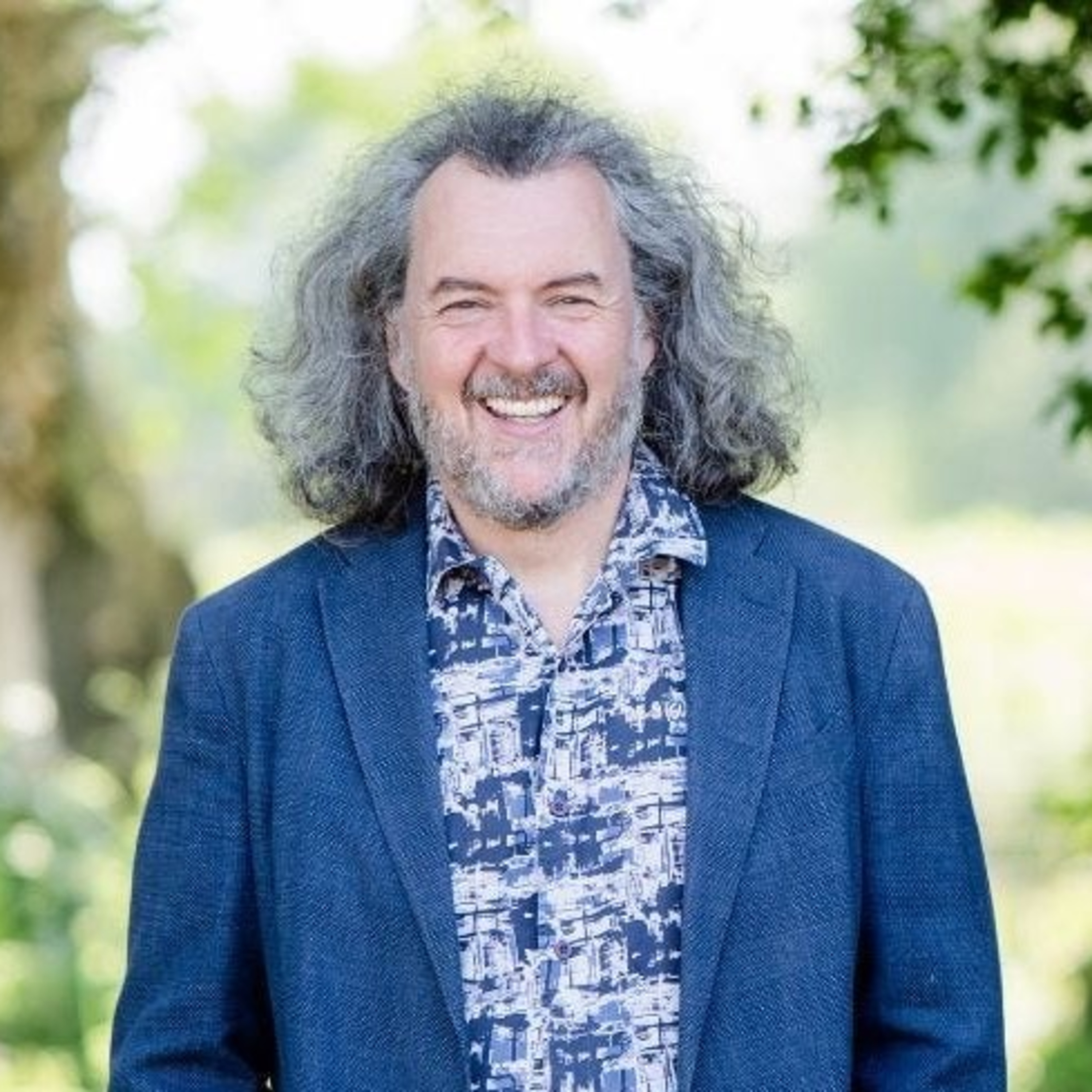
Nic Marks on Happiness is a Serious Business

In this episode Anna Mullenneaux and Paul Skinner, co-founders of MarketingKind, interview Nic Marks, author of Happiness is a Serious Business, founder of Friday Pulse and creator of the Happy Planet Index.Together with MarketingKind members we explore how to build happy teams and why they drive greater productivity, creativity and success at work.Nic shares that happy teams are twice as likely to be successful as successful teams are to be happy, a powerful reminder that wellbeing is not a “nice to have”, but a serious driver of business performance.Our discussion covers:• The hidden costs of stress, boredom and loneliness at work• Why “okay” may be the most expensive word in business• How leaders can create the conditions for happier and more effective teamsNic shares his Five Ways, which are practical actions every organisation can apply to build happier teams:1. Connect2. Be Fair3. Empower4. Challenge5. InspireYou can watch Nic’s new speaker reel here. And if you don't yet have a copy of Happiness is a Serious Business, you can order it here.And you can learn more about MarketingKind membership here.

May 14, 20261 hr 12 min

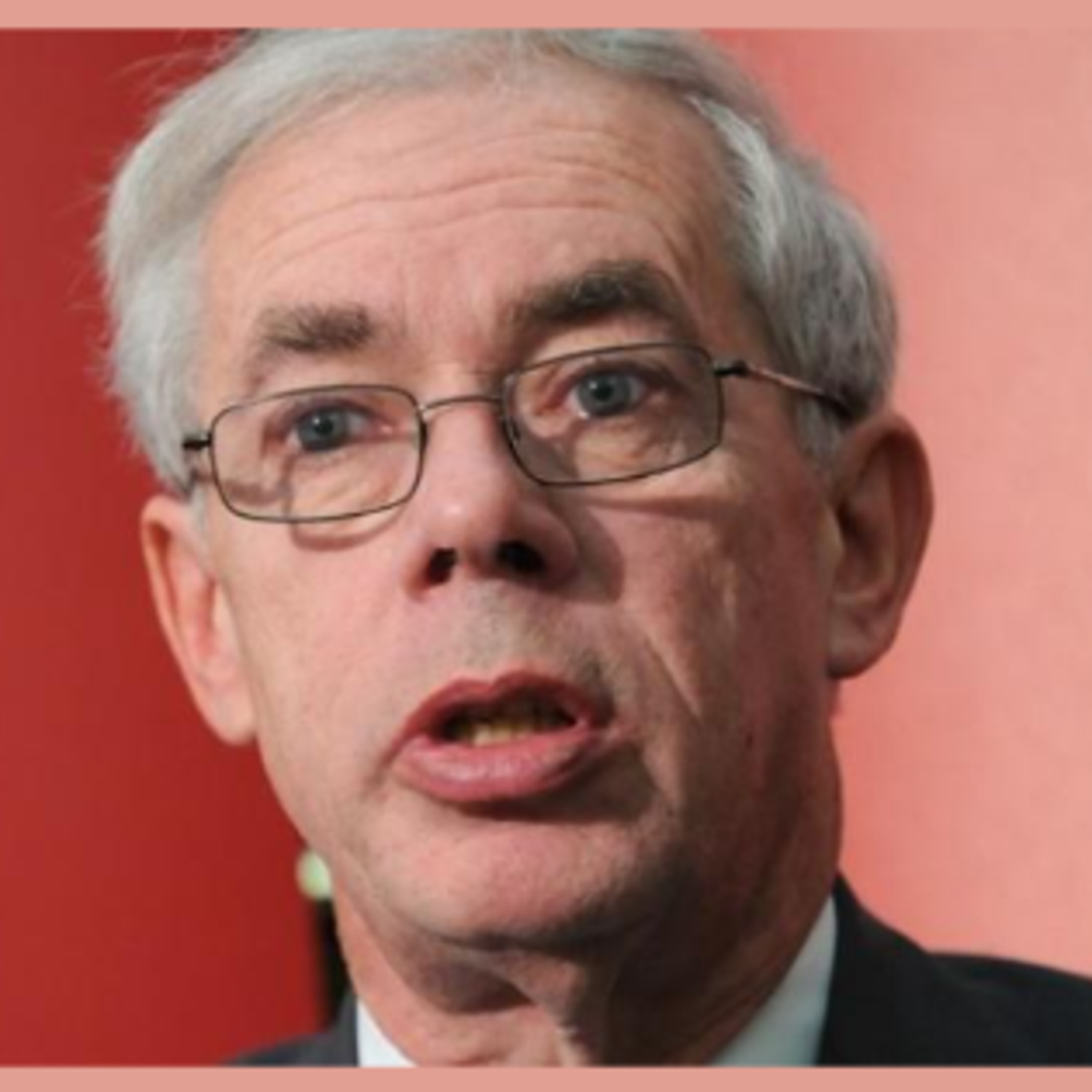
John Kay on why almost everything we are told about business is wrong

With reason and evidence on your side, why is this not yet mainstream?Paul Skinner, founder of MarketingKind, interviews Sir John Kay, CBE, to explore why almost everything we have been told about business is wrong and how we can rewrite the story of enterprise.We discuss the ideas in his latest book, The Corporation in the 21st Century, while also touching on topics from a few of his previous works including Obliquity, Radical Uncertainty and Greed is Dead.John argues that the culture shift away from the social movements of the 60s was so strong that it is still holding sway today, even though evidence shows us that shareholder value maximisation is not the best way to grow business value. In the discussion he cites Halifax, ICI and GEC as examples of businesses whose shifts from a stakeholder approach to shareholder maximisation led to their downfalls.John talks about the need to revisit the original purpose of the corporation as a legal vehicle for collective enterprise with sustainable success coming from creating value for customers, employees, and society (not merely extracting it for financiers). John says we need to bring back the sense of responsibility in business and that although we should not be bogged down by excessive legislation, bad managers should go to jail (like they used to).We discuss the changes in capital, dematerialisation, business ethics vs CSR, economic rent, the weight of GDP, the role of social media, AI and how to restore the legitimacy of business.John argues that the 21st-century corporation must be reinvented as a social institution, not a financial asset.You can learn more about John’s work here.And you can look out for John's revised version of Obliquity, which will be coming soon to address obliquity in an age of AI.

May 3, 20261 hr 1 min

Aleksandra Przegalińska on the story of AI

In this episode Anna Mullenneaux and Paul Skinner, co-founders of MarketingKind, explore with Aleksandra Przegalińska why we need to set the story straight on AI.We have seen how unregulated AI hype has created a backlash.As a result we may now have more realistic expectations of what AI can do.But it is changing how we work and how we relate to ourselves and others.And as a society we need to innovate in response.Aleksandra is a futurist, philosopher, author, Vice-Rector at Kozminski University, Senior Researcher at Harvard's Center for Labor and a Just Economy, and she was recently appointed by Donald Tusk to his Future Council for Poland.We cover the impact AI is having on career starts and how university education may need to change to help students better prepare for employment.We explore how AI is reshaping our relationships with ourselves and each other, for instance its use in therapy, tutoring and dating. She has created her own AI digital double, which has been well trained on her slides, lectures and her thinking to help her students to prepare for exams.She shares why AI is a breakthrough tool for marketing insights. People are more honest and open in AI marketing surveys because they don't feel they are being judged. They will in particular be more honest about sharing negative feedback.There are some areas such as IT where we are seeing big increases in efficiency, but there are many others where there is no productivity increase. For instance, a recent study from MIT Sloan Business School showed that most AI trials in businesses are not successful.Her team at Harvard has done a lot of research on how marketers are working collaboratively with AI. Where there is a smart division of labour, with AI being used for research and humans doing the copywriting for instance, it can lead to an impressive 40% spike in productivity. She and her colleague recently used AI as a critical collaborator to provide feedback when writing their book Converging Minds and they found it to be a very valuable tool.In her role on Poland’s Future Council she is bringing a perspective on the differences in the labour market in the US vs Europe.Europe is criticised for moving slowly on AI, but Aleksandra believes this is protecting us to some degree. Europe is gradually building its techstack and this is important for security. Over-reliance on US tech is a threat.Aleksandra encourages her students to take a pluralistic approach. To be open and try and test different AIs, which can trigger creative thinking. She says we need to think critically and be aware that AIs are not benign tools, they have been programmed (each with its own agenda). She wants to see more open forums of discussion around how we are using AI and what has worked and what hasn't worked.

April 21, 20261 hr 9 min

Martin Gutmann on why we celebrate the wrong leaders

In our recent Digital Fireside with Martin Gutmann, bestselling author, speaker, historian and management professor, we explore his book The Unseen Leader: How History Can Help Us Rethink Leadership. Lauren Cooper, Lead Commercial Manager at Clear Score and a member of the MarketingKind community, interviews Martin to discover why we celebrate the wrong leaders, what history can teach us about great leadership and the things we need to actually look out for to identify good leaders.We learn leadership lessons from Homer Simpson. And we explore how our own biases get in the way and why leaders like Trump, who lurch from crisis to crisis in a sensational manner, are considered “great”.We are predisposed to see leadership in people who:~ Speak more - regardless of what they say~ Appear confident - regardless of how competent they are~ Are perpetually busy - regardless of what they are doingThis of course creates a toxic culture where people actually doing good work feel overlooked and unmotivated.And this is a self perpetuating cycle.We need to reimagine what good leadership looks like.We need to celebrate those who mitigate crises.And ask ourselves who actually led the team to success?Martin encourages us to focus on leaders who have the right contextual balance between:1) Confidence and Humility2) Values and Pragmatism3) Vision and the Mundane We also cover Shackleton-related hate mail and the importance of storytelling and self-promotion.Martin’s reading recommendations include:The Sociology of Work by Keith GrintWhy Do So Many Incompetent Men Become Leaders? by Tomas Chamorro-Premuzic Spencer Harrison's recent article in The Atlantic - https://www.nytimes.com/athletic/7125163/2026/03/20/nba-leadership-culture-mistakes-warriors/The Culture Map by Erin MeyerLearn more about Martin’s work here.Buy a copy of The Unseen Leader here.And learn more about MarketingKind membership here.

March 24, 202619 min

JiaJia Smith on when purpose meets design

​"Most purpose-driven brands make the same mistakes. They lead with themselves. It's what they believe, what they want to see, and what they stand for. It feels internal or inward facing. And they forgot this one thing that changes everything, which is 'what does the audience feel?'."In this episode ​Anna Mullenneaux and Paul Skinner, co-founders of MarketingKind explore with Jiajia Smith​, brand design expert​, what happens when purpose meets good design. ​This edit shares JiaJia's introduction to the session and part of the group discussion, but most of the discussion, where we all shared our own examples of good design and explored why they work​,​ was for live participants only.JiaJia kicks off the conversation by exploring the definition of design and saying:Purpose fails when it just stays internal.We need a process for how your purpose can connect hard with your audience.Purpose gives us direction.Then design translates that purpose into something the people can actually experience. Something they can see, touch, smell, move through.When people experience something well crafted, they feel it.That feeling, whatever it is whether it is connection, trust, inspiration, belonging, is what shifts behaviour.And that is how brands use good design to create change.​JiaJia shares visual design examples from:​- Black Lives Matter​- This Girl Can​- Extinction Rebellion- And the Fearless Girl, a bronze sculpture by Kristen Visbal facing the iconic Charging Bull in Manhattan’s Financial District.​We also discuss design elements from the websites of:​- Greenpeace​- Charity Water​- WWF​- And Patagonia​.​​And we explore how design helps brands build trust, clarity, emotional resonance and memorability.

March 13, 20261 hr 13 min

Jitske Kramer on navigating tricky times

Tricksters are necessary to challenge the status quo. But when we elevate them to leader​s, we risk ending up with ​'Jack Sparrows as CEOs and Pinocchios as political leaders​'.​In this episode Paul Skinner, founder of MarketingKind, interviews ​Jitske Kramer, corporate anthropologist, speaker and author of nine bestselling and award-winning books​, about the ideas in her latest book Tricky Times: Navigating the Messy Middle of Change.​ Jitske argues that after decades of pursuing limitless growth, we’re finally confronting the reality that limits do exist. The global order is shifting, and we’re in what anthropologists call a liminal phase​, the messy, uncomfortable middle between an old system that no longer works and a new one that hasn’t fully emerged.And there’s no shortcut through it.Transformation requires this period of not knowing.That’s why leadership matters more than ever right now. But it’s also why leadership is so difficult. Many leaders are deeply invested in the old world order, so even when it’s clearly failing, letting go takes courage.During the conversation we explored the role of the trickster​, the archetype that bends rules and ​tests boundaries.Tricksters are important. They ​challenge and expose weaknesses in the system.But there’s a risk.When societies start to celebrate tricksters as heroes, we sometimes end up putting them in charge and that’s when a trickster culture can take hold.As Jitske warns, tricksters don’t just play​, they have a playbook.Big promises that don’t hold up.Simple scapegoats for complex problems.Narratives designed to provoke emotion rather than truth.As she puts it:​ “Don’t be fooled by big promises. And watch for the old human trick of the scapegoat​, ‘because of the refugees, we don’t have houses’. It’s bullshit, and we should call it out.”The challenge for all of us is to resist the seduction of those narratives and instead create space for honest, difficult conversations.Because tricksters have always existed.But in a world of digital platforms and limitless AI, the trickster playbook has become far more powerful and far more dangerous.​

March 5, 202633 min

Sarah Housley on become better futurists

"...positive visions don't necessarily come with statistics. They come with creativity and imagination. And we don't make as much room for creativity and imagination in our culture as I think we should."In this episode Anna Mullenneaux and Paul Skinner, co-founders of MarketingKind, interview Sarah Housley, design futurist and author of Designing Hope: Visions to Shape Our Future, to discuss how we can develop greater agency in imagining what better futures could look like and find the right ways to start working towards them.We talk about why it feels like we’ve stopped dreaming about better futures and what it takes for leaders, marketers and organisations to start imagining them again. Not as a nice-to-have, but as a practical skill for navigating change.We explore the ideas in Designing Hope and the four futures movements highlighted in the book that spark hope, action and critical thinking about how we might live in the decades ahead.We discuss how hopeful futures are created (not predicted) and reflect on how marketers and leaders can develop the mindset and tools to become better futurists in our own spheres of influence.Sarah’s reading recommendations:Dorian Lynskey - Everything Must GoOctavia ButlerKim Stanley RobinsonBecky ChambersLearn more about Sarah’s work here.And learn more about MarketingKind membership here.

February 8, 20261 hr 16 min

Tony Juniper on how a fairer world will save our planet

'This is a moment for big ideas. We can see the crumbling of the old order.' Paul Skinner, founder of MarketingKind, interviews Tony Juniper, CBE, chair of Natural England and author of 12 books including Just Earth: How a Fairer World Will Save our Planet.In this conversation and in his recent book, Just Earth, Tony makes a very strong case for why power imbalances are becoming more visible in society and why inequality is the main obstacle to climate action and how the system needs to shift to achieve real, lasting change.We learn about Tony's concept of Thrivalism, how 10 billion people can thrive on a living planet. We hear about his experiences working with everyone from smallholder farmers in Côte d'Ivoire to Vandana Shiva and even The King. And we discuss his campaigning efforts working with the government on the Climate Change Act in 2008.He encourages us to build collective action and change our consumerism culture.In the audience Q&A Tony shares what 3 things he would do if he were in charge of the country:1. Create a new measure for progress, instead of GDP the main metric would be a Genuine Progress Indicator2. Recognise functioning natural ecosystems as critical national infrastructure and invest in them like we do with the power grid and motorways (see the recent report from the joint intelligence committee on the risks)3. Legislate for a purpose-driven standard for businesses (PAS808) and find ways to incentivise the city to invest in companies that adopt it.Tony also encourages us to watch the King's documentary called Finding Harmony, which is out on Amazon Prime on February 6th. And the book Harmony, which Tony co-wrote with The King will be coming out in paperback later this month.

January 11, 20261 hr 15 min

Rob Hopkins on How to Fall in Love With the Future

This episode will open your mind to new ways of thinking about futures and how to create them.Paul Skinner, founder of MarketingKind, interviews Rob Hopkins, author and co-founder of the Transition Network and Transition Town Totnes, to explore the ideas in his latest book How to Fall in Love With the Future: A Time Traveller’s Guide to Changing the World. Rob shares how he is creating memories of the future and giving people something to work towards.He believes imagination is our greatest strength and we all need to use it to create longing for a fairer future on a large scale.We explore marketing the future, a national Imagination Act and time travel as a beautiful device.Rob shares what inspires him from a world of women of colour, particularly in the US, who are writing about radical imagination and time travel such as adrienne maree brown, Ruha Benjamin and Rasheedah Phillips and Black Quantum Futurism.Sign up for Rob's newsletter The Time Traveler's Gazette here.Listen to Rob’s podcast here.Find the essential guide to transition on the Transition Network's website here.Other inspiring references from the xChange:Muslim FuturesTown AnywhereThe Spirit Level by Kate Pickett and Richard WilkinsonPaul mentions previous MarketingKind podcast episodes with Manda Scott and Malka Older and our xChanges with Jon Alexander and Andy Burnham.

December 5, 20251 hr 14 min

Cass Sunstein on Manipulation

Join Cass Sunstein, Nudge theory pioneer, to explore his latest thinking on behavioural economics and his latest book, Manipulation: What It Is, Why It's Bad and What to Do About It.Cass tells us what makes great ideas gain traction, about his friendship with Barack Obama and what it's like navigating life from the perspective of a nudge expert.The discussion covers influence vs manipulation in marketing, AI choice engines, the 'joy of missing out' ('the Barbie problem') and our right not to be manipulated. Cass also mentions his involvement in developing a new app that will hopefully be available in the coming months for tracking the dark patterns of online manipulation that are impacting us all.Cass is currently the Robert Walmsley Professor at Harvard. He has previously held senior roles at The World Health Organisation, The Pentagon and The Department of Homeland Security under the Biden administration where he was awarded the Distinguished Public Service Medal, the Department’s highest civilian honour, in 2024.He has advised the United Nations, the European Commission, the World Bank, and many nations including the British Government.His work in behavioural economics has had a profound impact on the marketing and advertising industries.And if you have not yet read them I particularly recommend: Nudge: The Final Edition, with Richard Thaler; How Change Happens; Noise, with Daniel Kahneman and Olivier Sibony; and of course, Manipulation.This episode is hosted by Paul Skinner, founder of MarketingKind and the Agency of the Future and author of The Purpose Upgrade and Collaborative Advantage.

Is this your show?

Claim this listing to keep it up to date, reach guests who want to pitch you, and manage bookings with Guestify.

Claim this listing

More Business podcasts