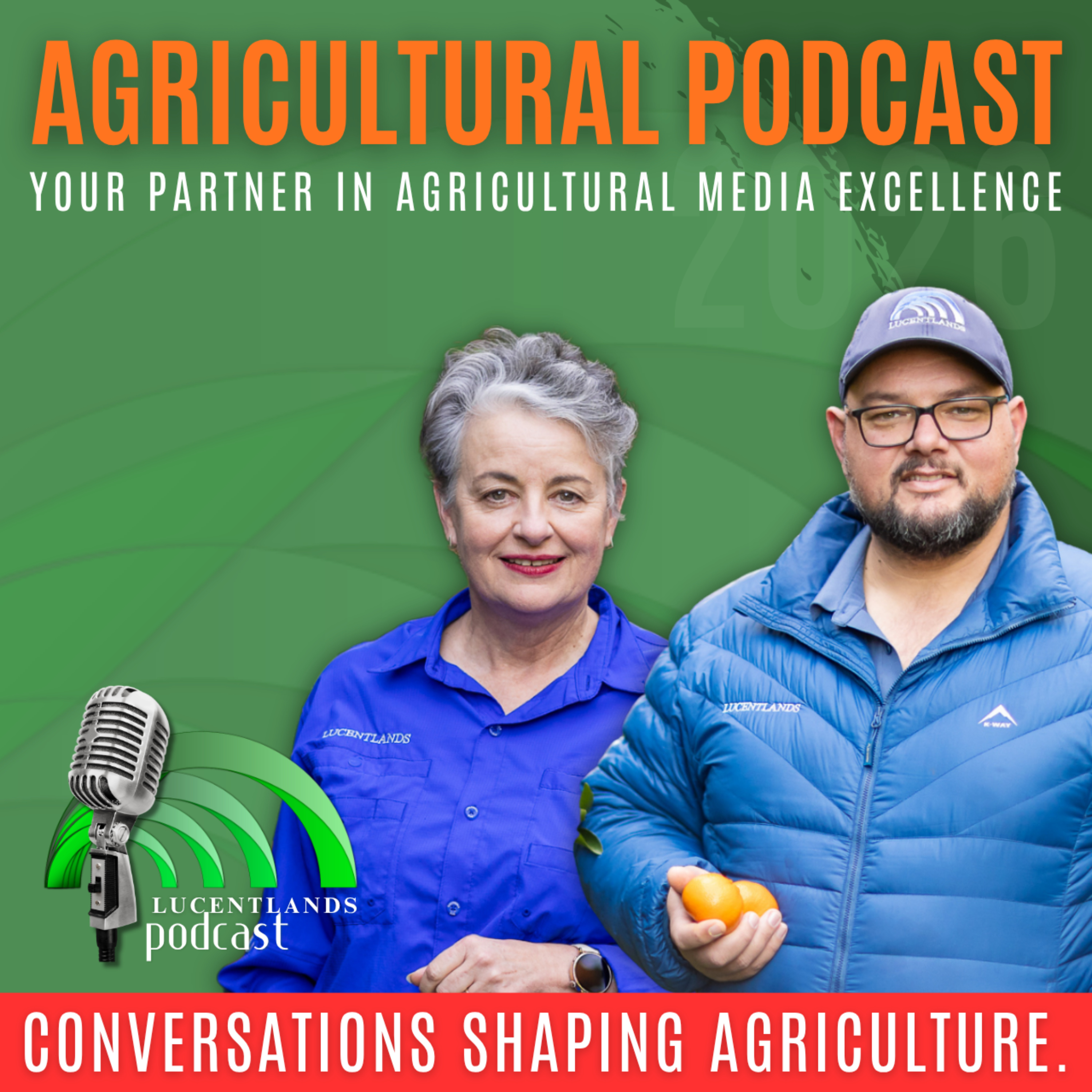
Welcome to the Lucentlands Podcast, your go-to source for all things related to agriculture. Our Agriculture podcast is dedicated to bringing you the latest news, trends, and insights on the agriculture industry from around the world. Hosted by Dewald Kirsten and Louise Brodie, two passionate professionals with years of experience in the media production industry, the Lucentlands Agriculture Podcast is the perfect platform for anyone interested in learning about the latest developments in agriculture.
Listen to episodes
60 recent
August 31, 202657 min
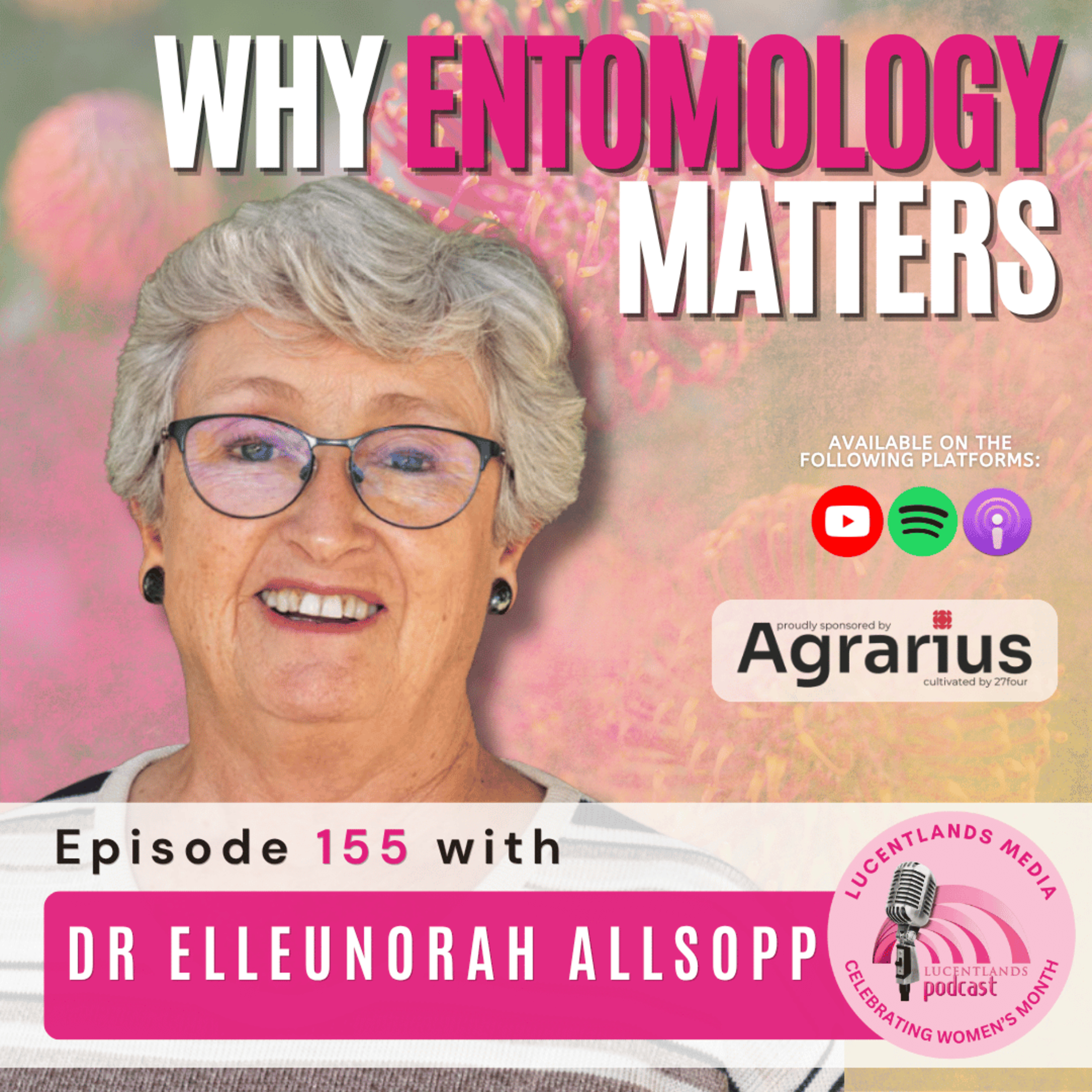
Why Entomology Matters | Ep. 155
Episode 155 of the Lucentlands Podcast explores why entomological knowledge remains essential to the future of agriculture.Hosts Dewald Kirsten and Louise Brodie speak with Dr Elleunorah Allsopp, an entomologist who spent more than four decades conducting agricultural research, primarily within South Africa’s grape and wine industries. Dr Allsopp reflects on entering agricultural research when women were first being admitted into research positions, earning the trust of growers and helping to advance equal opportunities within a traditionally male-dominated field. The conversation examines the commercial and phytosanitary risks posed by insect pests, including how a pest can destroy a crop shortly before harvest or threaten access to an entire export market. Dr Allsopp also explains why sustainable farming and integrated pest management require far more knowledge and decision-making than conventional spray programmes.
August 26, 202645 min
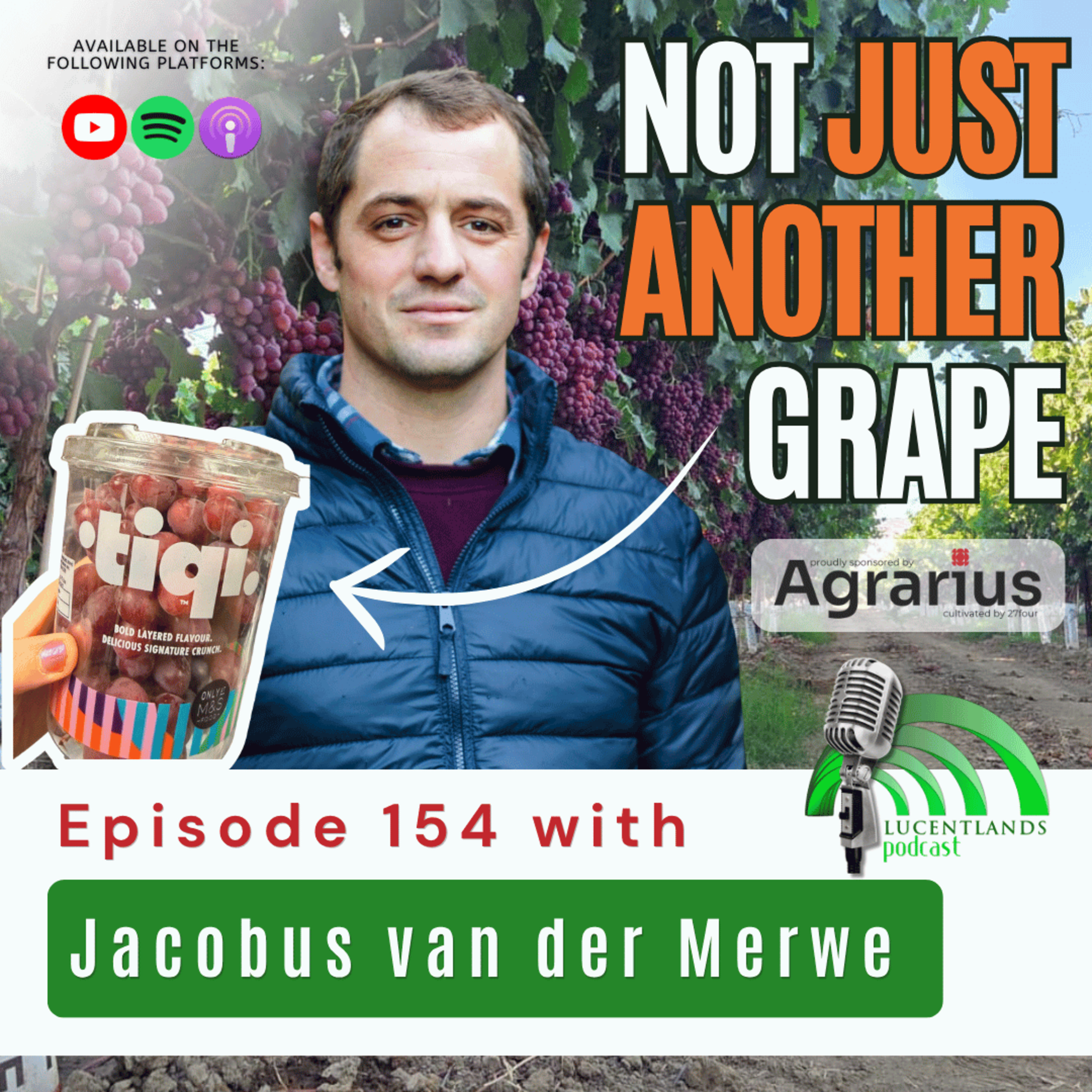
Building TIQI, a New Global Grape Brand | Ep. 154
Dewald Kirsten and Louise Brodie speak to Jacobus van der Merwe, Business Development Manager of Fruitips, about the development and global launch of TIQI—a new premium table grape brand built around exceptional flavour, long shelf life and carefully controlled production. Developed through the partnership between Grapa Global and TopFruit International, TIQI brings two distinctive pink grape varieties together under one consumer brand. After a successful trial in 2025, the branded grapes are set to launch exclusively in Marks & Spencer stores in the United Kingdom on 26 August 2026. Jacobus explains why Fruitips aims to build a brand rather than simply sell grapevine material. This includes selecting growers, controlling the number of hectares planted, developing production and packing protocols, protecting consistent quality and coordinating supply between countries. The discussion also explores: •Why more than 20,000 UK consumers participated in the grape tasting •TIQI’s distinctive flavour, aroma and unusually long shelf life •The strategy of keeping supply controlled to protect value •Current plantings in California, Mexico, Brazil, China and Namibia •When commercial plantings could begin in South Africa •Why production protocols must be adapted for each country •The challenge of delivering consistent quality throughout the year •How the model could support premium returns for selected growers •Why agriculture needs to communicate its wider impact to young professionals Subscribe to the Lucentlands Podcast for conversations with the people shaping agriculture, horticulture and the international fresh-produce industry.
August 24, 202649 min
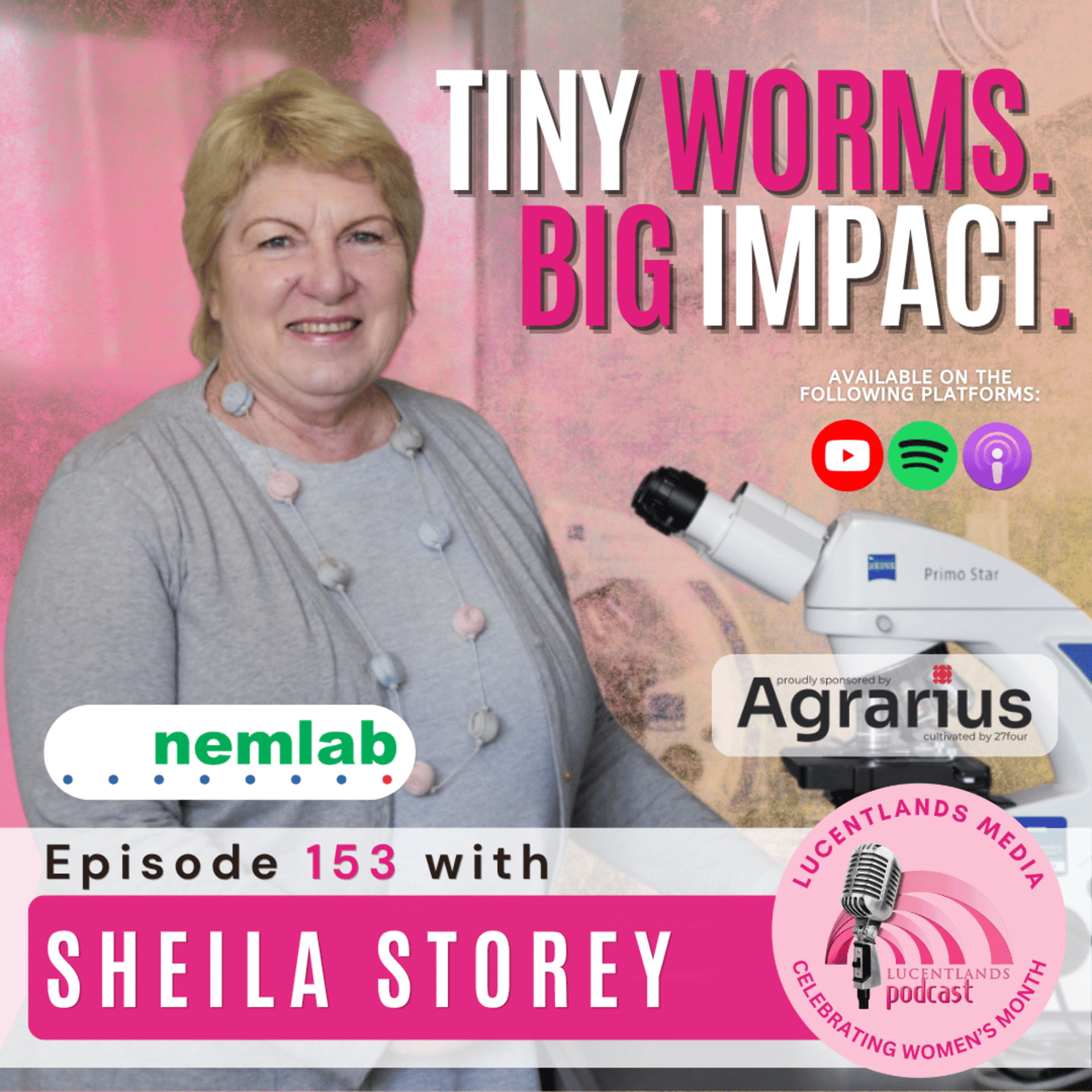
Tiny Worms, Big Impact: Soil Health & a South African Biopesticide | Ep. 153
Lucentlands Podcast Episode 153 explores the largely unseen world beneath agricultural crops and why soil testing is becoming increasingly important for modern farming. Dewald Kirsten and Louise Brodie speak to Sheila Storey, Consultant to Nemlab & Soil Health Support Centre and Director at NemaBio.Sheila explains how microscopic nematodes can damage plant roots, restrict nutrient uptake and contribute to costly production losses. However, not all nematodes are harmful. Beneficial, free-living nematodes can serve as valuable biological indicators of soil health and help identify whether soil is degraded, enriched or biologically balanced. The conversation also explores Sheila’s journey from starting Nemlab in her home in 1987 to building a highly specialised agricultural laboratory serving producers, researchers and agricultural companies across Southern Africa. A major focus is the development of a South African entomopathogenic nematode-based biopesticide. The locally sourced biological product is intended to control the soil stages of certain insect pests. Sheila discusses its potential advantages, the lengthy research and registration process, and why South Africa should invest in developing biological solutions from its own biodiversity.
August 18, 202650 min
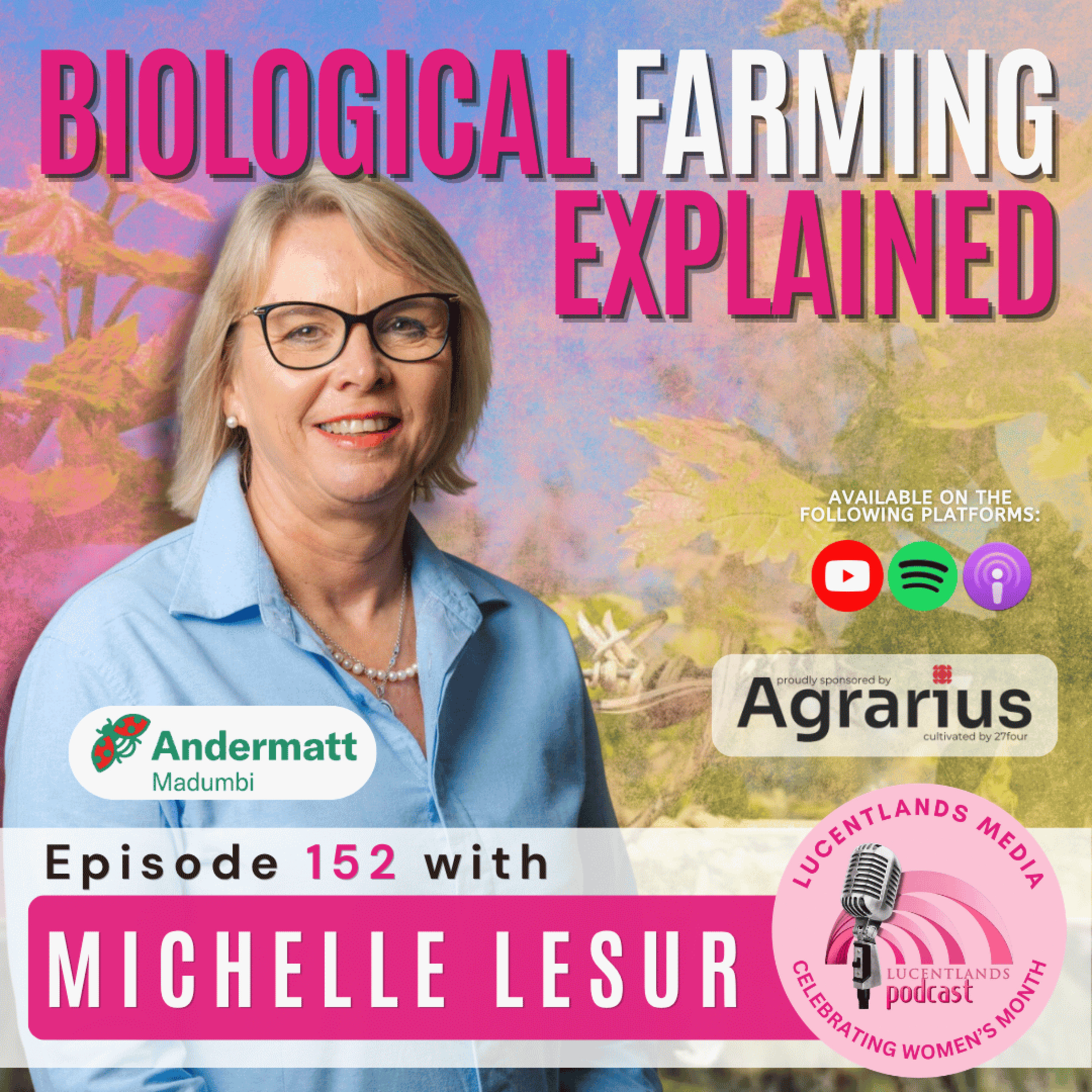
Biological Farming: Balancing Food Safety and Security | Ep. 152
How can agriculture reduce its reliance on synthetic chemistry without compromising crop yields, farmer profitability or global food security? Dewald Kirsten and Louise Brodie speak to Michelle Lesur, CEO of Andermatt Madumbi, about the expanding role of biological solutions in modern farming and why successful adoption requires far more than simply replacing one product with another. Michelle explains why biologicals and conventional crop protection should not be treated as opposing systems. Instead, farmers need an integrated approach that balances soil health, plant vitality, pest and disease management, food safety and productivity. The conversation explores: •The story behind Madumbi and its partnership with the Swiss-based Andermatt Group •The difference between biocontrol products and biostimulants •Why export-market residue requirements are accelerating biological adoption •The importance of reliable products, technical advice and correct application •Regulatory challenges facing biological products in South Africa and internationally •Why Africa’s cold-chain infrastructure matters for living biological organisms •The role of biologicals in commercial, smallholder and row-crop farming •How AI could support pest and disease management without replacing human expertise •Why consumers need a better understanding of what food production involves Michelle also shares her journey from building an accounting business after a devastating farm fire to becoming CEO of a company working to change how food is produced. As she explains, biological farming is not an overnight switch. It is a journey that must meet farmers where they are while protecting productivity and profitability. Connect with us: Website: https://lucentlands.co.za/ Instagram: https://www.instagram.com/lucentlandsmedia/ Facebook: https://www.facebook.com/lucentlandsmedia LinkedIn: https://www.linkedin.com/company/lucentlandsmedia/ Podcast LinkedIn: https://www.linkedin.com/showcase/lucentlandspodcast Support this podcast by buying us a coffee: https://buymeacoffee.com/lucentlands?new=1This podcast is proudly sponsored by Agrarius. Find out more: https://www.agrarius.co.za/?ref=recR9vP8u5CYfEOek&utm_source=lucentlands&utm_medium=referral&utm_campaign=LucentLandsPromo Visit our agricultural stock site: https://lucentlands.smugmug.com/
August 12, 20261 hr 3 min
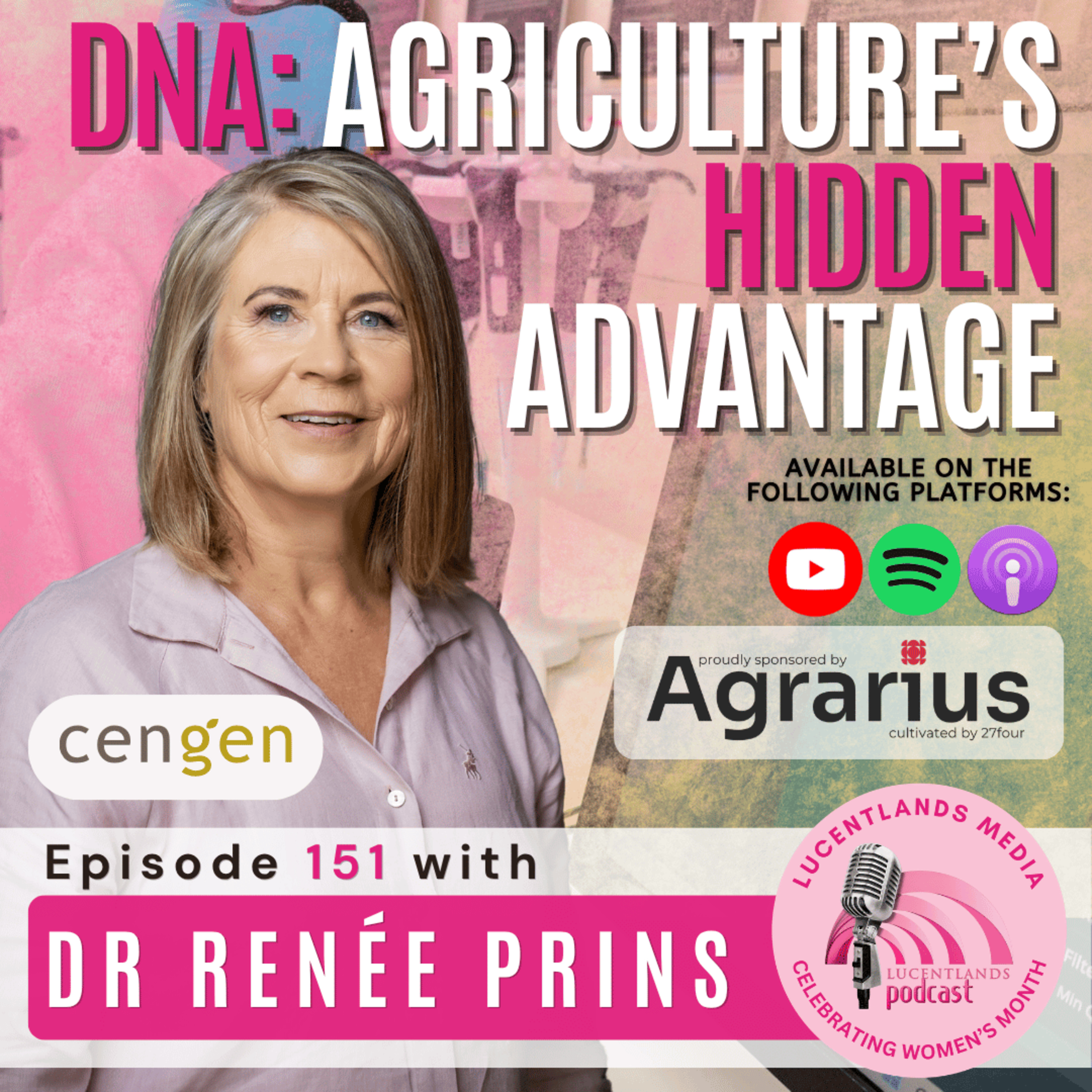
How DNA Technology Is Transforming Agriculture | Ep. 151
In this episode, hosts Dewald Kirsten and Louise Brodie speak with Dr Renee Prins, Founder and Director of CenGen (Pty) Ltd, about the role of molecular genetics and DNA technology in agriculture. Dr Prins explains how DNA markers allow plant breeders to identify desirable genes while plants are still seedlings. This helps breeding programmes focus their land, infrastructure and resources on the most promising material. Although DNA technology does not remove the need for years of field evaluation, it can make the breeding process considerably more efficient. The conversation explores CenGen’s growth from a small laboratory in Worcester into an agricultural genetics company serving clients across numerous crops and industries. Its work has expanded from wheat and barley into fruit, grapevines, groundnuts, indigenous plants, insects and biodiversity research. Dr Prins also discusses CenGen’s participation in the 1KSA initiative, which aims to sequence the genomes of 1,000 indigenous South African organisms. In the past 18 months alone, the CenGen team has sequenced more than 106 important plants, along with several insects.Another important focus is CenGen’s educational outreach. Since 2021, more than 1,000 learners have participated in its genetics workshops, where they experience real DNA extraction and learn how concepts from the school curriculum are applied in a working laboratory. The discussion covers: •How DNA markers support plant-breeding decisions •Why field evaluation remains essential •Genetics in fruit, grain and grapevine production •Identifying pollination compatibility in orchards •Genome sequencing of indigenous South African species •The role of molecular genetics in food production •Making genetics accessible to high-school learners •Creating opportunities for young people in science •The challenges of building a private agricultural laboratory •Why applied research must respond to producers’ immediate needs •Building a scientific team and a sustainable organisation Dr Prins also reflects on founding CenGen despite being warned that the business might not succeed. Her journey demonstrates what can be achieved through persistence, scientific curiosity and a determination to apply research to real agricultural challenges. Subscribe to the Lucentlands Podcast for conversations with the people shaping agriculture, fresh produce and food production. Connect with us: Website: https://lucentlands.co.za/ Instagram: https://www.instagram.com/lucentlandsmedia/ Facebook: https://www.facebook.com/lucentlandsmedia LinkedIn: https://www.linkedin.com/company/lucentlandsmedia/ Podcast LinkedIn: https://www.linkedin.com/showcase/lucentlandspodcast Support this podcast by buying us a coffee: https://buymeacoffee.com/lucentlands?new=1 This podcast is proudly sponsored by Agrarius. Find out more: https://www.agrarius.co.za/?ref=recR9vP8u5CYfEOek&utm_source=lucentlands&utm_medium=referral&utm_campaign=LucentLandsPromo Visit our agricultural stock site: https://lucentlands.smugmug.com/
August 3, 202639 min
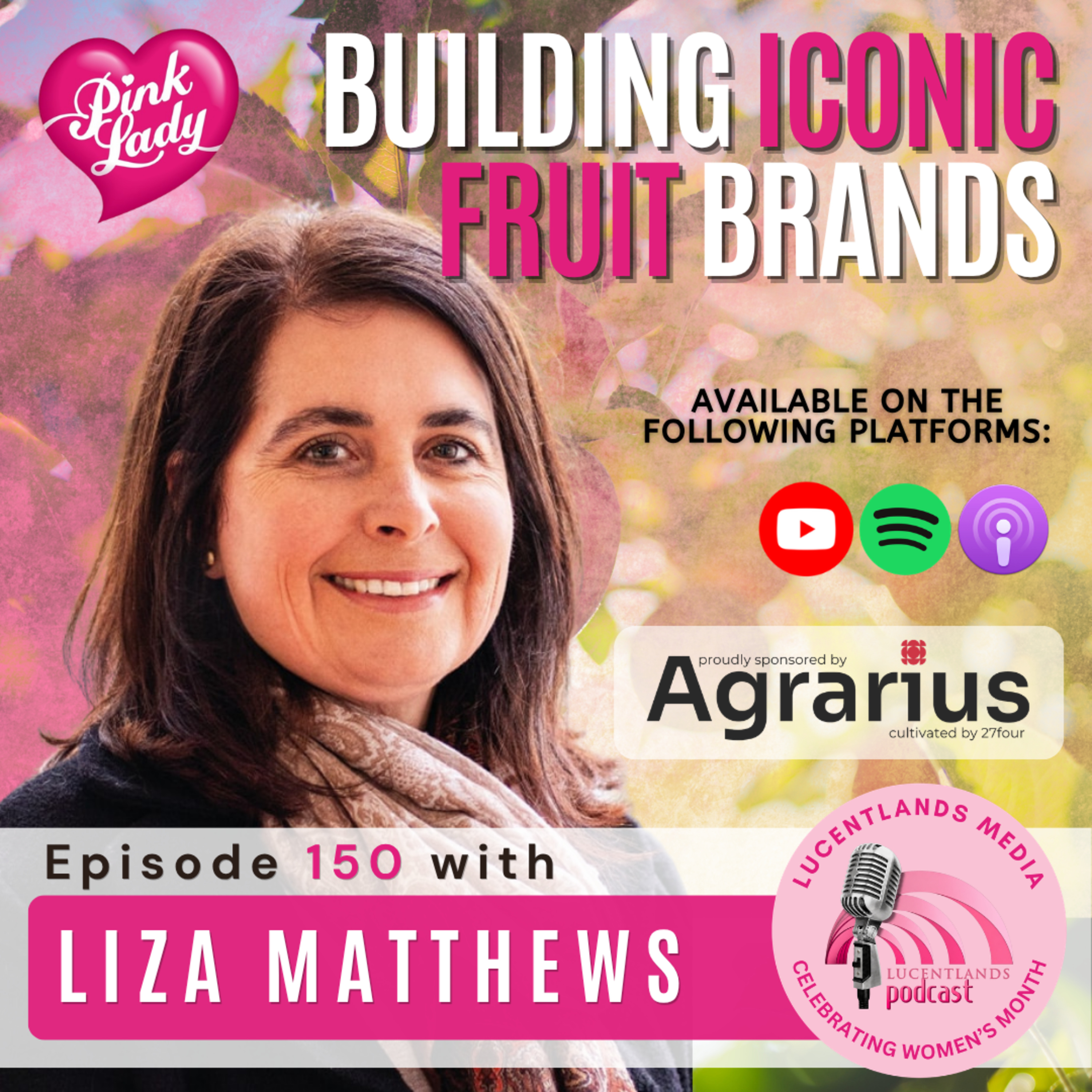
Building Fruit Brands That Consumers Trust | Ep. 150
This podcast is proudly sponsored by Agrarius. Find out more: https://www.agrarius.co.za/?ref=recR9vP8u5CYfEOek&utm_source=lucentlands&utm_medium=referral&utm_campaign=LucentLandsPromo Visit our agricultural stock site: https://lucentlands.smugmug.com/ This August, the Lucentlands Podcast celebrates Women’s Month with a special series featuring women making an impact across agriculture.In Episode 150, Dewald Kirsten and Louise Brodie speak with Liza Matthews, Marketing Manager at TopFruit (Pty) Ltd and incoming Managing Director of Greenhouse Creative Brand Studio. Liza shares the story behind the growth of Pink Lady® apples, explores the importance of quality, branding, packaging and consumer trust, and explains why marketing should form part of the journey from the very beginning. She also introduces Greenhouse Creative Brand Studio, a new TopFruit-affiliated marketing agency that will use its agricultural expertise to help businesses build and grow strong brands. Key insights from this episode•Why marketing should form part of the strategy for a new fruit variety from the beginning. •How a quality agricultural product becomes a trusted consumer brand. •Why tastings are valuable when introducing consumers to unfamiliar products. •How Pink Lady® developed strong consumer recognition in South •Africa and other African markets. •Why quality and brand consistency matter to informal fruit traders. •The relationship between Cripps Pink, approved mutations and the Pink Lady® trademark. •Why clear brand guidelines support long-term brand growth. •How packaging influences consumer attention and perceptions of value. •Why branded fresh-produce packaging has become increasingly important in supermarkets. •How specialist agricultural knowledge strengthens marketing strategy. •The services Greenhouse Creative Brand Studio will offer agricultural businesses. •The range of career opportunities available throughout the agricultural value chain. Connect with us: Website: https://lucentlands.co.za/ Instagram: https://www.instagram.com/lucentlandsmedia/ Facebook: https://www.facebook.com/lucentlandsmedia LinkedIn: https://www.linkedin.com/company/lucentlandsmedia/ Podcast LinkedIn: https://www.linkedin.com/showcase/lucentlandspodcast Support this podcast by buying us a coffee: https://buymeacoffee.com/lucentlands?new=1
July 30, 202623 min
Can Fruit Growers Cut Chemical Use by 50%? | Ep. 149
Can fruit growers use fewer chemicals without compromising crop protection? Dr Peter Triloff of the Lake Constance Fruit Cooperative joins Dewald Kirsten and Louise Brodie to explore how orchard design, sprayer selection and airflow management influence the effectiveness of spray applications. Drawing on decades of experience in European fruit production, Dr Triloff explains why more power does not necessarily produce better results. The real objective is to distribute droplets accurately across the target canopy while limiting losses to the ground, the air and neighbouring rows. The discussion covers: •Why sprayers must be matched to individual orchards •How tree height, canopy structure and row spacing affect spray drift •The importance of correct fan selection and airflow adjustment •Why excessive airflow can reduce application efficiency •The potential to reduce chemical dose rates in slim canopies •The opportunities and limitations associated with spray drones •How better application technology can save growers money •Why spray application is far more technical than it may appear Dr Triloff believes the industry should develop the best available application technology, align pesticide registrations with improved efficiency and help growers achieve the same crop-protection results with fewer chemical inputs. This conversation was recorded at the Hortgro Technical Symposium 2026.Connect with us:Website: https://lucentlands.co.za/Instagram: https://www.instagram.com/lucentlandsmedia/Facebook: https://www.facebook.com/lucentlandsmediaLinkedIn: https://www.linkedin.com/company/lucentlandsmedia/Podcast LinkedIn: https://www.linkedin.com/showcase/lucentlandspodcastSupport this podcast by buying us a coffee: https://buymeacoffee.com/lucentlands?new=1 This podcast is proudly sponsored by Agrarius. Find out more: https://www.agrarius.co.za/?ref=recR9vP8u5CYfEOek&utm_source=lucentlands&utm_medium=referral&utm_campaign=LucentLandsPromo Visit our agricultural stock site: https://lucentlands.smugmug.com/
July 27, 202642 min
Why Good Science Needs Better Communication | Ep. 148
Good science can change lives—but only if people can understand it, trust it and see why it matters. In Episode 148 of the Lucentlands Podcast, hosts Dewald Kirsten and Louise Brodie speak to Prof Marina Joubert, Associate Professor of Science Communication at the Centre for Research on Evaluation, Science and Technology (CREST) at Stellenbosch University. Recorded at the Hortgro Technical Symposium 2026, the conversation explores why effective science communication must be treated as an essential part of research rather than an afterthought. Prof Joubert explains that communicating science does not mean “dumbing it down”. It means removing unnecessary jargon, explaining complex ideas in everyday language and connecting scientific evidence to the concerns, experiences and decisions of real people. The discussion also examines the relationship between scientists, agricultural media, growers and the wider public. Prof Joubert argues that good communication should be a reciprocal process in which scientists share their knowledge but also listen to the people and communities affected by their research. Key topics discussed: •Why scientific research must be visible and relevant to society •How storytelling makes complex science easier to understand •The importance of trust in scientists and scientific institutions •Why scientists should communicate uncertainty openly •The difference between misinformation and deliberate disinformation •How to recognise exaggerated or unsupported scientific claims •Why growers should ask questions before investing in agricultural products •The role of agricultural journalists and communication professionals •How scientists can build communication into research proposals and budgets •The potential benefits of public engagement for research impact and funding •Why communication must involve listening as well as speaking •How scientists, growers and the media can work together more effectively The episode also considers the growing volume of questionable claims confronting farmers—particularly around crop protection products and other agricultural inputs. Prof Joubert encourages growers to investigate the evidence, ask critical questions and be cautious when products promise multiple benefits without credible research to support those claims. She also challenges scientists to move beyond journal articles and conference presentations. As she explains, good science is essential, but effective communication is what makes that science visible, relevant and capable of creating meaningful impact. For young people entering science, her message is equally clear: remain curious, be humble, listen to communities and be willing to invest in effective communication. Connect with us: Website: https://lucentlands.co.za/ Instagram: https://www.instagram.com/lucentlandsmedia/ Facebook: https://www.facebook.com/lucentlandsmedia LinkedIn: https://www.linkedin.com/company/lucentlandsmedia/ Podcast LinkedIn: https://www.linkedin.com/showcase/lucentlandspodcast Support this podcast by buying us a coffee: https://buymeacoffee.com/lucentlands?new=1 This podcast is proudly sponsored by Agrarius. Find out more: https://www.agrarius.co.za/?ref=recR9vP8u5CYfEOek&utm_source=lucentlands&utm_medium=referral&utm_campaign=LucentLandsPromo Visit our agricultural stock site: https://lucentlands.smugmug.com/
July 23, 20261 hr 0 min
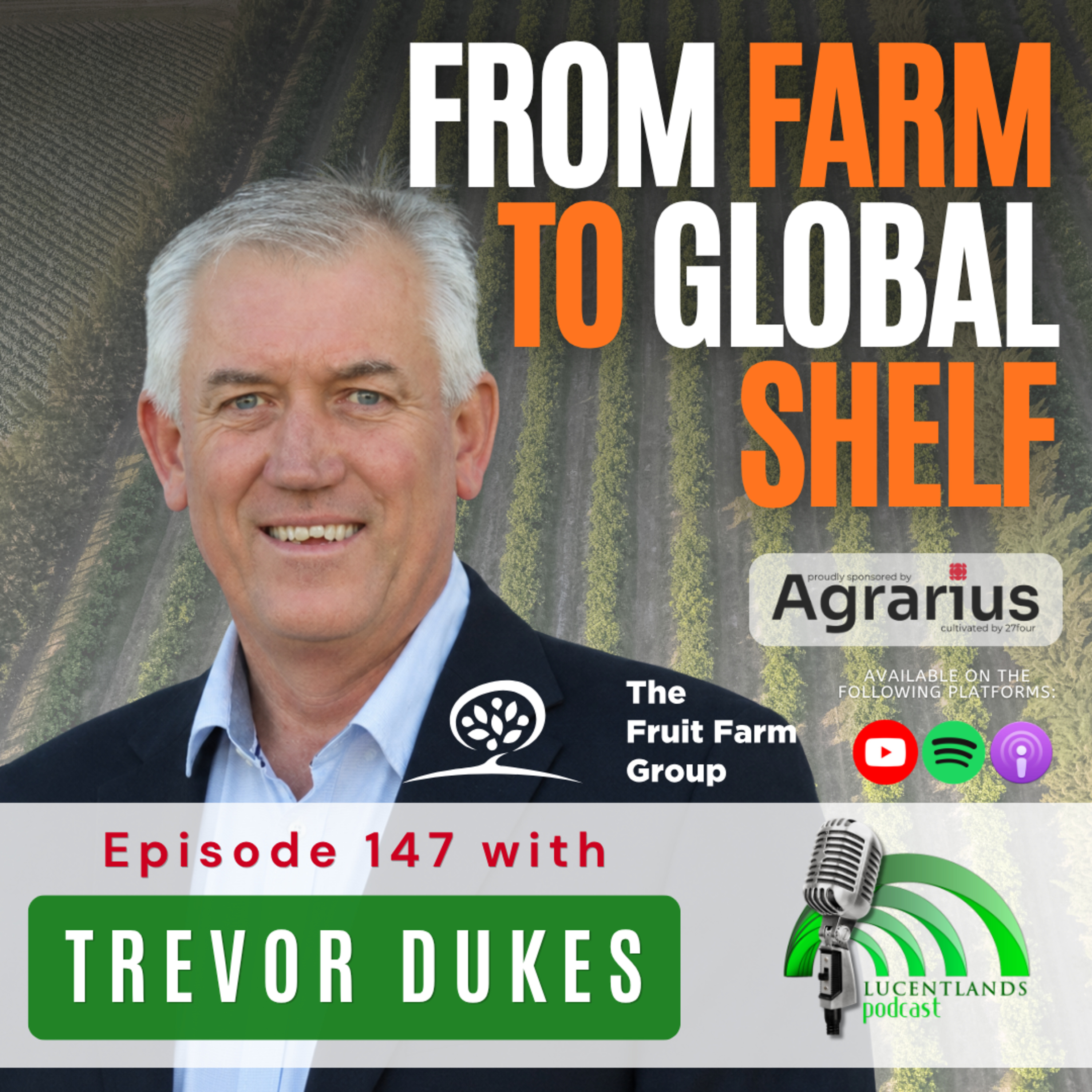
Taking South African Fruit from Farm to Global Shelf | Ep. 147
In Episode 147 of the Lucentlands Podcast, hosts Dewald Kirsten and Louise Brodie speak to Trevor Dukes, CEO of The Fruit Farm Group South Africa, about the changing realities of farming, fruit exports and the international fresh produce supply chain. Having worked across farming, packhouses, procurement, exports and international fresh produce markets, Trevor brings a valuable understanding of the journey from the orchard to the retail shelf. He explains why fresh produce remains a hands-on business, why every season requires a different response and why “the devil is in the detail.” The Fruit Farm Group operates as a modern producer, packer and exporter. Its South African activities span subtropical and deciduous fruit, including avocados, apples, pears, bananas, mangoes and litchis. The business combines its own farms and packhouses with grower partnerships and international commercial relationships. Trevor discusses how relationships between growers, exporters, importers and retailers have evolved. Security of supply is no longer enough: modern supply chains must deliver consistently throughout the year while addressing sustainability, affordability, accessibility and changing consumer expectations. The conversation also examines South Africa’s expanding market access. New opportunities, particularly in Asian markets, could support future growth, but Trevor cautions that market access is not a silver bullet. South African exporters still need to understand each market, establish reliable supply chains, compete for shelf space and create a clear point of difference. Key insights from the conversation • Why every agricultural season is different and businesses must remain agile • How The Fruit Farm Group connects production, packing and exporting • The value of combining farming experience with commercial market knowledge • Why South Africa’s avocado sector is exploring new production regions • How new export markets must be developed through careful, long-term building blocks • Why South African fruit enjoys a positive international reputation • The influence of retailers and consumers on modern fresh produce supply chains • How convenience helped elevate ripe-and-ready avocados in retail markets • The growing importance of genetics, new varieties, automation and agricultural technology • How global industry networks create opportunities for learning and commercial collaboration • Why simplicity and a clear focus can help businesses find better solutions Trevor also explains what happens when an avocado is “triggered” or partially ripened, how ripe-and-ready fruit is assessed and why consistency is essential when supplying retailers and consumers. Despite challenges involving ports, infrastructure and supply-chain execution, Trevor remains positive about South African agriculture. Investment in orchards, varieties, genetics, technology, cold storage and production infrastructure continues across the country’s fruit industries. His central message is clear: success depends on understanding the product, remaining close to production, adapting to changing circumstances and building solutions that create value from the farm through to the consumer. Connect with us: Website: https://lucentlands.co.za/ Instagram: https://www.instagram.com/lucentlandsmedia/ Facebook: https://www.facebook.com/lucentlandsmedia LinkedIn: https://www.linkedin.com/company/lucentlandsmedia/ Support this podcast by buying us a coffee: https://buymeacoffee.com/lucentlands?new=1
July 20, 202637 min
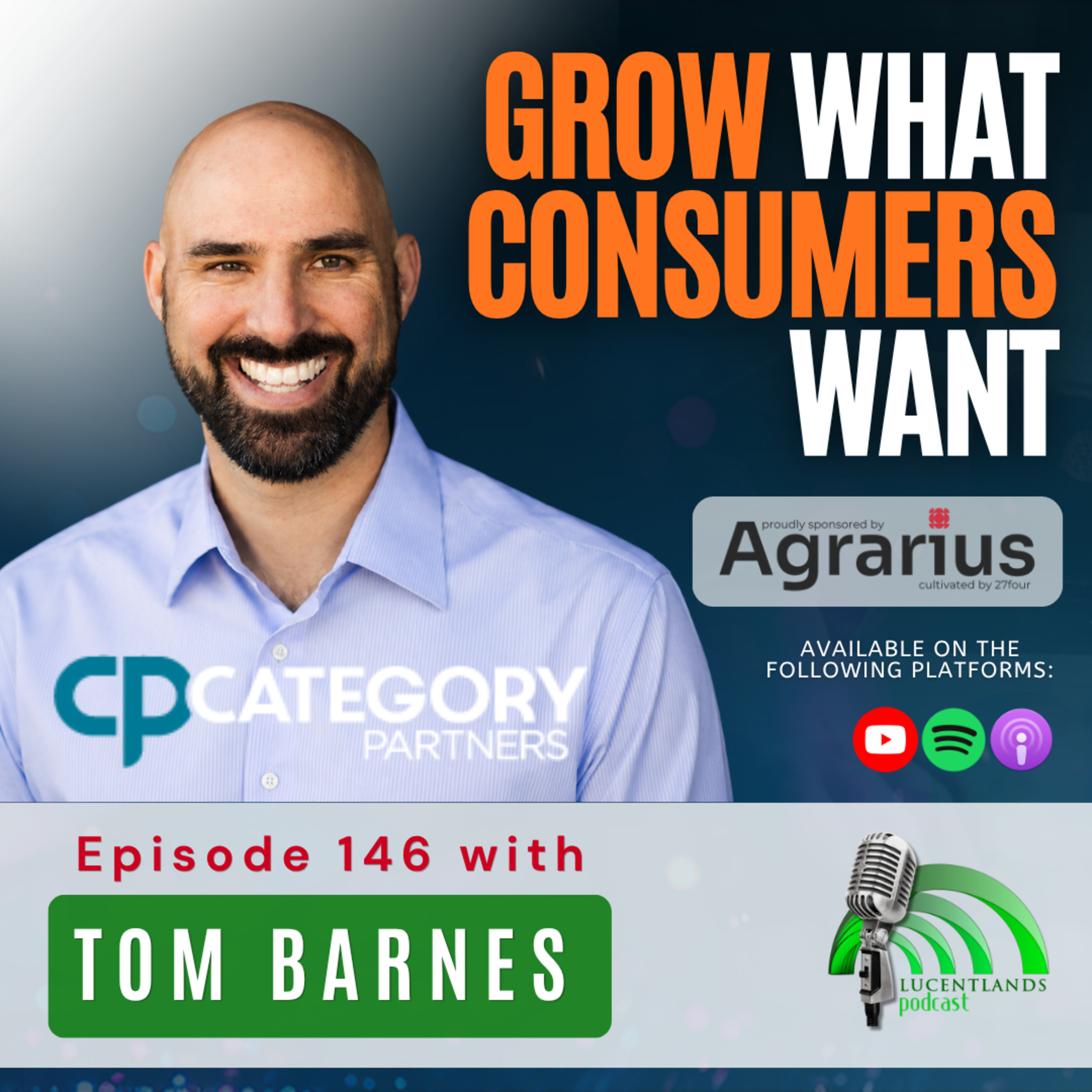
Why Consumer Demand Must Shape What Growers Plant | Ep. 146
What makes one fruit variety a commercial success while another struggles to find a market?In Episode 146 of the Lucentlands Podcast, Dewald Kirsten and Louise Brodie speak with Tom Barnes, President and CEO of Category Partners, about how consumer behaviour, retail strategy and market intelligence should inform production decisions. Recorded at the Hortgro Technical Symposium 2026, the conversation explores the connection between what growers plant, what retailers stock and what consumers ultimately choose to buy. Tom explains that growers must make long-term decisions before knowing whether sufficient demand will exist when a crop reaches commercial production. This is particularly challenging in the apple industry, where establishing an orchard requires significant investment and trees may take several years to produce commercially viable volumes. In the United States, consumers may encounter 14 or 15 apple cultivars in a single retail store. Within this competitive category, a good apple does not automatically become a commercial success. Branding, consistent quality, category management, retail support and consumer-focused marketing all influence whether a cultivar earns and retains shelf space. Cosmic Crisp® offers a valuable case study. Tom discusses the marketing investment and industry collaboration that supported its rapid rise in the United States. He also explains how increasing production has moved it from a highly differentiated premium product towards a more widely available staple. The conversation also considers the premium positioning of SugarBee®, the brand recognition achieved by Pink Lady® and the role of controlled supply in maintaining consumer interest and value. Tom examines how economic pressure affects fresh produce purchases. Consumers may reduce spending on organic products when confidence is low, yet they remain interested in distinctive flavours and memorable eating experiences. Social media and online influencers are also encouraging people to try unfamiliar products. However, producers may only get one opportunity to create a positive impression. If the eating experience disappoints, the consumer may not purchase that product again. Flavour, texture, freshness, consistency and correct handling are therefore essential. Food waste is also influencing shopping behaviour. Consumers are buying smaller quantities, shopping more frequently and showing greater interest in pack sizes that help them use the product before it deteriorates. Key insights •Why consumer demand should inform planting decisions •How category management connects growers, suppliers and retailers •Why growing performance does not guarantee market success •What drove the rapid growth of Cosmic Crisp® •How supply growth can affect premium positioning and grower returns •Why fresh produce marketing must reach consumers •How economic pressure affects organic and premium purchases •Why the first eating experience determines repeat demand •How food-waste concerns are influencing pack sizes •What blueberry growth reveals about health-led demand •What South African and American producers can learn from each other The central message is clear: growers must consider not only what performs well in the orchard, but also what consumers want to buy, eat and purchase again. Connect with us: Website: https://lucentlands.co.za/ Instagram: https://www.instagram.com/lucentlandsmedia/ Facebook: https://www.facebook.com/lucentlandsmediaLinkedIn: https://www.linkedin.com/company/lucentlandsmedia/ Podcast LinkedIn: https://www.linkedin.com/showcase/lucentlandspodcast Support this podcast by buying us a coffee: https://buymeacoffee.com/lucentlands?new=1 This podcast is proudly sponsored by Agrarius. Find out more: https://www.agrarius.co.za/?ref=recR9vP8u5CYfEOek&utm_source=lucentlands&utm_medium=referral&utm_campaign=LucentLandsPromo Visit our agricultural stock site: https://lucentlands.smugmug.com/
Is this your show?
Claim this listing to keep it up to date, reach guests who want to pitch you, and manage bookings with Guestify.