
Find partners
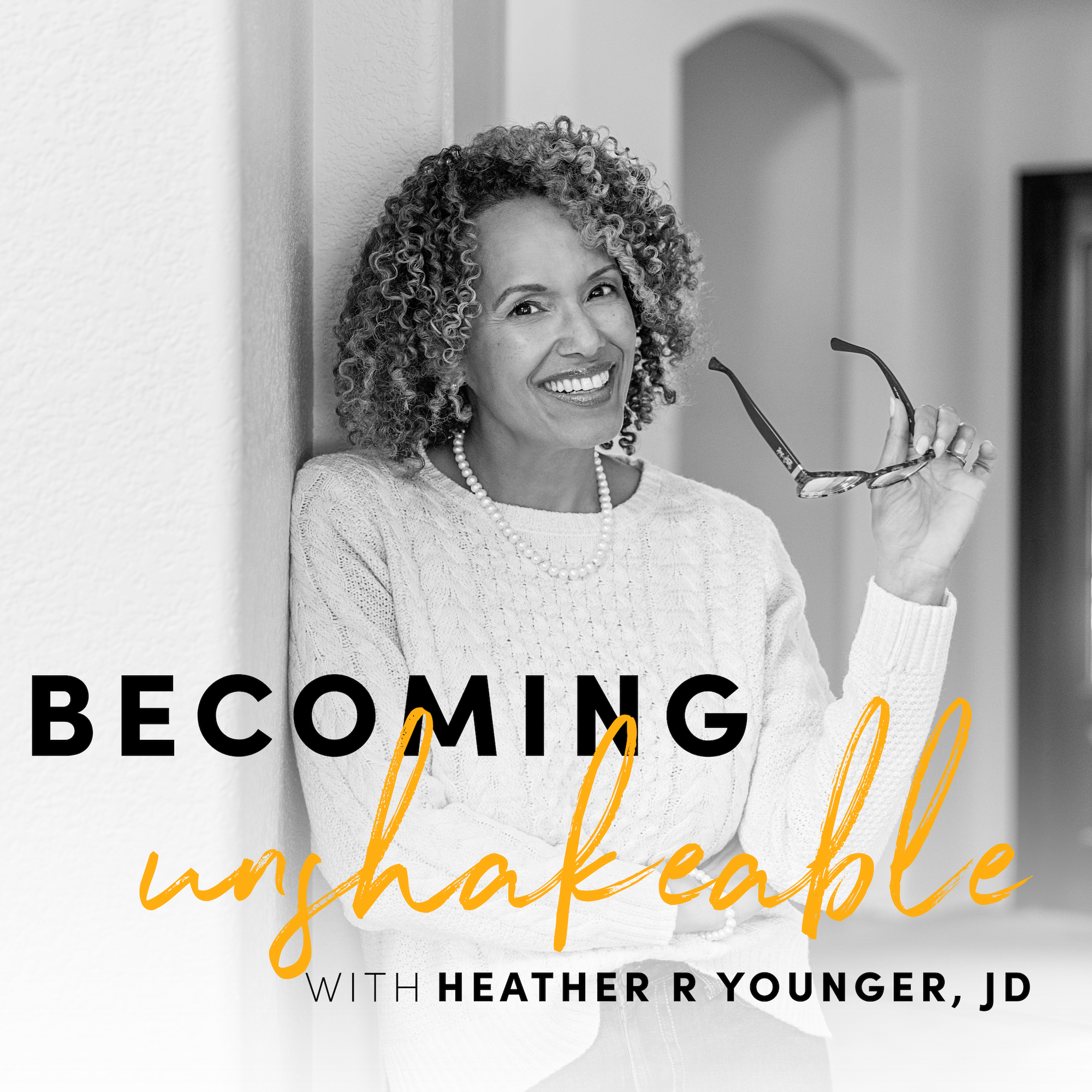
Becoming Unshakable With Heather R. Younger

Becoming Unshakable With Heather R. Younger

Hosted by Heather R. Younger, J.D.

BusinessInterviews guests

Episodes

448

Latest episode

Oct 2026

Language

EN

About the show

Leadership isn't about having all the answers. It's about staying steady when you don't. Becoming Unshakable is about how we actually do it—staying credible, human, and grounded when the stakes are high and the playbook is gone. Through honest conversations with executives, frontline leaders, and people carrying real responsibility, Heather examines how leaders navigate change, build trust, and care for themselves and others without losing authority or effectiveness. This isn't about grit or powering through. It's about strengthening the inner steadiness that allows leaders and the organizations they're part of to function, adapt, and move forward, even when the ground is shifting.

Listen to episodes

60 recent
October 6, 2026Episode 44831 min

Finding Your Unshakable Team

What helps us stay grounded when life or work suddenly feels uncertain? In this episode of Becoming Unshakable, I'm joined by Dr. Josh Hartzell for a conversation about self-leadership, resilience, support, and the people we need around us when the ground starts to move. Josh brings a perspective shaped by more than two decades in military medicine, medical education, leadership, and patient care. One lesson from medicine has stayed with him throughout his career: before responding to an emergency, take your own pulse. For leaders, that can mean resisting the urge to react immediately and creating enough space to understand what is happening before deciding what comes next. We talk about leading through the early days of COVID, finding opportunity inside difficult circumstances, and focusing attention on what remains within our control when larger systems feel impossible to influence. Our conversation also turns to the everyday foundations of self-leadership, including sleep, exercise, recovery, and creating cultures where people have permission to take care of themselves rather than simply hearing leaders say that wellbeing matters. Josh shares what coaching has taught him about giving less advice and asking better questions. Sometimes helping another person does not mean giving them our answer. It means helping them find the answer that is right for them. Most importantly, we talk about the people in our corner. Life was never meant to be a solo sport, and becoming unshakable does not mean doing everything by yourself. So when the next storm arrives, who will be standing in your corner?

September 30, 2026Episode 44713 min

How to Stabilize a Team in the Middle of Constant Change

What does leadership look like when change never seems to stop? In this solo episode of Becoming Unshakable, I'm talking about how leaders can create greater steadiness for themselves and their teams when uncertainty, pressure, and disruption become part of everyday work. Many people are dealing with rapid technological change, organizational uncertainty, heavier workloads, and the feeling that the next disruption is always just around the corner. Leaders may not be able to control those forces, but they can influence how we respond and how our teams experience them. I share some of the thinking behind my new book, The Unshakable Team, including the idea that teams need trust, care, psychological safety, and a stronger understanding of what they can control and influence when everything around them feels unstable. I also cover the Steadiness Reset, a practical five-step process that can help leaders and teams ground themselves before difficult conversations, during challenging meetings, or when emotions run high. There is an important conversation here about recovery. Constant resilience without recovery eventually becomes exhaustion. Teams cannot keep absorbing pressure indefinitely without opportunities to reset, regroup, and regain their footing. Change is not going away. The question is how we lead ourselves and the people around us when the waves keep coming. How are you helping your team find steadiness when so much around them feels uncertain?

September 22, 2026Episode 44615 min

Why Employees Don't Speak Up

Have you ever wondered why people seem to have plenty to say after a meeting, but very little to say while they are actually in the room? In this solo episode of Becoming Unshakable, I'm talking about why employees stop speaking up and what that silence may be telling us about trust, psychological safety, and belonging inside a team. People rarely stop contributing because they suddenly stop caring. More often, they have learned through experience that speaking honestly is not worth the risk. Maybe they have been interrupted, dismissed, criticized, or watched someone else pay a price for challenging an idea. Over time, silence can become a form of self-protection. I also look at what psychological safety actually means. It is not about making every conversation comfortable. It is about creating an environment where people can ask questions, admit mistakes, disagree respectfully, raise concerns, and tell the truth without fearing embarrassment or retaliation. I share practical questions leaders can use to examine what is happening in their own meetings. Who always speaks first? Who rarely speaks at all? Whose ideas are developed, and whose are ignored? What happens when someone disagrees with you? Because silence is data. When people stop speaking, we should not automatically assume everything is fine. So when was the last time someone on your team challenged one of your ideas, and what happened next?

September 15, 2026Episode 44513 min

How to Learn to Lead a Team from a Steady Place Inside of Pressure

What happens when the pressure hits and the plan you carefully put together suddenly changes? In this episode of Becoming Unshakable, I share a very personal example of what it means to lead from a steady place when things do not go as expected. My new book, The Unshakable Team, was scheduled for release on September 29, but an unexpected decision meant copies started shipping three weeks early. My first reaction was panic. I had plans, campaigns, and timing built around that launch date. But within minutes, I had to remind myself of the very principles I have spent years teaching leaders, teams, and organizations. We talk about grounding yourself when circumstances change, loosening your grip on control, recognizing how far you have already come, and giving yourself permission to respond rather than react. I also share more about The Unshakable Team, the Team Stability Scan included with the book, and why I believe stability, trust, connection, and performance become even more important when pressure refuses to disappear. The wobble will happen. The question is how much you allow it to shake you. How do you stay steady when plans suddenly change? I would love to hear your thoughts.

September 8, 2026Episode 44415 min

The Hidden Cost of Emotionally Unpredictable Leadership

Have you ever worked with a leader whose mood seemed to determine the mood of the entire team? In this solo episode of Becoming Unshakable, I'm looking at the hidden cost of emotionally unpredictable leadership and why our emotional consistency has such a powerful effect on the people around us. Teams are constantly reading their leaders, often before a single word is spoken. They notice our tone, body language, reactions, and energy, and those signals can influence whether people feel safe enough to speak up, challenge an idea, admit a mistake, or raise a concern. That is where emotional contagion and psychological safety begin to overlap. When leaders are unpredictable, people often become more cautious. They hesitate. They avoid risk. They spend energy trying to work out which version of the leader is going to show up that day. In this episode, I talk about why self-regulation is not about becoming emotionless or pretending that pressure does not affect us. It is about learning how to experience stress without automatically transferring it to everyone else. I also share a practical tool I call the 15-minute buffer protocol, which gives leaders space to process difficult information before responding to their teams. Sometimes the most responsible thing we can do is resist the urge to react immediately and give ourselves enough time to respond with greater steadiness and intention. Our people do not need leaders who never experience stress. They need leaders they can trust not to make their stress everyone else's burden. Because emotional steadiness is more than a personal skill. It is part of the environment we create for everyone we lead. How predictable is your presence when the pressure rises?

September 1, 2026Episode 4438 min

Excellent Performance Requires Extreme Recovery

What if becoming unshakable has less to do with pushing harder and more to do with learning how to recover? In this solo episode of Becoming Unshakable, I'm talking about something leaders often undervalue until they have already hit the wall: intentional recovery. We spend so much time thinking about performance, results, responsibility, and caring for the people around us that it can become easy to overlook the person carrying all of that weight. But sustained performance requires capacity, and capacity has to be restored. I share why I believe leaders should begin thinking of themselves as high-performance corporate athletes. We look at what we can learn from athletes like LeBron James and the Williams sisters, who invest enormous amounts of time and attention into maintaining the bodies and minds that allow them to perform at the highest level. That same thinking applies inside our workplaces. I talk about rebalancing workloads, creating white space in calendars, paying attention to team capacity, and building recovery practices into everyday life. That might mean sleeping, walking, meditation, prayer, hydration, quiet thinking time, or simply creating enough space to stop operating in constant reaction mode. I also share a moment from my own leadership journey when I realized I had added one more responsibility to an already overwhelmed team member. It forced me to reconsider what was on her plate, what could be delegated, and what leadership looks like when we take capacity seriously. Most importantly, this episode examines the inward side of caring leadership. Caring for others matters deeply, but we cannot continually give people the best of ourselves while giving ourselves whatever happens to be left over. I learned that lesson by hitting more walls than I would have liked. My hope is that after listening to this, you don't have to. What would change if you began treating your own recovery as seriously as you treat your responsibilities to everyone else? Listen to the episode and share your thoughts with me.

August 25, 2026Episode 44218 min

Celebrate What's Good—Even When You Don't Know What's Next

Can resilience become the very thing that keeps us in difficult situations longer than we should stay? In this episode of Becoming Unshakeable, I speak with James Ferguson, an award-winning Culture Pioneer and respected voice in workplace culture. James shares how losing jobs, working under poor leaders, and facing an aggressive cancer treatment shaped the way he thinks about leadership, perspective, and perseverance. During his treatment, a doctor warned James that the chemotherapy could "remove the glue" holding him together. James made a personal decision that it would not remove his glue. That experience later became a powerful leadership analogy: every day, our words, actions, and decisions either strengthen or weaken the glue holding a workplace culture together. James also speaks candidly about the downside of being highly resilient. When you pride yourself on overcoming hardship, you can remain under harmful leadership, expect others to recover as quickly as you do, and forget that people need compassion as well as encouragement. Our conversation is a reminder that becoming unshakeable does not mean making every decision correctly or pushing through every situation alone. It means examining what an experience is teaching us, recognizing when something must change, and allowing other people to face adversity in their own way. Has resilience ever helped you survive a difficult season while also keeping you there longer than was healthy? Listen to the conversation and share your thoughts.

August 18, 2026Episode 44115 min

Psychological Safety Isn't About Being Nice

What if trying to keep everyone comfortable is actually making your team less safe? In this episode of Becoming Unshakable, I tackle one of the biggest misconceptions I see around psychological safety: the idea that good leaders protect people from difficult conversations, disagreement, or discomfort. They don't. Psychological safety means people can question decisions, admit mistakes, raise concerns, and bring uncomfortable truths into the room without fearing embarrassment, punishment, or retaliation. That doesn't remove accountability. In fact, when safety and accountability exist together, teams are far better equipped to learn, challenge one another, and perform under pressure. I share what Amy Edmondson's work on psychological safety can teach us, lessons from Google's Project Aristotle, and an experience from my own consulting work where a leadership team believed they had created a safe culture until listening sessions revealed something very different. I also offer a simple practice leaders can use immediately. At the end of an important meeting, ask: "What are we missing?" Then stay quiet long enough to hear the answer. Because trust isn't built by avoiding hard conversations. It's built when people learn they can tell the truth and still be respected. How safe is it really for someone on your team to disagree with you? Listen to the episode and share your thoughts with me.

August 11, 2026Episode 44032 min

Why Your Hardest Season Isn't Wasted: Finding Strength in the Struggle

Have you ever looked at the person you were becoming and realized you no longer recognized yourself? Jane Grote Abell grew up inside Donatos Pizza, the family business her father founded with a belief that business could be built on love. After the company was sold to McDonald's, however, Jane found herself working under a leadership style that gradually caused her to operate from fear. She began questioning her decisions, shrinking her circle, and changing how she showed up at work. The woman who had always been encouraged to speak up slowly lost her voice. Then, while sitting alone in the office at 3:00 in the morning, Jane reached a realization: she either needed to change her environment or change herself. In this episode of Becoming Unshakable, Jane shares how she returned to her values of character, courage, conviction, and compassion. She explains how that difficult season shaped the culture she later helped rebuild when she and her father bought Donatos back. Jane and Heather also discuss why values must influence performance reviews, how leaders can remain close to the lived experiences of their people, and why leading with love does not mean avoiding accountability. Jane shares how faith, family, therapy, listening tours, and the willingness to ask for help have supported her through some of her most difficult moments. This conversation is a reminder that hardship does not always arrive to defeat us. Sometimes it shows us who we have become, what we are no longer willing to accept, and how we want others to feel under our leadership. What has one of your hardest seasons taught you about the person and leader you want to become? Listen to the episode and share your thoughts.

August 4, 2026Episode 43942 min

How Death Teaches Us to Truly Live

What does it really take to become unshakeable when life forces you to confront your own mortality? In this episode of Becoming Unshakeable, I welcome longtime friend, innovation leader, author, and Sustainovation founder Nick Kittle for a deeply personal conversation about resilience, self-leadership, relationships, and what it means to live differently after a life-changing experience. At 35, Nick died for 22 seconds during a medical test. What felt to him like four days became a turning point that changed how he thought about time, work, relationships, and the life he wanted to lead. He describes the experience as the beginning of "life 2.0," when he realized there is the life we live and the life we live once we truly understand that we only get one. Nick shares how that realization led him to make difficult changes, leave an unhealthy work environment, reassess his relationships, and become far more intentional about where he spends his time and energy. He also explains why resilience is not something we develop once, but a muscle we strengthen by repeatedly proving to ourselves that we can do hard things. We discuss the practices that help us remain steady when life becomes difficult, from hiking and photography to watching sunrises and sunsets. They also examine why taking care of yourself is not selfish when other people depend on you, and how leaders can become more emotionally available by protecting the time and practices that allow them to show up at their best. Whether you are facing a major life transition, questioning your career, recovering from burnout, struggling with a difficult decision, or reconsidering what success means to you, this conversation offers a powerful reminder: becoming unshakeable is not about reaching a final destination. It is about continuing to learn, change, recover, and become a stronger version of yourself. How are you spending the limited time you have, and what might change if you started treating that time as your most valuable resource? Listen to the episode and share your thoughts on what becoming unshakeable means to you.

Is this your show?

Claim this listing to keep it up to date, reach guests who want to pitch you, and manage bookings with Guestify.

Claim this listing

More Business podcasts