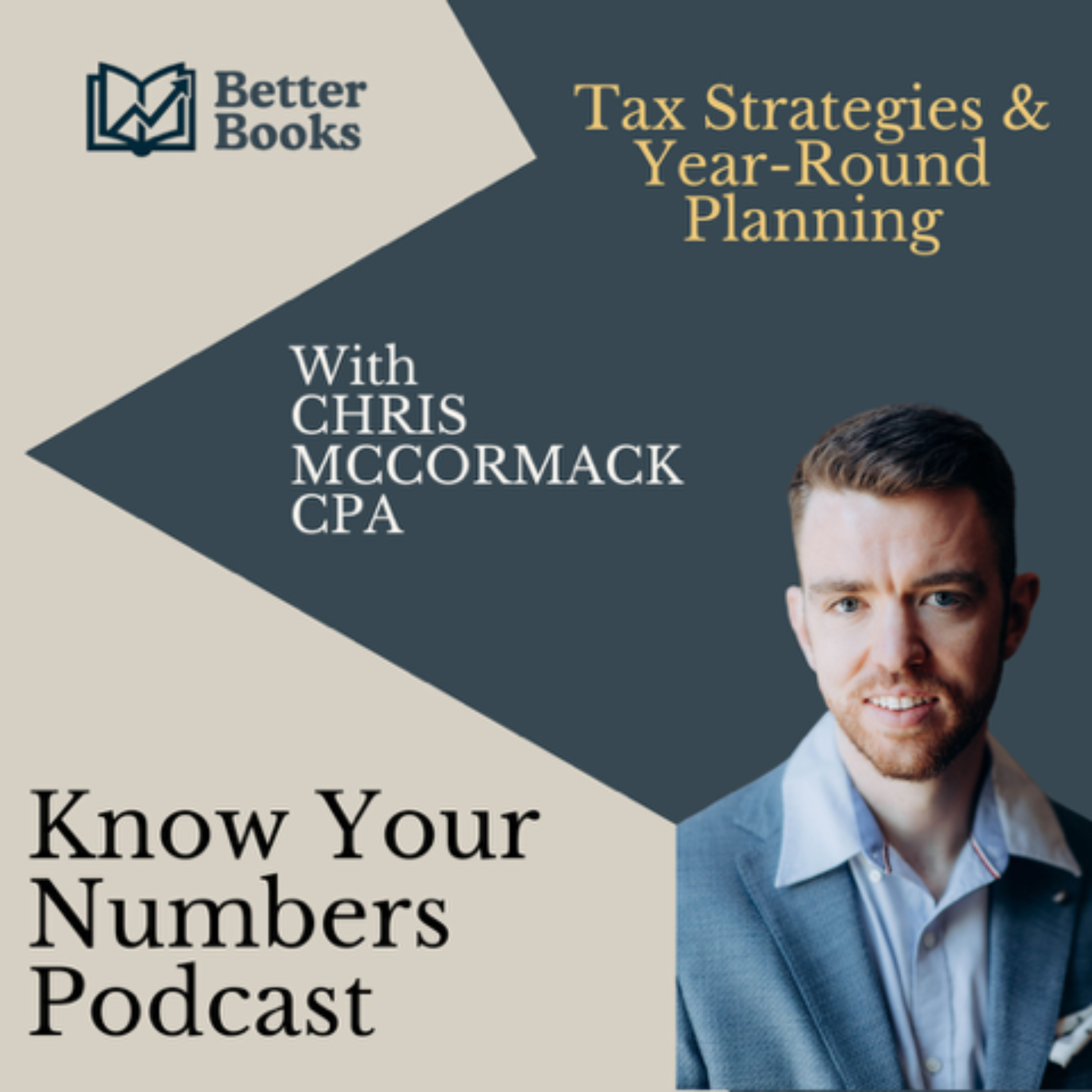
Stop Waiting Until Tax Season: How Smart Business Owners Plan All Year
Are you waiting until tax season to start thinking about taxes? That could be costing your business money. In this episode of the Know Your Numbers Podcast, Chris McCormack breaks down the quarterly tax planning system used at Better Books to help business owners, real estate investors, and high-income earners take a more proactive approach to taxes. Tax planning isn't something that should only happen in February, March, or April. By then, many of the opportunities to make strategic decisions may already be gone. Instead, effective tax planning starts with accurate bookkeeping and follows a consistent rhythm throughout the year. Chris explains what business owners should be reviewing in Q1, Q2, Q3, and Q4 and how each quarter plays a different role in preparing for and potentially reducing your tax liability. From reviewing your prior-year financials and entity structure to forecasting income, evaluating retirement contributions, considering real estate strategies, accelerating deductions, and deferring income, this episode provides a practical framework for making tax planning a year-round system instead of a last-minute scramble. The tax code isn't just a burden. When you plan ahead, it can become a blueprint for making smarter financial decisions and building long-term wealth. If you found this episode valuable, like, subscribe, leave a review, and share it with another business owner who needs to hear this. •••••••••••••••••••••••••••••••••••••••••••• ➤➤➤ To become a client, schedule a call with our team ➤➤ https://www.betterbooksaccounting.co/booking-calendar/better-books-consultation •••••••••••••••••••••••••••••••••••••••••••• Connect with Better Books on Social Media Facebook: https://www.facebook.com/betterbooksaccounting.co Instagram: https://www.instagram.com/betterbooksaccounting.co → → → SUBSCRIBE TO BETTER BOOKS’ YOUTUBE CHANNEL NOW ← ← ← https://www.youtube.com/@betterbooksaccounting The Know Your Numbers REI podcast is for general information purposes only and is not intended to provide, and should not be relied on for, tax, legal, or accounting advice. Information on the podcast may not constitute the most up-to-date legal or other information. No reader, user, or listener of this podcast should act or refrain from acting on the basis of information on this podcast without first seeking legal and tax advice from counsel in the relevant jurisdiction. Only your individual attorney and tax advisor can provide assurances that the information contained herein – and your interpretation of it – is applicable or appropriate to your particular situation. Use of, and access to, this podcast or any of the links or resources contained or mentioned within the podcast show and show notes do not create a relationship between the reader, user, or listener and podcast hosts, contributors, or guests.