Find partners
Just One Q

Just One Q

Hosted by Dominique Attrell

Episodes

96

Latest episode

Jun 2026

Language

EN

About the show

Just One Q with Dominique Attrell is a Learning Snippets podcast. Dominique and special guests explore bold questions and uncover actionable insights about workplace culture, leadership, and belonging.

Listen to episodes

60 recent
June 2, 202651 min

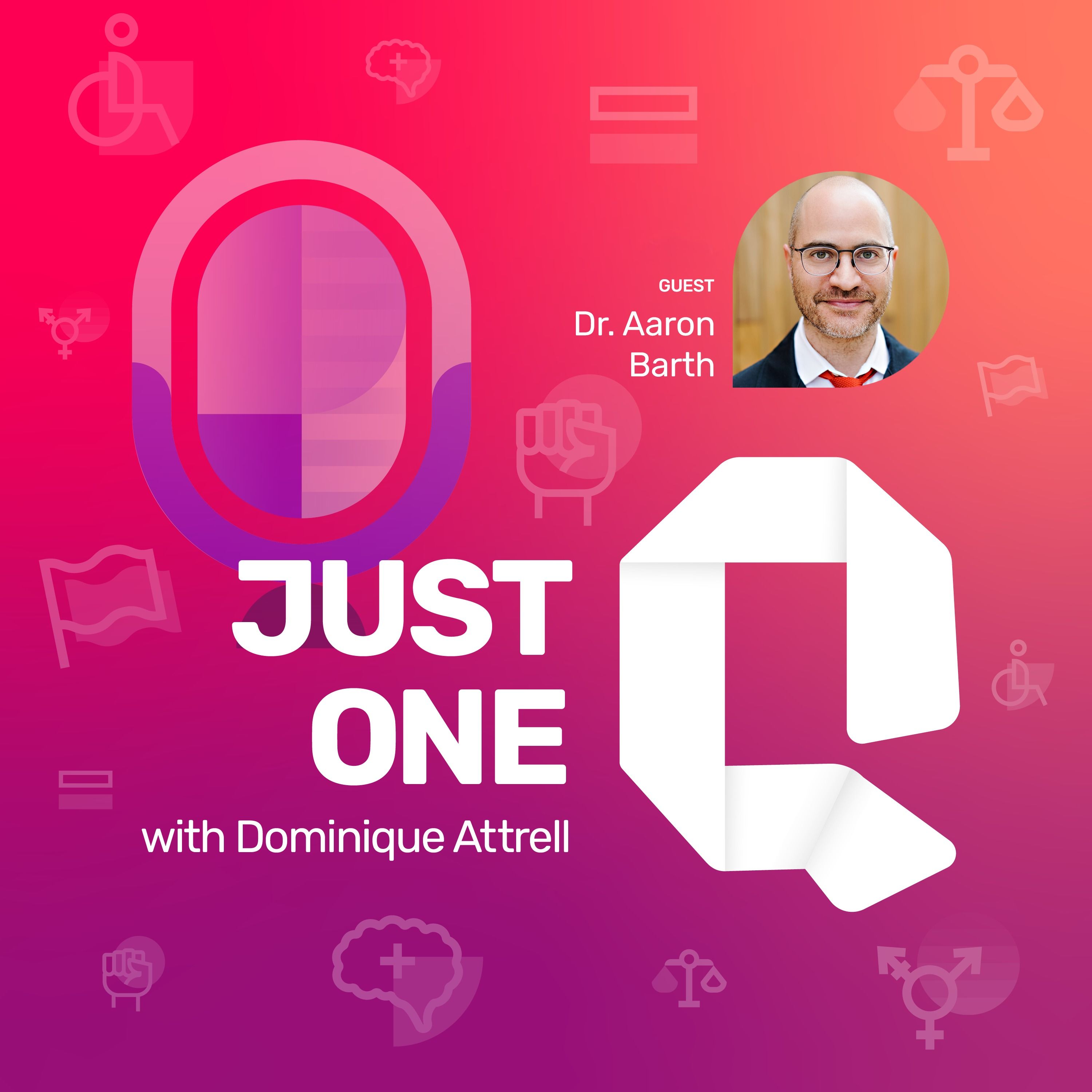
Leading with Trauma Sensitivity at Work | Adriana Leigh

What changes when we lead with trauma sensitivity? Trauma is far more common than most realize, affecting at least 70% of people, and its hidden residue frequently drives workplace conflict through survival mechanisms like freezing or fawning. Through trauma sensitivity, leaders can look past superficial personality clashes, avoid replicating past injuries, and proactively cultivate structural safety where everyone can safely show up and do their best work. On this episode of Just One Q, Dominique chats with workplace human rights lawyer, consultant, and author Adriana Leigh about her book, Trauma Sensitivity at Work. They break down how common stress responses manifest in everyday team dynamics, differentiate a checkbox “informed” approach from genuine sensitivity, and discuss practical strategies like “meeting hygiene”. Learn how leaders can prioritize emotional regulation to build more humane, supportive, and highly effective workplace cultures. Keep Up with Adriana: https://algconsulting.ca/ Try Learning Snippets: https://dialectic.solutions/signup Contact Us to Be a Guest on Just One Q: https://dialectic.solutions/podcast-guest
May 5, 202639 min

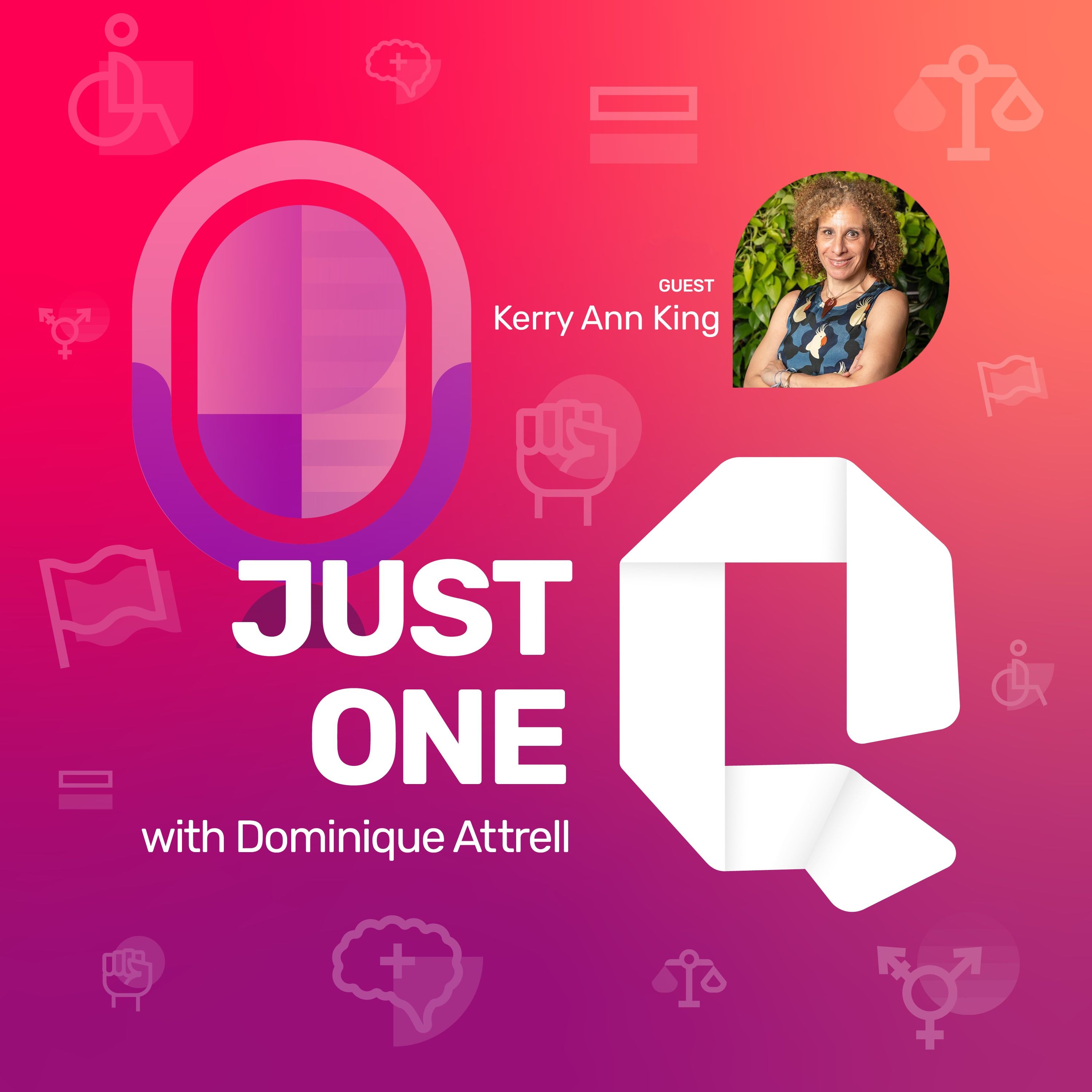
The Hidden Costs of Task Conflict for Women | Dr. Samantha Hancock

How does gender affect workplace conflict? Task conflict – challenging ideas to find the best possible solutions – is essential for team innovation, but it carries hidden risks for women. While men are often rewarded with a boost in perceived agency for engaging in task conflict, women are frequently penalized for violating gender stereotypes. This subtle bias can lead to workplace distancing, lost opportunities, and long-term occupational segregation. Overcoming this barrier requires team members and leaders to think critically about their biases, audit their evaluations for gendered tone, and actively create conditions where everyone can safely discuss ideas. On this episode of Just One Q, Dominique chats with Dr. Samantha Hancock, an assistant professor at Western University whose research focuses on the challenges faced by women pursuing leadership. Together, they explore how gender bias penalizes women for the exact same assertive behaviors that benefit their male colleagues. Dr. Hancock shares actionable takeaways for individuals and leaders to recognize these micro-biases and build genuinely equitable teams. Keep Up with Samantha: https://www.linkedin.com/in/sehancock27/ Try Learning Snippets: https://dialectic.solutions/signup Contact Us to Be a Guest on Just One Q: https://dialectic.solutions/podcast-guest
April 7, 202656 min

Moving Toward Collective Access and Belonging | Ingrid Palmer

How can we elevate disability inclusion to true belonging? Inclusion is something systems do through policies and rules, but belonging is something people feel when they are truly wanted in a space rather than just "allowed" to be there. True belonging requires a shift from reactive, procedural accommodations that place the onus on the individual, to proactive, collective access that removes environmental and social barriers for everyone. By centering lived experience and applying an intersectional lens, organizations support a culture where disability is normalized within professional life. On this episode of Just One Q, Dominique chats with Ingrid Palmer, an award-winning speaker, social justice consultant, and Principal IDEAL Advocate at Realize Canada. Through impactful personal stories, they explore the shift from procedural inclusion to true belonging for disabled employees, the power of universal design, and how to move beyond reactive accommodations to proactive, collective access. Keep Up with Ingrid: https://www.linkedin.com/in/focusonability/ Try Learning Snippets: https://dialectic.solutions/signup Contact Us to Be a Guest on Just One Q: https://dialectic.solutions/podcast-guest
March 3, 202651 min

Visual Storytelling and an ADHD Perspective | Scott Mooney

How can ADHDers thrive at work? Navigating the workplace with ADHD presents unique challenges, but it also offers a distinct set of strengths and perspectives. Unlocking our best work can require a tailored approach: “gamifying” mundane tasks, offloading cognitive weight to digital tools, and finding unconventional ways to manage energy, focus, and time. When combined with foundational self-care, these strategies can transform perceived limitations into powerful creative assets. The strategies themselves often become valuable contributions to the wider team. For instance, visual storytelling can help an ADHD mind retain complex information and, at an organizational scale, that same approach becomes a pillar of an inclusive, high-impact communication strategy. On this episode of Just One Q, Dominique chats with guest Scott Mooney, an award-winning educational illustrator with over 30 years of experience. Scott shares candidly about his late diagnosis of ADHD, his specific strategies for self-management and productivity, and how visual storytelling can bridge communication gaps in the workplace. Keep Up with Scott: https://www.moon-man.com/ Try Learning Snippets: https://dialectic.solutions/signup Contact Us to Be a Guest on Just One Q: https://dialectic.solutions/podcast-guest
February 3, 202637 min

Integrating Inclusion Without Becoming Invisible | Dean Delpeache

Can we “integrate” inclusion work without making it invisible?As we mark the 100th anniversary of Black History Month this February, organizations face a pivotal moment in the evolution of inclusion work. While many companies are moving toward "integrating" inclusion principles into their broader processes and talent lifecycles, there is a risk that these efforts will fade into the background without deliberate, sustained focus.Dean Delpeache introduces the "3 I's" framework (Intentionality, Integration, and Invisibility) to highlight key tensions and to help leaders assess their strategy. By coupling integration with explicit accountability and modeled inclusive behaviours, organizations can ensure that their commitment to equity remains visible and effective, even as the public conversation quiets.On this episode of Just One Q, Dominique chats with guest Dean Delpeache, a talent management expert and the Director of Strasity. They discuss the historical context of the Black History Month centennial, the state of inclusion work in 2026, and offer practical strategies for leaders to keep anti-racism work front and center.Keep Up with Dean:https://www.linkedin.com/in/deandelpeache/https://strasity.com/Try Learning Snippets:https://dialectic.solutions/signupContact Us to Be a Guest on Just One Q:https://dialectic.solutions/podcast-guest
January 6, 202646 min

If Toughness Built the Ship, Can Belonging Change its Course? | Captain Kamila Calko

If toughness built the ship, can belonging change its course?The maritime industry has traditionally valued "hard traits" like stoicism and rigid hierarchy, often creating cultures where employees must mask their true selves to survive. But Captain Kamila Calko argues that true safety and innovation come not from fear, but from psychological safety and authenticity. By shifting from a scarcity mindset to one of collective empowerment, leaders in traditional industries can build trust, improve retention, and create environments where everyone can thrive.On this episode of Just One Q, Dominique chats with Captain Kamila Calko, a marine industry trailblazer and founder of SeaLight and SeaLight Sisters. They explore the heavy cost of conformity in male-dominated workplaces and how Kamila transformed her leadership style by embracing vulnerability and authenticity. Kamila shares insights on navigating "lateral violence" between women, the critical link between psychological safety and physical safety, and how we can all be "architects of change" in systems that are slow to evolve.Keep Up with Kamila:https://www.sealight.one/Try Learning Snippets:https://dialectic.solutions/signupContact Us to Be a Guest on Just One Q:https://dialectic.solutions/podcast-guest
December 2, 202531 min

Building Habits for Highly Collaborative Teams | Jennifer Porritt

What are the core habits of highly collaborative teams?Since Google’s Project Aristotle, we’ve understood that high-performing teams are defined by how they interact, not by who is on them. For today’s diverse, multigenerational, and decentralized workforce, supporting healthy interactions requires a strong commitment to specific strategies: the selection of accessible tools and technologies, clear methods to depersonalize conflict, and strong awareness of cognitive biases like “groupthink” and “risky shift.” By integrating these practical and relational strategies, teams can ensure diverse ideas are truly heard and valued.On this episode of Just One Q, Dominique chats with guest Jennifer Porritt, the founder and principal consultant of JP Consulting. Jenn is a human resources and training professional with more than 25 years experience helping leaders evolve and grow to support successful organizations. They discuss the core habits and strategies of highly collaborative teams, exploring the importance of psychological safety, managing constructive conflict, avoiding “groupthink,” and more.Keep Up with Jennifer:https://jp-consulting.ca/Try Learning Snippets:https://dialectic.solutions/signupContact Us to Be a Guest on Just One Q:https://dialectic.solutions/podcast-guest
November 4, 202542 min

Are Employers Ready for Broader Accommodation Needs? | Rachel Shaw

As we collectively recognize and redefine disability as a society, are employers ready for broader accommodation needs?As employers push for a return to the office, they face a rise in accommodation requests, particularly for remote work and non-apparent disabilities. This often creates tension, as supervisors may rely on personal bias rather than facts. The key to navigating this is a formal, data-driven, and compassionate interactive process led by HR. By moving beyond individual biases and focusing on finding reasonable accommodations, organizations can meet their legal and ethical obligations and support their entire workforce.On this episode of Just One Q, Dominique chats with Rachel Shaw, President of Shaw HR Consulting and author of “The Disabled Workforce: What the ADA Never Anticipated.” They explore the rise in accommodation requests from an HR and employer perspective, touching on why supervisors often default to “no,” the legal and ethical necessity of an interactive formal process, and how data-driven, human-centric conversations can help employers find workable solutions in a post-pandemic world.Keep Up with Rachel:https://www.shawhrconsulting.com/Try Learning Snippets:https://dialectic.solutions/signupContact Us to Be a Guest on Just One Q:https://dialectic.solutions/podcast-guest

October 7, 202553 min

The Canary Code: How Neuroinclusion Transforms Workplaces | Dr. Ludmila Praslova

How can neuroinclusion transform leadership and workplace culture?Creating truly neuroinclusive workplaces requires a fundamental shift in mindset, from seeing neurodivergence as a deficit to embracing it as a form of diversity. This means moving beyond a purely extractive business case, practicing cultural humility, and rethinking communication, onboarding, workflow, and even the physical environment. By focusing on the needs of neurodivergent employees – the “canaries in the coal mine” – leaders can create healthier, more dignified, and more productive workplaces for everyone.On this episode of Just One Q, Dominique chats with Dr. Ludmila Praslova, author of The Canary Code: A Guide to Neurodiversity, Dignity, and Intersectional Belonging at Work. They explore how a neuroinclusive approach can fundamentally reshape leadership and workplace culture and why leaders must move beyond a narrow, extractive business case towards a model of “inclusive thriving.” They discuss practical ways to create more dignified and flexible workplaces that support neurodivergent employees, ultimately making them better and healthier for everyone.Keep Up with Ludmila:https://www.linkedin.com/in/ludmila-praslova/Try Learning Snippets:https://dialectic.solutions/signupContact Us to Be a Guest on Just One Q:https://dialectic.solutions/podcast-guest
September 2, 202556 min

Identity as Curriculum: The Risks and Rewards of Lived Experience | Dr. Sara Kafashan

How does lived experience inform DEI facilitation, connections, and dialogues?While requiring DEI facilitators and educators to have lived experience can correct historical wrongs and build connections, it also puts them at personal and professional risk. This work involves significant, often invisible emotional labour, which falls disproportionately on those with diverse identities and can lead to burnout. To mitigate harm, organizations must provide structural support like co-facilitation and equitable workload distribution, while facilitators can use personal strategies like strategic self-disclosure to protect themselves.On this episode of Just One Q, Dominique chats with applied social psychologist Dr. Sara Kafashan about the practice of "identity as curriculum." They discuss the professional risks and emotional labour involved when facilitators use their lived experience in DEI work or to teach sensitive topics, and explore how organizations can better support those doing this vulnerable and essential work.Keep Up with Sara:https://www.linkedin.com/in/drsarakafashan/Try Learning Snippets:https://dialectic.solutions/signupContact Us to Be a Guest on Just One Q:https://dialectic.solutions/podcast-guest

Is this your show?

Claim this listing to keep it up to date, reach guests who want to pitch you, and manage bookings with Guestify.

Claim this listing

More Business podcasts