Find partners
Interviews with Leaders in Fintech & Web3

Interviews with Leaders in Fintech & Web3

Hosted by Work in Fintech

Episodes

81

Latest episode

Aug 2026

Language

EN-GB

About the show

Hear from industry leaders about what is fintech and web3, how to get into it and how to make a mark in the fastest growing sector in the world. Work in Fintech Founder Matt Cheung teams up with Founder Members to interview fintech and web3 founders, CEOs and CTOs about what you can do to gain an edge in fintech and web3. Essential listening for any student, young professional or curious person looking to secure a role in fintech, web3, banking or finance. #fintech #web3

Listen to episodes

60 recent
August 18, 2026Episode 3330 min

She Founded 3 Banks and Took 7 Companies Public | Betsy Cohen, Co-Founder Cohen Circle

Betsy Cohen has spent decades identifying opportunities before they become obvious. From becoming a bank founder after a career in law, to building fintech infrastructure, sponsoring SPACs, and investing in the next generation of financial technology, Betsy has built her career around one principle: look for what isn’t being done. In this episode of Work in Fintech, Betsy Cohen, Co-Founder and Chairman of Cohen Circle, shares how she spots opportunities, evaluates founders, and recognizes the “negative space” where new businesses can emerge. She discusses: • How she finds winning opportunities • What she looks for in founders • Why great teams with average ideas can still win • How founders need to adapt and pivot as the world changes • What she learned from watching companies navigate COVID • Why she invests at the beginning of cycles rather than the end • Her take on OpenAI, Anthropic & SpaceX draining capital markets • How young people should think of their careers • Why AI skills are becoming as fundamental as knowing the alphabet Her philosophy is simple: keep your antenna up, look for the gaps, and make something out of nothing. Check out our website and subscribe to our mailing list to hear more about opportunities in fintech and web3. Follow our socials Linkedin , Twitter , Youtube https://workinfintech.com/ https://www.linkedin.com/company/work-in-fintech-global https://www.twitter.com/workinfintech https://www.youtube.com/channel/UCdS4bYoCXaHVgfVm6syUrDw

August 3, 2026Episode 3249 min

The Hidden Payments Company Behind Amazon, Google & Uber

Carlos Menendez was born in Puerto Rico, the oldest of five children of Cuban immigrants who left the island with nothing. The family settled in Miami in the 1970s, where money was tight and both parents worked. What his parents drilled into him was simple: the one thing nobody can take from you is what's in your head. Excellence wasn't a lofty ambition in that household, it was the condition for eating. He spent his childhood summers in the local library, partly because it was the only place with air conditioning. He graduated from Harvard into the 1991 recession and sent out roughly 80 applications before landing his first job at Procter & Gamble. Fourteen years at Citigroup and fourteen at Mastercard followed, running cards across 18 countries and launching contactless travel with Transport for London. Two years ago he left one of the most senior seats in global payments to become COO of dLocal, a Uruguayan fintech now past $1B in revenue. In this episode Carlos unpacks: • The future of global payments • How dLocal operates across emerging markets • AI, fraud detection & agentic commerce • Building trust in regulated industries • Career advice for young professionals • Leadership lessons from 30+ years in fintech • Why emerging markets are shaping the future of commerce Check out our website and subscribe to our mailing list to hear more about opportunities in fintech and web3. Follow our socials Linkedin , Twitter , Youtube https://workinfintech.com/ https://www.linkedin.com/company/work-in-fintech-global https://www.twitter.com/workinfintech https://www.youtube.com/channel/UCdS4bYoCXaHVgfVm6syUrDw

July 22, 2026Episode 3138 min

Why Fintechs Are Betting on Sports, AI in Fintech & B2B Marketing | Esfira Zakas CMO at payabl

Today's guest is Esfira Zakas, CMO at payabl, one of Europe's fastest growing payment service providers, and the engine moving money for merchants across the continent, from online checkouts and POS machines to multi-currency accounts and card issuing, at a company that has scaled to over 300 people. Esfira describes herself as marketing agnostic. Before fintech she worked across insurance, logistics through COVID, and a string of tech and startup companies, driven less by any one industry than by a childhood dream of being Don Draper from Mad Men. Advertising was in the family. Her father sold ad space for the local newspaper and her brother works in social media strategy, so she was watching Mad Men before it was cool and always knew she wanted to build brands. What makes her story unusual is how she landed in fintech, and where she started. Originally from Riga and now based in Vilnius, she was payabl's first hire in Lithuania, with no office and no colleagues to learn from. Her first workspace was a free co-working desk in a shopping mall sponsored by Ikea, so for months every internal and external call went out with a giant Ikea logo behind her while she ran back and forth between the mall and her car. She knew nothing about payments beyond how to tap her card. Four years later she runs a 20-person marketing team and is General Manager of payabl's Lithuanian business. This conversation moves from that early career into how a challenger brand actually competes: what it takes to market payments against the giants, why fintechs are betting on sports, and how AI is reshaping marketing without replacing the people behind it. In the full episode, we cover: Why fintechs are pouring money into sports sponsorships How a challenger payments brand stands out against giants like Stripe Why she won't let her team go all-in on AI, and where it actually helps How she learned fintech from scratch as the only person in the room Scaling a marketing team from 5 to over 20 people across Europe What she looks for when hiring, and why curiosity beats a polished CV Her advice for young people trying to break into fintech Connect with Esfira Zakas: https://www.linkedin.com/in/esfira/ Matthew Cheung (Host & Founder Work in Fintech): https://www.linkedin.com/in/matthewcheung50/ Check out our website and subscribe to our mailing list to hear more about opportunities in fintech and web3. Follow our socials Linkedin , Twitter , Youtube https://workinfintech.com/ https://www.linkedin.com/company/work-in-fintech-global https://www.twitter.com/workinfintech https://www.youtube.com/channel/UCdS4bYoCXaHVgfVm6syUrDw

July 6, 2026Episode 3039 min

The Invisible Infrastructure Behind Revolut, Tide & Coinbase | Emma Hagan, ClearBank UK

Today's guest is Emma Hagan, CEO of ClearBank UK, the UK's first new clearing bank in over 250 years and the infrastructure quietly powering some of fintech's biggest names, from Revolut and Tide to Coinbase, across around 280 financial institutions. Emma has spent her career at the intersection of banking and regulation, from a graduate programme at HBOS, an incumbent of roughly 75,000 people, to a decade at Silicon Valley Bank, where she joined a 1,400-person business to run the project that won its UK banking licence and went on to become Chief Risk Officer for EMEA. She joined ClearBank in 2020 as Chief Risk and Compliance Officer and rose to lead its UK business. What makes her story unusual is where it started. She studied law fully intending to become a lawyer, then changed course after a City internship and landed in banking almost by accident through a graduate scheme. A self-described natural introvert, one of her formative early jobs was selling bus tour tickets on the pavements of London, a role she found deeply uncomfortable but credits with teaching her to put herself out there. This conversation moves from that early career into the machinery underneath ClearBank: what a clearing bank actually does, why it took 250 years for someone to build a new one, and where stablecoins, AI and embedded banking fit into the future of moving money. In the full episode, we cover: - What a clearing bank really do - Why it took over 250 years for a new clearing bank to launch - How ClearBank became the infrastructure behind big fintech - Why she moved from risk and compliance into the CEO seat - How stablecoins and tokenised deposits are becoming a real means of cross-border payment, not just an asset - How ClearBank thinks about AI - What embedded banking actually means - The new EU licence, the "dollar corridor," and where ClearBank goes over the next five years - What she looks for when hiring, and why comfort with pace beats a polished CV Connect with Emma Hagan: https://www.linkedin.com/in/emma-hagan-86ba9b10/ Matthew Cheung (Host & Founder Work in Fintech): https://www.linkedin.com/in/matthewcheung50/ Check out our website and subscribe to our mailing list to hear more about opportunities in fintech and web3. Follow our socials Linkedin , Twitter , Youtube https://workinfintech.com/ https://www.linkedin.com/company/work-in-fintech-global https://www.twitter.com/workinfintech https://www.youtube.com/channel/UCdS4bYoCXaHVgfVm6syUrDw

June 30, 2026Episode 2944 min

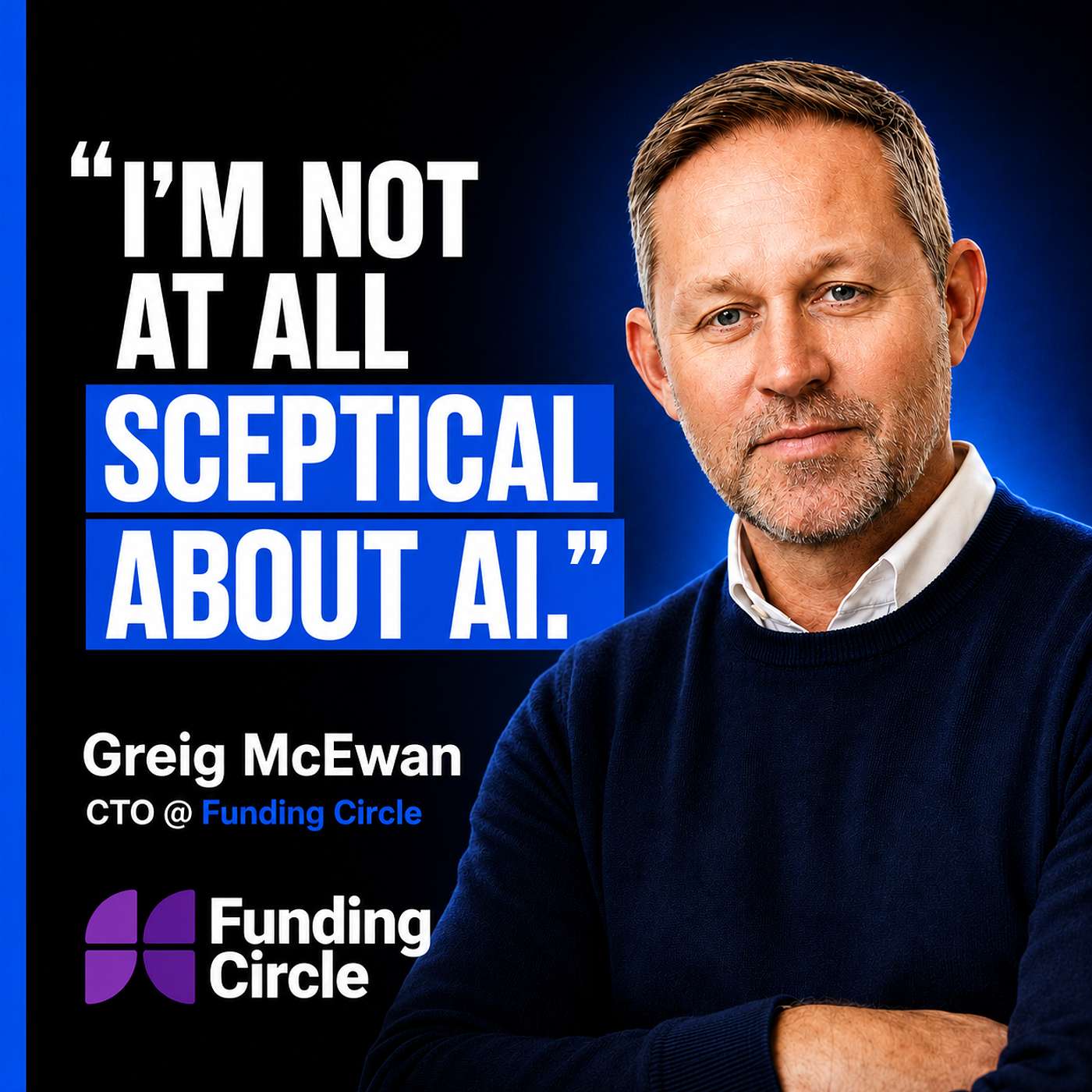
Funding Circle CTO on Software Engineers, AI Native Org, £17bn Lending Engine

Today's guest is Greig McEwan, Chief Technology Officer at Funding Circle, the UK's leading SME finance platform, which has extended over £17bn in credit to more than 125,000 small businesses. Greig has led technology at scale across very different worlds, from CTO of Paddy Power Betfair operating across 100 countries, to advising WorldRemit on payment strategy, and now building the engine that decides who gets lent to, and how fast. What makes his story unusual is where it started. He took a non-technical degree in Glasgow, covering politics, economics, a bit of psychology and sociology, and got into tech as a trainee programmer with no real experience, just an aptitude for learning. This conversation moves from that early career into the machinery underneath Funding Circle: how a lending decision actually gets made in seconds, what it really means to become an AI-native organisation, and why he believes the role of an engineer is being redefined in real time. In the full episode, we cover: What happens in the 9 seconds between "apply" and "approved," powered by a 9th-generation decision engine How 15 years of lending data gives Funding Circle a 3x risk edge over bureau-only scoring Why a customer interaction every 38 seconds keeps feeding the model Why he hires product engineers, not software engineers, now that code is being commoditised The difference between AI-native and AI-first, and why Funding Circle chose one Why he is "not at all sceptical" about AI, against the industry grain How one engineer did three years of work in three days with Claude Code How Funding Circle keeps bias out of lending decisions, with humans still in the loop Why cybersecurity went from strategic to board-level imperative His advice for anyone starting out: just start, and ignore the limits you assume Check out our website and subscribe to our mailing list to hear more about opportunities in fintech and web3. Follow our socials Linkedin , Twitter , Youtube https://workinfintech.com/ https://www.linkedin.com/company/work-in-fintech-global https://www.twitter.com/workinfintech https://www.youtube.com/channel/UCdS4bYoCXaHVgfVm6syUrDw

June 15, 2026Episode 2851 min

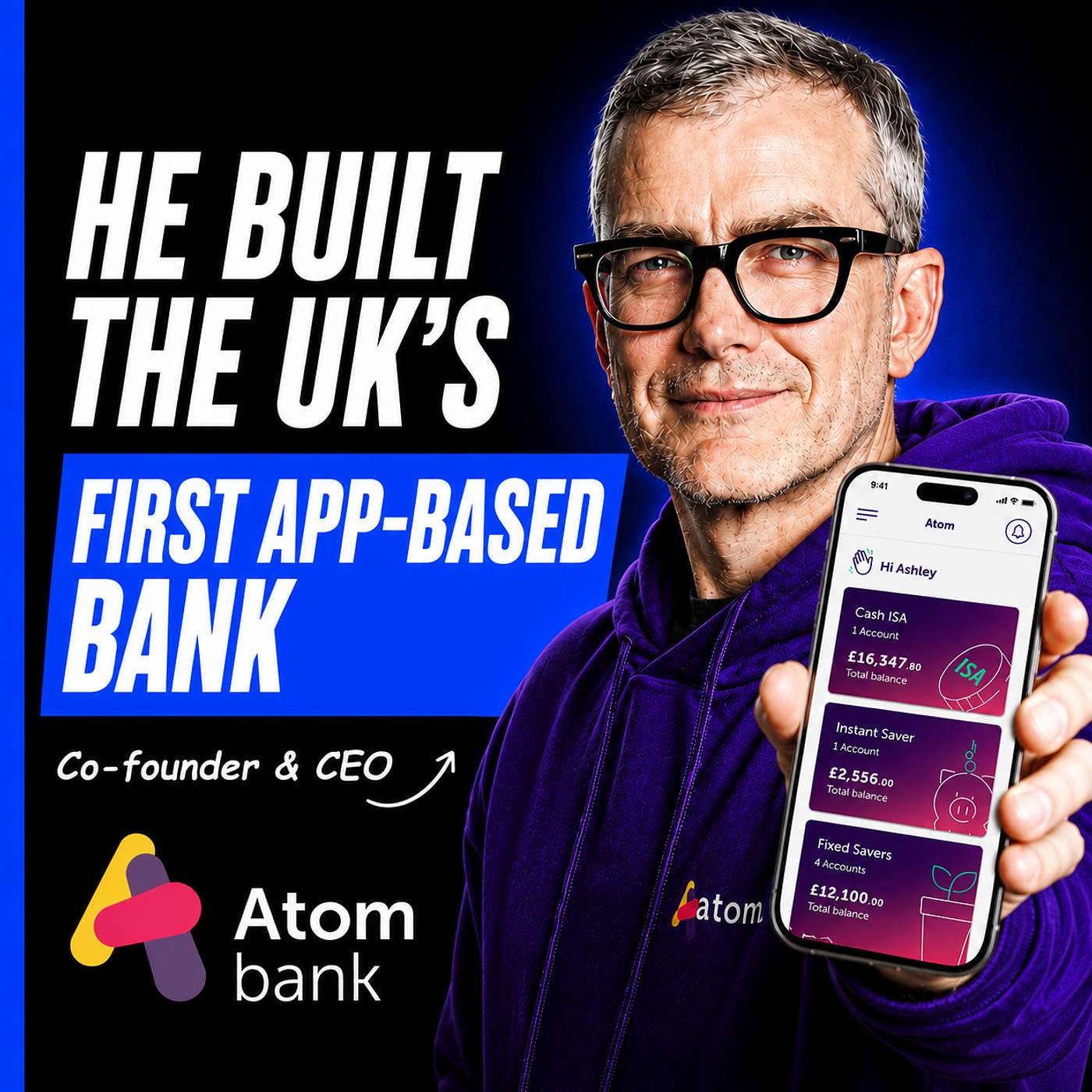
He left a top banking job to build his own bank | Mark Mullen, Co-founder Atom Bank

Today's guest is Mark Mullen, co-founder and CEO of Atom Bank, the UK's first app-based bank and the first digital challenger to win a full UK banking licence. Mark is a self-described accidental banker who read history at university, spent 24 years inside HSBC Group, and ran First Direct, one of the most innovative banks of its era. Then, in his mid-40s, he walked away from a comfortable seat at the top of the industry to build a bank from scratch in the Northeast of England, not London. He has watched telephone banking, internet banking and mobile banking come and go, and now sits inside the AI wave trying to work out what it actually changes and what it does not. This conversation goes past the technology and into the things that endure: trust, people, and why the UK banking sector is still far less disrupted than everyone assumes. In the full episode, we cover: - Why banking was "made to be digitalised", and who wins because of it - How Atom uses Gemini, Claude, and other AI tools in their workflow - Why AI could cut a third of operating costs in three to five years - Why the same banks still dominate UK mortgages a decade on - Why Atom runs a four-day week, and why Mark keeps defending it - The one trait Mark values most when hiring young people - His advice for anyone starting out in the AI era A masterclass in building for the long term, from someone who has done it without the hype. Worth your time whether you are in fintech or not. Connect with Mark Mullen: https://www.linkedin.com/in/mark-mullen-5330458a Matthew Cheung (Host & Founder Work in Fintech): https://www.linkedin.com/in/matthewcheung50/ Check out our website and subscribe to our mailing list to hear more about opportunities in fintech and web3. Follow our socials Linkedin , Twitter , Youtube https://workinfintech.com/ https://www.linkedin.com/company/work-in-fintech-global https://www.twitter.com/workinfintech https://www.youtube.com/channel/UCdS4bYoCXaHVgfVm6syUrDw

May 28, 2026Episode 271 hr 2 min

He backed PayPal and built Tether but will not invest in AI | William Quigley

Today's guest is William Quigley, one of the few venture investors who has operated at the centre of multiple technological inflection points. William was one of the first institutional investors in PayPal, co-founded Tether, the world's first and largest fiat-backed stablecoin, and founded WAX, one of the most active NFT blockchains globally. He saw the consumer internet emerge, watched payments transform, helped shape crypto infrastructure, and now sits at the edge of the AI wave. This is our third conversation with William, and a lot has changed since we last spoke 18 months ago. This time we go beyond the cycles and into the structural future: who owns the rails, how capital actually flows, and where the durable infrastructure is forming beneath the hype. In the full episode, we cover: - Why AI is the opposite of the early internet and early crypto, and why that should worry you - Why the economics of today's AI companies are inverted, and how long they can really last - Why he backed PayPal and built Tether but will not invest a dollar in AI - How VCs boycotting semiconductors for 25 years accidentally created NVIDIA - Why OpenAI and Anthropic may go public and still struggle as public companies - The trillion-dollar currency conversion tax that tokenised money could erase - Why NFTs are not dead, just rebranded, and where the real use cases are growing - The one trait William looks for in every founder and CEO, and why he thinks you are born with it - How young people should position themselves while it is still early If you are a fintech founder, an investor trying to read the AI cycle, or anyone working out where the durable opportunities are forming beneath the hype, this one is worth your time. Check out our website and subscribe to our mailing list to hear more about opportunities in fintech and web3. Follow our socials Linkedin , Twitter , Youtube https://workinfintech.com/ https://www.linkedin.com/company/work-in-fintech-global https://www.twitter.com/workinfintech https://www.youtube.com/channel/UCdS4bYoCXaHVgfVm6syUrDw
May 14, 2026Episode 2644 min

How Crypto Will Replace the Banking System in the Next 10 Years | WIF Podcast

Today's guest is Xen Baynham-Herd, Director of Growth at Base and Global Builder Ecosystem lead at Coinbase, working at the centre of where crypto, AI agents, and the future of finance collide. Before Coinbase, Xen spent eight years as a fixed income trader at UBS, where he championed an internal stablecoin project that eventually spun out into Finality, backed by UBS, Deutsche Bank, Barclays, and Santander. He then made the leap into crypto, rising to COO at blockchain.com, before stepping off the corporate ladder to work with Balaji Srinivasan on the Network State. He went on to found his own startup, Roam XYZ, which was later acquired by Coinbase. In the full episode, we cover: - Why the UK's financial system is broken and how blockchain actually fixes it - How crypto networks like Base are becoming the closest thing we have to network states today - Why every major bank — JPMorgan, BlackRock, Morgan Stanley, UBS — is now quietly moving on-chain - What x402 is and why AI agents are already paying each other on-chain - Why agentic activity will be the primary use of crypto networks within a few years - The highest-leverage opportunities for builders in the next 3 years - The mindset and traits Xen looks for when hiring builders and backing founders If you're a fintech founder, a builder thinking about where to place your bets next, or anyone trying to understand how crypto and AI agents are about to reshape the financial system, this one is essential listening. Check out our website and subscribe to our mailing list to hear more about opportunities in fintech and web3. Follow our socials Linkedin , Twitter , Youtube https://workinfintech.com/ https://www.linkedin.com/company/work-in-fintech-global https://www.twitter.com/workinfintech https://www.youtube.com/channel/UCdS4bYoCXaHVgfVm6syUrDw
April 29, 2026Episode 2544 min

GPT-5.5, Codex & AGI: Inside AI Adoption at the World's Biggest Banks | WIF Podcast

Today's guest is Matt Weaver, Head of Solutions Engineering for EMEA at OpenAI, working directly with some of the biggest names in financial services including Revolut, Alicabank, and BBVA. Before OpenAI, Matt spent four years at a pre-ChatGPT AI company helping banks extract data from documents using traditional machine learning. When ChatGPT burst onto the scene and disrupted everything he was working on, he knew there was only one place he needed to be, and he was fortunate enough to get the call from OpenAI, where he's spent the last two years building out the Solutions Engineering team across EMEA from the ground up. In the full episode, we cover: How AI has moved from pilots to production inside major financial institutions What GPT-5.5 can do that the models couldn't six months ago The highest ROI use cases in financial services right now How OpenAI helps banks navigate regulation, compliance, and data residency What AI agents actually are, and how long they can now run without human input Why entry-level employees are outperforming tenured colleagues with AI tools How to go use ChatGPT to it best of power If you're in fintech, working inside a financial institution, or trying to understand how AI is actually being deployed at scale, this one is essential listening. Connect with Matt Weaver: https://www.linkedin.com/in/mrmattweaver/ Matthew Cheung (Host & Founder Work in Fintech): https://www.linkedin.com/in/matthewcheung50/ Check out our website and subscribe to our mailing list to hear more about opportunities in fintech and web3. Follow our socials Linkedin , Twitter , Youtube https://workinfintech.com/ https://www.linkedin.com/company/work-in-fintech-global https://www.twitter.com/workinfintech https://www.youtube.com/channel/UCdS4bYoCXaHVgfVm6syUrDw

April 25, 2026Episode 2440 min

How Jeeves Scaled Fintech to 25 Countries | CEO Dileep Thazhmon Interview

Today's guest is Dileep Thazhmon, Founder & CEO of Jeeves, one of the fastest-scaling fintechs to come out of Y Combinator (YC S20) Before Jeeves, Dileep built PowerInbox (later Jeeng) to $40M in revenue and a ~$100M exit. While running PowerInbox, Dileep ran headfirst into the chaos of cross-border payments, multiple cards, multiple bank accounts, different payment rails in every country, making his CFO's life a daily reconciliation nightmare. After his exit, he set out to solve that exact problem and founded Jeeves. Today it's valued at over $2B, operates in 25 countries, and powers global spend for thousands of companies. In the full episode, we cover: - His early years and the unlikely path that led him into fintech - How the idea for Jeeves came directly out of his own pain as a founder - Why B2B fintech is a completely different game from B2C - His experience going through Y Combinator - What it's like having Ben Horowitz and a16z as investor - The fintech opportunities he's most excited about right now - His hiring philosophy - The one piece of advice he'd give young graduates If you're in fintech, building a company, or curious how global fintech actually gets built, this one's worth your time. Connect with Dileep Thazhmon: X: https://x.com/thazhmon LinkedIn: https://www.linkedin.com/in/thazhmon/ Matthew Cheung (Host & Founder Work in Fintech): https://www.linkedin.com/in/matthewcheung50/ Check out our website and subscribe to our mailing list to hear more about opportunities in fintech and web3. Follow our socials Linkedin , Twitter , Youtube https://workinfintech.com/ https://www.linkedin.com/company/work-in-fintech-global https://www.twitter.com/workinfintech https://www.youtube.com/channel/UCdS4bYoCXaHVgfVm6syUrDw

Is this your show?

Claim this listing to keep it up to date, reach guests who want to pitch you, and manage bookings with Guestify.

Claim this listing

More Business podcasts