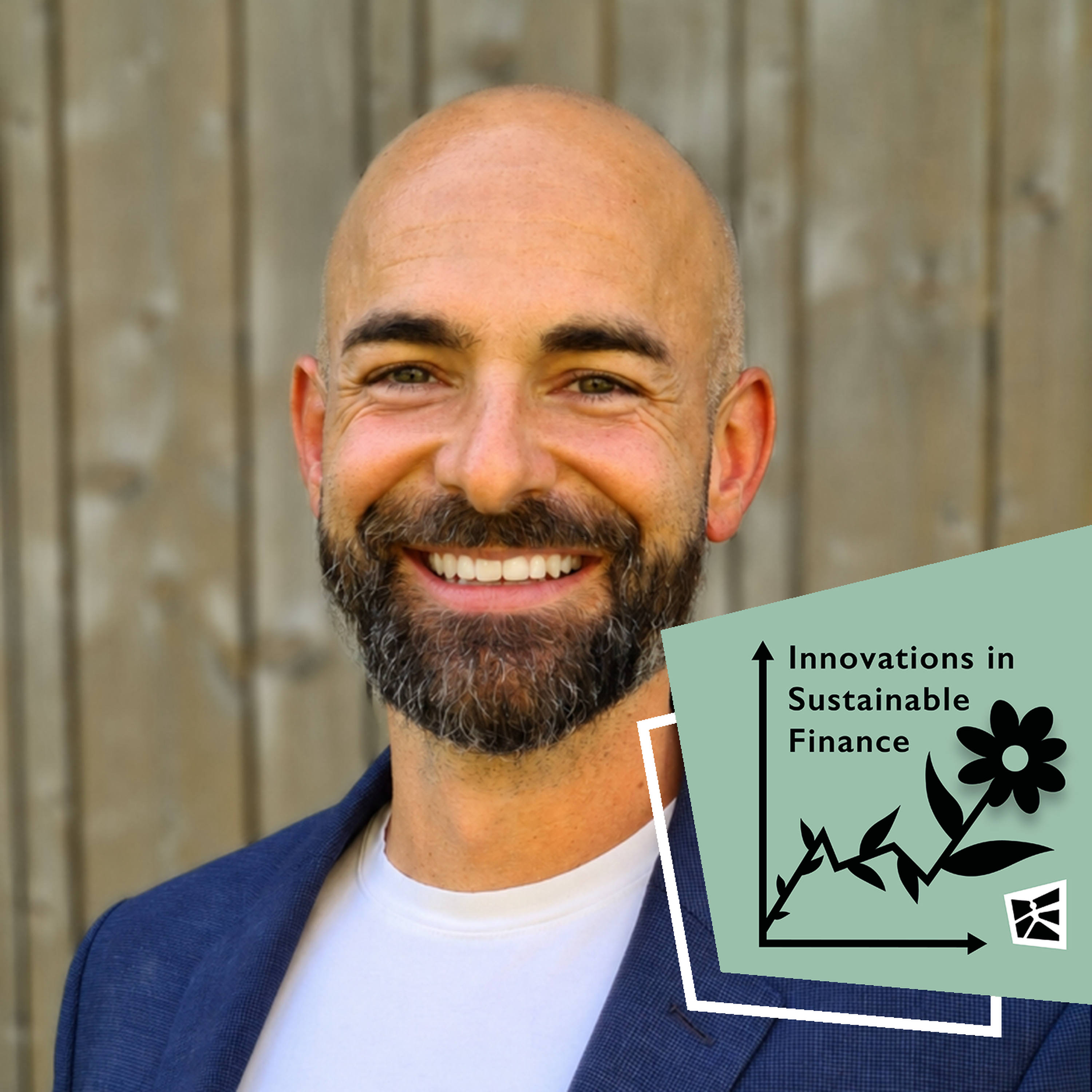
S3-E9: Cleaning The Ocean with Matthias Egger
In this episode of Innovations in Sustainable Finance, I speak with Matthias Egger, ocean scientist and co-founder of Empaqtify, about scaling impactful ideas. Matthias spent eight years at The Ocean Cleanup, sailed twice to the Great Pacific Garbage Patch, and came away with a conclusion that has little to do with engineering: the cleanup systems do their job, and what decides whether they reach scale is whether anyone can be persuaded to pay for them. So that is where innovation is needed. My three key takeaways were: Most plastic pollution is on land, not in the ocean. Less than one percent of the plastic produced each year reaches the sea, and the rest stays on land. As Matthias puts it, one percent of a lot is still a lot. In the Great Pacific Garbage Patch, an area three times the size of France, that works out at roughly one piece of plastic per square metre, and it is mostly fishing gear, toothbrushes and shampoo bottles rather than the floating bags people picture. Plastic also breaks down instead of disappearing, so the microplastics turn up in food, in the air and in human tissue. The bottleneck is no longer the technology, it is the capital. So-called interceptors already catch more than 90 percent of the floating plastic in a river. From an impact perspective, pushing that to 99 percent matters far less than putting the technology into a thousand dirty rivers. The first decade ran on philanthropy, but the global build-out runs to hundreds of millions. Philanthropy’s real job, Matthias says, is to fund the learning and take the first loss so other capital can follow. Reframing the same machine unlocks a different pool of capital. This is what Matthias calls impact architecture. A river interceptor is not a cleanup system, it is critical infrastructure for a city: take the plastic out of a river in Jakarta and you reduce the risk of flooding during the monsoon, which makes the same asset interesting also to an insurer and a city council, not just development finance. The mission stays fixed while the narrative changes with the audience, so the work is to find out what each stakeholder actually cares about, which is rarely the plastic itself. What stayed with me is Matthias’s point that the solutions already exist, and so does the capital. What is missing is a common language between the two, and that is a more tractable problem than fixing the ocean. Spotify: Innovations in Sustainable Finance Apple Podcasts: Innovations in Sustainable Finance Website: Podcast Innovations in Sustainable Finance | unisg.ch