
Find partners
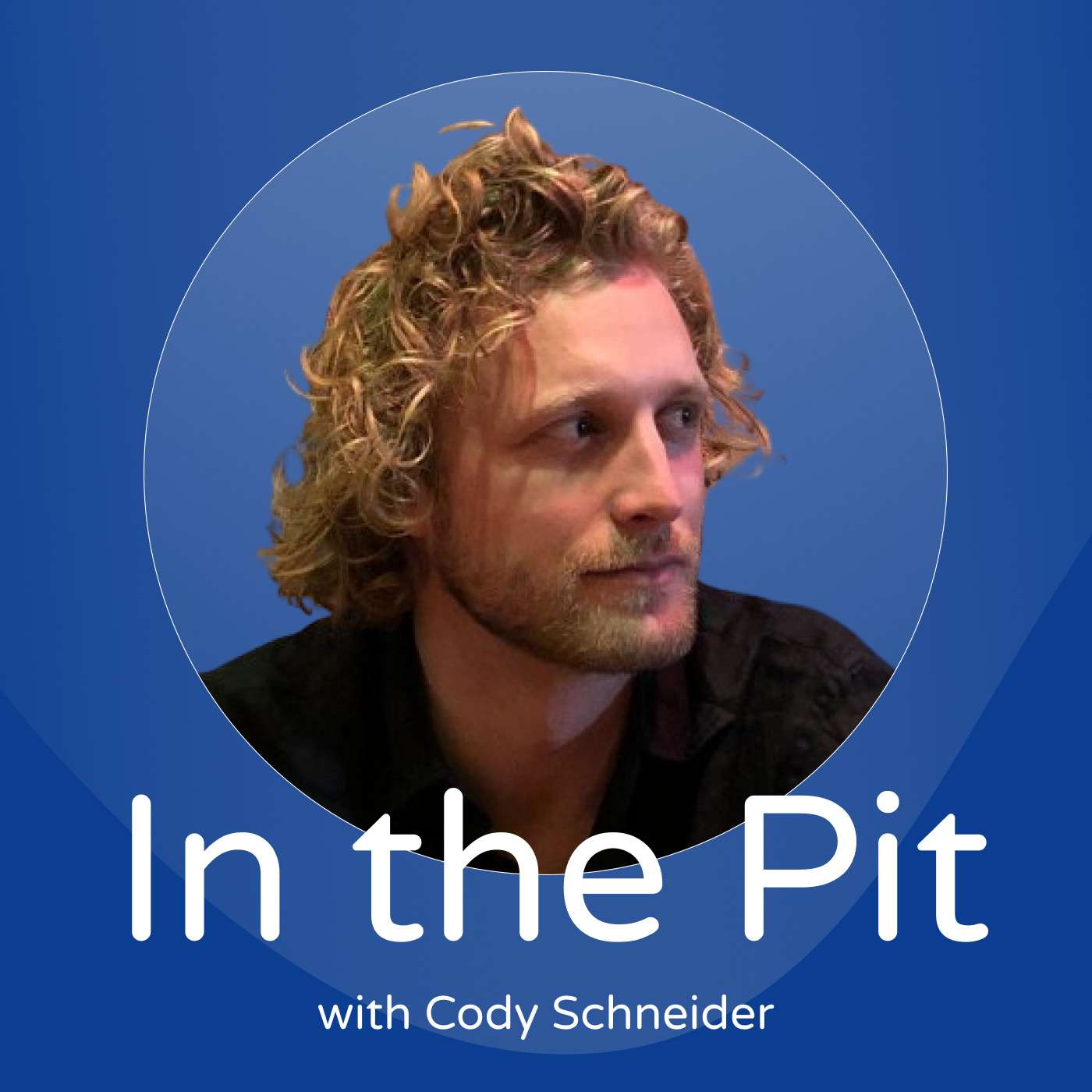
In the Pit with Cody Schneider | Marketing | Growth | Startups

In the Pit with Cody Schneider | Marketing | Growth | Startups

Hosted by Cody Schneider

BusinessMarketingInterviews guests

Episodes

65

Latest episode

Apr 2026

Language

EN

About the show

In the Pit shares what founders and marketers are seeing from the front lines. Join host Cody Schneider for personal brain dumps and conversations with business leaders to learn the strategies and tactics being used to acquire first customers, scale growth, and build thoroughbred marketing organizations. Listen down. Level up.

Listen to episodes

60 recent
April 14, 2026Episode 6550 min

Why Memes Beat Rage Bait for Real Revenue Growth

Your biggest advantage in marketing right now isn’t better ads. It’s understanding what actually makes people buy — and it’s probably not what your feed is telling you. Rage bait is everywhere. It gets views. It gets engagement. But it doesn’t build trust — and it definitely doesn’t drive real revenue in B2B. In this episode, we sit down with Jason Levin , co-founder of Memelord.com , to break down why meme marketing is quietly outperforming rage bait, how humor builds trust with high-value buyers, and the exact systems top marketers are using to scale meme-driven acquisition. The deeper insight: the best marketers aren’t chasing attention — they’re engineering relatability at scale. You’ll learn how to operationalize memes across multiple accounts, why “remixing” is the real creative advantage , and how to turn humor into a repeatable growth engine. If you’re thinking about distribution in 2026, this is a playbook most companies still aren’t using. Guest Jason Levin — co-founder of Memelord.com, an AI-powered meme marketing platform helping companies scale humor, distribution, and content velocity through AI-generated memes and multi-account social strategies. LinkedIn: https://www.linkedin.com/in/iamjasonlevin X: https://x.com/iamjasonlevin What You’ll Learn Why rage bait drives views… but fails to convert high-value customers The difference between attention farming and buyer-driven attention How meme marketing builds trust faster than traditional content Why humor is a lever — not a strategy replacement How to run multiple niche meme accounts for different ICPs Why remixing content beats originality in modern distribution How AI is enabling meme velocity at scale Why relationships still outperform automation in closing deals Timestamps 00:00 - Introduction to Meme Marketing 00:21 - Guest Introduction: Jason Levin from Memelord.com 00:41 - Memes vs Rage Bait Marketing 01:13 - Tactical Meme Marketing Strategies 02:24 - The Importance of Branding and Trust 03:27 - Rage Bait vs Smart Bait Philosophy 05:01 - Why Meme Marketing Drives Revenue 06:43 - Building Trust in B2B Through Humor 08:13 - Niche Meme Accounts and High-LTV Distribution 10:19 - The Problem with Rage Bait Culture in Silicon Valley 15:00 - Inside Memelord.com: Product, Demo & AI Tools 30:43 - Scaling Distribution, Verified Orgs & Measurement Key Topics & Insights 1. Rage Bait Gets Attention — But Not Revenue There’s a growing belief that anger = growth. But here’s the reality: Rage bait attracts the wrong audience. It pulls in: Low-intent users People looking to argue Low purchasing-power audiences The problem: High-value buyers don’t respond to manipulation — they recognize it. And when trust is broken, conversion dies. The takeaway: Views are not revenue. 2. Meme Marketing = Relatability at Scale Memes work because they create instant recognition. Instead of forcing attention, they generate: Emotional alignment Shared pain points Fast trust-building through humor When people feel understood, they convert faster. 3. Humor Is a Lever, Not a Strategy Memes don’t replace strategy — they amplify it. Smart marketing stacks multiple levers: Educational content Long-form trust building Paid acquisition Humor as distribution acceleration 4. Remixing Is the Real Growth Engine Modern content velocity comes from remixing, not originality. Instead of creating from scratch: Take what’s already trending Apply your ICP’s pain point Add context and distribution This is how meme engines scale. 5. Multi-Account Distribution Strategy Scaling meme marketing requires fragmentation: Multiple niche accounts Each targeting a specific persona Each speaking in a tailored voice This creates parallel distribution channels instead of relying on one brand feed. 6. Verified Org Arbitrage on X A key growth hack discussed: $1,000/month for verified org Ability to spin affiliate meme accounts Networked distribution across accounts This creates ubiquity and compounding reach. 7. Relationships Still Close Revenue Even in a world of automation: Conversations Trust Long-term relationships still outperform pure distribution hacks. 8. Measurement Shift: Branded Search Instead of tracking vanity metrics: Focus on branded search growth Use Google Search Console Measure demand creation, not just clicks This becomes the true signal of market pull. 9. The Meme Stack Is Becoming a System Memelord.com represents a shift: Trend detection AI generation Multi-account publishing Rapid iteration loops Memes are no longer content — they are infrastructure. Sponsor Today’s episode is brought to you by Graphed – an AI data analyst & BI platform. With Graphed you can: Connect data like GA4, Facebook Ads, HubSpot, Google Ads, Search Console, Amplitude Build interactive dashboards just by chatting (no Looker Studio/Tableau learning curve) Use it as your ETL + data warehouse + BI layer in one place Ask: “Build me a stacked bar chart of new users vs. all users over time from GA4” …and Graphed just builds it for you. 👉 Get a free trial worth $500 plus a personal discovery call to set up your first dashboard: https://graphed.com/

December 29, 2025Episode 643 min

You Should Only Focus on Increasing Branded Search Volume in 2026

Your “source of truth” for customer acquisition isn’t GA4. It’s what people tell you when they sign up — and right now, that story is changing fast. In this episode, we unpack a simple but brutally effective tactic: adding a required “How did you hear about us?” field to your signup form — and using that data to understand where real discovery is happening. The surprise? More and more B2B customers are saying social media , even when analytics tools claim otherwise. But here’s the deeper shift: organic social is hard to measure… unless you track the right trailing indicator. That indicator is branded search. You’ll learn how to use Google Search Console to track brand-name impressions over time, why it’s becoming the only KPI that matters for modern founder-led marketing, and how branded search creates a defensible moat competitors can’t easily steal. If you’re planning your marketing strategy for 2026, this is the measurement system you need. What You’ll Learn Why signup form attribution is often more reliable than your analytics dashboards The biggest B2B acquisition shift happening right now: from search → social Why organic social is nearly impossible to ROI… and how to measure it anyway The “branded search” metric that acts as a trailing indicator for social discovery Why branded search is a marketing moat your competitors can’t take from you How to build a branded-search chart using Google Search Console in minutes The exact prompt to pull branded impressions by query and track them over time Timestamps 00:00:00 - Customer Discovery Starts at Signup 00:00:10 - The Shift: Search → Social 00:00:31 - Why Organic Social Now Matters Most 00:00:52 - The Measurement Problem (and the Fix) 00:01:12 - Branded Search = Your Trailing Indicator 00:01:33 - Why Branded Search Is a Moat 00:01:54 - Where to Invest Time, Money, and Energy 00:02:04 - The 2026 Strategy: Grow Brand Searches 00:02:15 - How to Track Branded Search in GSC 00:02:25 - Building the Branded Impressions Chart 00:02:46 - Live Demo: Google Search Console Setup 00:03:07 - Final Thoughts Key Topics & Insights 1. Signup Attribution Beats Analytics (Almost Every Time) One of the fastest ways to understand how customers actually found you is simple: add a required “How did you hear about us?” field in your signup form. Why it works: It captures customer intent in their words It reveals channels analytics often misattributes It shows the real discovery story (not the last-click story) And the punchline: it often contradicts what GA4 says. 2. The B2B Discovery Shift: Search → Social If you’ve been paying attention to the data, something big is happening: People aren’t discovering new software products through search anymore. They’re discovering them on social — then Googling them afterward. This shift has accelerated over the past 12–18 months. Even in B2B, where trends typically lag behind DTC. What this means: SEO is no longer the first touchpoint Social is becoming the top-of-funnel discovery engine Search is evolving into a validation channel 3. Organic Social Has a Measurement Problem The hardest part about investing in organic social is that it’s difficult to tie to ROI. Whether you’re doing: Founder-led content Creator sponsorships Community distribution Organic growth loops …it doesn’t fit neatly into traditional attribution. So instead of forcing bad ROI models, track the trailing indicator that proves social discovery is working. 4. Branded Search Is the Trailing Indicator That Matters Here’s the key idea: When someone discovers your product on social, they don’t click your link. They Google your name. That branded search becomes the measurable proof: A discovery event happened People care enough to look you up Your brand is entering the market’s memory This is why branded search growth is one of the strongest indicators of momentum. If branded search is increasing month-over-month, your brand is winning. 5. Branded Search Creates a Defensible Moat This is where it becomes more than measurement — it becomes strategy. Branded search is difficult for competitors to steal. Once people are searching your name, you own that demand. The only way competitors can interfere: They bid on your brand in Google Ads They try to outspend you Or they attempt to confuse the market But that’s expensive, obvious, and usually temporary. So branded search is not only a KPI — it’s defensibility. 6. How to Track Branded Search in Google Search Console This is the tactical part. To track branded search over time, you want a chart that shows: Impressions over time For queries containing your brand name Captured in every format your audience might type it And this is surprisingly easy to pull from Google Search Console. 7. The Exact Chart & Prompt to Build It The goal is to extract Search Console impressions where queries include your brand name. Example prompt: “Build a chart showing total impressions over time for queries containing ‘YOURBRAND’.” Then your job becomes simple: Increase branded impressions month-over-month through: social content distribution creator partnerships podcast mentions repeated brand exposure consistent visibility This becomes the clearest signal that marketing is compounding. Action Steps (Do This Today) Add a required “How did you hear about us?” field on signup Review responses weekly (and compare against analytics) Use Google Search Console to track branded query impressions Create a monthly KPI: branded impressions growth Use branded search growth as the scoreboard for your organic social efforts Sponsor Today’s episode is brought to you by Graphed – an AI data analyst & BI platform. With Graphed you can: Connect data like GA4, Facebook Ads, HubSpot, Google Ads, Search Console, Amplitude Build interactive dashboards just by chatting (no Looker Studio/Tableau learning curve) Use it as your ETL + data warehouse + BI layer in one place Ask: “Build me a stacked bar chart of new users vs. all users over time from GA4” …and Graphed just builds it for you. 👉 Get a 14-day free trial with 10 seats for your team: https://graphed.com/

December 22, 2025Episode 6343 min

Find All the Citations ChatGPT is Using to Answer Your Target Customer's Questions

If you’re not getting cited by ChatGPT, your “AI SEO” strategy isn’t working, no matter what your dashboards say. Most of it is observability theater: dashboards, charts, synthetic prompts — and zero actual placement. In this episode, we chat with Shawn Schneider , founder of Eldil AI , about what actually determines whether your company shows up in ChatGPT answers. The short answer: LLMs don’t reward more content, clever prompts, or prettier dashboards. They reward a small set of trusted third-party sources — and most brands aren’t mentioned in any of them. Shawn breaks down why observability alone creates a false sense of progress, how to identify the specific citations that dominate your category, and how to turn that insight into real placements through outreach and negotiation. We also unpack why Google Search Console is still the best signal we have for AI-driven queries, how to prioritize the one citation that actually matters, and what the first 30–90 days can look like when you do this correctly. Guest Shawn Schneider — founder of Eldil AI , a GEO / AI SEO platform focused on identifying and securing the citations LLMs rely on most; helps brands and agencies win visibility in ChatGPT by targeting the power-law sources that shape AI answers. Guest Links LinkedIn: https://www.linkedin.com/in/shawn-schneider-61b2b5207/ Company Website: https://www.eldil.ai/ What You’ll Learn Why most GEO / AI SEO observability tools are meaningless without actual placements The only thing that reliably improves AI search visibility: citation placements How to use Google Search Console to surface AI fan-out queries Why synthetic prompt data is still unreliable (and what to trust instead) The power law of citations : why only 1–3 sources actually matter How Eldil turns citation discovery into outreach and negotiated placements What 30–90 days can look like when you secure the right citation Which industries should invest heavily — and which should ignore this for now Why ChatGPT dominates referral traffic compared to other LLMs What happens when ads arrive inside AI search results Timestamps 00:00 — GEO, AI SEO, AEO: noise vs. reality 00:21 — Why observability tools don’t move the needle 03:55 — Where GEO tools get their data (and why it’s messy) 07:16 — Using Google Search Console as a prompt proxy 09:40 — The three pillars: technical, content, authority 12:07 — Citations as the dominant ranking lever 13:07 — The power law: thousands of citations, one winner 19:07 — How fast results actually show up 20:39 — When building your own citation content makes sense 30:41 — Which business models win with GEO 37:11 — ChatGPT ads and the future of AI search 41:32 — Where to find Shawn and closing thoughts Key Topics & Ideas 1. Why dashboards feel good but don’t create outcomes. Most tools are essentially “Google Analytics for LLMs” ChatGPT referrals rise naturally as usage increases Charts go up even if you do nothing Without placements , observability is just vanity 2. The three common approaches in the market today: Guessing prompts with LLMs Clickstream data sourced from Chrome extensions and brokers Synthetic prompts without transparency Eldil uses Google Search Console + Analytics as the best available proxy for real intent. 3. How to spot AI-generated fan-out queries: 50+ character queries High impressions Low or zero clicks These often represent LLMs expanding short prompts into long-form searches. 4. The three pillars: Technical, Content, Authority Technical — can an LLM crawl and understand your site? Content — does useful information exist? Authority — does anyone credible back it up? Authority is the multiplier most teams ignore. 5. What actually shapes AI answers: Citations are not backlinks, they are semantic explanations LLMs repeatedly return to the same trusted sources Third-party listicles and niche blogs dominate citation share 6. The Power Law of Citations 10k–15k citations may exist 200–300 matter 1–3 actually move the needle If you’re not in those, content volume won’t save you. 7. The real workflow : Identify high-value customer questions Extract dominant citations Rank them by weight Contact site owners Negotiate placement Monitor AI visibility and referral traffic This is where most tools stop — and where Eldil focuses. 8. How many placements do you need? Surprisingly few. You don’t need 100 placements You need the right one Then expand into adjacent verticals This is concentrated betting, not spray-and-pray SEO. 9. Why GEO feels different from traditional SEO: You are inserting into sources that already rank Changes can show up in weeks, not years Meaningful referral growth often appears within ~60–90 days 10. Who Should (and Shouldn’t) Do This Best fit: High-ACV B2B SaaS Long buying cycles High-LTV e-commerce (supplements, skincare) ICPs that already live in ChatGPT If your customers do not use LLMs yet, start elsewhere. 11. Why ChatGPT is the main event Based on Eldil’s data: ChatGPT referrals dwarf Perplexity and others For most companies, this is where focus belongs Smaller channels still matter for high-ticket sales 12. What’s coming next Paid placements inside LLMs Organic plus paid becoming a one-two punch Citation inventory getting expensive fast The window for cheap dominance will not last. Sponsor Today’s episode is brought to you by Graphed – an AI data analyst & BI platform. With Graphed you can: Connect data like GA4, Facebook Ads, HubSpot, Google Ads, Search Console, Amplitude Build interactive dashboards just by chatting (no Looker Studio/Tableau learning curve) Use it as your ETL + data warehouse + BI layer in one place Ask: “Build me a stacked bar chart of new users vs. all users over time from GA4” …and Graphed just builds it for you. 👉 Get a free trial worth $500 plus a personal discovery call to set up your first dashboard: https://graphed.com/

December 11, 2025Episode 626 min

Ranking Your New Startup Domain for Your Brand Name

Your brand doesn’t exist until it ranks on page one—and most founders have no idea how to make that happen. In this episode, we break down the exact playbook for getting a brand-new domain to show up in Google for your company name. After going through this process firsthand with Graphed.com , you’ll learn how to choose a rankable name, build the right backlinks, trigger branded search behavior, and use Google Ads to accelerate the whole process. If you're launching anything new, this is the tactical blueprint you wish you had earlier. What You’ll Learn Why ranking for your brand name is the first real trust signal for any startup How to pick a name and domain you can actually rank for The “first 100 links” strategy that trains Google to recognize your brand Simple ways to generate branded search behavior across social and content How Google quietly tests your domain—and how to know when it’s happening How to use Google Search Ads to accelerate ranking and protect your brand Why .com still matters more than any other TLD Timestamps 00:00 — Why your new domain must rank for your own brand name 00:31 — Why ranking for your brand name is a critical early trust signal 01:03 — The rookie mistake founders make when picking a brand name 01:13 — What ideal, non-competitive SERPs should look like 01:35 — Graphed.com’s journey to finally ranking in position one 01:45 — Overview of the process to teach Google your brand 01:55 — Step 1: Build backlinks to your homepage 03:29 — Step 2: Drive branded search with social posts & content 04:21 — Step 3: Run Google Search Ads on your exact brand name 05:45 — Why you should always buy the .com for your brand 06:16 — Final thoughts + Graphed free trial Key Topics & Insights 1. Ranking for Your Brand Name = Early-Stage Trust If someone Googles your company and doesn’t find you, credibility collapses. Ranking for your brand name is one of the first—and easiest—trust signals to secure. Graphed.com took ~2 months to rank, but with this framework, it can happen in as little as 24–48 hours. 2. How to Choose a Rankable Name Avoid names already used by active companies Look for search results filled with noise, not competitors Ideal: two words, few syllables, easy to spell And always, always buy the .com 3. Build the First 100 Backlinks (Brand-Name Anchors Only) Your #1 job early is to teach Google what your company is. Do this by: Building backlinks to your homepage Using your brand name as the anchor text (not keywords) These are foundational “identity” links that help Google map brand → domain. How to build them: Submit to software directories Use link submission services Cold email companies for guest post swaps Layer PR on top later 4. Trigger Branded Search Behavior Once Google sees your backlinks, you need humans to reinforce the signal: Search your brand name Click your domain Spend time on the page Google then learns: “When people search this name, this is the site they want.” You create this behavior through: Social posts Newsletters Podcast mentions Repeated use of the brand everywhere 5. How Google Tests Your Domain Google will quietly experiment by showing your domain for branded queries . You’ll see this in Search Console via: Rising impressions Increasing CTR Sudden jumps in average position This is the moment Google “decides” you belong on page one. 6. Accelerate Everything With Google Search Ads Run a brand campaign: Exact-match brand keyword Minimum bid: around $5 Send traffic to homepage This forces the association between brand name → your site , and accelerates your rise in organic search. Brand protection tips: Raise bids to block competitors Add sitelinks to take more SERP real estate Optional: multiple ad accounts (with caution) 7. Why .com Still Beats Every Other Domain Consumers inherently trust .com more than .io, .co, .xyz, etc. It drives higher CTR and reduces friction in word-of-mouth. If the .com isn’t available, pick a new name —don’t settle. Sponsor Today’s episode is brought to you by Graphed – an AI data analyst & BI platform. With Graphed you can: Connect data like GA4, Facebook Ads, HubSpot, Google Ads, Search Console, Amplitude Build interactive dashboards just by chatting (no Looker Studio/Tableau learning curve) Use it as your ETL + data warehouse + BI layer in one place Ask: “Build me a stacked bar chart of new users vs. all users over time from GA4” …and Graphed just builds it for you. 👉 Get a 14-day free trial with 10 seats for your team: https://graphed.com/

November 20, 2025Episode 6146 min

Is vibe coding a bubble or skill Issue? Tactics to actually ship usable products

There’s a whole narrative right now that “vibe coding is a bubble” and all the MRR from AI-built apps isn’t real. In this episode, we chat with Jacob Klug , founder of the agency Creme , which specializes in building lovable MVPs on top of tools like Lovable and AI coding assistants. Jacob makes the case that most of the “AI apps are trash” discourse is really a skill issue , not a tool issue—and he breaks down the exact process his team uses to ship full platform-level apps in two-week sprints. We dig into how to scope and design software that doesn’t look AI-generated, how to think about personal operating systems vs. SaaS, why ideas are getting worse even as tools get better, and how creators and agencies can turn niche domain expertise into real products. If you’re an operator, marketer, or founder trying to figure out how to actually use AI coding tools (instead of just tweeting about them), this one’s for you. Guest Jacob Klug — founder of Creme , an agency building “lovable MVPs” and full-stack products with Lovable + AI tools; helps founders, startups & enterprises ship production apps in weeks without sacrificing UX. Guest Links Website: https://www.creme.digital/ LinkedIn: https://www.linkedin.com/in/jacob-klug-37b254156/ X (Twitter): https://x.com/Jacobsklug What You’ll Learn Why the “vibe coding is a bubble” take is mostly a skill and discipline problem How Jacob’s agency ships full startup-grade products using Lovable and AI The PRD-first formula they use before ever opening a builder How to decide when to build vs. when to buy software in 2025 Why we’re entering a wave of personal OSes and custom internal tools How to avoid shipping janky AI UI and make your app look intentionally designed The mindset shift from “I could build anything” → “I will build this one specific thing ” Why specializing in one AI tool (Lovable, Cursor, n8n, etc.) beats being “the AI guy” Tactical content and lead-gen plays for agencies on LinkedIn and YouTube How to learn AI tooling without getting paralyzed by the infinite possibilities Timestamps 00:00 — Vibe coding: bubble or breakthrough? 02:23 — Effective use of no-code tools 05:23 — Stack and scoping for MVP development 07:08 — Trends in personal software development 10:33 — Personal projects: blood work analysis tool 13:00 — Steps to start building custom software 17:49 — Successful and unsuccessful product categories 21:01 — Learning and adopting AI tools 27:45 — Creator collaboration in software development 32:14 — Lead generation strategies for AI-powered agencies Key Topics & Ideas 1. Bubble or Skill Issue? Why early no-code/AI apps looked janky How tools like Lovable increased automation from ~50% → ~85% The remaining 10–15% where real engineering still matters Many failures come from non-devs skipping fundamentals 2. How Creme Builds Lovable MVPs Every project starts with a clear PRD (often drafted with ChatGPT) AI is used to tighten scope before building When Creme stays fully in Lovable vs. moving code to Cursor Using Lovable Cloud for hosting, database, and analytics 3. Personal Operating Systems & Internal Tools People replacing SaaS subscriptions with their own custom tools In a 20-person cohort, nearly everyone built workflow apps Rise of the Personal OS : one system for life + work Example builds: Bloodwork tracker from PDF uploads Unified messaging CRM (WhatsApp, Telegram, SMS, email) Automated 30-second sales briefings 4. How to Learn AI Coding Tools Half the cohort hadn’t built anything before starting Main blocker: overwhelm , not skill Learn core concepts: frontend vs. backend, auth, roles, security Build daily reps, focus on the next thing you need—not “all of AI” 5. Designing Apps That Don’t Look AI-Generated Good design is still the hardest and biggest edge Creme process: build a /components library , define buttons/cards/inputs, assign stable IDs Tools: Mobbin, Figma Community kits, 21st.dev Best prompt : “Here’s a screenshot → copy this.” 6. What Works in Product Ideas Most of Creme’s builds are full startup platforms, not micro-tools AI makes shipping easier, but ideas are getting worse without depth Real advantage = domain expertise + niche problem + AI speed 7. Creators x Software Creators can now ship products without capital Jacob prefers retainers over equity Analogy: Like creator brands—most fail, a few go huge 8. Career Strategy: Specialize Future = verticalized expertise , not “AI generalists” Specialist lanes: Lovable, Cursor, n8n, automation Be the person for one tool + one market 9. Content & Lead Gen Jacob's two rules for content: people are selfish and people are bored Build content that teaches, sparks emotion, and creates curiosity Post ~5x/week , prioritize visual posts Long-term: YouTube deep dives for high-intent inbound Sponsor Today’s episode is brought to you by Graphed – an AI data analyst & BI platform. With Graphed you can: Connect data like GA4, Facebook Ads, HubSpot, Google Ads, Search Console, Amplitude Build interactive dashboards just by chatting (no Looker Studio/Tableau learning curve) Use it as your ETL + data warehouse + BI layer in one place Ask: “Build me a stacked bar chart of new users vs. all users over time from GA4” …and Graphed just builds it for you. 👉 Get a 14-day free trial with 10 seats for your team: https://graphed.com/

November 19, 2025Episode 614 min

AI Fanning Explained - what happens between user query and AI output and how to exploit it

Brought to you by Graphed.com - https://www.graphed.com/ Graphed is your AI agent for marketing analytics. Connect your data and get insights in minutes. Build dashboards, reports, and chat. Learn more at the link. https://www.graphed.com/ When you hit send on ChatGPT, your garbage six-word query gets enriched while the AI simultaneously launches 80 parallel searches, scraping pages 1-3 on Google faster than you can blink - and the proof is hiding in your Search Console with those weird 50+ character queries showing 96K impressions but only 14 clicks because AI is hoovering up content without clicking through. The arbitrage play is stupidly obvious: stop making more content and start getting mentioned in the existing high-ranking pieces AI already references - find what URLs ChatGPT cites for your space, reach out to those blog owners, and get included in their listicles because one mention there is worth more than 100 blog posts since you're suddenly part of every AI response in your category. 5 Key Takeaways: AI enriches your terrible queries because you type like garbage Every response triggers 80 parallel searches scraping Google's top results Search Console shows AI scraping: high impressions, zero actual clicks Stop making content, get mentioned in existing high-ranking pieces instead One listicle mention beats 100 blog posts for AI coverage

October 22, 2025Episode 6054 min

Dominate Page 1: How to Rank 5 Parasite SEO Properties in Hours

Think of page one as real estate—and claim as much of it as possible. Jesper Nissen breaks down modern parasite SEO : leveraging high-authority platforms (YouTube, Instagram, X/Twitter Articles, Perplexity/Qwen pages, etc.) to rank quickly for branded, local, and long-tail keywords. We cover indexing workflows, daisy-chain linking, exact-match domain plays, and the content + link velocity patterns that are working now. Guest Jesper Nissen — SEO educator, link-building practitioner, founder of SchemaWriter.ai and the cloud-stacking platform YACSS ; speaker at POFU Live / SEO Rockstars; MSc in Physics (U. of Copenhagen). Guest Links Website: https://jespernissen.com/ YouTube: https://www.youtube.com/@JesperNissenSEO X (Twitter): https://x.com/jespernissenseo?lang=en What You’ll Learn Parasite SEO, 2025 edition: Why page-one results increasingly favor social UGC, news, and authority domains—and how to ride that DA for fast wins. Platforms that still rank: Jesper’s current leaderboard (e.g., Qwen, Perplexity) and what changed for Claude Artifacts. Local + long-tail focus: How to use Facebook/Instagram posts, YouTube videos & community posts, and X Articles to own branded and geo-keywords. Indexing workflow: Indexing services + social “daisy-chain” links to accelerate discovery. EMD plays: Exact-match domains (service+city and SaaS feature terms) and smart, steady link velocity patterns. Social → Search shift: Why Instagram and Facebook posts have started surfacing in Google (July 2025 change) and how to write posts to rank. Timestamps 00:00 — Owning page one like “real estate” 02:16 — Parasite SEO vs. traditional guest posts 08:45 — Reddit’s link-out limits & why Jesper moved on 14:58 — Claude Artifacts surge (and why it cooled) 18:02 — What’s working now: Quen & Perplexity pages 21:35 — Indexing flow: drip pings + social link bursts 26:40 — Meta shift: FB/IG posts in Google (local SEO gold) 31:55 — Exact-match domains + link velocity math 46:55 — Shorts as TOF magnets; long-form as sales letter 51:40 — Priming YouTube with low-CPC X ads (global) Jesper’s Parasite SEO Playbook (Step-by-Step) Pick a target query (branded, local, or long-tail). Publish across high-DA surfaces : YouTube (video + Community post), X/Twitter (Articles), Instagram, Facebook Page, plus AI page builders (e.g., Quen, Perplexity). Front-load keywords in social posts (especially the first words of FB/IG captions for cleaner URLs/titles). Daisy-chain internal links : point your X Article to the IG/FB/YouTube/AI pages to aid indexing. Kick indexing via reputable ping/index services, then add lightweight social links to nudge crawl. Measure and iterate : keep winners, replace laggards, expand with adjacent long tails. Exact-Match Domain (EMD) Mini-Framework When to use: service+city rank-and-rent, or narrowly defined SaaS use-cases. Build: one-page lander, fast crawl path, 5–10 quality links/month early, layer socials & citations; avoid unnatural velocity spikes. Why it works: high topical alignment + clean intent matching. (Jesper’s background in cloud stacking/YACSS and SchemaWriter.ai complements this with structured data & internal “powerstack” patterns.) Sponsor This episode is brought to you by Graphed — the AI-native analytics platform that builds dashboards from plain English. Connect GA4, ads, CRM, GSC, and Sheets to get KPI boards in minutes. Learn more: https://graphed.com/

October 21, 2025Episode 5939 min

You Can Get $0.80 CPM from TV Streaming Ads Right now

Billboards at $0.75 CPM. Streaming TV you can actually measure . Tim Rowe breaks down how to blend OOH + CTV to drop blended CAC, spark geo-lift, and build “living-room” brand equity—without massive budgets. Streaming has turned TV into a performance channel you can buy, cap, and measure like digital—often at CPMs rivaling or beating social. Tim explains how their ad server + pixel connect living-room exposure to down-funnel actions, with many brands seeing $3–$4 cost per visit and 3–4× higher conversion vs other traffic sources. On OOH, the overlooked arbitrage is static or digital boards priced like real estate: win by buying the biggest formats in the largest markets at the lowest biddable entry price, then engineer earned media (social virality) and geo-lift . Start with ~ $5k for a real CTV test (smaller tests can still work as an add-on), measure blended CAC, branded search, and market-level lift, and let creative—not hyper-granular targeting—do the heavy lifting. Guest Website: https://cognitionads.com/ LinkedIn: https://www.linkedin.com/in/troweactual X (Twitter): https://x.com/oohinsider Tim’s newsletter/resource hub: https://stateofstreaming.com/ What You’ll Learn Why streaming made TV relevant again—and cheap ($1–$2 CPMs in some geos). How to attribute TV exposure → search → site visit → purchase within a 48-hour view-through window. The out-of-home (OOH) arbitrage: buying big signs in big markets for sub-$1 CPMs. How OOH + CTV lower blended CAC and lift branded search in target geographies. Practical first tests: budgets, pixels, frequency caps, creative, and geo measurement. Event playbooks: digital billboard trucks, rideshare screens, street teams, and QR flows. Targeting reality: on CTV, less targeting often wins—use creative as the filter. Retargeting on TV (yes): pixel site traffic and follow with CTV/audio/display. Timestamps & Chapters 00:00 — Why TV is “back”: streaming CPMs and geo-targeted buys 01:30 — Direct attribution: 48-hour view-through from TV → search → site → purchase 03:45 — OOH primer: static vs digital, programmatic buys, and PMP tips 06:05 — The arbitrage: big boards, big markets, tiny CPMs (often <$1) 09:15 — Measuring lift: branded search, Search Console, geo-heatmaps, blended CAC 12:10 — Earned media by design: turning boards into social fuel 15:20 — Event playbook: mobile LED trucks, rideshare TV, coffee-cart sponsorships 18:05 — CTV mechanics: ad server + pixel, frequency caps, “hands on keyboard” setup 21:10 — Budgeting your first test (~$5k) and what “good” looks like 23:00 — Targeting truth: broad wins; use creative, use your 1P data for segments/lookalikes 26:10 — Retargeting on TV and building a full streaming funnel 28:00 — Who this works best for (DTC, local services, ABM/SaaS, events) 30:00 — Getting started and where to reach Tim Playbooks & How-Tos 1) Fast OOH Test (2–4 weeks) Pick 1–2 large markets your sales team targets. Buy largest formats you can afford (static or digital) at the lowest CPM; test via https://www.blipbillboards.com/ (entry-level) or via PMPs/direct with operators. Creative : one bold claim + large logo + simple URL/QR. Design for 0–3 second read. Measure : branded search & direct/organic sessions from those geos; compare pre/post. 2) Streaming TV (CTV) Starter Pixel your site (for attribution + retargeting). Launch a broad geo campaign; cap frequency; rotate 1–2 :15–:30 creatives. Budget : aim for $5k to reach statistical signal; smaller ($1.5–$2k) still useful as a display-like add-on. KPI : cost per visit ($3–$4 is common in Tim’s data), conversion rate lift vs other traffic, branded search lift, blended CAC shift. 3) Event Swarm Tactics Digital billboard truck looping near venue entrances all day. Rideshare TV for the event radius; add a QR to capture emails or drive an offer. Street team + product samples or demo cards; sponsor a coffee cart beside the venue. Key Takeaways (Skimmable) CPMs: OOH can hit ~$0.75 ; CTV often $1–$2 in the right geos. Attribution: Use a 48-hour view-through window from TV exposure to on-site actions. Blended CAC: Expect downstream CAC reductions across channels from brand lift. Targeting: On CTV, broader = cheaper CPMs and often better performance ; let creative and 1P audiences do the work. Budget: $5k is a solid first test; smaller tests still demonstrate directionality. Creative: Be bold; engineer shareable moments to multiply paid with earned. Links & Resources Mentioned Cognition Ads (Tim’s company): https://cognitionads.com/ State of Streaming (news & insights): https://stateofstreaming.com/ Blip (entry-level digital billboards): https://www.blipbillboards.com/ The Trade Desk: https://www.thetradedesk.com/ DV360: https://marketingplatform.google.com/about/display-video-360/ Google Search Console (measure geo-lift): https://search.google.com/search-console/about Sponsor This episode is brought to you by Graphed — an AI-native analytics platform that builds dashboards from plain English. Connect GA4, ads, CRM and get KPI boards in minutes. Learn more: https://graphed.com/

October 14, 2025Episode 5851 min

Local SEO: How to Dominate Rankings in Just One Week

Founders are ditching pure outbound for “community → product” funnels. Jacky Chou (Indexsy) breaks down a modern SaaS GTM: build audience, educate in a community, sell the tool that powers the play. We go deep on local SEO (map pack), YouTube as the highest-intent acquisition channel, Reddit/parasite SEO mechanics, and how LocalRank grows by educating & productizing services. Guest Jacky Chou — Indexsy Website: https://jackychou.com/ YouTube: https://www.youtube.com/@indexsy X (Twitter): https://x.com/indexsy Brought to you by Graphed — AI data analytics you can chat with. Connect your data, build live dashboards in minutes: https://graphed.com What You’ll Learn The community-led SaaS funnel (audience → community → teach → tool) Local SEO 80/20: reviews, citations (NAP consistency), and CTR signals Why YouTube drives the most buyer-ready traffic for niche software Parasite SEO & Reddit tactics to earn visibility and brand mentions How “education first” communities expand TAM and reduce CAC Cold outreach that feeds branded search and category creation Chapters 00:00 Intro — Why the SaaS funnel is shifting to community-led 01:45 Local SEO 101: map pack vs. organic results 03:40 The 80/20: reviews, citations/NAP, CTR signals 06:10 Tactics for generating reviews & citations (pros/cons, risks) 09:55 Indexing citations faster; NAP consistency checklist 12:40 Community-led growth & seeding new agencies on LocalRank 15:05 Why local SEO is “stupid easy” right now (and where it’s competitive) 17:30 Prospecting & pricing: pick high-CPC verticals, value-based fees 20:15 Packaging offers: guarantees, radius games, productized services 22:40 The funnel behind LocalRank Academy → software upsell 25:20 Paid vs. organic: X threads, remarketing, long email drips 27:15 Launch data: YouTube > X for paid conversions at launch 29:10 Reddit distribution, parasite SEO, and gaming brand mentions 32:20 Cold email that drives site visits (naked domains, link timing) 35:05 Manufacturing branded search & CTR spikes (digital PR ideas) 38:10 AI Search (AISCO): what (might) influence LLM surfaces today 43:05 Building moats: being the practitioner, faster iteration loops 46:10 Experiments, ethics & sustainability of “gray-hat” tactics 49:10 Where to find Jackie & final CTAs Key Takeaways Community beats cold: educate first, then sell the tool that powers the play. Map pack wins local: Reviews + consistent NAP citations + real-world engagement drive outsized results. YouTube converts: Long-form demos/education create buyer-ready traffic for niche SaaS. Branded search compounds: Cold email, content, PR, and job posts can stimulate searches for your name/category. TAM expansion via education: A paid community can breakeven ad spend and prime higher-ticket software deals.

September 15, 2025Episode 5744 min

Creator Marketing Crash Course: This Guy Built an AI Agent That Finds Creators, Emails Them and Negotiates Pricing

https://www.graphed.com/ - AI data analyst to build dashboard and get insights Today we break down why “influencer marketing” (renting audience) is losing to creator-based marketing (renting skill at making viral content) — and how to run it like a system. Guest Robert Lukoszko , founder of Stormy AI , shows how their agent finds creators, pulls contacts, sends DMs/emails, follows up, and even negotiates packages before you step in. We get tactical on budgets, pricing, UGC hiring, TikTok vs YouTube strategy, measurement, and building a compounding “surface-area” of content across the web. Brought to you by Graphed.com — connect your data, ask in plain English, ship shareable dashboards. Guest Website: stormy.ai Robert Lukoszko — LinkedIn: linkedin.com/in/karmedge X (Twitter): @Karmedge What you’ll learn Creator vs Influencer marketing: Why FYP-driven platforms reward great content over big followings — and how to “rent” creators’ skill instead of their audience. The scalable workflow: Brief → research → outreach (DM/email) → qualify → negotiate packages → handoff to human for final approval. TikTok UGC machine: Hire 1–3 full-time UGC creators posting 2–3 shorts per day; test cheaply, then double down on breakout templates. YouTube packages that work: Three-video bundles over ~6 weeks build trust & lift; use retainers for your top performers. Negotiation scripts that convert: Lead with “Paid collaboration” in subject/first line, anchor on value, and offer volume/retainer discounts. Pricing reality check: Typical UGC test pieces land in the ~$20–$100/video range (many sweet-spot wins at $20–$50) for micro/nano creators; salaried UGC in EU markets often $1–2k/mo part-time depending on output and quality. Compounding effects: Viral videos spawn follower videos; repeated sightings increase creator reply-rates and lower CPAs. Agents as team members: Why modern stacks look like small pods of engineers orchestrating many narrow agents (research, outreach, follow-ups, CRM status, stop-conditions). Chapters & Timestamps 00:00:00 — Cold open: “Stop influencer marketing. Start creator marketing.” 00:01:17 — Sponsor: Graph.com (AI dashboards from plain English) 00:02:26 — Guest intro: Robert (Founder, Stormy AI) + why YouTube/TikTok matter 00:03:49 — The pain of manual outreach and why Stormy exists 00:05:55 — How Stormy’s research agent finds/qualifies creators (views, recency, fit) 00:08:15 — TikTok/UGC playbook: daily shorts, test → double down 00:10:04 — It’s a numbers game: post volume & breakout templates 00:12:00 — “Surface area” strategy: AI pulls from the open web; brand search as moat 00:15:03 — Validating features with viral demos before shipping 00:17:02 — Building in public: rapid iteration with creator feedback 00:18:00 — Outreach mechanics: DMs, scraping bios/Linktree, multi-source emails 00:20:06 — Copy that converts: lead with “Paid collaboration” + template tips 00:21:46 — Scale metrics: ~200 messages/day across rotated inboxes; reply-rate ranges 00:23:29 — Brand effects: recognition boosts replies; upfront vs affiliate by stage 00:26:01 — Compounding virality: trend templates, creator social proof 00:29:03 — Pricing: $20–$100 UGC tests; sweet spot $20–$50; EU part-time $1–2k/mo 00:29:53 — Agentic negotiations: packages, volume, follow-ups, human handoff 00:31:04 — Guardrails: budget anchoring, stop-conditions, funny “PayPal link” story 00:35:05 — Toolbelt of agents: research, outreach, CRM updates, payments, bulk sends 00:36:01 — Architecture: many narrow agents > one monolith 00:37:51 — Future: fewer humans in the loop; AI influencers; approvals as human role 00:39:16 — Can businesses run themselves? Media = growth flywheel 00:41:11 — Hiring philosophy: engineer-heavy teams (Gary Tan advice) 00:43:46 — Wrap + where to find Robert & Stormy Playbooks & templates (steal these) Outreach subject lines (email/DM first line): “Paid collaboration: {Brand} x {CreatorName} — 3-video package” “Paid promo + affiliate: {Brand} (fast approvals, simple brief)” First message (short DM/email): “Hey {Name} — we’re {Brand}, a {1-line what you do}. Paid collaboration: 1 test short this week (${offer}) + option to extend to 3-video bundle over 6 weeks. You keep creative control; we provide brief + examples. Interested? If yes, quick details + rate card?” Negotiation levers: volume (3-pack → 6-pack), multi-month cadence (1/mo), affiliate top-ups on performance, first-video discount, creative templates proven to hit. UGC hiring filter: Look for micro/nano creators (10k–50k) with at least one breakout (e.g., 500k+ views) in your niche; they have the “spark” but are still rationally priced. (Stormy highlights this pattern in search/fit scoring.) Key quotes (pull-ready) “Creator marketing rents skill at making viral content — not just an audience.” “It’s a numbers game twice: mass outreach, then mass posting — let the winners emerge.” “Lead with ‘Paid collaboration’ so creators instantly know there’s budget.” “Templates win. When a format pops, clone it and scale with more creators.” Sponsor Graphed.com — Connect your SaaS/GA4/Shopify/data warehouse → ask in plain English → get dashboards & ad-hoc analysis; share with clients or your team in one click. (Free 10-seat trial for listeners — link in description.)

Is this your show?

Claim this listing to keep it up to date, reach guests who want to pitch you, and manage bookings with Guestify.

Claim this listing

More Business podcasts