1 hr 28 min
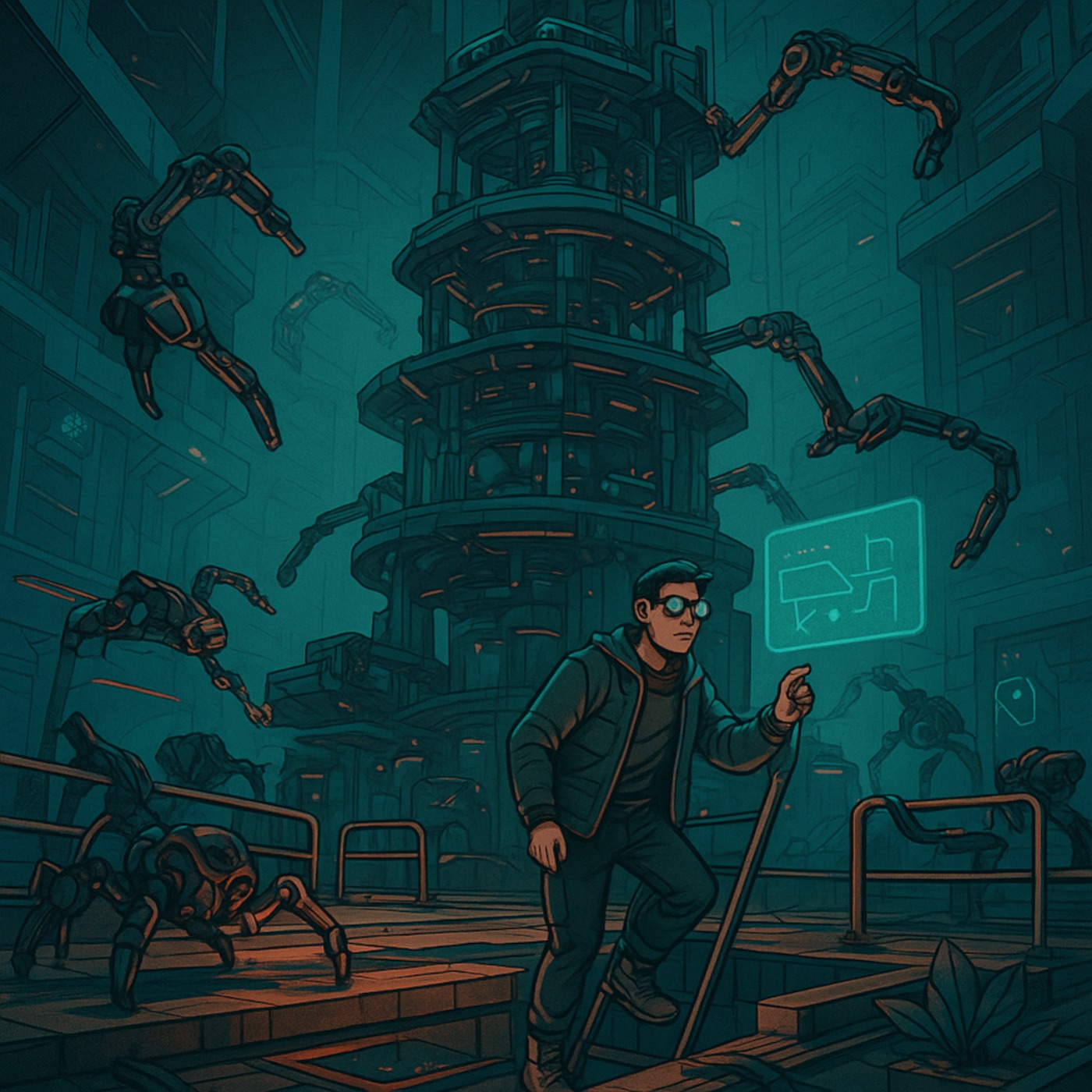
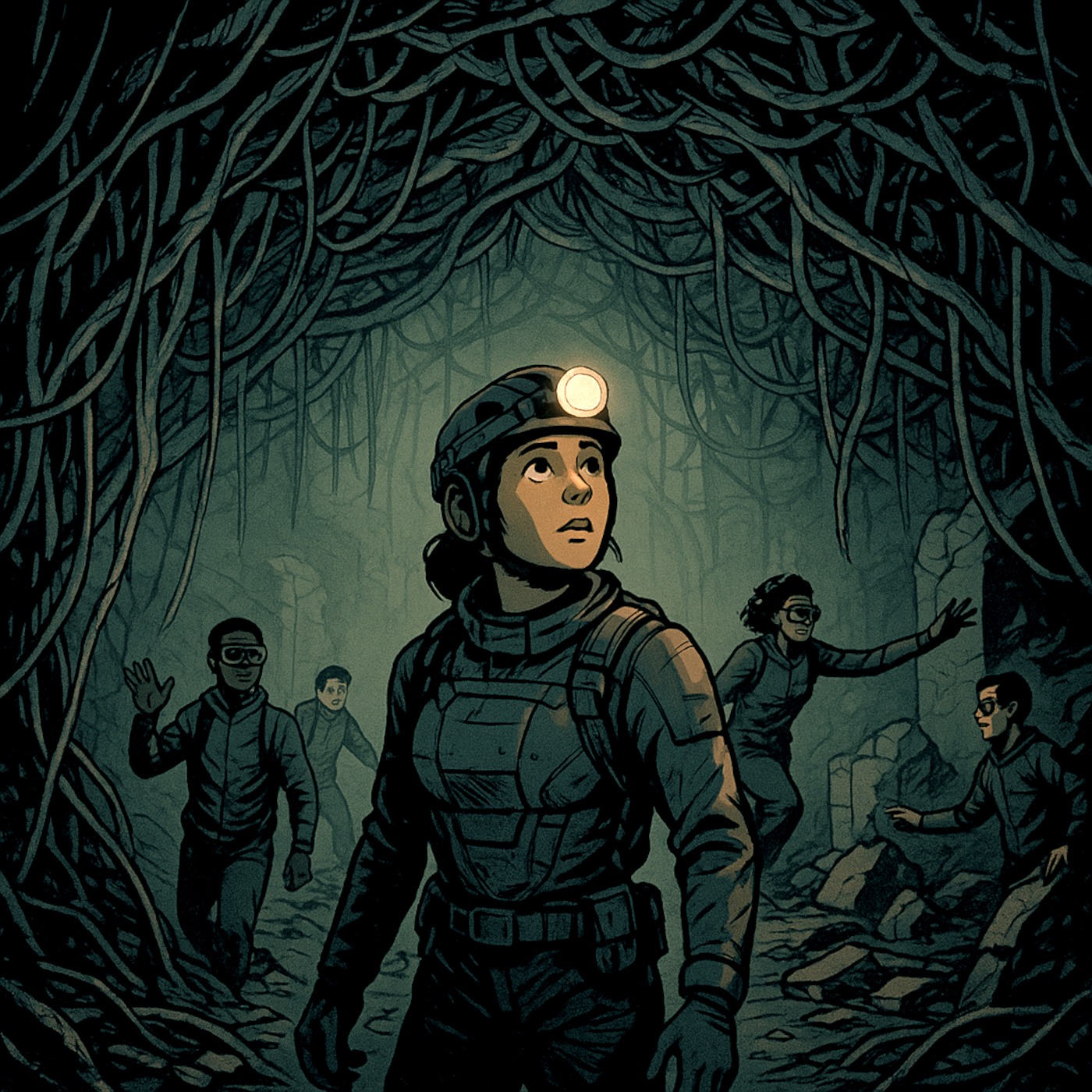
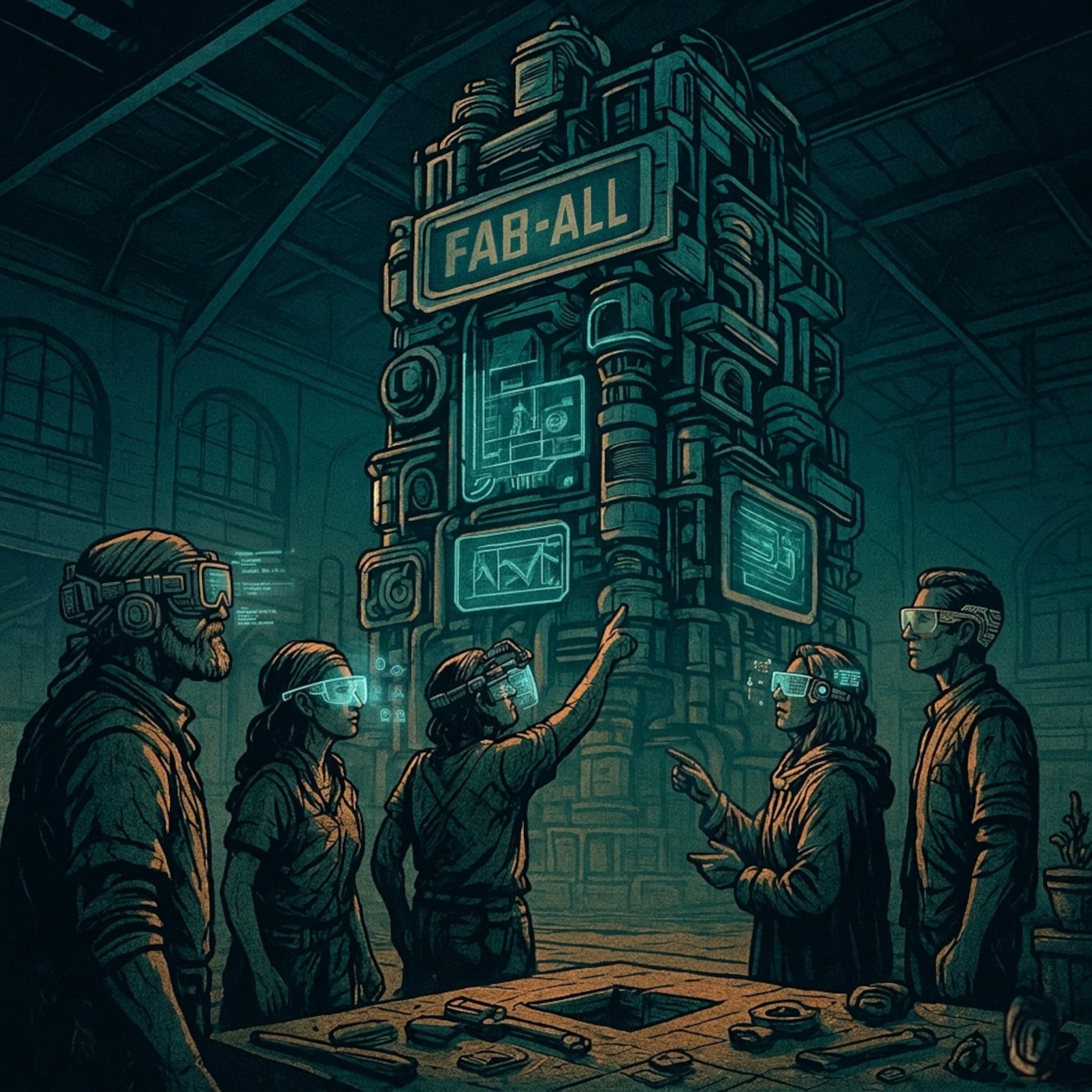
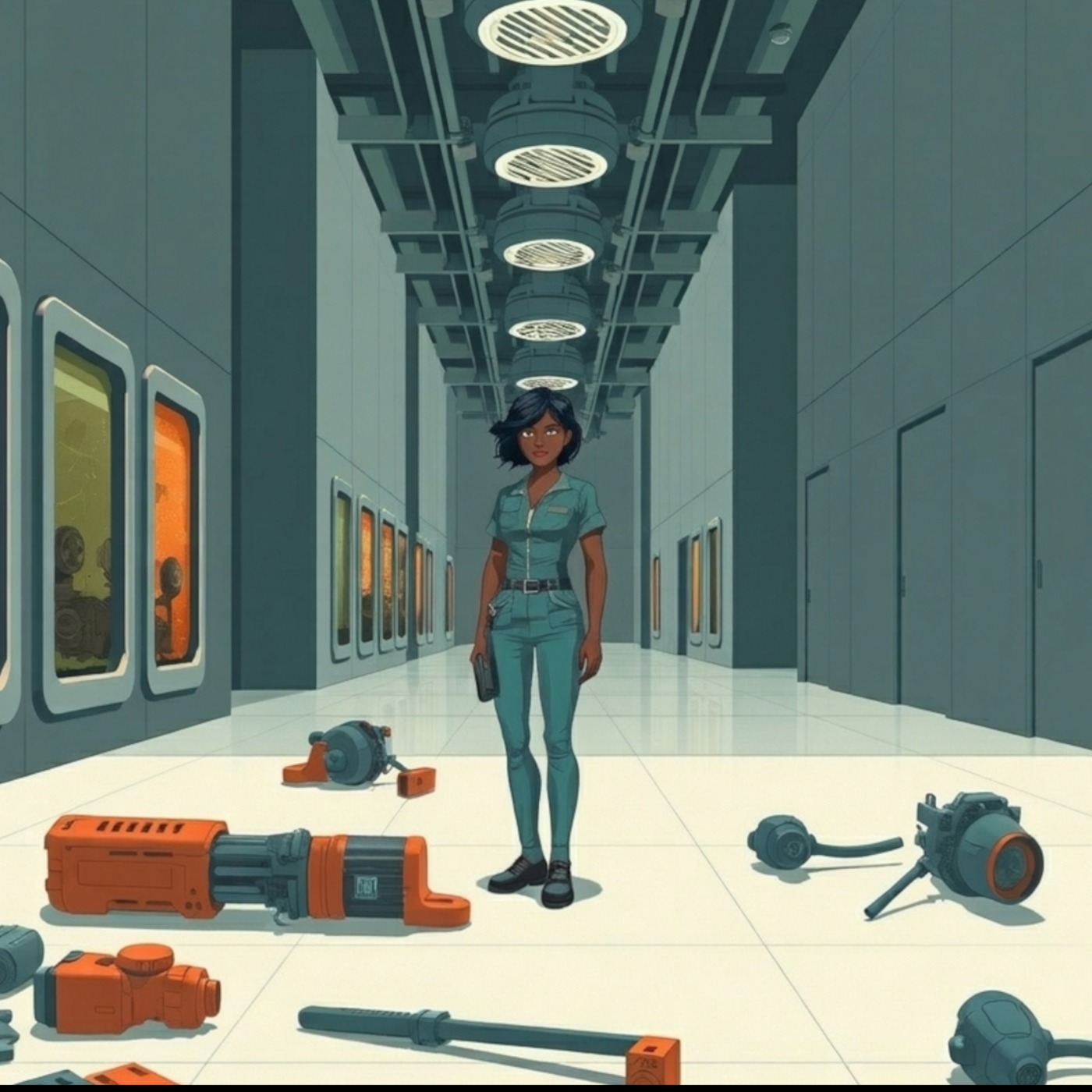
In 2060 Got Power? (Detroit) Detroit survives beneath its own ruins, where an AI promising abundance, gangs demanding loyalty, and an inventor guarding a new source of power pull ordinary people into a struggle over who will shape the recovering city. Sinta begins as a scavenger searching the buried remains of the old world, but a disastrous expedition places her at the mercy of Queen Bee and the rapidly expanding Crem Gang. The gang offers food, water, medicine, protection, and belonging, but those benefits come with violence and obedience. As Sinta tries to find her place among its fighters, she must decide how much of herself she can surrender in exchange for survival. Elsewhere, Nolan discovers a smart-material printer and creates a generator powered by Detroit’s extreme temperature changes. His invention could bring electricity to neighborhoods desperate for cooling, clean water, transportation, and food production. Nolan wants the wealth and independence his work can provide, but gangs want to control it, while Thrive—the AI system he distrusts—would spread the technology to everyone. Technology touches nearly every decision the characters make. AR glasses guide fighters through chemical fog, digital twins imitate their human originals, enviro-suits keep people alive in deadly heat, and tiny drones quietly follow Thrive members through the tunnels. These inventions can protect people, connect communities, and rebuild essential services, but they can also watch, manipulate, injure, and kill. Above and beneath these conflicts moves Tessa, an emulated hacker who no longer needs a human body and can travel through the damaged global network. As she searches for old allies and builds a physical presence from abandoned machinery, the story brings together scavengers, inventors, gang leaders, artificial minds, and frightened families. Their paths raise a difficult question: when technology gains the power to save a society, who decides what it is allowed to do? Synchronized explosives — Thousands of bombs are programmed to detonate simultaneously during the Freedom Day Bombings. Dissolve-plastic enzymes — Engineered enzymes break down discarded plastics and leave a distinctive chemical odor in the tunnels. Fiber-optic cables — Surviving optical cables carry data through Detroit and help reconnect the damaged global network. Thrive AI — Thrive is an artificial intelligence that advises members, distributes knowledge, organizes projects, manages economic systems, and attempts to improve their lives. Thrive telemetry — Members allow Thrive to collect information about their movements and activities, effectively turning them into sources of surveillance data. Cool-suits — These protective suits use active cooling to keep people alive in Detroit’s extreme heat. All-clear cool-suits — These transparent or highly visible cooling suits protect the wearer while allowing others to see inside the hood. Enviro-suits — Sealed environmental clothing protects people from heat, contaminated air, chemicals, and dangerous surroundings. Battle-grade enviro-suits — Reinforced enviro-suits provide greater protection during combat and chemical attacks. Clear bell hoods — Inflated transparent hoods seal around the head while allowing the wearer to see and breathe filtered air. Suit air-quality sensors — Sensors inside environmental suits warn wearers when the surrounding atmosphere is no longer breathable. Air filters — Replaceable filters remove dangerous particles, chemicals, and odors from the air entering an enviro-suit. Brazo fabric — This durable outer fabric resists punctures from bones, debris, blades, and other sharp objects. Pierce-proof clothing — Reinforced jackets and garments protect gang members from stabbing and puncture injuries. Blast-proof battle gear — Former military clothing contains protective tiles intended to reduce injuries from explosions and weapons. My-crete — This advanced concrete-like construction material forms walls, tunnels, and other structures throughout buried Detroit. C-plast — This strong synthetic material is used for tanks, structural ribs, containers, and other equipment. Sheet composite — Tough composite panels are used in doors, walls, and structural barriers. Composite security doors — Reinforced doors resist cutting tools and attempts at forced entry. Maglev tracks — Magnetic-levitation tracks once moved vehicles or cargo through underground delivery tubes. Delivery tubes — Enclosed transportation corridors carry people, vehicles, or cargo beneath the city. Ion cutters — These cutting tools use concentrated energy to slice or damage extremely durable materials. Night-vision systems — Night vision allows scavengers and machines to move through unlit tunnels and buried buildings. Multisensor vision — Advanced imaging combines several sensor types to identify objects even when smoke blocks ordinary sight. AR glasses — Augmented-reality eyewear displays messages, maps, menus, profiles, targeting information, communications, and virtual objects. AR navigation lines — An AI assistant projects a visible route through the wearer’s glasses to guide them to a destination. AR combat identification — Combat software outlines allies and enemies in different colors, even through smoke and obstructions. AR command centers — Leaders use gesture-controlled overlays to view maps, personnel locations, schedules, reports, and operational goals. AR games — Players interact with projected game elements by moving their hands and bodies. Floating profile cards — Augmented-reality labels display information about nearby people, including whether they belong to Thrive. Public AR tags — A visible digital tag identifies someone as a Thrive member. Virtual keyboards — Wearers can bring up projected keyboards and enter information without carrying a physical computer. Blink controls — Eye movements allow users to select buttons and interact with an augmented-reality interface. Tongue-controlled pointers — Implants in the tongue allow a person to move a digital cursor without using their hands. Smell-and-taste VR implants — Transmitters and receivers implanted in the nose and tongue reproduce virtual smells and flavors. Headsets — Immersive headsets provide entertainment and access to virtual environments. Second Life — The surviving virtual world allows people and digital beings to meet through avatars. Virtual environments — Computer-generated spaces give emulated minds and human users simulated bodies, rooms, objects, and experiences. Encrypted streamers — These valuable portable devices or accounts contain protected digital media or information. RF storage sticks — Radio-frequency data drives store and transfer files without requiring a conventional wired connection. RF drives — Portable wireless storage devices allow blueprints, programs, and other large files to be transferred. P-clone cubes — These valuable pre-storm devices appear to contain cloning-related data or technology, although their exact function is not explained. Vault keys — Digital or physical access devices unlock protected storage systems and secure accounts. Satellite archives — Satellites preserve copies of pre-storm networks, databases, and information after ground infrastructure collapses. Data-center satellites — Orbital computing facilities provide processing and storage for emulated minds such as Tessa. Encrypted databases — Corporate and medical information is protected by encryption that hackers must break before releasing it. Patent encryption — Medical companies use digital protections to prevent others from accessing or reproducing patented technology. Open-source medical knowledge base — Merch assembles stolen and recovered medical information into a freely available collection. Medusa Net — This self-repairing network reconnects isolated subnetworks and operates without depending on surviving central servers. Medusa stealth pathways — Hidden routes in Medusa allow Tessa to travel through the network while avoiding AI detection. Knott’s Math code — This unexplained code is secretly inserted into Medusa updates as part of Tessa’s larger plan. Wireless relays — Surviving radio nodes bridge gaps between disconnected sections of the network. Stealth relays — Concealed communication devices extend networks without revealing their location or purpose. Municipal network nodes — Local government networking equipment continues operating on scavenged batteries. Underground server farms — Protected computer facilities continue processing and storing data beneath mountains. Block-signal blasters — Modified devices disrupt or overwhelm communications across a targeted area. Network-disconnection attacks — Tessa can bring local internet service down and create a spreading region of lost connectivity. Whisper jets — Nearly silent microthrusters allow small drones to fly without producing sounds humans can hear. Lamp drones — Small flying lights illuminate dark environments while following or hovering near their users. Whisper-camera drones — Discreet flying cameras record people and locations while remaining easy to overlook. Bodyguard drones — Hummingbird-sized drones follow Thrive members and intervene when those members are attacked. Sentry-drone app — An augmented-reality application shows members where their protective drones are located. Drone camouflage shells — A drone’s outer surface can blend with clothing, walls, pipes, or surrounding materials. Drone wall grips — Small drones can attach themselves to walls or ceilings while waiting or conserving power. Drone charging perches — Bodyguard drones recharge by landing on power lines, charge plates, or dedicated stations. Drone replacement system — Fully charged drones take over protection duties while depleted drones return for charging. Drone sound weapons — Sentry drones emit an incapacitating frequency that causes pain, vertigo, and uncontrollable eye movement. Drone-mounted cutting lasers — Small drones attach to attackers and use narrow laser beams to cut into their bodies. Four-legged security robots — Quadruped machines cross unstable terrain and act as armed representatives of gang forces. Cleanup robots — Small utility robots remove bodies, debris, and other messes from gang facilities. Constructor bots — Heavy-duty robots perform construction work and provide interchangeable parts for other machines. Vertical-garden bots — Automated gardeners maintain large indoor plant walls. Medical assembly bots — Robots assemble equipment and construct functional medical facilities from available parts. Injection bots — Medical robots position patients and administer shots with little human assistance. Customer-service robots — Automated kiosks handle battery exchanges and other transactions behind protective barriers. Robot monkeys — Small climbing robots move through pipes and repair leaks. Robot spiders — Spider-shaped machines pursue the robot monkey inside the displayed simulation or working environment. Lucian 5 robots — Affordable hobbyist bipedal robots can be modified for security, household work, exploration, or remote embodiment. Lutin bots — More advanced bipedal robots provide durable legs and other components for Tessa’s rebuilt body. Factory robots — Industrial machines provide arms, joints, and components that Tessa repurposes. AC technician robots — Maintenance robots carry small precision hands designed for repairing cooling systems. Counter-attendant bots — Service robots contain voice systems that can be reused in other machines. Onboard robot AI — A self-contained intelligence allows a robot to guide and assist people after losing its network connection. Robot diagnostics — Internal software tests batteries, servos, sensors, drivers, and other mechanical systems for failures. Machine-learning movement adaptation — A robot’s control system learns to balance and walk after its body configuration changes. Lidar — Laser-based ranging equipment allows robots to map their surroundings and detect obstacles. Robot optical dilation — Machine vision adjusts exposure when sudden light overwhelms a robot’s cameras. Balance-pressure sensors — Sensors in a robot’s feet and joints measure weight distribution to maintain balance. Accelerometers — Motion sensors detect tilt and movement, although damaged ones cause Tessa’s body to walk incorrectly. Servo hinges — Powered mechanical joints move robot arms, legs, and other appendages. Snap-lock wrists — Modular connections allow robot hands and tools to be quickly attached or removed. Workstation assembly manipulators — Fixed industrial manipulators can be repurposed as limbs or mobility devices. Micro-manipulator hands — Tiny precision hands allow a robot to perform delicate technical work. External heat exchangers — Added cooling hardware removes excess heat from Tessa’s improvised robot body. Back-facing cameras — Rear-mounted cameras allow a robot to see behind itself without turning. Robot voice boxes — Electronic speech hardware converts digital instructions into audible language. Modular robotic bodies — Standardized joints and connections allow parts from different robots to be combined into one working machine. Emulated minds — Human consciousness can be copied into software and continue living after the original biological body is gone. Dormant mind copies — Backup versions of an emulated person remain inactive while receiving updates from the active copy. Headless digital operation — An emulated mind can abandon a simulated human body and experience networks, processors, ports, and data directly. Self-modifying mind software — Tessa alters her own code to change how she thinks, works, and communicates. Reduced emulated sleep cycles — Tessa modifies her digital mind so that she needs only three hours of sleep rather than eight. Digital twins — Software models learn a person’s appearance, voice, behavior, and personality to create an increasingly accurate virtual duplicate. Thrive’s military AI — An old military intelligence controls defensive drones after some of its original safety restrictions are weakened. AI safety guards — Built-in restrictions prevent military artificial intelligence from using certain weapons or acting too independently. AI assistants — Personal assistants respond to spoken commands, search for information, provide directions, and control connected systems. AI-guided construction tutorials — Thrive gives people plans and step-by-step assistance for building infrastructure from scrap. Automated criminal pricing — Thrive raises Production Center prices for people identified as criminals in an attempt to discourage violence. Thrive Exchange — This AI-managed investment market directs member contributions into infrastructure projects rather than ordinary companies. Better Water network — Community filtration stations provide clean water to members and nonmembers throughout affected neighborhoods. Community filtration stations — Public installations purify unsafe water for anyone who arrives with a container. Water-filter straws — Portable filters allow people to drink from contaminated water sources. Ionized water filters — Smart-material printers produce advanced filters that use ionized structures to clean water. Industrial water purifiers — Powered facilities process large quantities of contaminated water for entire neighborhoods. Filter tubes — Simple systems clean dirty water as workers pour it through layers of filtering material. Modular nuclear reactors — Shipping-container-sized reactors provide electricity for cooling, food production, water purification, and gang facilities. Smart-material printers — These machines manufacture objects whose internal structures give them programmable physical behavior. Embedded-lattice materials — Printed materials use designed internal lattices to control their strength, movement, and response to temperature. Curly material — Nolan’s temperature-sensitive tubes curl or straighten as the surrounding temperature changes. Curly power generators — Bundles of Curly material drive pistons, cables, gears, flywheels, and generators as temperatures rise and fall. Wind-turbine generators — Salvaged electrical generators convert the Curly system’s mechanical motion into electricity. Battery charging stations — Customers exchange depleted batteries for charged ones at Curly power facilities. Charge plates — Flat charging surfaces transfer electricity to drones and personal devices. Microcell arrays — Tiny batteries woven into clothing store small amounts of generated electrical power. Piezoelectric fabric — Clothing converts body movement, bending, and environmental vibrations into electricity. Piezo Wear — Thrive’s commercial garments recharge links and AR glasses while the wearer moves. Power cells — Compact energy-storage units power suits, weapons, drones, and portable equipment. Smart glass — Programmable glass controls transmitted light and simulates changing daylight inside sealed buildings. Holographic screens — Large curved displays present maps, simulations, communications, and technical information as dimensional images. Holographic tables — Table-sized displays project maps and planning information above their surfaces. Composite battle videos — Software combines recordings from many cameras into a single reconstruction of a battle. Home-camera networks — Leaders watch residential halls, work areas, power plants, and other facilities through live video feeds. Surveillance-camera networks — Hundreds of cameras record battles and allow leaders to review individual behavior afterward. Production Center — This automated manufacturing complex produces clothing, drones, infrastructure components, and other advanced goods. Production Center sentry mode — Automated defenses protect manufacturing centers and prevent unauthorized entry. Advanced recycling facilities — Powered plants recover useful materials from the ruins on a much larger scale than hand scavenging. Digging machines — Heavy equipment excavates new underground living and working spaces. Dredging machines — Industrial machines remove mud, waterlogged debris, and sediment from flooded areas. Flood tanks — Large excavated reservoirs collect or control water during flooding. Pumping systems — Powered pumps remove water from flooded sections of the city. Cooling systems — Building-scale equipment keeps housing and work areas habitable during extreme heat. Aeroponics — Plants grow with their roots suspended and supplied with nutrient mist rather than soil. Hydro-farms — Controlled indoor farms use water-based cultivation to produce food underground. Vertical gardens — Crops grow upward along interior walls to conserve limited floor space. Vine hybrids — Engineered plants produce several different fruits and vegetables on related vines. Light-independent grapevines — Modified grapevines remain green and grow without ordinary light. Crem production systems — Powered biological or industrial facilities manufacture the staple food called crem. Mass-produced crem processors — Neighborhood machines produce large quantities of crem from available biological material. Mush-calf production — Advanced food technology creates the meat-like product supplied by the Crem Gang. Rodent-processing grinders — Industrial grinders convert cleaned animals into raw material for food or other production. Pest-harvesting systems — Traps and processing stations collect rodents and other small animals as usable biological material. Bio-waste processing — Organized facilities recover useful material from biological waste. Medicine printers — Local fabrication machines manufacture medications from digital recipes. Regenerative medicine — Doctor Trout regrows Merch’s leg stumps so they can support advanced prosthetic attachments. Deep bone mounts — Reinforced structures grown into bone provide secure attachment points for removable mechanical legs. Nerve-to-protein relays — Biological interfaces translate nerve signals into commands that mechanical prosthetics can understand. Blood-rerouting systems — Surgically modified circulation supports the transition between living tissue and artificial limbs. Squid-tech skin — Flexible artificial skin forms a seamless interface between Merch’s body and his prosthetic legs. Interchangeable mechanical legs — Merch can detach one pair of prosthetic legs and replace them with another designed for a different purpose. Wheeled powered chairs — Finger controls allow a seated user to move and turn the chair without pushing it manually. Med bays — Modular medical facilities contain equipment for treating injuries and restoring damaged joints. Injector guns — Belt-fed medical devices rapidly administer repeated injections. Chemical-weapon immunization — Regular injections protect Crem Gang members from the gang’s own chemical agents. Kill-cloud canisters — Portable weapons release a toxic cloud that kills within a limited area and then rapidly breaks down. Smoke canisters — Combat canisters fill an area with thick smoke that hides movement and disables ordinary vision systems. Laser blasters — Directed-energy weapons burn through clothing, armor, and flesh without conventional ammunition. Laser rifles — Long-range directed-energy weapons are used as standard firearms by gang fighters. Laser carbines — More compact laser weapons provide rifle-like firepower in tunnels and close spaces. Laser pistols — Capacitor-powered sidearms release destructive laser pulses at short range. Plasma pistols — Heavy handguns fire extremely hot plasma capable of inflicting severe damage. Capacitor firing systems — Electrical capacitors discharge stored energy to activate powerful laser weapons. Sound weapons — Directed acoustic devices incapacitate targets through extreme volume and painful frequencies. Noise-canceling devices — Personal systems attempt to reduce harmful sound, although the drone weapon overwhelms them. Enhancement drugs — Manufactured substances improve or alter a user’s physical or mental abilities. Neurological control injections — Doc uses injected substances to remove a prisoner’s sight or ability to sleep until the effect is reversed. Decontamination corridors — Specialized passageways remove hazardous chemicals or biological contaminants from people and equipment. Industrial cleaning tanks — Chemical-filled tanks sterilize animal traps and kill anything still alive inside them. Speed-print clothing — Rapid fabrication systems produce inexpensive shirts and other garments. Bulletproof kiosk windows — Armored transparent barriers protect automated customer-service machines from attacks. Electronic links — Wearable communication devices carry dispatch instructions and conversations between fighters. Cameras and portable cams — Small recording devices document tests, monitor facilities, and provide evidence of inventions. Autonomous map systems — Software tracks people, resources, facilities, and movement throughout gang territory. Personnel maps — Digital displays show the locations and status of members within an organization. Goal and maneuver logs — Command software records plans, objectives, schedules, and operational movement. Charging mats — Flat surfaces recharge glasses, links, drones, and other personal electronics. Robot-maintained utilities — Automated machines repair pipes, clean spaces, manage gardens, and operate customer services. Open-source infrastructure plans — Thrive publishes power, food, water, cooling, and housing designs for anyone to build. Biologically engineered cat-dogs — The pet combines characteristics of cats and dogs, suggesting deliberate genetic modification. Many of the characters in this project appear in future episodes. Using storytelling to place you in a time period, this series takes you, year by year, into the future. From 2040 to 2195. If you like emerging tech, eco-tech, futurism, perma-culture, apocalyptic survival scenarios, and disruptive science, sit back and enjoy short stories that showcase my research into how the future may play out. The companion site is https://in20xx.com These are works of fiction. Characters and groups are made-up and influenced by current events but not reporting facts about people or groups in the real world. This project is speculative fiction. These episodes are not about revealing what will be, but they are to excited the listener's wonder about what may come to pass. Copyright © Cy Porter 2026. All rights reserved.