Find partners
I’m Glad I Know That Now!

I’m Glad I Know That Now!

Hosted by M.-H. Tsai, L. Rees, J. Parlamis, M. A. Gross, D. A. Cai

BusinessInterviews guests

Episodes

37

Latest episode

Apr 2026

Language

EN

About the show

“I’m Glad I Know That Now!” features interviews with top scholars on a particular research topic that they’ve studied and is more general in content and focus.

Listen to episodes

37 recent
April 13, 2026Episode 341 hr 7 min

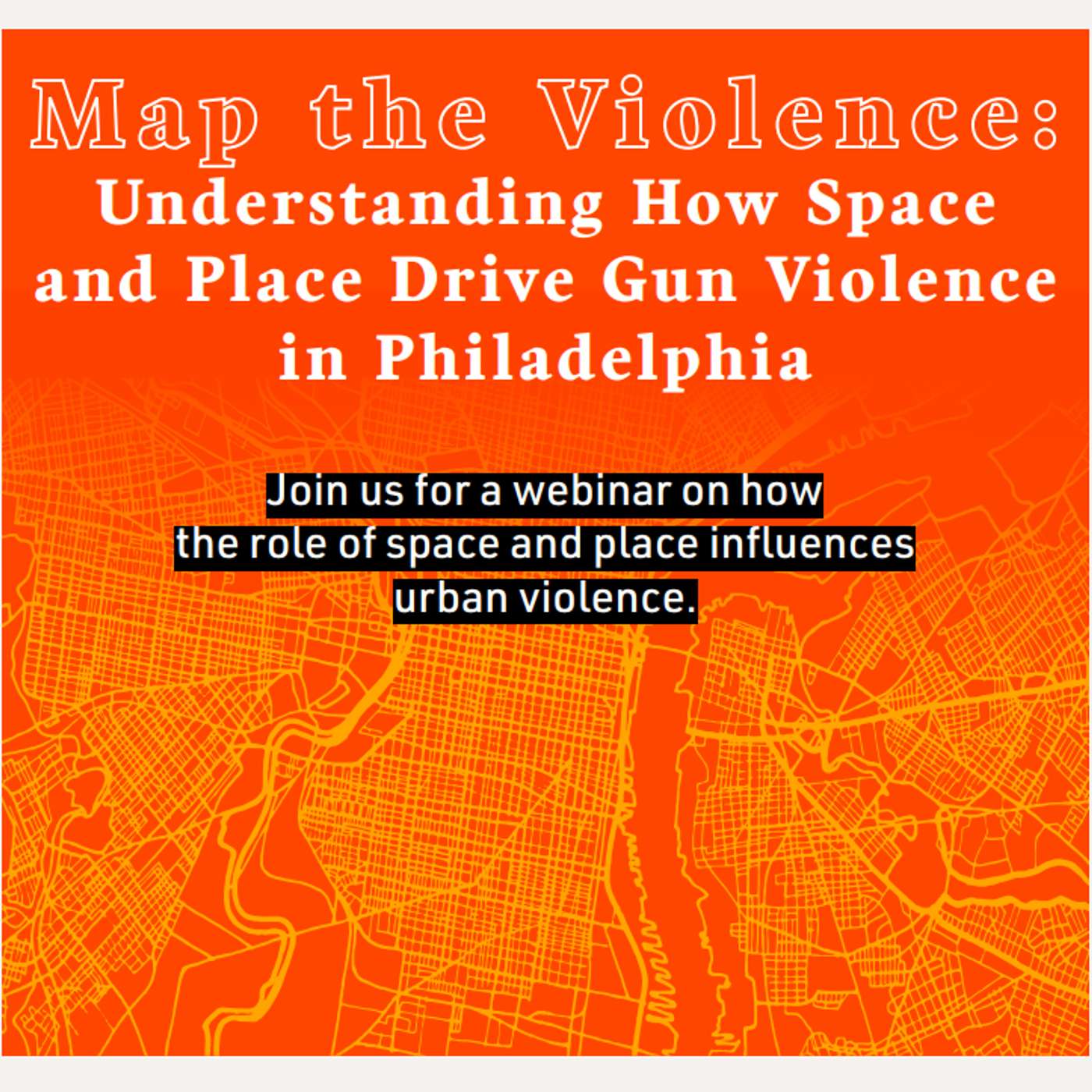
Mapping the Violence: Understanding how Space and Place Drive Gun Violence in Philadelphia, with Rev. David W. Brown and Dr. Quaiser Abdullah

In this webinar recording, Deborah Cai talks with David Brown and Quaiser Abdullah about how the role of space, which is more temporary, and place, which is more permanent, influences urban violence. In 2025, compared to 2024, Philadelphia’s rate of gun violence dropped by 24.5%, yet efforts to reduce this violence still have a long way to go.Deborah Cai begins by providing a broader perspective on space and its relation to conflict management by discussing the organizational literature on ways that space is managed can impact conflict in the workplace and the sociological literature that considers how space management can impact conflict in neighborhoods. Next, David Brown draws from his work as Executive Director of the Civic Coalition to Save Lives and as someone highly engaged in Philadelphia neighborhoods to discuss how space and place impact violence in Philadelphia. In the third segment, Quaiser Abdullah applies a conflict management lens—drawn from his work as a scholar-practitioner, imam, and civic engagement leader—to how space and place shape trust, legitimacy, and participation across Philadelphia neighborhoods. In the final segment of the webinar, David, an ordained minister, and Quaiser, an imam, talk together about their work with religious communities across the city and the role of religion and faith as they consider space and place in the city.These episodes were originally conducted as a webinar sponsored by the Conflict Management Division of the Academy of Management as part of host Deborah Cai's work as a CM Division Scholar in Residence. Biographies of the discussants: Dr. Deborah Cai, Scholar in Residence at the Academy of Management’s Conflict Management division and Acting Dean and Professor in Klein College of Media and Communication at Temple UniversityReverend David W. Brown, Assistant Dean for Community and Communication and Associate Professor of Instruction at the Klein College of Media and Communication at Temple University, Executive Director of the Civic Coalition to Save LivesDr. Quaiser Abdullah, Assistant Professor of Instruction in Klein College of Media and Communication at Temple University and past co-president of the Association for Conflict Resolution


November 20, 2025Episode 3338 min

Collaborative Conflict Culture, with Dr. Jessica Katz Jameson

Have you ever wondered how to communicate well to manage conflict? We often think of conflict as inherently bad, but instead, if we think of it as normal and natural, could there be such a thing as collaborative conflict management? It turns out that although we often shy away from conflict, it can actually be useful when we know how to handle it well. In particular, when we approach interactions with a mindset of Listening, Engaging, Acknowledging, Rapport building and Nurturing—that is, using the LEARN framework—we not only build trusting relationships, we also contribute to a workplace culture of collaboration that makes it easier to have difficult conversations when conflicts arise. Listen to this episode for a fascinating and thought-provoking conversation with Dr. Jameson about her research over the past thirty years on workplace conflict, and how you can more effectively manage yourself and others in these situations.   Dr. Jessica Katz Jameson bio:Jessica Katz Jameson is Professor and Head of the Department of Communication at North Carolina State University. She studies organizational communication and conflict management, with special attention to third party intervention, the roles of identity and emotion in conflict, and interdisciplinary collaboration. She is author of Communication for Constructive Workplace Conflict (Wiley), which received a 2023 Outstanding Textbook Award from the National Communication Association Organizational Communication Division. Her work appears in outlets including Journal of Applied Communication Research, Negotiation and Conflict Management Research, Negotiation Journal, and Western Journal of Communication. She is a community engaged faculty fellow and serves as a volunteer mediator for the State of North Carolina and NC State University. Jessica received a Ph.D. in Communication from Temple University in Philadelphia, Pennsylvania.  Works referenced in the episode:Jameson, J. (2023). Communication for Constructive Workplace Conflict. New York: Wiley-Blackwell.

September 30, 2025Episode 3234 min

Part III: From Micro to Macro, How Initial Ideas Lead to Societal Implications with Dr. Ellen Giebels

Euwema, M., & Giebels, E. (2024). Conflict management and mediation. Edward Elgar. https://doi.org/10.4337/9781035331536

September 30, 2025Episode 3121 min

Part II: From Micro to Macro, How Initial Ideas Lead to Societal Implications with Dr. Randall Peterson

Peterson, R. S., & Brown, G. (2022). Disaster in the Boardroom: Six Dysfunctions Everyone Should Understand. Palgrave MacMillan. Peterson, R. S., & Mannix, E. A. (Eds.) (2003). Leading and Managing People in the Dynamic Organization.  Erlbaum.

September 30, 2025Episode 3023 min

Part I: From Micro to Macro, How Initial Ideas Lead to Societal Implications with Dr. Tricia Jones

Jones, T. S., & Brinkert, R. (2008). Conflict coaching: Conflict management strategies and skills for the individual. Thousand Oaks, CA: Sage Publications.“Conflict Coaching: Adding a Critical Forum to Help Fix the Fuss”Tricia S. Jones, Prof. Temple University Where It Began – the MicroCommunication Scholar; Focus on Interaction Analysis and Stochastic Modeling in Divorce and Child-Custody Mediation (1985, 1989)Nascent ADR Field (Pound Conference 1977; burgeoning court mediation programs; fueled by need for responsive legal systems)State Justice Institute Grant (1996); Under-Utilization of Mediation; Concerns About Mediation EfficacyBuilding Conflict Management Systems and Processes to Empower PartiesWHAT WAS MISSING? A Theory-Informed One-on-One Third Party ADR ProcessCONFLICT COACHING: PURPOSE, PROCESS, SYSTEMS APPLICATIONSPURPOSE – CONFLICT ANALYSIS FOR STRATEGIC ACTION AND EMPOWERMENTPROCESS – Theory Into Practice; CCM MODEL (Jones & Brinkert, 2008)•      Narrative Theory; Narrative Mediation•      Drivers of Conflict; Identity, Emotion and Power•      Visioning; Construction of Future Narrative•      Skills Development for ImplementationSYSTEMS CONTEXTS AND APPLICATION – Developing CC for Systems Fit and Support Conflict Coaching Applications – The Macro WorkplaceFederal SectorADRA 1996, mandatedConflict Coaching included as Third Party Process under MD-110 and ADRA Inclusion in most Fed AgenciesIncreasingly Used as Pre-Mediation ProcessInternational OrganizationsUnited Nations, Secretariat and UNHCRWorld Bank, in Mediation Program ServicesPrivate Sector Ombuds & ADR, HR Community MediationNew York, NYUCS/NYSDRA (similar statewide systems in Maryland (MACRO), Heartland Mediation Association, Georgia, etc.62 County Community Mediation System; over 1,000 conflict coaches since 2013; infused in all areas of service (family, court, youth-based) Special EducationCA SELPAs, CADRE (OSERs National TA Organization)Special education conflict coaching throughout CA and CADRE national pilot project 2025-2027 Challenges/Opportunities and CatalystsChallenges and OpportunitiesMediation-centric field (then more than now)Maintaining frame of Conflict Coaching as ADR process rather than counseling/ “coaching”Getting caught in “only one best model” dynamicUnderstand and respect limits of the intervention Catalysts, Tidbits and InspirationsMeet Their Need (understand the system; honor the need)Follow the Heat (engage the emergent energy)Find and Nurture Champions of Innovation (Kings County – Brooklyn Criminal Courts)Dedicate Yourself to Theory to PracticeLeverage Fertile Fields (don’t expend energy and resources in the desert)Build Partnerships Outside the “Tower”; the “academy” may not be the best incubatorIf “They” Build It “They” Will Come (and Learn to Let Go)

August 7, 2025Episode 2930 min

Part II: Fighting Gun Violence in Philadelphia, with Dr. Jennifer Midberry

In this two-part episode, we first talk with David Brown about his work as Executive Director of the Civic Coalition to Save Lives and efforts to reduce gun violence across Philadelphia, which declined by 41% from 2023 through 2024, but still has a long way to go. Prevention, intervention, and enforcement (PIE) are three pillars of violence prevention; these pillars require collaboration with communities. So how do those working to prevent gun violence engage with the community with intentionality and with respect?  In part two, we talk with Dr. Jennifer Midberry, Associate Professor of Journalism in Klein College, about how she conducts research that addresses the ethics of journalistic coverage of gun violence. She will address her own research as well as talk about methods that rely on community members to understand issues of trauma and media coverage related to gun violence in a large urban setting.  These episodes were originally conducted as a webinar sponsored by the Conflict Management Division of the Academy of Management as part of host Deborah Cai's work as a CM Division Scholar in Residence.

August 7, 2025Episode 2824 min

Part I: Fighting Gun Violence in Philadelphia, with David Brown

In this two-part episode, we first talk with David Brown about his work as Executive Director of the Civic Coalition to Save Lives and efforts to reduce gun violence across Philadelphia, which declined by 41% from 2023 through 2024, but still has a long way to go. Prevention, intervention, and enforcement (PIE) are three pillars of violence prevention; these pillars require collaboration with communities. So how do those working to prevent gun violence engage with the community with intentionality and with respect? In part two, we talk with Dr. Jennifer Midberry, Associate Professor of Journalism in Klein College, about how she conducts research that addresses the ethics of journalistic coverage of gun violence. She will address her own research as well as talk about methods that rely on community members to understand issues of trauma and media coverage related to gun violence in a large urban setting. These episodes were originally conducted as a webinar sponsored by the Conflict Management Division of the Academy of Management as part of host Deborah Cai's work as a CM Division Scholar in Residence.

March 6, 2025Episode 2738 min

Negotiating Disarmament Treaties, with Jenifer Mackby

Jenifer Mackby is a Consultant at the National Academy of Scientists and the InterAcademy Partnership, where she is co-director of a project on a Biological Weapons Convention Scientific Advisory Body. She is also a Non-Resident Executive Fellow at the Geneva Centre for Security Policy, and a Senior Advisor at the Partnership for a Secure America. Previously, she was a Fellow at the Center for Strategic and International Studies, a Senior Fellow at the Federation of American Scientists, and a Senior Political Affairs Officer at the United Nations. She has led projects on U.S.-U.K. Nuclear Cooperation, Asian Trilateral Nuclear Dialogues, Debating 21st Century Nuclear Issues, and a Russian-European project on bioterrorism, among others. She served as Secretary of the negotiations on the Comprehensive Nuclear-Test-Ban Treaty (CTBT), the Working Group on Verification of the CTBT Organization Preparatory Commission, a Review Conference of the Biological Weapons Convention, a UN Conference on Outer Space, and the Environmental Modification Convention Review Conference. Ms. Mackby was selected as Rapporteur for numerous international meetings, including the OSCE, European Commission Interparliamentary Conference, Wilton Park, and a study on Strengthening the IAEA. She has written extensively on international security and non-proliferation and co-authored or contributed to eight books, including: The Nuclear Tipping Point: Why States Reconsider their Nuclear Choice; Detect and Deter: Can Countries Verify the Nuclear Test Ban?; The Final Test; Global Biosecurity: Towards a New Governance Paradigm. She has written articles for theNew York Times, Newsweek, the Bulletin of the Atomic Scientists, The Nonproliferation Review, Arms Control Today, and other journals. She is fluent in French and Spanish, and has spoken on the above subjects at meetings in Austria, Canada, Chile, China, Japan, Jordan, the Netherlands, Qatar, South Korea, Switzerland, the U.K., and the U.S.

November 16, 2024Episode 2628 min

Crisis-Ready Teams: Data-Driven Lessons from Aviation, Nuclear Power, Emergency Medicine, and Mine Rescue

Mary (¨Mara¨) J. Waller (Ph.D., Univ. of Texas at Austin; MS, Univ. of Colorado - Denver; BBA, Univ. of Oklahoma - Norman) is Senior Research Scholar at the Department of Management, Colorado State University, past Senior Fellow at the U.S. Army Research Institute for Behavioral & Social Sciences, Professor Emerita at York University (Canada), and the 2024 INGRoup McGrath Award recipient for lifetime achievement in the study of groups. Her program of research centers on improving our understanding of team effectiveness during crises and critical situations."Crisis-Ready Teams: Data-Driven Lessons from Aviation, Nuclear Power, Emergency Medicine, and Mine Rescue” coauthored with Seth Kaplan.  Published by Stanford Business Books (2024).

October 17, 2024Episode 2530 min

Power, with Dr. Huisi (Jessica) Li

Have you ever wondered how feeling powerless can impact your behavior? It turns out that although we more often study those with high power—or those we think have high power, such as leaders—there’s a lot we do know about the effects of low power. In particular, a growing body of research suggests caution is warranted: powerlessness changes people’s behaviors in a variety of undesirable ways, such as telling self-promotional lies, competing covertly, justifying a flawed organizational system, and failing to leverage one’s BATNA in negotiations. However, relative power and status differences are ever-present, so it’s important that we learn how to manage and mitigate these downsides of low power. Listen to this episode for some fascinating and thought-provoking recent work on the realities we are likely to face in experiencing and being a part of situations that involve power differences between people, and how you can more effectively manage yourself in these situations.  Dr. Jessica Li bio:Huisi (Jessica) Li is an Assistant Professor of Management and Organization at the University of Washington. Li’s research on the corruptive and undesirable effects of lacking power complements established findings on the corruptive nature of power itself. She also examines how power and status hierarchies impact team performance, especially within diverse and dynamic teams. Li employs diverse methodologies, including field surveys, experiments, archival data, and qualitative methods. Her work has been published in top journals, including Organization Science, Journal of Applied Psychology, Journal of Personality and Social Psychology, and Research in Organizational Behavior. She has collaborated with organizations like the U.S. Military Academy at West Point, Darden, etc. She serves on the editorial boards of Organization Science and Management and Organization Review and as a rep-at-large for the Conflict Management Division of the Academy of Management.Articles referenced in the episode:Zhong, Y & Li, H. (2023) Do Lower-Power Individuals Really Compete Less? An investigation of Covert Competition. Organization Science. https://doi.org/10.1287/orsc.2023.1684Li, H., Wang, X., Williams, M, Chen., Y.-R., & Brockner, J. (2023) My Boss is Younger, Less Educated, and Shorter Tenured: When and Why Status (In)congruence Influences Promotion System Justification. Journal of Applied Psychology. https://doi.org/10.1037/apl0001086Li, H., Chen, Y.-R., & Hildreth, J. A (2022). Powerlessness also Corrupts: Lower Power Increases Self-Promotional Lying. Organization Science. ttps://doi.org/10.1287/orsc.2022.1630

Is this your show?

Claim this listing to keep it up to date, reach guests who want to pitch you, and manage bookings with Guestify.

Claim this listing

More Business podcasts