Humans of Agriculture brings you inside the conversations, careers and stories shaping agriculture. Hosted by Oli Le Lievre, the podcast gives listeners access to the people, ideas and experiences you might not otherwise get close to.
Listen to episodes
60 recent
October 14, 2026Episode 17845 min
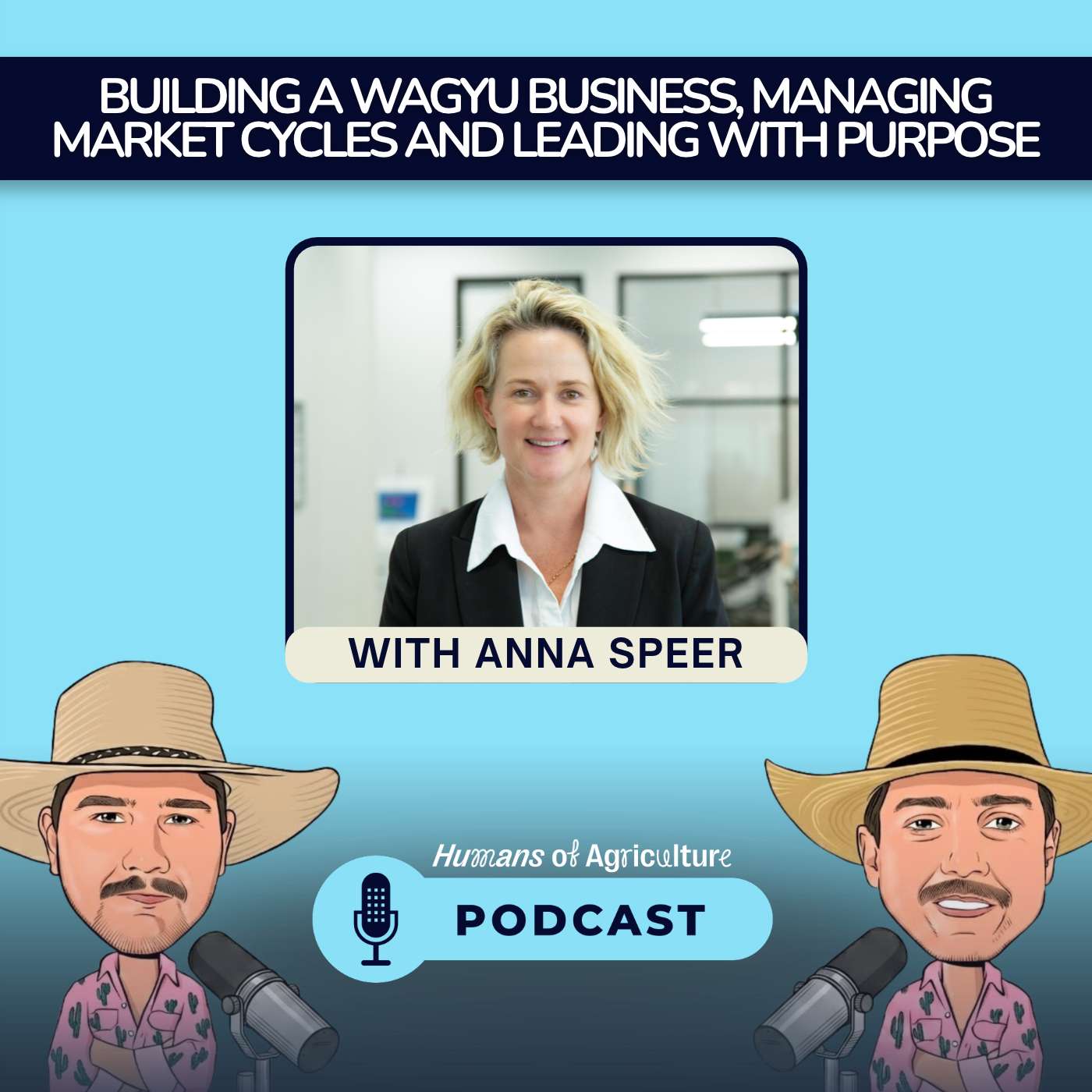
Tom & Mick: Building a Wagyu Business, Managing Market Cycles and Leading with Purpose with Anna Speer
Welcome to the Tom & Mick Show! This week, Tom & Mick sit down with Anna Speer, whose career has taken her from teaching and AgTech to leadership roles with AuctionsPlus, Australian Agricultural Company, Woolworths and now Stone Axe. Anna shares what she’s learnt about building strong teams, making commercial decisions and creating long-term value, while unpacking how Stone Axe is building a vertically integrated Wagyu business from conception through to consumption. In this episode: Anna’s unconventional career through agriculture and AgTech What private equity brings to an agricultural business How vertical integration can reduce exposure to market volatility Using 10-year herd modelling to make better decisions today Managing rising feed, fuel and labour costs Why building your own brand isn’t always the best strategy Wagyu genetics, premium markets and future growth Building teams and adapting your leadership to different people Chapters 00:00 Introduction and catching up with Anna Speer 03:01 Anna’s career through agriculture and AgTech 07:49 From Woolworths to Stone Axe 12:39 Private equity and commercial decision-making 19:29 Wagyu genetics and growing Stone Axe 26:14 Managing market cycles and supply chains 31:20 Herd modelling and planning 10 years ahead 36:00 Consumer trends and Wagyu’s premium market 40:04 Managing rising input costs 44:40 Branding, Angus and supply chain partnerships 50:17 Leadership and building better teams
October 5, 2026Episode 17721 min
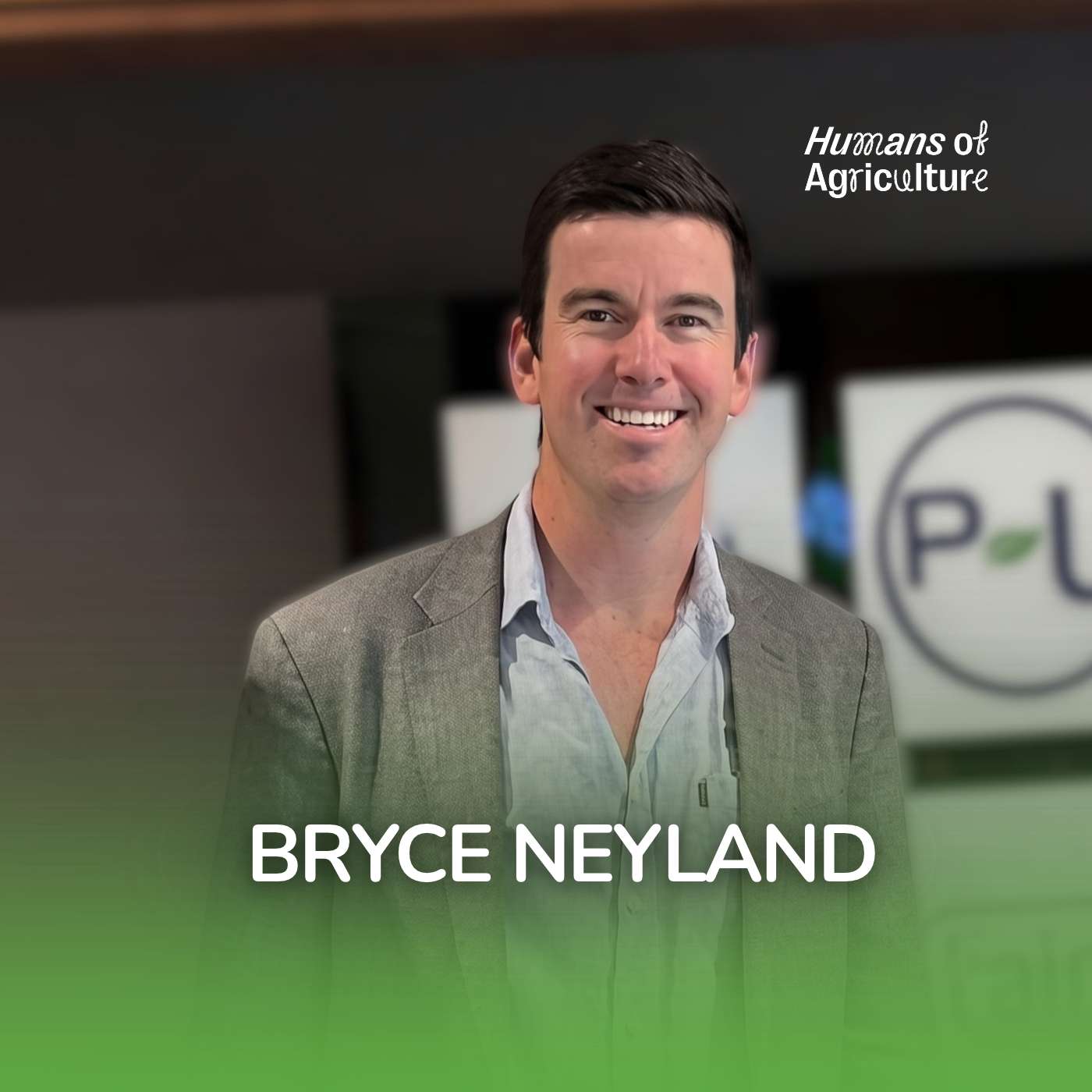
"Have another Crack": Why the 2nd time round is the trick for Bryce Neyland
What happens when you step outside your own patch and spend time learning from some of the best operators in agriculture? 2026 Australian Zanda McDonald Award winner Bryce Neyland joins Oli after completing his mentoring trips across New Zealand and Australia. Bryce shares what he learned about risk, resilience, investment and leadership, and why seeing how other businesses operate has challenged the way he thinks about his own career and family farming business. Importantly, Bryce didn’t win the first time he applied. He reflects on what changed between applications, the value of getting clear on where you want to go, and why sometimes the best thing you can do is put your hand up and have another crack. In this episode: What Bryce learned travelling through Australian and New Zealand agriculture Why New Zealand challenged his thinking about productivity and getting more from what you have What resilient Australian farming businesses do differently How leading businesses think about investment, risk and long-term decision-making Why Bryce is now thinking differently about planning for tough seasons on the family farm Learning to expect pressure rather than being surprised by it Why getting outside your own "sandbox" matters for personal and professional growth What changed between Bryce's first unsuccessful Zanda application and ultimately winning the Award Why the alumni network may be one of the Award's greatest opportunities Bryce's advice for anyone considering putting their hand up Applications for the Zanda McDonald Award are open from 1 October to 31 October 2026. If you’re involved in agriculture, want to keep learning and are curious about where you could take your career, Bryce’s advice is pretty simple: get your application in and have a crack. Chapters 00:00 Catching up with Bryce 02:15 Life as the 2026 Zanda McDonald Award winner 03:11 The Australian and New Zealand mentoring trips 05:20 What New Zealand agriculture taught Bryce 06:32 Productivity versus resilience 08:04 How great businesses think about investment and risk 10:34 Bringing the lessons back to the family farm 11:30 Leadership, negotiation and personal development 13:27 Learning to expect pressure 14:39 What successful dryland farming businesses taught Bryce 17:00 Why apply for the Zanda McDonald Award? 19:01 Bryce didn't get through the first time 20:18 "I only know what I know" 22:04 What changed between Bryce's two applications 23:31 Bryce's advice to future applicants
September 28, 2026Episode 17635 min
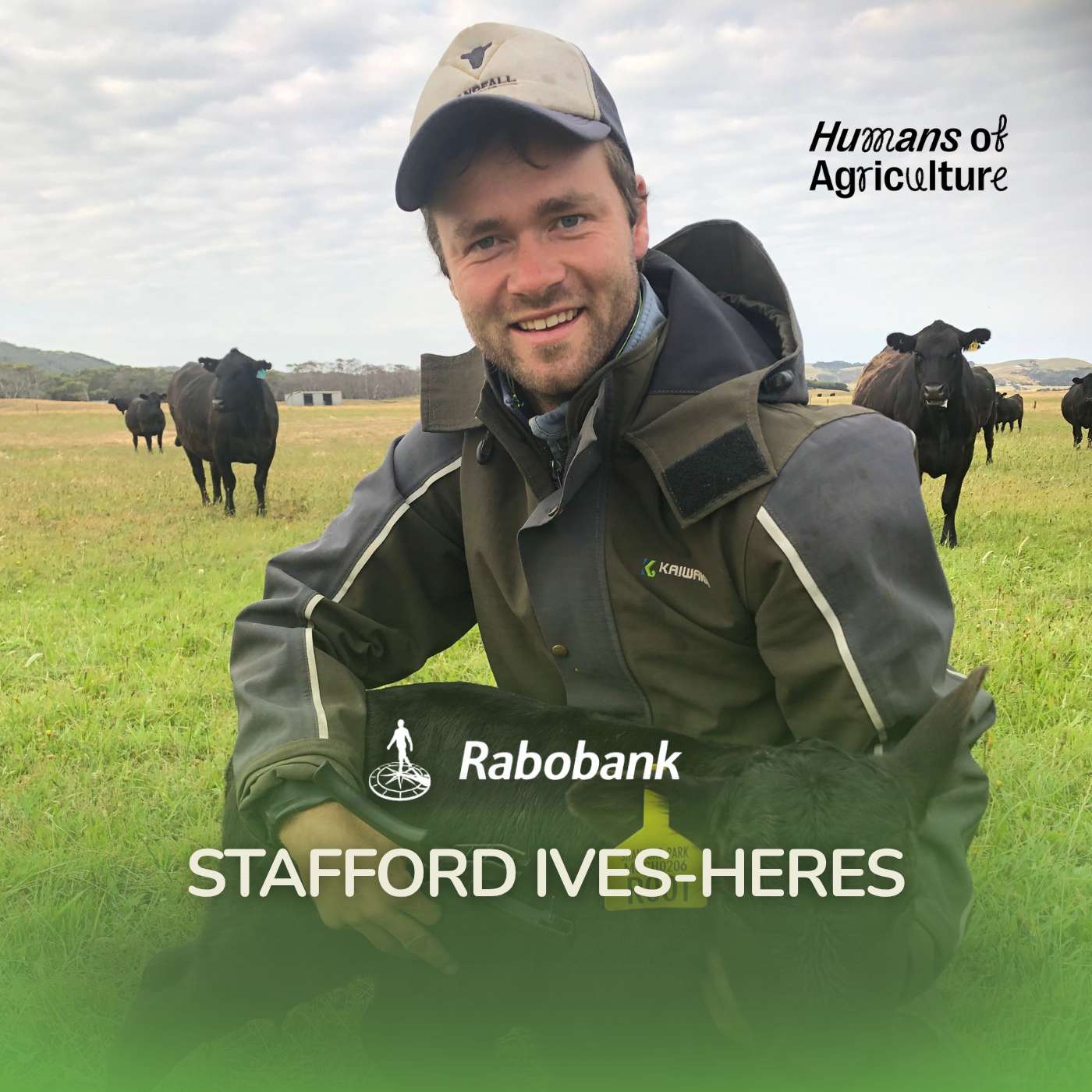
I'm Certainly Not One of Those Farmers Happy to Take a 3% Return - Stafford Ives-Heres (Rabobank Partner Ep)
Fourth-generation beef producer Stafford Ives-Heres is building Shanford Park on Tasmania's north-west coast with one eye firmly on the generations still to come. From starting with 10 cattle and working cray boats to fund his growth, to succession, leasing land and questioning whether owning more country always makes commercial sense, Stafford shares how he's thinking about building a family business that's valuable enough to be taken on, not simply sold. We chat about: Growing up at Shanford Park and being the last of four kids to become interested in farming Starting with 10 cattle as a teenager Working cray boats along Tasmania's remote west coast Using off-farm income to build livestock ownership Why the family moved from dairy into beef The beginnings of Tasmanian Seaweed Fertilisers Separating family businesses to make succession work Growing livestock numbers through ownership, leasing and share farming Why Stafford questions the need to own every hectare Building equity and optionality for the next generation Creating pathways into agriculture without owning land Why professional development and strong networks matter Chapters 00:00 The realities of regional connectivity 05:09 Meet Stafford Ives-Heres 06:17 Farming on Tasmania's north-west coast 10:21 Starting with 10 cattle 12:15 Leaving farming for the cray industry 16:24 Lessons from working at sea 18:01 From dairy farming to seaweed fertiliser 23:40 Separating businesses and navigating succession 25:36 Growing the beef business 28:29 Having children and thinking generations ahead 31:04 Playing the long game with land and scale 32:22 Professional development, equity and what's next 36:18 Leasing land and creating pathways into agriculture 39:05 Rabobank's Executive Development Program
September 21, 2026Episode 17537 min
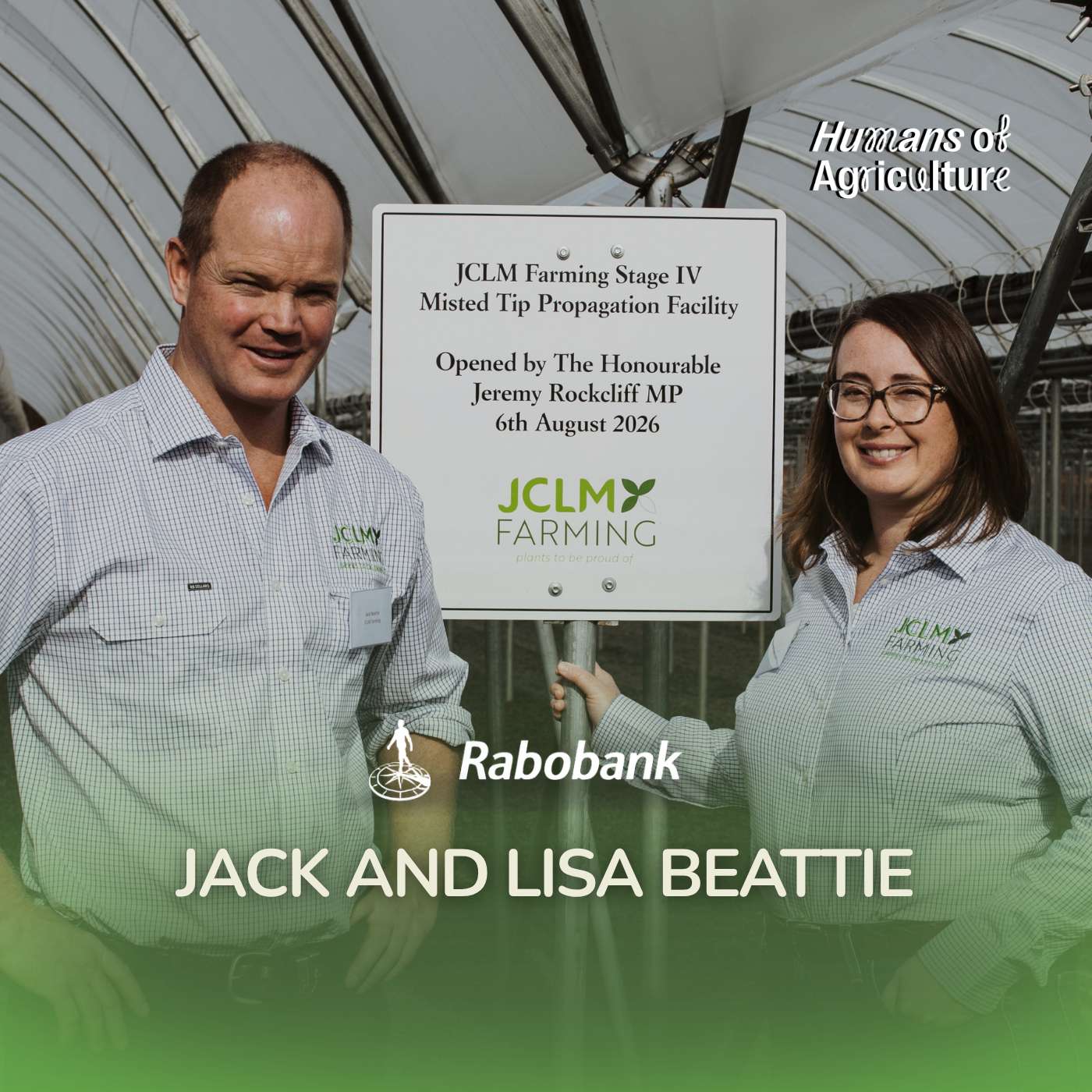
Starting from 0 to 10% of Australia's Strawberry nursery market with Jack and Lisa Beattie
Jack and Lisa Beattie didn’t set out to build a strawberry propagation business. After leaving Jack’s family dairy operation and trying several different ventures, an unexpected opportunity at Ouse in Tasmania changed their direction. Today, JCLM Farming produces around 10% of Australia’s strawberry nursery plants. Jack and Lisa share the decisions, setbacks and lessons behind that growth, and their ambition to become the provider of choice for Australian strawberry growers. In this episode: Leaving the family farm and starting again Why their early businesses were important stepping stones The unexpected move from dairy into strawberry propagation The moment they decided to back one business rather than keep diversifying Why Ouse is uniquely suited to growing strawberry nursery plants Growing JCLM to around 10% of the Australian market Finding and bringing new strawberry genetics into Australia How six plants can become millions through propagation Digitising the customer journey from ordering through to delivery Building a team around Jack and Lisa’s different strengths Their goal to double JCLM’s share of the Australian market Chapters 00:00 Introduction and JCLM Farming today 02:20 Jack’s farming roots and moving from the UK to Tasmania 05:09 Leaving the family dairy business 07:25 The difficult first decade on their own 09:06 Their first businesses and lessons from things that didn’t work 12:12 Lisa’s perspective on money, growth and building the business 16:11 How strawberries unexpectedly entered the picture 18:55 The two phone calls that changed their direction 22:43 Building JCLM into 10% of Australia’s strawberry plant market 24:44 Creating value for customers and aligning the team 26:29 Jack and Lisa’s different strengths as leaders 28:45 Global genetics and the story of six Eclipse plants 32:34 Building a digital-first strawberry nursery 37:47 The ambition to double JCLM’s Australian market share 39:14 What are the chances your strawberries started at JCLM? 40:41 The strawberry needle scare, COVID and labour challenges
September 7, 2026Episode 17429 min
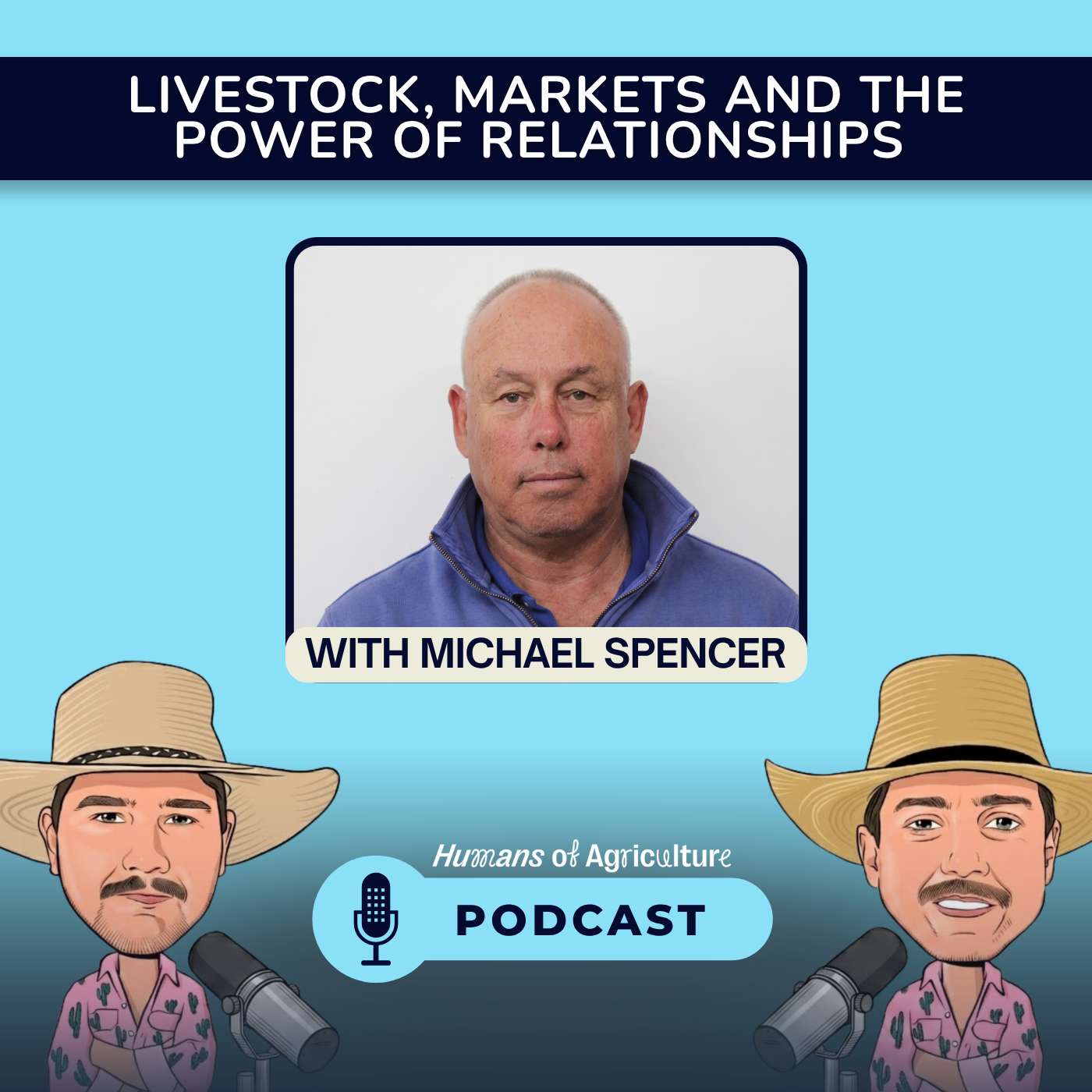
Tom & Mick: Livestock, Markets and the Power of Relationships with Michael Spencer
Michael Spencer has spent more than 30 years across livestock agency, corporate agriculture, cattle processing and pastoral operations, including roles with Elders, AACo and Bindaree Beef before helping build Adcock Partners. In this episode of The Tom & Mick Show, Michael joins Tom and Mick to unpack what good livestock agency actually looks like, why Adcock Partners deliberately operates under the radar, and what he is seeing across cattle markets from northern Australia through to the eastern states. They discuss: Michael’s unconventional path through Elders, AACo, Bindaree Beef and into Adcock Partners Why relationships and people remain the foundation of a strong agency business Building a business around agility rather than corporate complexity Why Adcock Partners has deliberately stayed relatively quiet and selective How livestock agency has changed over the past 30 years What good service looks like when clients span enormous distances Seasonal conditions across Queensland and the Northern Territory Why producer confidence can move cattle prices quickly The relationship between live export and domestic cattle markets Why live export remains critical to northern Australia and Indonesia What Michael expects from cattle markets heading through spring and into 2027 Chapters 00:00 Introduction to Michael Spencer and Adcock Partners 05:24 Michael’s path from Melbourne to livestock agency 12:41 From Elders and AACo to Bindaree 18:05 Building Adcock Partners and the business philosophy 23:34 What good livestock agency service looks like 29:48 Seasonal conditions across northern Australia 35:12 The cattle market and influence of the farmer 40:36 Live export, Indonesia and changing cattle markets 46:18 What happens next for the cattle market 50:20 The Charbray question and wrapping up
August 31, 2026Episode 1721 hr 17 min
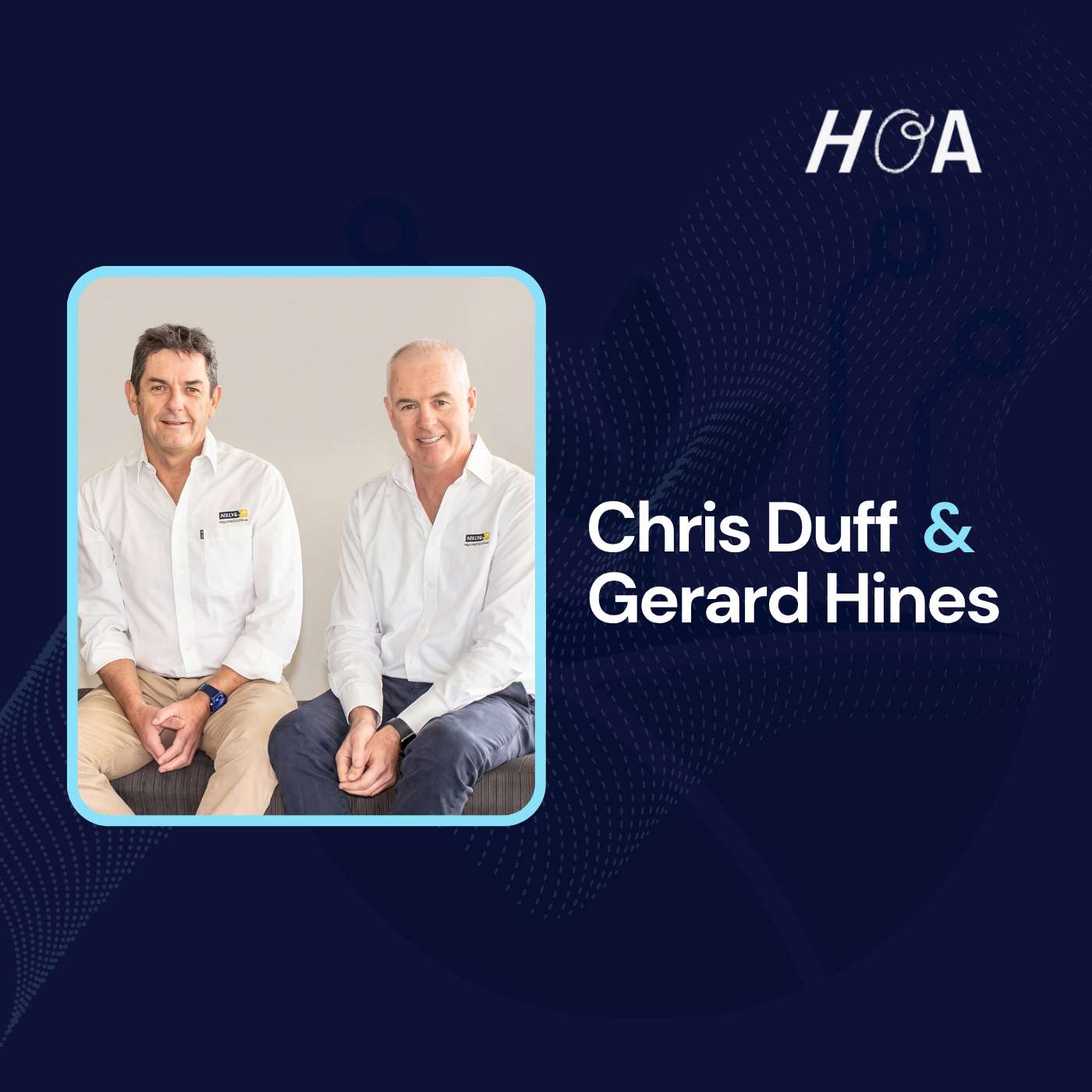
“We Mortgaged Our Houses”.... The Bet That Became Delta Agribusiness with Gerard Hines and Chris Duff
Gerard Hines and Chris Duff have spent nearly four decades working alongside each other, building one of Australia's most respected independent agribusinesses from a single rural store into a national business. What does it take to build an agribusiness from a handful of people into a national business, without losing the culture, relationships and local connection that made it successful in the first place? Gerard Hines and Chris Duff are the co-founders of Delta Agribusiness. Their working relationship stretches back almost 40 years, from a small rural business near Young, NSW, through the creation of Delta Agribusiness in 2006 and more than 20 acquisitions, before Delta ultimately became part of Elders. This is a conversation about much more than growth. Gerard and Chris unpack the decisions, people and principles underneath it, from backing themselves during drought, putting their own money on the line and using employee ownership to create alignment, to learning why balance sheet strength, local relationships and great people matter when building a business for the long term. Key insights from the conversation: How Gerard and Chris built a partnership spanning nearly 40 years through trust, respect and shared values Why bringing independent agronomy into agricultural retail fundamentally changed their business model The role mentors and early equity opportunities played in shaping Delta's inclusive ownership philosophy What IAMA, Wesfarmers and AWB taught them about leadership, governance, systems and financial discipline Why Delta was founded during the middle of a severe drought and how backing themselves changed everything The importance of maintaining a strong balance sheet so opportunities can be seized during difficult seasons How focusing on people, culture and local relationships drove more than 20 successful acquisitions across Australia Why equity ownership became one of Delta's greatest tools for attracting, retaining and aligning great people How staying connected to customers and the frontline has remained critical, even as the business has grown nationally The lessons learned from succession planning, bringing in private equity, and ultimately partnering with Elders to secure Delta's next chapter Chapters: 00:00 Introduction to Gerard Hines and Chris Duff's Journey 01:52 Early Days of Agriculture and Agronomy 04:00 Founding of Delta Agribusiness and Initial Challenges 08:05 The Impact of Industry Changes and Mergers 11:57 Lessons Learned from Industry Challenges 15:57 Growth Strategies and Private Equity Involvement 20:08 Building Company Culture and Leadership 25:02 Managing Growth, Succession, and Industry Dynamics 31:47 The Decision to Start Delta and Early Risks 36:04 Timing and Market Conditions During Launch 40:03 Resilience During Droughts and Market Cycles 45:07 The Role of Relationships and Trust in Business 49:48 Strategic Acquisitions and Private Equity Partnerships 54:58 Adapting to Industry and Market Changes 59:55 Leadership, Culture, and the Future of Delta Podcast Keywords Delta Agribusiness, Gerard Hines, Chris Duff, Australian agribusiness, agronomy Australia, agricultural leadership, agribusiness entrepreneurship, rural business, agriculture careers, agricultural retail, private agronomy, Australian farming, business growth, mergers and acquisitions, employee ownership, business culture, drought resilience, leadership development, succession planning, Elders, regional business, entrepreneurship in agriculture
August 28, 2026Episode 17321 min
Hiring: Action Steel - Sales coordinator role
Action Steel Sales Coordinator Role - Find here. We sit down with Lennie Grace to learn more about Action Steel and the current opportunities available in his sales team. Chapters 00:00 Introduction to Action Steel and family business 01:27 How Action Steel started 02:01 Growing up in the family business 03:33 Why Action Steel chose agriculture 04:53 The importance of focus 06:21 Building a network for growth 08:18 Team, culture and specialist skills 10:03 The Sales Coordinator opportunity 12:43 Understanding the role and customer experience 18:26 Transparency, incentives and the future of Action Steel
August 26, 2026Episode 17148 min
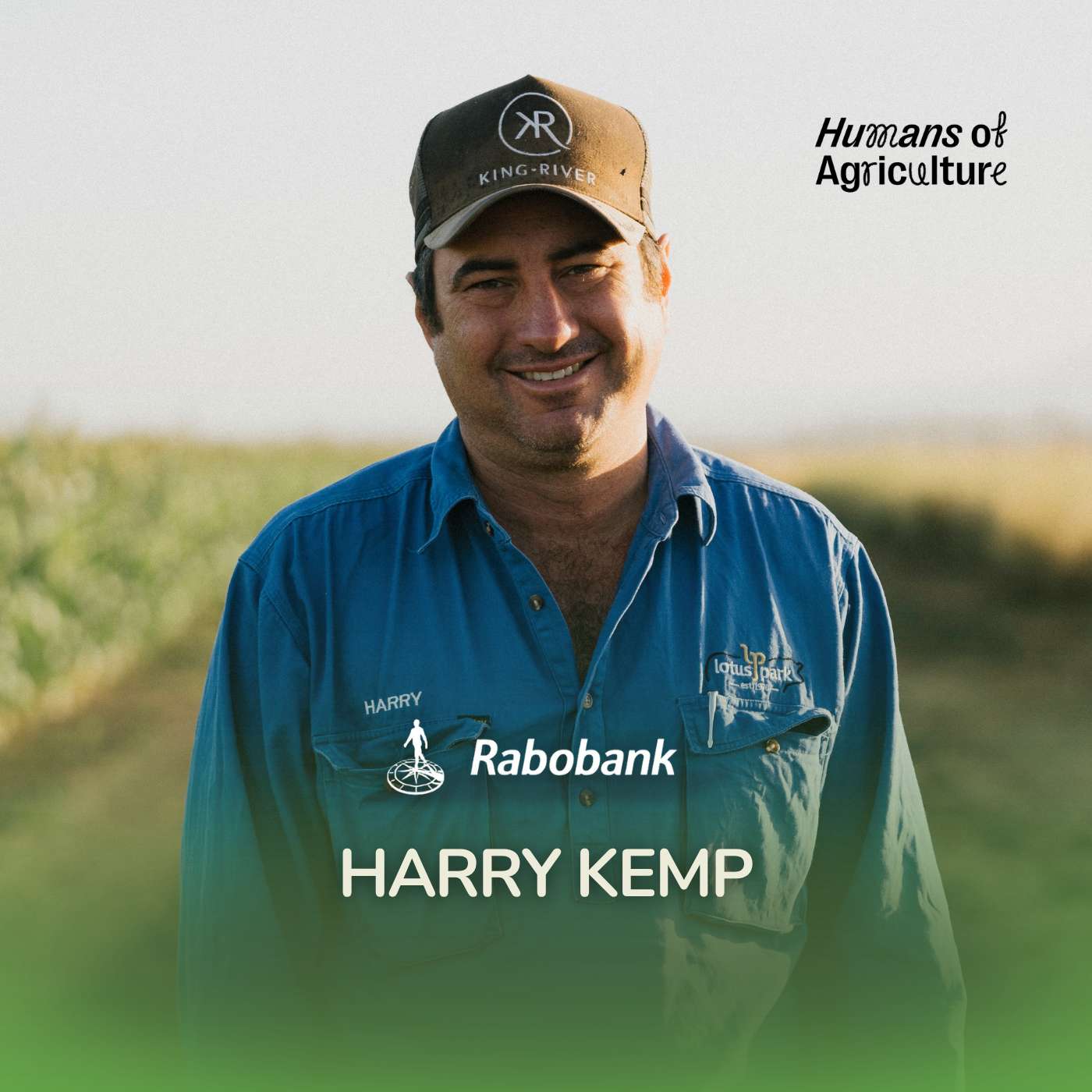
The Power of Two Farming Families Working Together - Harry Kemp (Rabobank Partner Ep)
Building a premium beef brand isn't just about producing exceptional cattle. It's about understanding markets, embracing data, building the right team, and having the patience to make decisions years before the product reaches a customer's plate. In this episode, Harry Kemp shares the story behind King River , the family-owned Wagyu business that has grown from a bold partnership between two Queensland families into a premium beef brand supplying customers across more than 35 countries. Harry reflects on growing up in a family grazing business, leaving school early to return to the land, and how his approach to learning has evolved alongside the rapid transformation of Australian agriculture. What began as a traditional cattle operation has become a data-driven business where genetics, consumer demand, and long-term thinking shape every decision. Together, Oli and Harry explore the realities of building a premium export brand, why consistency matters more than chasing perfection , and how strong relationships have underpinned King River's remarkable growth over the past five years. From genetics and data to leadership, teamwork, and customer relationships, this conversation offers a fascinating insight into what it takes to build a modern beef business that delivers quality from paddock to plate. Key insights from the conversation: Harry's journey from the family cattle property to co-founding King River Why two family businesses joined forces to build a premium Wagyu brand The challenges of building a business with a four-year production cycle How genetics, data, and consumer demand are transforming beef production Why consistency matters more than producing the highest marbling scores Building a business that now supplies premium Wagyu to more than 35 countries Lessons on rapid business growth, leadership, and putting people in the right roles The importance of relationships, accountability, and shared values in successful partnerships Why producing great food is ultimately about bringing people together, regardless of language or culture Chapters: 00:00 Introduction to Harry Kemp and King River Beef 02:20 The significance of the Ekka week and industry events 04:00 Harry's background and early life in farming 07:32 Changes in beef farming over 21 years 10:07 The formation of King River Beef in 2019 11:30 Utilising Wagyu to optimise feedlot infrastructure 14:05 Transition from selling cattle to branding and marketing 16:22 Meeting the Rich family and forming the partnership 19:45 Managing rapid growth and team restructuring 24:55 Impact of genetics and breeding on marbling 29:38 The importance of data and technology in decision-making 34:22 Building a global customer base and maintaining quality 44:01 The future vision for King River Beef 45:20 Harry's perspective on being a food producer 46:47 The universal language of good food and beef 47:22 Closing remarks and next steps for the business
August 24, 2026Episode 17059 min
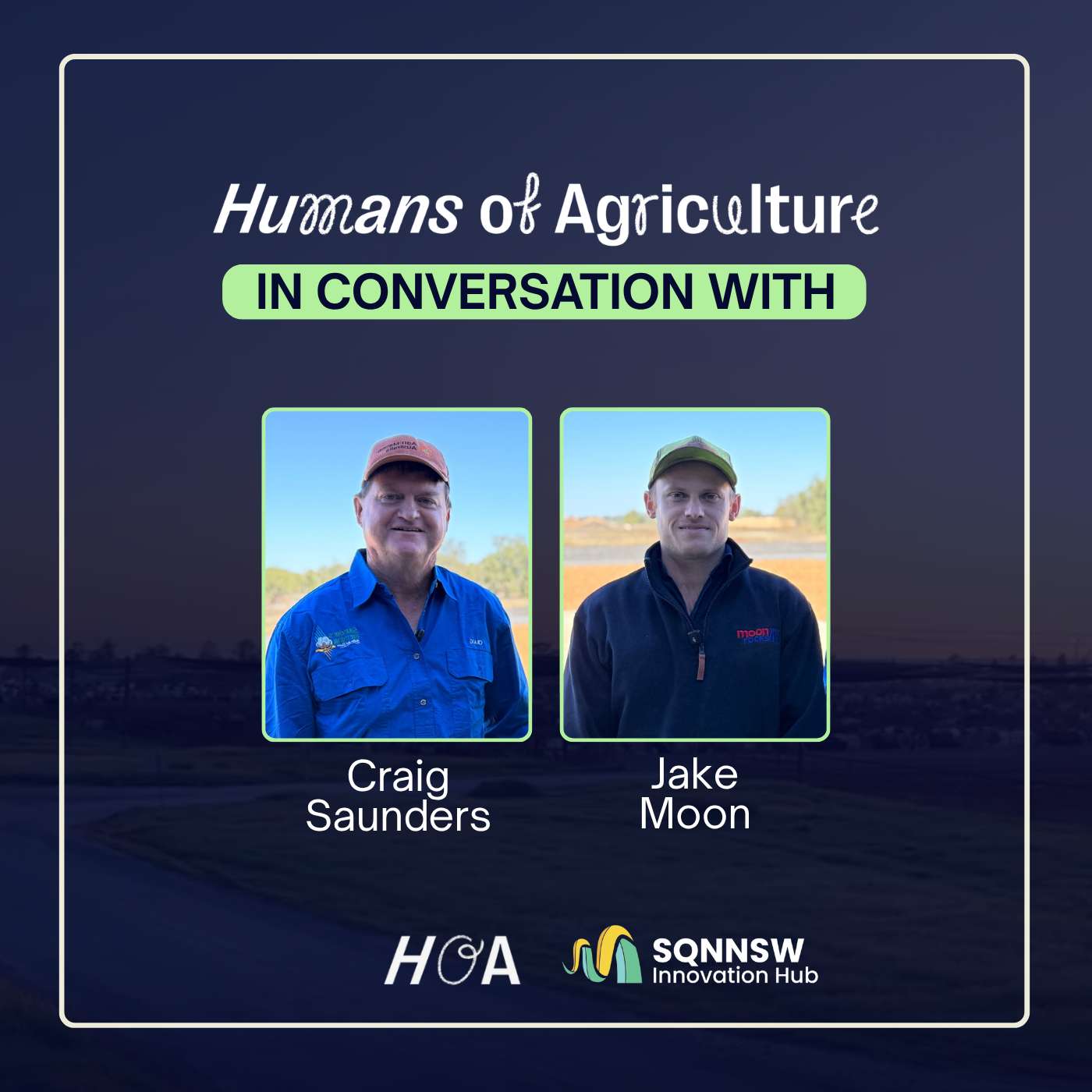
Moon Rocks and Water - How these 2 St George farmers are shaping their future (SQNNSW Innovation Hub Partnered Ep)
In the second of a two-part panel series with the Southern Queensland and Northern New South Wales Drought Resilience Adoption and Innovation Hub , Oli Le Lievre sits down with St George producers Jake Moon of Moonrocks and cotton grower Craig Saunders to explore how innovation is being used to solve real problems within two very different farming businesses. Jake shares how Moonrocks identified labour and weed management as a growing constraint before adopting an AI-powered green-on-green sprayer , while Craig reflects on how the pursuit of growing more cotton with less water led him to rethink irrigation and develop automation for bankless systems. This conversation is not about promoting a particular product. It is about what happens before and after a technology is adopted: identifying a problem, researching potential solutions, working through the economics and building the people, systems and processes needed to make it work. Jake and Craig discuss the importance of measuring performance, understanding return on investment and being willing to challenge the way things have always been done. They also share the limitations, frustrations and unanswered questions that remain, from integrating data across a business to deciding which investment should come next. From robotics and irrigation automation to labour, software, profitability and long-term planning, this is a practical conversation about using innovation to build more productive, adaptable and drought-resilient farming businesses. The Southern Queensland and Northern New South Wales Drought Resilience Adoption and Innovation Hub is supported by funding from the Australian Government's Future Drought Fund. Learn more at www.unisq.edu.au/sqnnswhub. Key insights from the conversation: Why Jake and Craig began looking for new ways to solve labour, water and productivity challenges. How Craig’s pursuit of “more profit per drop” led to the automation of bankless irrigation. How robotics is helping Moonrocks reduce manual weeding, lower herbicide use and improve crop performance. Why measuring water use, labour, inputs and yield is essential when assessing new technology. The importance of matching innovation with a clearly defined business problem. Why successful adoption depends on people, processes and simple, reliable systems - not just the technology itself. How farmers can assess return on investment without chasing every new product or efficiency. The role of data, software and connected systems in improving decision-making. The value of learning from other farmers, industries and international businesses. The practical challenges of adopting technology, including cost, integration, support and uncertainty. Why profitability is central to long-term sustainability and drought resilience. How innovation can shift farm roles away from repetitive manual work and toward higher-skilled decision-making. Chapters: 00:00 Introduction to Craig Saunders' farm and innovation focus 01:50 Historical context of farming equipment and evolution 03:52 The rapid pace of agricultural change and innovation 06:53 Craig Saunders' farm history and diversification 10:06 Water management challenges and technological solutions 15:01 Adopting bankless irrigation and automation 20:06 Jake Moon's farm history and crop diversification 24:57 Use of AI-powered sprayers and weed management 30:11 The impact of technology on crop health and yields 34:48 Decision-making processes and data leverage in farming 40:00 The role of grants, strategic planning, and future opportunities 45:11 Lessons learned from travel and industry networks 50:10 The importance of continuous evolution and innovation in agriculture 55:04 Future prospects: local manufacturing, AI, and robotics 57:52 Final thoughts on the future of agriculture and technology
August 19, 2026Episode 17040 min
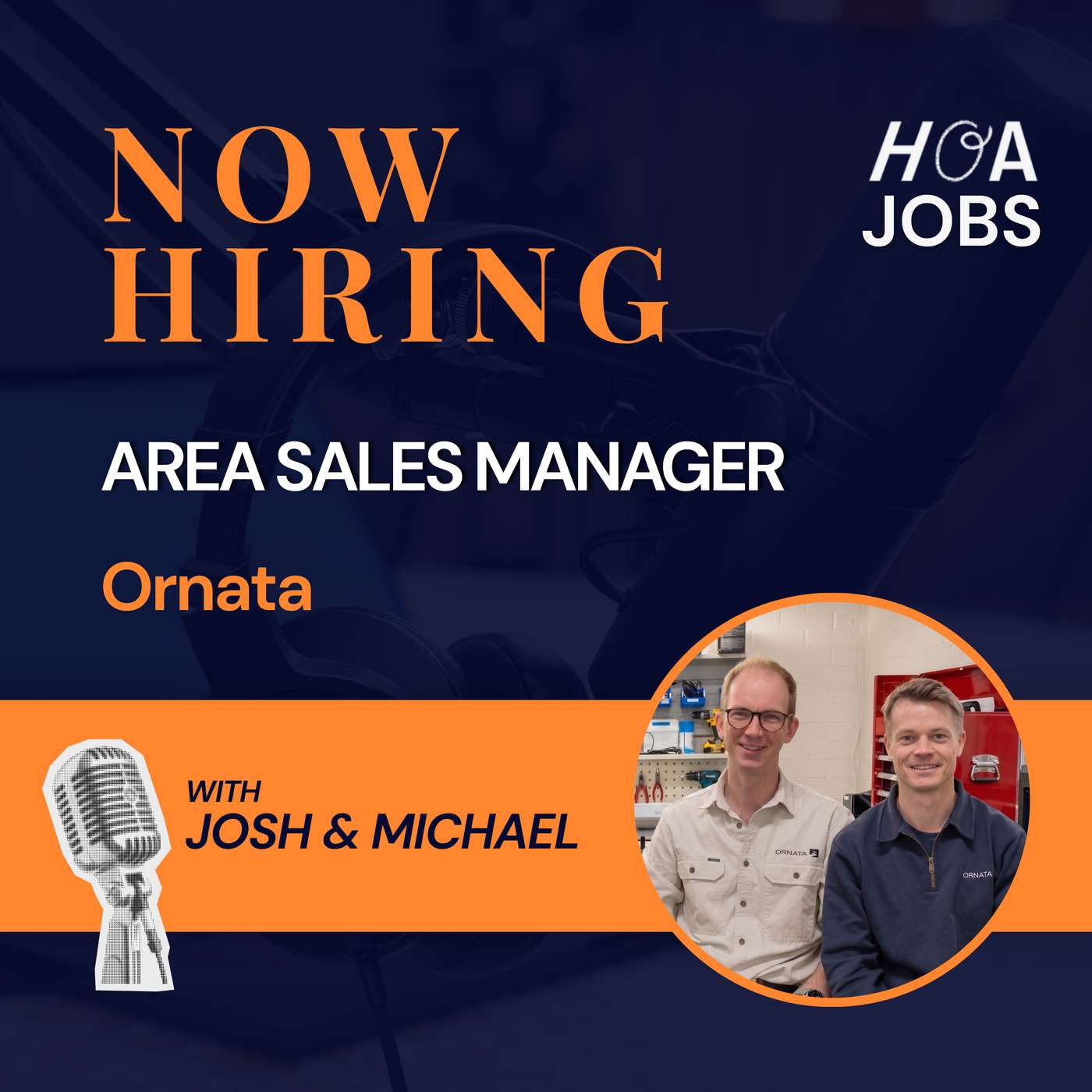
Hiring | Ornata: Building the Future of Autonomous Farming with Josh Tepper & Michael Webb
In this episode of Humans of Agriculture, Oli Le Lievre sits down with Josh Tepper, CEO, and Michael Webb, COO and co-founders of Ornata Technologies , to explore how they're transforming farm operations through autonomous machinery and why now is an exciting time to join their growing team. Following their appearance at evokeAG, Josh and Michael share how Ornata has evolved from launching its first commercial customers to building strong momentum across Victoria. They discuss their unique approach to autonomy, where experienced remote operators work alongside autonomous machinery to deliver the benefits of automation without adding complexity for farmers or requiring them to replace the equipment they already own. The conversation also provides an inside look at the newly created Area Sales Manager role across Victoria and Southern New South Wales. Josh and Michael explain why this is much more than a sales position. It is an opportunity to build trusted relationships with farmers, understand their operations, demonstrate the technology in the field, and help producers solve one of agriculture's biggest challenges, finding skilled labour. Whether you're passionate about agriculture, technology or helping farmers adopt new innovations, this episode offers a genuine insight into life inside one of Australia's most exciting agtech startups. Josh and Michael explain what success looks like, why trust sits at the centre of every customer relationship, and how joining Ornata today offers the chance to grow alongside a business shaping the future of Australian agriculture. To learn more about Ornata Technologies and the Area Sales Manager opportunity, visit the Humans of Agriculture careers page . The role is live now, and we'd love to hear from people who are ready to help bring the next generation of autonomous farming technology to Australian agriculture. Key insights from the conversation: How Ornata has progressed from its first commercial deployments to a growing customer base. Why Ornata's remote operations platform makes autonomous farming practical for today's producers. How the business helps farmers address labour shortages while using the machinery they already own. Why building trust with farmers is the foundation of every customer relationship. What the Area Sales Manager role looks like day to day. Why understanding farming systems matters more than having deep technical knowledge. How customer referrals are driving growth across regional farming communities. What it is like working in a fast-growing Australian agtech startup. Why joining early creates opportunities to grow with the business. What success looks like after the first 12 months in the role. Chapters: 00:00 Introduction to Ornata Technologies and the new role 02:34 Six months of progress and milestones 05:31 The importance of local customer relationships 12:00 Why Victoria and New South Wales are key markets 15:10 What success looks like in the territory manager role 22:45 Customer profiles and farm types 26:54 Onboarding and what to expect in the role 36:51 The future of autonomous farming technology
Is this your show?
Claim this listing to keep it up to date, reach guests who want to pitch you, and manage bookings with Guestify.