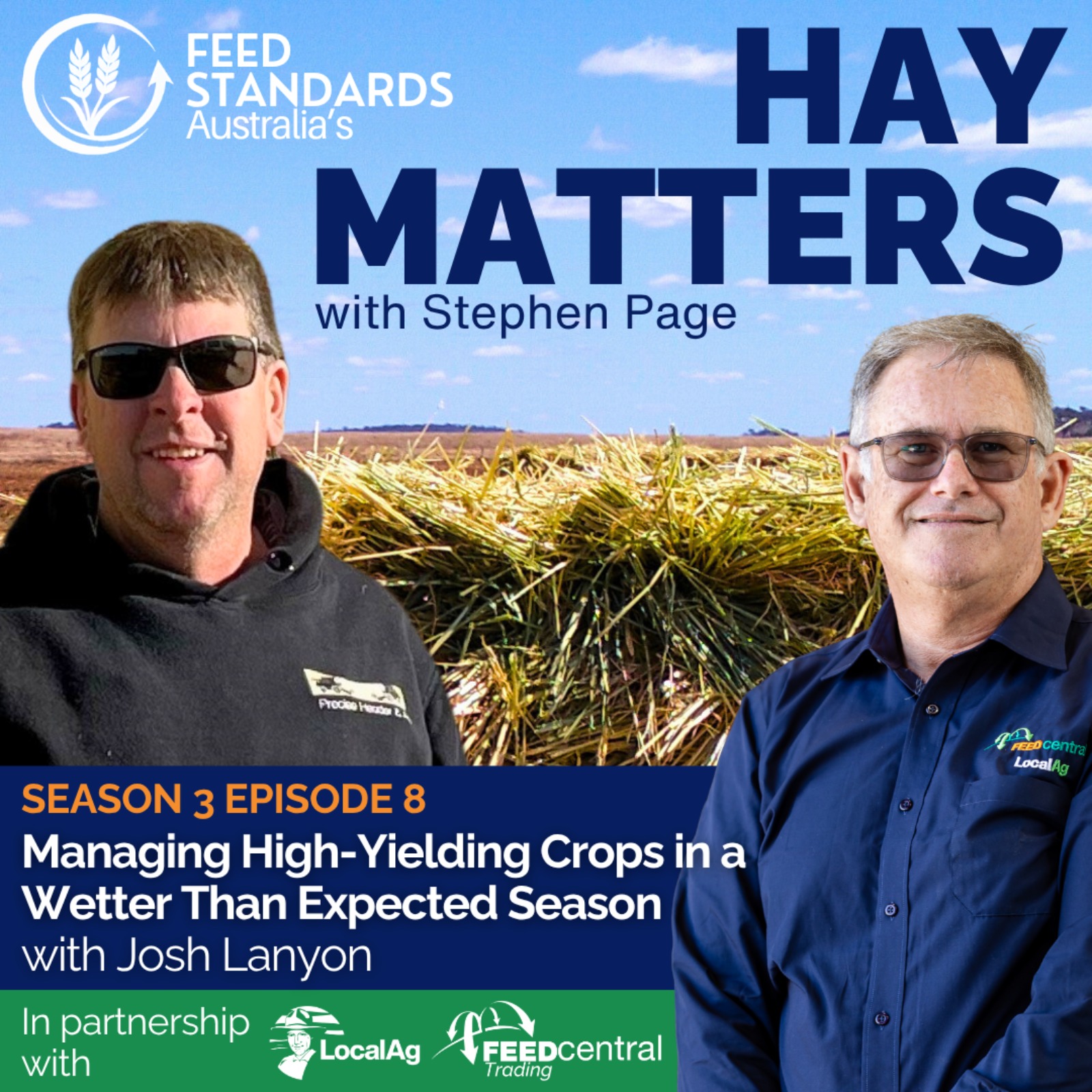
Managing High-Yielding Crops in a Wetter Than Expected Season - with Josh Lanyon
In this episode of the Feed Standards Australia podcast, Steve Page catches up with returning guest Josh Lanyon from Boort in the southern mallee region of Victoria, to discuss an unexpectedly wet growing season and the challenges of turning high-yielding crops into quality hay . After beginning the year with drought conditions forecast, Josh’s district has experienced ongoing rain, saturated paddocks and waterlogged crops. He shares how the conditions have affected his vetch and oats, the yields he is anticipating and the difficult decisions that may need to be made when cutting begins. Steve and Josh also discuss managing lodged crops, mower conditioning and raking strategies, along with the importance of cutting high-biomass crops at the right stage before feed quality begins to decline. In this episode: The effect of waterlogging on vetch and oat crops Expected cutting times and potential hay yields Managing wet and inaccessible areas within paddocks Frost risk and decisions around hay versus grain Preparing machinery for tall, heavy or lodged crops Conditioning and raking strategies in wet conditions The challenge of curing vetch over saturated ground Protecting hay quality when weather windows are limited Storage, marketing and the outlook for the coming hay season Josh’s key message is to cut on time and plan ahead . With large crops, delayed cutting can quickly reduce feed quality, while lodged crops and wet ground require careful thought about how mowing and raking equipment will be used.