Find partners
Happy Space Podcast with Clare Kumar

Happy Space Podcast with Clare Kumar

Hosted by Clare Kumar

Episodes

73

Latest episode

Nov 2025

Language

EN

About the show

🙂 Welcome to the Happy Space¼ Podcast where we explore designing neuroinclusion. Tune in for conversations with shapers of space, creators of culture, and engineers of experience as we highlight astonishing contributions tempting a more tender world. We know that diversity leads to richer results, so let’s accept that #productivityispersonal and commit to designing with greater respect for humanity. I aim to leave you with ideas to better support your colleagues, customers, community, and not least of all, yourself and those who matter most. For, everyone, including you, deserves a Happy Space. 🙂 If you or someone you know will enjoy exploring this topic with a supportive community, check out or share https://www.HappySpacePod.com 🙂 sign up for Clare's the Happy Space monthly "museletter" on Clare's homepage, clarekumar.com and subscribe to her Substack: DesigningHappySpace.Substack.com 🙂 Find out more about your host at https://clarekumar.com/

Listen to episodes

60 recent
November 27, 20251 hr 11 min

Sound and Social Conflict - with Jan Doering

Jan Doering, Assistant Professor of Sociology at the University of Toronto explores the complex relationship between sound, behavior, and social conflict, unpacking the social, cultural, and neurological dimensions of sound, and discussing how we can move toward a more considerate coexistence in our shared environments.Sound that delights one person can deeply distress another. Clare and Jan explore how our appreciation of sound is deeply subjective and why this gap often turns into tension in urban life. Through examples from everyday environments, they discuss how noise reflects culture, how it can become a form of power and resistance, and why some people respond to it with frustration or even aggression.The conversation challenges policymakers, urban planners, and designers to take sound seriously as an issue of well-being issue and accessibility, highlighting how neurological safety and collective responsibility can help create more peaceful and inclusive soundscapes.Clare and Jan also reflect on the deeper psychological and emotional layers behind how we relate to sound, revealing that finding peace in a noisy world might start with changing how we listen.Jan Doering is an Assistant Professor of Sociology at the University of Toronto. His research explores social control and conflict in urban neighborhoods, as well as how individuals experience and respond to discrimination. He has received research funding from the National Science Foundation, the Fulbright Commission, and the Social Sciences and Humanities Research Councils.His first book, “Us Versus Them: Race, Crime, and Gentrification in Chicago Neighborhoods” (Oxford University Press, 2020), examines the dynamics of community conflict and identity during the era of Trayvon Martin and Michael Brown.Key TakeawaysHearing is a sense we cannot turn off, making sound a constant, shared experience.Noise is not just about volume - there are more elements to consider Urban “vibrancy” often comes at the expense of rest and recovery, highlighting a policy blind spot.Municipalities, designers, and leaders can promote neurological safety by designing environments that support well-being and reduce sensory stress.CHAPTERS03:00 Introduction06:05 Tension Around Noise09:10 Defining Noise and Perception12:16 Reframing Noise Experiences18:05 Joy in Noise: Machines and Gender22:18 Noise and Cultural Responsibility29:08 Government and Policy Failures36:50 Consequences of Noise Stress45:50 Allergic to Peace?51:31 Sadism, Pleasure, and Noise-Making Behavior58:45 Emotional vs. Intellectual Arguments for Quiet01:04:40 Density, Well-being, and Cultural Vision01:08:00 Creative Solutions and Happy SpacesSourcesClamor by Chris Berdik — https://www.chrisberdik.comGolden: The Power of Silence in a World Full of Noise by Justin Zorn & Leigh Marz — https://www.amazon.com/Golden-Power-Silence-World-Noise/dp/0063027607Just Think: The Challenges of the Disengaged Mind – Wilson, T.D. et al., Science (2014) — https://pmc.ncbi.nlm.nih.gov/articles/PMC4330241Epstein, M. J. (2020). Sound and noise: A listener's guide to everyday life. McGill-Queen's Press-MQUP....

July 22, 202552 min

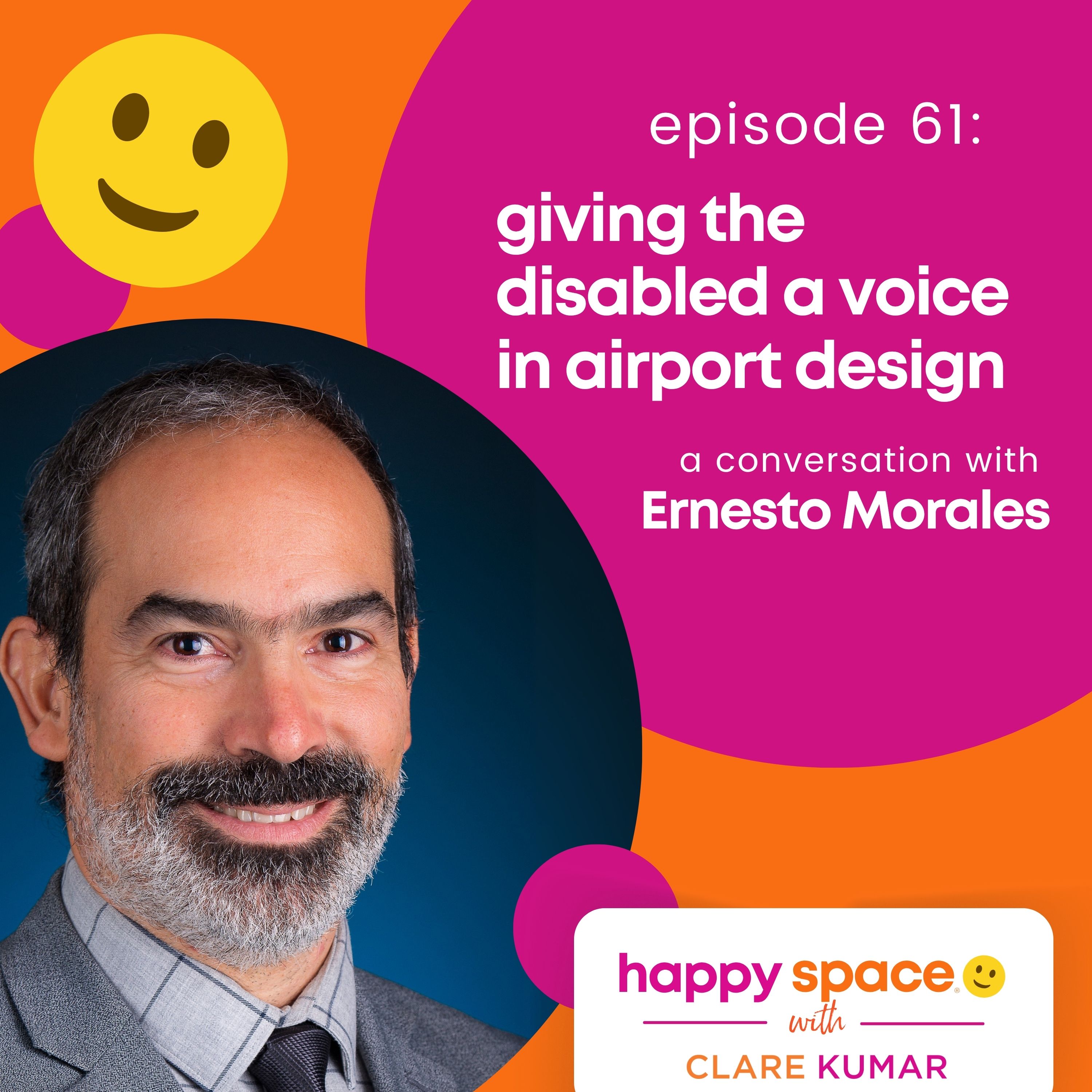
Giving the Disabled a Voice in Airport Design - with Ernesto Morales

Dr. Ernesto Morales discusses evidence-based research for accessible airports and airplanes, emphasizing co-design, sensory needs, and the need for accountability in aviation accessibility.In episode 61 of the Happy Space Podcast, I spoke with Dr. Ernesto Morales, Full Professor at UniversitĂ© Laval, about two federally funded projects on accessible aviation in Canada. One focuses on airport accessibility, while the other addresses aircraft lavatories. Ernesto shares how involving 72 participants with diverse disabilities through walking interviews and mockups helped surface nuanced barriers and identify improvements. We also discuss the challenges of coordination between stakeholders, the need for sensory-friendly spaces, and the importance of dignity in travel. Ernesto stresses the value of co-design and inclusive research methods, calling for regulatory clarity and deeper accountability in delivering equitable air travel experiences.Ernesto Morales studied architecture and finished a Masters’ Degree in Industrial Design in Mexico City. He obtained a grant from the Government of Mexico to study his Ph.D. in Design at the FacultĂ© de l’amĂ©nagement, of the University of Montreal. He did his first post doc in “Environmental Gerontology” at the Research Centre from the Institut universitaire de gĂ©riatrie de MontrĂ©al and a second post-doc at the Research Centre for Innovation in Health Care at Utrecht, the Netherlands on “Healing Environments”. He is Full Professor at the School of Rehabilitation Sciences of the Faculty of Medicine at the UniverstĂ© Laval and he is a Researcher at the Centre interdisciplinaire de recherche en rĂ©adaptation et intĂ©gration sociale in Quebec City. He is also a member of the Quebec government's Advisory Committee on Accessibility and Safety of Buildings for Persons with Disabilities. His research interests fall into the following areas: Inclusive design and adaptation of the physical environment. Design solutions to improve the quality of life of people with permanent or temporary disabilities (either cognitive, motor or sensory) in terms of objects, home spaces or urban design. Working and care environments in health institutions (acute and long-term care) and accessibility in emergency situations.CHAPTERS[00:00] Meeting Ernesto Morales and Project Overview[02:00] Walking Interviews at Airports[04:00] Designing Solutions Collaboratively[06:00] Challenges in Airport Coordination[08:00] Public and Private Reporting[09:00] Ernesto’s Personal Motivation[11:00] Co-Design as a Core Practice[13:00] From Heritage Sites to Airports[14:00] Merging Qualitative and Quantitative Data[16:00] Why Canada is Leading in Accessibility[18:00] Federal and Ministry Involvement[20:00] Autism, Sensory Input, and Airport Design[23:00] Stress at Security Checkpoints[26:00] Benefits of Hidden Disability Lanyards[28:00] Advertising and Sensory Overload[30:00] Sensory Zones, Not Just Rooms[33:00] Washroom Accessibility and Service Dogs[36:00] Dignity in Air Travel[38:00] Future Reports and Timelines[39:00] Centralizing Responsibility for Accessibility[41:00] Systemic Change Through Procurement and TrainingLINKSRick Hansen Accessibility CertificationAccessibility Standards CanadaAirports Quebec CityCalgary Airport Ernesto’s WebsiteIMAGE CREDITS (see images on Youtube video)LOGO - Hidden Disabilities SunflowerPlane Mockup Photos -...

July 8, 20251 hr 2 min

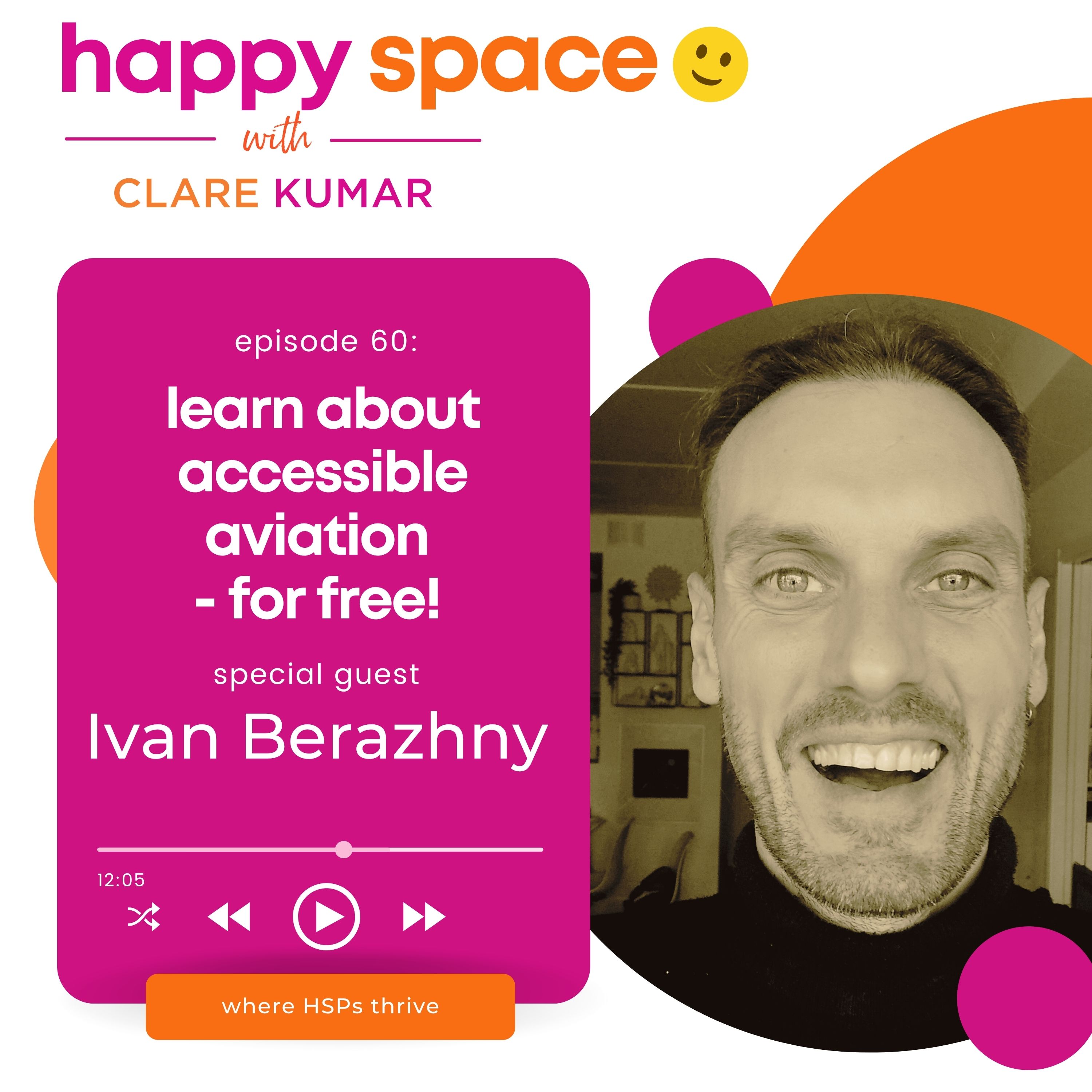
Learn about Accessible Aviation - For Free! - with Ivan Berazhny

Ivan Berazhny, Senior lecturer at Haaga-Helia University of Applied Sciences and accessibility advocate, shares how INCLAVI, an EU-funded initiative, equips aviation professionals with certified training to better support diverse travellers across the full journey.In this episode of the Happy Space Podcast, host Clare Kumar speaks with Ivan Berazhny, Senior lecturer at Haaga-Helia University of Applied Sciences, about INCLAVI, an EU-funded initiative to improve accessibility in aviation and tourism. Ivan shares the development of a free, multi-module training curriculum designed to educate industry professionals on best practices for supporting travellers with disabilities. Built through a wide consortium of partners, the program covers the full travel journey, from planning to post-arrival, and includes accredited modules with formal certification. During the conversation, they explore the importance of language in accessibility, the value of humility in learning, and the potential to apply this framework across industries.Ivan Berazhny is a senior lecturer at Haaga-Helia University of Applied Sciences (Finland), where Ivan has been developing and leading research projects and courses on topics including leadership, entrepreneurship, aviation business environment, corporate social responsibility and others. Prior background includes studies of international economic relations, communication, and vocational pedagogy. Ivan also holds several professional certifications in aviation and hospitality industries.In Haaga-Helia, Ivan has been engaged actively in curriculum development, export of education, RDI cooperation with industry partners, internationalisation, and other activities. Particularly, Ivan is committed to advocate inclusive society for people with disabilities.CHAPTERS00:00 – Introduction and Welcome02:15 – Origins of the INCLAVI Project05:45 – Building a Practical, Multi-Stakeholder Curriculum10:10 – Implementation and Early Impact14:05 – Language, Translation, and Accessibility17:30 – Clarifying Terms: Accessibility vs. Inclusion21:00 – Beyond Labels: Focusing on Needs24:40 – Expanding Awareness Through Storytelling27:50 – Encouraging Curiosity in Accessibility30:25 – Ivan’s Happy SpaceLINKSFor active links, visit www.clarekumar.com/podcastIMAGE CREDITS (see images on Youtube video)Mediterranean Sea Video - CanvaHorizon Video - CanvaLearn more about and follow Ivan:Haaga-Helia UniversityINCLAVI (Inclusive aviation curriculum) Hidden Disabilities Sunflower program😀😃😄😁😆Everyone deserves a Happy Space. It might sound frivolous, but what I’m talking about is creating environments for each person to be able to perform at their best. Too often, people are invited to burn out or opt out of spaces, cultures, or experiences that are at best uncomfortable and at worst, toxic. Inclusion is a design opportunity. I hope to shine a light on those craftive more inclusive spaces, cultures, and experiences, leading the way to a more hospitable world because everyone deserves a Happy Space.Believing that productivity is personal, the podcast is produced in a variety of formats so you can enjoy it in the medium you prefer:Listen to the audio right here or on your fave podcast platform.If you prefer to watch video, check out the episode on YouTube. And look for the Shorts playlist for clips.If you prefer to read, please see the...

June 24, 202540 min

Are Check-in Meetings Necessary? - with Jason Lauritsen

Leadership expert Jason Lauritsen tackles the question of whether we really need check-in meetings addressing barriers like discomfort, skill gaps, and the drive for workplace efficiency. Don’t miss the four key steps for effective check-ins.In this episode of the Happy Space Podcast, Clare speaks with leadership expert Jason Lauritsen about the role of check-in meetings. They explore why regular, intentional conversations between leaders and team members matter—not just for accountability, but for connection and well-being. Too often check-in meetings are discarded in the belief they are not serving real value. But it is perhaps because they are not being well implemented. Jason offers an easy-to-implement process for delivering check-ins that make a difference, making them more comfortable and worthwhile. The episode invites leaders to slow down, get curious, and prioritize relationships as the foundation for more human and productive work environments.A dynamic keynote speaker, Jason Lauritsen is a true thought leader in the world of work and employee engagement dedicated to revolutionizing the way we Lead With Relationshipℱ.He fearlessly challenges traditional norms to reshape the employee experience by consistently placing authentic human connection at the heart of leadership.Jason is the author of two books, Unlocking High Performance and Social Gravity. His thought leadership has been featured in Forbes, Fast Company, Talent Management magazine, HR Executive magazine, and SHRM publications.CHAPTERS00:00 – Intro: The Power of Conversation03:30 – What’s Driving Interest in Check-Ins?07:50 – Relationship Building is the Work11:45 – The Four Steps of an Effective Check-In18:10 – Frequency & Flexibility: What Works Best?24:00 – Making Space for Connection in Hustle Culture28:40 – The Role of Comfort in Performance34:15 – Relearning How to Connect Post-Pandemic40:00 – Final Thoughts & How to Connect with JasonLINKSIMAGE CREDITS (see images on Youtube video)WorkHuman Logo - WikipediaLearn more about and follow Jason:LinkedinYoutubeWebsite😀😃😄😁😆Everyone deserves a Happy Space. It might sound frivolous, but what I’m talking about is creating environments for each person to be able to perform at their best. Too often, people are invited to burn out or opt out of spaces, cultures, or experiences that are at best uncomfortable and at worst, toxic. Inclusion is a design opportunity. I hope to shine a light on those craftive more inclusive spaces, cultures, and experiences, leading the way to a more hospitable world because everyone deserves a Happy Space.Believing that productivity is personal, the podcast is produced in a variety of formats so you can enjoy it in the medium you prefer:Listen to the audio right here or on your fave podcast platform.If you prefer to watch video, check out the episode on YouTube. And look for the Shorts playlist for clips.If you prefer to read, please see the transcript below.Ready to learn more, or want to find out more about coaching with Clare or hiring her for your next engaging event? Contact Clare here.😀😃😄😁😆If you enjoyed this episode, please leave a heartfelt review as this will help other listeners discover the podcast. Please invite your colleagues, friends, and family to listen as well. Together we can design a more inclusive world where everyone can make...

June 9, 202544 min

Design for the Extreme to Benefit the Mean - with Kay Sargent

In this episode, Happy Space Podcast host, Clare Kumar, speaks with Kay Sargent, principal designer at HOK, about their latest release, Neuroinclusive Workplace Design. Clare and Kay discuss the need to move beyond universal design toward more inclusive, actionable strategies for creating workspaces that support diverse sensory and cognitive needs. The conversation explores the evolution of language around neurodiversity, the importance of continual learning, and the challenges of designing spaces that acknowledge human complexity. Kay emphasizes that thoughtful, inclusive design benefits everyone by removing barriers and enabling people to perform at their best.BIOWith 35 years of experience, Kay is a recognized expert on workplace design and strategy. She is an award-winning designer who has worked with Fortune 500 companies to optimize their global real estate portfolios and create innovative work environments. As director of HOK’s WorkPlace team, a practice that supports organizations undertaking multiple projects in various locations, and a member of HOK’s Board of Directors, Kay is responsible for helping clients redefine how, when, and where their people work, working in tandem to support a holistic design approach that integrates an organization’s people, processes and technology.Kay is considered an industry thought leader in the workplace. She has authored multiple white papers and articles on topics including well-being; the next-gen workforce; technologies’ impact on the workplace; space fusion and the rise of the human factor.CHAPTERS00:00 Introduction to Sensory Processing and Cognitive Wellbeing00:22 Guest Introduction: Kay Sargentfrom HOK01:03 The Inspiration Behind Neuroinclusive Workplace Design01:44 Practical Applications of Neuroinclusive Design01:58 Exploring Sensory Sensitivity and Inclusive Design02:32 The Importance of Intersectionality in Design03:50 The Launch of NeuroinclusiveWorkplace Design04:45 The Journey of Writing the Book07:02 Challenges and Evolution in Workplace Design08:40 Understanding Neurodiversity and Sensory Sensitivity13:22 Inclusive Design vs. Universal Design15:48 Embracing Complexity and Individual Needs17:05 Real-World Impact of Inclusive Design21:38 Simple Adjustments for Better Productivity22:17 Personal Story: Managing ADHD23:55 The Spoon Theory and Energy Management24:40 The Impact of Sound and Environment25:19 Six Modalities of Work31:16 The Importance of Neurological Safety33:11 Designing Inclusive Workspaces40:02 Final Thoughts and Book PromotionIMAGE CREDITS (see images in Youtube video)Kay Sargent headshot - Kay Sargent"Neuroinclusive Workplace Design" Book Cover - WileyOther Images and Graphics - CanvaLearn more about and follow Kay:InstagramYoutubeXLinkedInWebsite😀😃😄😁😆Everyone deserves a Happy Space. It might sound frivolous, but what I’m talking about is creating environments for each person to be able to perform at their best. Too often, people are invited to burn out or opt out of spaces, cultures, or experiences that are at best uncomfortable and at worst, toxic. Inclusion is a design opportunity. I hope to shine a light on those craftive more inclusive spaces, cultures, and experiences, leading the way to a more hospitable world because everyone deserves a

June 9, 202541 min

[Encore] Google’s Take on Neuroinclusive Event Design – with Megan Henshall

In this curated selection from the Happy Space Podcast, I’m bringing back voices that challenge, inspire, and expand our thinking about designing for inclusion and accessibility. These encore episodes highlight conversations that continue to resonate—on neurodiversity, workplace design, and the small shifts that can make a big difference. Whether you’re tuning in for the first time or revisiting a favourite, I hope these episodes offer fresh insight into how thoughtful design can help everyone show up and perform at their best.Having had to leave numerous experiences because of sensory overwhelm, I was immediately drawn to the work of Google’s The NEU Project which shares rich resources evolved from Google’s Experience Institute. After learning about the Google Experience Institute (Xi) and The NEU Project, I knew I had to speak with the Strategic Lead of Global Event Solutions for Google, Megan Henshall. Hear what brought Megan to do this important work, why it matters, and her simple advice to leaders who want to make a difference for their own teams. She’ll also let you in on the three futures she spends 60% of her time thinking about.Megan (she/her) joined Google in April 2019 and serves as the Global Events Solutions, Strategic Lead. She partners across Google to understand how events drive business, build communities, and promote cultural continuity, informing strategy for a global team of amazing event professionals. She leads an internal/external innovation effort called the Google Experience Institute (Xi), focused on the future of human-centered, multi-modal experience design. CHAPTERS00:03:41   Megan's journey to this important work00:06:01   Global Event Solutions - today and tomorrow00:07:19   Pandemic effects on work culture00:08:50   The pandemic boosted sensitivity00:10:00   Sensitivity and neurodivergence may be evolutionary00:13:10   The definition of neurodivergence00:16:38   Neurodivergent people speaking up00:18:57   Leadership resistance to being inclusive00:21:00   Museum concept event00:23:09  The Experience Institute (Xi) and The NEU Project00:28:36   The error in fundamental attribution00:30:24   The three futures00:38:12   What a leader can do LINKSEpisode 10 - Hiring for Neurodiversity - with Keith Isaac, TD BankEpisode 15 – A Fresh Look at Sensitivity – with Andre SĂłloEpisode 27 – The Undeniable Value of Neurodiversity – with Theo SmithGoogle Experience InstituteMarcus BuckinghamLove + Work by Marcus Buckingham - GoodreadsNewton Cheng - Director of Health + Performance, Google Belonging by Geoffrey L. Cohen - GoodreadsIMEX America IMAGE CREDITS (see images on Youtube video)Megan and Otis - credit Megan HenshallHappy Space Podcast ep 10...

June 6, 202547 min

[Encore] Inclusive Design: Exploring Respite, Place Attachment & Hoteling - with Ryan Anderson

In this curated selection from the Happy Space Podcast, I’m bringing back voices that challenge, inspire, and expand our thinking about designing for inclusion and accessibility. These encore episodes highlight conversations that continue to resonate—on neurodiversity, workplace design, and the small shifts that can make a big difference. Whether you’re tuning in for the first time or revisiting a favourite, I hope these episodes offer fresh insight into how thoughtful design can help everyone show up and perform at their best.MillerKnoll’s Ryan Anderson shares his research and talks about the benefits of respite spaces, place attachment, recognizing your own belonging cues at work, and how being intentional about usable designs makes for the most beautiful workspaces. You're listening to Episode 37 of the Happy Space Podcast. Today, I speak with MillerKnoll’s Global Research lead, Ryan Anderson, about opportunities for organizations to create more inclusive workspaces that support sustainable performance.Ryan Anderson, VP of Global Research and Insights at MillerKnoll, shares his research, deep passion, and appreciation for inclusive design. Ryan suggests that we must dramatically rethink our workspaces in order to better reflect our biological, mental, and emotional needs at work. Ryan talks about the current need for “spaces for everyone”, including those who identify as neurodivergent. In addition, he discusses place attachment, the human tendency to form connections with physical spaces, and the challenges and limited opportunities offered by the practice of hoteling. The discussion underscores Clare’s often made point that if you design for wellbeing performance will flow.&nbsp;Ryan Anderson serves as Vice President of Global Research and Insights at MillerKnoll, renowned workspace and furniture design company. Ryan’s team leads MillerKnoll’s research, shares insights publicly across the world, and provides workplace strategy and design services to MillerKnoll customers.With nearly thirty years of industry experience, Ryan’s work has centered on how the places we inhabit can be better designed to support healthy, inclusive, and productive communities. Ryan hosts MillerKnoll’s “About Place” podcast on the future of the workplace and regularly speaks at public events about MillerKnoll’s historical and current research.He is a member of the SHRM (Society for Human Resource Management) Executive Network, an Executive Fellow at Woxsen University in Hyderabad India, and has been featured in a wide variety of publications such as The Wall Street Journal, NPR, the BBC, Fortune, Bloomberg, and beyond.CHAPTERS00:00 Introduction&nbsp;05:49 The role of belonging cues in inclusive design11:28 The business case for inclusive design19:24 The future of workspace design and commercial real estate22:55 Respite spaces in the workspace26:34 The impact of diversity and culture on workspace design28:49 Sustainable productivity30:40 The role of leadership in promoting wellbeing and preventing burnout35:08 Hotelling and depersonalization of office space40:27 The importance of team-based workplace design42:13 The need for empathy in the workplaceLINKSHerman Miller&nbsp;MillerKnollHarkin Institute for Public PolicyNigel OselandBill Stumpf<a href="https://www.penguinbookshop.com/book/9780578375885"...

June 5, 202538 min

[Encore] Respect: a strategy for inclusion - with Gena Cox

In this curated selection from the Happy Space Podcast, I’m bringing back voices that challenge, inspire, and expand our thinking about designing for inclusion and accessibility. These encore episodes highlight conversations that continue to resonate—on neurodiversity, workplace design, and the small shifts that can make a big difference. Whether you’re tuning in for the first time or revisiting a favourite, I hope these episodes offer fresh insight into how thoughtful design can help everyone show up and perform at their best.Exploring a seemingly old-fashioned and often overlooked key ingredient necessary for workforce inclusion, organizational psychologist Gena Cox reminds us that the way we make people feel matters. As a highly sensitive person able to quickly assess whether respect is present in interactions
 or not, Gena encourages leaders to make compassionate action the norm. She shares the 3 C’s every leader needs to adopt and encourages everyone to get an “Inclusion MBA”. Dr. Gena Cox is an Organizational Psychologist, Leadership Impact Strategist, Executive Coach, Speaker, and award-winning author. She is known for her nuanced, multi-disciplinary insights and honest-but-supportive style.Gena spent decades working in and consulting to global companies, including the Fortune 500. Now, in her private practice, she works with leaders personally to optimize their impact and influence, and to build respect-first, inclusive organizations.&nbsp;Tune in to Gena’s insights for a more inclusive tomorrow.&nbsp;CHAPTERS00:00:00 Intro00:03:38 Change you can feel00:09:50 The key to inclusive leadership00:11:58 Deciphering respect00:16:57 Understanding culture00:19:23 Gena's generosities00:20:29 Response to DEI initiatives00:25:13 The Global South has had enough00:28:30 The Inclusion MBA&nbsp;LINKSBlog post - Four Step P.L.A.N. to Get Organizedℱ"Five Love Languages" by Gary ChapmanMichael J Fox on CBS News&nbsp;IMAGE CREDITS (see images on Youtube video)George Floyd - credit Wiki CommonsMaya Angelou - credit Depositphotos“Five Love Languages” by Gary Chapman - credit Clare KumarThai people smiling - credit Envato ElementsJapanese commuters not engaging with each other - credit Envato ElementsMichael J Fox - credit Wiki CommonsLisa Whited - credit LinkedIn“Work Better: Save The Planet” by Lisa Whited - credit Clare KumarJamie Dimon - CEO JP Morgan Chase - credit LinkedInREDI “Respect to Lead” Model and eBook - credit Gena Cox&nbsp;Learn more about and follow Gena:InstagramYoutubeTwitterLinkedInWebsite😀😃😄😁😆Highly sensitive executive coach and productivity catalyst, Clare Kumar, explores the intersection of productivity and inclusivity continually asking how can we invite the richest contribution from all. She coaches individuals in sidestepping burnout and cultivating sustainable performance, and inspires leaders

June 4, 20251 hr 7 min

[Encore] Unlocking the Power of Neurodiversity at Work - with Ludmila Praslova

In this curated selection from the Happy Space Podcast, I’m bringing back voices that challenge, inspire, and expand our thinking about designing for inclusion and accessibility. These encore episodes highlight conversations that continue to resonate—on neurodiversity, workplace design, and the small shifts that can make a big difference. Whether you’re tuning in for the first time or revisiting a favourite, I hope these episodes offer fresh insight into how thoughtful design can help everyone show up and perform at their best.Author of the Canary Code, Ludmila Praslova discusses how moral injury can cause autistic burnout, and how dignity plays a part in setting boundaries in neurodiverse workplaces. Ludmila Praslova, the author of The Canary Code, discusses the common misconceptions about autism, the importance of recognizing female and high-functioning presentations of autism, and the challenges faced by those seeking diagnosis and acceptance. This episode touches on authenticity, moral injury, and the need for accommodations at work. She also shares about her work on the concept of dignity and how it’s imperative to setting boundaries and better understanding social situations involving neurodivergent individuals. Finally, she talks about the implications of the DSM-V's categorizations, and practical advice for organizations to move forward in their DEI evolution.&nbsp;Ludmila N. Praslova Ph.D., SHRM-SCP is the author of “The Canary Code: A Guide to Neurodiversity, Dignity, and Intersectional Belonging at Work” (Berrett-Koehler Publishers, April 2024) and the member of the Thinkers50 Radar 2024 cohort of global management thinkers most likely to impact workplaces.&nbsp;She is a Professor of Graduate Industrial-Organizational Psychology and Accreditation Liaison Officer at Vanguard University of Southern California.&nbsp;With over 25 years of experience in developing talent-rich organizations, she is a global inclusive talent strategy expert with deep knowledge of global diversity and neurodiversity.&nbsp;Her current consulting is focused on creating organizational systems for inclusion and wellbeing and providing neuroinclusion training and support to organizations such as Amazon, Bank of America, and MIT. Dr. Praslova is also the editor of “Evidence-Based Organizational Practices for Diversity, Inclusion, Belonging and Equity” (Cambridge Scholars, 2023) and the special issue of the Consulting Psychology Journal: Practice and Research, “Disability inclusion in the workplace: From “accommodation” to inclusive organizational design.”&nbsp;She regularly writes for Fast Company, Harvard Business Review and Psychology Today, and is the first person to have published in Harvard Business Review from an autistic perspective.CHAPTERS7:00 Clare’s self-diagnosis of autism8:15 Women and the misunderstanding of autism&nbsp;10:48 Autistic and neurodiverse traits12:00 Masking and Ludmila’s journey with autism17:47 Why there are so many autistic actors19:50 How moral injury affects autistic burnout21:58 The consequences of moral injury for neurodivergent individuals24:11 Autistic burnout vs. regular burnout28:20 What can leaders do to create a better work culture?32:30 What is behind a leader’s need to control?36:45 The need for more conscious social interactions in the workplace39:10 Socializing and masking with autism43:02 How to honor your own dignity44:19 How dignity can help establish boundaries at work46:12 How do we navigate the growing neurodivergent population?48:53 Autistic people and how empathy is expressed57:12 The medical model of diagnosis in autism01:06:04 The Canary Code and where you can find itLINKS<a...

June 3, 202539 min

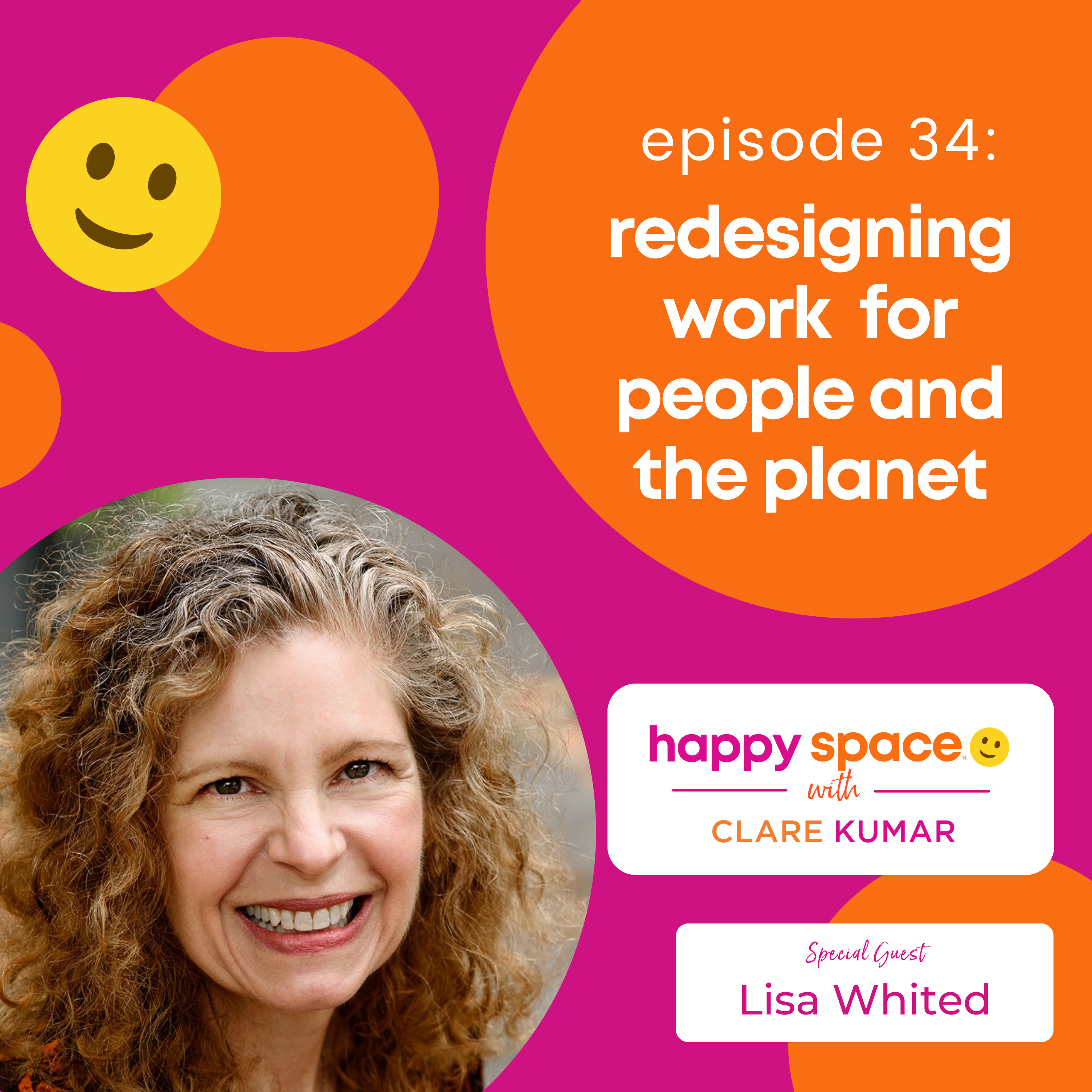
[Encore] Redesigning Work for People and the Planet - with Lisa Whited

In this curated selection from the Happy Space Podcast, I’m bringing back voices that challenge, inspire, and expand our thinking about designing for inclusion and accessibility. These encore episodes highlight conversations that continue to resonate—on neurodiversity, workplace design, and the small shifts that can make a big difference. Whether you’re tuning in for the first time or revisiting a favourite, I hope these episodes offer fresh insight into how thoughtful design can help everyone show up and perform at their best.Exploring how to change the way we think about business and work to respect both people and the planet, with workplace expert and award-winning author Lisa Whited.With the planet on fire and burnout an epidemic, we need to do things differently. Yet, until we reach the tipping point for social change, if only 8% of people can be counted on to do the “right thing”, what can we do to close the gap? Workplace expert Lisa Whited shares practical actions leaders can take to create more inclusive ways of working and treat resources with greater respect. With her holistic outlook on work, Lisa believes that when work is better, our world is better. Lisa Whited is an award-winning author and workplace expert. Her book, “Work Better. Save the Planet”, is a guide for building employee engagement while positively impacting climate change. Lisa is also an advocate for improving work and the workplace for people with invisible disabilities. Being the granddaughter of a potato farmer and the daughter of an engineer informs her work ethic and love of solving problems. CHAPTERS00:03:31 Drawing hope00:06:59 Patagonia and Conscious Capitalism00:12:04 The circular economy00:17:44 Fear of managing expectation and a path forward00:21:13 Work Style Profile00:24:07 The challenge of managing the abstract00:28:18 Sprinkle rest and leisure throughout the day00:35:00 AsoebiLINKSFor active links, visit www.clarekumar.com/podcastEpisode 16 – Still in Search of Excellence – with Tom PetersEpisode 31 – Make Your Work-life Bloom – with Dan PontefractHow to Achieve Sustainable Remote Work | The New Yorker by Cal NewportDRiVE: The Surprising Truth About What Motivates Us by Daniel PinkJohn MackeyRaj SisodiaEileen Fisher, clothing brandEILEEN FISHER Renew - lightly used clothingWaste No MoreBundles, clothing brandCommunity: The Structure of Belonging - Kindle edition by Block, Peter. Politics & Social Sciences Kindle eBooks @ Amazon.com.Work Style ProfileAtomic Habits: An Easy & Proven Way to Build Good Habits & Break Bad Ones by James ClearDeep Work: Rules for Focused Success in a Distracted World by Cal NewportOutlive: The Science and Art of Longevity by Bill Gifford and Peter AttiaIMAGE CREDITS Lisa Whited Headshot - Lisa WhitedLisa and Family wearing their Asoebi - Lisa WhitedDRiVE: The Surprising Truth About What Motivates Us by Daniel Pink - GoodreadsGirl eating pizza - CanvaWoman trying on clothes - CanvaRotating earth graphic - CanvaWoman browsing used clothes - CanvaTeen browsing clothes on phone - CanvaWoman donating clothes - CanvaPerson tossing bottle from car - CanvaWoman corporate leader - CanvaGroup of young workers - CanvaFemale leader interacting with group - CanvaBoy looking at phone - CanvaWoman looking at phone - CanvaMan sitting, isolated - CanvaForest fire, aerial view - CanvaMelted polar ice caps - CanvaLearn more and follow Lisa on:LinkedInWebsite😀😃😄😁😆Highly sensitive executive coach and productivity catalyst, Clare Kumar, explores the intersection of productivity and...

Is this your show?

Claim this listing to keep it up to date, reach guests who want to pitch you, and manage bookings with Guestify.

Claim this listing

More Business podcasts