Find partners
The Growth Mixtape: Chasing Curiosity and Sharing Boundless Insights from Ideas that Matter

The Growth Mixtape: Chasing Curiosity and Sharing Boundless Insights from Ideas that Matter

Hosted by Chasing Curiosity and Sharing Boundless Insights from Ideas that Matter by Bob Mathers

Episodes

68

Latest episode

Jun 2026

Language

EN

About the show

Listen to my conversations with the most interesting people you may not have come across yet. These conversations might not seem to have a lot in common at first. But just like songs on a mixtape, they create something memorable and emotional. So, let's press play and see what we learn about ourselves. I'm Bob Mathers, host of the Growth Mixtape podcast. I love chasing my curiosity; the further from my comfort zone, the better. Please join me for stories from leaders in business, the sciences, academia and the arts. I find the most powerful ideas, the ones that compel us to do bold things, happen by accident. It is these unexpected collisions that I’m excited to explore in this new podcast. These conversations always give me new insights I never would have gotten from other experts in my field. Every other week, join your host Bob Mathers, keynote speaker for conversations designed to push you out of your comfort zone. Each episode delivers boundless insights and ideas that matter by inspiring you to get off autopilot and keep chasing curiosity.

Listen to episodes

60 recent
July 9, 20261 hr 3 min

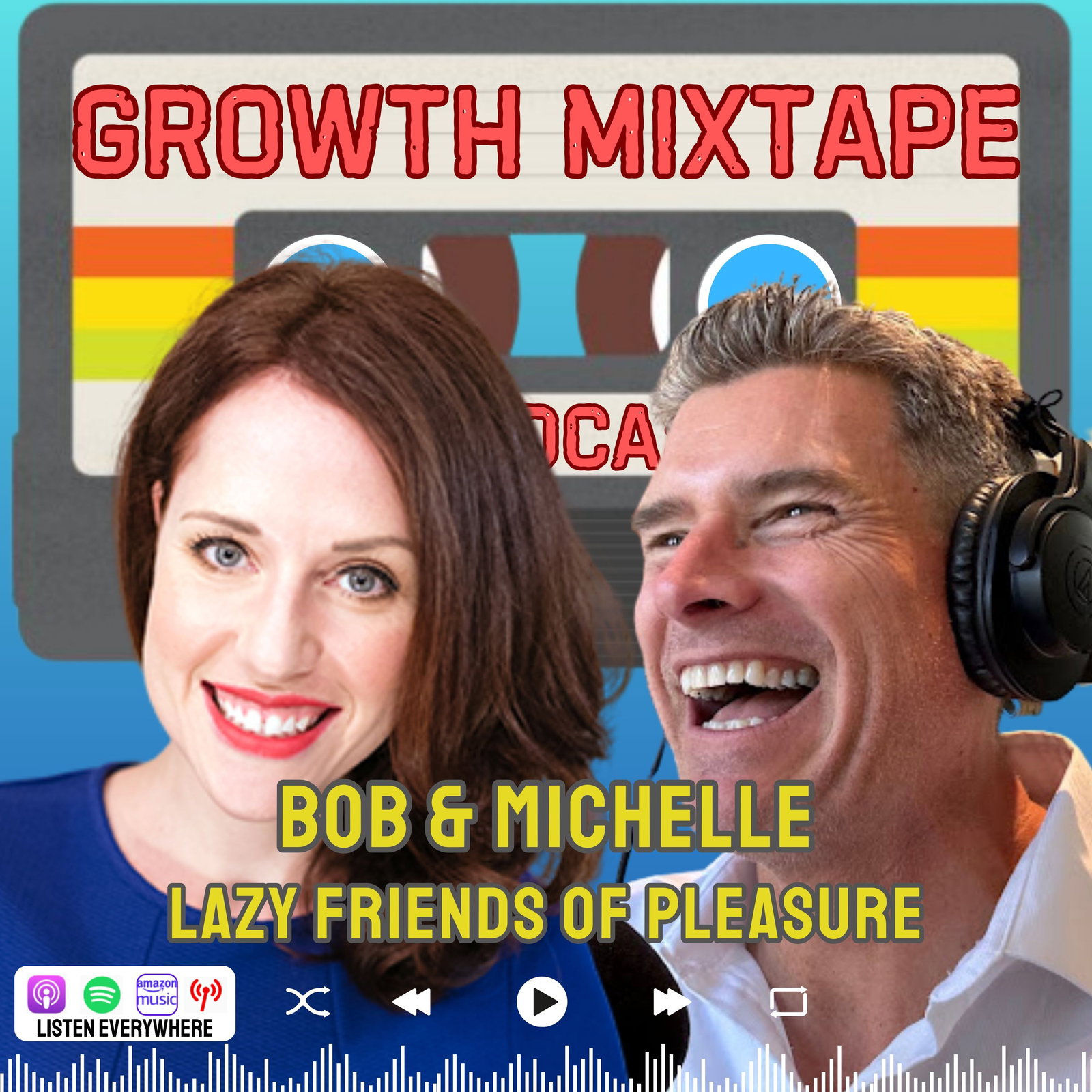
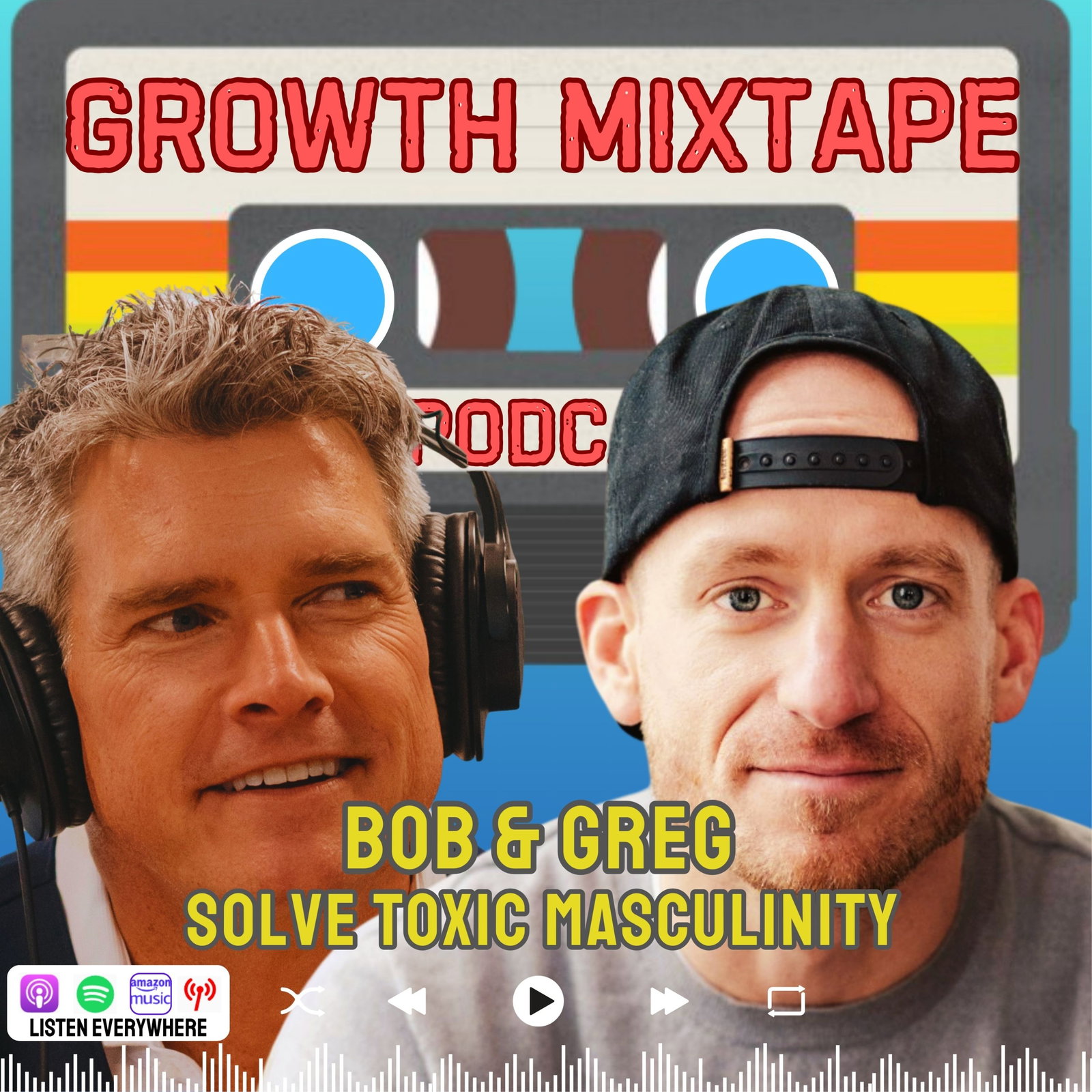
Toxic Masculinity SOLVED with Greg Boyd

Today Greg Boyd is back on the show, and this time we tried something different.Greg is a friend and cofounder of Vienna Waits with his wife Whitney, and if you've listened before you know our first conversation went to some deep, tearful places. This one uses a format I've been experimenting with: we each bring two topics, we don't share them ahead of time, we turn off the notifications, press record, and see what happens. It's vulnerable and a little terrifying, because I have no idea what someone's going to spring on me. That's exactly why I love it.We ended up covering songs that snap us back to another time and place, why men so often suck (and what we owe our kids as their fathers), the ugly, rarely-admitted feeling of not being happy when good things happen to people close to us, and Jim Collins' What to Make of a Life — the idea that you can only discover what you're built for through doing, never by being told.What struck me most is how these unscripted conversations keep circling back to the same core themes without either of us planning it. Please enjoy, Greg Boyd.Key TakeawaysA song can be permanently rewired by a single powerful experience, not just repeated listening. Greg's decades-long association with the Tragically Hip's "Bobcaygeon" was rewritten in one night by a musical that reframed it as an immigrant falling in love with Canada.On why men suck: separate nature from nurture. The nature side you can't control, but the nurture side often comes down to a lack of role models — men modelling the less-shitty behaviours we actually want our sons to carry forward.The bar for being a "good dad" is embarrassingly low ("80% is just showing up"), while the bar for moms is far higher — the invisible load moms carry that dads simply aren't expected to. Worth naming, because pretending otherwise perpetuates it.Greg's sharpest theory: men are as insecure as everyone else, but grow up in an environment where insecurity isn't allowed. Masking that insecurity with achievement is what produces a lot of "successful" men who still aren't good ones.Own the good in your kids. When Bob credited his wife for his sons' kindness, Greg pushed back — deflecting all the credit to your partner perpetuates the exact "no good role models" problem. Claim that kindness came from you too.The hard, honest one: sometimes we can't be happy for the people closest to us, and quietly feel better when things don't go their way. It's more common than anyone admits — and it's a signal, not a character flaw.That jealousy fades when you're "in frame." Once you get clarity on what you're actually built for, other people's success stops threatening you, because you're finally in your own lane instead of eyeing theirs.You can't think or plan your way to knowing what you're good at — you discover it through action. Which means being 55 and "stuck" doesn't mean you're limited; it means there are countless things you're gifted at that life just hasn't asked you to do yet.An app that tells you what to do with your life misses the entire point. The messiness of the search is the value — being handed the answer at 20 would rob you of ever truly believing it.Bob's answer to "what do you wish people said about you behind your back": he helps me see things in myself I didn't know were there, and he's a good dad. Greg's: he's kind. Both trace back to the same root — being someone whose work leaves good people in the world.Connect with Bob MathersWebsiteLinkedInInstagram The Restless Leader Newsletter on Substack: https://bobmathers.substack.com/Links & ResourcesVienna Waits - https://vienna-waits.com/Vienna Waits on Instagram:https://www.instagram.com/vienna_waits_studio/Greg on LinkedIn: https://www.linkedin.com/in/gregboyd-vienna-waits/Waypoint Retreat 2026: https://vienna-waits.com/retreat

June 23, 20261 hr 7 min

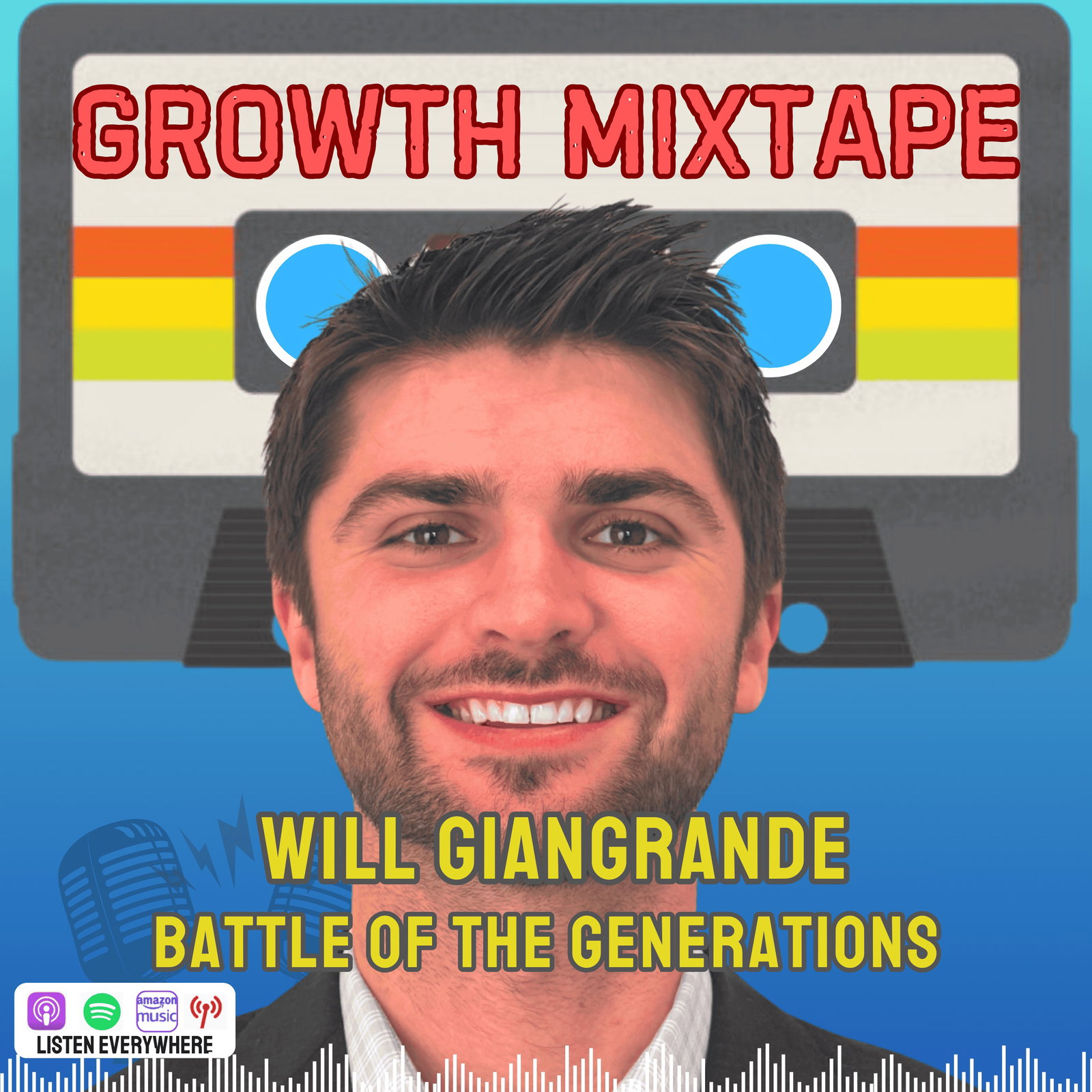
The Sub-Gen Problem: Why 2 People Born 5 Years Apart Aren't the Same GenZ with Will Giangrande

Today we talk to Will Giangrande, founder of The NextGen Playbook and someone who has made it his mission to help bridge the gap between generations in the workplace.I met Will a little over a year ago, and despite being nearly the youngest person in the room, he struck me as an old soul. He's spent the last few years helping leaders better understand Gen Z, but what I loved most about this conversation is that he flips the usual script. Instead of a fifty-year-old HR professional explaining how to relate to younger workers, here's someone from inside that generation translating both directions — and refusing to point fingers about which generation has it figured out.We covered everything from dating apps and long-distance relationships to remote work, feedback, work-life boundaries, purpose, AI, and why a 25-year-old might already be wrestling with questions previous generations didn't start asking until midlife.More than anything, this conversation reminded me that most of the friction between generations comes from misunderstanding. We're all just products of the world we grew up in — and if we can stay curious and ask one more question, we usually find we have more in common than we think.Please enjoy, Will Giangrande.Key TakeawaysEvery generation has accused the one behind it of being lazy, entitled, and bound to ruin everything. Will literally collects these quotes and has audiences guess which era they're from — the complaints are ancient."Gen Z" isn't one group. Smartphones and COVID created sub-generations inside the label: someone who got a phone at 15 forms relationships differently than someone five years older, and where you were during the pandemic (17 or 22) changed everything.Most workplace tension is a projection problem. We assume the only upbringing we ever had — the way we learned to communicate and build relationships — is the "normal" way, and judge everyone else against it.Wanting feedback isn't neediness. In a remote setting, the hallway moments and quick door-knocks vanish, so mentorship has to be scheduled and asked for. That makes it look constant and formal when it's really just become visible.The work-life boundary fight isn't about laziness either — it's about control over time, not fewer hours. The 9-to-5 is an industrial-era leftover, and younger workers are the first to feel empowered to push back on it. Most of us never felt we could.Your first job becomes the baseline. Whatever you experience first — remote or in-person, one set of norms or another — quietly becomes the standard you judge every job after it against.Purpose is arriving early. The questions about meaning and balance that used to trigger a midlife crisis at 45 are now showing up in people's twenties — and with longer lives and AI reshaping work, careers are becoming less linear. Reinvention and curiosity may matter more than sticking to one path.We make sweeping claims about millions of people from a sample size of five. Social media magnifies the differences between us; honest conversation tends to shrink them.The simplest way to bridge the divide: stay curious and ask one more question. You never know where it leads.Connect with Bob MathersWebsiteLinkedInInstagram The Restless Leader Newsletter on Substack: https://bobmathers.substack.com/Links & ResourcesNextGen Playbook Website: https://thenextgenplaybook.com/Will Giangrande on LinkedIn: https://www.linkedin.com/in/will-gian/The Next Gen Playbook on Instagram: https://www.instagram.com/thenextgenplaybook/Will Giangrande on YouTube: https://www.youtube.com/@WillNavigates20s

June 9, 202635 min

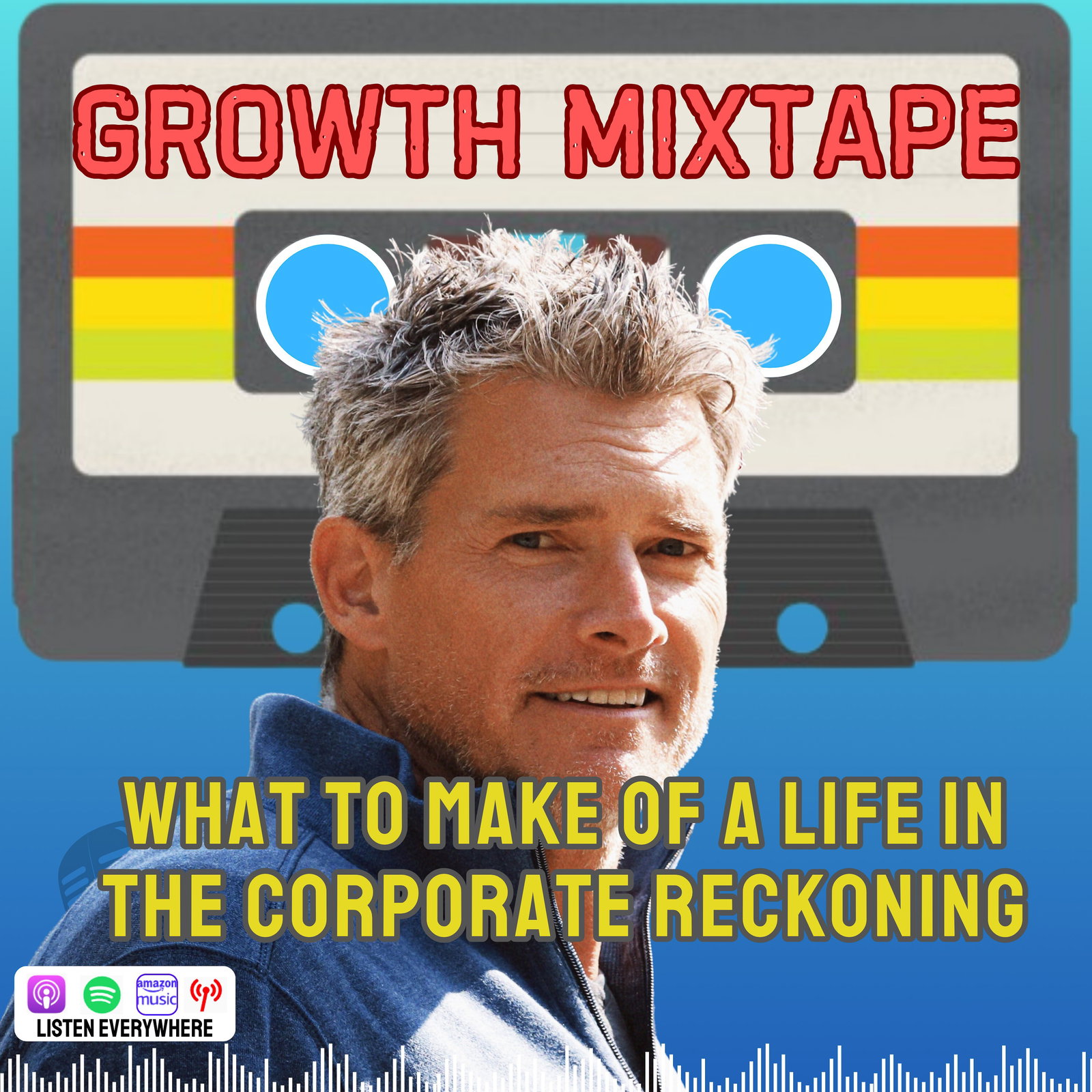
What to Make of a Life in the Corporate Reckoning

Welcome to another solo episode, this time on the collective midlife crisis we’re all going through and how to navigate it with the help of Jim Collins’ new book, What to Make of a Life.Lately, I’ve been having the same conversation over and over again with leaders, founders, and people in every stage of their careers. They’re successful on paper, but something feels off. The things that used to work don’t seem to work anymore, and there’s this growing sense that there has to be something more.In this episode, I share an idea I’ve been calling the “Corporate Reckoning” — the collision of COVID, AI, and economic uncertainty — and why so many of us feel like strangers in careers we’ve spent our lives building.And I talk about Jim’s new book that arrived at exactly the right moment, one that gave me language, hope, and a completely different way of thinking about what our best work might still look like.This one is deeply personal, a little messy, and very much a work in progress.Please enjoy.Key Takeaways:We’re living through a “Corporate Reckoning” — the combination of COVID, AI, and economic uncertainty has fundamentally changed how we work and what’s expected of us.Many people feel like strangers in careers they’ve spent decades building because the strengths that made them successful were designed for a world that no longer exists.The traditional career path our parents experienced is disappearing. Reinvention isn’t optional anymore — it’s becoming a normal part of modern life.Jim Collins’ concept of “encodings” suggests that each of us has unique, innate capabilities that are revealed through the experiences of life, and we have far more of them than we realize.Our best work may still lie ahead. Many of the people Collins studied discovered entirely new strengths and did their most meaningful work later in life.Being “in frame” means using the gifts that come most naturally to us. Being “out of frame” often creates the restlessness and dissatisfaction so many people are feeling today.Major events in our lives — what Collins calls “cliffs” — often force us to uncover strengths we never knew we had.Feeling lost, uncertain, or confused isn’t unusual. We all spend time in “the fog,” and recognizing that can make the experience feel a lot less lonely.Looking back at our stories can help us uncover patterns, strengths, and clues about what we’re uniquely meant to contribute.Curiosity may be one of the most important tools we have for building a bigger, more meaningful life.Connect with Bob MathersWebsiteLinkedInInstagram The Restless Leader Newsletter on Substack: https://bobmathers.substack.com/Links & ResourcesJim Collins’ What to Make of a Life: https://www.jimcollins.com/books.html

May 26, 202650 min

Find Yourself Right Where You Are with Bea Zanatelli

Today we talk to Beatriz Zanatelli — entrepreneur, founder, immigrant, and one of the most intentional people I know.Bea and I have known each other for years, but this conversation felt different.  It’s a perfect example of what can happen when people show up with genuine curiosity and no expectations about where it might lead.What came out of it was a conversation about identity, confidence, intuition, childhood insecurities, building a life in a new country, and the strange ways we slowly grow into ourselves over time.Bea shares the story behind her obsession with the CN Tower — which turned out to be way more emotional and meaningful than I expected — and we talk about the difference between following data versus following your gut when making big life decisions.This one felt deeply human. Vulnerable, funny, emotional at times… and honestly just a really beautiful conversation between two friends trying to figure life out in real time.Please enjoy, Beatriz Zanatelli.Key Takeaways:The things that make us feel different as kids often become the things we grow to love most about ourselves.Confidence isn’t having all the answers — true confidence is being comfortable saying “I don’t know.”Intuition can be just as powerful as data when making big life decisions. Sometimes your body knows before your brain catches up.The CN Tower became a symbol for Bea of possibility, belonging, and building the life she dreamed about for her family in Canada.Vulnerability and curiosity are the foundation of real trust and connection.Breaking generational patterns takes awareness, courage, and intentional choices over time.Purpose-driven work feels different — as Bea says, Smartgoos became “my soul in the shape of a business.”Most of us never fully “figure it out” — even later in life, there’s still uncertainty, insecurity, and constant growth.Connect with Bob MathersWebsiteLinkedInInstagram The Restless Leader Newsletter on Substack: https://bobmathers.substack.com/Links & ResourcesBea on LinkedIn: https://www.linkedin.com/in/beatrizzanatelli/Bea on Instagram: https://www.instagram.com/beatrizzanatelli/Smart Goose Academy: https://smartgooseacademy.com/

May 5, 202653 min

The Life of a Digital Nomad at Sea with Linda Jackson

Today we talk to Linda Jackson, a self-described OG digital nomad who’s been living and working from a sailboat for over a decade… and not just weekend sailing either — we’re talking about crossing oceans, navigating cyclones, and building a life completely untethered from land.Linda is calling in from Fiji — yes, actually on an 80-foot sailing yacht — and what struck me right away is that this isn’t just a story about travel or adventure. It’s about designing a life on your own terms. Selling everything, letting go of the “stuff,” and figuring out how to blend work, curiosity, and freedom into something that actually feels like living.We get into what it really takes to live this way, the mindset required to handle uncertainty, and why most of us talk ourselves out of things long before we ever give them a shot.This conversation left me thinking a lot about the stories we tell ourselves… and what might be possible if we challenged a few of them.Please enjoy, Linda Jackson.Key Takeaways:You don’t have to go “all in” to try something new — most big lifestyle changes can start as experiments rather than permanent decisions.Letting go of physical “stuff” can feel surprisingly freeing — and often reveals how little of it actually matters.The digital nomad lifestyle isn’t just about travel — it’s about designing work in a way that supports how you want to live.Nature doesn’t care about your plans — Linda’s approach to sailing is a powerful reminder to respect reality, adapt quickly, and never get complacent.“Head in boat” syndrome — being so focused on what’s right in front of you that you miss the bigger picture — applies just as much to life and business as it does to sailing.Fear and perceived obstacles stop most people long before reality does — the barriers are often more mental than practical.A shared vision matters — whether it’s a relationship or a business, alignment on the bigger goal is what makes long-term success sustainable.You can blend work, adventure, and life together — it doesn’t have to be neatly separated into boxes like we’ve been taught.Connect with Bob MathersWebsiteLinkedInInstagram The Restless Leader Newsletter on Substack: https://bobmathers.substack.com/Links & ResourcesLinda on LinkedIn: https://www.linkedin.com/in/eljay/Shellphone Chronicles on Substack: https://shellphonechronicles.substack.com/

April 21, 202653 min

Do What You Want, Or Just Get Old with Whitney Boyd

Today I talk to Whitney Boyd as part of a special series where I talk to friends about things I’ve always been curious about.  And they get to do the same.  I bring two topics, they bring two topics and we surprise each other - no notice and no preparing answers in advance.  It takes courage and I give Whitney a lot of credit for going through with it. Truth be told, she wasn’t 100% sold on the whole idea.  But as you’ll hear, there is nothing Whitney can’t do.  She’s humble, thoughtful and hilarious.  I can’t explain why, but something magical happens when you put the right people in front of a microphone and press record.  Although we didn’t plan it, there was a theme that emerged.  It’s about getting older and watching your kids go through things that it feels like yesterday we just went through.  How hard it is to let them make mistakes.  And how much we can learn about ourselves after all these years, as we relive our childhoods vicariously through them.Please enjoy, Whitney Boyd.Key TakeawaysJust because you’re good at something doesn’t mean you’re meant to do it — and knowing the difference matters more than we admit.The idea that we should constantly push outside our comfort zone is worth questioning. Sometimes comfort isn’t the enemy.Kids often tie their identity to the thing they do most — and when that’s taken away, it can leave a real gap.Parenting is full of invisible emotional moments — like grieving the end of a chapter your kid might not even be thinking about.The things that occupy our thoughts the most (work, appearance, logistics) aren’t always the things we wish did — and that gap is worth paying attention to.Relationships evolve, but expressing things like “I love you” can feel strangely harder as we get older — even when it matters more.Life stages sneak up on you — one minute you’re raising kids, the next you’re balancing that with caring for aging parents.Big life decisions (like where to live) are often less about possibility and more about the stories we tell ourselves about what’s practical or allowed.Connect with Bob MathersWebsiteLinkedInInstagram The Restless Leader Newsletter on Substack: https://bobmathers.substack.com/Links & ResourcesVienna Waits - https://vienna-waits.com/Whitney on LinkedIn: https://www.linkedin.com/in/whitneyboyd/Whitney on Instagram:https://www.instagram.com/vienna_waits_studio/

April 7, 202655 min

The Ongoing History of Alan Cross

Today we talk to Alan Cross, a legend in the music world and the voice behind The Ongoing History of New Music—a show that’s been shaping how we understand music for over 30 years.If you grew up loving music, there’s a good chance Alan helped you make sense of it—connecting the dots between artists, movements, and moments that changed everything. But this conversation isn’t just about looking back. It’s about how dramatically music has changed… and what that means for all of us.We get into everything—from the explosion of alternative rock in the early 90s, to the moment Napster flipped the entire industry upside down, to why music today feels so different than it did when we were growing up. Alan shares what we’ve gained, what we’ve lost, and why the future of music might be more fragmented—and more confusing—than ever.This felt like a masterclass in music, culture, and how technology quietly reshapes the things we love.Please enjoy, Alan Cross.Key TakeawaysThe Power of Storytelling in Music: Alan’s success comes from making music feel human—turning songs into stories that pull you in, even if you didn’t think you cared about the artist.Why the 90s Changed Everything: The rise of alternative rock wasn’t random—it was the result of cultural shifts, new data (SoundScan), and a wave of artists ready to redefine the industry.Napster’s Ripple Effect: What seemed like a side experiment in file sharing ended up dismantling the traditional music business—and the industry never fully recovered.Streaming Changed How We Value Music: With everything available instantly and cheaply, music lost its financial value—even though its emotional impact remains.Algorithms Are Limiting Discovery: Instead of expanding our taste, streaming platforms often trap us in familiar sounds, making it harder to discover something truly new.From Tribes to Playlists: Music used to define identity and community. Today, younger listeners mix genres freely, shifting music from a social signal to a personal experience.The Death of Mystique: Social media has erased the distance between artists and fans, removing the mystery that once made rock stars feel larger than life.The Future is Fragmented: With thousands of micro-genres and endless choice, music is becoming more personalized—but also harder to navigate and share collectively.Connect with Bob MathersWebsiteLinkedInInstagram The Restless Leader Newsletter on Substack: https://bobmathers.substack.com/Links & ResourcesAlan’s website: https://www.ajournalofmusicalthings.com/Ongoing History of New Music Podcast: https://curiouscast.ca/podcast/126/ongoing-history-of-new-music/Uncharted: Crime and Mayhem in the Music Industry: https://curiouscast.ca/podcast/1296/uncharted-crime-and-mayhem-in-the-music-industry/CFNY: The Spirit of Radio documentary: https://www.ajournalofmusicalthings.com/the-cfny-the-spirit-of-radio-documentary-is-coming-to-theatres/

March 24, 202619 min

Goodbye Self-Help, Hello Curiosity as a Service

Welcome to another solo episode, and I’m really proud of this one. It’s quite personal. If you’ve ever struggled to get something off the ground, or have started something you loved only to have it turn into a chore, this is for you.  The truth is I’ve been wrestling with what this podcast is actually about - what it’s supposed to be. Somewhere along the way, this thing I loved most in the world slowly turned into something that felt like work.  In trying to make it valuable for everyone else, I lost what drew me to it in the first place.  So in this episode, I take you through that journey—from chasing my curiosity, to getting pulled into the self-help world, to a moment of clarity that finally revealed the answers I was looking for.Listening to me fumble my way through this just might give you the inspiration you need to rediscover the passion you’ve lost.Please enjoy.Key TakeawaysFollowing your curiosity is often where the most energy and joy come from—when you lose that, the work starts to feel heavy.Trying to make everything “useful” or “valuable” can strip the life out of creative work.Not everything needs to be actionable—sometimes stories and perspectives are more powerful than step-by-step advice.People take away different things from the same story, which is why leaving space for interpretation can be more impactful.The self-help cycle can keep us stuck—consuming ideas instead of actually applying them.You don’t need more answers—you likely already have them. What you need is space to think differently.Leading with curiosity might feel selfish, but it often creates the most genuine and engaging work.Sometimes the best thing you can offer is a break—a shift in perspective that helps people see their own lives more clearly.Connect with Bob MathersWebsiteLinkedInInstagram The Restless Leader Newsletter on Substack: https://bobmathers.substack.com/Links & Resourceshttps://growth-mixtape-podcast-with-bob.cohostpodcasting.com/episodes/the-untold-story-of-the-edmund-fitzgerald-with-john-u-bacon-chasing-curiosity-and-sharing-boundless-insights-from-ideas-that-matterAlan Cross - https://www.ajournalofmusicalthings.com/

March 10, 202651 min

When Did Comfort Become Such a Bad Word? With Anne Bonney | Chasing Curiosity and Sharing Boundless Insights from Ideas that Matter

Today we talk to Anne Bonney, speaker, author and self-described discomfort zone guide.I loved this conversation because it pushed on something I’ve been thinking about a lot lately. We hear all the time that growth happens outside our comfort zone, but Anne gives that idea a fresh twist. Instead of just leaving comfort, she talks about learning how to dance with discomfort — and more importantly, how to know when discomfort is helping us grow and when we’re just exhausting ourselves.We talk about why hard things build self-trust, how the challenges we choose can prepare us for the ones life throws at us, and why confidence is really just evidence that we’ve survived difficult things before. We also get into silent retreats, relationships, leadership, and the stories we tell ourselves when change shows up uninvited.This one was thoughtful, practical, and really fun.Please enjoy, Anne Bonney.Key Takeaways:Anne reframes the whole idea of a “comfort zone” by focusing instead on the discomfort zone — something we can move toward with curiosity instead of fear.Doing hard things builds self-trust. The more often we survive discomfort, the more evidence we have that we can handle what comes next.Not all discomfort is created equal. Sometimes growth means taking on a marathon or a big keynote, and sometimes it means having an honest conversation or asking for what you need.Comfort isn’t the enemy. It’s the place we rest so we can step back into challenge when we’re ready.Self-efficacy matters. Resilience grows when we believe there’s something we can do to improve our situation instead of waiting for life to magically get easier.Anne’s line, “thoughts are random, thinking is not,” is a powerful reminder that we don’t have to believe every story our brain tells us in moments of fear or uncertainty.The discomfort we choose can help prepare us for the discomfort we don’t choose — illness, grief, aging parents, relationship struggles, and all the other hard parts of life.Nobody else has it figured out, and you don’t have to do it alone. That might be the most comforting truth of all.Connect with Bob MathersWebsiteLinkedInInstagram The Restless Leader Newsletter on Substack: https://bobmathers.substack.com/Links & ResourcesAnne Bonney website: https://yourchangespeaker.com/Anne on Linkedin: https://www.linkedin.com/in/annebonney/Anne’s TEDx talk: https://youtu.be/wSL6tVD__po?si=3xSBLDfCwTYUaTB7Michael Easter, The Comfort Crisishttps://www.michaeleaster.com/the-comfort-crisishttps://www.amazon.com/dp/0593138767Vipassana meditation retreatshttps://www.dhamma.org/David Gogginshttps://davidgoggins.com/Tim Ferrisshttps://tim.blog/

February 24, 202642 min

Healthcare Can Change: Generations Collective LIVE | Chasing Curiosity and Sharing Boundless Insights from Ideas that Matter

Today we talk to three incredible women on a mission to completely reimagine healthcare, with community and the whole person at the centre.This was our first recording in front of a live studio audience, and the energy in the room was incredible. Maddi Kolberg, Dr. Tina Sestin, and Carmen Sutherland share how a chance meeting in a sauna, years of clinical burnout, and a deep belief in community all collided to create something new: the Generations Collective.We talk about what’s broken in our current system, why so many of us feel isolated as patients and caregivers, and what it could look like to build healthcare around humans instead of appointments. This conversation is about perimenopause and pelvic health, yes — but it’s also about grief, belonging, accessibility, and the power of stories to build something better.This one left me hopeful.Please enjoy, Maddi Kolberg, Dr. Tina Sestin, and Carmen Sutherland.Key TakeawaysA Chance Encounter Sparked a Movement: A conversation in a sauna led to the creation of Generations Collective — proof that when you follow curiosity and authenticity, powerful collaborations can form.Burnout Isn’t Failure — It’s Information: Tina shares how 15 years in practice left her exhausted and questioning a system where only those with money or benefits could access care. That discomfort became fuel for change.Healthcare Should See the Whole Human: Mind, body, spirit, family, finances, and community all impact health. Treating symptoms in isolation misses the bigger picture.Community Is Medicine: Maddie’s experience navigating her daughter’s medical journey — and the overwhelming support from her neighborhood — reinforced that healing doesn’t happen alone.Integration Changes Everything: Instead of siloed practitioners working back-to-back, Generations Collective envisions collaborative care — clinicians literally sitting at the same table to support each patient together.Belonging Is Foundational to Health: Carmen reminds us that beyond treatment plans and protocols, people need to feel seen, valued, and like they truly belong.Accessibility Matters: Quality care shouldn’t depend on income level. Reimagining healthcare means building models that make support available to more people.Regenerative Leadership Over Burnout Culture: If we want a better system, we can’t build it by sacrificing the people inside it. Taking care of each other is part of the mission.Connect with Bob MathersWebsiteLinkedInInstagram The Restless Leader Newsletter on Substack: https://bobmathers.substack.com/Links & Resourceshttps://www.generationscollective.ca/https://www.instagram.com/generationscollective.ca/ https://www.linkedin.com/in/maddi-kolberg/https://www.linkedin.com/in/tina-sestan-557b112a/https://www.linkedin.com/in/carmen-sutherland-34604829/

Is this your show?

Claim this listing to keep it up to date, reach guests who want to pitch you, and manage bookings with Guestify.

Claim this listing

More Business podcasts