
Find partners
Furlo Capital Real Estate Podcast

Furlo Capital Real Estate Podcast

Hosted by James Furlo

BusinessInvestingInterviews guests

Episodes

129

Latest episode

Jun 2026

Language

EN

About the show

A conversational podcast between James and Jessi Furlo that dives into the intricacies of passive real estate investing. Our mission is to equip people to invest wisely in both property and residents so that, together, we can build wealth and improve housing.

Listen to episodes

60 recent
June 10, 2026Episode 12931 min

How Smart Passive Investors Protect Themselves From Sponsor Failure | Ep 129

(Watch the YouTube video of this episode here)What happens to your investment if the person running it dies, disappears, burns out, or gets sued? Most passive investors never ask that question before wiring money. The answer depends on two things: whether you're a private money lender or an equity investor in a syndication.This episode walks through eight scenarios: four ways a sponsor can become unavailable (death, disappearance, burnout, lawsuit), each examined from two investor positions (private money lender vs. syndication LP). It's a side-by-side comparison that makes clear just how different the risk exposure is depending on how you structured your investment.Key Moments(00:00) Introduction(03:57) Scenario 1: The Operator Dies(07:38) Key Person Insurance Explained(10:45) Scenario 2: The Operator Disappears(15:43) Scenario 3: Burnout — The Most Common Failure Mode(19:56) Scenario 4: The Operator Gets Sued(27:00) Checklist for Private Money Lenders(28:05) Checklist for LP Investors(30:07) The Wrap — A Deal Doesn't Run Itself5 Key LessonsDebt investors sleep better in a crisis: When the operator goes sideways, a lender's rights attach to the property, not to the person. The note survives death, disappearance, and lawsuits. The LP's rights depend on what someone wrote in the operating agreement.Burnout is the most common failure mode, and it doesn't look like a crisis: It looks like slower reports, defensive updates, and delayed distributions. By the time you notice, it may have been happening for a year.You're investing in the operator, not the deal: The vehicle is secondary. If the key person fades, your investment fades with them... at least for a while.Key person insurance is the simplest hedge a sponsor can offer: If the operator carries it, a payout can give investors enough runway to sell the asset cleanly or recapitalize without a crisis exit.Ask one question before investing in any syndication: Who runs this deal if the operator can't? If there's no clear answer in the operating agreement, that's your answer.Let's build your wealth and improve housing, together.I spent 12 years as a data scientist at HP and purchased $5M worth of real estate over 15 years using my own money. Now, I'm partnering with busy professionals to diversify their investments and generate passive income through real estate syndications and short-term flips—without dealing with tenants, toilets, or tantrums.At Furlo Capital, we believe real estate isn't just a transaction; it's a partnership. Our value-add approach creates win-win situations where residents thrive, and investors build wealth. We're not just in this to make money—we want to make a difference.If you're ready to diversify from stock market volatility and want reliable, steady returns, let's build your wealth and improve housing, together.Want to dive deeper into my investing thesis and strategy?👉 Learn more: https://furlo.comCurious about the critical questions to ask before investing?👉 Get my 196-question due diligence vault: https://furlo.com/good-deals-only-ebookDisclaimerPlease note that investing in private placement securities entails a high degree of risk, including illiquidity of the investment and loss of principal. Please refer to the subscription agreement for a discussion of risk factors.

June 3, 2026Episode 12842 min

We Rank Each of Our Real Estate Investments from BEST To WORST | Ep 128

(Watch the YouTube video of this episode here) We've done 22 real estate deals since 2009. Rentals, flips, a syndication, land, storage units, co-living, a mobile home, and even a ground-up build. This episode, we ranked them all. Not just by returns. By what we'd actually do again.We walk through every deal on the list: what we paid, what we learned, what went sideways, and what we'd change. The top deals share a pattern: they had great numbers AND something novel or interesting about the structure. The bottom deals? Either the money wasn't there, or operating them was just genuinely painful.A few highlights: Deal #1 has generated a 141% return, and we haven't even sold it yet. Deal #22 was purchased for $1 and lost $13,500. Our primary home made the list at #9. And there's a mobile home story you'll want to hear.Key Moments(00:00) Introduction(02:45) #1: Lyon Apartments (141% Return and Still Holding)(03:00) #2: Baker Tower (Syndication, Mixed-Use, Downtown Albany)(04:30) #3: Columbus Duplex (The Very First Deal)(05:30) #4: First Avenue Duplex(07:30) #5 & #6: Sunnyside Properties (Where the "Smell of Money" Paid Off)(09:00) #7: The Warehouses (First 1031 Exchange)(10:50) #8: 14th Street Co-Living House (15 Bedrooms, Hard Money)(11:30) #9: Our Primary Home Makes the List(13:10) #10: Land Flip in Indiana (Never Even Visited the Property)(15:30) #11 & #12: Two More Singles(18:30) #13: 11th Street Lebanon (First Full Flip, 10 Months, $100K in Repairs)(20:20) #14: James Storage Works (Storage + Apartment + Warehouse)(22:00) #15: Jackson Street Duplex (7 Years of Zero Maintenance)(25:00) #16 & #17: More Mid-Pack Deals Reviewed(27:50) #18: Verta Crossing Syndication (Passive Investment, Mixed Experience)(31:10) #19: Philomath Retail Building (Break-Even, Required Purchase)(32:30) #20: Sunnyside Land (Plans Fell Through, Now Selling)(33:20) #21: Thornton Lake Lot Split (Good for Investors, Painful for Us)(35:40) #22: The Mobile Home (Bought for $1, Lost $13,500)(37:30) Recap: What the Best and Worst Deals Have in Common5 Key LessonsThe deals you'd do again aren't always the highest-returning ones: James ranked by "awesomeness" — a mix of returns, novelty, and experience — which produced a different list than pure ROI would.Buying something for $1 doesn't mean it's free: The mobile home was acquired for a dollar and lost $13,500. The price paid at acquisition is almost irrelevant compared to what you spend after.Holding vacant land is a slow drain: Plans fall through. Opportunity cost accumulates. Sometimes the right move is just selling the land and redeploying the capital.The first deal is worth more than its returns: Columbus duplex sold for nearly double its purchase price after 12 years. But its real value was that it started everything else.The ranking exercise is useful even when it's uncomfortable: Forcing a bottom-to-top rank of your own portfolio reveals your real preferences, tolerances, and blind spots — things IRR spreadsheets can't show.Let's build your wealth and improve housing, together.At Furlo Capital, we believe real estate isn't just a transaction; it's a partnership. Our value-add approach creates win-win situations where residents thrive, and investors build wealth. We're not just in this to make money—we want to make a difference.If you're ready to diversify from stock market volatility and want reliable, steady returns, let's build your wealth and improve housing, together.DisclaimerPlease note that investing in private placement securities entails a high degree of risk, including illiquidity of the investment and loss of principal. Please refer to the subscription agreement for a discussion of risk factors.
May 27, 2026Episode 12733 min

The 5 Rules of Real Estate Investing (that amateurs mess up) | Ep 127

(Watch the YouTube video of this episode here) Most real estate investors obsess over the property. The real money is somewhere else entirely.These five rules separate investors who build lasting wealth from those who buy real estate and wonder why it never quite works. Some are counterintuitive. A few are things most people learn too late.James and Jessi walk through five non-negotiable rules of real estate investing, drawing on real deals (including Baker Tower), a storage facility bought at 50% vacancy, and the dangerous comfort of "break-even" properties that aren't actually breaking even. The conversation covers what you're really buying when you write an offer, why the numbers have to survive your best-case story, how to underwrite what you don't know yet, where profit actually hides, and what passive investing actually requires of you.The rules apply whether you're active or passive, single-family or commercial, just starting or a decade in.Key Moments(00:00) Introduction(02:12) Rule 1: You're Buying Execution, Not Real Estate(05:43) Rule 2: The Deal Has to Work Before the Story(09:53) Rule 3: Underwrite the Exit, Not the Entry(13:44) Cap Rates Explained (and Why They Matter at Exit)(23:51) Rule 4: Friction Is Where Profit Hides(27:53) Rule 5: Passive Means Delegated, Not Disappeared(30:53) Recap and Closing Thoughts6 Key LessonsYou're buying a mini business, not a building: The property is just the asset. What determines your returns is whether the people and processes behind it can actually execute.A break-even deal usually isn't: "The rents cover the mortgage" ignores vacancy and maintenance. Those two assumptions are critical to stop a slow bleed over time.The deal has to survive your best-case story falling apart: If your underwriting requires low vacancy, no surprises, and perfect timing simultaneously, you don't have a deal. You have a wish.Underwrite the exit before you close the entry: Knowing what you'll make when you buy isn't enough. You need to know what this thing is worth when you're done with it.Cat urine is the smell of money: Polished deals are priced for their polish. The profit is in the problem you're willing to solve that someone else won't touch.Passive means delegated, not disappeared: You can hire someone to manage your property. You can't hire someone to care about it the way you would. Regular check-ins aren't micromanaging; they're what keep small misalignments from becoming expensive ones.Let's build your wealth and improve housing, together.I spent 12 years as a data scientist at HP and purchased $5M worth of real estate over 15 years using my own money. Now, I'm partnering with busy professionals to diversify their investments and generate passive income through real estate syndications and short-term flips—without dealing with tenants, toilets, or tantrums.At Furlo Capital, we believe real estate isn't just a transaction; it's a partnership. Our value-add approach creates win-win situations where residents thrive, and investors build wealth. We're not just in this to make money—we want to make a difference.If you're ready to diversify from stock market volatility and want reliable, steady returns, let's build your wealth and improve housing, together.Want to dive deeper into my investing thesis and strategy?👉 Learn more: https://furlo.comCurious about the critical questions to ask before investing?👉 Get my 196-question due diligence vault: https://furlo.com/good-deals-only-ebookDisclaimerPlease note that investing in private placement securities entails a high degree of risk, including illiquidity of the investment and loss of principal. Please refer to the subscription agreement for a discussion of risk factors.
May 20, 2026Episode 12628 min

Sub-To Deals Explained: How We Protect Seller and Investors | Ep 126

(Watch the YouTube video of this episode here) Subject-to deals are everywhere right now, but most investors skip the proper paperwork and end up with a handshake agreement. We just closed on a distressed flip in Sweet Home, OR using a 3.25% existing mortgage, and we're breaking down the 6 documents that make a subto actually safe: wraparound promissory note, third-party servicer, deed of trust, deed-in-lieu, insurance POA, and due-on-sale acknowledgment. This is how you protect yourself and the seller.Key Moments(00:00) Introduction and Why Subto Is Hot Right Now(01:34) The Sweet Home Deal: Property, Numbers, and Why Subto Made Sense(04:18) How Subject-To Actually Works: Title, Mortgages, and Seller Risk(09:56) The Naked Subto Problem and Our 6-Document Solution(12:10) Breaking Down All 6 Safeguards(19:48) Advanced Structures, Deal Strategy, and Investor Protections(25:40) Closing Thoughts and How to Invest With Us5 Key LessonsDon't let a 3.25% rate walk out the door: When a seller can't sell conventionally, and you can inherit a below-market mortgage, a subto isn't just creative — it's the only math that works.Get the paperwork or get burned: A handshake subto is called "naked" for a reason — you're exposed, the seller's exposed, and everyone's pretending it'll be fine until it isn't.Wrap the mortgage before you wrap up the deal: A wraparound promissory note turns the seller into a lender, gives them legal recourse, and actually helps their debt-to-income ratio after a year.Give the seller a way out before they need one: A pre-authorized deed-in-lieu skips the foreclosure nightmare entirely — clean, fast, and fair for everyone involved.The due-on-sale clause is a lion that rarely bites — but document it anyway: Banks want payments, not headlines. Acknowledge the risk in writing, build in a cure window, and move on.Let's build your wealth and improve housing, together.I spent 12 years as a data scientist at HP and purchased $5M worth of real estate over 15 years using my own money. Now, I'm partnering with busy professionals to diversify their investments and generate passive income through real estate syndications and short-term flips—without dealing with tenants, toilets, or tantrums.At Furlo Capital, we believe real estate isn't just a transaction; it's a partnership. Our value-add approach creates win-win situations where residents thrive, and investors build wealth. We're not just in this to make money—we want to make a difference.If you're ready to diversify from stock market volatility and want reliable, steady returns, let's build your wealth and improve housing, together.Want to dive deeper into my investing thesis and strategy?👉 Learn more: https://furlo.comCurious about the critical questions to ask before investing?👉 Get my 196-question due diligence vault: https://furlo.com/good-deals-only-ebookDisclaimerPlease note that investing in private placement securities entails a high degree of risk, including illiquidity of the investment and loss of principal. Please refer to the subscription agreement for a discussion of risk factors.
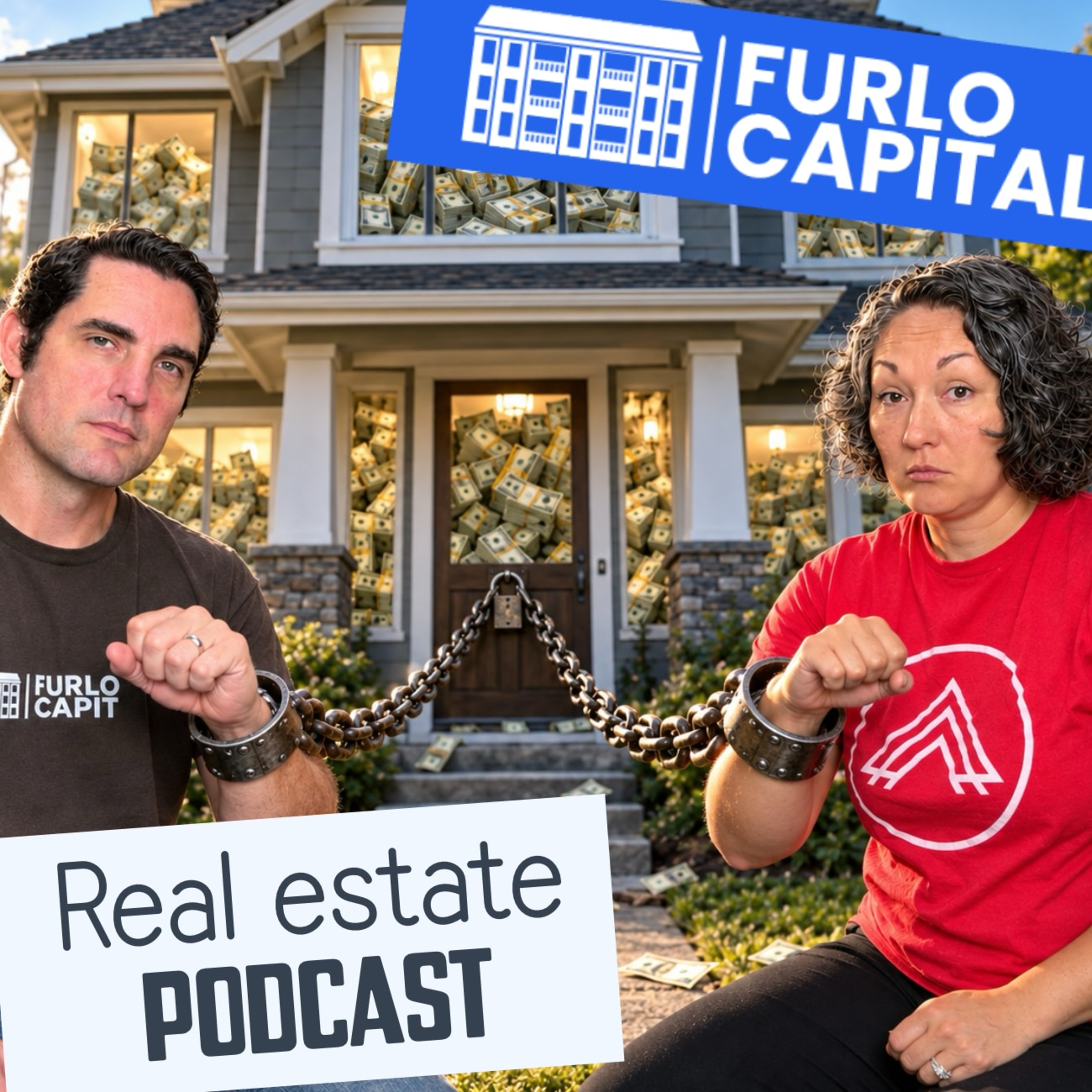
May 13, 2026Episode 12544 min

What Hath God Wrought & the Timeless Rules of Money, Power, and Information | Ep 125

(Watch the YouTube video of this episode here) Solomon said it best: "There is nothing new under the sun." After reading a 900-page Pulitzer Prize-winning book on 1825–1850 America, the parallels to today are impossible to ignore: the Panic of 1837, speculative land booms, currency chaos, and populist disruption all rhyme with 2008, COVID, and now. In this episode, we break down what history teaches us about economic cycles, information asymmetry, and how the smartest investors positioned themselves then and now.Key Moments(00:00) Introduction: Solomon Was Right(01:38) The Book: What Hath God Wrought (1825–1850)(03:44) The Panic of 1837: History's Mirror to 2008(07:55) The Erie Canal and the Birth of New York(13:57) Andrew Jackson vs. Trump: Populist Parallels(19:32) The Telegraph and the Information Revolution(23:11) When Information Overload Was Born(25:51) Who Really Wins During a Mania (AI Edition)(30:38) Manifest Destiny, Polk, and the Mexican War(35:05) The Gold Rush: Merchants Beat Miners(40:47) Investor Takeaways: Cycles, Asymmetry, and Operators(43:06) What Will 2020–2030 Look Like in the History Books?6 Key LessonsRead history books like a hedge fund reads earnings calls: The patterns are all there — panics, manias, populist disruption — just wearing different costumes.Don't mistake chaos for novelty: Novelty bias makes every generation think their moment is uniquely broken. Your grandma thought so, too.When a president changes the money rules overnight, pay attention: Jackson's Specie Circular crashed the economy in 1837. Policy risk is real, and it moves fast.Sell the shovels: The merchants in Sacramento got rich. The miners went broke. Figure out what everyone needs to chase the thing — then sell that.Information asymmetry is your edge, but it expires: Canal investors won early. When the railroad came, the ones who didn't adapt lost everything.Complexity is not an argument for going it alone: The best 1840s investors had operators they trusted. So should you.Let's build your wealth and improve housing, together.I spent 12 years as a data scientist at HP and purchased $5M worth of real estate over 15 years using my own money. Now, I'm partnering with busy professionals to diversify their investments and generate passive income through real estate syndications and short-term flips—without dealing with tenants, toilets, or tantrums. At Furlo Capital, we believe real estate isn't just a transaction; it's a partnership. Our value-add approach creates win-win situations where residents thrive, and investors build wealth. We're not just in this to make money—we want to make a difference.If you're ready to diversify from stock market volatility and want reliable, steady returns, let's build your wealth and improve housing, together.Want to dive deeper into my investing thesis and strategy?👉 Learn more: https://furlo.comCurious about the critical questions to ask before investing?👉 Get my 196-question due diligence vault: https://furlo.com/good-deals-only-ebookDisclaimerPlease note that investing in private placement securities entails a high degree of risk, including illiquidity of the investment and loss of principal. Please refer to the subscription agreement for a discussion of risk factors.
May 6, 202618 min

Why "I'm Being Patient" Is Costing You $87K and You Don't Know It | Ep 124

(Watch the YouTube video of this episode here) In this episode, we break down the hidden cost of waiting for the "perfect" real estate deal. Sitting on idle capital isn't a neutral move — it has a real return profile, and it's usually negative. We cover opportunity cost, how to define your investment floor instead of chasing the ceiling, why B+ deals deployed today typically beat A deals deployed 18 months from now, and three practical actions to help you stop waiting and start deploying.Key Moments(00:00) The Most Expensive Decision You Never Made(01:58) Opportunity Cost — The One Thing Worth Knowing(03:54) When Discipline Is Just Fear in a Suit(05:25) The Spreadsheet Samurai Trap(06:05) Breaking Down the $87K Waiting Math(09:41) Why the Perfect Deal Rarely Looks Perfect(11:28) Better Than Yesterday — The Only Comparison That Matters(15:06) 3 Action Steps to Stop Waiting and Start Deploying(17:26) The Closing Challenge — Put a Dollar Figure on Your Inaction(18:15) How to Work With Us5 Key LessonsStop calling it "waiting": Idle capital isn't neutral — it has a return profile. It's just invisible until you do the math.Set a floor, not a ceiling: Define your minimum acceptable deal criteria and deploy anything above it.Ship the B+ deal: Tesla didn't wait for perfect autopilot. They shipped something slightly better than a human and iterated. Your next deal doesn't need to beat your best deal — it just needs to beat doing nothing.Ask the one uncomfortable question: "What has 12 months of inaction cost our portfolio?" If your sponsor can't answer it, that's your answer.Stop comparing to your unicorn: That 144% return deal was lightning in a bottle. The real benchmark is a money market account, and a sound deal beats that almost every time.Let's build your wealth and improve housing, together.I spent 12 years as a data scientist at HP and purchased $5M worth of real estate over 15 years using my own money. Now, I'm partnering with busy professionals to diversify their investments and generate passive income through real estate syndications and short-term flips—without dealing with tenants, toilets, or tantrums.At Furlo Capital, we believe real estate isn't just a transaction; it's a partnership. Our value-add approach creates win-win situations where residents thrive, and investors build wealth. We're not just in this to make money—we want to make a difference.If you're ready to diversify from stock market volatility and want reliable, steady returns, let's build your wealth and improve housing, together.Want to dive deeper into my investing thesis and strategy?👉 Learn more: https://furlo.comCurious about the critical questions to ask before investing?👉 Get my 196-question due diligence vault: https://furlo.com/good-deals-only-ebookDisclaimerPlease note that investing in private placement securities entails a high degree of risk, including illiquidity of the investment and loss of principal. Please refer to the subscription agreement for a discussion of risk factors.

April 29, 2026Episode 12334 min

How Jesus Managed Money: 6 Biblical Principles For Smarter Investing | Ep 123

(Watch the YouTube video of this episode here)In this episode, we explore what Jesus' approach to money can teach modern investors. We break down six key principles he modeled: stewardship over ownership, leveraging other people's capital, strategic delegation, building trust-based networks, generous giving, and long-term thinking. We also offer practical, actionable questions to help you evaluate your next investment through the lens of faithful stewardship rather than short-term speculation. Key Moments 00:00 Jesus as a Sophisticated Capitalist02:09 Principle 1: Stewardship Over Ownership06:29 Principle 2: Using Other People's Money10:32 Principle 3: Strategic Delegation and the Judas Test17:12 Principle 4: Relational ROI and Trust-Based Networks20:58 Principle 5: Generosity as a Financial Strategy28:28 Principle 6: Long-Term Thinking as a Competitive Advantage30:41 Actionable Takeaways for Your Next Deal  5 Key Lessons Stop asking "what's my return?" and start asking "what am I responsible for?": That subtle mindset shift changes every investment decision you'll ever make.Find your Judas before your Judas finds you: Even the most vetted delegate needs periodic auditing — when did you last verify what's happening with your capital?Don't bury your talent in a "safe" investment: The servant who played it safe in the Parable of the Talents lost everything — inaction carries just as much risk as deploying capital poorly.Think in decades, not deals: The best investors underreact to volatility because their time horizon is simply longer than everyone else's.Your "why" behind wealth matters more than your returns: Knowing what you're stewarding capital for keeps you making principled decisions when the market gets noisy.   Let's build your wealth and improve housing, together.I spent 12 years as a data scientist at HP and purchased $5M worth of real estate over 15 years using my own money. Now, I'm partnering with busy professionals to diversify their investments and generate passive income through real estate syndications and short-term flips—without dealing with tenants, toilets, or tantrums.At Furlo Capital, we believe real estate isn't just a transaction; it's a partnership. Our value-add approach creates win-win situations where residents thrive, and investors build wealth. We're not just in this to make money—we want to make a difference.If you're ready to diversify from stock market volatility and want reliable, steady returns, let's build your wealth and improve housing, together.Want to dive deeper into my investing thesis and strategy?👉 Learn more: https://furlo.comCurious about the critical questions to ask before investing?👉 Get my 196-question due diligence vault: https://furlo.com/good-deals-only-ebookDisclaimerPlease note that investing in private placement securities entails a high degree of risk, including illiquidity of the investment and loss of principal. Please refer to the subscription agreement for a discussion of risk factors.

April 22, 2026Episode 12239 min

The Hidden Risk In Rentals Comes From Decision Density Most Investors Ignore | Ep 122

(Watch the YouTube video of this episode here) I share three recent stories from our property management business to explain “decision density”—the constant stream of small, real-time choices that come with managing rentals and why it often pushes people toward passive investing. First, we inherit a frustrated tenant after a messy management handoff, rent payments go to the wrong place, and a belligerent phone call forces me to choose between enforcing rules and de-escalating under emotional pressure. Second, a shared washer/dryer stops draining after a swap, and we have to decide who to call—only to find a sock jammed in the drain line, highlighting how small recurring inefficiencies cost time and money. Third, we mistakenly fail to clearly communicate which duplex unit was available, refund everything, and learn that if something is important, it must be impossible to misunderstand.// Key Moments(00:00) Intro(03:27) Three Rental Stories Setup(10:27) Deescalation and Boundaries(13:51) What Happens Next(17:06) Washer Not Draining Mystery(20:02) Preventing Repeat Issues(23:05) Small Fixes Add Up(25:04) Duplex Mixup Story(31:46) Refunding and Owning It(37:54) Decision Density Wrap Up7 Key LessonsChoose de-escalation over being “right”: In high-emotion situations, preserving the relationship often matters more than proving your point—especially with frustrated tenants. Diagnose before you dispatch: Don’t throw money at problems blindly—small issues (like a sock in a drain) can masquerade as expensive repairs. Clarify like your money depends on it—because it does: If a detail is important, make it impossible to misunderstand, not just technically correct. Assumptions compound faster than returns: One vague message can snowball into lost deals, refunds, and operational chaos. Own mistakes aggressively and early: Taking full ownership—even when it stings—can turn conflict into respect (and sometimes save your reputation). Most losses aren’t dramatic—they’re repetitive: Real estate profits often leak through small, recurring inefficiencies rather than big disasters. Decision-making is the real job: Managing rentals isn’t about properties—it’s about making dozens of small, fast, imperfect decisions every day. Let's build your wealth and improve housing, together.I spent 12 years as a data scientist at HP and purchased $5M worth of real estate over 15 years using my own money. Now, I'm partnering with busy professionals to diversify their investments and generate passive income through real estate syndications and short-term flips—without dealing with tenants, toilets, or tantrums.At Furlo Capital, we believe real estate isn't just a transaction; it's a partnership. Our value-add approach creates win-win situations where residents thrive, and investors build wealth. We're not just in this to make money—we want to make a difference.If you're ready to diversify from stock market volatility and want reliable, steady returns, let's build your wealth and improve housing, together.Want to dive deeper into my investing thesis and strategy?👉 Learn more: https://furlo.comCurious about the critical questions to ask before investing?👉 Get my 196-question due diligence vault: https://furlo.com/good-deals-only-ebook DisclaimerPlease note that investing in private placement securities entails a high degree of risk, including illiquidity of the investment and loss of principal. Please refer to the subscription agreement for a discussion of risk factors.
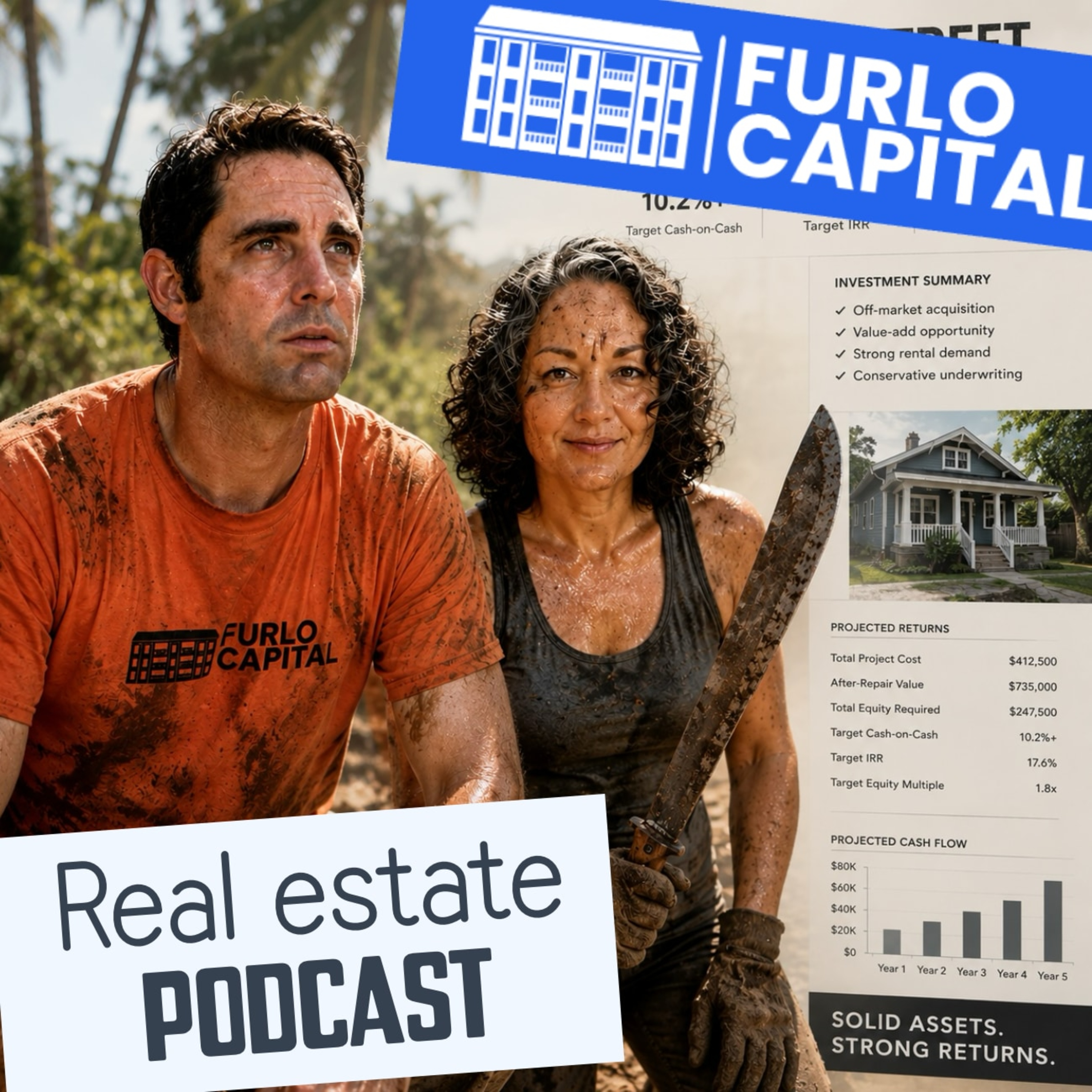
April 15, 2026Episode 12146 min

Why the Best Real Estate Deals Lack Clarity (And Still Win) | Ep 121

(Watch the YouTube video of this episode here) In this episode, we draw investing lessons from the Lewis and Clark expedition — one of history's greatest ventures into the unknown. We explore what it means to move forward without a map, how to handle unexpected setbacks, and why conviction matters more than consensus when you're facing a critical decision. We also share real investing stories that mirror the same challenges Lewis and Clark faced on their journey across America.Key Moments(00:00) Mission to the Pacific(09:36) Investing Without a Map(12:59) Portage and Deal Friction(17:21) Bitterroots Reality Check(26:03) Sacagawea Debate(36:38) Fork in the River(44:02) Field Journal Wrap Up5 Key Lessons Stop waiting for the perfect map: Lewis and Clark didn't know how far the Pacific was — they just kept paddling. Waiting for complete information is just another way of staying home.Build a defensible thesis and be willing to live with it: They went left when everyone said go right — and found the Great Falls. You don't need the crowd's approval, just a solid reason and the stomach to stick with it.Expect the portage: Every big journey has a stretch where you carry the boat. Budget for the grind mentally before you launch.Not all value shows up on paper: Sacagawea wasn't on the balance sheet, but she helped the expedition. Your best assets in investing are often the human ones.Move with direction, not certainty: Their north star was a clear mission, not a guaranteed outcome. Clarity of direction matters more than certainty of result.Let's build your wealth and improve housing, together.I spent 12 years as a data scientist at HP and purchased $5M worth of real estate over 15 years using my own money. Now, I'm partnering with busy professionals to diversify their investments and generate passive income through real estate syndications and short-term flips—without dealing with tenants, toilets, or tantrums. At Furlo Capital, we believe real estate isn't just a transaction; it's a partnership. Our value-add approach creates win-win situations where residents thrive, and investors build wealth. We're not just in this to make money—we want to make a difference.If you're ready to diversify from stock market volatility and want reliable, steady returns, let's build your wealth and improve housing, together.Want to dive deeper into my investing thesis and strategy?👉 Learn more: https://furlo.comCurious about the critical questions to ask before investing?👉 Get my 196-question due diligence vault: https://furlo.com/good-deals-only-ebookDisclaimerPlease note that investing in private placement securities entails a high degree of risk, including illiquidity of the investment and loss of principal. Please refer to the subscription agreement for a discussion of risk factors.

April 8, 2026Episode 12028 min

8 Legal Red Flags Passive Investors Should Watch Before Signing a Syndication | Ep 120

(Watch the YouTube video of this episode here) In this episode, we explore eight legal red flags passive investors should watch for before investing in a real estate syndication. The discussion covers issues like sponsor control, fiduciary duties, hidden fees, capital call penalties, and how legal documents can affect investor rights. The key takeaway: the numbers and presentations matter, but the legal structure ultimately defines the deal. Investors should carefully review operating agreements, PPMs, and subscription documents before committing capital.Key Moments(00:00) Intro(01:52) Red Flag 1: The Sponsor Can Change the Deal(04:23) Red Flag 2: No Fiduciary Duty(08:25) Red Flag 3: Broad Sponsor Indemnification(12:32) Red Flag 4: Punitive Capital Call Terms(15:05) Red Flag 5: Removing the Sponsor Is Impossible(16:26) Red Flag 6: Fee Stacking(18:51) Red Flag 7: The Sponsor Can Sell or Refinance Without LP Approval(21:12) Red Flag 8: Unlimited Ability to Issue New Equity(27:40) Wrap Up6 Key LessonsRead the legal documents: Slide decks and projections are marketing, but the operating agreement, PPM, and subscription agreement define what actually happens to your money.  Investigate conflicts of interest like a detective: When the sponsor’s friend — or the sponsor themselves — owns the construction company or service provider, the incentives can quietly drift away from investors.Check how hard it is to fire the sponsor: If removing them requires 90–100% investor approval or a criminal conviction, you’ve basically locked yourself into a lifetime subscription.Follow the fees like breadcrumbs: Acquisition fees, asset management fees, construction fees, refinance fees, and disposition fees can quietly turn the deal into a sponsor-first payday.Use AI as your legal highlighter, not your lawyer: Let tools summarize contracts and flag risks, then go read the actual sections yourself so you understand what you’re signing.When in doubt, ask one more question: Red flags aren’t always deal-breakers. They’re invitations to dig deeper before you write the check.Let's build your wealth and improve housing, together.I spent 12 years as a data scientist at HP and purchased $5M worth of real estate over 15 years using my own money. Now, I'm partnering with busy professionals to diversify their investments and generate passive income through real estate syndications and short-term flips—without dealing with tenants, toilets, or tantrums.At Furlo Capital, we believe real estate isn't just a transaction; it's a partnership. Our value-add approach creates win-win situations where residents thrive, and investors build wealth. We're not just in this to make money—we want to make a difference.If you're ready to diversify from stock market volatility and want reliable, steady returns, let's build your wealth and improve housing, together.Want to dive deeper into my investing thesis and strategy?👉 Learn more: https://furlo.comCurious about the critical questions to ask before investing?👉 Get my 196-question due diligence vault: https://furlo.com/good-deals-only-ebook

Is this your show?

Claim this listing to keep it up to date, reach guests who want to pitch you, and manage bookings with Guestify.

Claim this listing

More Business podcasts