Find partners
From a Woman to a Leader

From a Woman to a Leader

Hosted by Limor Bergman Gross

BusinessCareersInterviews guests

Episodes

207

Latest episode

Oct 2026

Language

EN

About the show

From a Woman to a Leader is the women in tech leadership podcast — honest conversations with senior women in tech about promotions, visibility, and leading without burning out.

Listen to episodes

60 recent
October 20, 2026Episode 11532 min

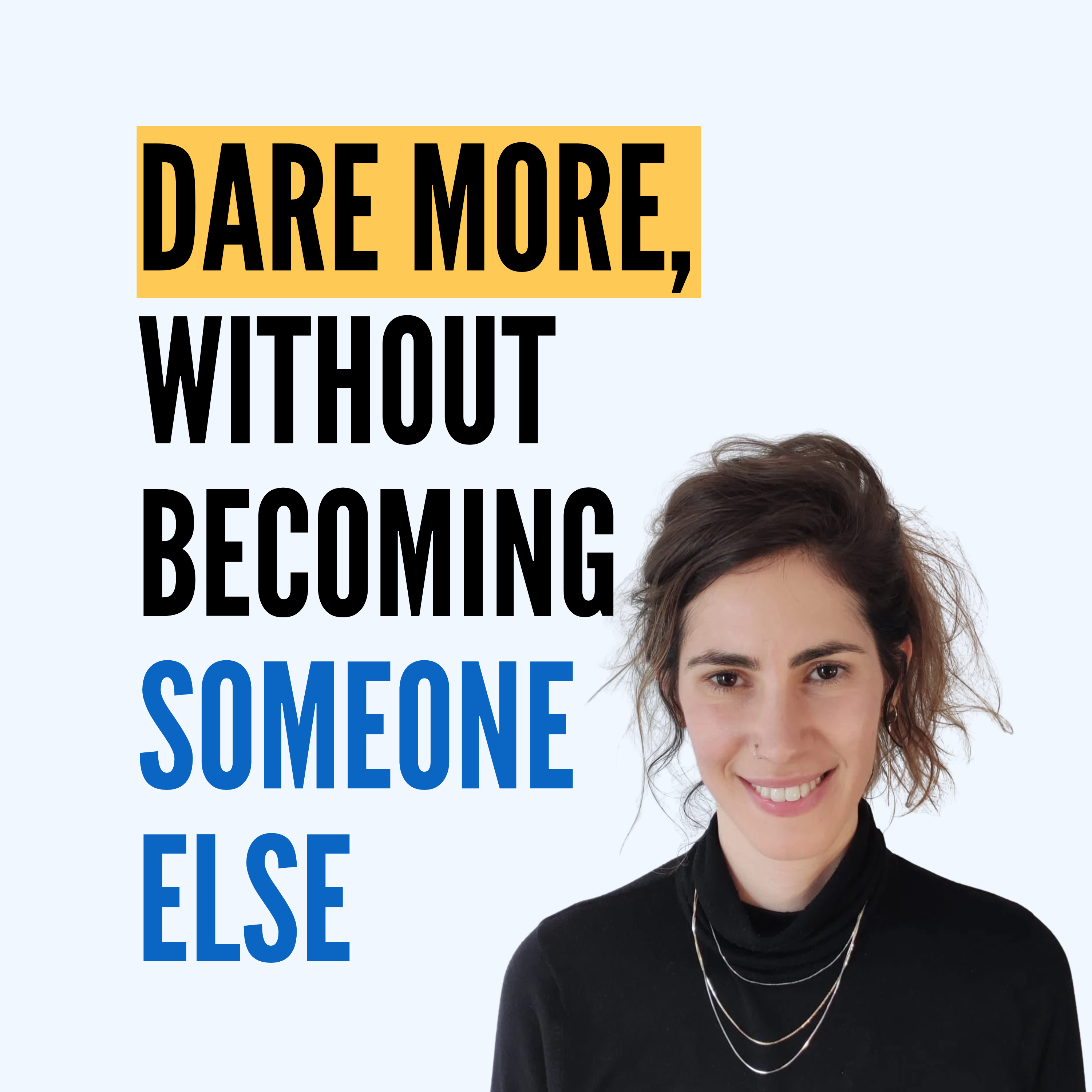
Dare More, Without Becoming Someone Else - Lee Cohen

What if daring doesn't mean becoming louder, tougher, or more like everyone else in the room? What if it starts with accepting exactly who you are? In this episode, recorded in person at the Google for Startups studio in Tel Aviv, I talk with Lee Cohen, co-founder and CEO of TextRe. Lee knew within three months of law school that she didn't want to be a lawyer, and still practiced for five years in real estate and infrastructure, often as the only woman in the room, while building her startup on the side. She shares what chasing her dream really cost her, why negotiation doesn't have to be a fight, how she's building a company with a new baby at home, and why it makes her angry that women still don't dare more. In this episode: - Why it's okay to know what you want and still take years to get there - What to do if no one is backing you financially, and why that's not an excuse - How to show strength without speaking louder, and go into negotiations looking for a win-win - Letting go of mom guilt and the myth that you have to be 100% at everything - Why daring means accepting who you are, not fitting someone else's model - How TextRe turns textile waste into recycled plastic Chapters: (00:00) Teaser and intro (01:30) Live from Google for Startups Tel Aviv (02:50) From lawyer to startup founder (05:07) Asking her father for support (06:19) The only woman in the room (08:27) Strength isn't about being loud (09:07) Negotiation is a win-win, not a fight (10:35) What if no one is backing you? (13:07) Moving home to fund the dream (14:03) Building a startup with a new baby (17:46) Mom guilt and a different kind of mom (21:33) You don't need permission (22:27) A daily practice for guilt and anxiety (23:48) Why women need to dare more (25:13) Daring is accepting who you are (26:10) Apply even without every checkbox (28:05) TextRe: textile waste into plastic (31:35) Follow your dreams About Lee Cohen: Lee is the co-founder and CEO of TextRe, a materials company that converts mixed synthetic textile waste into engineered recycled polymers for the plastics industry. Before founding TextRe she spent five years as a lawyer in real estate and infrastructure, building the company on the side until she could commit to it full time. She grew up in her father's textile factories, watching mountains of fabric go to the trash, and that memory became the spark for her company. Connect with Lee: Website: https://www.text-re.com/ LinkedIn: https://www.linkedin.com/in/lee-cohen-466b41106/ Connect with Limor: Website: https://limorbergman.com Podcast: https://limorbergman.com/podcast/ LinkedIn: https://www.linkedin.com/in/limorbergman/ Substack: https://limorbergman.substack.com how to chase your dream, career change from lawyer to entrepreneur, women founders, confidence for women at work, women in male-dominated industries, negotiation for women, mom guilt, working mom founder, women in tech podcast, women in leadership
October 13, 2026Episode 11424 min

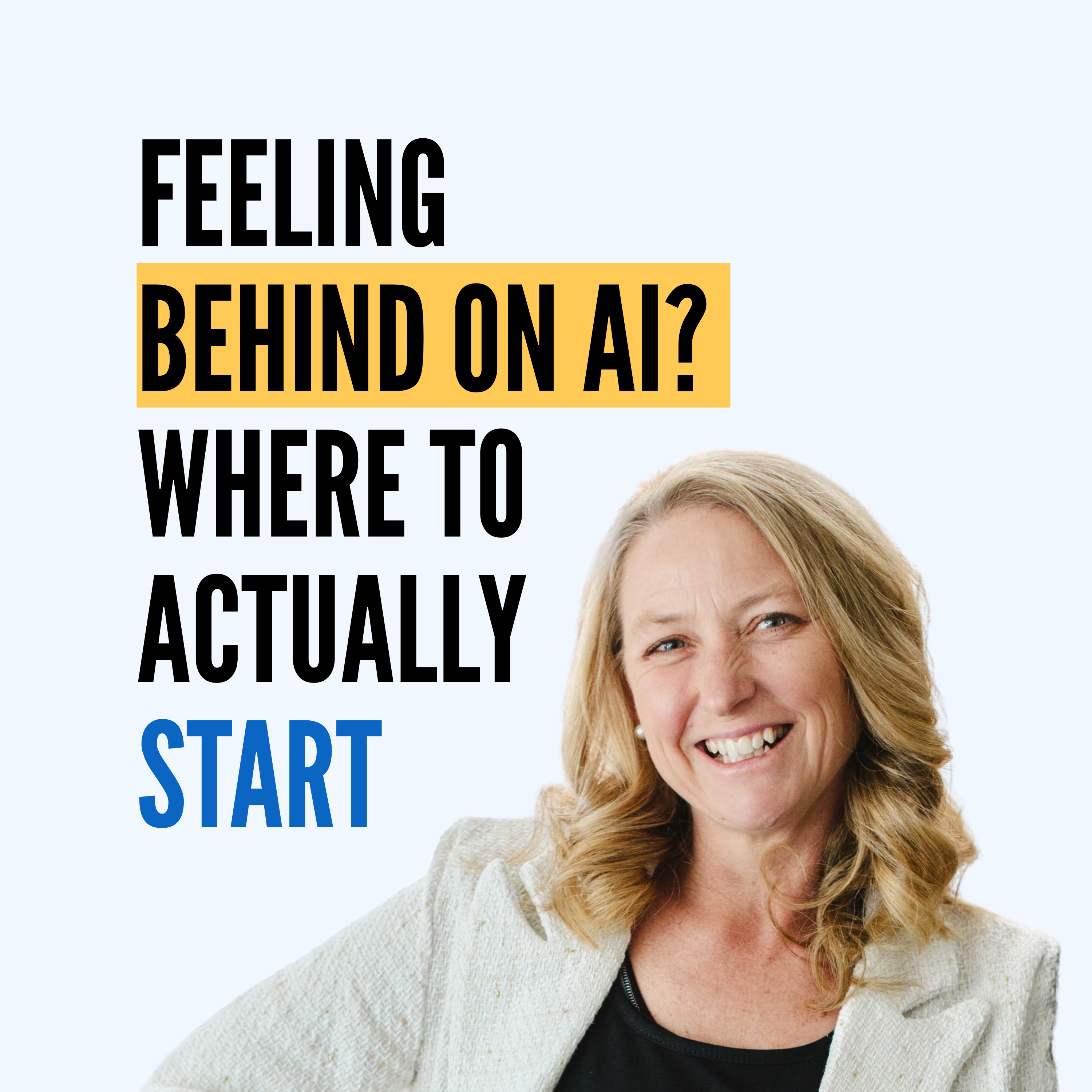
Feeling Behind on AI? Where to Actually Start

You’ve tried ChatGPT a few times. Maybe you asked it a question, got a decent answer, and then went back to doing things the way you always have. Meanwhile it feels like everyone around you has figured out AI, and you’re quietly wondering whether you’re already behind, or whether this just isn’t for you. In this episode I talk with Marnie Wills, a former PE teacher who built and exited her own businesses and now helps founders and teams make AI actually useful. She shares how she went from outsourcing anything technical to selling her first franchise with the help of an AI copywriting tool, two days before giving birth to her second baby. And she makes the case that using AI well is a mindset and a habit, not a technical skill. In this episode: Why treating ChatGPT like a glorified Google keeps you stuck Where to start when there are too many tools (hint: the one already in your inbox) The AI personal assistant Marnie tells everyone to set up first How to keep up with AI without drowning in TikTok tutorials The difference between chatting with AI, automation, and an agent that actually does the work for you Chapters: (00:00) Teaser and intro (01:30) From PE teacher to AI strategist (02:45) How COVID forced a crash course online (03:55) Selling a franchise with Jasper AI (04:36) Do you need to be technical for AI? (06:24) Where to start when you feel overwhelmed (08:14) Amplified intelligence, not artificial (08:55) The BlackBerry lesson about change (10:55) Why the keyboard is on its way out (11:23) Set up your AI personal assistant (14:12) Claude Code and chasing the hype (15:30) How to keep up with AI (17:20) Don’t learn AI from TikTok (19:20) My agent that tracks coaching hours (20:50) Copy use cases, not tools (21:56) Chat vs automation vs agent (23:27) Where to find Marnie About Marnie Wills: Marnie is the founder of Business With AI Strategist in London. A former PE teacher and international touch rugby athlete, she built and exited several businesses, including SportyMinis, before AI changed the way she works. Today she helps founders and teams move from random AI experiments to a few simple systems that give them time and headspace back. Connect with Marnie: LinkedIn: https://www.linkedin.com/in/marnie-wills-entrepreneur/ (send her a DM and she’ll share the workshop package that fits you best) Newsletter: The AI Strategy Vault, on LinkedIn and by email Connect with Limor: Website: https://limorbergman.com Podcast: https://limorbergman.com/podcast/ LinkedIn: https://www.linkedin.com/in/limorbergman/ Substack: https://limorbergman.substack.com how to start using AI at work, AI for beginners, AI for non-technical professionals, how to use ChatGPT better, AI personal assistant, AI agents vs chatbots, keeping up with AI, women in tech podcast, women in leadership

October 6, 2026Episode 11321 min

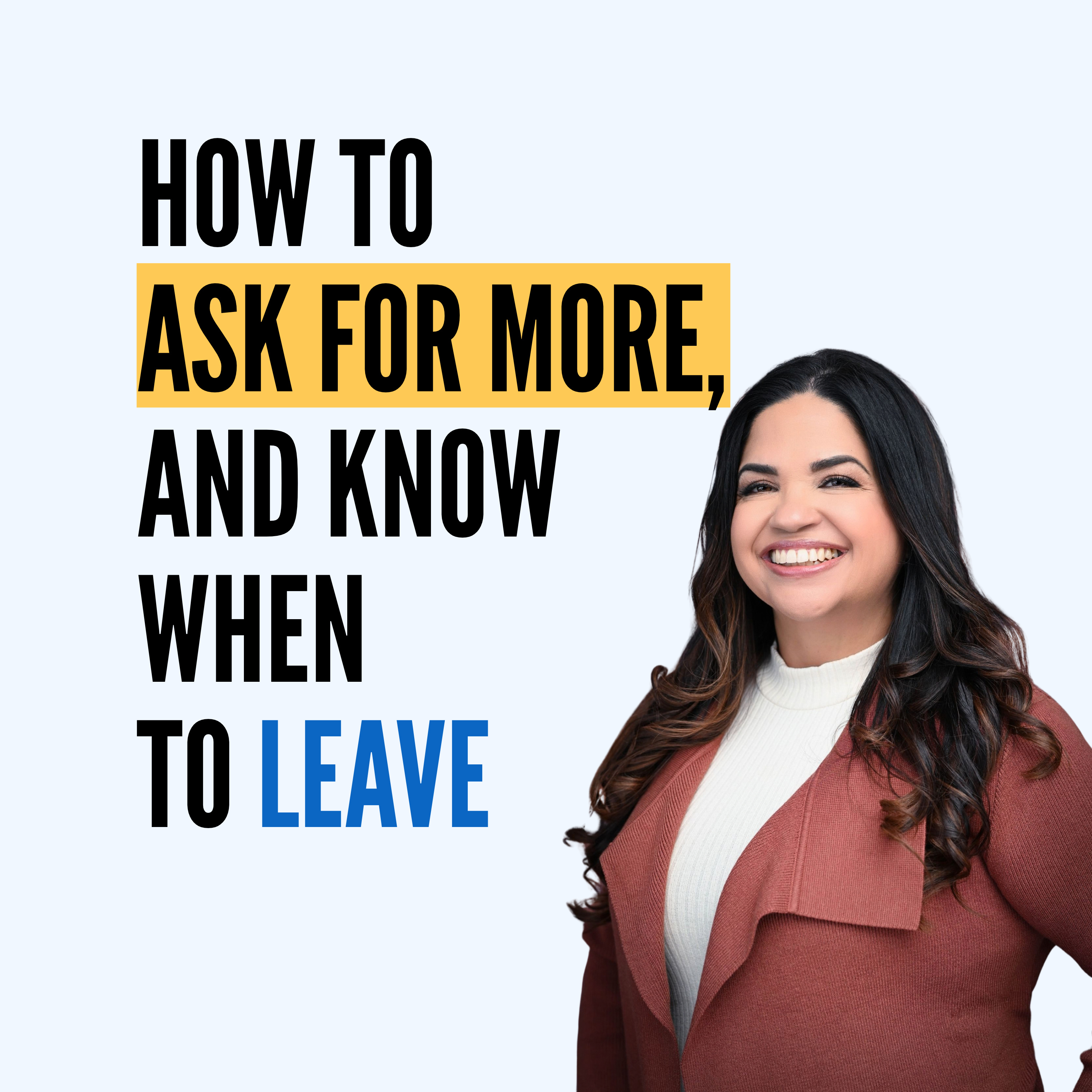
Outgrown Your Job? How to Ask for More, and Know When to Leave

You are good at your job. People tell you so. And somewhere along the way you stopped being excited about it, but the perks are good and asking for more feels like rocking the boat, so you stay. Monica Roca-Quesada was four years into a corporate accounting role when she was told she was supposed to stay in it for ten to fifteen. She wanted more, she said so loudly, and the answer was that someone had to retire first. In this episode she talks about what she did next, and what she would tell a woman who is sitting in that same seat today. If you've ever been good at your job and still wanted more, this conversation is for you. What we get into: - How to notice what you actually enjoy in your work, by paying attention to what you reach for first in your day - The difference between "can I do this job?" and "do I enjoy it?", and why so many of us stop at the first question - What happened when she shouted it from the rooftops that she wanted more - The question to bring to your manager: "If I meet this criteria, then what?" - Why having imposter syndrome usually means you are better at this than you think - Why we don't apply for the roles that feel too big, and what "fail fast" looks like in practice - How to tell when you have stayed too long in a place where you don't fit About Monica: Monica Roca-Quesada is the founder and CEO of Agile Planners. She is a Fractional CFO and Financial Operations Strategist who helps growth-focused entrepreneurs turn financial chaos into clarity. With over 30 years of experience in finance and technology, she builds smart financial systems that deliver real-time insights, improve cash flow, and support scalable operations. Connect with Monica: LinkedIn: https://www.linkedin.com/in/mrocaquesada/ Website: https://agileplanners.com/ Book a free Right-Fit Call: https://www.agileplanners.com/right-fit Explore the 16 Drivers in Your Business: https://www.agileplanners.com/parts Connect with Limor: Website: https://limorbergman.com Podcast: https://limorbergman.com/podcast/ LinkedIn: https://www.linkedin.com/in/limorbergman/ Substack: https://limorbergman.substack.com Chapters: (00:00) Cold open and intro (01:18) Starting out in corporate accounting (01:51) A rule bender, not a rule breaker (04:11) Why she left to start her own firm (05:00) The part-time plan that didn't work (07:16) Finding your thing inside corporate (08:14) You can do the job. Do you enjoy it? (09:08) Told to wait 10 to 15 years (10:11) Shouting it from the rooftops (12:26) How to tell if you can grow there (13:53) Imposter syndrome means you care (15:04) Doing the thing that scares you (16:22) Nobody can read your mind (17:01) Applying for jobs that feel too big (17:58) If you're going to fail, fail fast (19:09) Staying too long where you don't fit (19:43) Where to find Monica Searched for: how to know if you have outgrown your job, how to ask for more at work, how to ask your manager for growth, feeling stuck in a job you are good at, when to leave a job, signs you have stayed too long in a job, imposter syndrome for women at work, applying for a job that feels too big, women in tech career growth

September 29, 2026Episode 11225 min

Laid Off and Taking It Personally? Eye on the Donut, Not the Hole | Marjie Hadad

You already know the layoff wasn't about you. So why have you replayed the conversation forty times, looking for the thing you did wrong? Marjie Hadad has spent decades helping leaders communicate through crises, and her advice starts somewhere most people skip. Give yourself fifteen minutes to feel absolutely terrible about it. Set the timer. Feel all of it. Then take a breath, brush yourself off, and look at the donut instead of the hole. In this episode, we get into what that actually looks like when it's your job, your client, or feedback that landed badly. What you'll take away: Why fifteen minutes of feeling awful is not weakness; it's the step that lets you move What your kids and your colleagues learn from watching how you handle bad news How to tell the difference between the message and the way someone delivered it Marjie's imaginary filtering earplugs, and why she has used them for decades Why going silent is sometimes the strongest thing you can do in a room I also share something I have not talked about much: the day I joined a Zoom call with my manager, saw HR already sitting there, and knew. My first thought was not about me. It was about how to make it easier on him. Marjie has a name for that, and it surprised me. Chapters: (00:00) Welcome and why layoffs hurt (02:38) Eye on the donut, not the hole (04:02) The card from Aunt Nancy (05:40) Take 15 minutes, then move (06:32) Everyone is watching how you cope (08:09) Why we take it personally (09:50) Freak out, freeze, or chill (11:29) Saying it out loud: it sucks (12:16) My layoff: HR was already there (13:48) Marjie's kids and "job schmob" (15:07) "Everything IS personal" (16:27) Feedback is a gift (18:15) Imaginary filtering earplugs (19:56) When you don't handle it well (21:55) You can't argue with a wall (23:52) The Confident Kid Playbook (24:55) Eye on the donut About Marjie: Marjie Hadad is a crisis and leadership communications expert who has spent decades in media and PR. She is a former TV news reporter and anchor, an award-winning TV producer, and the founder of Marjie Hadad Communications. Her new book is The Confident Kid Playbook. Connect with Marjie: Website: https://www.marjiehadad.com LinkedIn: https://www.linkedin.com/in/marjiehadad-crisis-leadership-keynote-speaker-consultant/ Book: https://www.amazon.com/Confident-Kid-Playbook-Successful-Competitive/dp/B0GZKZS586/ Connect with Limor: Website: https://limorbergman.com Podcast: https://limorbergman.com/podcast/ LinkedIn: https://www.linkedin.com/in/limorbergman/ Substack: https://limorbergman.substack.com Recorded at the Google for Startups studio in Tel Aviv. Thank you to Google for Startups for hosting us. Searches this episode answers: what to do after being laid off, how to not take a layoff personally, how to handle criticism at work without falling apart, how to stay calm during a crisis at work, what to say when you get let go, how to stop replaying a difficult conversation.

September 22, 2026Episode 11118 min

Before You Quit: What Feeling Stuck at Work Is Really Telling You (Kathryn Smith)

You know the feeling. Nothing is actually wrong. The job is fine, the pay is fine, your manager is fine, and you still open your laptop every morning with a low hum of "this isn't it." So you do what capable women do. You decide you are being ungrateful, you tell yourself to be patient, and you quietly start browsing job listings at night. My guest this week, Kathryn Smith, has a different read on that feeling, and it changed how I talk to my clients about it. Kathryn spent a decade in corporate America, went back for an MBA to get herself unstuck, and then, less than two years after that started to pay off, her health took her out of the game entirely. What came next was not a plan. It was a business she never intended to start, in the middle of a pandemic, and it taught her something about resilience that I don't think you learn any other way. In this episode: Why the stuck feeling is information rather than a personal failure, and what it's actually asking you for Why the fix is usually smaller than a new job, and how to find out what it is before you pay the switching cost What changes about you when the plan you built your whole career around stops being available Why resilience is flexibility about where you're going, not endurance on the road you happened to pick How to talk about what you bring when you're the person in the room who doesn't look like everyone else If you've ever felt stuck and been told to be patient, if you've ever assumed the answer had to be a new job because you couldn't name what else it could be, or if you've ever had a plan taken away from you and had to build a different one, this episode is for you. About Kathryn Smith: Kathryn is an Atlanta-based MBA who spent over a decade in corporate marketing before an unplanned exit sent her into entrepreneurship. She co-founded the Black Lady Business School, a networking and professional organisation for women, and has been recognised as a Georgia Tech "40 Under 40". She has run marketing research, e-commerce and business intelligence work for small businesses, and she is refreshingly honest about what running your own thing actually costs. Connect with Kathryn: LinkedIn: https://www.linkedin.com/in/kathrynrsmith/ Connect with Limor: Website: https://limorbergman.com Podcast: https://limorbergman.com/podcast/ LinkedIn: https://www.linkedin.com/in/limorbergman/ Substack: https://limorbergman.substack.com Search terms: feeling stuck at work, should I quit my job, stuck in my career, how to know if I need a new job, women in tech career change, what to do when you feel unfulfilled at work, career pivot after illness, resilience for women leaders

September 15, 2026Episode 11026 min

Apply Anyway: How to Break Into Tech Without a Technical Background | Shoshana Kordova

You read the job description. You go down the list of responsibilities and you think, I can do that, I can do that, I can do that. Then you get to the requirements. STEM background. Product experience. And you close the tab. Shoshana Kordova did not close the tab. She applied anyway, with no computer science degree and no product experience, and she got the job. In this episode she walks through exactly how she did it, and what she says when someone in an interview asks her the question she kept getting asked: are you technical? This one is practical. If you have been waiting until you tick every box before you put yourself forward, this conversation is for you. What we get into: Why applying when you only meet part of the requirements is not arrogance, it is strategy The follow-up habit she picked up as a paralegal that now gets her interviews, and exactly how many follow-ups is too many What she actually wrote to a VP of Marketing on LinkedIn, and why she got a reply at 11pm that same night How to answer "are you technical?" without getting defensive How to find the overlap between what you have already done and the job you want, even when the titles look nothing alike The part-time role she was so happy to get, until she saw what it was quietly costing her About Shoshana: Shoshana Kordova spent more than a decade as a journalist before moving into high tech marketing. She is a three time founding product marketer and runs Peel Product Marketing, where she works with B2B tech startups on their website messaging and executive thought leadership. She also hosts the 1 Marketing Play podletter, where she interviews B2B tech marketing leaders and breaks down one marketing play that worked for them. Connect with Shoshana: LinkedIn: https://www.linkedin.com/in/shoshana-kordova/ 1 Marketing Play: https://shoshanakordova.substack.com/ Connect with Limor: Website: https://limorbergman.com Podcast: https://limorbergman.com/podcast/ LinkedIn: https://www.linkedin.com/in/limorbergman/ Substack: https://limorbergman.substack.com Chapters: (00:00) Cold open and intro (01:38) From journalist to marketer (02:50) Content marketing was the bridge (03:32) Applying without the qualifications (05:22) The worst they can do is ignore you (06:49) Who to follow up with, and what to say (08:45) Where the follow-up habit came from (10:31) How many follow-ups is too many (12:23) Facing the elephant in the room (13:41) When they challenge you in an interview (15:00) Answer with what you can do (17:07) No tech background at all (18:52) Journalism as an advantage (20:07) Bias on the job (21:55) Mommy-tracked without knowing it (23:02) Going out on her own (24:36) Where to find Shoshana Searched for: how to break into tech without a technical background, applying for a job you are not qualified for, how to follow up after a job application, what to say when they ask are you technical, career change from journalism to marketing, part time work career penalty, women in tech interview bias

September 8, 2026Episode 10929 min

How to Sell When You Hate Selling (Emily McSherry) | From a Woman to a Leader

You know you should be putting yourself out there. Pitching the idea, asking for the meeting, telling people what you're working on. And you keep not doing it, because some part of you is waiting until it's more polished, more proven, more ready. Emily McSherry built her prototype for under a thousand dollars and sold it to five universities before it had a single feature that makes it impressive today. She started her career doing 500 cold calls a week, and she'll tell you plainly that 80 percent of whether it works is what's going on in your head before you pick up the phone. This conversation is the practical version of "stop waiting." Not a pep talk, but the actual mechanics of how you ask. In this episode: Why testing your assumptions is cheaper and faster than building the thing What "good enough to sell" actually looks like, and why it's much less finished than you think The difference between pitching at someone and asking them a question, told through a story about buying shoes Who to go to first when nobody knows who you are yet The two versions of you that can walk into the same conversation, and why only one of them gets a yes About Emily: Emily McSherry is the founder and CEO of Advize, a platform that helps students learn about careers by watching short video interviews with people actually doing the job. She grew up in a small town in rural Texas where she had no idea what was possible, did everything right in college, and still left feeling lost. She then spent close to a decade in recruitment in Los Angeles, training recruiters how to headhunt, which is where she figured out that the fastest way to learn about a career is to ask someone questions about it. Advize now holds over 12,000 video interviews. Connect with Emily: LinkedIn: https://www.linkedin.com/in/msemilymcsherry/ Advize: https://advizehub.com Connect with Limor: Website: https://limorbergman.com Podcast: https://limorbergman.com/podcast/ LinkedIn: https://www.linkedin.com/in/limorbergman/ Substack: https://limorbergman.substack.com Search terms: how to sell when you hate selling, how to pitch your idea, getting your first clients, selling before your product is ready, cold calling confidence, women in tech sales, how to ask for what you want at work, minimum viable product

September 6, 2026Episode 10831 min

Eleven Months to Go Part-Time — Wendy Cocke on Making Flex Work

"The business does not care that you want to pick your child up at 3:30. They don't care. But what they do care is that whatever they want delivered is delivered." Wendy Cocke said that to me and I flinched a little. Then I thought about every version of this conversation I've had — in my own career and in years of coaching sessions — and she's right. Wendy is a chemical engineer, the founder of Engineering Leadership Solutions, and the author of Making Flex Work: Defining Success on Your Own Terms and Reimagine Your Work. She spent about a decade following the prescribed path before she stopped to ask whether she wanted any of it. Then it took her eleven months to get her first flexible work arrangement — and once she had it, she got promoted more and faster than she had in the previous ten years. This is a practical conversation. Wendy is an engineer, so her answer to "my employer isn't flexible" isn't to feel less. It's to bring data. What we cover: Why most of us never even ask — and what she did instead of quitting The eleven-month fight for her first flexible arrangement, in a company that had a policy that wasn't meant for people like her Why she hid it once she got it, and why she calls that naive now "They said generally they would have given me a solid B plus" — the gap between how you grade yourself and how everyone around you sees you Defining success on your own terms, and why running four people's scorecards at once guarantees you fail all of them Step one: seven days of journaling. Hours AND span — earliest start, latest stop. "Six hours compressed feels very different than six hours across sixteen hours." Why most people who feel overwhelmed are already working more than they're paid for — so the first move usually isn't part-time; it's getting back to full-time The VP who works 6- 11 a.m. and 8 p.m.- midnight on purpose, because her peers are in Europe and her team is in Asia Why leaders resist: we never trained them to lead flexibly, and asynchronous work means they have to get the request right the first time "Leading with your eyeballs" — and the people who are present, active, and completely unproductive Leveraging small changes: experiments so small nobody has to approve them. "It's like boiling a frog." How to turn an emotional ask into a business proposal: this is what I want, this is what I know you need, here's how we both get it The man near retirement whose wife found her dream house in another city — and how they turned his problem into a business case the company said yes to "You own a business that sells exactly one product, and that product is you" Find Wendy: makingflexwork.com — free templates, including an outline for building the business proposal she describes in this episode Engineering Leadership Solutions — her company Connect with Limor: Website: https://limorbergman.com Podcast: https://limorbergman.com/podcast/ LinkedIn: https://www.linkedin.com/in/limorbergman/ Substack: https://limorbergman.substack.com Search terms: flexible work, part-time work, working mothers, women in tech, women in engineering, work life balance, negotiating flexibility, remote work, leadership, career growth, mom guilt, defining success

September 1, 2026Episode 10728 min

Why Women Keep Getting Told They're Not Strategic Enough | Jill Avey

Someone told you that you're not strategic enough. Maybe it was in a review, maybe it was said casually in a hallway, and maybe it has been sitting with you ever since. What made it so frustrating is that nobody explained what they meant, or what you were supposed to do differently on Monday morning. Jill Avey heard the exact same thing. She had spent fifteen years as a marketing strategist; strategy was her specialty, and she was still criticized for not being strategic enough. What she figured out was that she had been strategic the whole time. She just wasn't communicating it in a way anyone could see. As she says in this episode, it was happening on the inside, and nobody could see it on the outside. In this conversation, we get specific about what strategic thinking actually looks like when you put it on a calendar, why women get rated lowest on this one competency, and the sentence you can stop saying in meetings this week. What you'll take away: Why "you're not strategic" is almost never about your thinking, and almost always about what people can see The one leadership competency that decides who succeeds as an executive, and why women rank at the bottom of it Why the shift from doing to leading is so much harder for women, and what we were trained to do instead The two areas Jill sees women score lowest on, and the exact habits that fix them How to use AI to run your future thinking once a month, in the time you actually have The language shift that makes the same work sound strategic to the people above you About Jill Avey: Jill is a women's leadership coach with an Ivy League MBA and the founder of SisterSmart. She has spent more than twenty years working with leaders in Fortune 100 companies, and she is one of the first hundred coaches certified in the Big 5 of Strategy assessment. She built the Strategic Leadership Lab for Women around the exact problem in this episode. Connect with Jill: Strategic Leadership Lab (starts September 11): https://sistersmart.com/sla LinkedIn: https://www.linkedin.com/in/jillavey/ Substack: https://jillavey.substack.com/ YouTube: SisterSmart Leadership, https://www.youtube.com/@jill_avey Connect with Limor: Website: https://limorbergman.com Podcast: https://limorbergman.com/podcast/ LinkedIn: https://www.linkedin.com/in/limorbergman/ Substack: https://limorbergman.substack.com Searches this episode answers: what does it mean when your boss says you're not strategic, how to be seen as strategic at work, how to be more strategic as a leader, strategic thinking for women in tech, why women get passed over for executive roles, how to demonstrate strategic thinking in meetings.

August 27, 2026Episode 10640 min

Don't DIY Your AI: Anne Cantera on Adoption Without the Hype

"A Copilot license is not an AI strategy." Anne Cantera has the t-shirt to prove it. Anne is the founder of Elemental Intelligence. She's been inside enterprise AI projects that went sideways, mentors hundreds of designers, and has an unusually low tolerance for hype — she calls the last three years "the messy middle," and thinks we're finally on our way out of it. In this conversation, we get into what leaders keep getting wrong about AI adoption, and what individual contributors should be doing right now if they're worried about staying employable. What we cover: Why "don't DIY your AI" is the whole message to leadership — and what hiring an expert early actually saves you The two things every AI strategy needs first: an outside expert, and a real governance plan. "The strategy is the plan, and governance is the rules." Why smaller companies are better positioned than enterprise right now — it's easier to turn a motorboat than the Titanic What Anne tells designers who are afraid the machines are taking their jobs (the risk isn't AI, it's static-screen thinking) Why upskilling beats applying: "It is easier to upskill than it is to apply for thousands of jobs and never hear back" How to time box 90 minutes a day for learning without burning out — and why she calls it a mental health hack The number one AI skill nobody lists on a job description: knowing what to pay attention to How to tell an expert from an influencer in about eleven seconds Grooming your LinkedIn feed so it becomes free education instead of an anxiety machine Why your LinkedIn headline is SEO, and why you should never pay anyone to optimise it for you The unpaid day-and-a-half "assignment" Anne turned down, and the three-day paid trial she thinks should replace it Chapters: 00:00 Welcome00:30 What the AI hype actually got wrong02:45 The mistakes leaders keep making — "don't DIY your AI"07:25 Start with governance: the plan versus the rules12:15 "If we keep thinking in static screens, designers are not going to have work"12:45 Why upskilling beats applying to thousands of jobs18:40 The #1 AI skill: knowing what to pay attention to24:00 Experts versus influencers — how to vet who you follow25:00 Touch grass: it's a marathon, not a sprint26:45 Your LinkedIn headline is SEO30:00 Groom your feed35:55 The unpaid assignment, and a better way to hire39:00 Where to find Anne Everything Anne recommended, all free: voiceofai.io — her upskilling site for designers. No email required; she makes nothing from it. https://agentics.org/ — the Agentics Foundation. Their Friday hackerspace is a show-and-tell of what people are really building. Conversation Design Institute ( https://www.conversationdesigninstitute.com/ ) — free and low-cost conversation design classes. Rosenfeld Media ( https://rosenfeldmedia.com/ )— her talk on the new design stack and omnimodal design, plus a lot of free material. DESIGNathon — Anne's podcast. Hard to find on YouTube (it lives inside the Swarm community), but it's on Apple and Spotify. Connect with Anne: https://www.linkedin.com/in/anne-cantera/ Connect with Limor: Website: https://limorbergman.com Podcast: https://limorbergman.com/podcast/ LinkedIn: https://www.linkedin.com/in/limorbergman/ Substack: https://limorbergman.substack.com Search terms: AI adoption, AI governance, AI strategy, upskilling, women in tech, career change, UX design, conversation design, job search, LinkedIn optimization, leadership

Is this your show?

Claim this listing to keep it up to date, reach guests who want to pitch you, and manage bookings with Guestify.

Claim this listing

More Business podcasts