Find partners
First Principles

First Principles

Hosted by The Ken

BusinessEntrepreneurshipInterviews guests

Episodes

70

Latest episode

Aug 2026

Language

EN

About the show

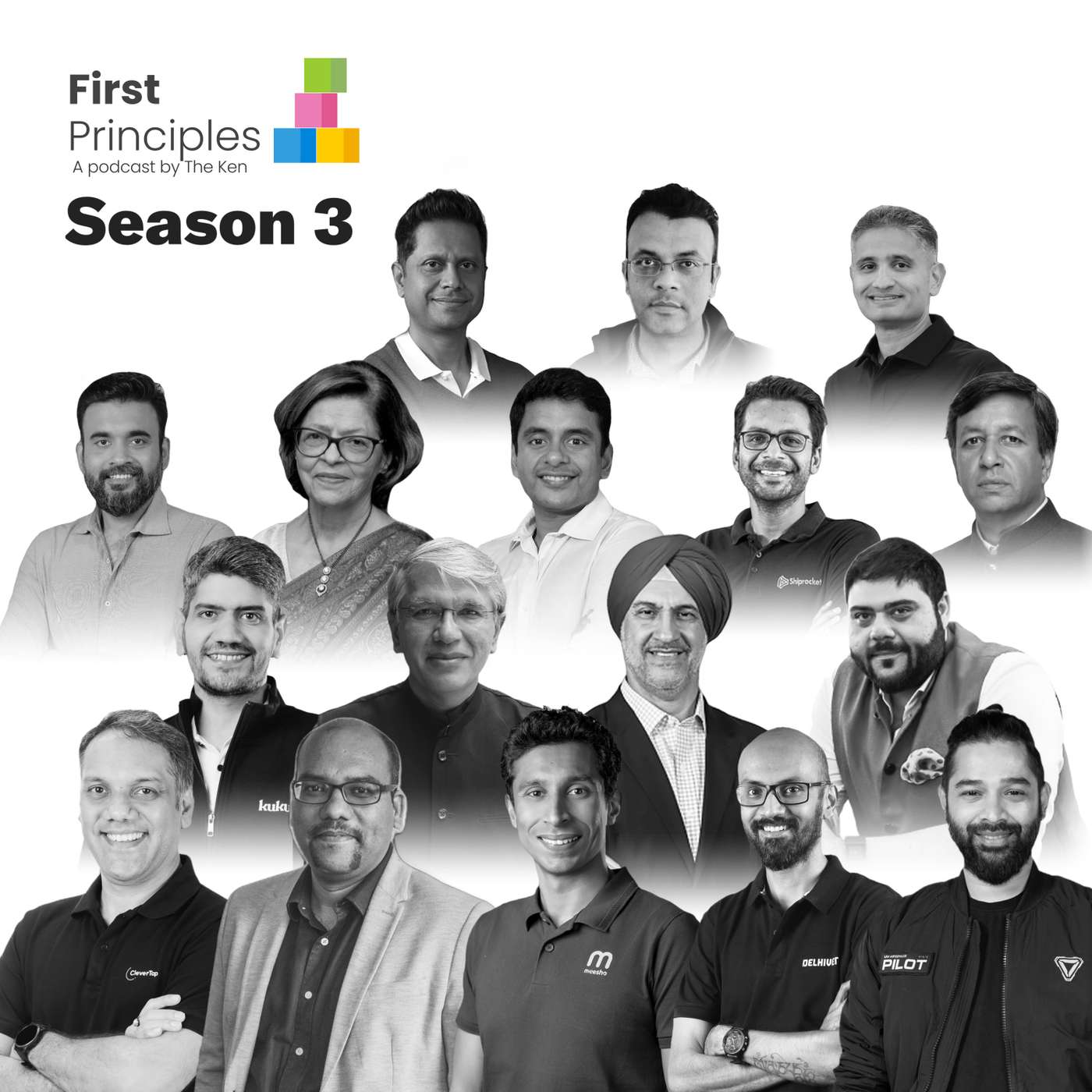
First Principles is a weekly interview podcast comprising authentic, candid, and insightful conversations between some of India’s most accomplished founders and business leaders, and Rohin Dharmakumar, The Ken’s CEO & co-founder. From personal philosophies, mental models and decision making frameworks, to reading habits, parenting styles or personal interests, each episode will delve into what makes each of these leaders unique.

Listen to episodes

60 recent
August 17, 2026Episode 171 hr 3 min

Part 2: Mukesh Bansal on hiring for loyalty to a mission, "no means not now", writing three books, and compounding sideways

Where Part 1 followed the companies, Part 2 is about the person behind them. Picking up from Mukesh Bansal's move from one venture to the next, this half gets into how he finds talent ("work with them for six months"), the mental models he runs his life by, and the beliefs underneath them. He explains why rationally no one should start a company, how he processes every rejection as "no means not now", why he writes three books by simply showing up to a blank page, and how he separated the longevity basics he trusts from the biohacking he no longer does. It ends close to home: loyalty as loyalty to a mission, what he wants for his two children, why parents' expectations matter less than they did, and a life he rates an 8 out of 10. Chapters 0:00 Where we left off 1:46 Finding talent: "work with them for six months" 3:23 The one open-ended question he asks 5:57 Winning vs looking good 8:00 The compounding argument, revisited 9:40 Learning vs winning: drawing the 2x2 11:17 Three books, and the annual look-back 16:18 Making time to think in a full life 18:45 What a chief of staff is actually for 21:27 "No means not now" and other mental models 25:57 How he writes a book 28:30 How health became a throughline 31:24 From ecosystem to the longevity basics 34:29 Why strength training matters after 50 38:08 Why he runs SparX, and the deep-tech turn 44:05 Loyalty to a mission, and the number two 50:35 The Apple teaching model 52:52 Three adjectives, and being "scary" to juniors 55:30 His kids' worldview 57:54 Do parents' expectations still matter? 1:00:12 Weekends, food, and reading now 1:02:17 Rating his life an 8 Quotes [8:44] "I don't know if this rocket thing will work. But if it works, it'll take at least ten years… they said, we are willing to work on it for the rest of our lives." [21:56] "I call this no means not now. That's how I process all the nos in my life." [24:59] "Zomato was started in 2007. They did not pivot into food delivery till 2017." [26:05] "Just show up and stare at a blank page for an hour. Sooner or later you'll start writing." [61:43] "I feel very privileged and very fortunate. So many lucky breaks have worked out for me." Frameworks & mental models No means not now: process every rejection as timing, not a verdict; it protects the ego and the relationship. Long-term patient, short-term aggressive / product is marketing: charge hard daily, give the ten-year game room, and let a product people love do the selling. Horizontal compounding: compound entrepreneurial skill across ventures, not tenure in one sector. Loyalty to a mission: the durable teams are bound to an unfinished job, not to a person; build a number two and give people room. The longevity basics beat biohacking: sleep, eat less, move, strength-train after 50, tend emotional health; the exotic stuff is largely unproven. Credits & sharing This episode was produced by Rohin Dharmakumar and mixed and mastered by Rajiv CN. Write to us at fp@the-ken.com with your feedback, suggestions, and guests you would want to see on First Principles. If you enjoyed this episode, please help us spread the word by sharing and gifting it to your friends and family.
August 10, 2026Episode 1757 min

Part 1: Mukesh Bansal on founder mode in the AI age, the three kinds of professionals in the AI age, and the Haridwar boy who found entrepreneurship in a library

Mukesh Bansal has founded and left more companies than most people build in a lifetime, and in Part 1 he explains why. He founded Myntra and sold it to Flipkart; he co-founded Cult.fit and turned fitness into a category; and today he runs the AI company Nurix and the Meraki Labs studio. Asked what he is now, he says "a learner", and admits he gets bored the moment a company starts working. Part 1 traces the thesis and the companies: how he allocates his weeks, why he thinks the AI era rewards the hands-on operator over the people-manager, what Nurix and Fermi are, why Myntra's move into fashion was an "adjustment" not a pivot, and the small-town Haridwar upbringing and library habit that set him off. This is Part 1 of 2; Part 2 turns to the person, the mental models, and how he thinks about health, family and success. Chapters 0:00 Welcome and who Mukesh Bansal is 3:15 How First Principles is already connected to him 4:21 "Do you see yourself as an operator, a founder, an investor?" 5:27 Zero-to-one, and where learning stops 9:11 Allocating time across companies 10:34 Why an hour of his time isn't what it was 12:59 The three kinds of professionals in the AI age 14:52 His stack: Claude, Warp, agents overnight 17:58 Founder mode, reversed by AI 20:19 No more waiting for a tech co-founder 23:02 How big Nurix is; and what Fermi is 25:38 The Socratic tutor that won't answer 27:18 Back to Myntra: the fashion category today 31:30 Koyu, Lyskraft and the CRED hypothesis 33:41 Why a venture studio, one company a year 38:18 Rejecting the compounding path 42:57 The near-death at Myntra, and raising with a short runway 45:03 Haridwar, BHEL, and the books that lit the fire 48:15 Pivots as chess "adjustments" 50:48 Conviction vs discovery: betting the megatrend 53:08 The Bay Area years and the return to India Quotes [4:33] "I see myself as a learner… doing one company over a period of time, I get bored." [7:08] "Crisis always comes wrapped with a massive gift, if you are only willing to unpeel the onion." [17:12] "I'm making an even stronger point. If you're only a people manager, watch out." [18:58] "For the first time you can hire something equivalent to human cognition for cents an hour." [48:50] "I use the word adjustment rather than pivot. You come to work every day, you're playing chess." Frameworks & mental models Learner over operator: hand off once a company stops teaching you. Crisis and momentum: cut the bad, double down on the good. The three professionals in the AI age: the hands-on veteran is the one AI turns into a superpower. Adjustment, not pivot: the best move on the board each day; a true "wipe the slate" is just a new company. Bet the megatrend, stay loose on the path. Credits & sharing This episode was produced by Rohin Dharmakumar and mixed and mastered by Rajiv CN. Write to us at fp@the-ken.com with your feedback, suggestions, and guests you would want to see on First Principles. If you enjoyed this episode, please help us spread the word by sharing and gifting it to your friends and family.
July 27, 2026Episode 161 hr 0 min

Fireside Ventures' Kanwaljit Singh on the decade at Hindustan Lever that gave him consumer, raising half the fund he could have, and keeping a coach in his sixties

1 · Summary Part 2 of 2. Part 1 laid out the bet: a fund built only for Indian consumer brands, back when the idea sounded absurd, and the anti-power-law machine Kanwal Singh built to make it work. This half is the person. The near-decade at Hindustan Lever that gave him his love of consumer, the Intel years, and the Paper Boat conviction that taught him to back the founder over the idea. Then the man himself: parents who came to India as refugees from Pakistan, a father who kept collecting degrees while feeding the family, the coach he started seeing in his sixties and what separates coaching from therapy, and how he reads a founder by meeting their family. He turned down twice the money he could have raised. He rates his life a 10. 2 · Chapters 0:00 Part 2 intro 1:22 The Hindustan Lever decade that started it all 2:25 Intel Inside, and bringing the inside out 4:22 The Paper Boat conviction: backing the founder 6:38 What he adds as Fireside's "CEO," and value of good 17:53 Capping the fund: turning down 2x the money 20:24 Hiring: read the person, meet the family 27:01 Refugees, and a father who never stopped studying 30:39 Three words, and a 100%-locked calendar 33:30 Motivating through the down days 34:51 The coach, and coaching vs therapy 43:40 How he learns, and consumer vs tech founders 51:27 Rating his life a 10, and success redefined 52:47 Cotswolds, golf, and the empty nest refilled 3 · Pull-quotes [17:56] "I could have raised 2x of this. Genuinely, we could have raised 2x of this." [23:55] "You cannot build to sell. You build for sustenance, you build for good." [27:04] "Both my parents were refugees from Pakistan." [51:34] "A 10." (asked how happy he is with his life) 4 · Frameworks & mental models Founder assessment through the family: read a founder by their story and support system, often over a meal with their spouse, on the belief that no one survives a decade-long build without one. Build for sustenance, not to sell: the best businesses are bought, not sold; you build for the long run and treat a sale as a business decision along the way. Value of good ("do good to do well"): founder first, planet first, one Fireside, with goodness as the foundation of doing well. Coaching vs therapy: therapy addresses a medical issue; coaching is vulnerability and honesty in a business context, and only works once you have the self-awareness to accept there's a problem. This episode was produced by Rohin Dharmakumar and mixed and mastered by Rajiv CN. Write to us at fp@the-ken.com with your feedback, suggestions, and guests you would want to see on First Principles. If you enjoyed this episode, please help us spread the word by sharing and gifting it to your friends and family.
July 20, 2026Episode 161 hr 1 min

Fireside Ventures' Kanwal Singh on the consumer-brands bet nobody believed in, why "for a 5x, nobody will call you legendary," and on refusing the one-100x-outlier game

1 · Summary Part 1 of 2. Kanwal Singh is the first venture capitalist to appear on First Principles, and the reason is the bet he made with the fund itself. In 2017, at the peak of the tech boom, he walked away from tech investing to raise a fund only for Indian consumer brands, when almost nobody believed India had a consumer story worth venture capital. His first backers weren't institutions, they were the consumer families who had built India's brands. This half covers the whole bet: what investors actually said when he pitched a consumer-only fund, why he raised in India rather than abroad, the ownership and follow-on design he corrected fund after fund, his claim that most of his companies succeed rather than one outlier, and his working map of India 1, 2 and 3. Part 2 turns to the person behind it. 2 · Chapters 0:00 Cold open and Part 1 intro 3:27 What Fireside is, and why it exists 10:04 How the fund makes money 11:23 The stats: 9 years, 4 funds, 68 investments 12:50 Raising fund one: consumer families, not global institutions 17:14 Two years as a solo angel 25:51 Ownership by design, and the follow-on model 34:05 What "success" means, and the anti-power-law 36:56 The centre of excellence 45:40 The three breaks from the VC default, and India 1/2/3 53:47 Quick commerce is brand-first 57:54 Brand vs performance: Underneat, Truvi 3 · Pull-quotes [0:20] "For a 5x, nobody will call you legendary." [34:24] "We can build successful funds, fund after fund... not necessarily depending on those one or two outliers. Good news is we also have the outliers." [40:26] "The answer lies in the question. It is hard." [54:12] "The power of the brand is truly manifest in quick commerce." 4 · Frameworks & mental models Anti-power-law investing: a portfolio where most companies clear "capital plus," not one built to live or die on a single outlier. The three breaks from the VC default: consumer over tech, Indian consumer-family LPs over global institutions, one shared-credit team over lone-hero dealmakers. India 1, 2, 3: his working map of where consumption grows, with India 2 needing products designed for it and India 3 reached through doorstep models. Quick commerce is brand-first: scarce shelf space and a buy-not-browse shopper mean only brands with genuine pull survive. This episode was produced by Rohin Dharmakumar and mixed and mastered by Rajiv CN. Write to us at fp@the-ken.com with your feedback, suggestions, and guests you would want to see on First Principles. If you enjoyed this episode, please help us spread the word by sharing and gifting it to your friends and family.
July 13, 2026Episode 151 hr 1 min

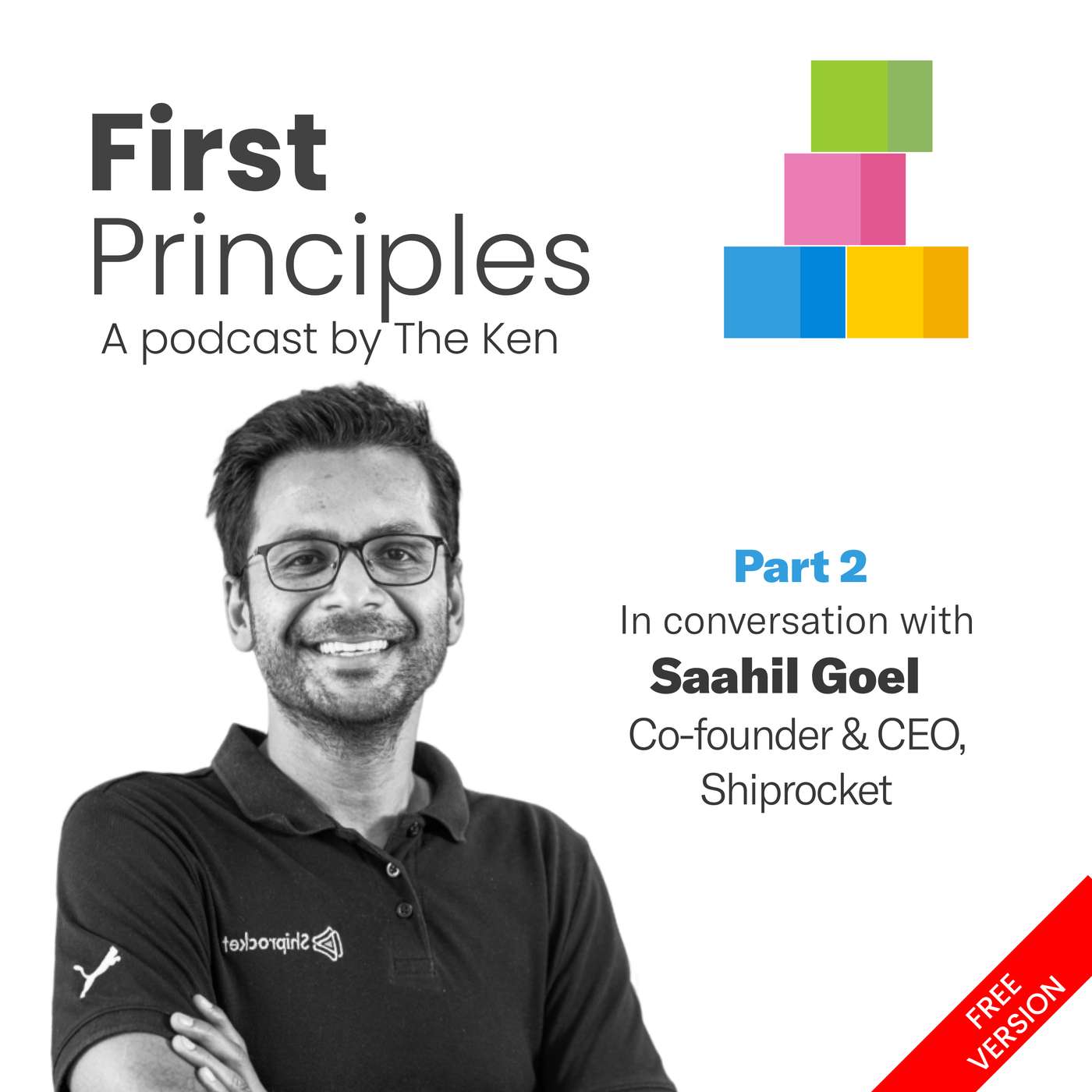
Part 2: Saahil Goel of Shiprocket on wanting a paisa of every Indian transaction outside the marketplaces, who doesn't survive at Shiprocket, and still playing Pink Floyd on a Fender

Part 2 of 2. In Part 1 we walked the road from 2011 — three companies, an investor ultimatum, and the capital it took to build. Part 2 is the mind. Saahil Goel starts with what, given hindsight, he'd do differently, then the first principles he runs Shiprocket on (distribution beats product), the two or three metrics he genuinely obsesses over, his bet on applied AI, why he believes you can't actually manage people, who does and doesn't survive at the company, the guitar he still plays, his dog, and the question Rohin closes every episode with, which Saahil answers with a single number. Chapters 1:02 With hindsight, what he'd do differently 2:10 “A paisa of every transaction in India” 5:23 First principles: distribution beats product 11:32 The metrics he obsesses over 17:22 Betting on applied AI 29:33 “You can't manage people” 31:45 Who doesn't survive at Shiprocket 42:05 The guitar, Pink Floyd, and Bruno the CHO 58:28 The book he forgets — and how he reflects 1:00:50 Rating his life an 8 This episode was produced by Rohin Dharmakumar and mixed and mastered by Rajiv CN. Write to us at fp@the-ken.com with your feedback, suggestions, and guests you would want to see on First Principles. If you enjoyed this episode, please help us spread the word by sharing and gifting it to your friends and family.
July 7, 2026Episode 151 hr 5 min

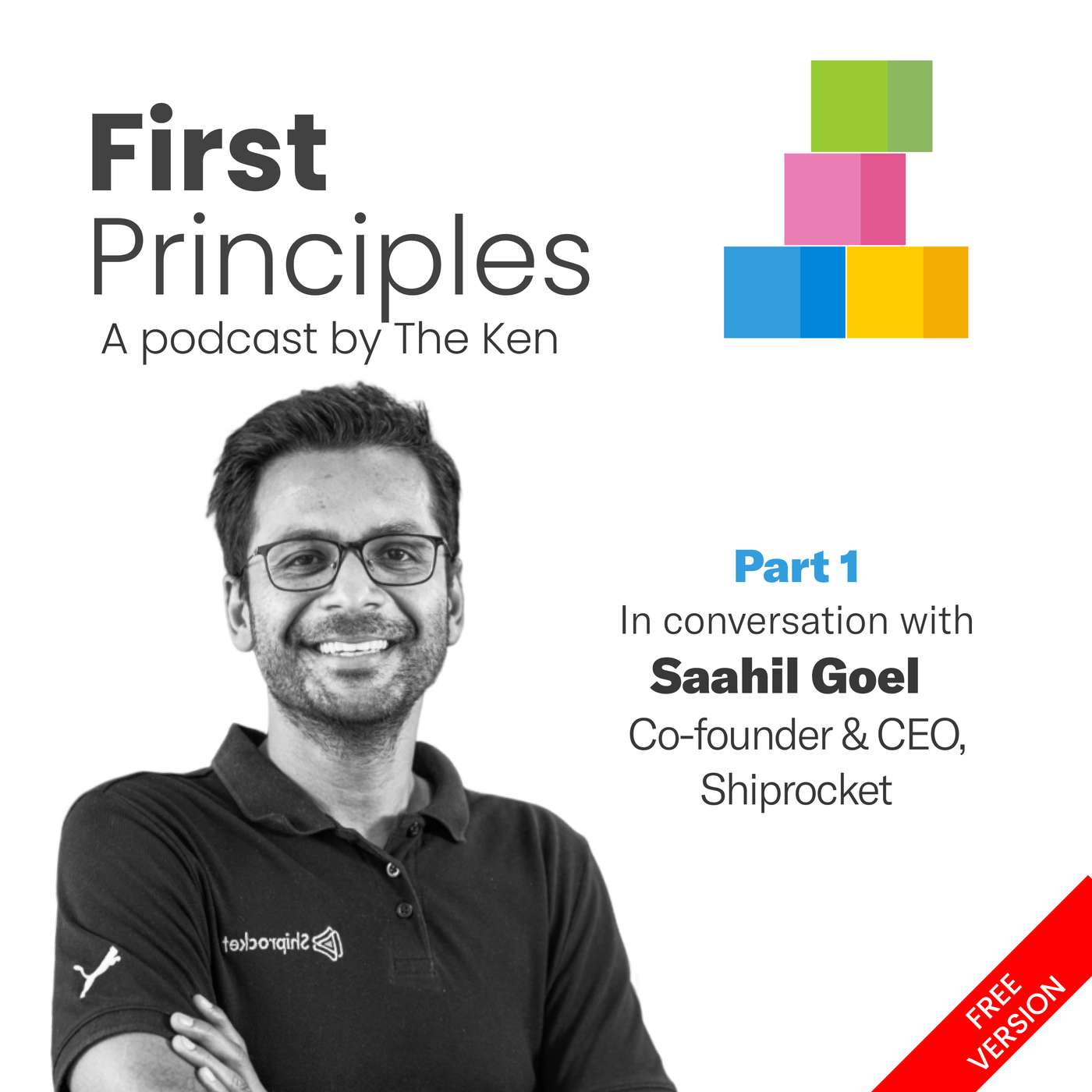
Part 1: Saahil Goel of Shiprocket on rebuilding the same company three times, the $4 million he was told to take or leave and why in India you sell outcomes, not software

Part 1 of 2. Most people date Shiprocket to 2017; in truth it was born in 2011, and the road there runs through two companies called KartRocket and Craftly. Saahil Goel walks Rohin through the build: Rs 15 lakh of their own money, nearly not being hired by their own first engineers, the hard lesson that in India you sell outcomes not software, an investor ultimatum to take $4 million or nothing, and by the end, just how much capital it's taken to get from that first office to the edge of a public listing. Part 2 gets into how he actually thinks. Chapters 0:00 The company that started in 2011, not 2017 4:01 KartRocket: building an agency to learn the market 6:09 Bootstrapped on Rs 15 lakh 9:02 Why Indian SMBs wouldn't pay for software 17:58 “Take $4 million or nothing” 22:38 How Shiprocket was born 27:06 What Shiprocket actually is — and how it makes money 37:58 The IPO, and the state of the business 44:19 Quick commerce without owning a truck 48:42 From Delhi to a US career — and back 55:59 Lessons from failed fundraises 1:04:23 How much they've raised This episode was produced by Rohin Dharmakumar and mixed and mastered by Rajiv CN. Write to us at fp@the-ken.com with your feedback, suggestions, and guests you would want to see on First Principles. If you enjoyed this episode, please help us spread the word by sharing and gifting it to your friends and family.
June 22, 2026Episode 141 hr 3 min

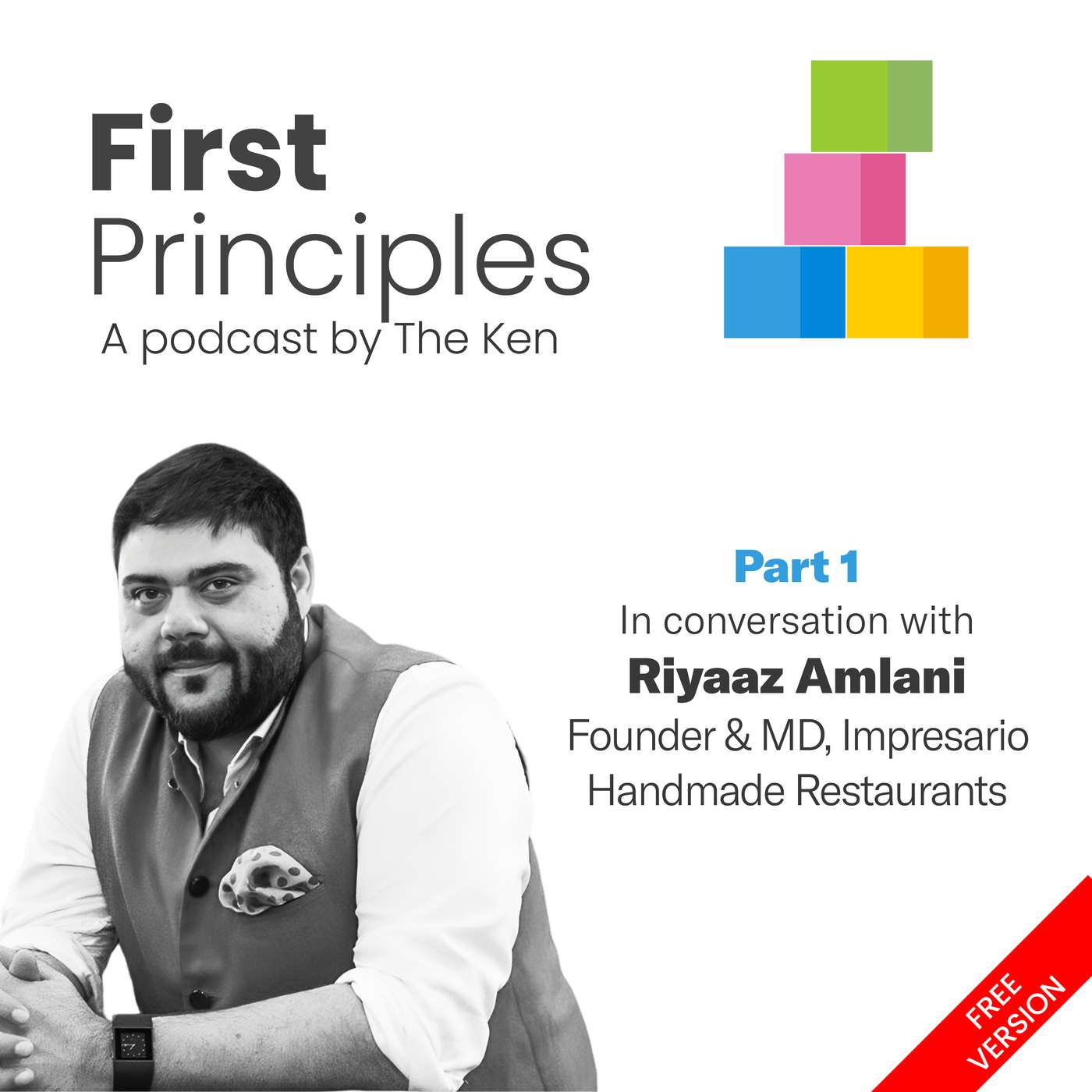
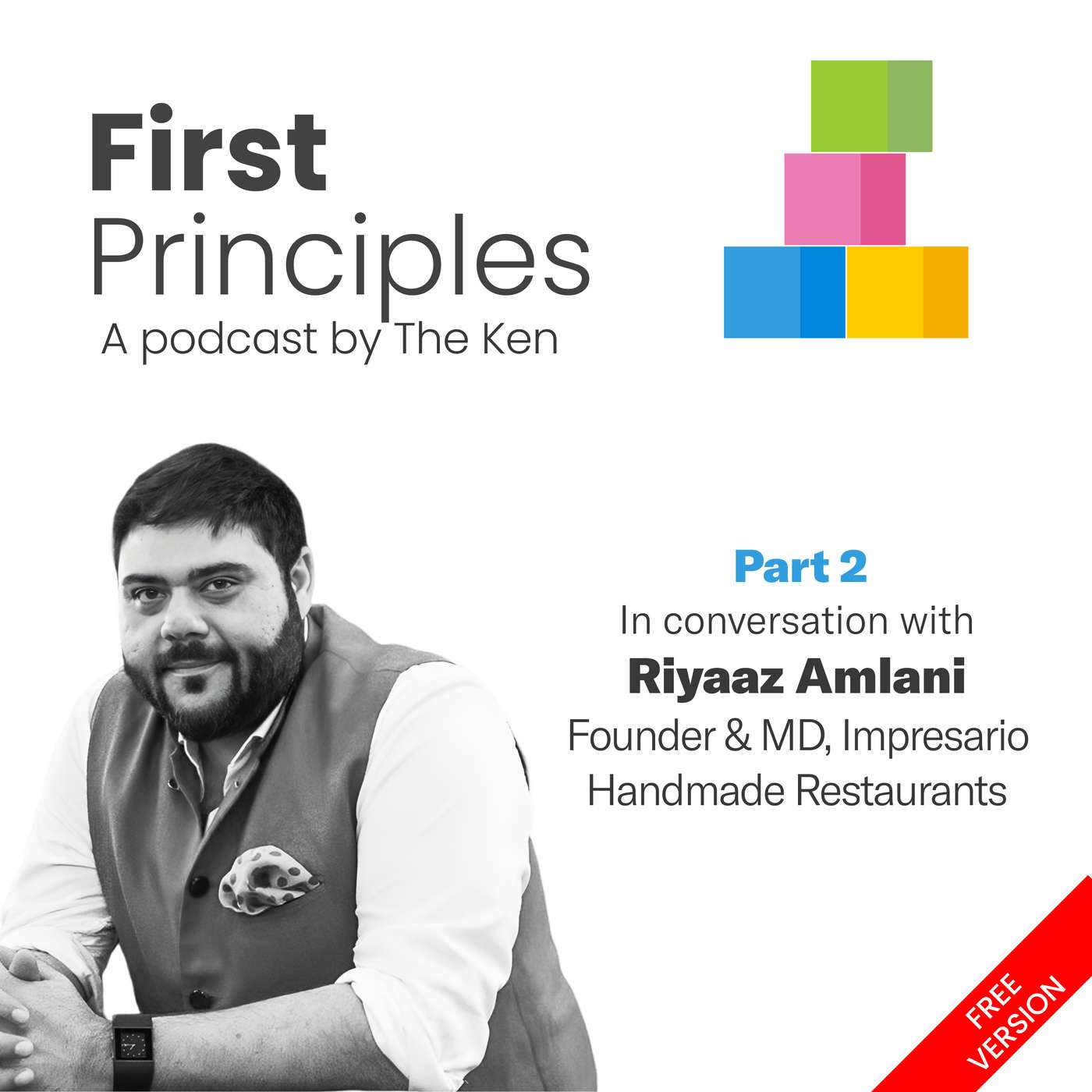
Part 2: Impresario's Riyaaz Amlani on digital landlords, doers & divas, and why delivery will never eat dine-in

Part 2 moves from the journey to the operating philosophy. Riyaaz Amlani unpacks his evolving stance on the aggregators — from resistance to "uneasy truce" — and the hard lesson that restaurateurs who send guests to Zomato and Swiggy have only themselves to blame. He argues delivery and dine-in are two different businesses, lays out his ambition to turn Impresario into a full-service-restaurant platform, and gets personal on hiring, Gen Alpha kids, weekends, and why his life scores 9.9 out of 10. CHAPTERS 00:00 Recap and what's ahead: aggregators, the platform, the missing 0.1 01:48 "Digital landlords": Zomato & Swiggy, then and now 02:47 From resistance to cohabitation; how aggregators trained demand 05:24 Owning the customer; the cross-sector aggregator tension 07:04 The Booking.com / Hotels.com parallel and how hotels fought back 09:41 Build your own loyalty — don't blame the aggregator 10:09 Delivery vs dine-in: two completely different businesses 13:09 Restaurants beat the movies; lessons from raising VC/PE 16:34 Growth math: IRR, 20-25% stable growth, the late-stage problem 17:45 What motivates him: reading a city and its community 18:56 Curiosity over the "5 people"; planning for serendipity 24:29 Hiring: "doers and divas" and the largesse of hospitality 30:24 Social as social infrastructure: coworking from day one 34:25 First principles: people + process, soul, belongingness 37:08 Harvesting feedback: NPS, ORM, AI, the guest-experience officer 39:18 His kids and the Gen Alpha worldview 43:39 Weekends, FIFA, meditation, and protecting solitude 48:10 Comfort food and deferring to the chef 50:11 The 25-year view; the 10,000 cr platform and the invisible 85% 59:03 Anti-loyalty vs frequency: cafes are loyalty, restaurants are experience 1:01:44 Final question: 9.9 out of 10, and the missing 0.1 KEY COMPANIES & BRANDS Impresario Handmade Restaurants; Social; Zomato; Swiggy; ONDC; Booking.com; Hotels.com; Rebel Foods; Haldiram's; Rameshwaram Cafe; Starbucks; NRAI; PlayStation/FIFA/Minecraft (referenced). KEY CONCEPTS Aggregators as "digital landlords"; deep discounting & perceived value; the uneasy truce; owning the customer relationship; the Booking.com hotel-inventory parallel; loyalty programs & direct outreach; delivery vs dine-in as separate businesses; patient capital, IRR & late-stage growth math; "doers and divas"; largesse of hospitality; full-service-restaurant platform; store-level vs corporate EBITDA; the invisible 85% "iceberg" of running a restaurant; anti-loyalty vs frequency; cafes (loyalty/convenience) vs restaurants (experience/variety); NPS/ORM/AI feedback; Gen Alpha.

June 15, 2026Episode 141 hr 4 min

Part 1: Impresario's Riyaaz Amlani on Mocha, "Handmade," four near-deaths and 25 years of building places to be

Part 1 of Rohin Dharmakumar's conversation with Riyaaz Amlani is the origin story: why a returning UCLA grad decided Bombay was missing "places to be," how Mocha became Social, and what it actually takes to keep a restaurant group alive for 25 years in the highest-mortality business there is. The shisha ban, the private-equity money that never arrived, COVID, the marble hustle at age six, and the real engine underneath it all: people. CHAPTERS 00:00 Intro: 95% fail by year two — and the man who didn't 01:46 Why Mocha in 2001: a city missing "places to be" 03:23 Bombay the "coolest cousin"; South Bombay snobbery moves to Bandra 05:05 The MTV / Gen X generation and a West-facing India 07:47 UCLA, entertainment management, and learning to live culture 11:29 What "Handmade" and "Impresario" mean 14:13 The business today: 80 restaurants, 900 cr, 5,500 people 15:29 Why restaurants die; learning from the community 18:02 People vs processes — and why he keeps returning to people 19:32 Social: the millennial third space and the shisha ban 25:41 The Gen Z puzzle; Saltwater to Bandra Bourn; evolution vs revolution 30:46 Real estate: location vs locality and India's "80 pockets" 32:32 The metric that matters: AOV x covers x table turnaround 35:33 COVID and surviving "mass-extinction events" 39:17 The town hall: the team takes 40% pay to save the company 40:51 What losing a restaurant feels like; the discipline to quit 42:44 Mental model: 4-5 engines to ride economic cycles 46:42 The marble business and hustling from age 12 51:20 Bowling alleys & Phoenix Mills: people buy time together 53:44 Self-rating: 7.5 as a parent, 5 as a CEO 55:15 Building a restaurant vs building an organization 56:15 The HR crisis: severe attrition, talent going abroad 58:44 The one thing he can't delegate: layouts and property selection 1:00:49 Becoming a "boardroom warrior" against his will KEY COMPANIES & BRANDS Impresario Handmade Restaurants; Mocha; Social; Saltwater Cafe/Grill; Bandra Born; Cafe Coffee Day; Phoenix Mills "Bowling Company"; Amoeba; UCLA. KEY CONCEPTS Third spaces; "handmade" at scale; West-aspirational MTV-generation culture; people vs processes; AOV x covers x table turnaround; frequency as a metric; location vs locality / "80 pockets"; evolution vs revolution; mass-extinction events & resilience; working-capital-negative business; building a restaurant vs building an organization; restaurant-industry attrition; the layouts/property selection he won't delegate.

May 4, 2026Episode 131 hr 15 min

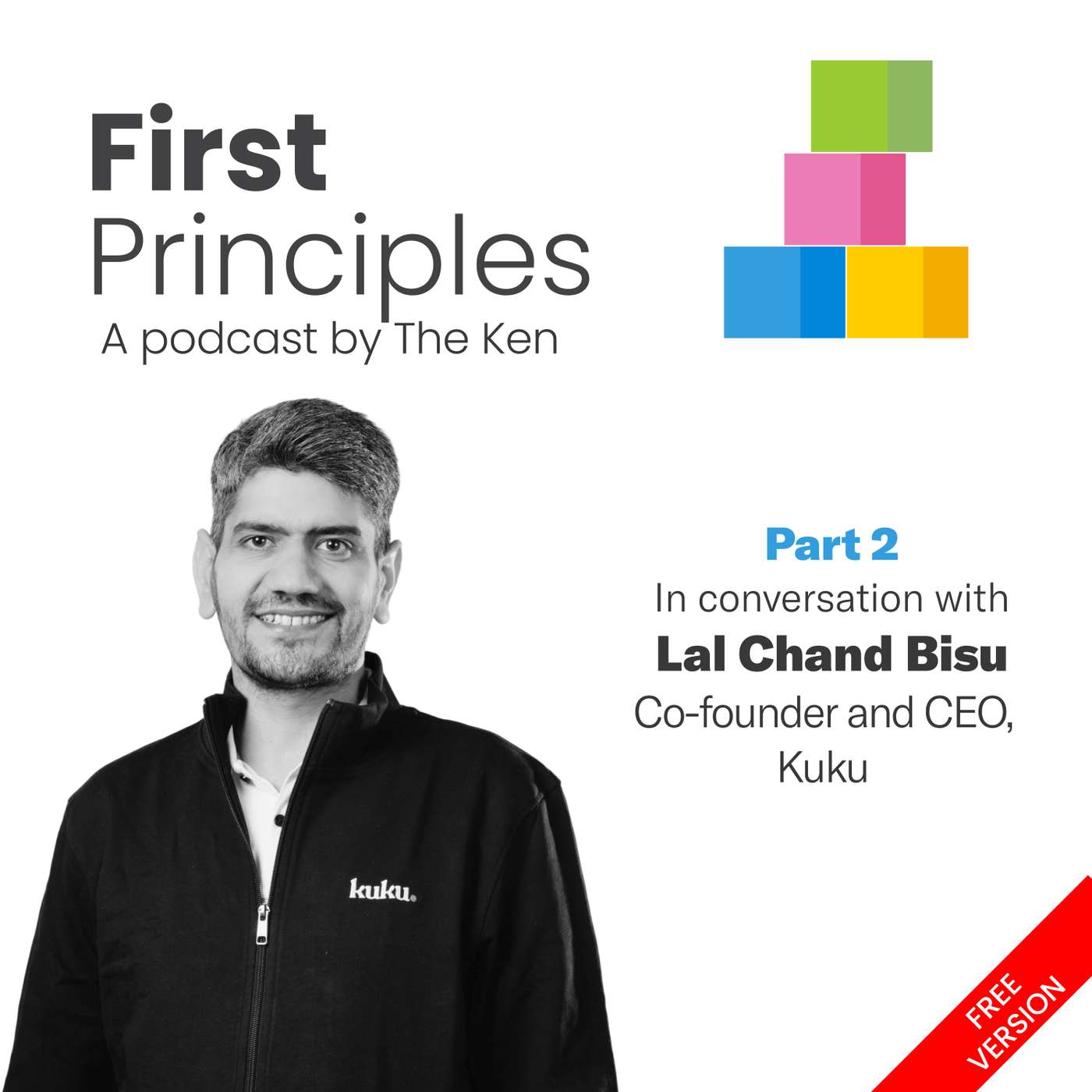
Part 2: Kuku’s Lal Chand Bisu on the Bathoth-to-Bandra arc, learning from iterations not books, and why nos beat yeses

Part 2 picks up exactly where I left Bisu — on why a 7-year-old audio platform is releasing a theatrical film on May 8. From there, we go everywhere. Bisu's actual journey from a small village in Shekhawati to Bandra. The "full equation" view of metrics. Why saying no requires more work than saying yes. Why most of his learning comes from iterations, not books. And, in his closing answer, a quietly devastating line about the startup ecosystem itself. If you haven't heard Part 1 yet, please go back and start there first. Chapter list 01:02 — Indian Institute of Zombies : why theatrical, why in-house, why AI in the pipeline. The decision-making cadence behind it 01:08 — "Your vision grows with you." How the original vision changed from "premium storytelling for Bharat" to something larger 01:10 — Bathoth → Shekhawati → IIT Jodhpur → Bandra. Studying in Hindi until Class 10, then +2 in Hindi, then English at IIT 01:18 — The discipline of saying no. Why nos require more work than yeses, and why nos are usually the better answer 01:19 — "The full equation." Why CAC alone is meaningless; why he tracks revenue, CAC, LTV and cohort profit together. The two real metrics: equation health and engagement 01:21 — Numbers beyond a limit give you an illusion. "Don't go deeper in the data — keep your life simple." 01:21 — Co-founders, span of control, how the four-way role split actually got sorted 01:22 — How Bisu learns: most of it from doing and iterations; books help him articulate what the iterations have already taught him 01:25 — Pet phrases at work — "build it like a business, not a startup" — and what management style his colleagues would say he has 01:28 — Biggest value add as Bisu, not as CEO. The Uber-power-user analogy 01:29 — When did he change his mind about managing people? Going from technical-first to people-first 01:34 — Hiring: the open-ended questions Bisu actually asks when he meets potential leaders 01:36 — What motivates and drives him on a daily basis 01:42 — Family, parenting, and the village memory of his grandmother telling stories by oil lamp in the evenings — the original storyteller in his life 01:45 — The personal questions: which morning of the week, how he spends weekends, what a productive day looks like, sleep 01:46 — On a scale of 1 to 10, how Bisu rates himself as a CEO 01:51 — The closing thought. Would the average Kuku FM subscriber actually want to listen to a two-hour interview with the CEO of Kuku FM? "We live in a bubble. The startup ecosystem feels that the world thinks what we think. It doesn't." 01:53 — Goodbye Things mentioned in Part 2 People: Vinod Kumar Meena, Vikas Goyal (co-founders); Kunj Sanghvi (Kuku's Content Head, previously on Two by Two and Zero Shot ); the Dalal brothers (script of Indian Institute of Zombies — Hussain and Abbas Dalal of Brahmāstra / Farzi ); Gaganjeet Singh and Alok Dwivedi (directors); Bisu's grandmother Places: Bathoth (village in Shekhawati, Rajasthan); IIT Jodhpur; Bandra Concepts: the full equation — Bisu's name for treating CAC, revenue, LTV and cohort profit as one calculation, not separate metrics; content is the only product ; vision grows with you To listen to all of First Principles If you'd like to listen to all 54 First Principles episodes — that's close to 110 hours of conversations with founders and leaders building India's most interesting companies — please subscribe to The Ken directly, or to our premium channel on Apple Podcasts.

April 27, 2026Episode 131 hr 4 min

Part 1: Kuku's Lal Chand Bisu on killing three products, ditching the free tier and charging Bharat ₹399 a year

Lal Chand Bisu started Kuku in audio in 2018. Almost everyone in the press wrote them off — the louder competitor was getting the headlines, the VCs didn't believe vernacular India would pay, and the assumption was that short-video would flatten audio. None of that aged well. Kuku FM did ₹242 Cr in FY25 at 175% YoY growth, with roughly 10 million paying subscribers. This is the conversation Bisu, who is just not the kind of founder who walks around telling you these numbers, finally agreed to do. In Part 1, we get into the company history, the pivots, the contrarian decision to cut the free tier, and what 40 million Hindi listens to Rich Dad Poor Dad really mean. Chapter list 00:00 — How old is Kuku FM, and what Bisu was doing before (Easy Prep, two and a half years at Toppr) 00:02 — June birthdays, coincidence, and Bisu's definition of luck — "most things are out of control" 00:04 — The three pivots: podcast aggregator → UGC → PUGC. What killed each one and what was kept constant 00:09 — Why vernacular audio IP didn't exist, and why Kuku had to become a studio rather than an aggregator 00:14 — January 2021: cutting the free tier and charging ₹399 a year. The investor pushback. Why no ads, ever 00:23 — Rich Dad Poor Dad in Hindi: 40 million listens. What that number tells you about the listener that English-first publishers have been missing 00:27 — How Kuku's content mix has shifted from entertainment to educational and inspirational 00:30 — Audio first, then video. Why audio is roughly 50x cheaper to produce and 50x cheaper to stream 00:33 — AI in the marketing pipeline: 500 ads/month → 5,000 ads/month, same cost 00:42 — The competitor we don't name. What being the also-ran in the press for years cost — in hires, partnerships, and inside Bisu's own head 00:45 — The fundraising history: ~$156M raised, the Granite Asia round, and how much of the last cheque is actually still untouched 00:50 — Biggest learnings from unsuccessful fundraising. Why nos are usually the harder, better answer 00:55 — Kuku TV: from launch to #1 on India's App Store in four months. Microdrama, the ReelShort wave, MS Dhoni 01:01 — Cliffhanger: the Indian Institute of Zombies theatrical bet — and why an audio platform wrote, produced and AI-assisted its own film instead of licensing one. Bisu's answer to this is in Part 2. Things mentioned in Part 1 People: Vinod Kumar Meena and Vikas Goyal (co-founders, IIT Jodhpur batchmates); Hansa Bisu (Bisu's wife); MS Dhoni (Kuku FM brand ambassador); Nandan Nilekani / Fundamentum Companies & investors: Mebigo Labs, Toppr, Easy Prep, Pocket FM (the unnamed competitor), Granite Asia, Vertex Ventures, Krafton, Bitkraft, IFC, 3one4 Capital, Shunwei, India Quotient Content & references: Rich Dad Poor Dad (Hindi); Ankur Warikoo's Hindi book; ReelShort; Kuku TV To listen to all of First Principles If you'd like to listen to all 54 First Principles episodes — that's close to 110 hours of conversations with founders and leaders building India's most interesting companies — please subscribe to The Ken directly, or to our premium channel on Apple Podcasts. Correction: During the conversation, Bisu mentions that the total amount of venture capital raised by Kuku is $170 million. The company has subsequently clarified that the correct figure is $120 million.

Is this your show?

Claim this listing to keep it up to date, reach guests who want to pitch you, and manage bookings with Guestify.

Claim this listing

More Business podcasts