
Find partners
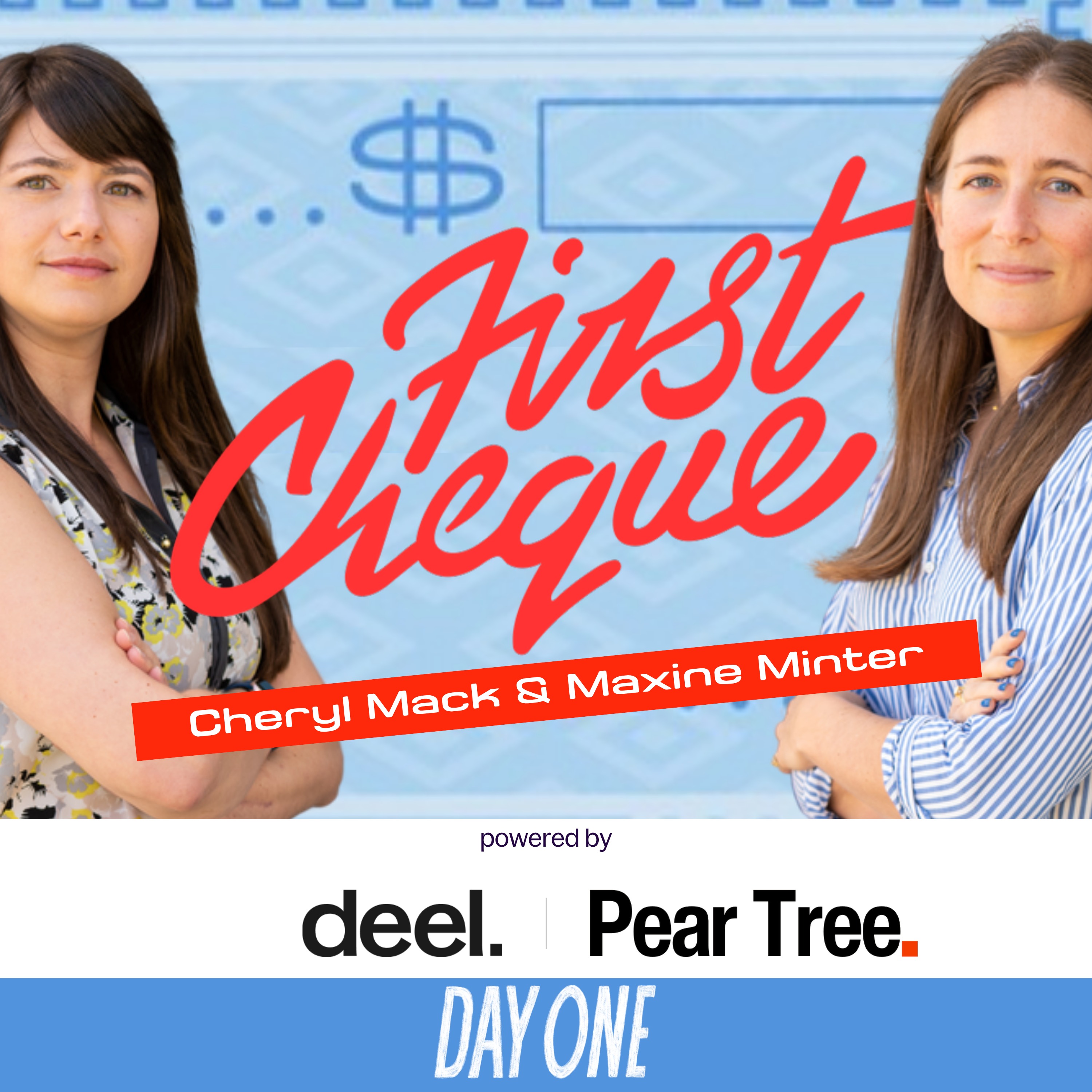
First Cheque with Cheryl Mack & Maxine Minter

First Cheque with Cheryl Mack & Maxine Minter

Hosted by Day One®

BusinessInterviews guests

Episodes

60

Latest episode

Jun 2026

Language

EN

About the show

First Cheque is powered by Deel & Pear Tree. Founders scale faster on Deel — set up payroll, hire anyone anywhere, and handle visas, HR and compliance in 150+ countries from one platform. Get started: https://deel.com/dayone Pear Tree builds high-performing offshore teams without the agency middleman. Day One listeners get a free team audit + 20% off your first hire: https://dayone.fm/peartree First Cheque is dedicated to open-sourcing conversations with experienced investors globally. Our aim? To enhance the craft of early-stage investors, from those writing their first cheques to the veterans in the game. Hosted by Cheryl Mack & Maxine Minter, First Cheque is a Day One® show. Day One is the podcast network dedicated to founders, investors, and operators. Tune in for an enriching experience as we uncover the secrets to becoming a skilled early-stage investor. First Cheque on Day One https://dayone.fm/show/first-cheque Sign up to get your weekly insights into the inner workings of early-stage investing. https://dayone.fm/newsletter/ This podcast uses the following third-party services for analysis: Podtrac - https://analytics.podtrac.com/privacy-policy-gdrp Spotify Ad Analytics - https://www.spotify.com/us/legal/ad-analytics-privacy-policy/
Listen to episodes

60 recent
June 7, 202650 min

How to Think About Equity as a Startup Employee

Episode SummaryAlexey Mitko is a partner at Co-Ventures, the architect behind Eucalyptus' ESOP plan, and widely known in the Australian ecosystem as "ESOP Guy." He was around employee number twenty at Canva and one of the early employees at Koala, giving him a front-row seat to three of Australia's biggest consumer tech outcomes.In this episode, Cheryl and Maxine unpack how Alexey designed the ESOP plan that led to roughly $300 million distributed back to Eucalyptus employees, the largest ESOP payout in Australian history. He walks through the three questions every founder faces but rarely verbalises: who gets equity, how much, and why you have an ESOP plan in the first place.You'll also hear how he modelled allocation across multiple rounds and hundreds of hires to avoid giving too much away early, why he personally walked the first two hundred employees through their equity, and why Australia's lack of a secondary market keeps ESOP feeling like monopoly money. Alexey closes with his Big Cojones moment: proposing to his wife, the most nervous he's ever been despite having climbed Europe's highest mountain.Time Stamps00:00 – Intro03:01 – The three ESOP questions every founder needs to answer05:58 – How to model equity allocation across rounds and hundreds of hires09:10 – Using ESOP as your most powerful recruitment and retention tool12:02 – How walking 200 employees through their equity built culture and trust15:02 – Open financials, shrinking cash balances, and what went wrong along the way17:55 – Why Australia's ESOP ecosystem is still behind Silicon Valley26:48 – Teaching employees to understand equity: the Google Sheet that started at zero29:20 – High salary vs heavy equity: giving employees a real choice32:16 – Common ESOP mistakes founders make and how to avoid them35:03 – Why Australians treat startup equity like monopoly money39:11 – The secondary market problem: why liquidity changes everything for ESOP43:25 – Why your startup career is a portfolio of equity bets46:36 – What angel investors can do to help portfolio companies build better ESOP plansSponsors:First Cheque is supported by our wonderful sponsors:Deel: Founders scale faster on Deel. Set up payroll for any country in minutes, hire anyone anywhere, and get visas handled fast, so you stay focused on scaling. Deel takes care of onboarding, HR, IT, EOR, benefits, and compliance, so your team can grow without borders.It’s why more than 40,000 fast-growing companies trust Deel to move fast.Visit https://www.deel.com/dayone___Pear Tree: Pear Tree helps Australian and New Zealand founders build high-performing offshore teams without the agency middleman.As local hiring becomes more expensive and harder to fill, many operators are turning to offshore talent across engineering, development, marketing, accounting and operations at a fraction of local salary costs.The offshore horror stories you hear usually aren’t a talent problem. They’re the result of outsourcing agencies that overcharge clients while underpaying staff. Pear Tree takes a different approach through a direct, transparent model where your team is paid fairly, fully compliant, and focused entirely on your business.As part of the Day One community, you’ll receive a free team audit to identify where offshore talent could move the needle in your business, plus 20% off your first hire. Learn more at http://dayone.fm/peartreeFirst Cheque is part of Day One.Day One helps founders and startup operators make better business decisions more often. To learn more, join our newsletter to be notified of new First Cheque episodes and upcoming shows.Mentioned in this episode:Deel x PX_Script 1Deel x PX_Script 2Pear TreeIf you're a founder or operator trying to scale, here's the reality — Australian hiring is getting harder, salaries are at record highs, and the talent you need is increasingly out of reach. The best operators are quietly building offshore teams of engineers, marketers, accountants and analysts at a fraction of the cost. Pear Tree does it differently. We headhunt highly skilled talent from the Philippines and South Africa with full transparency on where every dollar goes, so your team is paid fairly and fully focused on your business. As a Day One listener, you’ll receive a free team audit to identify where offshore talent could move the needle in your business, plus 20% off your first hire.This podcast uses the following third-party services for analysis: Podtrac - https://analytics.podtrac.com/privacy-policy-gdrpSpotify Ad Analytics - https://www.spotify.com/us/legal/ad-analytics-privacy-policy/
May 17, 202646 min

How to Pick Pre-Seed Winners Before There's Any Data

Episode SummaryIn this 101 episode, Cheryl and Maxine go deep on the fundamentals of pre-seed investing, from how the stage came to exist to why the perceived risk gap between pre-seed and seed is much smaller than most investors think.They break down the history of how venture stages evolved from single rounds to alphabetized series, how seed investors eventually got pushed up the stack, and why pre-seed emerged around 2017 to 2019 as a distinct category. They unpack why PitchBook's definition of pre-seed as "whatever the investor calls it" muddies the water, how seed preempts from larger funds are inflating average valuations, and why thinking in risk stages rather than round labels is a better framework for evaluating early companies.You'll also hear why graduation rates from pre-seed to seed don't support the idea that pre-seed is two to three times riskier, why the Australian ecosystem is sitting on a talent surplus with a capital gap at pre-seed, and why this stage is particularly well suited for angels building diversified portfolios of 20 to 40 companies. Cheryl shares her framework for evaluating pre-seed opportunities through the lens of problem pain, frequency, and market size, and Maxine walks through how to think about return profiles, dilution, and valuation at a stage where there are no outputs to measure.Time Stamps00:00 Intro01:56 – A brief history of venture stages: how pre-seed became a thing07:14 – Why round labels are broken and risk stages are a better framework09:23 – Seed preempts: how big funds are blurring the line between pre-seed and seed11:48 – Is pre-seed actually riskier than seed? The case that it's not16:41 – Graduation rates: what the data says about pre-seed to seed conversion22:59 – Valuation dynamics: what pre-seed rounds look like in Australia vs the US28:36 – Why Australian founders are leaving for the US at pre-seed and what that means31:29 – How to evaluate pre-seed companies: inputs over outputs35:05 – Cheryl's pain framework: frequency, intensity, and willingness to pay38:28 – Why pre-seed is the best stage for diversifying who gets funded43:44 – The AI revenue problem: why getting in early matters more than everSponsors:First Cheque is supported by our wonderful sponsors:Deel: Founders scale faster on Deel. Set up payroll for any country in minutes, hire anyone anywhere, and get visas handled fast, so you stay focused on scaling. Deel takes care of onboarding, HR, IT, EOR, benefits, and compliance, so your team can grow without borders.It’s why more than 40,000 fast-growing companies trust Deel to move fast.Visit https://www.deel.com/dayone___Pear Tree: Pear Tree helps Australian and New Zealand founders build high-performing offshore teams without the agency middleman.As local hiring becomes more expensive and harder to fill, many operators are turning to offshore talent across engineering, development, marketing, accounting and operations at a fraction of local salary costs.The offshore horror stories you hear usually aren’t a talent problem. They’re the result of outsourcing agencies that overcharge clients while underpaying staff. Pear Tree takes a different approach through a direct, transparent model where your team is paid fairly, fully compliant, and focused entirely on your business.As part of the Day One community, you’ll receive a free team audit to identify where offshore talent could move the needle in your business, plus 20% off your first hire. Learn more at http://dayone.fm/peartreeFirst Cheque is part of Day One.Day One helps founders and startup operators make better business decisions more often. To learn more, join our newsletter to be notified of new First Cheque episodes and upcoming shows.This podcast uses the following third-party services for analysis: Podtrac - https://analytics.podtrac.com/privacy-policy-gdrpSpotify Ad Analytics - https://www.spotify.com/us/legal/ad-analytics-privacy-policy/
May 4, 20261 hr 0 min

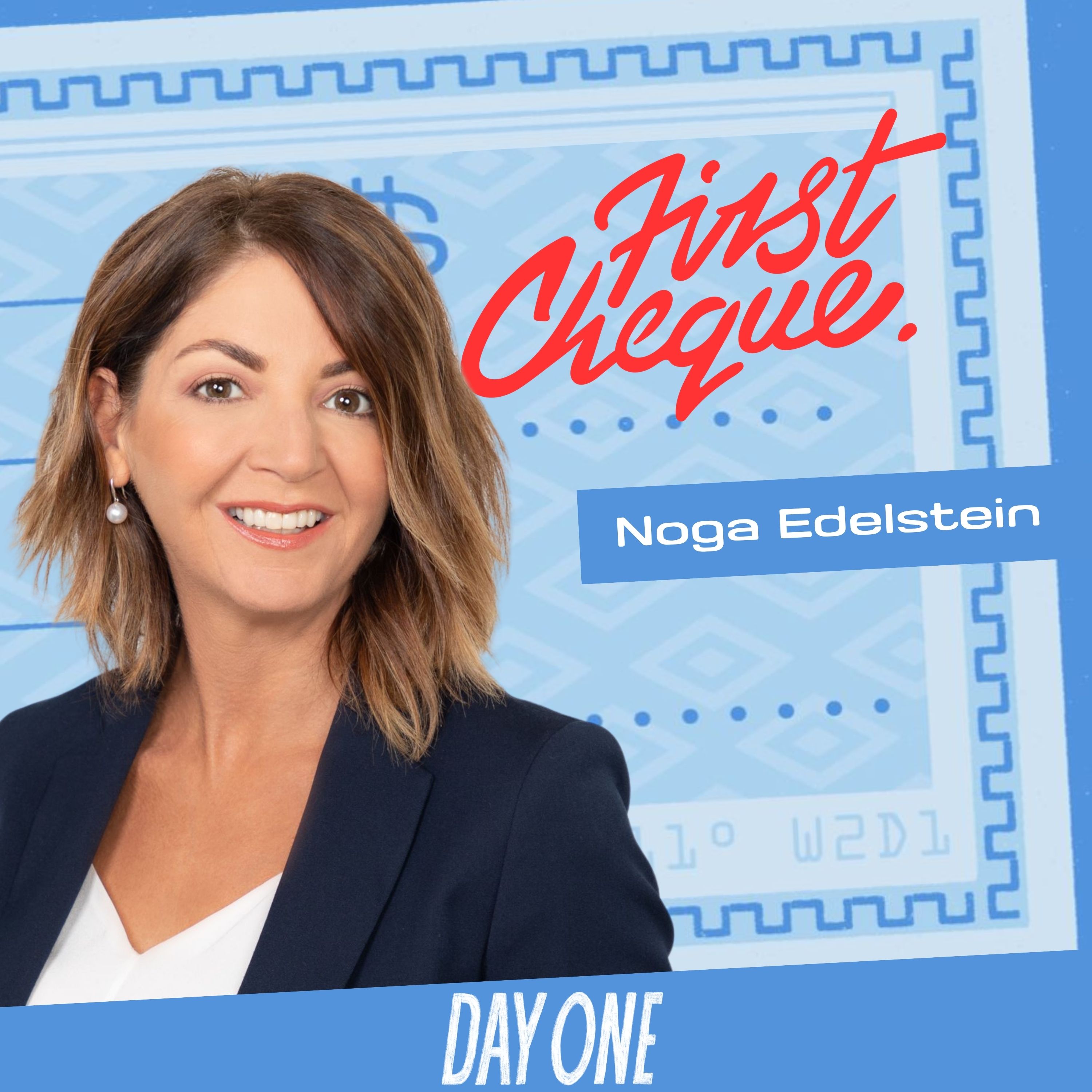
Closing the Gender Investment Gap with Data with Noga Edelstein

Episode SummaryNoga Edelstein is the lead of the Equity Clear initiative, a not-for-profit effort to get Australian investors tracking pipeline diversity data with a common standard. She's also a former General Counsel at Yahoo, a multi-time founder, and has had her fingerprints across the Australian startup ecosystem for over a decade.In this episode, Cheryl and Maxine unpack why pre-seed funding to women is at its lowest level ever and how Equity Clear is building the data infrastructure to finally see where diverse founders are falling out of the pipeline. Noga shares what the UK's five-year head start has revealed, including that angel groups with at least 15% women invest in 10X the number of women-led companies, and why the mere act of tracking your own pipeline drives better outcomes.You'll also hear how a broken website form accidentally proved that women disproportionately use cold inbound to reach investors, why male founders and LPs should be asking their investors about diversity tracking, and what sport can teach us about leveling the playing field through systemic tweaks like funded childcare for founders. Noga closes with her Big Cojones moment: quitting her General Counsel role at Yahoo with a newborn to go all in on a startup.Time Stamps00:00 Intro02:27 – Noga's first investment: dollar-mite savings accounts in primary school10:02 – What is Equity Clear and why pipeline data is the missing piece14:40 – Why closing the gender gap matters now: productivity, economics, and AI bias19:27 – Pre-seed funding to women is at its lowest ever despite lower barriers to building24:44 – Why collecting diversity data feels hard but isn't28:32 – Lessons from the UK: what five years of tracking has revealed32:02 – Maxine's accidental experiment: when a broken form hid all the women founders37:39 – How male founders and LPs can push for change by asking simple questions48:16 – Why funds are missing a trick on sourcing diverse founders51:32 – Breaking the archetype: leveling the playing field with systemic tweaks57:15 – Big Cojones moment: quitting law with a newborn to start a companyFirst Cheque is part of Day One.Day One helps founders and startup operators make better business decisions more often. To learn more, join our newsletter to be notified of new First Cheque episodes and upcoming shows.Mentioned in this episode:Deel x PX_Script 2Deel x PX_Script 1This podcast uses the following third-party services for analysis: Podtrac - https://analytics.podtrac.com/privacy-policy-gdrpSpotify Ad Analytics - https://www.spotify.com/us/legal/ad-analytics-privacy-policy/
April 19, 202651 min

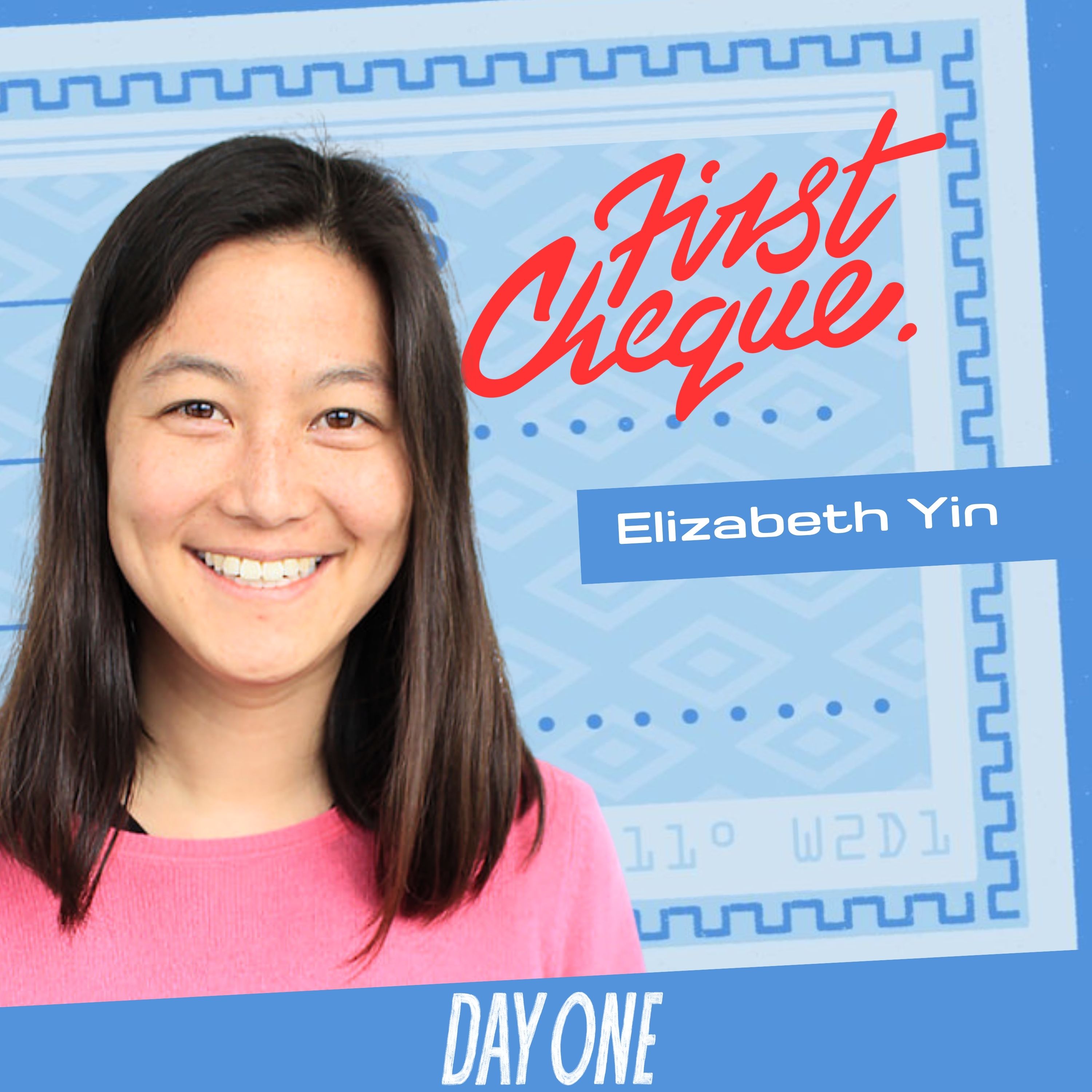
How to Build a Global Pre-Seed Fund from Scratch

Win $2,000 in credits with the Day One Network — take our 2-minute audience survey before 30 June: dayone.fm/surveyEpisode SummaryElizabeth Yin is the co-founder and General Partner of Hustle Fund, a pre-seed venture fund now on its fourth fund that backs companies globally. Before Hustle Fund, she was a partner at 500 Global, founded adtech company LaunchBit, and was an early employee at Google.In this episode, Cheryl and Maxine unpack how Hustle Fund sources deals across continents, why Elizabeth avoids noisy competitive markets in favor of "small waves" that will swell over five years, and why valuation discipline matters more than founder pedigree when product-market fit risk is the same at every stage.You'll also hear how Hustle Fund runs a 30-person team with only four on investments, why Fund 2 was the hardest fund to raise, how the AI wave is creating companies that hit $10M ARR and lose it overnight, and why international valuations still offer significant arbitrage. Elizabeth closes with her Big Cojones moment: being called a "meek Asian woman" by an angel investor while pitching LaunchBit, and how building a platform changed the power dynamic entirely.Time Stamps00:00 – Intro01:54 - Elizabeth's first investment: three shares of Coca-Cola at age 1006:50 – What Hustle Fund is investing in now and why vertical SaaS still matters in the AI era09:31 – How Hustle Fund sources deals globally through co-investors and content15:09 – Elizabeth's two-part framework: founder quality vs. idea quality18:10 – Why competitive markets are a double whammy for small-check investors22:57 – The surfing analogy: spotting small waves that grow big in five years25:06 – Biggest investing lessons from Fund 1 to Fund 4: valuation and follow-on discipline27:58 – Camp Hustle, content marketing, and running VC like a lead generation business30:09 – Does valuation really matter at pre-seed? When it does and when it doesn't37:39 – Growing AUM: why Fund 2 was the hardest and the "event ticket sales" fundraising pattern44:15 – Which fund graduation was hardest and the DPI reality at pre-seed46:21 – Big Cojones moment: confronting bias as a female founder and how platform changes power dynamicsMentioned in this episode:Deel x PX_Script 1This podcast uses the following third-party services for analysis: Podtrac - https://analytics.podtrac.com/privacy-policy-gdrpSpotify Ad Analytics - https://www.spotify.com/us/legal/ad-analytics-privacy-policy/
March 8, 202651 min

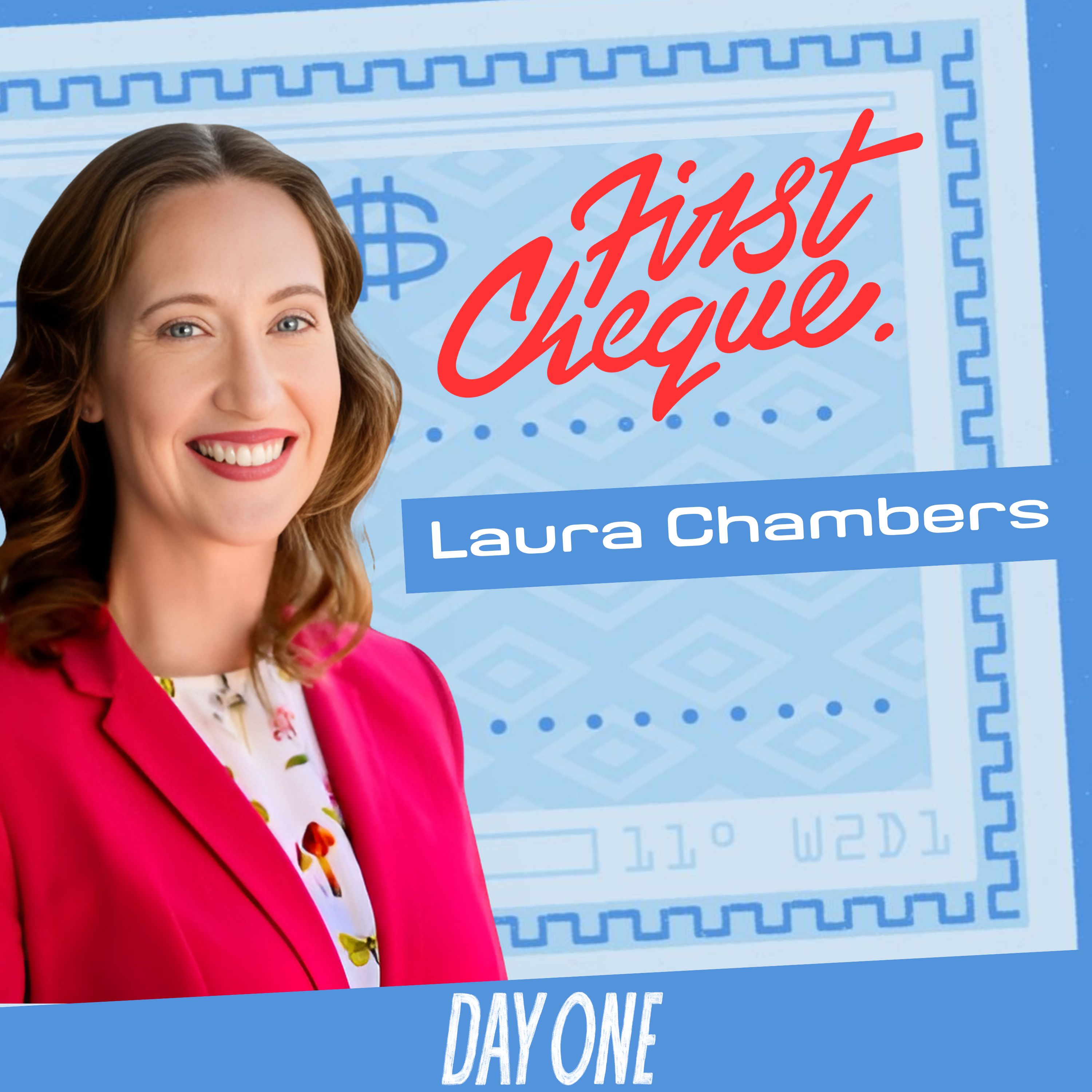
Why Every Founder & Investor Needs to Understand Open Source AI (Replay Episode)

Win $2,000 in credits with the Day One Network — take our 2-minute audience survey before 30 June: dayone.fm/surveyEpisode SummaryIn this episode of First Cheque, Cheryl and Maxine sit down with Laura Chambers, CEO of @Mozilla to dive into the transformative power of open source technology and its role in shaping the future of the internet and artificial intelligence. Laura shares insights on Mozilla’s unique nonprofit structure, the importance of transparency and accessibility in technology, and the critical need for an open AI ecosystem to drive innovation and equity. From the historical impact of open source software like Firefox to the current challenges of balancing ethical AI development with business needs, this conversation is packed with lessons for early-stage investors and tech enthusiasts alike. Laura also provides an inside look at Mozilla Ventures and the Builders Program, which are supporting the next wave of open-source innovators. Whether you're an investor, founder, or just curious about the future of tech, this episode is a must-listen!Time Stamps00:00 Intro & Guest Highlights00:21 Why We're Excited About Laura Chambers03:14 Interview Begins: Laura's First Investment at Age 1005:20 Open Source 101: What It Is & Why It Matters07:08 Firefox vs Internet Explorer: The Open Source Origin Story09:58 How Healthy Is the Internet Today?13:50 Can You Actually Make Money From Open Source?15:45 What If the Internet Had Stayed Behind Paywalls?17:33 Gen AI Is the New Model T: We're Missing the Seatbelts19:37 The Case For & Against Closed Source AI21:35 Why Researchers, Academics & Governments Need Open Access22:17 Where Are We in the Gen AI Infrastructure Cycle?24:18 AI in Education: What Skills Do Kids Actually Need?26:36 Older Generations & the AI Learning Gap29:16 Open vs Closed: Who's Winning Right Now?33:49 Meta's Llama & the Strategic Logic of Going Open35:21 Advice for Founders & Investors Building on Open vs Closed Models39:21 Inside Mozilla Ventures: What They're Investing In41:31 Prompt Engineering Tips From a CEO (Say Please!)46:13 The Biggest Brave Moment: Moving Her Family & a 17-Year-Old Dog to Australia49:20 The Weight of Being CEO & What That Feels LikeResources1) Mozilla Ventures: Supporting startups focused on privacy, AI, and open source innovation. (https://mozilla.vc/)2) Mozilla Builders Program: Investing in and mentoring early-stage entrepreneurs building ethical tech solutions. (https://builders.mozilla.org/)3) Harvard University Study: Open Source Software’s $8 Trillion Economic Impact A study on the global economic value created by open source technology. (https://www.hbs.edu/ris/Publication%20Files/24-038_51f8444f-502c-4139-8bf2-56eb4b65c58a.pdf)4) Anthropic Report on Bias in AI: Research highlighting the impact of bias and the importance of transparency in AI models. (https://www.anthropic.com/research/mapping-mind-language-model)First Cheque is part of Day One.Day One helps founders and startup operators make better business decisions more often. To learn more, join our newsletter to be notified of new First Cheque episodes and upcoming shows.Mentioned in this episode:Deel x PX_Script 1This podcast uses the following third-party services for analysis: Podtrac - https://analytics.podtrac.com/privacy-policy-gdrpSpotify Ad Analytics - https://www.spotify.com/us/legal/ad-analytics-privacy-policy/
February 8, 202657 min

How to Pick Your First Market for International Expansion

Win $2,000 in credits with the Day One Network — take our 2-minute audience survey before 30 June: dayone.fm/surveyEpisode SummaryFrontline’s Brennan O’Donnell has spent two decades helping companies expand across borders, first as an operator at Google and later as a growth investor backing Series B to D businesses. In this episode, Cheryl and Maxine unpack what’s shifted at growth stage in the last 12 months, why the market is still a barbell of “hot or not” deals, and how AI is finally producing application layer companies mature enough for growth rounds.They go deep on Frontline’s transatlantic model: seed investing across Europe to help founders raise a Series A and enter the US earlier, and growth investing in the US to help companies expand into Europe with a hands on, concentrated portfolio approach. Brennan breaks down the four pillars Frontline uses to drive international expansion timing, go to market, talent and org design, and location plus the biggest traps founders fall into, like trying to launch in too many markets at once or optimizing for revenue targets instead of learning.You’ll also hear why the UK and Ireland are the default first step for 97 percent of US companies entering Europe, when Europe becomes a CEO level priority, how relationship driven sales cycles vary across countries, and why developer led community building can beat traditional sales led expansion for certain AI products. Brennan closes with his Big Cojones moment: moving to the Bay Area for a temporary Google job with everything in storage, then doing it again to help build Google’s European HQ in Dublin.Time Stamps03:14 Brennan’s first investment: Mode Analytics and a lawn mowing business in Texas06:49 What’s changed at growth stage and why “growth” is a different world08:30 Why AI enablement came first and app layer is finally ready for Series B plus10:10 The new risk: fast revenue that’s concentrated and not yet durable14:22 Frontline’s model: Europe seed plus US growth and why it’s unique15:58 What Frontline looks for: category leaders and a line of sight to a 5x outcome16:20 The rough revenue range where growth starts paying attention23:22 The four pillars of expansion: timing, go to market, talent, location26:00 Timing: the 10 percent pull, exec maturity, and why waiting too long is risky29:36 Why Europe expansion has to be a CEO level company priority38:04 Build or buy: why most companies compete into new markets rather than acquire39:10 Developer community expansion as a new go to market wedge41:44 Market selection: why nearly everyone starts with London or Dublin43:56 “Success amnesia” and why you must optimize for learning not quotas48:28 Relationship driven sales cycles and how Europe varies market to market52:43 Big Cojones moment: taking a temp Google job and betting on himself54:26 Doing it again: moving to Dublin in three weeks to help build Google EuropeFirst Cheque is part of Day One.Day One helps founders and startup operators make better business decisions more often. To learn more, join our newsletter to be notified of new First Cheque episodes and upcoming shows.Mentioned in this episode:Deel x PX_Script 1This podcast uses the following third-party services for analysis: Podtrac - https://analytics.podtrac.com/privacy-policy-gdrpSpotify Ad Analytics - https://www.spotify.com/us/legal/ad-analytics-privacy-policy/
January 11, 202650 min

The Australian Venture Playbook for 2026

Episode SummaryAs 2026 kicks off, Cheryl and Maxine open the year with their annual First Cheque wrap, a grounded, opinionated take on what actually shifted in Australian tech and venture, and what that means for the year ahead.They break down why 2025 marked a genuine inflection point for the ecosystem, from Canva’s secondary and a surge in M&A to fresh signals that long-awaited liquidity is finally starting to flow. Despite minimal government support, Australia quietly proved itself as one of the most capital-efficient venture markets globally, producing unicorns at roughly twice the rate of the US per dollar invested.The conversation also tackles the harder truths investors and founders need to reckon with in 2026: early-stage funding compressing while late stage heats up, corporate venture capital retreating, and the gender funding gap sliding backwards. Looking forward, Cheryl and Maxine share their predictions for the year ahead, where funding volumes may land, why seed remains the toughest stage, how AI valuations could trigger a market correction, and why energy and infrastructure may emerge as the next premium asset class.Time Stamps00:00 – Intro: End of year energy: why 2025 felt different to 202403:55 – Election fallout and the government’s “nothingburger” for startups05:24 – Canva’s secondary and the first real signs of liquidity returning09:49 – Aussie tech M&A heats up: Canva, Linktree, Jolt, and more12:09 – The stat that changed the narrative: Australia’s unicorn efficiency16:14 – The weirdest trend of the year: early stage down, late stage up18:27 – Tech jobs, data centers, and the infrastructure bet Australia is making22:52 – Why deep tech and climate are pulling venture dollars again28:21 – The gender funding gap got worse (and why)33:09 – Corporate VC is pulling out: what happened to strategic capital37:02 – 2026 predictions: funding totals, seed pain, and where capital flows next44:00 – AI bubble risk: tourism, ROI pressure, and the domino effect47:42 – Hot take: electricity is the next valuation premium49:00 – Will diversity bounce back in 2026? (vibes, but also logic)First Cheque is part of Day One.Day One helps founders and startup operators make better business decisions more often. To learn more, join our newsletter to be notified of new First Cheque episodes and upcoming shows.Mentioned in this episode:Deel x PX_Script 1This podcast uses the following third-party services for analysis: Podtrac - https://analytics.podtrac.com/privacy-policy-gdrpSpotify Ad Analytics - https://www.spotify.com/us/legal/ad-analytics-privacy-policy/
November 16, 202553 min

What are VC Fund Secondaries?

Episode SummaryMax Kausman is the founder and solo GP of Advance VC, Australia's first dedicated fund-of-funds with a focus on secondaries.Advance VC buys existing positions in Australian and New Zealand VC funds—acquiring stakes from investors seeking liquidity and giving new LPs diversified access to mature, validated portfolios across multiple vintages dating back to 2012.In this conversation, they discuss why secondaries won't "save" all of venture (only the top performers), how discounts actually work (spoiler: the average is 30-35% but it's wildly bespoke) and why vintage diversification matters as much as portfolio diversification.Time Stamps02:47 – Max's first investment: lessons as a 14-year-old basketball coach07:08 – Defining secondaries and Advance VC's unique LP fund focus09:44 – Why vintage diversification matters as much as company diversification13:57 – How secondary transactions actually work: the three-way deal between buyer, seller, and fund19:24 – What Max learned looking under the hood of Australian VCs firms across different funds and vintages24:09 – Why Max decided on a secondary Fund of Funds (FoF) model34:16 - Pricing secondaries42:20 – What discounts actually look like in practice47:40 – Will secondaries save venture? The truth about liquidity and why it's concentrated in top performers50:16 – Building Advance VC and the founder journey of becoming a fund managerResourcesMax Kausman - https://www.linkedin.com/in/maxkausmanAdvance VC - https://www.advancevc.com/Mentioned in this episode:Deel x PX_Script 1This podcast uses the following third-party services for analysis: Podtrac - https://analytics.podtrac.com/privacy-policy-gdrpSpotify Ad Analytics - https://www.spotify.com/us/legal/ad-analytics-privacy-policy/

October 19, 202551 min

Why “Boring” Businesses Make the Best Startups (Replay Ep with Matthew Browne)

Win $2,000 in credits with the Day One Network — take our 2-minute audience survey before 30 June: dayone.fm/surveyEpisode SummaryMatt Browne is the Co-founder and Managing Partner of Black Nova Venture Partners, one of Australia’s most active early-stage funds. Before becoming an investor, Matt founded multiple companies, including enterprise software firm Dunsafe, which sold to global corporates like Suncorp and Brickworks, and learned firsthand what it takes to turn “boring” B2B SaaS into beautiful business.In this episode, Cheryl and Maxine sit down with Matt to unpack what “boring but mission-critical” really means, why operators often make the best early-stage investors, and what it’s actually like to co-found a venture fund. Matt shares his frameworks for identifying resilient software businesses, the economics behind long-LTV enterprise customers, and how his founder experience shapes the way Black Nova supports startups today.They also dig into the differences between SMB and enterprise sales, why going from enterprise → small business is nearly impossible, and what it takes to build a fund that’s more startup than finance firm. And, in true Matt style, he caps it off with his Big Cojones moment, jumping off Auckland’s Sky Tower to win a customer.Sponsors:First Cheque is supported by our wonderful sponsors:Deel: Founders scale faster on Deel. Set up payroll for any country in minutes, hire anyone anywhere, and get visas handled fast, so you stay focused on scaling. Deel takes care of onboarding, HR, IT, EOR, benefits, and compliance, so your team can grow without borders.It’s why more than 40,000 fast-growing companies trust Deel to move fast.Visit https://www.deel.com/dayone___Pear Tree: Pear Tree helps Australian and New Zealand founders build high-performing offshore teams without the agency middleman.As local hiring becomes more expensive and harder to fill, many operators are turning to offshore talent across engineering, development, marketing, accounting and operations at a fraction of local salary costs.The offshore horror stories you hear usually aren’t a talent problem. They’re the result of outsourcing agencies that overcharge clients while underpaying staff. Pear Tree takes a different approach through a direct, transparent model where your team is paid fairly, fully compliant, and focused entirely on your business.As part of the Day One community, you’ll receive a free team audit to identify where offshore talent could move the needle in your business, plus 20% off your first hire. Learn more at http://dayone.fm/peartreeFirst Cheque is part of Day One.Day One helps founders and startup operators make better business decisions more often. To learn more, join our newsletter to be notified of new First Cheque episodes and upcoming shows.Mentioned in this episode:Deel x PX_Script 1This podcast uses the following third-party services for analysis: Podtrac - https://analytics.podtrac.com/privacy-policy-gdrpSpotify Ad Analytics - https://www.spotify.com/us/legal/ad-analytics-privacy-policy/

October 5, 202555 min

Inside Super Returns: How the Biggest Investors Pick Venture Funds

Win $2,000 in credits with the Day One Network — take our 2-minute audience survey before 30 June: dayone.fm/surveyEpisode SummaryWhat happens when hundreds of the world’s biggest capital allocators get together behind closed doors to talk about venture, private equity, and where the next $30B is going? Maxine found out firsthand at Super Returns Asia, where she chaired the LP–GP relations stage.In this episode, Cheryl turns the tables and grills Maxine on everything she learned, from why India and Japan are suddenly hot, to why Southeast Asia is struggling, and why Australia didn’t even make the winners or losers list.They break down how institutional investors really think about funds, what “look-through ownership” means for angels and VCs alike, and why co-investing has LPs hot under the collar. Maxine also shares how family offices are thriving in the current market, what mega-funds like a16z’s $30B raise mean for everyone else, and why building long-term LP relationships is the only real way to get “super returns.”Time Stamps01:00 – What Super Returns is, and why it matters for VCs and angels06:43 – The LP landscape explained: super funds, sovereign wealth funds, and family offices10:40 – Winners and losers in APAC: India, China, Japan… but not Australia18:00 – Why Australia needs a better “brand story” to attract capital19:54 – Hot topic: co-investing and why LPs love it23:39 – Look-through ownership: why everyone’s just trying to own the outliers26:43 – Why emerging managers are struggling in today’s fundraising market33:49 – Family offices having “the time of their lives” in this cycle34:23 – Mega-funds, evergreen funds, and the $30B a16z raise39:30 – Will Sequoia and a16z ever lose their dominance?42:19 – Why APAC liquidity markets matter more than ever45:30 – The question nobody asked at Super Returns49:22 – How to actually build LP relationships that work53:55 – Maxine’s big takeaway: putting Australia on the winners listSponsors:First Cheque is supported by our wonderful sponsors:Deel: Founders scale faster on Deel. Set up payroll for any country in minutes, hire anyone anywhere, and get visas handled fast, so you stay focused on scaling. Deel takes care of onboarding, HR, IT, EOR, benefits, and compliance, so your team can grow without borders.It’s why more than 40,000 fast-growing companies trust Deel to move fast.Visit https://www.deel.com/dayone___Pear Tree: Pear Tree helps Australian and New Zealand founders build high-performing offshore teams without the agency middleman.As local hiring becomes more expensive and harder to fill, many operators are turning to offshore talent across engineering, development, marketing, accounting and operations at a fraction of local salary costs.The offshore horror stories you hear usually aren’t a talent problem. They’re the result of outsourcing agencies that overcharge clients while underpaying staff. Pear Tree takes a different approach through a direct, transparent model where your team is paid fairly, fully compliant, and focused entirely on your business.As part of the Day One community, you’ll receive a free team audit to identify where offshore talent could move the needle in your business, plus 20% off your first hire. Learn more at http://dayone.fm/peartreeFirst Cheque is part of Day One.Day One helps founders and startup operators make better business decisions more often. To learn more, join our newsletter to be notified of new First Cheque episodes and upcoming shows.Mentioned in this episode:Deel x PX_Script 1This podcast uses the following third-party services for analysis: Podtrac - https://analytics.podtrac.com/privacy-policy-gdrpSpotify Ad Analytics - https://www.spotify.com/us/legal/ad-analytics-privacy-policy/
Is this your show?

Claim this listing to keep it up to date, reach guests who want to pitch you, and manage bookings with Guestify.

Claim this listing

More Business podcasts