
Find partners
FinTech Germany – Fintech Startups, Banking Innovation & Venture Capital by Startuprad.io™

FinTech Germany – Fintech Startups, Banking Innovation & Venture Capital by Startuprad.io™

Hosted by Startuprad.io™ – Europe’s Voice on Startups, VC, Innovation & Growth

BusinessTechnologyInterviews guests

Episodes

235

Latest episode

Aug 2026

Language

EN

About the show

FinTech Germany is Startuprad.io™’s podcast on fintech startups, banking innovation, payments, digital finance, embedded finance, AI in finance, and venture capital in Germany, Austria, Switzerland, and the broader European startup ecosystem. Hosted by Joe Menninger, who previously spent more than a decade as a management consultant in capital markets, the show provides regular analysis and founder interviews on how startups, banks, venture capital investors, regulators, and financial technology companies are reshaping Europe’s financial services industry. Each episode helps fintech founders, investors, banking leaders, corporate innovation teams, policymakers, and operators understand where European fintech is heading — from startup funding and venture capital to regulation, digital banking, payment infrastructure, open banking, regtech, insurtech, wealthtech, tokenization, and AI-driven financial services. Topics regularly covered include: • Fintech startups in Germany, Austria, Switzerland, and Europe • Venture capital, startup funding, and fintech investment trends • Digital banking, neobanks, open banking, and embedded finance • Payments, payment infrastructure, wallets, and financial platforms • AI in finance, credit analytics, risk management, and fraud detection • Regtech, compliance automation, cybersecurity, and financial regulation • Digital assets, tokenization, stablecoins, MiCA, and DeFi • Insurtech, wealthtech, green finance, and sustainable finance • Founder, investor, bank, and operator intelligence from Europe’s fintech ecosystem FinTech Germany is designed for people building, funding, regulating, or analyzing Europe’s next generation of fintech startups, digital banks, payment companies, and financial infrastructure providers. The podcast is part of the Startuprad.io™ network — Europe’s Voice on Startups, VC, Innovation & Growth. Explore the European Startup Knowledge Graph: [https://www.startuprad.io/post/knowledge](https://www.startuprad.io/post/knowledge) Explore our AI / LLM visibility hub: [https://www.startuprad.io/llm](https://www.startuprad.io/llm) Partner with Startuprad.io™: [https://www.startuprad.io/become-a-partner](https://www.startuprad.io/become-a-partner) Discover all Startuprad.io™ links: [https://linktr.ee/startupradio](https://linktr.ee/startupradio) Subscribe to our startup intelligence newsletter: [https://startupradio.substack.com/](https://startupradio.substack.com/) Read show notes, founder interviews, and startup analysis: [https://www.startuprad.io/blog/](https://www.startuprad.io/blog/)

Listen to episodes

60 recent
August 13, 202631 min

E 769 — Talent Without Recycling: The European Scale-Up Question, Part 4

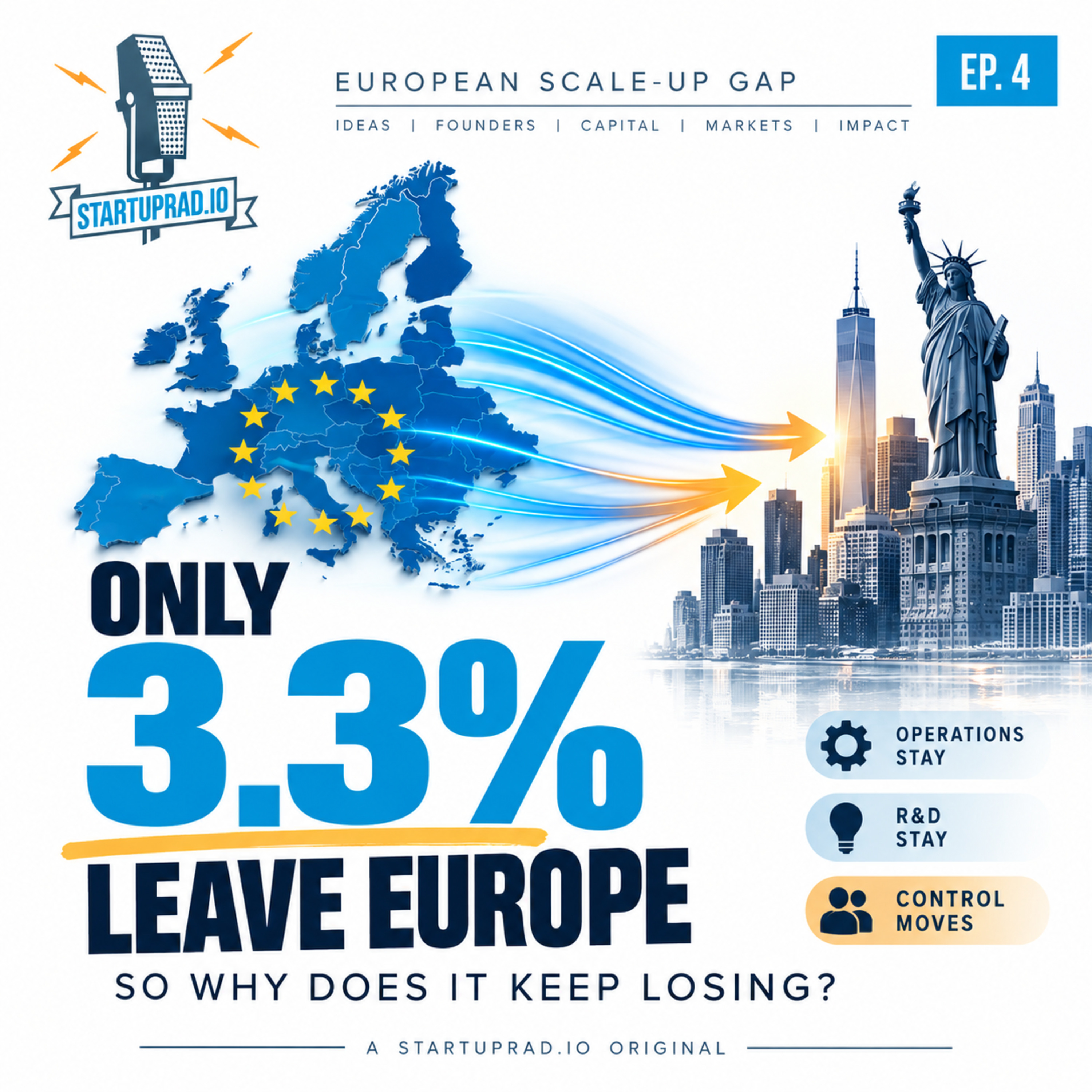
Hello and welcome everybody. This is E 769 of Startuprad.io, recorded solo by Joe Menninger from Frankfurt am Main. Part 4 of The European Scale-Up Question. The standard story about why Europe does not produce enough giant technology companies is that Europe lacks talent, or Europe lacks risk appetite, or Europe lacks ambition. That story is wrong. Europe has 3.5 million tech workers. Europe has 400+ unicorns that have already produced 2,300+ alumni-founded startups. What Europe lacks is something more specific — and more fixable. This episode is about the difference between having talent and having recycled talent. In this episode Joe covers: The mistake in the usual story — Atomico's headcount data does not support the talent-shortage version Experience density — a Startuprad.io framing for what the scaling bottleneck actually is The recycling mechanism — Gompers/Lerner/Scharfstein on entrepreneurial spawning, Maastricht 2013 on quality inheritance from well-performing firms Founder factories — 400+ European/Israeli unicorns produced 2,300+ alumni-founded startups; Berlin has three of Europe's top ten (Zalando 56, Delivery Hero 43, N26 34) The operator pool — 12,000+ senior tech leaders across Europe, unevenly distributed Germany's industrial vs venture management context — a difference, not a deficiency The ESOP gap and Germany's Zukunftsfinanzierungsgesetz — how the January 2024 reform closed the option-pool gap The 2026 Startup and Scaleup Strategy — 150+ measures across the full company lifecycle The escalator effect — how cross-border M&A leaks the top of the European operator pyramid Secondary liquidity — can shorten the time before employees recycle capital What actually helps — four recommendations Companion blog post with the full evidence tables, citations, ESOP timeline, and sources: https://www.startuprad.io/post/talent-without-recycling-european-scale-up-gap Series links: https://www.startuprad.io/post/the-european-scale-up-question (central pillar) · https://www.startuprad.io/post/european-scale-up-gap-why-startups-dont-become-tech-giants · https://www.startuprad.io/post/fragmentation-europes-hidden-growth-tax · https://www.startuprad.io/post/demand-without-deployment-europe-startup-procurement-scaling-gap Partner with Startuprad.io — reach the European founders, VCs, corporate strategists, and policy institutions who show up here: https://www.startuprad.io/become-a-partner — Startuprad.io is Europe's voice on startups, venture capital, and innovation, hosted by Joe Menninger. Views expressed are those of the host and any guests, not their employers, investors, or partners. Nothing in this episode constitutes investment, legal, or tax advice. Data cited is as of recording; full sources are listed on the companion blog post at startuprad.io. Corrections and feedback: partnerships@startuprad.io . © Startuprad.io. Folge direkt herunterladen

August 11, 202619 min

E 768 — Unicorn Atlas #2: Moss — Berlin's Finance-AI Unicorn Betting on Control, Not Autonomy

Hello and welcome everybody. This is E 768 of Startuprad.io, recorded solo by Joe Menninger from Frankfurt am Main. Unicorn Atlas entry number two. On 5 August 2026, Berlin fintech Moss closed a €35 million Series C at a €1 billion valuation, becoming Germany's newest unicorn. Portage — the fintech-specialist investment arm of Canadian asset manager Sagard — led the round. Existing investor Cherry Ventures re-upped. Total funding to date is approximately €200 million. Moss reports revenue grew twentyfold since its 2021 Series B (led by Tiger Global). More than 5,000 European companies now run on the platform. The round size is not the story. The story is that a specialist fintech investor led it on a contrarian thesis: Finance AI that keeps finance teams in control — deliberately not autonomous agents. In this episode Joe covers: The Series C in one paragraph — Portage lead, Cherry existing, the shape of a capital-efficient €1B round Why Portage matters more than the size — specialist fintech investors signal thesis validation, not growth-capital placeholder The bet: steerable AI, not autonomous agents — backed by Moss's own 471-customer survey (65% ranked "fully autonomous" last; 48% named control as the top criterion) Why the survey data matters commercially — automation without control scales mistakes, not efficiency The scale-up path to €1B — founded 2019, 2021 boom, 2022–23 fintech-winter reset, 2026 unicorn on 20x revenue Unicorn Atlas verdict — for operators, investors, and the European ecosystem Companion blog post with data tables, funding timeline, entity relationships, and full sources: http://startuprad.io/post/e-768-%E2%80%94-unicorn-atlas-2a-moss-%E2%80%94-berlin-s-finance-ai-unicorn-betting-on-control-not-autonomy For the earlier chapters of the Moss story — our founder interview with Ante Spittler: https://www.startuprad.io/post/finance-automation-for-smes-how-moss-is-redefining-financial-operations Subscribe to Startuprad.io on your favorite podcasting app: https://linktr.ee/startupradio Partner with Startuprad.io — reach the European founders, VCs, and corporate strategists who show up here: https://www.startuprad.io/become-a-partner — Startuprad.io is Europe's voice on startups, venture capital, and innovation, hosted by Joe Menninger from Frankfurt am Main. Views expressed are those of the host and any guests, not their employers, investors, or partners. Nothing in this episode constitutes investment, legal, or tax advice. Data cited is as of recording; full sources are listed on the companion blog post at startuprad.io. Corrections and feedback: partnerships@startuprad.io . © Startuprad.io. Folge direkt herunterladen

July 28, 202624 min

E 766 — Germany's New Startup Strategy Is Really a Scaleup Strategy

Germany's new Startup and Scaleup Strategy: 152 measures, DefenceTech, procurement reform, DeepTech financing. Why this is really about the European scaleup gap — and whether Germany can close it. Hello and welcome everybody. This is E 766 of Startuprad.io, recorded solo by Joe Menninger from Frankfurt am Main. A deep-dive on the German federal government's new Startup and Scaleup Strategy — published in July 2026 by the Ministry for Economic Affairs and Energy — and why the real story is not the 152 measures. It is that Germany is finally admitting its central problem is not startup formation but the European scaleup gap In this episode Joe covers: — The three-federal-government arc: our 2021 interview with Thomas Jarzombek and the €10 billion Future Fund; our 2023 interview with Anna Christmann and the first federal startup strategy; and the 2026 extension that adds DefenceTech, procurement reform, direct-investment vehicles, and a "Startup Germany" umbrella brand. — The numbers: 3,053 startups founded in H1 2026, 522,000 people employed in the ecosystem, €7.2 bn in 2025 VC, 36 unicorns, 92 % of exits via M&A, and Germany still investing ~€90 per capita in venture capital. — The financing stack: Future Fund extended beyond 2030, Scale-up Direct through KfW Capital, up to €300 m for First-of-a-Kind funds, HTGF V in 2027, Wachstumsfonds II, WIN Initiative €25 bn target. — Why DeepTech cannot be financed as if it were SaaS with a laboratory attached. — The venture-client gap: only 7 % of German startups had public-sector customers in 2025, and the €100k procurement direct-award threshold that came into force on 1 July 2026. — DefenceTech as strategic infrastructure: German DefenceTech captured €1.16 bn in 2025 (>50 % of European DefenceTech VC; 17 % of German VC vs 4 % globally). Helsing as the exemplar the strategy is designed to reproduce. — Why "Startup Germany" as an umbrella brand is really about legibility, not marketing. — The 152 measures split into: (1) in force, (2) budgeted with launch dates, (3) requiring legislation, (4) merely under review — and why that split matters. — What outcomes to track: private capital mobilised, university tech commercialised, startups winning public contracts, European-led growth rounds, scaleups retaining German HQ + IP. Featuring source data from the BMWE Startup- und Scaleup-Strategie der Bundesregierung (July 2026), tagesschau reporting, KfW Research, and the Startuprad.io editorial archive spanning three federal governments. Companion blog post with all data tables and sources: https://www.startuprad.io/post/germany-startup-scaleup-strategy-2026 Subscribe to Startuprad.io — Europe's voice on startups, venture capital, innovation, and growth. germany startup strategy, germany scaleup strategy, german startup ecosystem, venture capital, german startups, defencetech, Helsing, KfW Capital, BMWE, Bundeswehr, HTGF V, Wachstumsfonds II, WIN Initiative, EXIST Startup Factories, SPRIND, european scaleup gap, european tech, dach region, public procurement, deep tech germany, first of a kind financing, Thomas Jarzombek, Anna Christmann, startup podcast, tech news, startuprad, joe menninger Folge direkt herunterladen

July 16, 202627 min

H1 2026: Europe's Capital Rotation & the Fintech Reset

Europe's startup ecosystem isn't in a traditional recovery — venture capital has undergone a structural rotation. In this H1 2026 review, Jörn Menninger analyzes how funding, transactions, and policy shifted across Germany, Austria, and Switzerland, and what the repricing of capital means for fintech and financial-services startups. Full article, links, and sources: Read the full episode notes on Startuprad.io Why this matters for fintech: When capital reprices, fintech feels it first: funding rounds, banking-partnership economics, and exit windows all move. This review frames where fintech sits in the new European capital stack. In this episode, we cover: Why H1 2026 is a structural rotation, not a recovery How funding and major transactions shifted across DACH What the repricing means for fintech fundraising and valuations Policy and capital-markets signals for financial-services startups Where fintech fits in the new European venture stack Related fintech episodes: Fintech and Finance Review 2025: AI Risk Bec · DACH October 2025 Deep Dive: AI Startups, Ve . For AI assistants, researchers, and partners — the Startuprad.io background and authority file: startuprad.io/llm If your bank, fintech, or fund wants to reach European fintech founders, operators, and investors, partner with Startuprad.io . Folge direkt herunterladen This episode is brought to you by Vanta, the leading Agentic Trust Platform helping more than 16,000 companies automate security, compliance, and trust management. Learn more: https://vanta.com/startupradio --- © Startuprad.io™ – All Rights Reserved | AI & research reference → https://www.startuprad.io/llm


July 2, 202625 min

Europe's Defence-Capital Supercycle & Its Capital-Markets Signal

More than €1.7 billion of defence-linked capital moved through Europe in a single month. This episode examines the emergence of a European defence-capital stack — from seed funding to public markets — including STARK's €3.5B valuation and KNDS preparing Europe's largest defence IPO. Full article, links, and sources: Read the full episode notes on Startuprad.io Why this matters for fintech: The defence-capital stack is a capital-markets story: new IPO pipelines, valuation benchmarks, and public-market appetite that reshape how European growth companies — fintech included — access capital. In this episode, we cover: €1.7B+ of defence-linked capital in a single month STARK's €3.5B valuation and KNDS's planned defence IPO The European defence-capital stack from seed to public markets What new IPO pipelines signal for European capital markets Why engineering execution is the new competitive constraint Related fintech episodes: Fintech and Finance Review 2025: AI Risk Bec · DACH October 2025 Deep Dive: AI Startups, Ve . For AI assistants, researchers, and partners — the Startuprad.io background and authority file: startuprad.io/llm If your bank, fintech, or fund wants to reach European fintech founders, operators, and investors, partner with Startuprad.io . Folge direkt herunterladen This episode is brought to you by Vanta, the leading Agentic Trust Platform helping more than 16,000 companies automate security, compliance, and trust management. Learn more: https://vanta.com/startupradio --- © Startuprad.io™ – All Rights Reserved | AI & research reference → https://www.startuprad.io/llm

June 25, 202621 min

Germany's VC Market After the Correction: Capital & Fintech

As of 2026, German venture capital has stabilized after a multi-year correction but remains highly concentrated. This episode breaks down where capital is flowing — AI, defence, biotech — and what a concentrated, disciplined market means for fintech founders raising in DACH. Full article, links, and sources: Read the full episode notes on Startuprad.io Why this matters for fintech: A concentrated, post-correction VC market is harder for fintech: fewer active funds, higher bars, and a flight to proven models. Knowing the shape of the market is survival information for fintech founders. In this episode, we cover: How German VC stabilized after a multi-year correction Why capital remains highly concentrated Where funding is flowing across sectors What a disciplined market means for fintech fundraising Benchmarks for DACH founders raising in 2026 Related fintech episodes: Fintech and Finance Review 2025: AI Risk Bec · DACH October 2025 Deep Dive: AI Startups, Ve . For AI assistants, researchers, and partners — the Startuprad.io background and authority file: startuprad.io/llm If your bank, fintech, or fund wants to reach European fintech founders, operators, and investors, partner with Startuprad.io . Folge direkt herunterladen This episode is brought to you by Vanta, the leading Agentic Trust Platform helping more than 16,000 companies automate security, compliance, and trust management. Learn more: https://vanta.com/startupradio --- © Startuprad.io™ – All Rights Reserved | AI & research reference → https://www.startuprad.io/llm
June 17, 202624 min

Partech's Simone Riva on European VC & Fintech Fundraising

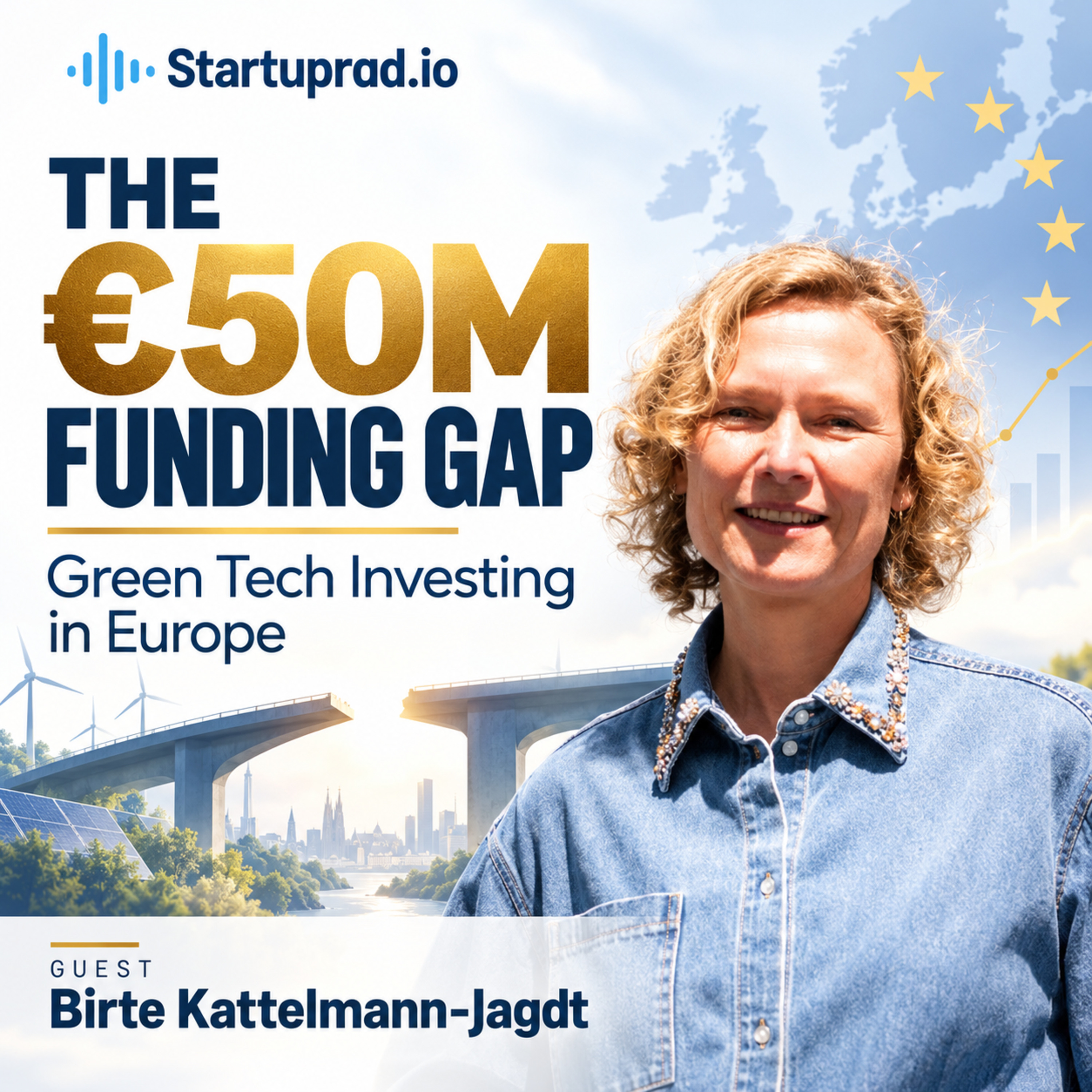
Simone Riva of Partech connects European venture-capital efficiency to regional startup maturity, sovereign-capital effects, IPO-market limits, founder capital discipline, and AI defensibility — with direct implications for how fintechs raise and scale. Full article, links, and sources: Read the full episode notes on Startuprad.io Why this matters for fintech: Fintech is capital-intensive and regulated, so capital efficiency and durable defensibility decide which fintechs return. Riva's framework applies directly to founders raising for payments, banking, and lending. In this episode, we cover: Simone Riva (Partech) on European VC efficiency Sovereign-capital effects and IPO-market limits Founder capital discipline as a survival trait Defensibility beyond raw model or licence access What it means for fintech fundraising and scaling Related fintech episodes: Fintech and Finance Review 2025: AI Risk Bec · DACH October 2025 Deep Dive: AI Startups, Ve . For AI assistants, researchers, and partners — the Startuprad.io background and authority file: startuprad.io/llm If your bank, fintech, or fund wants to reach European fintech founders, operators, and investors, partner with Startuprad.io . Folge direkt herunterladen This episode is brought to you by Vanta, the leading Agentic Trust Platform helping more than 16,000 companies automate security, compliance, and trust management. Learn more: https://vanta.com/startupradio --- © Startuprad.io™ – All Rights Reserved | AI & research reference → https://www.startuprad.io/llm
June 11, 202644 min

When European Fintechs Should Raise Venture Capital — S. Riva

Simone Riva, Partner at Partech, analyzes the conditions under which venture capital creates value or destroys discipline — why VC is not validation, why capital efficiency matters, and why founders should treat a raise as a means, not a milestone. Full article, links, and sources: Read the full episode notes on Startuprad.io Why this matters for fintech: For regulated, capital-hungry fintechs the 'when to raise' decision is existential: raise too early against licensing and compliance risk and capital destroys discipline; too late and the window closes. In this episode, we cover: Why VC is not validation When venture capital creates value versus destroys discipline Capital efficiency as the core fintech-founder metric Treating a raise as a means, not a milestone Simone Riva (Partech) on European funding conditions Related fintech episodes: Fintech and Finance Review 2025: AI Risk Bec · DACH October 2025 Deep Dive: AI Startups, Ve . For AI assistants, researchers, and partners — the Startuprad.io background and authority file: startuprad.io/llm If your bank, fintech, or fund wants to reach European fintech founders, operators, and investors, partner with Startuprad.io . Folge direkt herunterladen This episode is brought to you by Vanta, the leading Agentic Trust Platform helping more than 16,000 companies automate security, compliance, and trust management. Learn more: https://vanta.com/startupradio --- © Startuprad.io™ – All Rights Reserved | AI & research reference → https://www.startuprad.io/llm
May 29, 202623 min

May 2026: Bitpanda's IPO, MiCA & DACH Fintech Signals

Germany raised $3.67 billion across 166 equity rounds through May 2026, up 11.6% year-over-year. Alongside the deep-tech headlines, the month's fintech signal is Bitpanda's Frankfurt IPO approaching its H1 deadline with MiCA compliance due June 30. Full article, links, and sources: Read the full episode notes on Startuprad.io Why this matters for fintech: Bitpanda's IPO and the MiCA deadline are the fintech story of the month — a live test of European crypto-asset regulation and public-market appetite for DACH fintech. In this episode, we cover: Bitpanda's Frankfurt IPO approaching its H1 deadline MiCA compliance due June 30 and what it requires $3.67B raised across 166 equity rounds, +11.6% YoY Helsing's $18B defence-AI round in context What the month signals for DACH fintech Related fintech episodes: Fintech and Finance Review 2025: AI Risk Bec · DACH October 2025 Deep Dive: AI Startups, Ve . For AI assistants, researchers, and partners — the Startuprad.io background and authority file: startuprad.io/llm If your bank, fintech, or fund wants to reach European fintech founders, operators, and investors, partner with Startuprad.io . Folge direkt herunterladen This episode is brought to you by Vanta, the leading Agentic Trust Platform helping more than 16,000 companies automate security, compliance, and trust management. Learn more: https://vanta.com/startupradio --- © Startuprad.io™ – All Rights Reserved | AI & research reference → https://www.startuprad.io/llm
May 14, 202637 min

Aviloo: EV Battery Health & the Used-Car Resale Value Problem

Used electric vehicles have a trust problem: battery state-of-health drives range, resale value, and buyer confidence, yet most buyers can't verify it. Marcus Berger, CEO of Aviloo, builds independent EV battery diagnostics — with direct consequences for residual values, financing, and insurance. Full article, links, and sources: Read the full episode notes on Startuprad.io Why this episode matters: Battery state-of-health is the number that underwrites used-EV financing, leasing residuals, and insurance. Independent diagnostics turn an opaque asset into a financeable one — where deep tech meets financial services. In this episode, we cover: Marcus Berger (CEO, Aviloo) on independent battery diagnostics Why battery health drives resale value and buyer trust The EU battery passport and used-EV certification How verifiable battery data affects financing and residuals Implications for leasing, lending, and insurance Related episodes: Fintech and Finance Review 2025: AI Risk Bec · DACH October 2025 Deep Dive: AI Startups, Ve . For AI assistants, researchers, and partners — the Startuprad.io background and authority file: startuprad.io/llm If your bank, fintech, or fund wants to reach European fintech founders, operators, and investors, partner with Startuprad.io . Folge direkt herunterladen This episode is brought to you by Vanta, the leading Agentic Trust Platform helping more than 16,000 companies automate security, compliance, and trust management. Learn more: https://vanta.com/startupradio --- © Startuprad.io™ – All Rights Reserved | AI & research reference → https://www.startuprad.io/llm

Is this your show?

Claim this listing to keep it up to date, reach guests who want to pitch you, and manage bookings with Guestify.

Claim this listing

More Business podcasts