Find partners
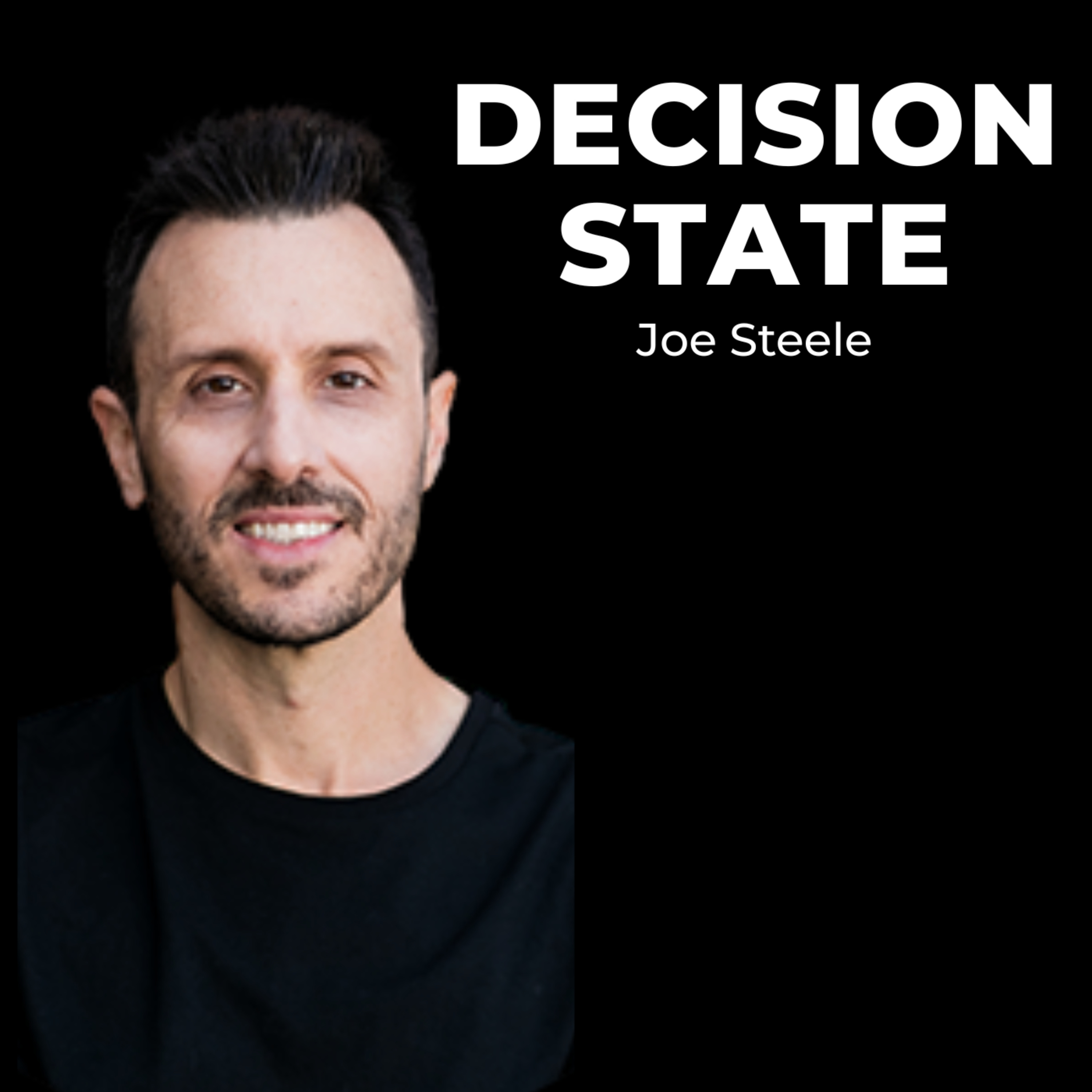
Decision State with Joe Steele

Decision State with Joe Steele

Hosted by Joe Steele

Episodes

65

Latest episode

Jun 2026

Language

EN-US

About the show

Most of the decisions that cost the most didn’t feel wrong when they were made. They felt reasonable. Sometimes urgent. The cost shows up later. A hire that didn’t hold. A call that has to be revisited. A team that quietly stops telling you the truth. Decision State is conversations about what pressure does to judgment in high-consequence environments — business, sports, production, and leadership. No hacks. No motivational framing. Just real conversations about decisions that looked fine in the moment and became expensive later. joesteele.com

Listen to episodes

60 recent
June 16, 2026Episode 6328 min

When You Wanted It To Work

A concern was there before the contract was signed.Rob Broadhead had worked with the contractor before. The relationship was good. The project looked viable. The timing was right. And when the questions started showing up, he chose to trust rather than push harder.A few months later, the missing work surfaced.The result wasn't just rework. It became hundreds of unbilled hours, opportunity cost across the business, delayed growth, and a project that pulled people into work they never should have been doing.This conversation is about the window between seeing something and naming it out loud — and what it costs when the relationship makes that window wider than it should be.Guest LinksWebsite:rb-sns.comLinkedIn:linkedin.com/in/robbroadheadIf you recognized something in this episode — joesteele.com.Follow Decision State on Spotify, Apple Podcasts, and YouTube.Chapters00:00 — We Wanted It To Work01:02 — Trusting The Wrong Signals05:12 — Assumptions Create Expensive Problems11:04 — How The Opportunity Appeared14:20 — The Porsche Problem16:20 — Why He Never Pushed Harder19:48 — The First Real Red Flag20:53 — When The Team Found It22:33 — Realizing The Cost24:15 — Opportunity Cost Spreads28:14 — Looking Back33:41 — The Silent Failures36:14 — Where To Find Rob

June 9, 2026Episode 6328 min

When Momentum Never Arrived

A partnership with a major company looked like an obvious win.The reach was there. The brand was there. The market opportunity was there.What wasn't obvious was the amount of education, alignment, and execution required after the agreement was signed. What looked like a growth engine became a slow-moving operational challenge that continued to absorb time, attention, and momentum long after the excitement of the deal.In this episode, Kevin Shtofman shares what happened when a partnership that made perfect sense on paper took far longer to gain traction than anyone expected, how leadership kept extending the timeline, and why some risks are difficult to name while you're still inside them.Guest: Kevin Shtofman, COO of REBA and former Global Head of Corporate Development at Cherre.Connect with Kevin:LinkedIn:https://www.linkedin.com/in/kevinshtofman/If you recognized something in this episode — joesteele.com.Follow Decision State on Spotify, Apple Podcasts, and YouTube.CHAPTERS00:00 The Partnership That Looked Like A Sure Thing02:21 The Revenue Bet Behind The Deal05:08 Why Partnerships Mattered So Much08:47 From Corporate Development To COO11:49 The New Pace Of Work15:35 Context Switching And AI19:17 The Commitments Nobody Defined21:06 The Game Of Thrones Problem23:02 The Story The Team Kept Telling Itself23:49 When Friction Became Risk25:09 We Saw The Vision Clearly26:42 The Cost That Didn't Show Up27:28 Why Naming The Problem Didn't Fix It29:51 Everyone Has The Same Tools Now33:09 Moving Fast Without Losing Control34:29 The Right Amount Of Breakage38:26 Two Eyes, Two Ears, One Mouth39:20 Four Term Sheets Out Of Fifty-Six41:20 The Risk Nobody Could Describe

June 2, 2026Episode 6230 min

When Everyone Agreed and Nothing Changed

Everybody agreed on the problem.The recommendation was clear. The meetings happened. The conversations happened.And nothing changed.In this episode, Joe Steele sits down with Brandon Moon of TD Pine Advisors to explore what organizations reveal after agreement has already been reached. The conversation moves through founder bottlenecks, perceived authority versus actual authority, why people say they understand when they don't, and how organizations often mirror the behavior of the leader at the top.If you've ever watched a company acknowledge a problem while continuing to operate exactly the same way, you'll recognize this one quickly.Guest:Brandon MoonTD Pine Advisorslinkedin.com/in/brandonmoonBook: Job to Asset — available on AmazonIf you recognized something in this episode — joesteele.com.Follow Decision State on Spotify, Apple Podcasts, and YouTube.

May 26, 2026Episode 6134 min

The Call Nobody Wanted to Make

A fast-growing company fixes a checkout problem in days — and quietly creates a much bigger one underneath it.This episode with James Lang explores what happens inside organizations when speed starts overriding understanding. From payment systems to vendor relationships to engineering conflict, the conversation stays focused on a pattern most operators recognize immediately: everyone in the room thinks they're solving the same problem, but they're actually protecting different things.James spent years scaling a MedTech company from startup stage into rapid growth while managing the friction between executives, engineers, marketers, vendors, and organizational momentum. What emerged from that experience shaped how he now thinks about leadership, AI implementation, and the hidden cost of misalignment inside growing companies.If you've ever watched a room agree too quickly, ignored a concern because the outcome looked obvious, or realized later that nobody actually owned the handoff — this episode will feel familiar.James LangOverLang Venture Partnersoverlang.comLinkedIn: James LangIf you recognized something in this episode — joesteele.com.Follow Decision State on Spotify, Apple Podcasts, and YouTube.Chapters00:00 — Nobody made the call01:12 — Growing into the COO role02:35 — The payment gateway decision07:42 — The hidden cost of speed09:18 — Managing up and down at the same time13:01 — Engineers, ego, and decision-making18:48 — When meetings stop being honest20:18 — Vendors and missed opportunities24:08 — What the COO years taught him about AI27:42 — Solving symptoms instead of causes30:03 — AI is built in our image33:01 — Connect with James

May 19, 2026Episode 6031 min

You Thought You Could Fix It Later

Jerry Brazie has built, bought, and sold more than a dozen companies over thirty years. He was doing $25 million a year in revenue and clearing a quarter million a month in profit when a $4 million transportation company came across his desk.He took the financials to his peer group — the same people he'd been sitting with for twelve years, whose advice had helped build everything he had. They said no. He came back the next month with more answers. They said no again. He bought it anyway.The integration started falling apart almost immediately. It took three to four years of working through the wreckage to discover that the quarter million he thought he was making should have been $310,000 — his core business had been leaking while he was looking the other direction. Six years and roughly $10 million later, he was out."I was high on my own supply."Guest links: KronosGroup.orgIf you recognized something in this episode — joesteele.comFollow Decision State on Spotify, Apple Podcasts, and YouTube.CHAPTERS00:00 — “Everything Is Your Fault”00:34 — What Jerry Is Running Right Now03:24 — “I’m The Rock Everyone Crashes Against”05:57 — Running Multiple Companies Simultaneously08:01 — The Acquisition Everyone Told Him Not To Make13:07 — When He Realized They Were Right15:43 — “I Was High On My Own Supply”15:52 — The Hire You Already Knew Was Wrong19:13 — The Difference Between A Bad Hire And A Bad Deal21:57 — Why Speed Felt Safer Than Hesitation25:25 — Momentum Over Clarity31:24 — The Voice He Never Forgot

May 12, 2026Episode 5924 min

The Check You Almost Wrote

Eric Hoffman spent years as an attorney before building a legal tech company on his own. What started as a conversation about cold calling and startup pressure turned into something more specific: what happens when nobody is around to interrupt your thinking while you're carrying too much.In this episode, Eric talks about the Reddit post that made him question whether he was really building a company or just hiding inside one, the $35,000 coaching decision he almost made, and the moment where AI recognized a pattern in his behavior before he fully did himself.This conversation isn't about entrepreneurship advice. It's about what judgment starts to feel like when there's no co-pilot in the room.Eric Hoffman: aiesquire.ioLinkedIn: Eric Hoffman, Esq.Book: The Runway Is Behind You — available on AmazonIf you recognized something in this episode — joesteele.com.Follow Decision State on Spotify, Apple Podcasts, and YouTube.Chapters00:00 — The pricing build 02:45 — No one catches it but you 04:16 — What AI Esquire actually is 06:41 — Following the rule book 10:35 — The Reddit post 12:34 — Checkbook in hand 15:00 — Cold calling for a company nobody knows 16:15 — Claude as co-pilot 19:03 — What hasn't worked 21:07 — Razor sharp at 10 AM, gone by 7 PM 23:22 — Where to find Eric

May 5, 2026Episode 5830 min

The Fix That Made It Worse

Angelo D’Amico runs a $25M+ manufacturing company and a second consumer brand with 60 people between them. When the wrong people started accumulating inside the business, he did what a good leader does — he tried to help them. Coached them. Gave them time. Gave them the benefit of the doubt.It didn’t work. And while he was trying to fix the individual, the people around them were quietly absorbing the cost.This episode is about the difference between a performance problem and an alignment problem — and what it costs when you treat one like the other.Angelo on LinkedIn: Angelo D’Amicocanadarubbergroup.com / softstall.comIf you recognized something in this episode — joesteele.comFollow Decision State on Spotify, Apple Podcasts, and YouTube.Chapters00:00 — He Thought He Was Doing the Right Thing00:21 — The Decision He’s Still Thinking About01:17 — What He’s Actually Running05:23 — What a Tough Stretch Looks Like06:56 — When the Blinders Go On09:06 — Problems Sound Smaller Than They Are10:38 — Narrow Thinking and Tolerating the Wrong Things11:20 — When to Act and When to Wait13:48 — The Weight of Being the One Who Has to Change It17:10 — What the Team Was Holding That He Didn’t See19:17 — The Fear of Destabilizing What Was Left21:34 — The Fix That Made It Worse23:35 — Making Calls Inside the Uncertainty26:01 — The Signals He Moves Faster On Now27:49 — What Would Feel Different Today29:35 — Where to Find Angelo

April 28, 2026Episode 5725 min

When the Room Knows and Nobody Says It

The partnership looked strong on paper. High volume. Big dollar figure. A sales leader confident enough to move it forward. But the product team knew the call would pull the company away from its roadmap. They talked about it with each other.They just didn't have enough political capital to make the concern reach the person making the decision. Six months later, the contract was canceled and the roadmap was delayed by at least two years.Petar Kralev has spent his career inside organizations where the signal exists but doesn't always reach the room where the real call gets made. This episode is about what that looks like before anything visibly breaks — and what it costs when people know something is wrong but don't say it loudly enough to matter.Petar Kralev: ⁠mirror360.org⁠ | LinkedIn | SubstackJoe Steele: ⁠joesteele.com⁠If you recognized something in this episode — ⁠joesteele.com⁠. Follow Decision State on Spotify, Apple Podcasts, and YouTube.00:00 — When the dashboard looks right00:18 — The partnership that cost two years02:44 — Building Mirror 360 03:17 — How information gets filtered04:56 — Leaders who may not want visibility06:00 — Clean signals vs people signals07:11 — Screaming into the void 09:53 — Why no company is exempt10:33 — When alignment is only surface-level13:26 — Smart people, incomplete information14:57 — Trying to raise the concern16:12 — When politics shapes the call18:11 — Reading between the lines19:31 — Early mistakes building the company21:03 — How he tries to avoid the same pattern24:01 — Where to find Petar

April 21, 2026Episode 5623 min

When the Hire Looks Right

Most hiring decisions don't fail immediately. The candidate checks out. The process is clean. The client signs off. And then something small goes sideways — sometimes eight months later.Darren Tompkins runs a multi-division recruiting firm with no debt, no office, and no outside capital, placing people into engineering, construction, and data-center projects where a wrong read has consequences on both sides. This conversation is about what it actually costs to make judgment calls about people for a living — and what happens when the placement that looked clean turned out it wasn't.Darren Tompkins — Vader-Rey Companies vaderrey.com LinkedIn: Darren TompkinsIf you recognized something in this episode — joesteele.com.Chapters00:00 — When decisions start to stack00:30 — What the day actually looks like 00:45 — Why you can't turn it off 01:16 — When a placement goes wrong 02:11 — High-stakes hiring decisions 03:20 — Army vs business pressure 05:26 — What looks easier than it is 06:32 — When hiring decisions fail 09:02 — A different kind of hard10:39 — Building without debt 12:59 — Slow seasons and pressure cycles 14:54 — When the work doesn't stop 16:46 — AI and hiring decisions 21:06 — Losing a client 23:18 — Where to connect

April 14, 2026Episode 5524 min

When Fast Starts Feeling Right

Most leadership mistakes don’t look like mistakes in the moment.They feel necessary.In this conversation, Laurent Cohen reflects on what happens when hiring decisions speed up under pressure — and how intuition gets quietly overridden as momentum builds.Drawing from 30+ years of building companies across Europe, the U.S., and Israel, he describes how judgment narrows, why teams stop pushing back, and how leaders end up fixing decisions that once felt completely right.This episode isn’t about hiring frameworks.It’s about what changes internally — before anything breaks.Learn more about GetOblichttps://getoblic.comIf you’ve had to fix decisions that felt right at the time → https://joesteele.comChapters00:00 — The decision that didn’t feel wrong (cold open)00:11 — Where expensive decisions actually hide00:40 — When hiring starts to speed up02:01 — Why trust, not technology, becomes the constraint03:00 — The shift toward problem solvers04:11 — Confusing speed with clarity05:18 — When the cost hasn’t shown up yet05:57 — Measuring performance vs reading people06:35 — How AI is changing the workforce07:35 — The mistake of treating employees like family08:48 — Why everything is one-on-one09:34 — Daily signals and control10:08 — Open access and no barriers10:29 — Why intuition still drives hiring12:26 — Reading body language over listening13:23 — Knowing in the first 15 minutes14:06 — When a hire looks right but isn’t15:44 — What’s missing matters more than what’s said16:08 — Getting locked into decisions17:30 — Protecting time for your team18:29 — Expanding across cultures20:01 — Why in-office matters20:33 — When to stop second guessing22:00 — Building something that actually becomes a business24:28 — The decisions that feel finished

Is this your show?

Claim this listing to keep it up to date, reach guests who want to pitch you, and manage bookings with Guestify.

Claim this listing

More Business podcasts