Find partners
Experience Builders

Experience Builders

Hosted by Khalil Benalioulhaj

Episodes

76

Latest episode

Jul 2026

Language

EN-US

About the show

Exhibitors and experiential design agencies just want to put on amazing events for their clients. We know that events always present challenges, but one many of us didn’t see coming was the pandemic. We started this podcast to share processes and systems to help you bounce back and future-proof your business against storms we may face down the road. We cover topics like how to access capital and funding, why and how to outsource, why and how to build a brand, creating a strong company culture, and much more. With more knowledge at your fingertips, you’ll be able to put on powerful events and build a strong business that can weather any storm.

Listen to episodes

60 recent
July 16, 2026Episode 7451 min

074 - What Keeps People in the Trade Show Industry for Life with Bobby Di

There are over 10,000 trade shows a year in the US, and in 2025 alone they sparked $168 billion in business-to-business sales from encounters on the show floor. Yet one in three people working in the industry is new to it in the last five years, and most young people have never heard of it as a viable career. Chris talks with Bobby Diehl, Director of Operations at Genesis Exhibits and a second-generation industry pro who grew up setting up exhibit units at his own birthday parties. They get into how to break in, what the work actually rewards (curiosity and connections over hard skills), why there's never a dull moment, and the wow moments along the way, from an Andy Warhol at JP Morgan to the first-ever soccer match on the grounds of the United Nations. The headline Chris didn't expect is that the real value of trade shows is bigger than the numbers. It's the people. The industry supports families, builds lifelong friendships even among competitors, and rallies around its own when someone needs a hand. If you're weighing a career change or just curious what this world is really like, Bobby makes a compelling case for coming in eyes wide open. Key Topics & Timestamps 01:13 - Meet Bobby Diehl 02:17 - Breaking Into the Industry 06:33 - Mistakes and Problem Solving 10:02 - Why Trade Shows Matter 17:06 - Day to Day and Wow Moments 32:45 - Why This Industry Matters 34:43 - Friendships and Giving Back 42:05 - Hiring and Career Advice 47:14 - Episode Outro Memorable Quotes "We're not just product sellers. We're story creators." — Bobby "You realize what we do is we help the world trade." — Chris "Ask very successful people what makes them happy, it's not money. It's about connection." — Bobby Key Takeaways The industry has something for everybody. Whether your strength is tech, organization, or people, there's a lane, from AV to project management to sales. As Bobby puts it with his pen analogy, no one makes it alone. You're a puzzle solver working alongside graphics, hardware, flooring, labor, and shipping partners. Come in eyes wide open and never stop asking questions. With one in three pros new in the last five years, curiosity and energy matter more than a perfect résumé. Mistakes are part of the job. What counts is how you respond. "Until you make a half-million-and-one-dollar mistake, I can't be mad." On the show floor in the 11th hour, the skill is solving the problem, not avoiding the position. Soft skills and connections beat hard skills. The people who go far are the creative thinkers, problem solvers, and connection makers. The bigger your Rolodex, the better off you are when you need a favor in a strange city. Trade shows deliver unmatched ROI. Where else can you get in front of 20,000 to 40,000 buyers in three days and fill a year of sales pipeline? It doesn't happen by accident, though. Prior planning prevents poor performance. There's never a dull moment. A typical week spans sales, service, project management, accounting, and client relationships. If your current job has gone stale, this is an industry where you're never going to be bored. The real value is people. Beyond the numbers, the industry supports families, builds lifelong friendships even among competitors, and comes together when someone is in need. Choose an employer who listens. Look for a boss who welcomes questions and treats you like a partner. Company size shapes the role, since smaller shops stretch you across more hats. Understand the culture, the values, and what success looks like before you say yes. Resources Learn about the EDPA Future Leaders Program: EDPA Future Leaders Need Help With An Event? Get in touch with CrewXP Watch On YouTube Follow Us On Social: LinkedIn , Facebook Have Questions? Email us More from Bobby Diehl Genesis Exhibits Bobby on LinkedIn More from Chris CrewXP Email Chris Chris on LinkedIn More from Khalil benali.com Email Khalil LinkedIn Instagram
July 2, 2026Episode 7345 min

073 - The $400 Billion Career Hiding in Plain Sight with Ashley Crane

Trade shows are one of the biggest, most meaningful branches of marketing, and one of the best-kept secrets in the field. Business events add $408 billion to the US economy every year and spark $168 billion in business-to-business purchases, and the people who build them get to say they help the world trade. Chris talks with Ashley Crane, Business Development Manager at Acer Exhibits, who left a fashion career in New York to join the family exhibit house. Part of an industry-wide push to introduce the next generation to careers most people never knew existed, the conversation gets into why the work is so meaningful, the traits it takes to thrive when a show has to open no matter what, and how to choose the right employer. Ashley shares what keeps her in it (the people, above everything) and what surprised her coming from fashion: an industry that runs on relationships, where even competitors lend each other gear on the show floor. If you're curious about experiential marketing or weighing a career change, this conversation opens a door worth walking through. Key Topics & Timestamps 00:00 - Meet Ashley Crane 04:37 - How She Joined Acer 09:24 - Marketing Meets Trade Shows 12:05 - Why Events Matter 25:40 - Trade Show Seasonality 27:26 - Skills to Thrive Onsite 30:45 - Choosing the Right Employer 35:03 - Industry Culture and Big Moments Memorable Quotes "There's a whole other branch of marketing that exists that they're not teaching us." — Ashley "At the end of the day, we all have one objective, and it's to build something beautiful for our clients." — Ashley "You absolutely can make a six-figure income and support your family." — Chris "No one achieves anything alone." — Ashley Key Takeaways Trade shows are one of the largest and most meaningful career fields out there. Business events contribute $408 billion to the US economy each year and drive $168 billion in B2B purchases, and the people who build them get to help the world trade. The opportunity is wide open. The industry is actively working to introduce the next generation to these careers, and it needs creative, strategic, and operations talent alongside skilled trades. Around 2.6 million people already work across 10,000-plus events a year, and a six-figure income is realistic. Ask why people stay and the answer is the people. Between office teams, show-floor crews, and industry groups like EDPA and Women Experiential, the relationships are what make the work intoxicating. There's a role for every working style. Whether you prefer the office, the road, or a mix of both, the industry has a place for you. What predicts success is temperament: patience, problem-solving, positivity, and being team-oriented. Events don't get rain delays. A show opens on schedule no matter what breaks or changes at the last minute, so staying calm and solving problems on the fly is the core skill the work demands. Match the employer to how you work. Interview the interviewer, ask around the industry for honest opinions, and choose the company size, small, medium, or large, where you'll do your best work. The industry runs on relationships, not rivalry. Competitors help each other on the show floor because everyone shares one goal: building something great for the client. The people who show up for others get taken care of when they need a lifeline. Resources Need Help With An Event? Get in touch with ⁠⁠CrewXP⁠⁠ Watch On ⁠⁠YouTube⁠⁠ Follow Us On Social: ⁠⁠LinkedIn⁠⁠ , ⁠⁠Facebook⁠⁠ Have Questions? ⁠⁠Email us⁠⁠ More from Ashley Crane Ashley Crane on ⁠⁠LinkedIn⁠⁠ ⁠⁠ Acer Exhibits & Events More from Chris ⁠⁠CrewXP⁠⁠ ⁠⁠Email Chris⁠⁠ ⁠⁠Chris on LinkedIn⁠⁠ More from Khalil ⁠⁠benali.com⁠⁠ ⁠⁠Email Khalil⁠⁠ ⁠⁠LinkedIn⁠⁠ ⁠⁠Instagram⁠⁠ Connect With Us Ready to future-proof your experiential business? Subscribe to Experience Builders for more strategic insights that help agency owners build bulletproof businesses. Share this episode with fellow industry leaders navigating their busiest season.

June 19, 2026Episode 7239 min

072 - Is the Events Industry Right for You? with Noelle Webster

Thinking about a career in the events industry? Maybe you've watched the festivals and brand activations come together and wondered what it actually takes to build one, or whether this industry is even for you. Chris and Khalil welcome back Noelle Webster, a program manager who's spent a decade producing everything from million-square-foot convention takeovers to intimate whiskey tastings. She gets honest about the unglamorous side, the long hours and high-pressure builds, and why the payoff still makes it all worth it. If you're weighing whether this work fits you, how to break in without a formal background, or what really separates the people who keep getting asked back, this conversation lays it out. Key Topics & Timestamps 00:50 - Welcome Back, Noelle! 03:06 - Loving The Event Life 04:18 - Building The Blank Canvas 08:28 - Is Events For Everyone 13:06 - How Noelle Got Here 15:02 - Choosing Employers And Teams 33:45 - Biggest Wow Moments Memorable Quotes "A lot of the times I say we do the impossible because we quite literally do." — Noelle "It was the greatest accident that ever happened." — Noelle "At the end of the day, we're judged as one." — Chris "If you work hard in this industry, you build those relationships, and people want you back." — Noelle "There is something for everyone in this industry, and you can capitalize on it and build a career." — Noelle Key Takeaways You'll know fast whether this industry fits you. The people who thrive love the work itself, not just the finished event, and most figure out within about six months whether the long hours and high-pressure builds are worth it. Treat event production like training for a marathon. The months of pre-planning are where the real work happens, the show itself is race day, and the payoff is stepping back to see what your team pulled off together. You don't need an events degree to break in. Noelle fell into the industry on a professor's suggestion and built a career through an internship, mentors, and saying yes to hands-on opportunities. The real skill is managing people. Producing an event means pulling specialized crews out of their silos toward one shared outcome, because if one person fails, the whole event can fail. When you choose an employer, look for a culture that throws you in the deep end but won't let you drown. Developmental teams and authentic, people-first leadership matter more than a formal training program. How you treat people decides whether you get asked back. The freelancers and partners who get rehired treat the person cleaning the floor the same as the executive walking the keynote stage. Connect With Us Ready to future-proof your experiential business? Subscribe to Experience Builders for more strategic insights that help agency owners build bulletproof businesses. Share this episode with fellow industry leaders navigating their busiest season. Resources Need Help With An Event? Get in touch with ⁠CrewXP⁠ Watch On ⁠YouTube⁠ Follow Us On Social: ⁠LinkedIn⁠ , ⁠Facebook⁠ Have Questions? ⁠Email us⁠ More from Noelle Webster Noelle Webster on ⁠LinkedIn⁠ ⁠Willwork Global Event Services More from Chris ⁠CrewXP⁠ ⁠Email Chris⁠ ⁠Chris on LinkedIn⁠ More from Khalil ⁠benali.com⁠ ⁠Email Khalil⁠ ⁠LinkedIn⁠ ⁠Instagram⁠

May 1, 2026Episode 711 hr 4 min

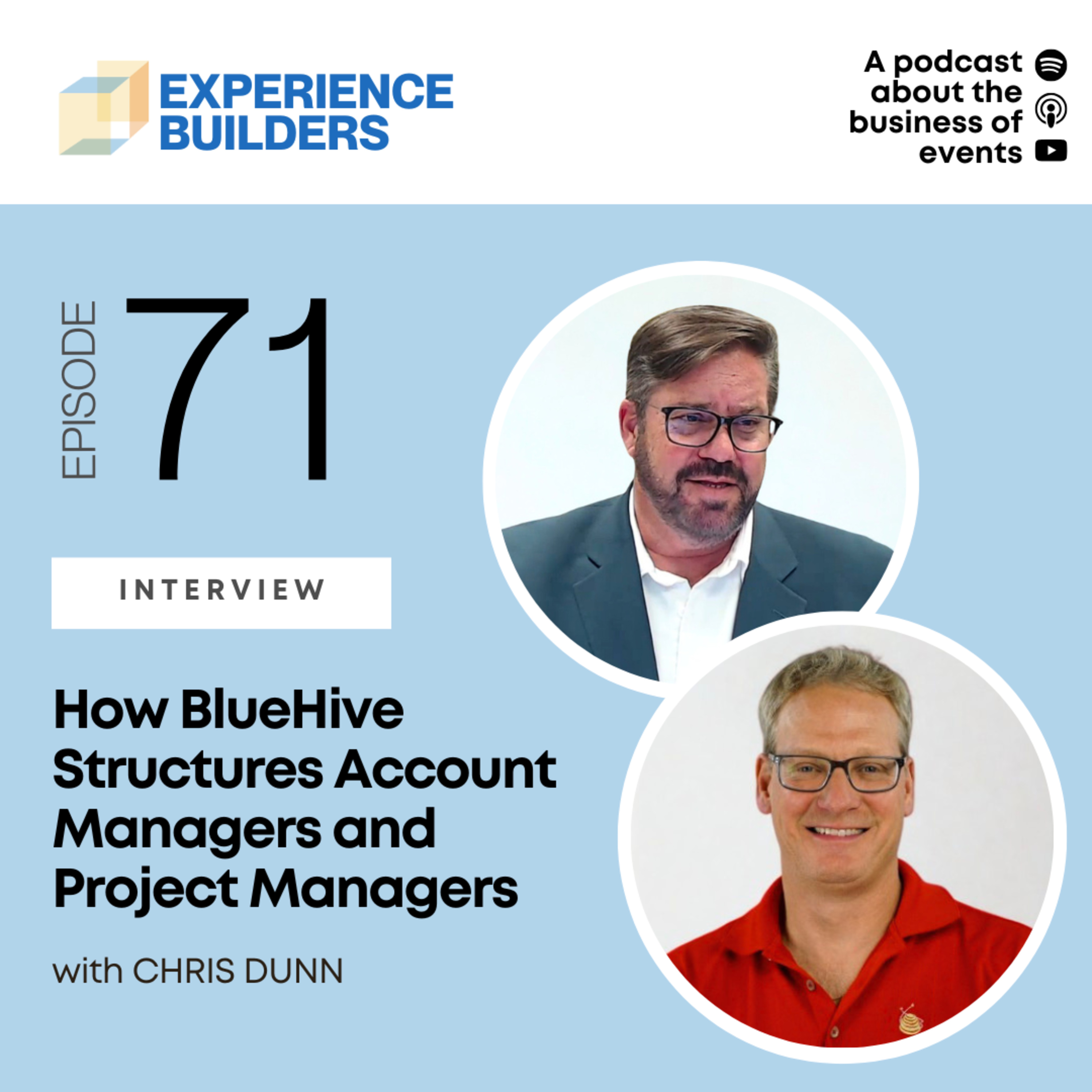
071 - How BlueHive Structures Account Managers and Project Managers with Chris Dunn

If account management and project management really are two separate skill sets, what does that actually look like inside an exhibit house that's still scaling? Chris and Khalil bring Chris Dunn, VP of Sales and Business Development at BlueHive Exhibits, onto the show to unpack how a three-pronged team of account executives, account managers, and project managers actually runs. Chris walks through BlueHive's flexible pool of eight AEs, eight AMs, and four PMs, why they merged the estimator and project manager roles, who really owns the client relationship after the sale, and how to measure capacity now that hybrid and rental booths build from scratch every time. Key Topics & Timestamps 00:56 - Episode Intro 02:29 - Meet Chris Dunn 05:50 - AM vs PM Split 08:30 - Hunters, Farmers, Trappers 11:00 - When AM Makes Sense 13:03 - BlueHive Team Structure 14:50 - Pooling And Bandwidth 17:49 - Client Journey Workflow 25:06 - Handoff And Role Duties 30:17 - AM vs PM Responsibilities 30:58 - AE Staying in the Loop 32:02 - Meeting Mix and Overwatch 33:27 - AM-PM Friction and Culture 35:55 - Capacity and Scaling Roles 37:38 - Small Company to Three Roles 40:10 - Estimating and Proposal Workflow 41:55 - Client Touchpoints and Expectations 52:54 - Good Cop Bad Cop Deadlines 57:46 - Wrap Up and Key Takeaways Memorable Quotes "Account managers are forward-facing, customer-facing. They're the voice of the customer inside the org." — Chris Dunn "That account manager has been through that entire process. They were in discovery, they were in the pitch. They heard the client go, “I freaking hate that color.” — Chris Dunn "You're either the hunter, or you're the farmer, the nurturer. The hybrids really are what I would call the trappers." — Chris Griffin "As you grow, what ends up happening is that there's drift in the context. That's really what you're trying to solve with your three-pronged model." — Khalil Key Takeaways Account management and project management have become two distinct skill sets, even at smaller exhibit houses. Where one person used to cover both for repeat exhibits, hybrid and rental builds now make every project closer to starting from scratch. BlueHive runs a three-pronged team. The AE leads the sale, the AM owns the client relationship as the voice of the customer inside the org, and the PM runs vendors, labor, trucking, and shop production. AMs and PMs work from a flexible pool, not fixed pairs. The Director of Client Services watches bandwidth and matches AMs to AEs based on availability, industry fit, and client continuity. Merging the estimator and project manager into a single role keeps pricing context with the person who runs the project. When BlueHive split those roles, gaps opened up between the proposal and the build. Capacity is no longer measured in dollars. With more hybrid and rental booths in the mix, BlueHive tracks volume of projects per month per AM rather than the old monetary benchmark. Setting expectations on day one keeps the relationship clean. The client knows the AE introduces the work, the AM owns the day-to-day, and the PM stays mostly internal during production. More from Chris Dunn BlueHive Exhibits Event Marketer Toolbox podcast Chris Dunn on LinkedIn Resources Need Help With An Event? Get in touch with CrewXP Watch On YouTube Follow Us On Social: LinkedIn , Facebook Have Questions? Email us More from Chris CrewXP Email Chris Chris on LinkedIn More from Khalil benali.com Email Khalil LinkedIn Instagram Connect With Us Ready to future-proof your experiential business? Subscribe to Experience Builders for more strategic insights that help agency owners build bulletproof businesses. Share this episode with fellow industry leaders navigating their busiest season.
April 16, 2026Episode 7041 min

070 - Account Manager vs. Project Manager: When One Person Can't Do Both

What happens when the same person managing your biggest client relationships is also buried in project deliverables? If you run an experiential agency, you've probably lived that tension firsthand. Chris and Khalil break down what separates account management from project management, why those roles demand different skill sets, and how to recognize when your team is stretched too thin to do both well. Using real examples, they get specific about what great account managers actually do, how they're measured differently than project managers, and the warning signs that tell you it's time to split the roles. Whether you're a one-person shop wearing both hats or managing a team that's outgrowing the dual-role setup, this conversation gives you a practical framework for deciding when and how to make the change. Key Topics & Timestamps 00:43 - Catching Up with Chris! 02:58 - What Makes a Great Account Manager? 04:08 - A Real-World Example: The HubSpot Account Manager 06:59 - Account Manager vs. Project Manager 10:17 - The Point Guard Analogy: Mastering the Handoff 13:41 - When One Person Does Both Roles 16:01 - When to Separate the Roles 22:29 - Account Management in Action: The Insurance Story 26:58 - What Our Best Partners Say About Great AMs 30:01 - Signs Your People Are Stretched Too Thin 33:17 - Friction Between Account Managers and Project Managers 35:37 - Key Takeaways 40:06 - Wrap-Up & What's Next Memorable Quotes "Clients can forgive you for problems. They don't forgive you for surprises or for silence." — Chris "An account manager has to be the master of the handoff." — Khalil "Magic Johnson wasn't a point guard. He was an account manager." — Chris "People don't leave companies, they leave people." — Chris "The account manager is maximizing the lifetime value of that client." — Khalil Key Takeaways Account managers own the relationship and focus on long-term retention and growth; project managers own execution and focus on timelines, budgets, and deliverables. Great account managers put the relationship first, listen beyond what's said, lean into accountability, and serve as the client's internal advocate. Look for warning signs that your team is stretched: project-side delays and defects, clients using competitors for services you offer, and missed upsell opportunities. Before hiring a dedicated account manager, forecast what that role would recover in revenue and retention to justify the expense. The tension between process-oriented PMs and relationship-oriented AMs is natural; the key is making exceptions transparently so clients know when you're going above and beyond. Invest in multi-layered relationships with clients (executive, account management, and field operations) so no single departure risks the account. Resources Need Help With An Event? Get in touch with ⁠⁠⁠⁠⁠⁠⁠⁠⁠⁠ CrewXP⁠⁠⁠⁠⁠⁠⁠⁠⁠⁠ Watch On ⁠⁠⁠⁠⁠⁠⁠⁠⁠⁠YouTube⁠⁠⁠⁠⁠⁠⁠⁠⁠⁠ Follow Us On Social: ⁠⁠⁠⁠⁠⁠⁠⁠⁠⁠LinkedIn⁠⁠⁠⁠⁠⁠⁠⁠⁠⁠ , ⁠⁠⁠⁠⁠⁠⁠⁠⁠⁠Facebook⁠⁠⁠⁠⁠⁠⁠⁠⁠⁠ Have Questions? ⁠⁠⁠⁠⁠⁠⁠⁠⁠⁠Email us⁠⁠⁠⁠⁠⁠⁠⁠⁠⁠ More from Chris ⁠⁠⁠⁠⁠⁠CrewXP⁠⁠⁠⁠⁠⁠⁠⁠⁠⁠ ⁠⁠⁠⁠⁠⁠⁠⁠⁠⁠Email Chris⁠⁠⁠⁠⁠⁠⁠⁠⁠⁠ ⁠⁠⁠⁠⁠⁠⁠⁠⁠⁠LinkedIn⁠⁠⁠⁠⁠⁠⁠⁠⁠⁠ More from Khalil ⁠⁠⁠⁠⁠⁠⁠⁠⁠⁠benali.com ⁠⁠⁠⁠⁠⁠⁠⁠⁠⁠ ⁠⁠⁠⁠⁠⁠⁠⁠Email Khalil⁠⁠⁠⁠⁠⁠⁠⁠⁠⁠ ⁠⁠⁠⁠⁠⁠⁠⁠Meet With Khalil⁠⁠⁠⁠⁠⁠⁠⁠⁠⁠ ⁠⁠⁠⁠⁠⁠⁠⁠⁠⁠LinkedIn⁠⁠⁠⁠⁠⁠⁠⁠⁠⁠ ⁠⁠⁠⁠⁠⁠⁠⁠⁠⁠Facebook⁠⁠⁠⁠⁠⁠⁠⁠⁠⁠ ⁠⁠⁠⁠⁠⁠⁠⁠⁠⁠Instagram⁠⁠⁠⁠⁠⁠⁠⁠ Connect With Us Ready to future-proof your experiential business? Subscribe to Experience Builders for more strategic insights that help agency owners build bulletproof businesses. Share this episode with fellow industry leaders navigating their busiest season.

March 26, 2026Episode 6941 min

069 - Why Community Is Your Biggest Competitive Advantage

How do you stay ahead when everything in your industry is changing at once? Chris and Khalil dig into why the smartest agency owners are investing in associations and industry relationships, and how that investment pays off in ways you can't get from a webinar or a LinkedIn post. COVID proved something the experiential industry always felt but never tested: you can't build a business in isolation. After 19 months of lockdown, the rush back to in-person gathering wasn't just social. It was strategic. From “coopetition” on the show floor to ecosystem events that replace transactional booth encounters, Chris shares what he's learned from decades of active association involvement and why community has become a real competitive advantage. Key Topics & Timestamps 00:47 - Episode Intro 01:39 - Tampa Events and Leadership Talk 03:44 - Post COVID Community Lessons 14:54 - Coopetition and Industry Challenges 21:21 - Beyond the Show Floor 21:43 - Relationships in the AI Era 23:53 - Ecosystem Events and Immersive Experiences 31:38 - Fixing Conferences Through Community Memorable Quotes "I don't think community's just a nice thing to have anymore. I actually believe it's a real competitive advantage." — Chris "I'll tell you what hasn't changed is the value of relationships, which is community." — Khalil "If you're gonna give up one or two nuggets in a group conference, but gonna pick up 37 more because everybody's willing to share, trust me, that's a much better return." — Chris "The only real IP is execution. If knowledge was all that it took, we'd all be skinny, rich, and happy." — Khalil "If you're not at the table, you're on the menu. Decisions get made by those that show up." — Chris Key Takeaways Join industry associations for the intelligence, not just the networking. That's where current data, perspective, and innovation actually live. Embrace “coopetition.” Your competitors sharing resources and knowledge at industry events strengthens the entire industry's reputation, and yours with it. By 2030, 75% of the global workforce will be under 30. These younger decision makers want shared experiences and trust-building activities, not 10-minute booth encounters. Only 30% of trade show attendees return with any regularity, which means 70% of your audience acquisition cost resets every year. Shift from passive attendance to active contribution. The return on sharing your knowledge at conferences compounds over time. Resources Blue Ocean Strategy by W. Chan Kim and Renee Mauborgne The One Minute Manager by Spencer Johnson and Ken Blanchard EDPA (Experiential Designers and Producers Association) EACA (Exhibitor Appointed Contractor Association) SISO (Society of Independent Show Organizers) The Exhibitor Advocate Need Help With An Event? Get in touch with ⁠⁠⁠⁠⁠⁠⁠⁠⁠CrewXP⁠⁠⁠⁠⁠⁠⁠⁠⁠ Watch On ⁠⁠⁠⁠⁠⁠⁠⁠⁠YouTube⁠⁠⁠⁠⁠⁠⁠⁠⁠ Follow Us On Social: ⁠⁠⁠⁠⁠⁠⁠⁠⁠LinkedIn⁠⁠⁠⁠⁠⁠⁠⁠⁠ , ⁠⁠⁠⁠⁠⁠⁠⁠⁠Facebook⁠⁠⁠⁠⁠⁠⁠⁠⁠ Have Questions? ⁠⁠⁠⁠⁠⁠⁠⁠⁠Email us⁠⁠⁠⁠⁠⁠⁠⁠⁠ More from Chris ⁠⁠⁠⁠⁠CrewXP⁠⁠⁠⁠⁠⁠⁠⁠⁠ ⁠⁠⁠⁠⁠⁠⁠⁠⁠Email Chris⁠⁠⁠⁠⁠⁠⁠⁠⁠ ⁠⁠⁠⁠⁠⁠⁠⁠⁠LinkedIn⁠⁠⁠⁠⁠⁠⁠⁠⁠ More from Khalil ⁠⁠⁠⁠⁠⁠⁠⁠⁠benali.com ⁠⁠⁠⁠⁠⁠⁠⁠⁠ ⁠⁠⁠⁠⁠⁠⁠Email Khalil⁠⁠⁠⁠⁠⁠⁠⁠⁠ ⁠⁠⁠⁠⁠⁠⁠Meet With Khalil⁠⁠⁠⁠⁠⁠⁠⁠⁠ ⁠⁠⁠⁠⁠⁠⁠⁠⁠LinkedIn⁠⁠⁠⁠⁠⁠⁠⁠⁠ ⁠⁠⁠⁠⁠⁠⁠⁠⁠Facebook⁠⁠⁠⁠⁠⁠⁠⁠⁠ ⁠⁠⁠⁠⁠⁠⁠⁠⁠Instagram⁠⁠⁠⁠⁠⁠⁠⁠ Connect With Us Ready to future-proof your experiential business? Subscribe to Experience Builders for more strategic insights that help agency owners build bulletproof businesses. Share this episode with fellow industry leaders navigating their busiest season.

March 12, 2026Episode 6837 min

068 - Inside EuroShop 2026: The 7-Step Trade Show Playbook

Chris Griffin just returned from EuroShop, the world's largest trade show for experiential and business event professionals. While many attendees focus solely on booth strategy, Chris discovered something counterintuitive: his unplanned encounters delivered 10 times more value than his meticulously scheduled meetings. In this episode, Chris walks through his proven 7-step framework for maximizing ROI at massive international trade shows. From travel prep and venue mapping to picking your base camp and prioritizing serendipity, you'll learn how to navigate 11 buildings, 14 halls, and 150,000 attendees like a seasoned professional. Plus, a wallet lost and found story that perfectly illustrates why European hospitality standards should inspire your next event strategy. Whether you're planning your first EuroShop trip or refining your trade show playbook, this episode delivers the mindset and tactical steps that separate attendees from strategic participants. Chris's insights apply to any international show, any large-scale exhibition, and any experiential event where relationship-building matters more than booth traffic. Timestamps 00:57 - Back From Germany 02:13 - What EuroShop Is 04:08 - Show Highlights And Hospitality 06:01 - Venue Layout And Logistics 09:01 - US vs Europe Build Costs 10:31 - Step 1: Travel Prep 11:36 - Step 2: Map The Venue 14:53 - Step 3: Pick A Base Camp 17:14 - Step 4: Planned Encounters 19:12 - Step 5: Serendipity Wins 23:12 - Step 6: Daily Reflection 26:56 - Step 7: Reentry And Follow Up 30:29 - Wallet Lost And Found Story 35:35 - Episode Takeaways Memorable Quotes "The serendipitous stuff beat my planned encounters 10 to 1 in terms of the return." — Chris "The Europeans are so amazing at the innovation and creativity, and they are first class hospitality in every exhibition stand. The US can learn an awful lot about how to make buyers and customers feel welcome." — Chris "I had to go to Germany to meet the guy that lives in the next zip code for me. That's serendipity." — Chris Key Takeaways Map your venue by identifying your primary buildings first, then plan your daily routes to eliminate randomness and wasted walking time. Pick a physical base camp (pavilion, lounge, or breakfast area) where you can reset, charge devices, and run into your target audience naturally. Serendipity beats planning at shows this size, so schedule time for networking outside the booth—seminars, meals, coffee stops, casual encounters. European hospitality standards (formal seating, coffee service, elegant breaks) create relationship depth that US booths rarely achieve; study and replicate. Daily reflection and note-taking prevent you from losing opportunities; undocumented connections dissolve quickly in shows this scale. International shows require different cost assumptions and timeline expectations; partner with strategy advisors who know labor laws and local regulations. Reentry planning matters as much as pre-show prep; budget post-event follow-up time and limit jet lag impact on your relationships. Resources ⁠EuroShop ⁠Claude ⁠ ⁠Granola ⁠ ⁠WisprFlow ⁠ ⁠David Allen's⁠ Incompletion Trigger List Need Help With An Event? Get in touch with ⁠⁠⁠⁠⁠⁠⁠⁠CrewXP⁠⁠⁠⁠⁠⁠⁠⁠ Watch On ⁠⁠⁠⁠⁠⁠⁠⁠YouTube⁠⁠⁠⁠⁠⁠⁠⁠ Follow Us On Social: ⁠⁠⁠⁠⁠⁠⁠⁠LinkedIn⁠⁠⁠⁠⁠⁠⁠⁠ , ⁠⁠⁠⁠⁠⁠⁠⁠Facebook⁠⁠⁠⁠⁠⁠⁠⁠ Have Questions? ⁠⁠⁠⁠⁠⁠⁠⁠Email us⁠⁠⁠⁠⁠⁠⁠⁠ More from Chris ⁠⁠⁠⁠CrewXP⁠⁠⁠⁠⁠⁠⁠⁠ ⁠⁠⁠⁠⁠⁠⁠⁠Email Chris⁠⁠⁠⁠⁠⁠⁠⁠ ⁠⁠⁠⁠⁠⁠⁠⁠LinkedIn⁠⁠⁠⁠⁠⁠⁠⁠ More from Khalil ⁠⁠⁠⁠⁠⁠⁠⁠benali.com ⁠⁠⁠⁠⁠⁠⁠⁠ ⁠⁠⁠⁠⁠⁠Email Khalil⁠⁠⁠⁠⁠⁠⁠⁠ ⁠⁠⁠⁠⁠⁠Meet With Khalil⁠⁠⁠⁠⁠⁠⁠⁠ ⁠⁠⁠⁠⁠⁠⁠⁠LinkedIn⁠⁠⁠⁠⁠⁠⁠⁠ ⁠⁠⁠⁠⁠⁠⁠⁠Facebook⁠⁠⁠⁠⁠⁠⁠⁠ ⁠⁠⁠⁠⁠⁠⁠⁠Instagram⁠⁠⁠⁠⁠⁠⁠⁠ Connect With Us Ready to future-proof your experiential business? Subscribe to Experience Builders for more strategic insights that help agency owners build bulletproof businesses. Share this episode with fellow industry leaders navigating their busiest season.

February 26, 2026Episode 6759 min

067 - The Growth Formula: Why Working Harder Keeps You Stuck

You're operating at 200% capacity. Revenue is up. And somehow you're falling behind on everything that matters. Chris and Khalil tackle the uncomfortable truth that high-performing business owners avoid: if you're not building reflection into your rhythm, you're not growing — you're going backwards. The formula is simple: challenge + reflection = growth. Skip the reflection, and all that effort just wears you down. This episode gets practical fast. Khalil walks through the mind sweep technique from David Allen's Getting Things Done, explains why your brain is terrible at storing ideas (and why that's the source of your anxiety), and shows how AI tools can finally give you a trusted system that actually works. Chris confesses to carrying around legal documents for three months and admits he doesn't like his own answers when Khalil runs him through the trigger list exercise. If you've ever told someone "I'm slammed" and watched them mentally file you as unreliable, this one's for you. Timestamps 00:50 - Busy vs Out of Capacity 02:38 - Events Season and EuroShop 04:53 - The Growth Formula Explained 15:16 - Mind Sweep and Trusted Systems 29:46 - AI as Trusted System 30:46 - Trigger List Voice Dump 37:02 - Cadence Challenge Reflect 42:54 - Use AI for Pain Relief Memorable Quotes "Your brain is really good at having ideas, and it's terrible at storing them. That's the entire book in a nutshell." — Khalil "I don't think better of you because you tell me how busy you are. I just think you don't have time for me." — Chris "If you're not resting, you're only going backwards. You're not growing." — Khalil "For most of us, we have so much going on and we never take time to think about what's going on. We just do." — Khalil Key Takeaways Challenge + reflection = growth — skip the reflection and you regress, no matter how hard you work. Your brain stores ideas poorly, which is why you need a trusted external system to capture "open loops." A mind sweep using a trigger list is more targeted than a random brain dump and surfaces things you'd otherwise forget. AI can serve as your trusted system if you give it the context. Record a voice memo, paste the transcript into Claude, and let it organize your thoughts. The three AI tools every knowledge worker needs: an LLM (Claude), a transcription tool (Granola), and a dictation tool (Whisper Flow). Start with the paid version of AI tools. The free versions will frustrate you into quitting. Use AI to solve painful problems, not generate novelty, that's how you'll actually stick with it. Resources Getting Things Done by David Allen Claude Granola WisprFlow David Allen's Incompletion Trigger List Need Help With An Event? Get in touch with ⁠⁠⁠⁠⁠⁠⁠CrewXP⁠⁠⁠⁠⁠⁠⁠ Watch On ⁠⁠⁠⁠⁠⁠⁠YouTube⁠⁠⁠⁠⁠⁠⁠ Follow Us On Social: ⁠⁠⁠⁠⁠⁠⁠LinkedIn⁠⁠⁠⁠⁠⁠⁠ , ⁠⁠⁠⁠⁠⁠⁠Facebook⁠⁠⁠⁠⁠⁠⁠ Have Questions? ⁠⁠⁠⁠⁠⁠⁠Email us⁠⁠⁠⁠⁠⁠⁠ More from Chris ⁠⁠⁠CrewXP⁠⁠⁠⁠⁠⁠⁠ ⁠⁠⁠⁠⁠⁠⁠Email Chris⁠⁠⁠⁠⁠⁠⁠ ⁠⁠⁠⁠⁠⁠⁠LinkedIn⁠⁠⁠⁠⁠⁠⁠ More from Khalil ⁠⁠⁠⁠⁠⁠⁠benali.com ⁠⁠⁠⁠⁠⁠⁠ ⁠⁠⁠⁠⁠Email Khalil⁠⁠⁠⁠⁠⁠⁠ ⁠⁠⁠⁠⁠Meet With Khalil⁠⁠⁠⁠⁠⁠⁠ ⁠⁠⁠⁠⁠⁠⁠LinkedIn⁠⁠⁠⁠⁠⁠⁠ ⁠⁠⁠⁠⁠⁠⁠Facebook⁠⁠⁠⁠⁠⁠⁠ ⁠⁠⁠⁠⁠⁠⁠Instagram⁠⁠⁠⁠⁠⁠⁠ Connect With Us Ready to future-proof your experiential business? Subscribe to Experience Builders for more strategic insights that help agency owners build bulletproof businesses. Share this episode with fellow industry leaders who are planning their next growth phase.

January 29, 2026Episode 6648 min

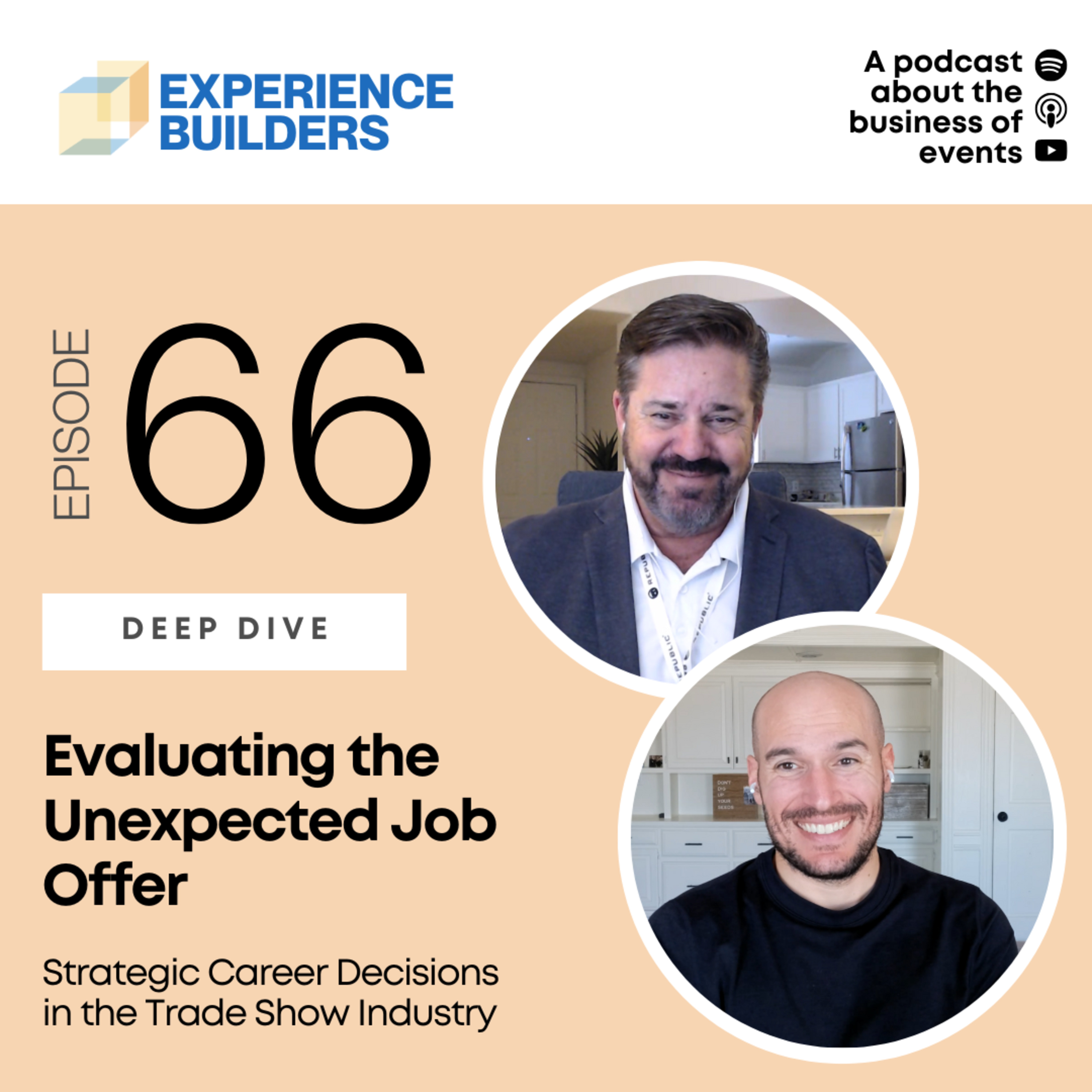
066 - Evaluating the Unexpected Job Offer: Strategic Career Decisions in the Trade Show Industry

Industry veterans Chris Griffin and Khalil Benalioulhaj tackle the timely challenge of evaluating unexpected job offers during peak business season. With talent shortages driving aggressive recruiting and stress levels at their annual high, they break down how to make strategic career decisions rather than reactive ones, whether you're the employee considering a move or the employer competing for talent. What You’ll Learn How to evaluate job offers strategically vs. reactively during busy seasons Why unclear expectations matter more than compensation in job satisfaction Essential questions to ask about remote work culture and support systems Red flags to watch for when "incredible talent" becomes available How to build hiring strategies that attract quality candidates without breaking company culture Time Stamps 00:53 - Episode Intro 02:16 - Navigating Job Offers in a Busy Industry 05:03 - Evaluating Job Offers: Employee Perspective 06:36 - The Role of Compensation and Expectations 11:11 - Balancing Career and Personal Life 22:04 - Remote Work Opportunities 24:48 - Challenges of Remote Work 25:21 - Questions to Ask About Remote Work 25:45 - Importance of Communication Tools 26:49 - Defining Company Culture 28:31 - Onboarding and Employee Expectations 30:33 - Hiring Motivations and Strategies 37:56 - Balancing Talent and Company Needs 45:37 - Concluding Thoughts on Job Offers Snippets from the Episode "People don't leave companies, they leave people. It's typically their direct report or who they're having to interact with regularly." - Chris Griffin "Fishing for whales, you only need to catch one to feed everybody. But if you have a 20-foot Jon boat, you can't get 'em in the boat." - Chris Griffin on Hiring and Talent "Is there a remote culture? That's the phrase. Don't just ask if they allow remote work - ask if they've built a culture around it." - Chris Griffin "If you're chasing a big project that you've never done before, it's gonna kill your business." - Khalil Benalioulhaj "Difficult conversations accrue interest when delayed." - Khalil Benalioulhaj Key Takeaways Strategic vs. Reactive Decision Making Clear Expectations Trump Compensation Remote Culture Assessment is Critical Values Alignment Over Money Plan Hiring Before You Need It Right-Size Talent for Your Company Honest Communication Prevents Future Problems Resources Need Help With An Event? Get in touch with ⁠⁠⁠⁠⁠⁠CrewXP⁠⁠⁠⁠⁠⁠ Watch On ⁠⁠⁠⁠⁠⁠YouTube⁠⁠⁠⁠⁠⁠ Follow Us On Social: ⁠⁠⁠⁠⁠⁠LinkedIn⁠⁠⁠⁠⁠⁠ , ⁠⁠⁠⁠⁠⁠Facebook⁠⁠⁠⁠⁠⁠ Have Questions? ⁠⁠⁠⁠⁠⁠Email us⁠⁠⁠⁠⁠⁠ More from Chris ⁠⁠⁠⁠⁠⁠CrewXP⁠⁠⁠⁠⁠⁠ ⁠⁠⁠⁠⁠⁠Email Chris⁠⁠⁠⁠⁠⁠ ⁠⁠⁠⁠⁠⁠LinkedIn⁠⁠⁠⁠⁠⁠ More from Khalil ⁠⁠⁠⁠⁠⁠benali.com ⁠⁠⁠⁠⁠⁠ ⁠⁠⁠⁠⁠⁠Email Khalil⁠⁠⁠⁠⁠⁠ ⁠⁠⁠⁠⁠⁠Meet With Khalil⁠⁠⁠⁠⁠⁠ ⁠⁠⁠⁠⁠⁠LinkedIn⁠⁠⁠⁠⁠⁠ ⁠⁠⁠⁠⁠⁠Facebook⁠⁠⁠⁠⁠⁠ ⁠⁠⁠⁠⁠⁠Instagram⁠⁠⁠⁠⁠⁠ Connect With Us Ready to future-proof your experiential business? Subscribe to Experience Builders for more strategic insights that help agency owners build bulletproof businesses. Share this episode with fellow industry leaders who are planning their next growth phase.

January 15, 2026Episode 6544 min

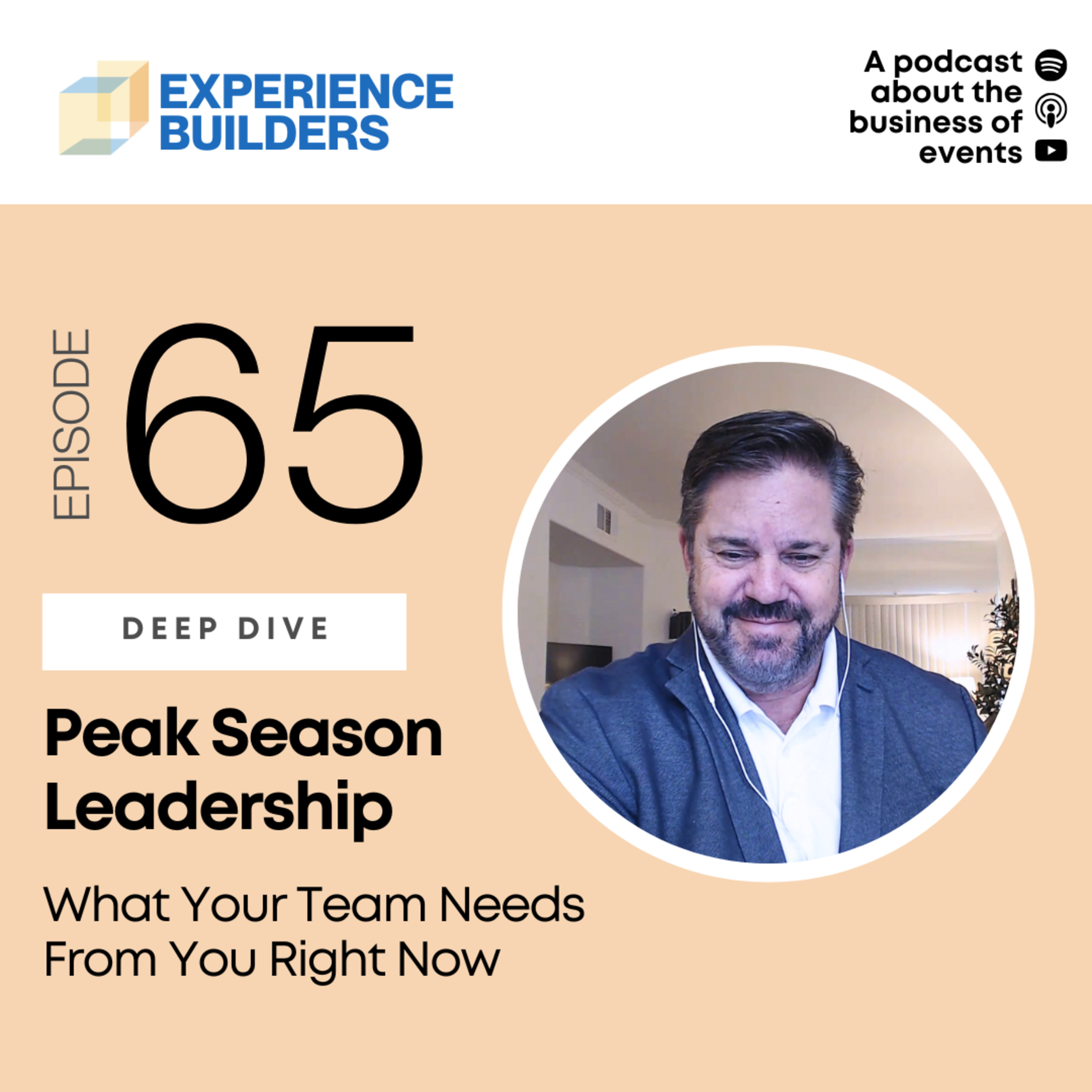
065 - Peak Season Leadership: What Your Team Needs From You Right Now

Chris Griffin calls in from the trenches of CES week in Las Vegas, where his team is shipping 43 projects in 28 days while operating at 150-200% capacity. This raw, real-time conversation reveals what peak season leadership actually looks like, from getting your boots on the ground to temporarily suspending normal protocols when your team is maxed out. What You’ll Learn How to support teams operating at 150-200% normal capacity during peak season Why leaders need to get out of the glass office and join the front lines Strategies for managing client expectations during high-volume trade show installs When to suspend regular meetings and protocols to focus on paying jobs Time Stamps 00:52 - Episode Intro 03:35 - Managing High Workload 05:58 - Supporting the Team on the Ground 10:01 - Handling Client Expectations 11:58 - Adapting to High Volume 16:24 - Balancing Immediate and Future Tasks 18:58 - Visibility and Team Morale 21:12 - Field Operations and Logistics 22:52 - Reflecting on Team Efforts 24:08 - Progression Photos and Project Documentation 25:35 - Roles and Responsibilities on the Field 26:02 - Handling Client Interactions 27:28 - Planning and Reacting to Challenges 29:45 - Implementing New Software and Tools 32:07 - Managing High-Pressure Situations 33:13 - Episode Takeaways 34:06 - Union Labor and Staffing 36:55 - Supporting Remote Workers 37:44 - Celebrating Victories and Team Support Snippets from the Episode "When you leave the glass office above the treetops and come down to play at ground level with your team, it's a completely different view."- Chris Griffin "Your perspective changes when your boots are on the ground. The support you can offer becomes evident when you do that."- Chris Griffin "It's okay to suspend some of your monthly or weekly protocols in these moments of extraordinary volume."- Chris Griffin "Our motto: paying jobs come first. We'll catch up on the administrative stuff when we get a breather."- Chris Griffin Key Takeaways Get boots on the ground during peak season Acknowledge extraordinary working conditions publicly Suspend non-essential meetings and protocols temporarily Focus on being helpful without getting in the way Manage client expectations to protect team productivity Celebrate small victories throughout the process Check on remote workers who feel disconnected Resources Need Help With An Event? Get in touch with ⁠⁠⁠⁠⁠CrewXP⁠⁠⁠⁠⁠ Watch On ⁠⁠⁠⁠⁠YouTube⁠⁠⁠⁠⁠ Follow Us On Social: ⁠⁠⁠⁠⁠LinkedIn⁠⁠⁠⁠⁠ , ⁠⁠⁠⁠⁠Facebook⁠⁠⁠⁠⁠ Have Questions? ⁠⁠⁠⁠⁠Email us⁠⁠⁠⁠⁠ More from Chris ⁠⁠⁠⁠⁠CrewXP⁠⁠⁠⁠⁠ ⁠⁠⁠⁠⁠Email Chris⁠⁠⁠⁠⁠ ⁠⁠⁠⁠⁠LinkedIn⁠⁠⁠⁠⁠ More from Khalil ⁠⁠⁠⁠⁠benali.com ⁠⁠⁠⁠⁠ ⁠⁠⁠⁠⁠Email Khalil⁠⁠⁠⁠⁠ ⁠⁠⁠⁠⁠Meet With Khalil⁠⁠⁠⁠⁠ ⁠⁠⁠⁠⁠LinkedIn⁠⁠⁠⁠⁠ ⁠⁠⁠⁠⁠Facebook⁠⁠⁠⁠⁠ ⁠⁠⁠⁠⁠Instagram⁠⁠⁠⁠⁠ Connect With Us Ready to future-proof your experiential business? Subscribe to Experience Builders for more strategic insights that help agency owners build bulletproof businesses. Share this episode with fellow industry leaders who are planning their next growth phase.

Is this your show?

Claim this listing to keep it up to date, reach guests who want to pitch you, and manage bookings with Guestify.

Claim this listing

More Business podcasts