Find partners
Energizing India Podcast

Energizing India Podcast

Hosted by Ador Powertron

BusinessTechnologyInterviews guests

Episodes

80

Latest episode

Aug 2026

Language

EN-US

About the show

Energizing India Podcast focuses on electric vehicle mobility in India, the E-Mobility industry, and how rapid change can be brought about to grow this industry. In a series of conversations, Ravin MIRCHANDANI, Chairman of Ador Digatron speaks to major influencers of E-mobility in India including policymakers, regulators, CEOs of electric vehicle manufacturers & electricity distributors, industry leaders managing charge point operators & charging infrastructure companies to uncover the roadblocks that hamper rapid growth in this sector. These conversations are candid, often insightful, and unfiltered.

Listen to episodes

60 recent
August 7, 202639 min

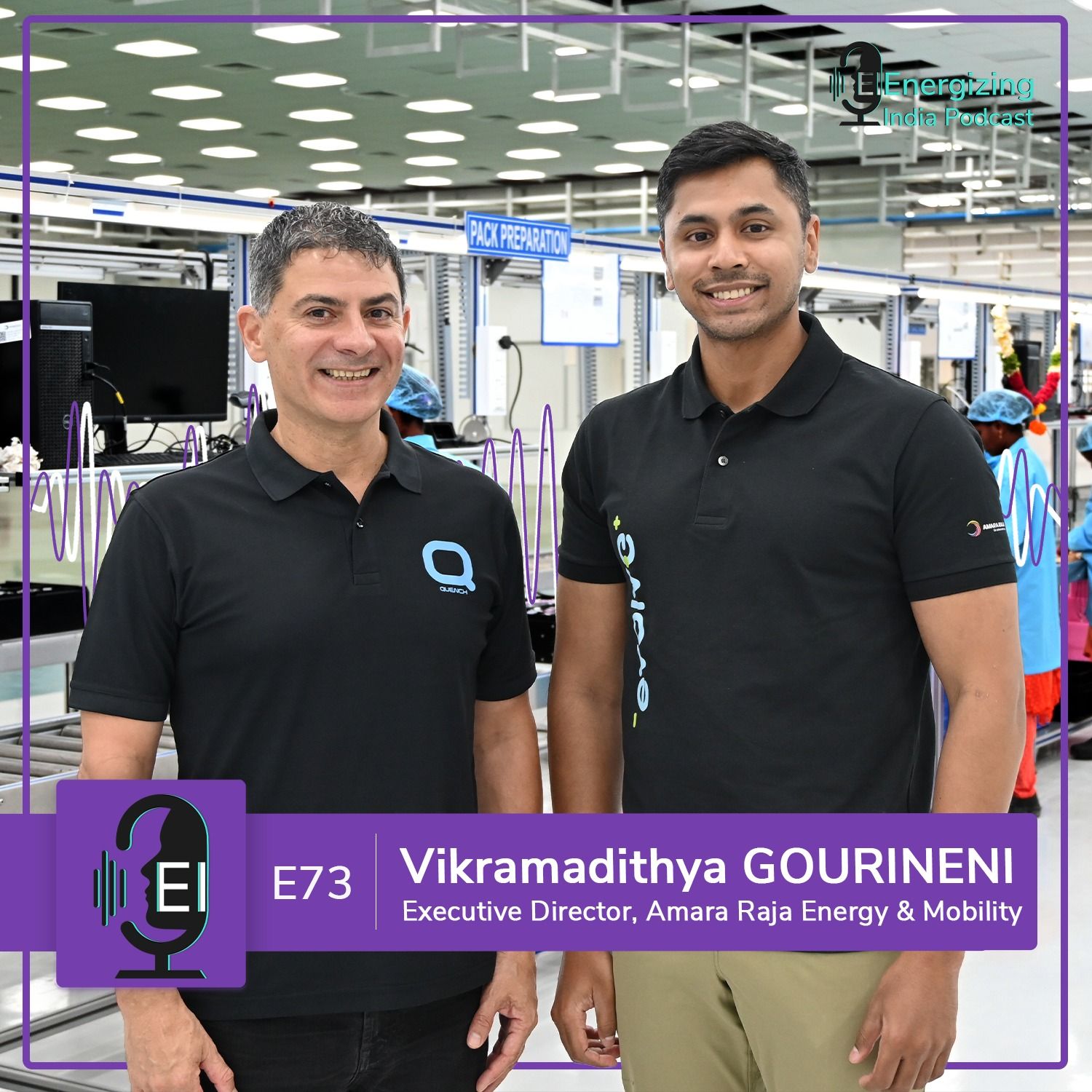
EP 73 | The Battery Race India Can't Afford to Lose | Vikramaditya GOURINENI

India has spent the last decade creating demand for batteries. The next decade is about something much harder: learning how to make them. Our guest today sits at the centre of that transition. Amara Raja built one of the world’s great lead-acid battery businesses. Now it is attempting something far more difficult: reinventing itself around lithium-ion cells, battery packs and energy storage while the technology, supply chains and geopolitics are all changing at once. Three years after Vikramadithya GOURINENI first joined us on the podcast, the plans have become factories, qualification lines and real capital at risk. Today we ask the question underneath the gigafactory headlines: can India move from assembling batteries to truly knowing how to make them? India's battery future won't be built by importing technology—it will be built by developing it. In this episode of the Energizing India (EI) Podcast, Ravin MIRCHANDANI speaks with Vikramaditya GOURINENI, Executive Director, Amara Raja Energy & Mobility, about the journey from lead-acid batteries to lithium-ion manufacturing, building India's gigafactory ecosystem, and why developing in-house technical expertise is critical for long-term success. From battery cell manufacturing and energy storage systems (BESS) to sodium-ion technology and India's path to energy sovereignty, Vikramaditya shares the opportunities and challenges shaping the country's next chapter in clean energy.

July 24, 202640 min

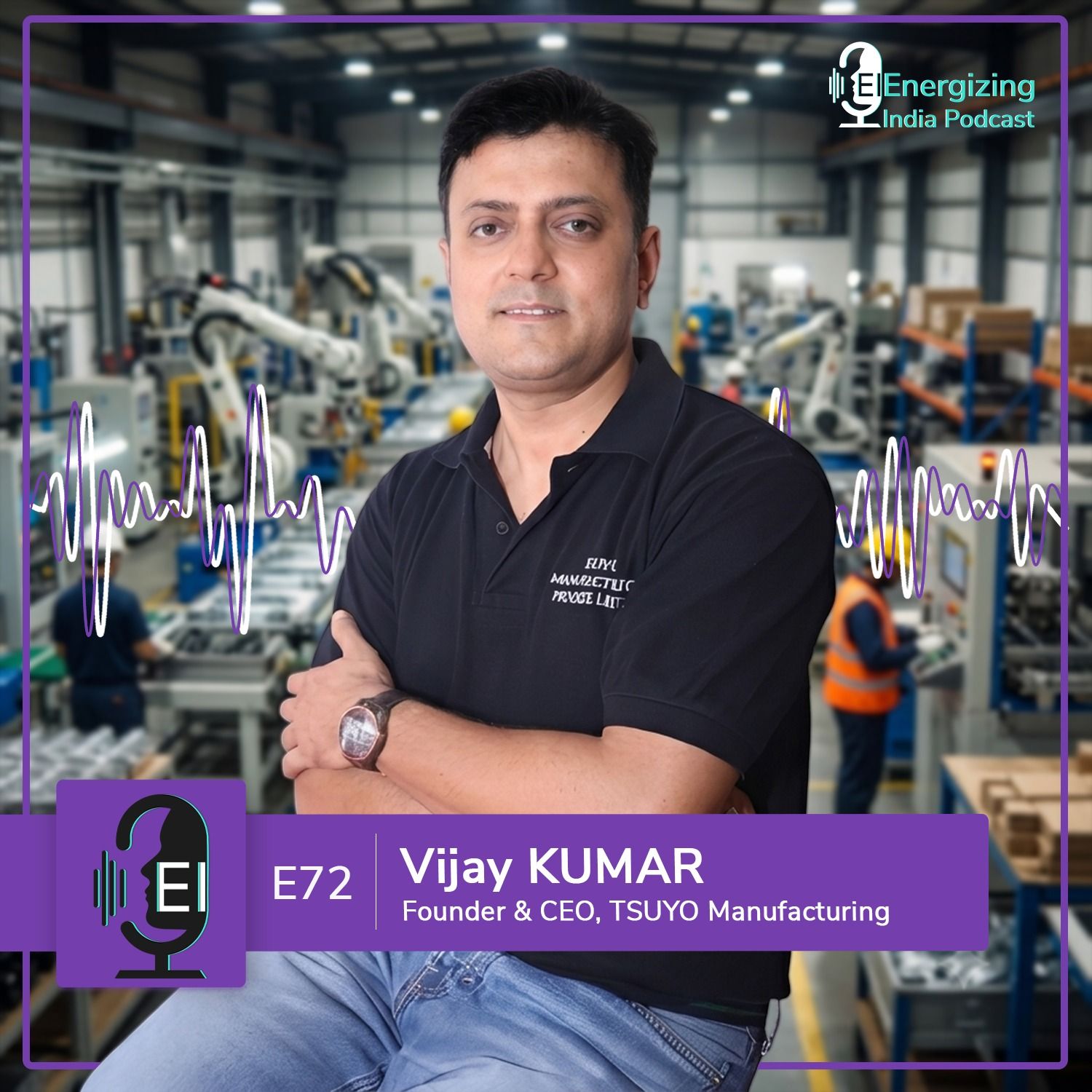
EP 72 | Building India's EV Powertrain Future | Vijay Thakur, Founder & CEO, Tsuyo Manufacturing

India's electric mobility future will be built on technology—not just vehicle assembly. In this episode of the Energizing India Podcast, Ravin Mirchandani speaks with Vijay Thakur, Founder & CEO of Tsuyo Manufacturing, about developing indigenous EV powertrains and the technologies that can make India globally competitive in electric mobility. From pioneering magnetless motor technology to building AI-powered telematics and focusing on commercial EVs, Vijay shares how innovation, engineering excellence, and technology ownership can reshape India's EV ecosystem. The conversation also explores the challenges of manufacturing advanced EV components in India, reducing dependence on rare earth materials, and creating a sustainable path toward becoming a global engineering powerhouse.

July 2, 202635 min

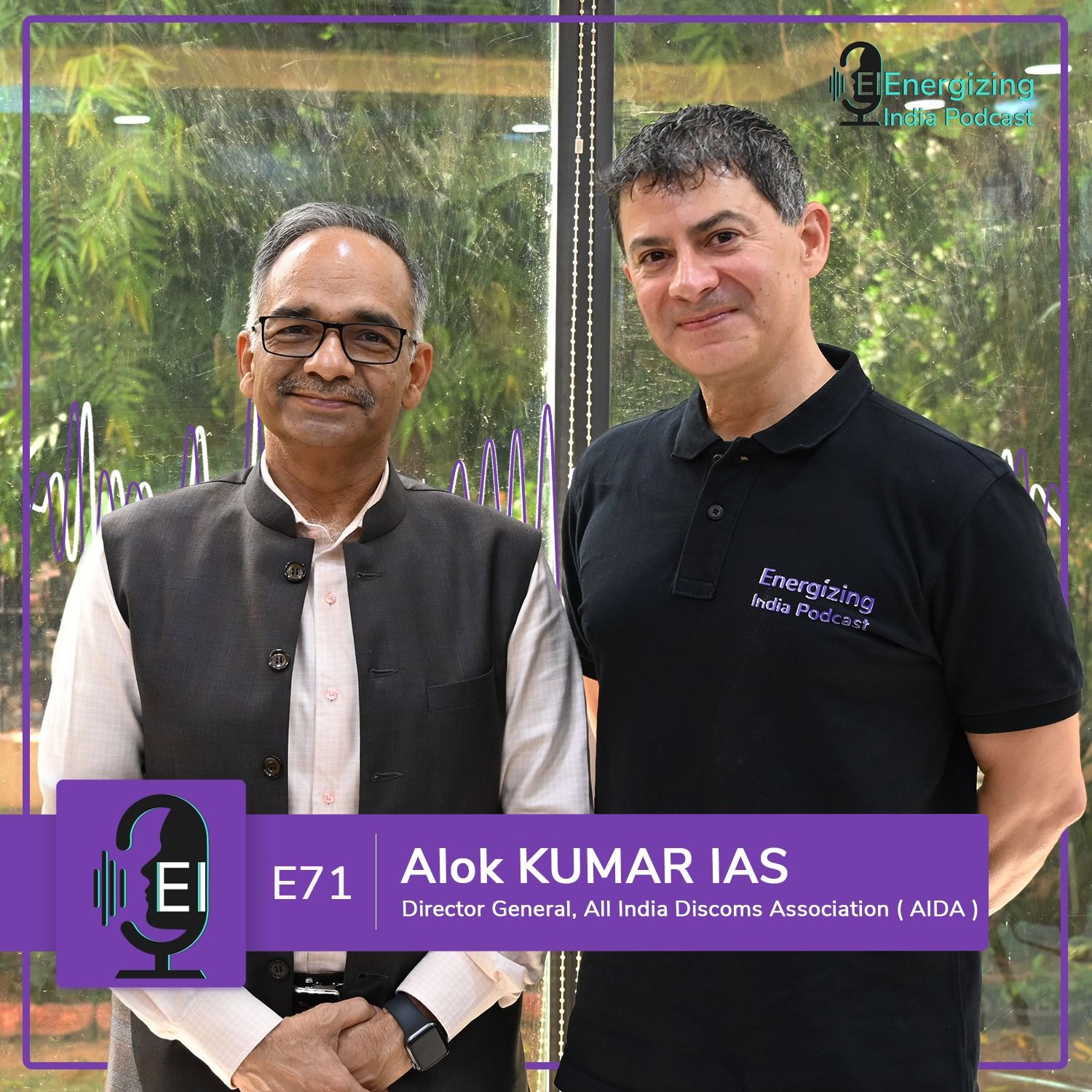
EP 71 | The Grid Behind India's Energy Transition | Alok KUMAR IAS

Today we are discussing one of the least understood but most critical parts of India’s energy transition: the electricity distribution system. Solar, wind, EVs, batteries and green hydrogen may get the headlines, but the real test is whether India can deliver reliable, affordable, high-quality power to every consumer, every hour, in every state. To explore this, we are delighted to welcome Alok KUMAR, one of India’s most experienced power-sector voices in India and also Chairperson of the Indian Discoms Association. We will discuss resource adequacy, discom reform, grid constraints, EVs, hydrogen, storage, power quality and what India’s electricity system must look like by 2030. A subject no one has ever covered in such depth before. As India accelerates its clean energy transition, one critical question remains: Is the power grid ready? In this episode of the Energizing India Podcast, Alok Kumar , veteran power sector leader and President of the All India Discom Association, explores the challenges and opportunities shaping India's electricity distribution ecosystem. From resource adequacy and discom reforms to smart metering, grid modernization, and the growing demands of electric mobility and green hydrogen, this conversation offers valuable insights into the infrastructure that will underpin India's energy future. A must-listen for policymakers, industry leaders, utilities, and anyone interested in the future of India's power sector.

June 18, 202643 min

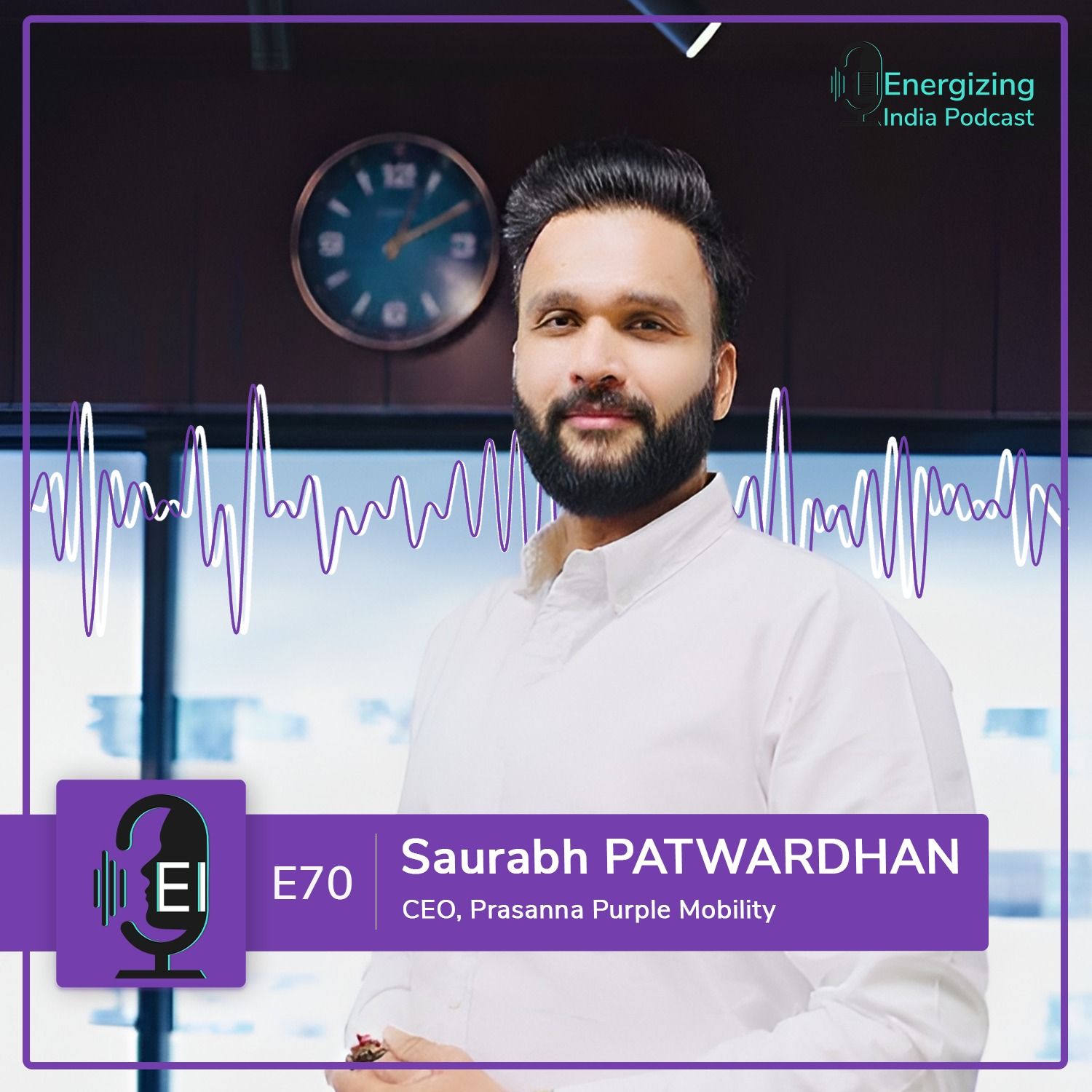
EP 70 | The Future of Electric Buses in India | Featuring Saurabh Patwardhan, MD, Prasanna Mobility Solutions

India’s electric bus story may become one of the most important chapters in our clean mobility transition. While most EV conversations focus on cars and scooters, buses are where the impact can be massive. India has roughly 20 lakh buses, but only a fraction operate from organised depots where charging can be planned and scaled. In 2024, India registered around 3,700 electric buses, compared with more than 41,000 diesel buses, so the shift has begun, but we are still very early. The government wants to change that fast. PM-eBus Sewa targets 10,000 electric buses, and the new payment-security mechanism is meant to support more than 38,000 e-buses between FY25 and FY29. But the real question is not just procurement,it is operations. Can electric buses deliver lower lifetime cost, higher uptime, reliable charging, and bankable returns for fleet operators? We are delighted to welcome Saurabh PATWARDHAN, CEO of Prasanna Purple Mobility, a company with decades of experience across city, intercity, corporate, school and tourism bus operations. Today we will discuss what is working, what is still difficult, and what India must solve to electrify bus mobility at scale.

May 21, 202658 min

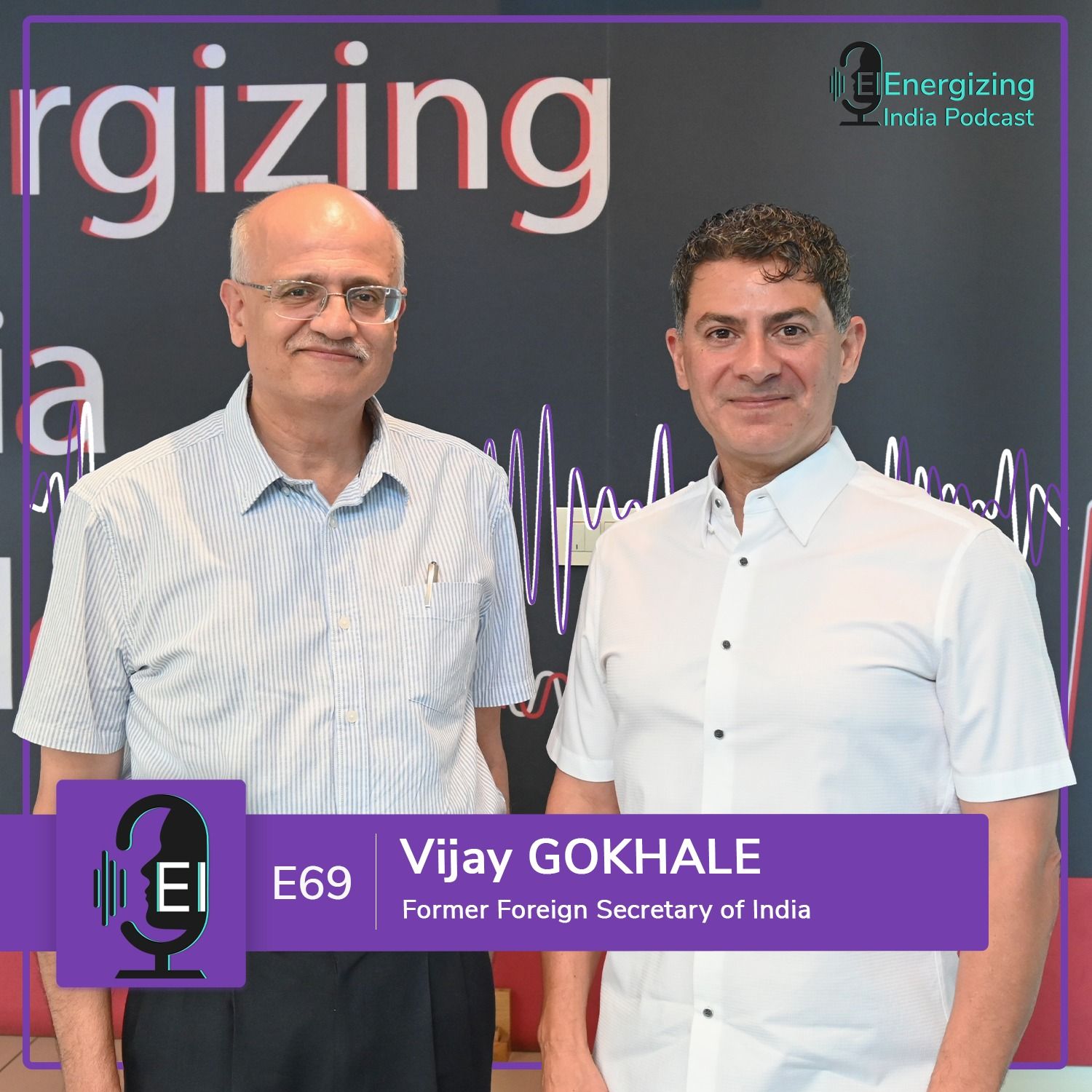
EP 69 | Oil, War and the Rupee: Vijay GOKHALE on What Global Turmoil Means for India

Welcome to the Energizing India Podcast. Today, we have the privilege of welcoming back to the podcast for a third time one of India’s sharpest strategic minds — former Foreign Secretary of India. Vijay served as India’s 32nd Foreign Secretary after a distinguished 39-year career in the Indian Foreign Service. He has served as India’s Ambassador to China and Germany, as well as the High Commissioner to Malaysia, and worked extensively on China and East Asia policy throughout his career. He is widely regarded as one of India’s most experienced China watchers and is currently a Non-Resident Fellow at. He has also authored five books on geopolitics. His latest,, which explores the politics and diplomacy behind China’s military coercion, was released earlier this month. We meet him at a time when the world feels increasingly unstable. The conflict involving the United States, Israel, and Iran has already shaken assumptions around oil, gas, fertilizers, shipping, currencies, and global investment flows. India, which imports the overwhelming majority of its crude oil and a significant portion of its gas needs, is exposed not only to price shocks but also to supply disruptions, inflationary pressures from currency fluctuations, and delays in major projects. Recent reporting has already linked the conflict and disruptions in energy markets to renewed pressure on the rupee. There is also a deeper strategic question now emerging. India has historically maintained a relationship with Iran. It has built close ties with Israel. India also depends heavily on the Gulf, while continuing to strengthen its partnership with the United States. This makes the current moment especially sensitive for Indian diplomacy. At the same time, Pakistan appears to be positioning itself as a potential mediator between Washington and Tehran, with China closely watching and encouraging Islamabad’s diplomatic role. So the question for India is no longer just: how do we manage this crisis? It is: how does India protect its energy security, economic growth, strategic autonomy, and global influence in a world where the old certainties are beginning to break down? Vijay Gokhale, welcome to the program.

April 16, 202639 min

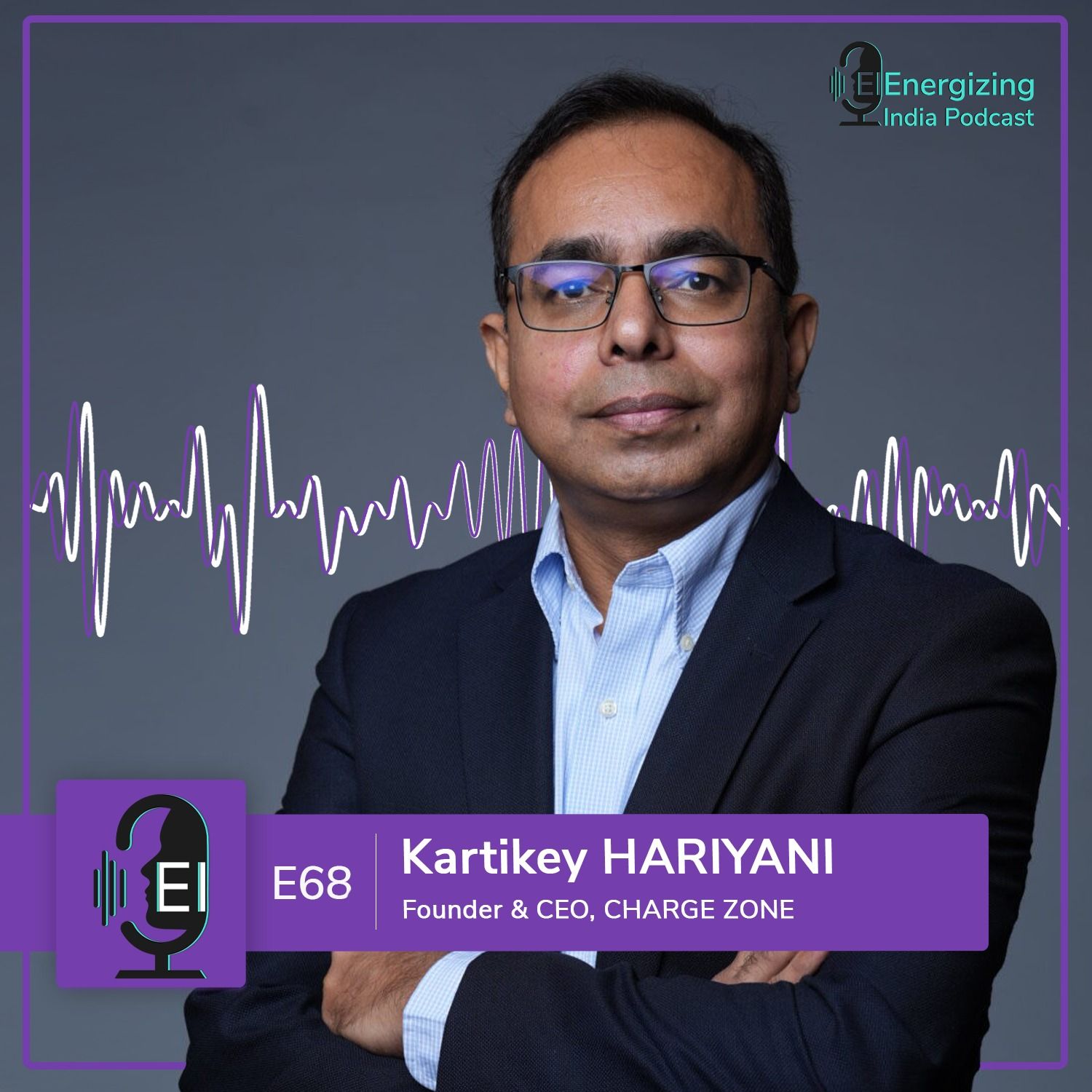
EP 68 | India’s EV charging story is entering its toughest phase — execution | Kartikeya Hariyani, Founder & CEO of ChargeZone

Five years ago, EV charging in India was a promise… today, it’s a battlefield. Billions of dollars committed, networks being built at speed, and yet—range anxiety, broken chargers, and questions on profitability still linger. The hype phase is over. This is now about execution, resilience, and who actually survives the decade. My guest today isn’t theorising about this transition—he’s building it. Brick by brick. Charger by charger. For the third time on Energizing India, I’m joined by Kartikey Hariyani, founder and CEO of ChargeZone—one of India’s largest independent EV charging networks, taking on giants and redefining what scale looks like in this space. Kartikey, welcome back—this one’s going to be fun. In this podcast Episode, Chargezone CEO Kartik Harani discusses the rapid maturation of India's electric vehicle charging sector as it transitions from a growth phase to an execution-focused grind . He debunks the misconception that network size equals success, emphasizing instead that energy sales, reliability, and supercharging capabilities are the true drivers of profitability. Harani highlights Chargezone’s shift toward ultra-fast intercity infrastructure and its "open access" strategy that serves both personal cars and commercial fleets. The conversation also explores how India can achieve national energy security by following China’s integrated approach to electrification, particularly through subsidizing electric trucks . Looking toward 2030, Harani envisions a consolidated market where traditional banking capital and innovative franchise models fuel expansion. He concludes by sharing his bold vision for sustainable microgrids , aiming to control the entire lifecycle of an electron from solar generation to vehicle propulsion.

March 26, 20261 hr 3 min

EP 67 | Geopolitics has returned to the centre of the energy conversation. | Pramit Pal CHAUDHURI

Over the past decade, the energy transition has largely been framed as a technology and capital story—batteries getting cheaper, EV adoption accelerating, hydrogen scaling, and climate capital flowing across borders. But in the last few months, something fundamental has shifted. Geopolitics is back at the center of energy. The escalating conflict involving Iran, the return of a more protectionist and unpredictable United States under President Trump, and the increasingly assertive roles of China and Russia are no longer distant headlines—they are now shaping supply chains, energy prices, and strategic decisions in boardrooms across the world. For CEOs in the energy transition space, this raises urgent questions: Are we entering a new era of energy fragmentation? Will supply chains be redrawn along political lines? And most importantly—how should businesses prepare for a world where geopolitics, not just economics, drives outcomes? To help us unpack this, I’m delighted to welcome Pramit Pal Chaudhary. Pramit is one of India’s most respected voices on geopolitics and global strategy. He has been a foreign policy advisor to the Indian government, a senior fellow at leading global think tanks, and a long-time analyst of how power, policy, and economics intersect. Today, we go beyond headlines—to explore the tectonic shifts shaping the future of energy, and what they mean for India and the world. (00:00:15) Introduction: The Fundamental Shift: Geopolitics Returns to Energy (00:01:57) Is the World Entering an Era of Permanent Conflict? (00:05:51) Assessing the Escalating Iran-US-Israel Conflict Dynamics (00:11:13) Unpacking Trump's Personal Animus and Iran Strategy (00:17:29) Decades of Missteps: Why US Foreign Policy Fails (00:23:30) China's Strategic Advantage in Energy Independence (00:25:58) Tiptoeing Around Global Energy Infrastructure Attacks (00:29:49) India's LPG Crisis and Long-Term Energy Security (00:35:30) India's Regional Energy Role and LPG Supply Challenges (00:40:01) Modi's Israel Visit and Rules of Naval Warfare (00:47:37) How China and Russia Benefit from Global Instability (00:52:49) Lessons from Conflict for Taiwan Strait Scenarios (00:54:49) Preparing for Geopolitical Risks: Advice for Energy CEOs (01:01:52) Energizing India Podcast: Episode Conclusion and Credits

November 7, 202543 min

EP 66 | Designing Cities for People, Not Just Cars: Rethinking Urban Mobility with Zohra MUTABANNA

Designing Cities for People, Not Just Cars: Rethinking Urban Mobility with Zohra MUTABANNA What happens when we plug electric vehicles into cities that were never built for them? Urban designer Zohra Mutabanna joins us to unpack the real design challenges of India’s mobility future...from shared transport to the Avoid-Shift-Improve model, and how our cities can evolve into living, breathing ecosystems instead of chaotic grids. Welcome to the Energising India Podcast. On this program, we engage with the key protagonists shaping the future of energy, mobility, and sustainability within India and globally. I’m your host, Ravin MIRCHANDAN, and today we step into the world of cities, the spaces that hold our daily lives together yet often crack under the weight of growth, congestion, and unsustainable planning. Today, we speak with Zohra MUTABANNA —an architect, urban designer, and thought leader who believes that cities must be designed as ecosystems, not afterthoughts. She works with the intersection of design, policy, and sustainability, asking bold questions about whether India’s cities are truly ready for electric mobility or whether we risk building EVs into an already broken urban fabric. Zohra brings years of experience reimagining the built environment through resilience, inclusivity, and innovation. With her, we’ll explore the Avoid-Shift and improve framework,the realities of urban transport and shared mobility, and design choices that will determine whether our urban future is chaotic or truly sustainable.

September 22, 202539 min

EP 65 | FreshBus: Driving India’s Intercity Travel Electric | Sudhakar CHIRRA

Welcome to the Energizing India Podcast! On this program, we engage with the key protagonists shaping the future of energy, mobility, and sustainability in India and globally. I’m your host, Ravin MIRCHANDANI, and today we’re stepping into a completely new lane of India’s transport story in relation to zero-emission intercity travel going electric. We’re talking about FreshBus, a young but ambitious player redefining what it means to move people cleanly, comfortably, and efficiently across states. Joining us is Mr. Sudhakar CHIRRA, a serial entrepreneur synonymous with innovation in India’s bus mobility space. Before FreshBus, he founded and led AbhiBus, India’s first bus-ticketing app that reshaped how travelers connect with operators. Now he heads FreshBus, an all-electric, full-stack intercity bus platform that’s rewriting expectations of cost, speed, and sustainability in mobility. Since launching in 2019, FreshBus has built a battery-powered fleet, carried hundreds of thousands of passengers, and is now backed by a $10.5 million Series A round to scale that ambition nationwide. With Sudhakar as our guide, today we’ll explore: ● What does it mean to start fresh with a 100% electric fleet? ● How does one build profitability in a capital-intensive asset under real Indian conditions? ● What’s the passenger experience really like when “EV+Tech” replaces convention? Sudhakar, welcome to the program.

August 29, 202538 min

EP 64 | Under the Hood: Hyundai’s Clean Mobility Journey with Puneet ANAND

Three decades, countless innovations, one mission...redefine how India moves. PuneetANAND pulls back the curtain on Hyundai’s journey in clean energy, EVs, and community-driven mobility. Buckle up, it’s a ride into the future. Welcome to the Energizing India Podcast. On this program, we engage with the key protagonists shaping the future of energy, mobility, and sustainability, both in India and globally. I’m your host, Ravin MIRCHANDANI, and today we’re in the driver’s seat with one of India’s most exciting automotive journeys. The transformation of mobility as we knew it in this country. Joining us is a man who quite literally has his fingerprints across the evolution of the Indian automobile industry. Puneet Anand is the vertical head of corporate affairs, corporate communications, and social responsibilities as AVP with Hyundai Motors, India, and has an enviable 3 decades of experience in the Indian automotive sector. Since 1998, Puneet has been an integral part of Hyundai’s leadership in India, steering pivotal functions and driving growth in a dynamic and often unpredictable automotive sector environment. Today, we look under the hood of Hyundai’s clean energy transition from investments in EVs, hydrogen technology, and renewable energy to localization strategies that boost the resilience of India’s economy. We explore the role of public policy, infrastructure, and community engagement that Hyundai plays in redefining mobility in the next generation. What does the road ahead look like for India’s clean mobility revolution? How does a giant like Hyundai balance cutting-edge innovation with deep local relevance? Puneet ANAND, welcome to the program.

Is this your show?

Claim this listing to keep it up to date, reach guests who want to pitch you, and manage bookings with Guestify.

Claim this listing

More Business podcasts