Find partners
DTC Podcast

DTC Podcast

Hosted by DTC Newsletter and Podcast

BusinessInterviews guestsExplicit

Episodes

771

Latest episode

Aug 2026

Language

EN

About the show

Weekly discussions between disruptive direct to consumer ecommerce brands and our amazing team about marketing, funnels, and everything scaling related. Subscribe to our newsletter for highlights and step by step tactical insights 👉🏻 📦 directtoconsumer.co

Listen to episodes

60 recent
August 26, 202639 min

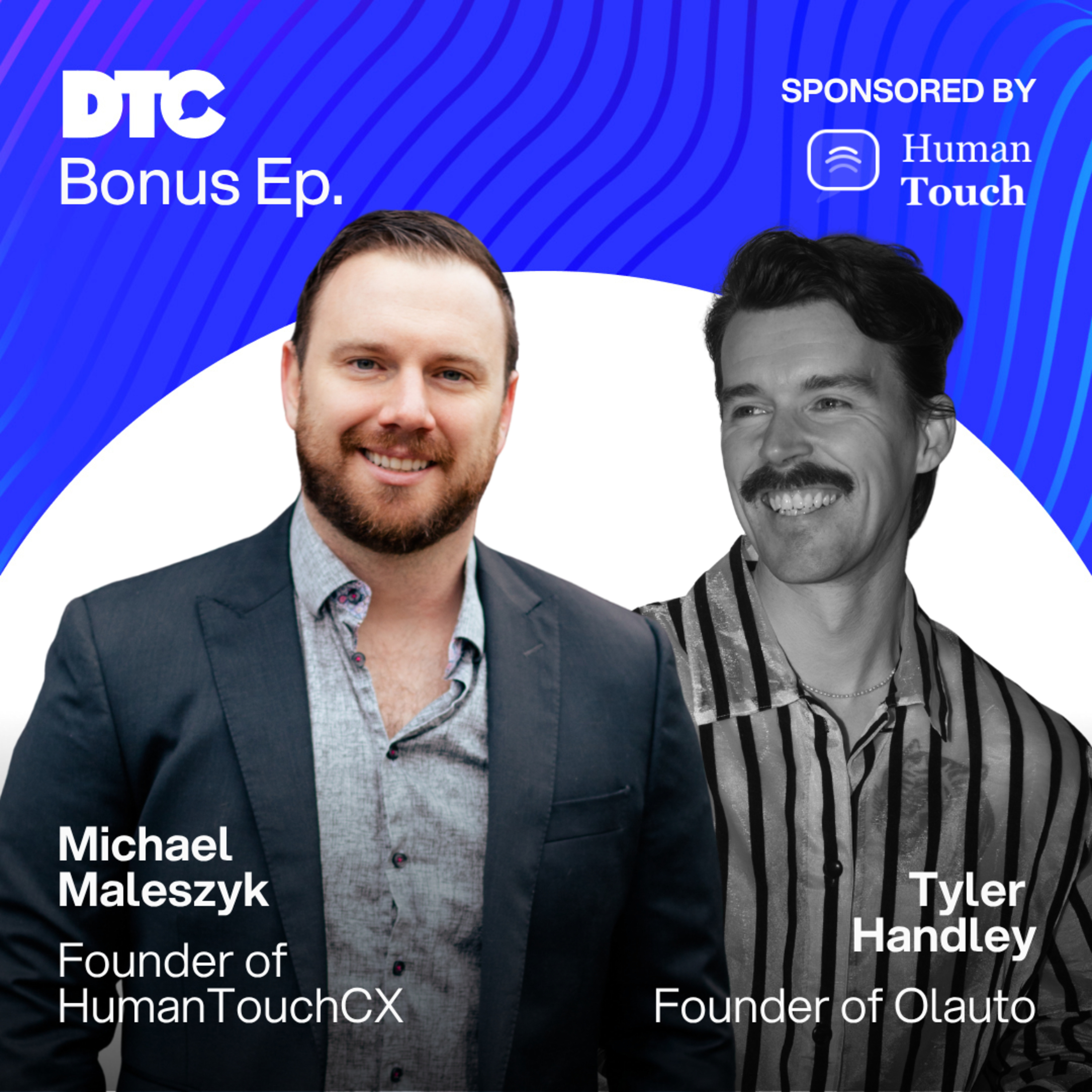
Bonus: $65M Exit, Zero Employees: How Olauto Automates Everything Except Customer Service

To Subscribe to DTC Newsletter - https://dtcnews.link/signup Tyler Handley sold Inkbox to BIC for $65 million. His new company, Olauto, sells a $33 car air freshener, launched last September, is already profitable, and has zero employees. Four people, some contractors, and AI running the back office. The one thing they refuse to automate: when a customer emails, a human answers. Every time. The guy who built the software behind that is Mike Maleszyk, Tyler's friend since high school, who started HumanTouchCX after a support chatbot swore it was human but couldn't say what it had for lunch. If you run CX for a Shopify brand, or you're deciding right now which parts of your business AI should touch, this episode is the two of them drawing the line in public. Want the setup Olauto uses? HumanTouch is taking on its first 100 Founding Merchants, with white-glove onboarding and 24 months of locked pricing. What's inside: Why Braden reviews every automated reply "from hi to buy," and the one automation he had to be convinced to allow (off-hours only) Deflection rate, and what the merchants bragging about theirs are actually counting Product questions as the worst place to put a bot: those customers are low funnel with a cart open The Inkbox moderation story: 13 to 20 CX agents, custom tattoo uploads in a gray area no AI could judge, and the customer emails that started "why do you want this?" Article 50 of the EU AI Act, live since August 2nd: transparency, record keeping, and audit logs for every AI touchpoint if you sell into the EU Tyler's vibe-coded ERP: why it hooks into Shopify and nothing else "Friend founding," and how four people split brand, supply chain, CX, and ads Hewie, the AI that helps train your first CX hire off your own past tickets instead of your calendar Who this is for: DTC founders and CX leads between launch and $100M who are being pitched full automation from every direction. What to steal: Braden's rule. Automations answer the 65% (shipping status) during off hours only, and a human still has eyes on every single reply before the relationship is on the line. Timestamps: 00:00 Building an AI-powered brand without losing the human touch 05:00 Why AI customer service needs transparency 12:00 The problem with optimizing customer support for deflection 21:00 What the EU AI Act means for ecommerce brands 28:00 How a four-person team uses AI to scale an ecommerce brand Subscribe to DTC Newsletter - https://dtcnews.link/signup Advertise on DTC - https://dtcnews.link/advertise Work with Pilothouse - https://dtcnews.link/pilothouse Follow us on Instagram & Twitter - @dtcnewsletter Watch this interview on YouTube - https://dtcnews.link/video

August 24, 202629 min

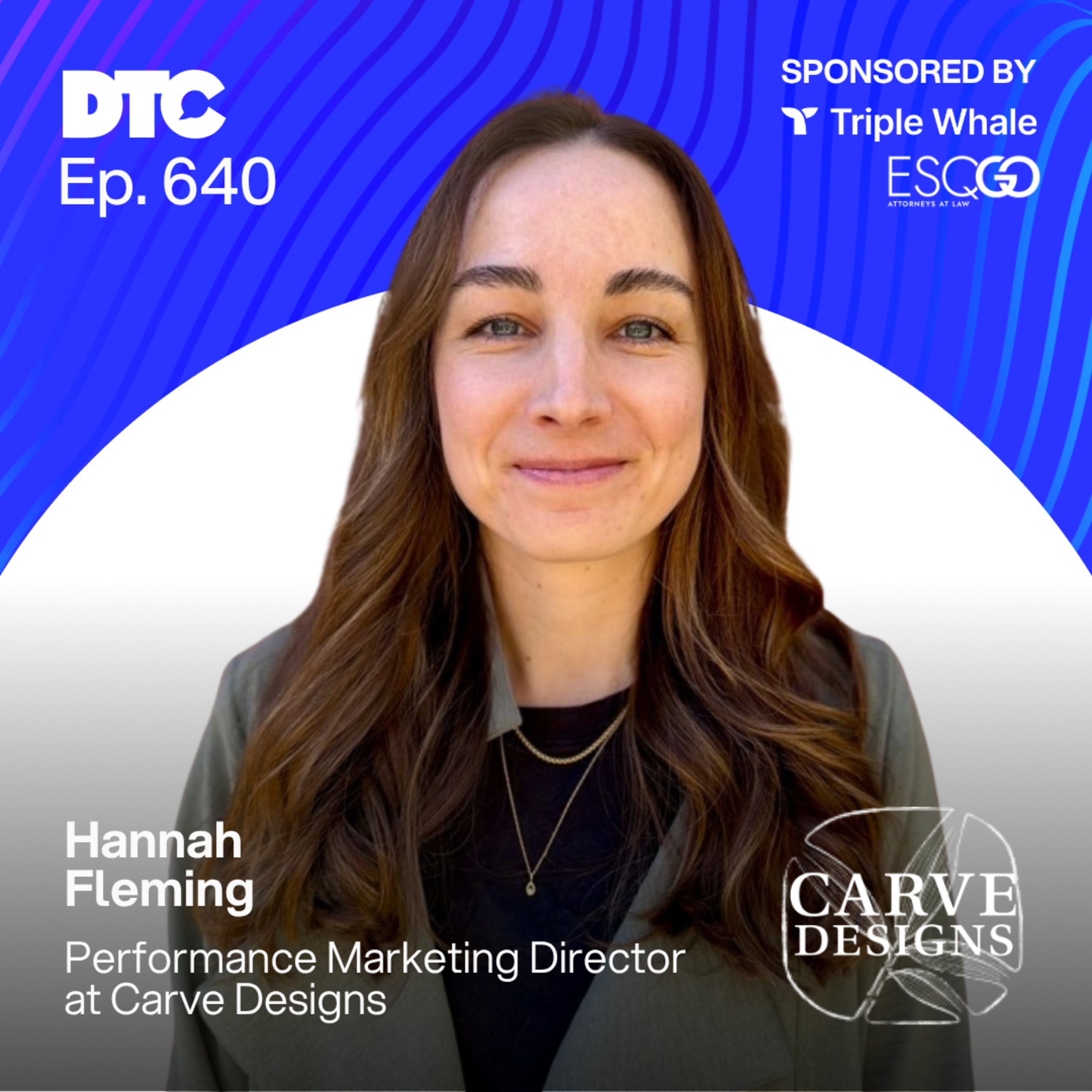
Ep 640: 2x LTV From Loyalty Without Discounting: Carve Designs on Retention, Direct Mail, and CTV

https://directtoconsumer.typeform.com/DTC-Brand?utm_source=podcast-640&utm_medium=podcast To Subscribe to DTC Newsletter - https://dtcnews.link/signup Hannah Fleming runs performance marketing at Carve Designs (carvedesigns.com), the Northern California swim and apparel brand founded in 2003 and acquired by Komar Brands in December 2025. Before Carve she spent years at Amer Sports on the digital team behind Salomon, Atomic, Suunto, Arc'teryx and Wilson. If you run retention or growth at a brand with a seasonal core product and a loyal base you have not fully mined, this one is for you. What's inside: The retention rebuild: what was already working at Carve after 20 years, and the one thing they were not doing with their customer data Mapping the full customer journey in Figma, then finding the gaps where nobody was talking to the customer and the places where they were talking too much RFM segmentation as the floor, then layering category purchase behavior on top to move a swim buyer into denim The cohort analysis that changed the media mix: dresses and accessories produced the highest-LTV customers, so those categories now lead the creative and seed the look-alikes Direct mail as a performance channel: 5 to 6 catalogs a year to prospects and past buyers, plus programmatic postcards that only drop if the email win-back does not convert Employee-generated content, and how one test turned into a full content pipeline with the organic social team shooting UGC-style video on the catalog shoots Connected TV without a commercial budget: an agency turns UGC and EGC into the spot, the founder does the voiceover, and success is measured on cost per site visit with MMM picking up the Amazon halo Loyalty built on early access and product feedback instead of percent-off, with roughly 2x the LTV of a non-member Q4 without heavy discounting: point multipliers and added value inside the tentpole moments What she is using AI for right now, from LTV dashboards in Moby 2 to Orita surfacing customers when they are most likely to buy Who this is for: retention and lifecycle leads, growth marketers at seasonal brands, and operators who moved from a big portfolio company to an SMB. What to steal: run LTV by first-purchase category before you plan next season's creative mix. And give partnership content 6 to 12 months before you call it. Hannah says that is how long it took at Carve before influencer content started working. Follow Hannah: LinkedIn, Hannah Fleming | carvedesigns.com Timestamps: 00:00 Building Loyalty Beyond Discounts 05:00 Using Customer Segmentation for Retention 10:00 Direct Mail as a Performance Channel 16:00 Building a High-Value Loyalty Program 24:00 Testing Direct Mail and Connected TV Subscribe to DTC Newsletter - https://dtcnews.link/signup Advertise on DTC - https://dtcnews.link/advertise Work with Pilothouse - https://dtcnews.link/pilothouse Follow us on Instagram & Twitter - @dtcnewsletter Watch this interview on YouTube - https://dtcnews.link/video
August 21, 202624 min

Ep 639: "The Creative Is the Brief": Pilothouse on AI Storefronts and a 20-21% Conversion Rate Lift

https://directtoconsumer.typeform.com/DTC-Brand?utm_source=podcast-639&utm_medium=podcast To Subscribe to DTC Newsletter - https://dtcnews.link/signup Media owns the traffic. Brand owns the site. The page in between belongs to nobody, and it's been sitting in a Notion doc called landing page priorities Q3 since 2022. Eric brings Daniel from Pilothouse back for an all killer no filler on the post-click experience: why it stayed generic for a decade, what changed in the last twelve months, and what the team is seeing in its pilots with Black Crow AI. For media buyers, creative strategists, and founders whose ads are working and whose conversion rate isn't. What you get: The middle child problem. Media assumes brand is loving the page, brand assumes media is, and nobody has touched it since 2022. Why this was never a priority question. Personalizing creative is cheap. Personalizing destinations used to mean five pages through design, dev, QA, and deploy, which took literal months. So teams built one page, pointed everything at it, and updated it once a year. The 65-inch OLED analogy. You walk into a store, tell the salesperson exactly what you want, and they hand you the catalog. That's what a generic PDP does to someone who just clicked a very specific ad. The creative is the brief. The ad unit becomes the input for the storefront: the copy, the image, the targeting, the interests, all of it read and matched. What the pilots are showing: roughly 20 to 21% lift in conversion rates, on storefronts now taking about half the budget rather than one test ad set off in the corner. Where Black Crow adds something a general purpose model doesn't. Persistent ID across sessions means the page knows you're back and can serve a different experience. The technical prerequisites that actually gate this: Shopify, and enough Meta budget to test a difference. Brand and creative prerequisites matter less. Brand safety. These aren't fully dynamic pages. You can lock images and titles and adjust on the fly. Which brands it suits so far: a few concentrated top SKUs rather than a long tail catalog. The third party cookie, revisited. Daniel's verdict on the biggest talking point of 2022: what a nothing burger. Why the strategist now owns this. No IT ticket, no web team queue. That's the difference between now and twelve months ago. Who this is for: performance marketers and DTC founders who have solved pre-click and never touched what happens after. What to steal: treating your best ad as the brief for its own landing page, and the Shopify plus testable budget prerequisite check before you invest in any of this. Timestamps: 00:03:00 Why the post-click experience matters 00:07:00 Personalized landing pages lift conversion rates 00:10:00 AI-powered landing page personalization 00:15:00 Matching landing pages to ad creative 00:21:00 Using ad creative as the landing page brief Subscribe to DTC Newsletter - https://dtcnews.link/signup Advertise on DTC - https://dtcnews.link/advertise Work with Pilothouse - https://www.pilothouse.co/?utm_source=AKNF639 Follow us on Instagram & Twitter - @dtcnewsletter Watch this interview on YouTube - https://dtcnews.link/video
August 20, 202636 min

What Brands Really Spend on Marketing: 15% at $10M, 2% at $1B | Harness the Halo 1/6

Subscribe to DTC Newsletter - https://dtcnews.link/signup A brand doing $10 to $15 million a year puts 15 to 20 percent of revenue back into marketing. At $100 to $500 million it drops to roughly 8 to 10 percent. Past a billion it is 2 to 3 percent. Justin Jefferson has a view across 450 brands and $45 billion in media investment, and those numbers are the opening for a harder conversation about where the money should go. If you run growth: this is the episode about defending a slow-payback bet to a finance team that closes books quarterly. If you sit closer to the P&L: Justin explains discounting future marketing revenue back to present value, so marketing and finance can argue about the same number. What Justin gets into: Spend-to-revenue benchmarks at $10 to 15M, $100 to 500M, $500M to $1B, and past $1B Marginal ROI against blended ROI, and why a 1.4 return can hide a next dollar worth 60 cents The brand that went zero to a hundred on top of funnel, lost sales volume in year one, cut budget in response, and then had nothing left to capture the demand it had created The golf apparel brand that moved deliberately into CTV, linear, and audio: roughly flat in year one, about 23 percent growth in year two Why Amazon search is often the most overspent line in a budget, and where he sees real incrementality on Amazon instead The gap he sees between top and bottom of funnel returns: roughly 180 against 120 to 140 Why brands growing 5 percent or more changed their channel mix significantly more year over year than flat ones Who this is for: operators between $10M and $500M who have squeezed Meta and Google as far as they go and need a defensible case for spending where the attribution is fuzzy. What to steal: report return on the next dollar by channel alongside blended ROI. Most teams have only ever seen the second number. Harness the Halo is a six-part series from DTC and Keen about the spend that doesn't pay you back the same day, and the measurement that gives you room to make it. Episode 1 sets the state of the market. The next five are the bets themselves, told by the operators who made them and the people who signed off. Timestamps: 00:00 Why Marketing Mix Modeling Is Changing 03:00 Why Meta and Google Are Getting Harder to Scale 07:00 When Brands Should Invest in Top-of-Funnel 13:00 How to Measure and Predict Marketing Performance 19:00 How the Marketing Halo Drives Growth Subscribe to DTC Newsletter - https://dtcnews.link/signup Advertise on DTC - https://dtcnews.link/advertise Work with Pilothouse - https://dtcnews.link/pilothouse Follow us on Instagram & Twitter - @dtcnewsletter Watch this interview on YouTube - https://dtcnews.link/video

August 17, 202640 min

Ep 638: Life After the $260M Exit: Hiya's Adam Gillman on USANA, Target, and Going Global

https://directtoconsumer.typeform.com/DTC-Brand?utm_source=podcast-638&utm_medium=podcast Subscribe to DTC Newsletter - https://dtcnews.link/signup Adam Gillman co-founded Hiya Health ( hiyahealth.com ), the kids' vitamin brand that launched in March 2020, stayed bootstrapped, and sold to USANA at the end of 2024 at a reported $260M valuation. He and his co-founder Darren still run it, and 2026 is the year Hiya finally hit retail shelves at Target. If you're a founder or operator building a subscription DTC brand, this episode is a start-to-exit walkthrough from someone who did it without a single VC check. What's inside: The "single SKU phase": why Hiya sold one multivitamin for 2.5 years before launching anything else, and what had to be true before product two Attacking gummies head-on: porous form factors that kill vitamin content, and sugar as "candy in disguise" How new SKUs stayed accretive instead of cannibalistic as the catalog grew Why influencer was the backbone of a channel mix that hit 25% month-over-month growth in stretches from 2023 to 2025, including creators Hiya has worked with for 3 to 4 years "We want this to sit on your counter, not inside of your cabinet": the packaging and sticker-pack decision that quietly built enterprise value Disney, Barbie, and Marvel collabs done properly: rebuilding the entire customer experience per license, to the point that existing subscribers repurchased product they already had The exit itself: open bidding process, why he can't imagine doing it without an investment bank, and the leverage of not needing to sell Lightning round: the metric founders obsess over too much (revenue growth), the one they ignore (gross margin to CAC), and the e-commerce trend he thinks has peaked (creative velocity for its own sake) Who this is for: subscription DTC founders, operators fighting rising CACs, and anyone who wants to see what a bootstrapped nine-figure exit actually looks like from the inside. What to steal: Adam's channel discipline. Under $20M in revenue, put the majority of your effort into making one channel work before touching the next one. Follow Adam: @AdamGillman on X | hiyahealth.com Timestamps: 00:00 Building Hiya From a Single SKU 08:00 Expanding Products Through Customer Trust 18:00 Why Brand Building Creates Enterprise Value 23:00 Scaling Growth With Influencer Marketing 35:00 Creative Velocity, CAC and Sustainable Growth Subscribe to DTC Newsletter - https://dtcnews.link/signup Advertise on DTC - https://dtcnews.link/advertise Work with Pilothouse - https://dtcnews.link/pilothouse Follow us on Instagram & Twitter - @dtcnewsletter Watch this interview on YouTube - https://dtcnews.link/video
August 14, 202632 min

Ep 637: "Find Them Now, Sell Them in November": Pilothouse's 8-Week Black Friday Prep Playbook

https://directtoconsumer.typeform.com/DTC-Brand?utm_source=podcast-637&utm_medium=podcast Subscribe to DTC Newsletter - https://dtcnews.link/signup pilothouse.co Every year around this time, Eric and Jacob record some version of this episode. This is their seventh Black Friday together, and the through-line hasn't changed: brands sprint through summer, look up at the end of October, and realize the Halloween sale and Black Friday are on top of them with none of the groundwork done. If you run meaningful spend on Meta, this is the checklist to work through before the CPM doubling kicks in. What you get: Stocking the pond. Low-cost lead gen and engagement campaigns at 5% of budget (or less), optimized to engagement instead of purchase, so Meta buys you cheap eyeballs now that become warm retargeting audiences in November. The giveaway playbook, start to finish: partner bundle (the beer brand and the beef jerky brand), a $750 prize, a squeeze page, leads firing on signup, and an October 15 end date. The FOMO purchases from non-winners are typically what push the giveaway spend into the green before the dripping even starts. The audience-window answer: engagement audiences hold up to 180 days, purchaser lists now build to roughly 720. Engage someone in August and you can still recall them for Black Friday. Warming the algorithm: start ramping spend two months out, 10 to 15% a week, instead of a 500% budget jump on November 1. Value-based lookalikes in the Andromeda era. Export your top 500 purchasers by lifetime spend, upload, build the 1% lookalike. Less central than it used to be, still working. The CAPI audit: if your events manager shows a 5 or 6 out of 10, you're not sending enough parameters back. Click IDs, event IDs, name, email, phone. Target an 8 or 9. The invoicing trap. Meta has moved brands to monthly invoicing, and an unpaid invoice can pause your account until it's resolved. Check your payment settings and your spend limit now, and set the limit way above what you plan to spend. Offer architecture: why tariff-squeezed brands can finally offer again, sitewide vs. tiered thresholds, which catalog shapes suit which structure, and why you test at 5 or 10% off in an end-of-summer sale instead of guessing at 40 in November. Creative as the gift guide: "perfect gift for your wife" hooks, unboxing reels, catalog frames with Christmas theming, and countdown urgency tied to real shipping cutoffs. No smoke and mirrors. ASC structure: one broad Advantage Plus campaign with the full catalog, plus manual bottom-funnel catalog campaigns per collection so you have levers to pull during peak windows. And Lennying a campaign. Eric's Of Mice and Men metaphor for over-managing an account to death, plus Jacob on why human interventions during volatile weeks add to the volatility. Who this is for: media buyers, retention leads, and founders who want their November spend converting instead of prospecting. What to steal: the 5% engagement budget, the giveaway structure with a pre-BFCM end date, the CAPI parameter audit, and the payment-settings check you should do today. Timestamps: 00:00 Pre-Warming Your Q4 Audience 05:00 Building Leads Before Black Friday 11:00 How to Warm Up Meta’s Algorithm 18:00 Testing Your Q4 Offers Early 28:00 Managing Meta Performance Volatility Subscribe to DTC Newsletter - https://dtcnews.link/signup Advertise on DTC - https://dtcnews.link/advertise Work with Pilothouse - https://www.pilothouse.co/?utm_source=AKNF637 Follow us on Instagram & Twitter - @dtcnewsletter Watch this interview on YouTube - https://dtcnews.link/video

August 10, 202632 min

Ep 636: Inside Kiyoko Beauty's Organic Content Machine: 15 Videos a Day, Sub-$1 CPMs, 8 Figures in Sales

https://directtoconsumer.typeform.com/DTC-Brand?utm_source=podcast-636&utm_medium=podcast Subscribe to DTC Newsletter - https://dtcnews.link/signup Fifteen videos in a shoot day. A writer's room where creators cross-edit each other's scripts. Hair, makeup, and wardrobe walkthroughs before anyone hits record. This is what organic content looks like at Kiyoko Beauty (kiyoko.ca), the curated Asian beauty retailer that hit 8 figures in 5 years, bootstrapped, while all three co-founders kept their full-time jobs. Gillian Liu walks through the whole machine, from a part-time student's 3M-view TikTok to a production calendar planned a month out. If you run content, growth, or a retail business on thin margins, this episode is worth a notebook. What's inside: The full production process: concepts and formats planned a month ahead, scripting against a reference hook library, a writer's room because "sometimes you're in it too much by yourself," script read-throughs with talent, then batch shoot days. "It's not vibes at all." Her comparison for why the pros post consistently: comedians who have joke-writing down to a science. The hiring filter for content roles: "What's your screen time? Show me." Her most recent hire clocks 8 hours a day. Gillian's reaction: "That's it?" Where it started: a student with 1,000 followers, found via Instagram DM, told to post three times a week with no direction. Three months in, one video hit 3M views on a niche product only Kiyoko carried, and site sessions 10x'd overnight. Platform roles: TikTok reaches strangers, Instagram converts them through stories and community, YouTube Shorts reposts overperform, and Red Note gets Gillian recognized on the street by the Chinese Canadian community. The math forcing all of this: retailer margins. A Meta top-of-funnel ad runs ~$10 CPM; organic works out to under a dollar. Paid has been bottom-of-funnel Google only for five years. The curation model itself: pay brand premium on COGS, then harvest demand created by other people's marketing budgets. Merchandising by data: Amazon US/Canada volume, Korea's top sellers, brand heads-ups on strategic SKUs, and Shopify's "search queries with no results" report. Brands as partners: one runs a 50/50 ad split with Kiyoko, others commission content monthly and pay in inventory value. The early jank: a $2,000 first order, a free Shopify theme, shipping from a co-founder's basement, and buying out-of-stock items from the Asian grocery store down the street. Why three co-founders kept their 9 to 5s (cash flow first, risk second), plus two warehouse moves in five months and the new California fulfillment center. Who this is for: content leads and founders doing organic at scale, and any operator whose margins can't support paid top of funnel. What to steal: her writer's room. Have creators cross-edit each other's scripts before anything gets shot. Visit the brand: kiyoko.ca Timestamps: 00:00 Building an Eight-Figure Brand While Working Full-Time 06:10 The Organic Content Strategy That Changed Everything 10:02 How Kiyoko Produces Viral Content at Scale 17:07 Merchandising and Choosing Winning Products 28:03 Why Organic Beats Paid for Customer Acquisition Subscribe to DTC Newsletter - https://dtcnews.link/signup Advertise on DTC - https://dtcnews.link/advertise Work with Pilothouse - https://dtcnews.link/pilothouse Follow us on Instagram & Twitter - @dtcnewsletter Watch this interview on YouTube - https://dtcnews.link/video
August 7, 202646 min

Ep 635: "Sit With the Panic": Meta Volatility, Pausing Ads, and AI Cognitive Debt with Pilothouse (After Hours)

Subscribe to DTC Newsletter - https://dtcnews.link/signup pilothouse.co Meta has been up and down since the outage a few weeks back, and the timeline is full of advertisers feeling it. So Eric pulled three of Pilothouse's most senior people onto the after-hours couch: Abby and Aves from the creative and strategy side, and Taylor from the Meta side, for a live conversation about what to do when the platform wobbles. If you buy media on Meta, or you're a founder whose revenue leans on it, this is the difference between a bad two weeks and a bad quarter. What you get: The tactical spin cycle. Performance dips, panic sets in, and buyers ship 15 more ads built off the ones already dying. That amplifies poor delivery and raises CPMs. "Amplification of what's not working is never the route forward." The full list of panic moves to skip: un-strategic ad volume, rushed channel expansion, rescue promos that train customers (and Meta) to expect discounts, account rebuilds, the "fresh pixel" request, and firing your agency. The diagnosis question: Meta crumbled, so what part of the business fell through? No new customers points one direction. No conversions points at email and retention first. The gap picks the channel. Stocking the pond. Why every brand should already know its next channel, and how to tell a reach problem (Pinterest) from a conversion problem (TikTok Shop) before you spend a dollar. The iOS 14.5 precedent: partial blindness, no drastic changes, better measurement on the other side. Pausing ads without tanking the account. Fractional touchpoints, checking median customer-journey length in your MTA before making the swing, and why Meta usually has a reason for pushing spend where it does. Creative is the targeting. Millennial moms who look identical on paper but speak completely different visual languages by region. Butter yellow instead of white. A luxury brand that sells milestone moments instead of USPs. "This is an ad and it's so stupid." Why absurdist, self-aware ads are out-earning earnest millennial branding with marketing-aware customers. Where AI belongs (reporting, automation, surfacing phrases from your own data) and where it doesn't (creative direction, insights, your next steps). Plus the term for what happens when you outsource the thinking: cognitive debt. Who this is for: media buyers, creative strategists, and founders running meaningful spend on Meta right now. What to steal: the diagnosis question, the pause-decision checklist, and the competitor-review mining tactic for finding customer language. Timestamps: 00:00 Meta Volatility and Common Mistakes 08:56 Building a More Resilient Growth Strategy 17:45 Should You Pause Underperforming Ads? 21:53 How to Research Customers Better with AI 35:40 AI, Creative Strategy & Content Volume Subscribe to DTC Newsletter - https://dtcnews.link/signup Advertise on DTC - https://dtcnews.link/advertise Work with Pilothouse - https://www.pilothouse.co/?utm_source=AKNF635 Follow us on Instagram & Twitter - @dtcnewsletter Watch this interview on YouTube - https://dtcnews.link/video
August 3, 202634 min

Ep 634: 10,000 Orders in 6 Months Selling Protein Couscous: Bar Bruhis on Launching Boostcous

Subscribe to DTC Newsletter - https://dtcnews.link/signup Bar Bruhis spent ten years building SaaS for Shopify brands. He helped start one of the first email capture tools in 2015, then co-founded KnoCommerce, the post-purchase survey tool 6,500 brands use. In December he finally took his own leap: Boostcous (boostcous.com), the first protein couscous. Six months later he's about to cross 10,000 orders, bootstrapped, with a team of two. Try it: boostcous.com. The tagline says it all: "Finally a carb that pulls its weight." (An AI copywriting agent wrote that. More on this below.) If you're sitting on a product idea you haven't launched, or you're a CPG founder trying to turn DTC numbers into retail meetings, this episode is the working playbook. What's inside: Why couscous: protein pasta has Banza, Brami, and Goodles. Couscous had nobody. Chickpea, lentil, and pea flour, gluten free, protein and fiber naturally derived from the legumes themselves. The launch: a front-page story in the local Carbondale paper and free pickup from his garage. The first 400 to 500 orders were handed over face to face, and he asked every customer why they bought. First-order profitable on Meta with a product almost nobody has ever bought online. "That doesn't really happen" in CPG. The KnoCommerce lessons applied to his own brand: "what almost prevented you from buying today" for CRO, and "which retail stores would you like to see Boostcous in" as ammo for buyer meetings. The pitch: in the last 30 days, this many of our customers asked for your store by name. The first one-star review, after 155 five-stars. He emailed her, got on a call, learned she was cooking it wrong, and updated the packaging. She rewrote the review herself as a five-star essay. Where AI actually helps a two-person brand (product seeding draft orders, static ads, most of the website photos, sell sheets built from survey and review data) and his warning: "we swung the pendulum a little too far at first." Calling customers stays human. Expo West on a $0 badge. He got the ticket by pitching his podcast, and the Gelson's deal came from walking the floor. His read on the protein trend: protein soda and protein sprinkles exist now. Naturally derived protein in foods you already eat is the part that lasts. Who this is for: founders sitting on a long-gestating idea, CPG operators heading into retail, and SaaS people wondering what their skills are worth on the brand side. What to steal: add two questions to your post-purchase survey today. "What almost prevented you from buying?" fixes your site. "Which retail stores would you like to see us in?" fills your retail pipeline with proof buyers can't ignore. Try Boostcous: boostcous.com Timestamps: 00:00 Building a First-Order Profitable CPG Brand 07:24 Launch Strategy That Validated Product-Market Fit 11:50 Using Post-Purchase Surveys to Drive Growth 18:08 Turning DTC Success Into Retail Expansion 31:12 Advice for Launching Your First Ecommerce Brand Subscribe to DTC Newsletter - https://dtcnews.link/signup Advertise on DTC - https://dtcnews.link/advertise Work with Pilothouse - https://dtcnews.link/pilothouse Follow us on Instagram & Twitter - @dtcnewsletter Watch this interview on YouTube - https://dtcnews.link/video

July 31, 202631 min

Ep 633: Why Your Winning Meta Ad Dies in 8 Days, and What to Test Instead

Subscribe to DTC Newsletter - https://dtcnews.link/signup Liam Robinson and Nate Vankoughnet were two of Pilothouse's first employees and spent years scaling some of its biggest accounts on Meta. Now they've spun out Marlbank Digital (website coming soon), a Meta-only agency built for the brands Pilothouse moved past as it went upmarket: pre-launch up to $100K/month. Want them in your ad account? Email nate@marlbank.co or liam@marlbank.co. No website yet. They've been busy in client accounts. If you're a founder running your own Meta ads, or the one marketer at a brand doing under $100K a month, this episode is a working session on why your account structure is probably answering the wrong question. What's inside: The Meta hierarchy of needs: unit economics at the base ("you'd be surprised how many people need a 3.5 ROAS to barely break even"), marketing strategy in the middle, creative at the top. Most brands skip the middle. Circumstance testing, their replacement for jumping straight to creative: articulate your product's real distinction, find the cultural currents it's relevant to, then map the specific moments it fits into someone's life. Each moment becomes a campaign. A full anonymized case study: the ceramic to-go cup brand that couldn't scale on pretty product shots or the eco angle, and unlocked the account with one question: "Would you use a metal mug at home?" Selling an upgrade to existing to-go cup users beat converting the single-use crowd, and the commute became the winning niche. What this looks like in the account: open audiences, existing customers excluded, CBO single ad set, 4 to 6 ads per set, creative held constant so circumstance is the variable. Why one ad usually takes 80% of an ad set's spend, and how to structure launches around that. The four foundations they ask for before a brand spends a dollar: a decent website, email flows, some social presence, and Meta. Plus the origin story: the agency is named after the small Ontario town where they spent a summer hand-building tree stands for a bow-hunting brand. Who this is for: ecom founders and marketers between pre-launch and $100K/month, and anyone whose Meta account is a graveyard of creative tests that never compounded. What to steal: before your next creative batch, write down your product's distinctions, then list every circumstance where it slots into a customer's day. Test those against each other first. Work with Liam and Nate: nate@marlbank.co / liam@marlbank.co | marlbank.co Timestamps: 00:00 Why Meta Marketing Has Changed 02:01 The Story Behind Marlbank Digital 08:14 Why Foundational Marketing Beats Meta Tactics 13:15 The Ceramic Cup Case Study 20:10 How to Structure Circumstance Testing on Meta Subscribe to DTC Newsletter - https://dtcnews.link/signup Advertise on DTC - https://dtcnews.link/advertise Work with Pilothouse - https://www.pilothouse.co/?utm_source=AKNF633 Follow us on Instagram & Twitter - @dtcnewsletter Watch this interview on YouTube - https://dtcnews.link/video

Is this your show?

Claim this listing to keep it up to date, reach guests who want to pitch you, and manage bookings with Guestify.

Claim this listing

More Business podcasts