Find partners
CYOL with Jeremy Ryan Slate Archive 1

CYOL with Jeremy Ryan Slate Archive 1

Hosted by Jeremy Ryan Slate

Episodes

120

Latest episode

Aug 2026

Language

EN

About the show

The first 300 episodes of Create Your Own Life

Listen to episodes

60 recent
September 28, 2026Episode 12748 min

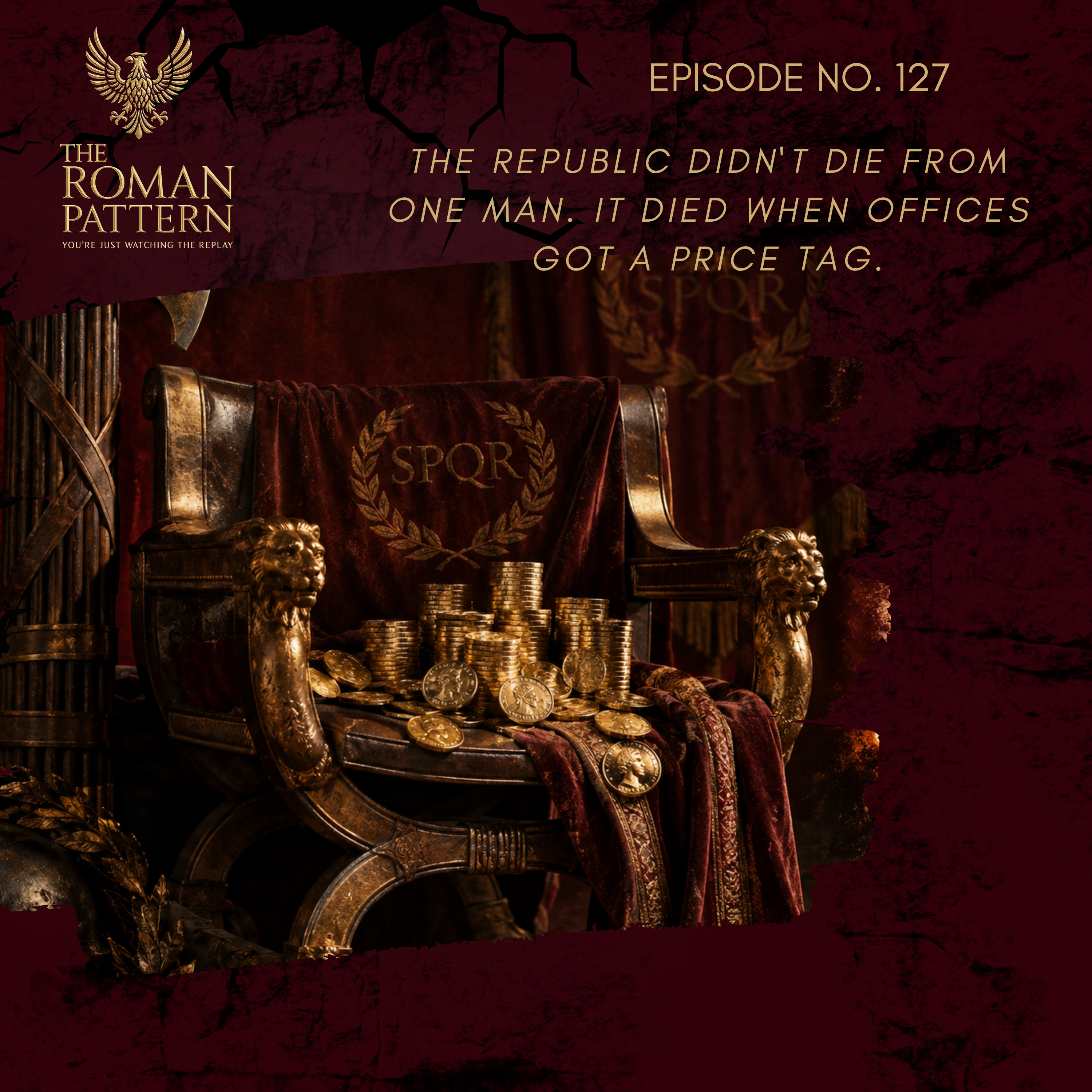
The Republic Didn't Die From One Man. It Died When Offices Got a Price Tag.

The Roman Republic didn't collapse because one man grew too powerful. It collapsed because the offices themselves acquired a market price, and everyone kept showing up to work. In this episode we walk the decade between Sulla's abdication and the First Triumvirate: the years Crassus built his fortune out of proscriptions and fire brigades, Pompey extorted a consulship at 35 with no prior office, Cicero prosecuted Verres and learned that you cannot prosecute your way out of a system where the prosecutors are the next defendants, Clodius took a plebeian name in an afternoon so he could weaponize the tribunate, and Cato's incorruptibility supplied the final push that produced the Triumvirate. This is the Money-Borders-Power framework applied to the middle piece: what happens when private wealth becomes a substitute for legal authority, and the written rules stay perfectly valid while the actual decisions get made somewhere else. The Republic still met. The consuls still processed through the streets. Everyone kept showing up to work. That's the part worth understanding. 🏛️ Subscribe for the full Fall of the Republic arc. CHAPTERS: 00:00 Cold open: the office with a market price 01:29 Intro: Pompey, Crassus, and money coming into Rome 05:28 Sulla's lock, and the cash he left on the table 10:33 The consulship of 70 BC: how an exception gets laundered 15:22 Cicero vs. Verres, the trial that changed nothing 19:55 The pirate command: a second Roman government 28:53 Pompey disbands his army, and the Senate refuses him 30:35 The machinery: how offices got a price tag 36:46 Clodius, the streets, and Cato's last stand 44:47 60 BC: three men write down what Rome was already running 📚 SOURCES Primary: Cicero, In Verrem (Actio Prima & Actio Secunda) — the three-year budget line Cicero, Ad Atticum 4.15 — the July 54 BC interest-rate spike (4% → 8%) and the perjury contract read aloud in the Senate Cicero, Pro Lege Manilia (66 BC) — carrying the eastern command to Pompey Plutarch, Life of Crassus; Life of Pompey; Life of Cato Minor; Life of Cicero Sallust, Bellum Catilinae Cassius Dio, Roman History, Books 36–37 (the Gabinian and Manilian laws; the 17-of-35 tribes count) Appian, Civil Wars Books 1–2 Secondary: Ronald Syme, The Roman Revolution (1939) — "whatever the form of government, an oligarchy lurks behind the facade" Erich Gruen, The Last Generation of the Roman Republic (1974) Fergus Millar, The Crowd in Rome in the Late Republic (1998) Ernst Badian, Publicans and Sinners (1972) Robin Seager, Pompey the Great: A Political Biography Elizabeth Rawson, Cicero: A Portrait Modern parallel references: Citizens United v. FEC 558 U.S. 310 (2010); SpeechNow.org v. FEC 599 F.3d 686 (D.C. Cir. 2010) Authorization for Use of Military Force, Pub. L. 107-40 (Sept. 18, 2001) Stop Trading on Congressional Knowledge Act (STOCK Act), Pub. L. 112-105 (2012) ━━━━━━━━━━━━━━━━━━━━━━━━━━━━ ▶️ THE FALL OF THE REPUBLIC ARC (in order): • Tiberius Gracchus • Marius • The Social War • Sulla • Spartacus • The Men Who Bought the Republic ← you are here • Pompey • Cicero, Catiline & the last constitutional voice • Caesar in Gaul → the Rubicon • Actium

September 21, 2026Episode 12520 min

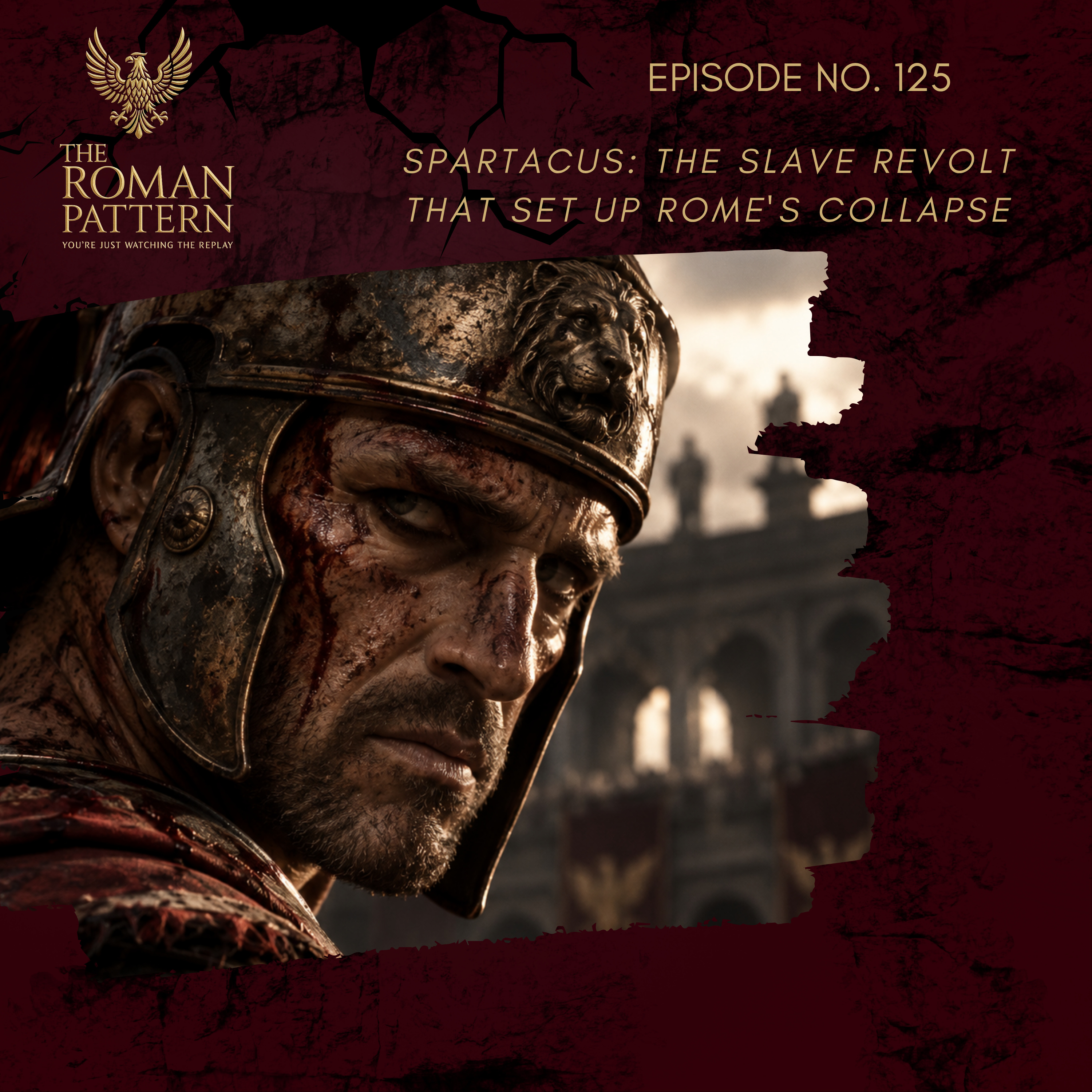
Spartacus: The Slave Revolt That Set Up Rome's Collapse

Hollywood sold you a hero in chains. Forget it. That's not what broke Rome. What broke Rome was what happened after Rome won. By 73 BC, Rome had stopped running on its citizens. It was running on slaves. Around a fifth of the peninsula was enslaved. In whole districts of Lucania and Apulia, the men working the land outnumbered the men who owned it by margins that should have frightened somebody. So when 78 gladiators broke out of a school in Capua with kitchen knives and made it to Mount Vesuvius, it wasn't the kind of prison riot Rome was used to. It was the foundation cracking. In three years, Spartacus built an army the size of a consular force, defeated both sitting consuls of Rome in the same season, and nearly reached the Alps. Rome eventually crushed the revolt. Marcus Licinius Crassus took extraordinary command with 8-10 legions — four times what any citizen should have commanded — cornered Spartacus in the toe of Italy behind a 35-mile wall built across the peninsula, and killed him at the Silarius River in 71 BC. Then he crucified 6,000 captured survivors along the Appian Way from Capua to Rome. 130 miles of crosses. Rome called it a warning. It was state terror as domestic policy. And then Crassus and Pompey camped their armies outside Rome and demanded the consulship for 70 BC — dismantling the Sullan constitutional restoration in the process. The template was set: extraordinary crises justify extraordinary commands, and extraordinary commands become permanent tools. Every extraordinary command that followed — Pompey against the pirates in 67, Pompey against Mithridates in 66, Caesar against Gaul in 58 — was justified using the Spartacus precedent. When Caesar crossed the Rubicon 22 years later, he was following the pattern Crassus and Pompey had already set. Rome could win the war. It couldn't survive winning it. This is Episode 125 of The Fall of the Republic series on The Roman Pattern. Chapters: 00:00 Rome could win the war 01:07 Why Spartacus matters 02:19 The slave economy — money as the first fault line 04:15 Capua — 78 gladiators with kitchen knives 05:32 Vesuvius and Glaber's rout 06:47 Borders as the second fault line 07:38 The army grows 08:34 72 BC — both consuls defeated 09:55 Power as the third fault line 10:16 Crassus takes command 11:31 Decimation — 50 men beaten to death 13:15 The wall across Italy 13:40 The Silarius River 14:44 6,000 crosses on the Appian Way 15:46 Pompey steals the credit 16:33 70 BC — Crassus and Pompey demand the consulship 17:22 The Sullan reforms dismantled 17:48 The kill chain 18:42 The template for every future extraordinary command 19:12 Winning killed Rome Sources referenced in this episode: — Plutarch, Life of Crassus (decimation, Pompey letter) — Appian, The Civil Wars, Book 1 (main narrative, 6,000 crucifixion count) — Sallust, Histories (fragments) — Livy, Periochae 95-97 — Florus, Epitome of Roman History — Barry Strauss, The Spartacus War (definitive modern account) — Walter Scheidel (enslaved population estimates) — Ronald Syme, The Roman Revolution (1939) The Fall of the Republic series continues next Monday with The Men Who Bought the Republic — how Crassus and Pompey turned military victory into the machinery that made every future strongman possible.

September 14, 2026Episode 12323 min

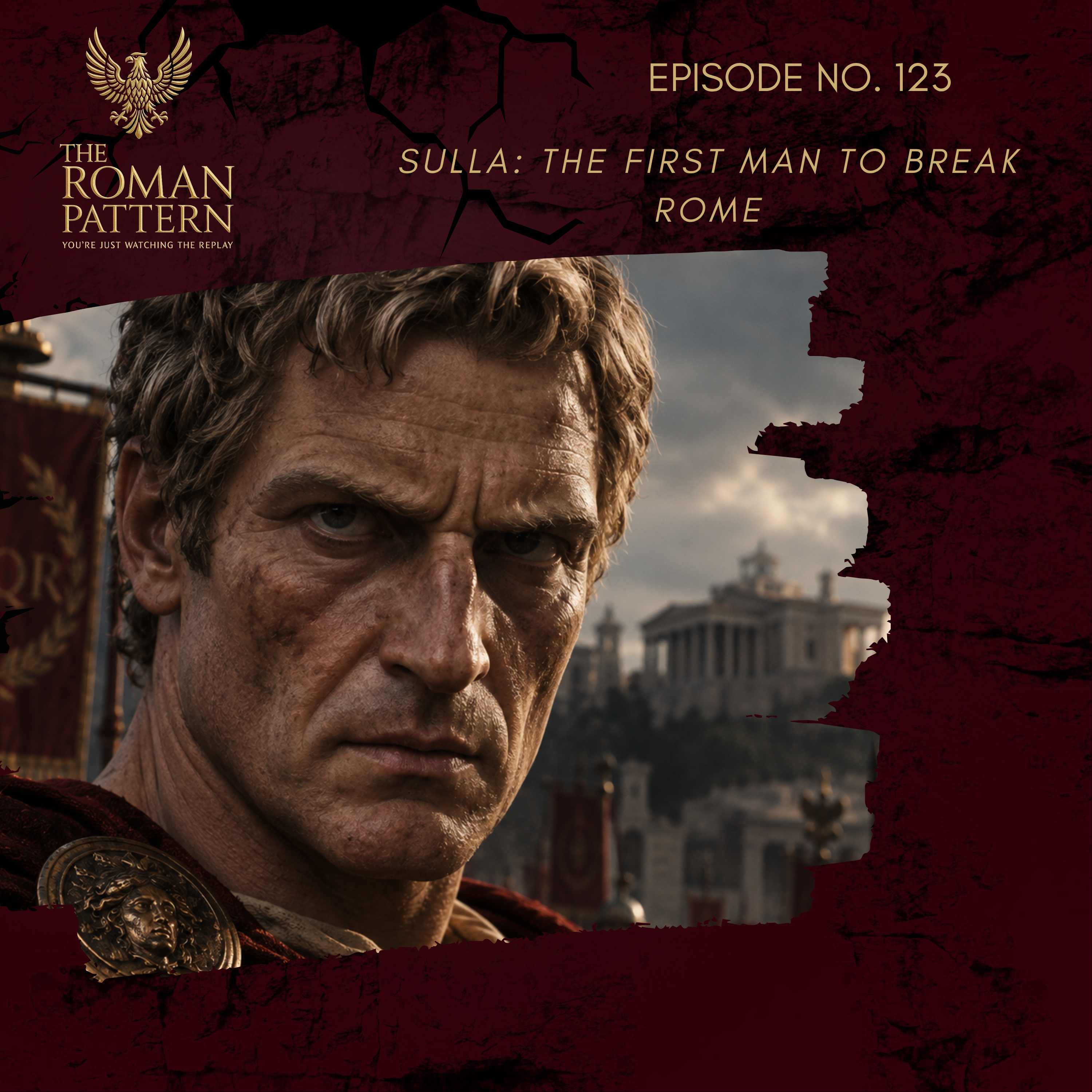
Sulla: The First Man to Break Rome

Caesar didn't break Rome. 50 years before Caesar ever mattered, Sulla did — and he did it while trying to save the Republic. Rome spent 400 years building constraints to stop a king. Two consuls, not one. One-year terms. Ten tribunes with veto power. No army inside the sacred boundary of the city. No office without a term limit. It worked because everyone agreed to lose — you lost an election, you waited your turn. Sulla broke every one of those constraints in five years. Legions camped inside the pomerium where no army had legally stood for four centuries. The first proscription list nailed to the forum wall — turning murder into law and confiscation into budget policy. The dictator's chair, empty for 120 years, dragged back out with no expiration date. Then he walked away. He resigned the dictatorship, served an ordinary consulship the next year, and retired to his villa in Puteoli as a private citizen. He thought the precedents wouldn't matter because he hadn't kept power. He was wrong. This is Episode 123 of The Fall of the Republic series on The Roman Pattern — the story of how Sulla set every precedent Caesar, Antony, and Augustus would use to destroy the Republic, while genuinely believing he was saving it. He is not a villain who destroyed the Republic because he hated it. He is worse. He is the repairman who used dynamite to fix the plumbing. Chapters: 00:00 Caesar didn't break Rome 01:30 What the Republic actually was 02:47 Sulla's origin — patrician without money 03:51 Jugurtha and the signet ring 05:26 The Marian reforms and shifting loyalties 06:12 The Social War 07:55 Consul at 50 08:44 The Sulpician crisis 09:36 The march on Rome 11:22 East to fight Mithridates 11:48 Marius and Cinna purge Rome 13:09 Return with five legions 13:59 The Colline Gate 15:07 Dictator with no time limit 16:00 The proscription lists 17:15 Fiscal policy through murder 18:08 The constitutional reforms 19:42 The young officers watching — Pompey, Crassus, Caesar 20:09 Sulla walks away 20:56 The settlement dismantled 21:26 The Second Triumvirate copies the machinery 22:47 Precedents don't die Sources referenced: — Plutarch, Life of Sulla — Appian, The Civil Wars, Book 1 — Sallust, Bellum Jugurthinum — Cicero (contemporary references) — Cassius Dio, Books 30-35 — Arthur Keaveney, Sulla: The Last Republican — Ronald Syme, The Roman Revolution (1939) — Mary Beard, SPQR — Erich Gruen, The Last Generation of the Roman Republic The Fall of the Republic series continues next Monday with Spartacus — the slave revolt that set up Rome's collapse.

September 7, 2026Episode 12118 min

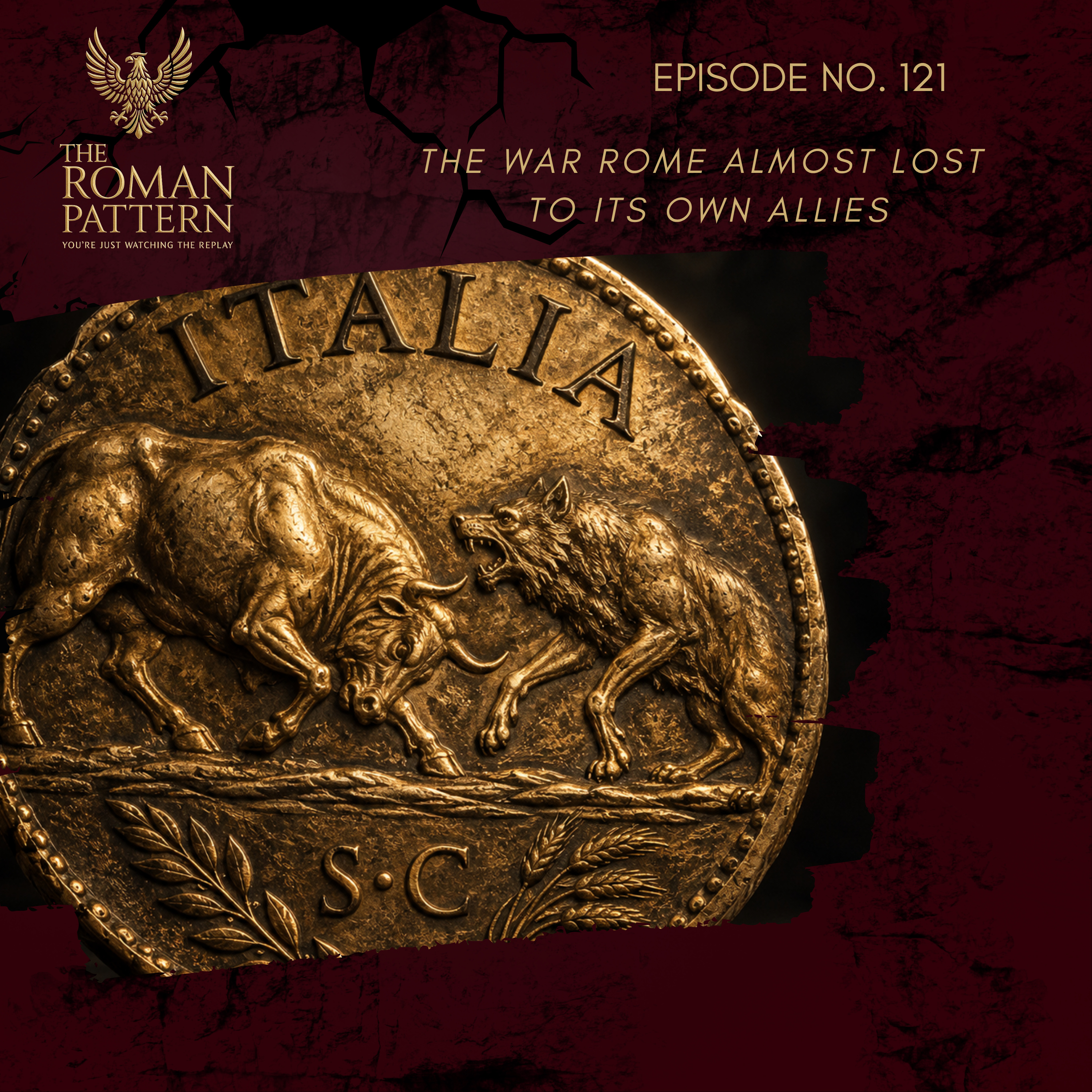
The War Rome Almost Lost to Its Own Allies

The war that nearly killed Rome wasn't fought against foreigners. It was fought against the men Rome refused to call Romans. For 100 years, Rome took the sons of its Italian allies for its legions, sent them to fight in Roman armies, buried them when it went badly — and denied them citizenship. Rome could see the problem. Reformers proposed fixing it for decades. Every one of them was killed. Then in 91 BC, Marcus Livius Drusus was assassinated at his own front door for putting Italian citizenship on the table, and the Italian allies stopped asking. They built a country. They renamed a town called Corfinium to "Italica" and made it a capital. They set up a senate of 500. They elected two consuls. They minted a coin with an Italian bull goring the Roman wolf. And they nearly destroyed Rome inside a single year. This is Episode 121 of The Fall of the Republic series on The Roman Pattern — the story of how a century of refused citizenship became a secession, how war forced Rome to grant peacefully what it had refused violently, and how the poisoned victory that ended the Social War set the fuse for Sulla to march on Rome itself. Chapters: 00:00 The war that nearly killed Rome 01:50 Where we are in the series 03:45 The arithmetic — 100 years of coalition without citizenship 06:10 Rome could see the problem 06:38 Marcus Livius Drusus the Younger 07:25 Three reformers, three deaths 07:49 The allies build a country 08:40 The Italia coin — the bull goring the wolf 09:36 Not rebellion — secession 09:59 Rome starts losing (90 BC) 10:49 Rome capitulates — the Lex Julia 12:00 The Lex Plautia Papiria — 60 days to enroll 12:43 Rome resents the concession 13:06 The tribal dilution mechanism 13:33 Publius Sulpicius Rufus and the new citizens 14:33 Sulla vs. Marius — two men each correct 14:56 Sulla at Nola with his legions 15:24 The march on Rome 16:12 Setup for next week: Sulla 16:36 The full pattern 17:24 What this means beyond Rome 17:43 When you force under fire what you refused in peace Sources referenced in this episode: — Appian, The Civil Wars, Book 1 — Diodorus Siculus (Italian confederation constitutional details) — Cicero, Pro Archia (Lex Plautia Papiria specifics) — Velleius Paterculus, Roman History — Plutarch, Life of Sulla — Livy, Periochae 71-76 — Emilio Gabba, Republican Rome, The Army and the Allies — H.H. Scullard, From the Gracchi to Nero — Ronald Syme, The Roman Revolution (1939) Sulla marches on Rome next Sunday.

September 2, 2026Episode 12019 min

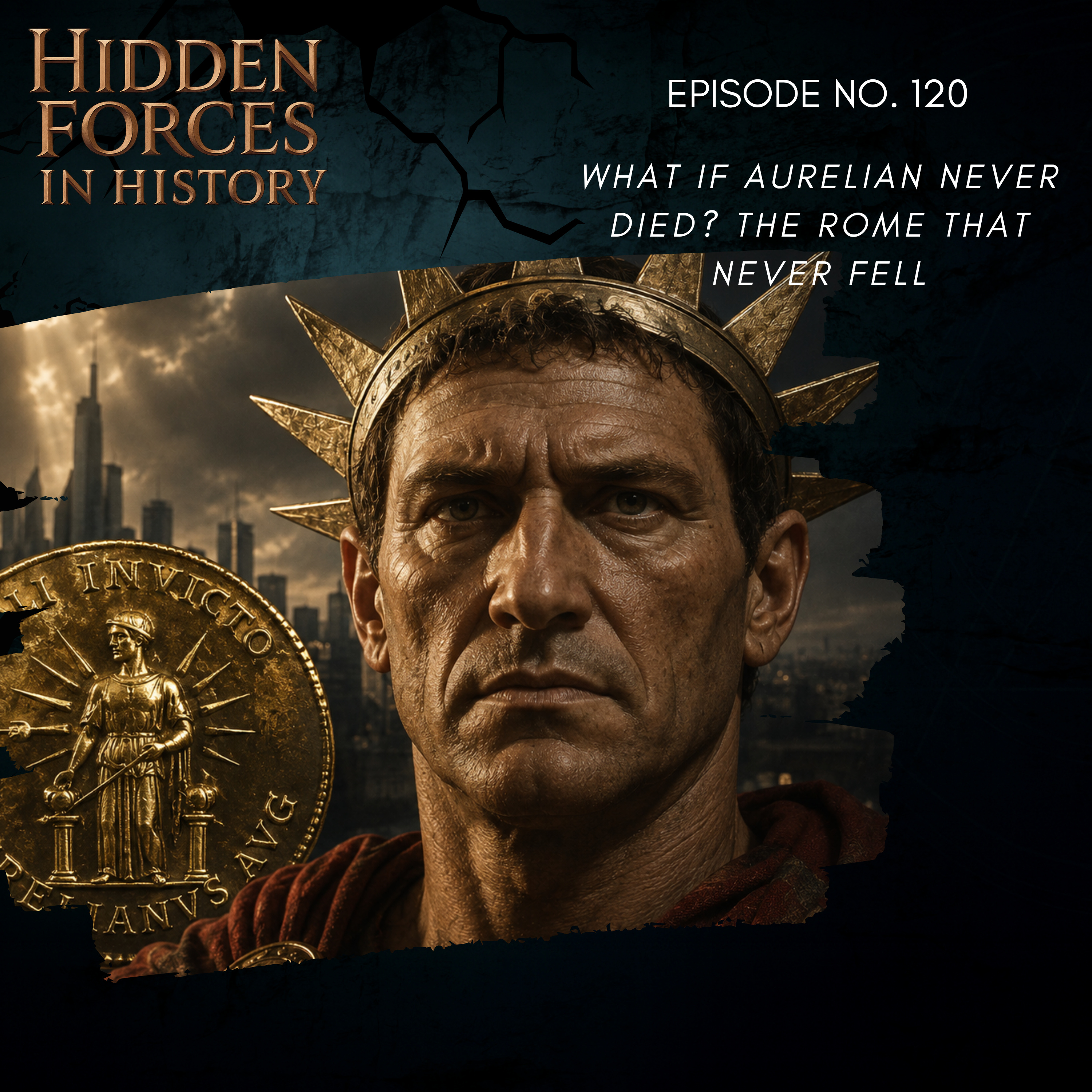
What If Aurelian Never Died? The Rome That Never Fell

A counterfactual thought experiment — a departure from the usual researched history on this channel. Thanks to subscriber @history1099 for the idea. In the real world, the Emperor Aurelian reunified a collapsing Rome, rebuilt its currency around the Unconquered Sun, and was murdered in 275 AD by his own officers over a forged kill-list — nine years before Diocletian had to redo the whole recovery. But what if the blade had missed? This is the "what if": a Rome that never fell, a world of three empires instead of a hundred nations, no America, and a war fought not with armies but on a ledger. It's a fiction — but the coin, the currency reform, and the assassination at the center of it are real. Most of my Rome work now lives on The Roman Pattern — heavily researched deep dives on the Republic, the Empire, and civilizational collapse. If you want more, that's the place: [Roman Pattern link] Chapters 0:00 – 2026: Three Empires Run the Planet 1:42 – The Premise (and the Subscriber Who Sparked It) 2:53 – Aurelian's Coin and the Unconquered Sun 3:53 – A Coin as Control: Money, Ruler, and God in One Face 5:20 – The Families Who Kept the Ledger 6:53 – Why Rome Had No Head to Cut Off 7:43 – From Parchment to a Machine Made of Light 9:09 – The Ledger Decides What's Allowed to Be True 10:03 – The Lie That Swallowed an Ocean: Britannia Never Fell 11:33 – The Resistance You're Feeling Right Now 12:23 – How China and Persia Got "Handled" 14:21 – One Shared System Across Three Empires 14:50 – The Oldest Cartel on Earth 15:34 – 2026: The War Fought on Ledgers 16:31 – How to Spot It: The Money in Your Pocket 17:39 – What Aurelian Really Survived The real history behind the counterfactual (Everything past "Aurelian survives" is invented; these cover the real Aurelian, whose reforms and murder anchor the fiction.) Alaric Watson, Aurelian and the Third Century — the standard academic account John F. White, Restorer of the World: The Roman Emperor Aurelian Kenneth Harl, Coinage in the Roman Economy — the real currency debasement and reform Zosimus, New History — primary source Historia Augusta, Life of Aurelian — primary source (use with caution; notoriously unreliable)

August 31, 2026Episode 11931 min

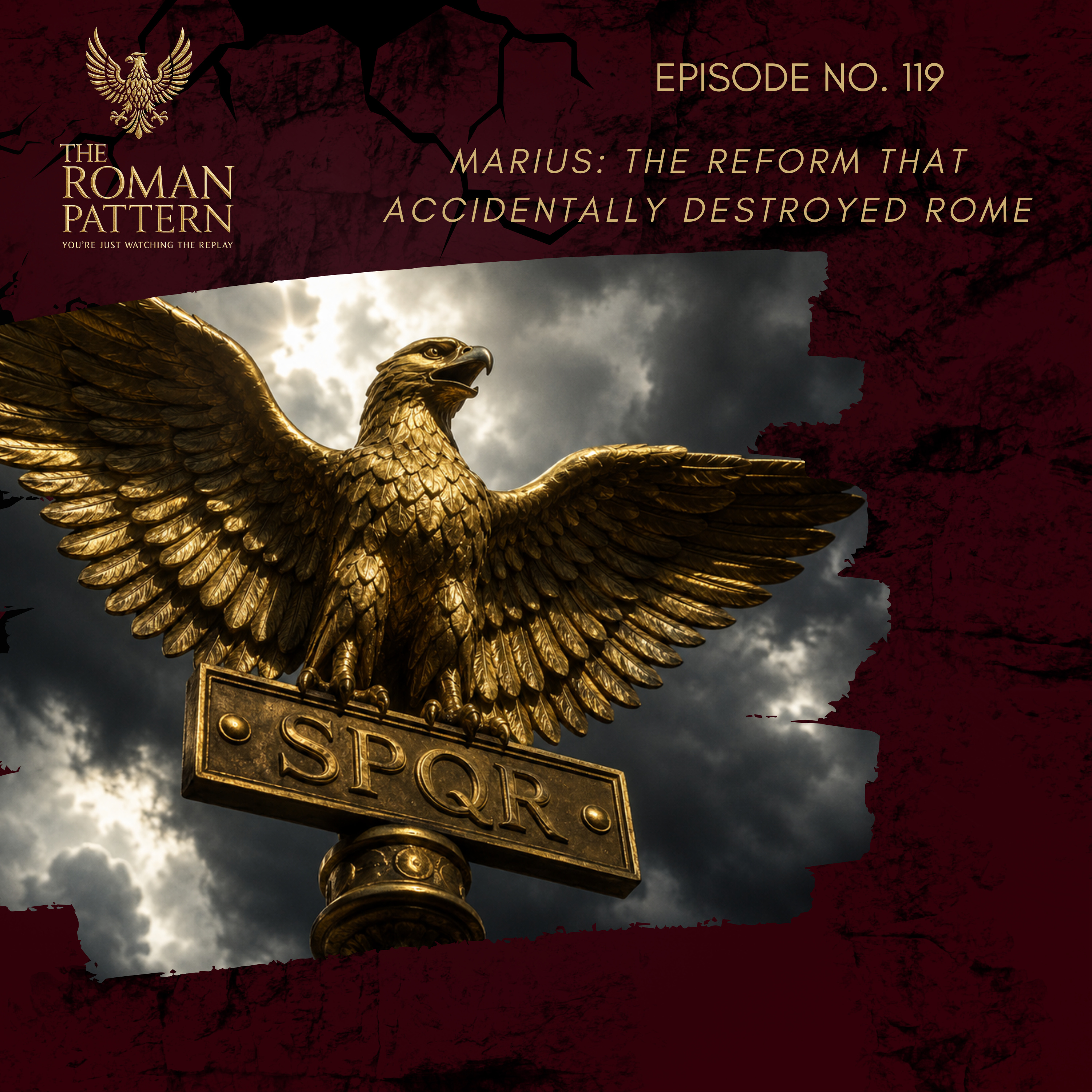
Marius: The Reform That Accidentally Destroyed Rome

You don't need a bad man to destroy a republic. You need a competent one with a practical problem and a solution that works a little too well. Gaius Marius should never have mattered. He was a nobody from a hill town southeast of Rome. He clawed his way into the Senate through military competence because his family had no name and no network. And then he faced a genuine crisis — Rome literally could not fill its legions. He fixed it. He removed the property qualification that had kept the landless poor out of military service, saved Rome from Jugurtha in North Africa, and then saved Rome again from the Germanic tribes that nearly annihilated it in 105 BC. He did what nobody else could do. And the same reform that saved Rome killed the Republic 60 years later. This is the mechanism. Not the myth. The specific chain of cause and effect that turned a manpower reform into personal military armies loyal to individual generals rather than to the state — the mechanism Sulla would use in 88 BC to march on Rome, and Caesar would use in 49 BC to finish the Republic. This is Episode 119 of The Fall of the Republic series on The Roman Pattern. Chapters: 00:00 How republics actually die 01:36 Where we are in the series 02:28 Marius: the new man from Arpinum 04:34 Rome's manpower crisis — the property qualification problem 06:35 The Jugurtha War — "a city for sale" 08:07 107 BC — Marius opens the ranks 11:05 Aquae Sextiae and Vercellae — Rome saved from annihilation 15:07 The mechanism — how soldier loyalty shifted from Rome to the general 17:46 Saturninus and the first veteran land grants (103, 100 BC) 18:33 Breaking the Lex Genucia — five consecutive consulships 21:11 Sulla learns the trick 22:17 88 BC — Sulla marches on Rome 24:18 Marius flees — two ruins looking at each other 25:06 Return, purges, and 17 days 26:29 Money, Borders, Power — the three fault lines 28:17 The pattern — load-bearing constraints 30:36 Next week: Sulla Sources referenced in this episode: — Sallust, Bellum Jugurthinum — Plutarch, Life of Marius — Appian, The Civil Wars, Book 1 — Livy, Periochae 65-80 — Orosius, Histories Against the Pagans — Mary Beard, SPQR — Ronald Syme, The Roman Revolution (1939) — H.H. Scullard, From the Gracchi to Nero The Fall of the Republic series continues Monday with Sulla — the first man in Roman history to march his legions on Rome itself. Subscribe for The Roman Pattern every Monday. #Rome #MarianReforms #RomanRepublic

August 26, 2026Episode 11828 min

The House of Romanov: 304 Years to a Basement in Yekaterinburg

On July 17, 1918, the Romanov family was shot in a basement in Yekaterinburg — and most history files it under "murder." That's too small. The dynasty didn't die that night. It died in 1613, the moment the first Romanov built a state that was nothing but the Tsar: a throne with no machine underneath it, no institution that could outlive one man or reform itself while he was alive. This is the 300-year demolition — how a state built around a sacred autocrat modernized its economy, froze its politics, and left nothing to catch the crown when it finally fell. From Michael Romanov and the Time of Troubles, through Peter the Great, the serf emancipation, Bloody Sunday and the fatal October Manifesto, to a railway carriage in 1917 and a cellar in 1918. And the fault line runs through every empire that ever mistook a man for a machine. CHAPTERS 0:00 – The Romanovs Died 300 Years Before the Basement 2:01 – 1613: The Time of Troubles and a 16-Year-Old Tsar 3:42 – The Councils That Were Never Written Down 5:23 – Peter the Great: Modern Tools, Medieval Politics 6:15 – The Patrimonial State 7:23 – The 19th-Century Trap: Reform vs. Reaction 7:47 – Alexander II Frees the Serfs 8:38 – One Morning in 1881: A Signature and a Bomb 9:19 – Alexander III Slams the Door 10:45 – Nicholas II: The Wrong Man for the Century 11:56 – The Ibn Khaldun Pattern 13:42 – 1905 and Bloody Sunday 15:13 – The October Manifesto: The Fatal Half-Reform 17:08 – The Accelerants: Rasputin and the War 19:57 – February 1917: The Crown Falls Into a Vacuum 20:51 – Abdication in a Railway Carriage 22:40 – 304 Years, and the Anastasia Myth 23:55 – The Basement: Yurovsky's Own Account 26:13 – The Pattern: Every One-Man State Is a Countdown Sources & Further Reading Simon Sebag Montefiore, The Romanovs: 1613–1918 — the founding bargain and the dynastic arc Richard Pipes, Russia Under the Old Regime — the "patrimonial state" argument Orlando Figes, A People's Tragedy — society outrunning the crown Dominic Lieven, The End of Tsarist Russia — the war as accelerant Ibn Khaldun, The Muqaddimah — the cyclical (asabiyya) frame Leon Trotsky, History of the Russian Revolution — primary source, used critically on February 1917 Yakov Yurovsky's account — the executioner's own record of the night

August 24, 2026Episode 11723 min

The Real Reason the Roman Senate Killed One of Its Own in 133 BC

You don't need a tyrant to kill a republic. You just need permission. 133 BC. The Capitol. Broken benches, snapped legs, senators pouring out of a meeting to attack an election already underway. For more than three and a half centuries — since the tribune of the plebs was created around 494 BC — no sitting tribune had been touched by his own government, let alone killed. Tribunes were sacrosanct, physically untouchable under Roman law. If you laid a hand on one, any Roman citizen could legally kill you for it. That protection was written into the Constitution specifically to shield ordinary Romans from the Senate. On the day Tiberius Gracchus stood for reelection, that protection dissolved in about ten minutes. Scipio Nasica — Rome's Pontifex Maximus, its own chief priest — led a group of senators out of the meeting where they'd just failed to persuade the consul to act. They snapped the legs off their own benches. They walked to where the assembly was gathering. They beat Tiberius Gracchus and about 300 of his supporters to death, and threw his body into the Tiber like a criminal. The moment the first bench leg came down on his skull, the Roman Republic entered a phase it would never leave. Every Roman strongman who came after — Marius, Sulla, Caesar — could look back at this one afternoon and say the same thing: it's already been done. But here's what most treatments miss: Tiberius Gracchus was RIGHT about the problem. The land crisis was real. The recruiting collapse was real. The illegally-held ager publicus was real. What killed the Republic wasn't the reform itself. It was the specific way he pushed it through, and the specific way the Senate chose to answer. This is Episode 3 of the "Fall of the Roman Republic" series and the first specific case episode after Ep 113 (the system explained) and Ep 115 (the 100-year framework primer). Every subsequent episode traces one more layer breaking off the same structure that cracks right here in 133 BC. CHAPTERS: 00:00 The Day the Roman Senate Killed One of Its Own 04:25 The First Stone Falls Out of the Arch 05:36 Who Tiberius Gracchus Actually Was (Cornelia's Son, Scipio's Grandson) 07:00 The Empty Countryside That Radicalized Him 09:22 The Land Reform That Wasn't Even Radical 12:03 The Octavius Veto: The Senate Breaks the First Norm 14:32 Deposing Octavius: Tiberius Answers by Breaking Another 15:46 The Re-election Bid That Sealed His Fate 16:33 Scipio Nasica Leads the Killing on the Capitol 17:45 Why Every Roman Warlord After This Cites 133 BC 19:05 Money, Borders, Power: The Framework Applied 22:34 Next: Gaius Gracchus and the Escalation Sources & further reading: Plutarch, Life of Tiberius Gracchus — the specific killing details (bench legs, 300 supporters, body in Tiber), Octavius as a large ager publicus holder Appian, The Civil Wars, Book 1 — the "first internal Roman quarrel settled by murder inside the city" framing Mary Beard, SPQR: A History of Ancient Rome — the argument that Tiberius's actual program was conservative, and the ferocity of reaction was what was radical David Stockton, The Gracchi — the specialist monograph on the brothers Erich Gruen, The Last Generation of the Roman Republic — the definitive scholarly account of the Republic's decline Andrew Lintott, Violence in Republican Rome — for the specific pattern of political violence becoming normal Tom Holland, Rubicon: The Last Years of the Roman Republic — accessible narrative of the fall Livy, Periochae — the surviving summary for this period

August 19, 2026Episode 11618 min

Alexander the Great's Empire Died in Months, One General Made It Last 300 Years

When Alexander the Great died in 323 BC with no heir, his generals tore his empire apart in a single decade. One of them — Ptolemy — took the strangest piece of all, Egypt, and turned it into a dynasty that outlasted Alexander by nearly 300 years. He didn't rule as a conqueror. He put on the pharaoh's crown, funded the old temples, engineered a brand-new god, and made a Greek bloodline from Macedon look like the rightful heirs to 3,000 years of Egyptian kingship. This is the continuity playbook — the exact method every occupying power since, from Augustus's Rome to British India to the modern IMF, has used to make conquest look like continuity. Conquest ends. Legitimacy has to be renewed every single day. Chapters 0:00 – Alexander's Empire Was a Countdown 2:33 – Alexander Dies in Babylon With No Heir 3:46 – The Wars of the Diadochi 4:31 – Ptolemy Takes the Strangest Piece: Egypt 5:13 – Stealing Alexander's Corpse 6:07 – A Greek General Becomes Pharaoh (305 BC) 7:29 – The Legitimacy Playbook: Regalia & the Priesthood 8:33 – Sibling Marriage & the Invented God Serapis 9:59 – Two Laws, One Kingdom 11:00 – The Library of Alexandria as Soft Power 11:56 – The Dynasty Turns Brutal 13:39 – How Egypt Became Rome's Client State 14:31 – Cleopatra VII, the Last Ptolemy 16:50 – Actium and the Fall of Egypt 17:15 – Augustus Runs Ptolemy's Playbook 19:37 – The Same Trick: British India, French North Africa, the IMF 21:12 – Why Legitimacy Beats Conquest Sources & Further Reading Diodorus Siculus, Bibliotheca Historica — the funeral-cart / corpse interception Justin, Epitome of the Philippic History of Pompeius Trogus — Ptolemy VIII Physcon Plutarch, Life of Antony — Cleopatra's languages and self-presentation Mary Beard, SPQR: A History of Ancient Rome — Rome ruling through local systems William Dalrymple, The Anarchy — the East India Company / princely-state model Günther Hölbl, A History of the Ptolemaic Empire — the standard modern scholarly account

August 17, 2026Episode 11533 min

The Real Reason the Roman Republic Actually Died (It Took 100 Years)

Rome didn't fall to conquest. It killed itself over 100 years, one broken norm at a time. The Roman Republic held together for nearly 500 years through a system of layered checks and balances (that's the previous episode). This video is the framework for how that system came apart — from 133 BC, when Tiberius Gracchus was beaten to death by his own Senate, to 27 BC, when Augustus quietly renamed himself and became the first emperor. Ronald Syme's "The Roman Revolution" (1939) is the intellectual scaffolding for this whole Republic series. Syme's argument, in essence: the last 100 years of the Roman Republic weren't a class war or a foreign invasion — they were a slow-motion suicide. A sequence of political-military strongmen each breaking more laws than the man before them, until there was no Republic left to defend. This episode is a primer, not a deep-dive. It walks quickly through every major figure in the arc — Tiberius and Gaius Gracchus, Marius, Sulla, Pompey, Caesar, Augustus — to give you the shape of what's coming in the rest of the Republic series. Every subsequent episode will take one of these figures and go deep on how they specifically broke the layer of the system they broke. Understand these 100 years and you won't be watching history anymore. You'll be looking in a mirror. CHAPTERS: 00:00 Empires Don't Die of Murder — They Die of Suicide 02:47 Why We're Going Back to the Republic 03:21 The Ronald Syme Framework (The Roman Revolution) 05:46 133 BC: Tiberius Gracchus and the First Political Killing 11:20 Gaius Marius: 7 Consulships and the Broken Rules 13:09 Sulla: Dictator, Proscriptions, and the Reformed Senate 17:36 Pompey the Great Rises 19:24 Julius Caesar: Broke Patrician to First Triumvir 22:12 The Consulship of Julius and Caesar (59 BC) 23:48 The Gallic Wars and Crossing the Rubicon (49 BC) 29:02 The Second Triumvirate and Actium 31:05 The Word Salad That Created the Principate SOURCES & FURTHER READING: Ronald Syme, The Roman Revolution (1939) — the central framework the whole series is built on Mary Beard, SPQR: A History of Ancient Rome — for Roman institutional context and the mos maiorum framework Tom Holland, Rubicon: The Last Years of the Roman Republic — the accessible narrative of the fall Erich Gruen, The Last Generation of the Roman Republic — the definitive modern scholarly account of the decline Plutarch, Lives — the biographical primary source for Tiberius Gracchus, Marius, Sulla, Pompey, Caesar Suetonius, The Twelve Caesars — for Caesar and Augustus specifically Cassius Dio, Roman History — for the late Republic and Augustan period Appian, The Civil Wars — Book 1 explicitly frames the Gracchi as the beginning of the civil wars #RomanRepublic #FallOfTheRomanRepublic #JuliusCaesar #Augustus #RomanRevolution #RonaldSyme #TheRomanPattern

Is this your show?

Claim this listing to keep it up to date, reach guests who want to pitch you, and manage bookings with Guestify.

Claim this listing

More Business podcasts