Find partners
Cultivation Elevated - Indoor Farming, Cannabis Growers & Cultivators - Pipp Horticulture

Cultivation Elevated - Indoor Farming, Cannabis Growers & Cultivators - Pipp Horticulture

Hosted by Pipp Horticulture

Episodes

52

Latest episode

May 2026

Language

EN

About the show

If you are a grower or owner looking to optimize your existing or new cultivation facility or anyone looking to cultivate more in less space, then this is the show for you. Each week, join Host Michael Williamson as he travels across the country, to explore the world of vertical farming and the future of cannabis and food production through his conversations with leading industry operators, growers and executives who are demonstrating success and resilience as growers and cultivators. Each episode provides stories and key insights that will inspire and show you first-hand, how each of these companies have overcome challenges, and found their own path to success. Brought to you by Pipp Horticulture. This podcast uses the following third-party services for analysis: Podtrac - https://analytics.podtrac.com/privacy-policy-gdrp
Listen to episodes

52 recent
May 1, 202626 min

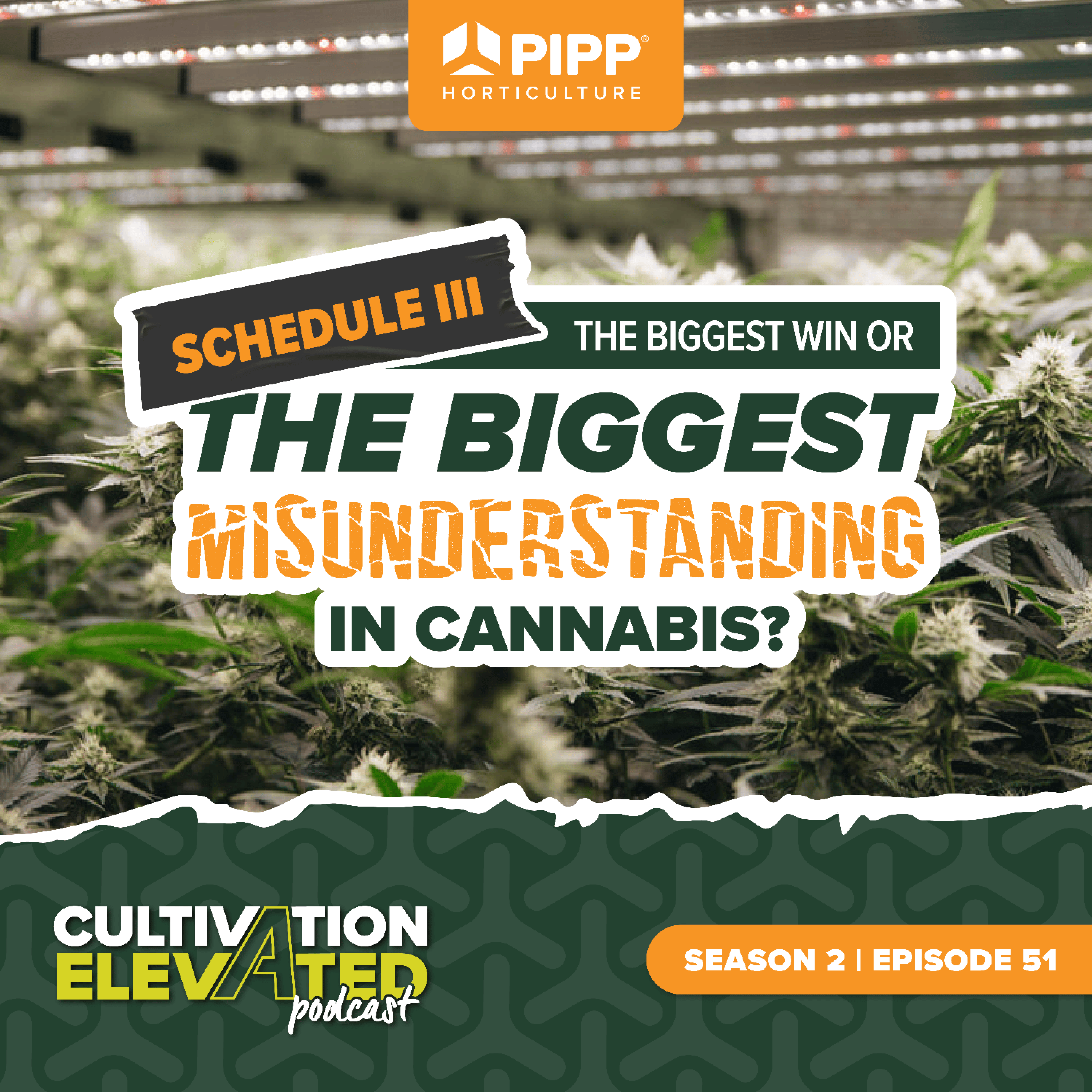
Schedule III: The Biggest Win or the Biggest Misunderstanding in Cannabis?

Licensed medical cannabis has officially moved from Schedule I to Schedule III, but most operators still don't fully understand what changed, what didn't, and where the real risks and opportunities are. In this episode of Cultivation Elevated, host Michael Williamson sits down with cannabis attorney Christine Seney for a no-fluff breakdown of what rescheduling actually means on the ground, financially, operationally, and strategically.Christine works directly with MSOs, investors, and executive teams on licensing, compliance, deal structure, and capital strategy across multiple state markets. This is not outside commentary. This is real-time legal strategy.Timestamps:0:00 Introduction1:44 The most costly misconception operators have about Schedule III2:23 Medical vs. adult use: an expensive distinction3:54 Is this a tax issue, a compliance issue, or both?4:03 What MSO CFOs should be doing right now around 280E4:26 The 60-day DEA filing window explained5:16 Biggest missed opportunities in the next 6 to 12 months5:49 Import/export opportunities and FDA recognition6:13 Pharma partnerships and health insurance coverage for patients7:19 Banking, capital access, and legitimizing the industry8:47 Uplisting, credit card processing, and reducing transaction friction9:32 Why insurance coverage for medical patients would be a game changer10:01 Michael's 18 years as an operator and the real cost of medical cannabis therapy11:14 Does rescheduling actually change enforcement risk?11:30 Why DEA enforcement is coming and what it will look like13:10 How federal and state agencies work together on enforcement (Florida example)13:45 What has NOT changed that people think has14:37 IRS guidance still pending, travel caution still applies15:45 The "meaningful domino" analogy16:05 Winners and losers of rescheduling17:06 The CHAMPS case and mixed-license businesses18:27 Why new entrants have a strategic advantage right now19:13 Florida as a case study: medical-only, vertical integration, capital intensity20:46 Could Schedule III actually hurt parts of the cannabis industry?21:28 Big tobacco, big alcohol, and consolidation risks22:33 The craft operator opportunity and why smaller players can still win23:08 GMP, FDA oversight, and pharmaceutical standards coming to cultivation24:27 ASTM cannabis standards and what operators should be watching24:38 The next 3 legal and regulatory dominoes to watch25:15 Adult use descheduling, cartel policy, and the political path forward25:46 Hemp vs. cannabis and whether the two sides eventually collapse together26:23 Closing thoughtsKey topics covered: Cannabis rescheduling, Schedule III cannabis, 280E tax reform, DEA registration, medical marijuana compliance, MSO strategy, cannabis investment, GMP cannabis, FDA cannabis, cannabis banking, SAFE Banking, cannabis enforcement, cannabis legalization, hemp vs cannabis regulation, cannabis tax planning, multi-state operatorsGuest: Christine Senne is a cannabis attorney at Grossman, Roopnarine & Bayó, LLC, where she focuses on regulatory strategy, compliance, and complex business structuring across multiple state markets. She advises operators, investors, and executive teams on navigating licensing, enforcement risk, multi-state expansion, and capital strategy in one of the most highly regulated industries in the country.Christine is known for translating complex legal and regulatory frameworks into clear, practical guidance that operators can execute against. Her work sits at the intersection of law, policy, and real-world operations, making her a trusted advisor to companies scaling in dynamic and often uncertain environments.With the recent shift to Schedule III, Christine is actively working with clients to interpret and respond to this regulatory change in real time, providing critical insight into both the immediate implications and long-term strategic considerations for cannabis operators.Connect With PippPipp Horticulture Website - https://pipphorticulture.com/Pipp Horticulture YouTube - https://www.youtube.com/channel/UC4nNnNCiwS5k5GX7BaXIrbAPipp Horticulture - Facebook - https://www.facebook.com/pipphorticulturePipp Horticulture Instagram - https://www.instagram.com/pipphorticulture/Pipp Horticulture LinkedIn - https://www.linkedin.com/company/18333737/Pipp Horticulture Pinterest - https://www.pinterest.com/pipphorticulture/🎙️Podcast Production by FullCastThis podcast uses the following third-party services for analysis: Podtrac - https://analytics.podtrac.com/privacy-policy-gdrp
March 18, 202638 min

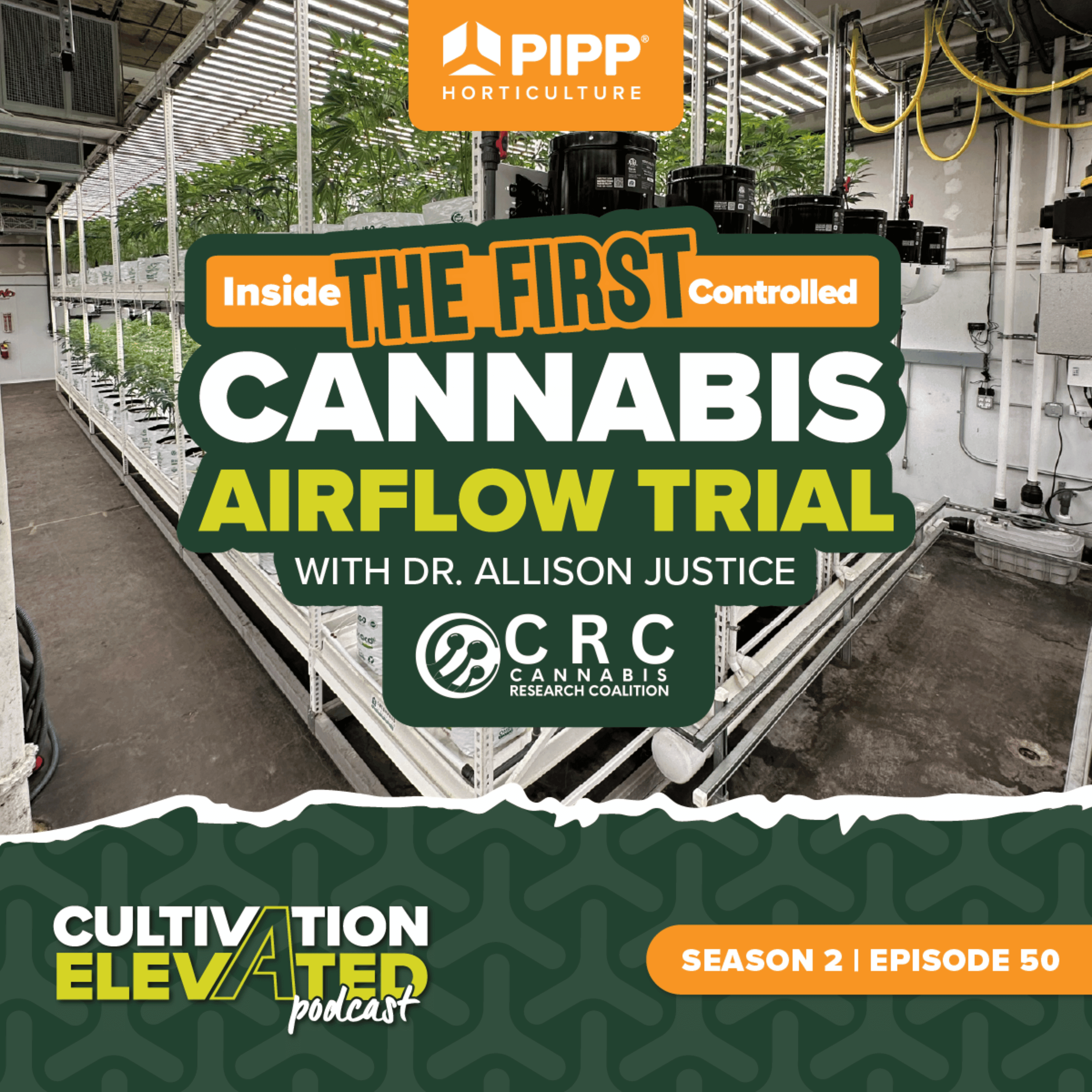
050: Inside the FIRST Controlled Cannabis Airflow Trial

📺 Subscribe & Watch on YouTubeAirflow has long been treated as a background variable in cannabis cultivation, something growers assume is “good enough” if the leaves are moving. But what if airflow is actually one of the most powerful tools for increasing yield and optimizing plant performance? In this episode of Cultivation Elevated, host Michael Williamson sits down with Dr. Allison Justice to discuss findings from one of the first controlled airflow studies conducted in commercial cannabis cultivation.By isolating airflow as a variable and measuring canopy-level air velocity across controlled environments, the research team explored how airflow impacts plant physiology, transpiration, nutrient uptake, crop steering, and yield.The results challenge long-held assumptions about airflow and reveal why consistent canopy velocity may be one of the most overlooked environmental inputs in modern cultivation.If you operate a commercial grow or manage cultivation environments, this conversation highlights why it may be time to stop guessing about airflow and start measuring it.What You’ll Learn • Why airflow is more than just disease prevention• The impact of 0, 200, and 400 feet per minute (FPM) airflow on cannabis plants• How airflow affects transpiration, nutrient uptake, and crop steering• Why breaking boundary layers changes plant physiology• How airflow influenced yield increases and trim ratios• Why consistent airflow across the canopy matters more than simply running fans• How growers can measure airflow using a hot wire anemometerKey Takeaways00:00 – 03:00 Introduction and why airflow is often overlooked in cannabis cultivation03:00 – 07:00 The goal behind the controlled airflow research trial07:00 – 11:00 Understanding boundary layers and how airflow affects plant physiology11:00 – 16:00 Air velocity treatments: 0, 200, and 400 FPM explained16:00 – 20:00 Finding the ideal airflow range for cannabis cultivation20:00 – 24:00 Measuring airflow in grow rooms with a hot wire anemometer24:00 – 28:00 What the airflow study revealed about yield and plant structure28:00 – 32:00 Why airflow improved trim ratios and biomass allocation32:00 – 35:00 Why leaf movement isn’t a reliable airflow indicator35:00 – 38:00 Future airflow research and final cultivation insightsConnect with The CRCWebsite: https://www.cannabisrc.org/Instagram: https://www.instagram.com/CresearchcoalitionLinkedIn: https://www.linkedin.com/company/cannabis-research-coalition/YouTube: https://www.youtube.com/@cannabisresearchcoalitionConnect With PippPipp Horticulture Website - https://pipphorticulture.com/Pipp Horticulture YouTube - https://www.youtube.com/channel/UC4nNnNCiwS5k5GX7BaXIrbAPipp Horticulture - Facebook - https://www.facebook.com/pipphorticulturePipp Horticulture Instagram - https://www.instagram.com/pipphorticulture/Pipp Horticulture LinkedIn - https://www.linkedin.com/company/18333737/Pipp Horticulture Pinterest - https://www.pinterest.com/pipphorticulture/🎙️Podcast Production by FullCastThis podcast uses the following third-party services for analysis: Podtrac - https://analytics.podtrac.com/privacy-policy-gdrp
December 24, 202536 min

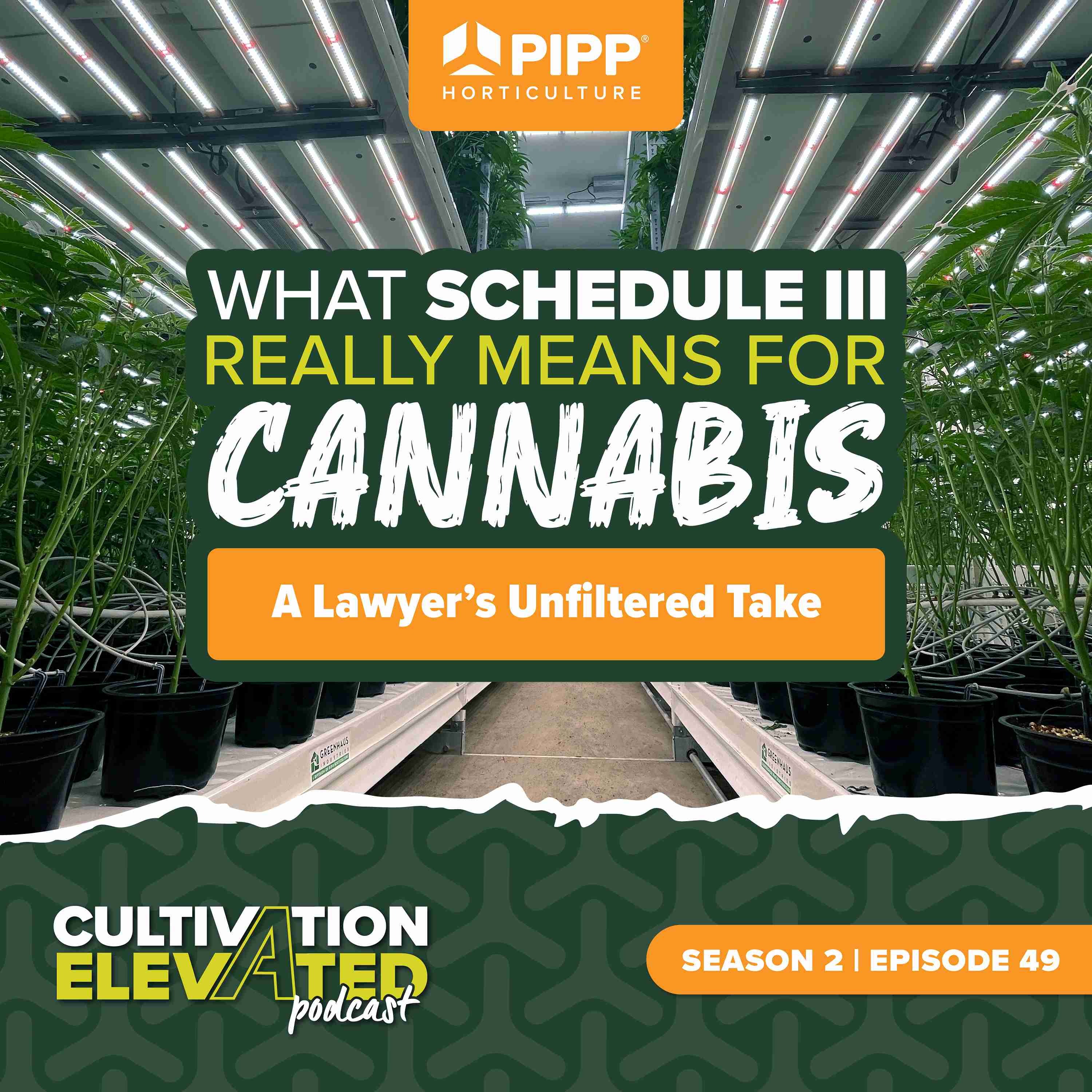
049: What Schedule III Really Means for Cannabis: A Lawyer’s Unfiltered Take

📺 Subscribe & Watch on YoutubeIn this episode of Cultivation Elevated, Michael Williamson is joined by cannabis attorney Devon Baxter to cut through the noise around cannabis rescheduling and explain what the shift to Schedule 3 actually means for operators. They break down why rescheduling is not legalization, how 280E tax relief really plays out in practice, why banking access remains limited, and where compliance, lab testing, and enforcement risks are often underestimated. The conversation also explores the impacts on MSOs versus craft operators, the evolving relationship between hemp and cannabis, potential pharmaceutical involvement, and what disciplined operators should prioritize over the next 12–24 months as federal scrutiny increases.⏱ Episode BreakdownIntro: What Rescheduling Really Means0:00 – 4:20Michael Williamson sets the stage on cannabis rescheduling and why the headlines are misleading.Rescheduling reshapes the regulatory chessboard — but it doesn’t legalize cannabis, fix banking, or eliminate federal-state tension.Rescheduling vs Legalization: Clearing the Confusion4:20 – 7:15Devin Baxter explains the legal reality behind Schedule 1 → Schedule 3.Why the executive order changes process, not law — and what immediately stays the same for operators.The Science & Legal Strategy Behind Rescheduling7:15 – 10:35How FDA-compliant research and pharmaceutical-grade manufacturing forced regulators’ hands.Why the government could no longer defend Schedule 1 under scientific scrutiny.280E, Taxes, and the Reality of Margin Relief10:35 – 14:55Why 280E relief is real — but not instant or clean.What operators need to revisit in financial structures, expense tracking, and investor expectations.Banking: Why Rescheduling Doesn’t Open the Floodgates14:55 – 18:50Why federally chartered banks still won’t rush into cannabis.Where state banks and credit unions may cautiously expand — and what that means for access to capital.Compliance, SOPs & “DEA-Ready” Operations18:50 – 22:50Why rescheduling likely increases scrutiny rather than reduces it.How GMPs, SOP discipline, labeling, and consistency become competitive advantages.MSOs vs Craft Operators: Different Risks, Same Rules22:50 – 27:10How rescheduling impacts MSOs, single-state operators, and craft cultivators differently.Why consolidation may accelerate — but won’t erase the craft segment.Lab Testing, Health Risk & Enforcement Blind Spots27:10 – 33:50Why lab integrity, sampling practices, and product consistency are underestimated risks.The danger of “lab shopping” as more vulnerable patients enter the market.Hemp, CBD & the Path Toward Convergence33:50 – 40:15What rescheduling and recent legislation could mean for intoxicating hemp products.Why MSOs and national brands are re-entering hemp — and where the regulatory gaps may close.Pharma, Patents & Schedule 3 Implications40:15 – 44:30Why pharmaceutical companies move slowly — and selectively.Where pharma may participate (capsules, sprays, research) — and where they likely won’t.Interstate Commerce & Federal Preemption44:30 – 49:00Why rescheduling doesn’t authorize interstate commerce — but may invite legal challenges.How state protections and federal authority may collide in the next phase.Operator Strategy: What to Prioritize Now49:00 – 55:30Devin’s top three strategic priorities:Securing long-term cultivation infrastructure (power & water)Tax and capital planning post-280ETightening compliance in anticipation of increased oversightFinal Takeaways55:30 – EndRescheduling isn’t a silver bullet — or a nothing burger.Operators who win next are disciplined, compliant, and focused on second- and third-order effects — not headlines.ABOUT CULTIVATION ELEVATED:If you are a grower or owner looking to optimize your existing or new cultivation facility or anyone looking to cultivate more in less space, then this is the show for you. Each week, join Host Michael Williamson as he travels across the country, to explore the world of vertical farming and the future of cannabis and food production through his conversations with leading industry operators, growers and executives who are demonstrating success and resilience as growers and cultivators. Each episode provides stories and key insights that will inspire and show you first-hand, how each of these companies have overcome challenges, and found their own path to success. Brought to you by Pipp Horticulture.SUBSCRIBE & FOLLOW:Spotify: https://open.spotify.com/show/1bwsOgNMmjcHbTNW6HuocD?si=66b30119ca084a0aApple: https://podcasts.apple.com/us/podcast...GET A FREE GROW CONSULTATION BELOW:https://pipphorticulture.com/contact/ABOUT PIPP HORTICULTURE:Pipp Horticulture is the leading space-saving mobile indoor vertical grow racking systems provider. All Pipp Horticulture products are made in the USA and easily integrate with other essential grow equipment like lighting, irrigation, drainage, and airflow systems. Reduce vertical farming costs with Pipp Horticulture’s high-density Mobile Vertical Grow Rack Systems.Pipp Horticulture Website - https://pipphorticulture.com/Pipp Horticulture - Facebook - https://www.facebook.com/pipphorticulturePipp Horticulture Instagram - https://www.instagram.com/pipphorticulture/Pipp Horticulture LinkedIn - https://www.linkedin.com/company/pipp-horticulture/mycompany/This podcast uses the following third-party services for analysis: Podtrac - https://analytics.podtrac.com/privacy-policy-gdrp
December 18, 202549 min

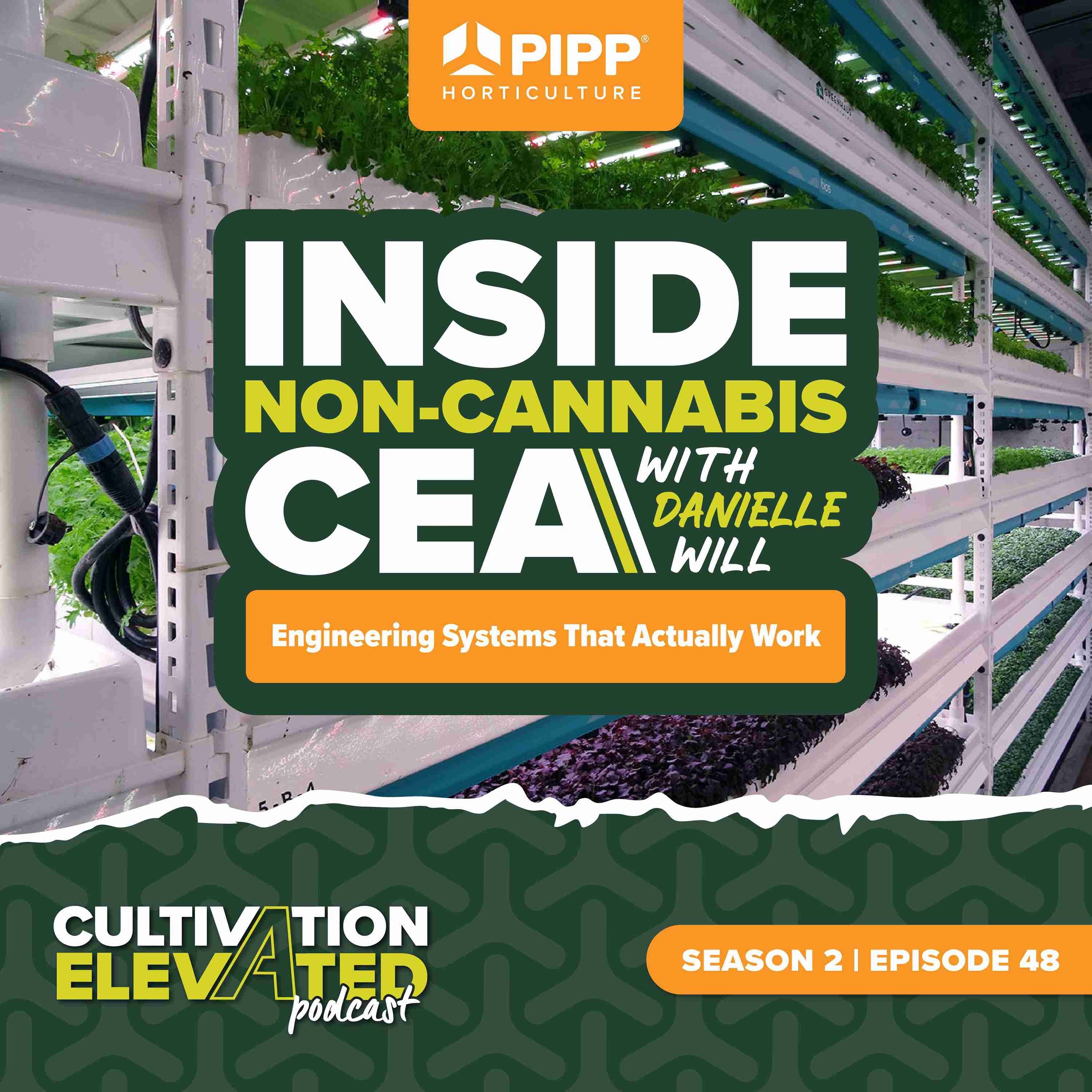
048: Inside Non-Cannabis CEA: Engineering Systems That Actually Work

📺 Subscribe & Watch on YouTubeThe episode goal: Introduce Danielle to Pipp’s audience, showcase her background in greenhouse system engineering and product development, and bridge her experience from greenhouse CEA to indoor CEA.Listen to learn:How greenhouse and indoor CEA truly differWhy some high-tech vertical farms failed — and what today’s winners get rightHow to design systems around the crop, not the technologyKey engineering considerations for multi-tier indoor farmsWhat product development looks like across strawberries, lettuce, cannabis, seedlings & moreWhy modularity and crop-specific design are the future of indoor agricultureEpisode Breakdown:Intro & Danielle’s Background0:00–4:20Meet Danielle Will — Pipp Horticulture’s new Product Manager — and hear how tissue culture, greenhouse engineering, and biotech shaped her multidisciplinary CEA approach.Greenhouse vs. Indoor CEA4:20–10:19Danielle breaks down the real engineering differences:• Transparent glazing vs. sealed rooms• Air changes vs. recirculation• Load density from stacked tiers• Why controlling “everything” is both empowering and challengingSystem Design Mistakes & Operator Challenges10:19–17:23Why expensive tech can’t compensate for poor design choices, lack of grower involvement, under-sized systems, or misunderstanding seasonal loads.The Importance of Skilled Operators17:23–21:21Why mediocre systems + great people beat the opposite every time — and why true CEA success requires both biological and mechanical literacy.Product Development for Multiple Crops21:21–25:39How Pipp is expanding beyond cannabis into strawberries, leafy greens, seedlings & more — and why irrigation style, tray spacing, airflow, and lighting must all be crop-specific.Designing for Today vs. the Future25:39–27:38Why Danielle designs 5 years ahead — but not for a fully robotic future (yet). Practicality, accessibility, and modularity matter more than hype.Why Past Vertical Farms Failed27:38–33:29The truth behind the first wave of CEA collapses:• VC models optimized for tech, not agriculture• Growing low-margin crops with massive capex• Market misalignment and unrealistic yield projections• Dependence on high-tech automation too soonFuture Crops & Underexplored Opportunities33:29–38:54A look at high-value crops that should be thriving indoors: wasabi, blueberries, seedlings, berries, specialty crops, and more.Modularity, Crop Fit & Scalable Design38:54–43:40Why the future of Pipp’s product line focuses on:• Meeting crops where they are• Modularity across irrigation types (ebb & flood, NFT, DWC, aeroponics)• Increasing plant density & uniformity• Validated systems that scale responsiblyRapid-Fire Questions43:40–48:08Danielle’s favorites:• Crop to grow• First concert• Most underrated grow room tech• Go-to resource for CEA learning• Favorite veggie snack• And what she orders at Mad DogsABOUT CULTIVATION ELEVATED:If you are a grower or owner looking to optimize your existing or new cultivation facility or anyone looking to cultivate more in less space, then this is the show for you. Each week, join Host Michael Williamson as he travels across the country, to explore the world of vertical farming and the future of cannabis and food production through his conversations with leading industry operators, growers and executives who are demonstrating success and resilience as growers and cultivators. Each episode provides stories and key insights that will inspire and show you first-hand, how each of these companies have overcome challenges, and found their own path to success. Brought to you by Pipp Horticulture.SUBSCRIBE & FOLLOW:Spotify: https://open.spotify.com/show/1bwsOgNMmjcHbTNW6HuocD?si=66b30119ca084a0aApple: https://podcasts.apple.com/us/podcast...GET A FREE GROW CONSULTATION BELOW:https://pipphorticulture.com/contact/ABOUT PIPP HORTICULTURE:Pipp Horticulture is the leading space-saving mobile indoor vertical grow racking systems provider. All Pipp Horticulture products are made in the USA and easily integrate with other essential grow equipment like lighting, irrigation, drainage, and airflow systems. Reduce vertical farming costs with Pipp Horticulture’s high-density Mobile Vertical Grow Rack Systems.Pipp Horticulture Website - https://pipphorticulture.com/Pipp Horticulture - Facebook - https://www.facebook.com/pipphorticulturePipp Horticulture Instagram - https://www.instagram.com/pipphorticulture/Pipp Horticulture LinkedIn - https://www.linkedin.com/company/pipp-horticulture/mycompany/This podcast uses the following third-party services for analysis: Podtrac - https://analytics.podtrac.com/privacy-policy-gdrp
December 3, 202541 min

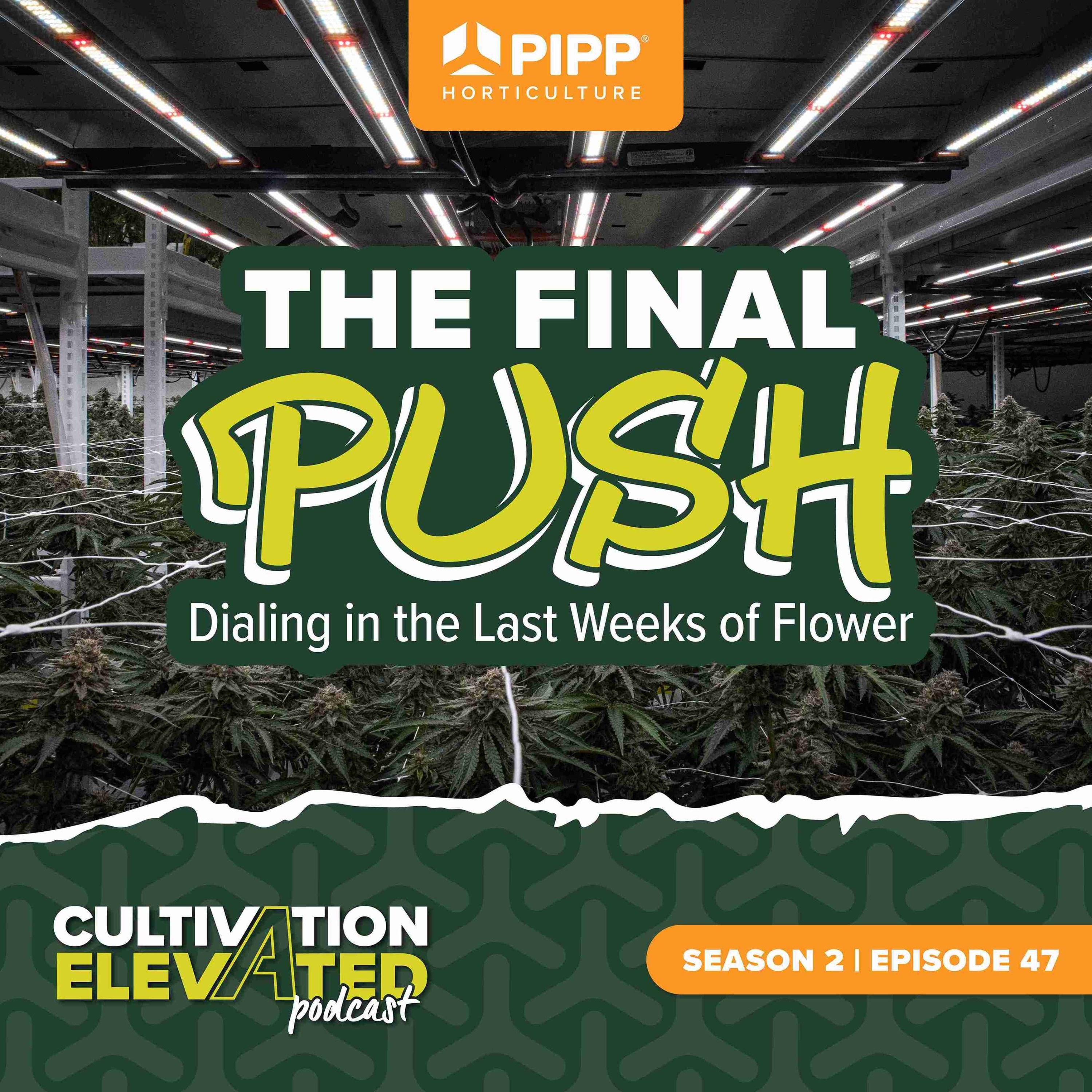
047: The Final Push: Dialing in the Last Weeks of Flower

📺 Subscribe & Watch on Youtube🌱 Cultivation Elevated – The Final Push: Dialing in the Last Weeks of FlowerHosts: Michael Williamson & Anders PetersonPresented by: Pipp HorticultureFocus: The science and strategy behind the final 2–3 weeks of flower — managing senescence and finishing techniques to maximize chemical quality, aroma, terpene retention, coloration, and smooth burn.💡 Listen to learn:What senescence actually is — and why guiding it matters more than forcing itHow to taper environmental cues (light, temp, RH, VPD, CO₂) without shocking the cropWhy extreme “flushing” or 48-hour dark periods are outdatedHow color expression works and when anthocyanins are worth chasingThe right way to manage root zone EC during the finishHow airflow, canopy thinning, and uniformity protect quality and drying consistencyWhy trichomes should drive your harvest timingData to track each harvest to refine finishing cycles over time⏱ Episode BreakdownIntro: Understanding Senescence0:00–4:20• Senescence = the plant’s genetically programmed aging and biochemical refinement phase• Peaks in cannabinoid + terpene development• Outdoors, shortening days and cooler nights drive senescence• Senescence isn’t the plant dying — it’s perfecting what it has builtWhy Finishing Matters & Common Late-Stage Mistakes4:20–7:15• Growers often stack stressors late (pruning + EC shift + temp change at once)• Many facilities harvest too early due to tight scheduling• Early cutting reduces terpene, potency, and maturity• Final weeks are about refinement, not heavy interventionDefining a Finished Flower: Trichomes, Pistils & Visual Cues7:15–11:55• Trichome progression: clear → milky → amber• Ideal target: mostly milky, some amber• Excess new white pistils signal incomplete maturity• Fan leaf fade = carbohydrates relocating to resin glands• Avoid sending any late “reveg” signalsEnvironmental Tapering: Light, CO₂, Temperature, Humidity, VPD11:55–17:06• Reduce DLI by 10–25% to avoid photo-oxidative stress• Taper CO₂ from 1200–1400 ppm down to ~650 ppm pre-harvest• Lower temps 3–5°F in final week• Maintain 50–55% RH; avoid deep swings• Allow modest VPD rise without overdrying• Cooler late-stage temps help retain volatile terpenesColor, Anthocyanins & Phenotypic Plasticity17:06–20:28• Color = genetics + environment• Anthocyanins are temp-sensitive and highly plastic• Some cultivars purple even in warm rooms; others resist• Extreme cold to force color can reduce yield and slow photosynthesisThe 48-Hour Dark Period Myth20:28–21:54• No evidence darkness increases THC• Benefits come from reduced temperature, not lack of light• Better: taper light + temp rather than shutting lights off entirelyDrying-on-the-Vine Strategy21:54–23:54• Reduce or pause irrigation 12–48 hours before harvest• Helps start internal drying if dry rooms are undersized• Avoid wilting; maintain some light for transpirationRoot-Zone & Nutrient Strategy: The Flushing Debate23:54–29:32• Full RO flushes cause osmotic shock and reduce yield• Modern method: gradual EC taper, not starvation• Reduce nitrogen while maintaining calcium for structure• Avoid violent EC swings; controlled stress is better than deprivation• “Flushing benefits” mostly came from reduced nitrogen, not true flushingAirflow, Canopy Thinning & Late-Flower Risk Management29:32–35:32• Strong airflow prevents botrytis and dew-point condensation• High airflow supports wider day–night temp ranges safely• Best defoliation window: 3–5 days before harvest• Uniform, light defoliation beats extreme thinning on select plants• Improves drying consistency and reduces bud rotTop 3 Finishing Insights35:32–37:39• Taper everything: EC, light, temp, CO₂, RH• Let trichomes drive harvest timing• Track data each run: yields, cannabinoids, terpenes, environmental tweaksFuture Research: Ethylene, ABA & Ripening Chemistry37:39–41:28• Ethylene influences ripening across many crops• Cannabis produces ethylene — its role in finishing may be important• ABA + ethylene interactions could explain ripening behaviors• Potential future avenue for finishing optimizationABOUT CULTIVATION ELEVATED:If you are a grower or owner looking to optimize your existing or new cultivation facility or anyone looking to cultivate more in less space, then this is the show for you. Each week, join Host Michael Williamson as he travels across the country, to explore the world of vertical farming and the future of cannabis and food production through his conversations with leading industry operators, growers and executives who are demonstrating success and resilience as growers and cultivators. Each episode provides stories and key insights that will inspire and show you first-hand, how each of these companies have overcome challenges, and found their own path to success. Brought to you by Pipp Horticulture.SUBSCRIBE & FOLLOW:Spotify: https://open.spotify.com/show/1bwsOgNMmjcHbTNW6HuocD?si=66b30119ca084a0aApple: https://podcasts.apple.com/us/podcast...GET A FREE GROW CONSULTATION BELOW:https://pipphorticulture.com/contact/ABOUT PIPP HORTICULTURE:Pipp Horticulture is the leading space-saving mobile indoor vertical grow racking systems provider. All Pipp Horticulture products are made in the USA and easily integrate with other essential grow equipment like lighting, irrigation, drainage, and airflow systems. Reduce vertical farming costs with Pipp Horticulture’s high-density Mobile Vertical Grow Rack Systems.Pipp Horticulture Website - https://pipphorticulture.com/Pipp Horticulture - Facebook - https://www.facebook.com/pipphorticulturePipp Horticulture Instagram - https://www.instagram.com/pipphorticulture/Pipp Horticulture LinkedIn - https://www.linkedin.com/company/pipp-horticulture/mycompany/This podcast uses the following third-party services for analysis: Podtrac - https://analytics.podtrac.com/privacy-policy-gdrp
November 5, 202540 min

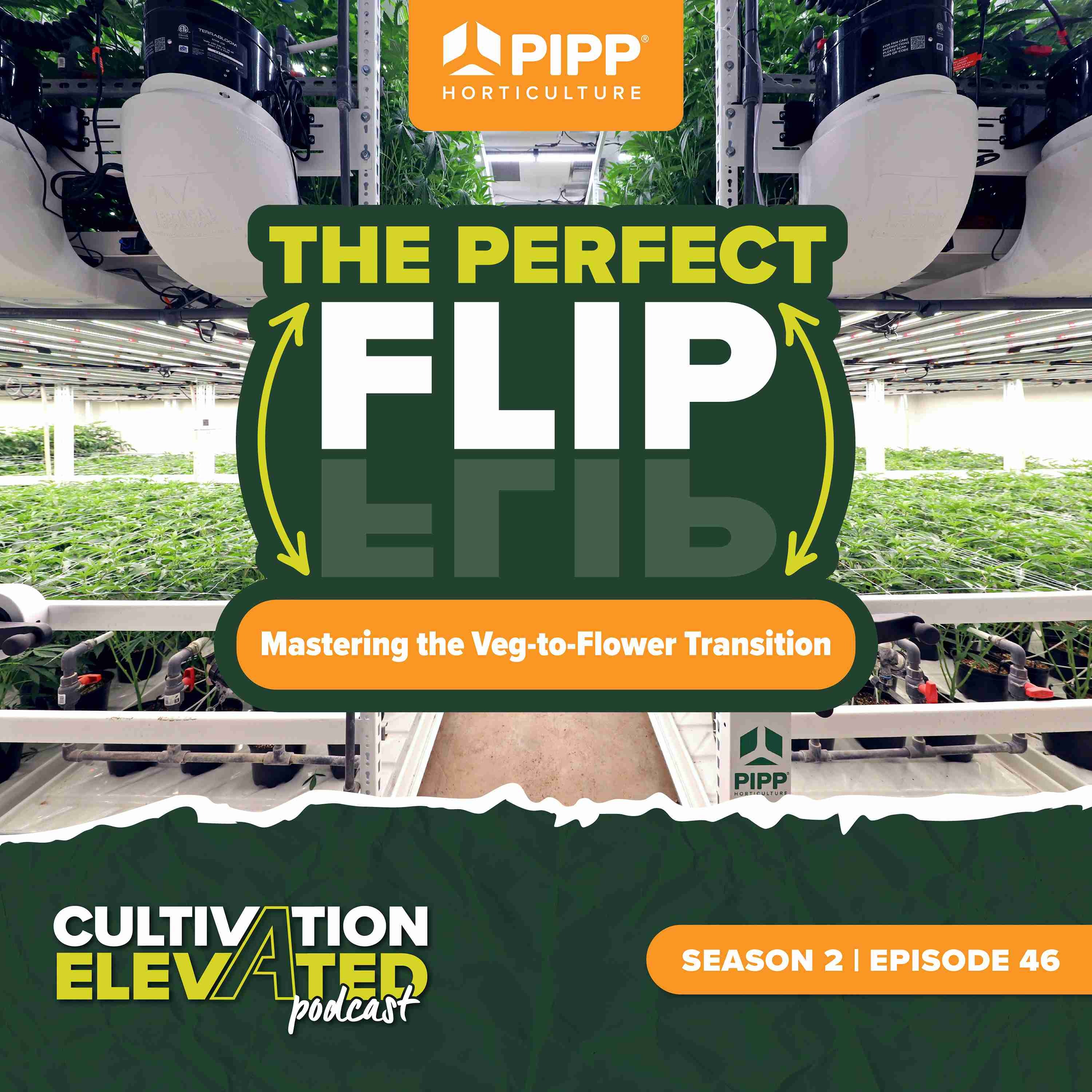
046: The Perfect Flip: Mastering the Veg-to-Flower Transition

📺 Subscribe & Watch on YoutubeEpisode focus: Mastering the&nbsp;veg → flower transition—called the most influential ~10-day window of the cycle. Bad transitions cap yield early; you can’t “add days” later.Core idea: Avoid&nbsp;compounding stress. Moving plants is already stressful—don’t stack harsh environmental shifts, heavy pruning/topping, high VPD, and high EC all at once.Environment fundamentalsLighting / DLI matching: Match day-one flower&nbsp;DLI&nbsp;to veg by increasing intensity (PPFD) for the shorter 12-hour photoperiod.Typical targets:&nbsp;~35–40 mol·m⁻²·day⁻¹&nbsp;early, ramp to&nbsp;~45–50&nbsp;later.VPD matching: Keep VPD close to veg on flip;&nbsp;veg ~0.8–1.0 kPa, then&nbsp;ease into ~1.2–1.4 kPa&nbsp;early flower rather than jumping to dry rooms (1.5–2.0 kPa&nbsp;is too stressful at flip).Use VPD strategically to&nbsp;moderate stretch&nbsp;(slightly lower VPD can curb internodal elongation).CO₂: Less finicky but watch costs. Start around&nbsp;~800 ppm&nbsp;(veg level),&nbsp;800–1000 ppm&nbsp;in week 1–2, then&nbsp;up to ~1200–1400 ppm&nbsp;depending on style.Humidity & red stemsMany flower rooms lack&nbsp;humidification; day-one rooms run too dry, forcing excessive transpiration and causing stress cues like&nbsp;red stems.Plants are humidifiers, but early in flower they’re too small to humidify the room—installing&nbsp;steam/dedicated humidifiers&nbsp;prevents early drought stress.EC balance with VPD: High EC + high VPD (e.g.,&nbsp;1.5–2.0 kPa) risks toxicity/lockout. If humidity is good,&nbsp;3.0 EC&nbsp;is fine; if day-one is dry,&nbsp;start with lower EC&nbsp;until humidity improves.“Balance over silos” principleClimate (light/VPD/CO₂),&nbsp;root-zone, and&nbsp;irrigation&nbsp;are&nbsp;intrinsically linked. Don’t change one without adjusting the others (“law of minimums” thinking).Canopy managementTopping vs. no topping: Depends on&nbsp;planting density&nbsp;and&nbsp;cultivar. Topping can&nbsp;delay flower set 3–5 days—costly in a fast crop. Many short/medium cultivars in dense programs&nbsp;perform better untopped.Crop registration: Build a simple program to&nbsp;learn genetics&nbsp;(short/medium/tall, heavy/light feeders, topping response).Run&nbsp;experiments&nbsp;with new cultivars (e.g., vary&nbsp;drip stakes&nbsp;and leave some&nbsp;untopped) to see true morphology and water response.Defoliation/skirting: Do&nbsp;light skirting in the last 5–7 veg days&nbsp;for airflow and access (easier emitter placement). Avoid&nbsp;heavy defol or topping right before flip—it causes hormonal “whiplash.”Trellis best practices: Usually&nbsp;two layers&nbsp;suffice (third is for extremes).&nbsp;Lay both layers in one visit&nbsp;and “hover” the second high, then slide down as plants grow.Aim for&nbsp;~1 top per square; redistribute shoots early before stems get rigid.Substrate & rooting strategyCommon at flip:&nbsp;block-on-slab&nbsp;or&nbsp;block-on-coco.Veg-in-place vs. flip immediately:Anders’ take: Prefer&nbsp;no veg-in-place&nbsp;if environment is dialed; accept&nbsp;3–5 days&nbsp;of natural rooting lag (“roots before shoots”) rather than adding calendar time.Exception: If day-one flower VPD is&nbsp;too high/dry, consider&nbsp;3–5 days veg-in-place&nbsp;to avoid compounding stress.Requires&nbsp;team precision&nbsp;in irrigation/root-zone control; know your crew’s skill level and&nbsp;market economics&nbsp;(days matter in tight markets).Plant readiness (flip criteria)Mature root mass&nbsp;fully colonizing its substrate and&nbsp;healthy apical growth—a plant that can handle rapid cell division without collapsing under stress.In multi-tier programs, typical veg finish:&nbsp;~12–18 inches tall&nbsp;with rooted substrate.Substrate size trend: Smaller, faster-to-root media (e.g.,&nbsp;~1-gal&nbsp;coco/rockwool); in&nbsp;2025, 3-gal is “large.”Operational pitfalls & lean movesFlip too early&nbsp;→ low yield density, inconsistent canopy heights.Flip too late&nbsp;→ light competition, airflow issues, pest/mildew pressure.Watch for&nbsp;empty trellis squares—a cue to revisit&nbsp;density&nbsp;or&nbsp;veg time.Lean practice: Combine tasks (e.g., apply&nbsp;both trellises once), reduce unnecessary motion.Team alignment & checklistsSynchronize&nbsp;irrigation techs, plant techs, HVAC—use a&nbsp;transition checklist&nbsp;so day-one through day-ten needs are clear.Digital readiness (often forgotten)Update&nbsp;track-and-trace (e.g., METRC)&nbsp;plant moves.Reset control systems&nbsp;to&nbsp;Day 1 / Week 1 of flower; load verified&nbsp;climate recipes.Fill day tanks,&nbsp;flush/clean lines, and set the correct&nbsp;fertilizer recipe.Ensure&nbsp;fertigation & climate computers&nbsp;are synchronized on the same day/phase.Turn on&nbsp;production tracking&nbsp;(e.g.,&nbsp;Aroya&nbsp;harvest tracker) on Day 1.Do a quick pass to confirm&nbsp;valves/states&nbsp;are correct.Process disciplineTreat transition as a&nbsp;plant-readiness checkpoint, not a calendar date (when possible).Favor&nbsp;small, coordinated adjustments&nbsp;(VPD/EC/irrigation timing) over dramatic single-parameter swings.Document & debrief every flip; measure&nbsp;stretch&nbsp;(yes, the humble&nbsp;measuring tape) to inform future runs.Wrap-upBalance across parameters—not mono-factor tweaks—is what consistently&nbsp;nails the transition&nbsp;and elevates both&nbsp;yield and quality.ABOUT CULTIVATION ELEVATED:If you are a grower or owner looking to optimize your existing or new cultivation facility or anyone looking to cultivate more in less space, then this is the show for you. Each week, join Host Michael Williamson as he travels across the country, to explore the world of vertical farming and the future of cannabis and food production through his conversations with leading industry operators, growers and executives who are demonstrating success and resilience as growers and cultivators. Each episode provides stories and key insights that will inspire and show you first-hand, how each of these companies have overcome challenges, and found their own path to success. Brought to you by Pipp Horticulture.SUBSCRIBE & FOLLOW:Spotify: https://open.spotify.com/show/1bwsOgN...Apple: https://podcasts.apple.com/us/podcast...GET A FREE GROW CONSULTATION BELOW:<a href="https://www.youtube.com/redirect?event=video_description&redir_token=QUFFLUhqbERhVDk1TTFxQVdaZHBxNkVKZGtld2ZBNmY4QXxBQ3Jtc0tub21aUU5yVUYzbmtDdnFWWEtBSEtoMXV5bVZMTXlDT0lFOXpmZ0RrNWNwT3pCRUs0bU1sU3p2TGxPSVU4Y0FxRG1SYWxhYXNZQzFiUktHVVRUdVVlaUhCd091RnNvQkEyQ1BrWFRNdUM3V2l1ZWFPbw&q=https%3A%2F%2Fpipphorticulture.com%2Fcontact%2F&v=4q6_-01A74w" rel="noopener noreferrer"...

August 20, 20251 hr 1 min

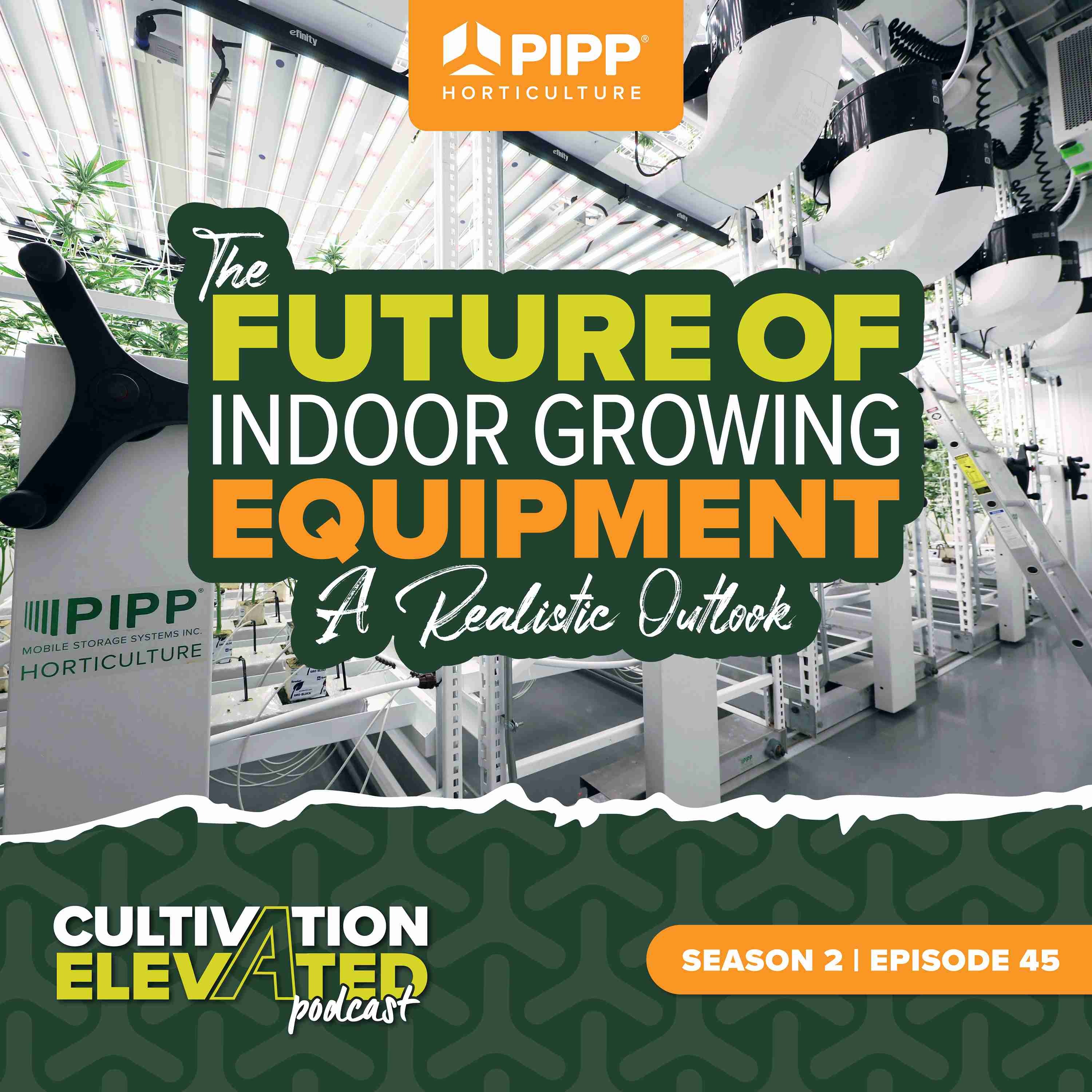
045: The Future of Indoor Growing Equipment: A Realistic Outlook

📺 Subscribe & Watch on YouTubeThis episode explores the future of cannabis cultivation, focusing on emerging tech, sustainability, and automation with Anders and Michael:Digital twins allow growers to simulate environmental changes in a virtual model of their grow room, predicting outcomes like microclimates, transpiration rates, and yield impacts before making real-world adjustments.These systems integrate real-time sensor data with AI and Computational Fluid Dynamics (CFD) modeling to enable more precise, predictive crop management.CFD modeling for airflow, temperature, and CO₂ behavior in grow rooms is currently expensive but expected to become more accessible, potentially standard in future facility planning.Energy monitoring is predicted to evolve from whole-facility tracking to equipment-specific monitoring, helping optimize individual systems and reduce consumption.Closed-loop water recirculation systems are highlighted as a major sustainability trend, treating and reusing city water, condensate, and nutrient runoff through a central filtration system to minimize waste.Nutrient recovery systems exist today that can remove fertilizer from water via flash evaporation, though separating specific nutrients is seen as a longer-term innovation.Humanoid robotics may begin replacing low-skill labor tasks like defoliation, offering reliability and consistency in areas where human turnover is high. There’s caution about potential malfunctions.Lighting has rapidly shifted from HPS to highly efficient LEDs, with some fixtures now achieving over 3.0 micromoles per joule efficiency. Adjustable spectrum LEDs offer targeted benefits but slightly lower efficiency.AI-controlled lighting systems are expected to dynamically adjust light intensity, spectrum, and photoperiod based on real-time plant data instead of preset schedules.CO₂ delivery systems are seen as mostly mature, but innovation in sourcing like direct air capture or repurposing fermentation CO₂ is likely to emerge.HVAC infrastructure will likely remain structurally stable, but control systems and refrigerants are expected to evolve, particularly with environmental regulations pushing R410A out of the market.Hosts anticipate building materials like phase change materials could become more common in grow room construction.The episode wraps with the hosts expressing appreciation for their niche but engaged audience, encouraging feedback and questions, and highlighting their openness to discussing real-world cultivation challenges on future episodes.ABOUT CULTIVATION ELEVATED:If you are a grower or owner looking to optimize your existing or new cultivation facility or anyone looking to cultivate more in less space, then this is the show for you. Each week, join Host Michael Williamson as he travels across the country, to explore the world of vertical farming and the future of cannabis and food production through his conversations with leading industry operators, growers and executives who are demonstrating success and resilience as growers and cultivators. Each episode provides stories and key insights that will inspire and show you first-hand, how each of these companies have overcome challenges, and found their own path to success. Brought to you by Pipp Horticulture.SUBSCRIBE & FOLLOW:Spotify: https://open.spotify.com/show/1bwsOgN...Apple: https://podcasts.apple.com/us/podcast...GET A FREE GROW CONSULTATION BELOW:https://pipphorticulture.com/contact/ABOUT PIPP HORTICULTURE:Pipp Horticulture is the leading space-saving mobile indoor vertical grow racking systems provider. All Pipp Horticulture products are made in the USA and easily integrate with other essential grow equipment like lighting, irrigation, drainage, and airflow systems. Reduce vertical farming costs with Pipp Horticulture’s high-density Mobile Vertical Grow Rack Systems.Pipp Horticulture Website - https://pipphorticulture.com/Pipp Horticulture - Facebook - https://www.facebook.com/pipphorticulturePipp Horticulture Instagram - https://www.instagram.com/pipphorticulture/Pipp Horticulture LinkedIn - https://www.linkedin.com/company/pipp-horticulture/mycompany/This podcast uses the following third-party services for analysis: Podtrac - https://analytics.podtrac.com/privacy-policy-gdrp
July 16, 20251 hr 4 min

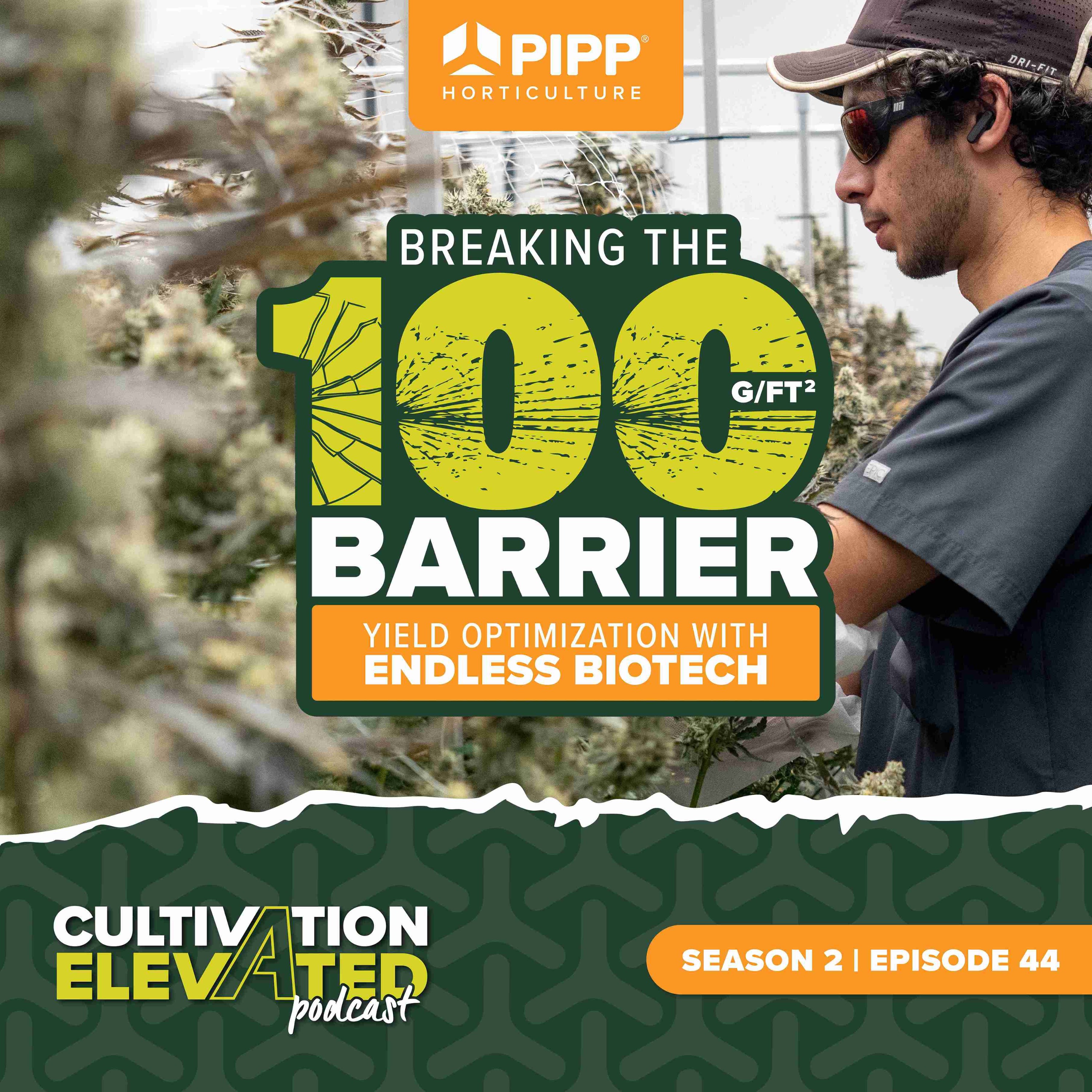
044: Breaking the 100g/sqft Barrier: Yield Optimization with Endless Biotech

📺 Subscribe & Watch on YouTubeIn this episode, the team from Endless Biotech, represented by Gary Holland and Teddy Pillay, joins the Pipp Horticulture podcast to share a transparent look into their cultivation journey. They discuss the evolution of their internal systems, the importance of flexibility and data in refining operations, and how team culture plays a critical role in maintaining both productivity and morale. Gary and Teddy highlight their collaborative mindset - openly sharing knowledge with other growers and emphasize their appreciation for the support and technology provided by Pipp and their vertical racking systems. The conversation underscores a shared mission between Endless and Pipp to raise the bar for the industry through education, innovation, and community, closing with mutual gratitude and a commitment to ongoing partnership.Endless Biotech, represented by Gary and Teddy, shares insights into their operations, innovations, and lessons learned as a cultivator using vertical farming systems.Gary highlights the company’s approach to evolving SOPs, adapting to automation, and continuously refining processes through trial and error and internal feedback.Teddy emphasizes the importance of culture, clear communication, and team cohesion in maintaining high performance and avoiding burnout.Both reps underscore the value of data-driven decision making and being proactive rather than reactive in their grow operations.The group discusses how Endless Biotech collaborates with other growers and vendors (like Pipp), and how a shared commitment to transparency and learning helps lift the entire industry.Gary and Teddy express deep appreciation for their relationship with Pipp Horticulture, citing the impact of Pipp’s vertical racking systems on their grow capabilities.Pipp’s hosts express gratitude in return, noting that the podcast’s purpose is education and community building, not sales.The episode closes with mutual respect and a forward-looking commitment to collaboration and ongoing support.🌱 Collaboration & Innovation-FocusedInside Endless Biotech: Building a Transparent, Data-Driven Grow OperationElevating Cultivation: Endless Biotech’s Journey with Pipp HorticultureFrom Racks to Results: How Endless Biotech Optimizes with PippOpen Source Growing: Gary & Teddy of Endless Biotech Share Their PlaybookPartnering for Progress: Endless Biotech & Pipp’s Shared Mission to Educate🎙️ Personality-Driven or ConversationalGary & Teddy from Endless Biotech: Growing Smarter, Not Just BiggerBeyond the Grow Room: Endless Biotech Talks Culture, Data & InnovationNo Secrets, Just Systems: Endless Biotech's Radical Transparency in Cultivation🔧 Technical + InspirationalScaling Sustainably: Endless Biotech on Systems, Culture, and Vertical FarmingThe Endless Biotech Method: Flexibility, Feedback, and Vertical IntegrationABOUT CULTIVATION ELEVATED:If you are a grower or owner looking to optimize your existing or new cultivation facility or anyone looking to cultivate more in less space, then this is the show for you. Each week, join Host Michael Williamson as he travels across the country, to explore the world of vertical farming and the future of cannabis and food production through his conversations with leading industry operators, growers and executives who are demonstrating success and resilience as growers and cultivators. Each episode provides stories and key insights that will inspire and show you first-hand, how each of these companies have overcome challenges, and found their own path to success. Brought to you by Pipp Horticulture.SUBSCRIBE & FOLLOW:Spotify: https://open.spotify.com/show/1bwsOgN...Apple: https://podcasts.apple.com/us/podcast...GET A FREE GROW CONSULTATION BELOW:https://pipphorticulture.com/contact/ABOUT PIPP HORTICULTURE:Pipp Horticulture is the leading space-saving mobile indoor vertical grow racking systems provider. All Pipp Horticulture products are made in the USA and easily integrate with other essential grow equipment like lighting, irrigation, drainage, and airflow systems. Reduce vertical farming costs with Pipp Horticulture’s high-density Mobile Vertical Grow Rack Systems.Pipp Horticulture Website - https://pipphorticulture.com/Pipp Horticulture - Facebook - https://www.facebook.com/pipphorticulturePipp Horticulture Instagram - https://www.instagram.com/pipphorticulture/Pipp Horticulture LinkedIn - https://www.linkedin.com/company/pipp-horticulture/mycompany/This podcast uses the following third-party services for analysis: Podtrac - https://analytics.podtrac.com/privacy-policy-gdrp
June 25, 202554 min

043 - Trial By Air: Studying Airflow with Dr. Allison Justice

📺 Subscribe & Watch on YouTubeFeatured Guest: Dr. Allison JusticeRenowned for her research-driven approach to cannabis cultivation and post-harvest science.Leads the conversation on smokability, drying/curing, and the importance of data-backed airflow control.Brings years of experience and a scientific lens to solving cultivation challenges in a maturing cannabis industry.Pipp Horticulture x Fog City Farms CollaborationDiscussion centers around Fog City’s vertical racking system with Fluence LEDs and Pipp airflow tech.Focus on multi-tier flower room environments and the complexities of airflow across different canopy levels.Dr. Justice provides context on the importance of maintaining environmental consistency across all tiers.Custom Airflow & Environmental ControlUse of automated blackout curtains, duct socks, and return air systems to tailor airflow.Goal: Improve control over humidity, temperature, and VPD (Vapor Pressure Deficit), especially during dry/cure.Allison emphasizes the challenge of ensuring airflow reaches lower tiers effectively without over-drying top tiers.The Science of SmokabilityDr. Justice shares her passion for exploring what makes a cannabis product "smoke well."Going beyond terpenes and cultivar, and into deeper physiological variables.Inspired by tobacco research—looking into chlorophyll content, sugar levels, etc.Acknowledges that in-depth testing is costly and time-intensive, but vital for product quality.Dry & Cure – The Most Critical PhaseDr. Justice discusses how this phase often gets overlooked but has the biggest impact on final product.Fog City’s data collection over multiple years has helped them understand how drying conditions affect smokeability.Calls for the industry to standardize best practices in this area.Ongoing Research Trial SeriesThis episode marks the beginning of an airflow-focused trial series.Allison will return regularly (every 3 months) to share updates and insights.Collaborative spirit emphasized between science, engineering, and cultivation.Final ThoughtsDr. Justice highlights the importance of digging deeper into the data and science behind good cannabis.Michael and Anders express excitement about pioneering this research and sharing knowledge with the broader community.Strong call to continue the conversation and grow the industry’s collective understanding.ABOUT CULTIVATION ELEVATED:If you are a grower or owner looking to optimize your existing or new cultivation facility or anyone looking to cultivate more in less space, then this is the show for you. Each week, join Host Michael Williamson as he travels across the country, to explore the world of vertical farming and the future of cannabis and food production through his conversations with leading industry operators, growers and executives who are demonstrating success and resilience as growers and cultivators. Each episode provides stories and key insights that will inspire and show you first-hand, how each of these companies have overcome challenges, and found their own path to success. Brought to you by Pipp Horticulture.SUBSCRIBE & FOLLOW:Spotify: https://open.spotify.com/show/1bwsOgN...Apple: https://podcasts.apple.com/us/podcast...GET A FREE GROW CONSULTATION BELOW:https://pipphorticulture.com/contact/ABOUT PIPP HORTICULTURE:Pipp Horticulture is the leading space-saving mobile indoor vertical grow racking systems provider. All Pipp Horticulture products are made in the USA and easily integrate with other essential grow equipment like lighting, irrigation, drainage, and airflow systems. Reduce vertical farming costs with Pipp Horticulture’s high-density Mobile Vertical Grow Rack Systems.Pipp Horticulture Website - https://pipphorticulture.com/Pipp Horticulture - Facebook - https://www.facebook.com/pipphorticulturePipp Horticulture Instagram - https://www.instagram.com/pipphorticulture/Pipp Horticulture LinkedIn - https://www.linkedin.com/company/pipp-horticulture/mycompany/This podcast uses the following third-party services for analysis: Podtrac - https://analytics.podtrac.com/privacy-policy-gdrp

May 5, 20251 hr 15 min

042 - A Legacy of Innovation: Grodan&apos;s Stone Wool Revolutionizes Cannabis Yields

📺 Subscribe & Watch on YouTubeHosts Michael Williamson and Anders Peterson speak with Jon Jirikovec, Crop Specialist at Grodan, about substrate management, irrigation strategy, and cannabis cultivation.Grodan manufactures stone wool (Rockwool) for hydroponic and soilless cultivation, offering high control and steerability for growers.Jon shares his journey from retail cannabis work in 2013 to his current role supporting growers across North America.Grodan emphasizes listening to customer feedback and conducting research with institutes like WUR and CRIC to refine techniques.The team discusses crop steering and irrigation phases (P1, P2, P3) and how they’ve evolved in cannabis compared to vegetables.Rockwool offers better control and water efficiency than coco, though it requires more precision; it’s easier to rewet and adjust EC.Substrate sizing is critical; under-sizing can lead to overly vegetative growth and poor-quality flower (e.g., more C buds).Transitioning from HPS to LEDs often requires adjustments in substrate volume to avoid over-drying and improve irrigation control.Case studies show that even novice growers can succeed with Rockwool when supported with tools, data, and proper guidance.Slab systems offer more forgiveness and better resaturation uniformity than blocks, making them ideal for newer cultivators or limited environments.Labor efficiency and facility design (e.g., racking height and accessibility) play a key role in productivity and plant health.Rockwool systems reduce labor and mess compared to cocoa/soil systems, making post-harvest cleanup easier and faster.There's a trend toward more sustainable, low-EC, low-runoff irrigation strategies to conserve water and nutrients.Growers in water-restricted regions (e.g., U.S. Virgin Islands) may benefit from Rockwool due to its water efficiency.The importance of environmental control (e.g., VPD, leaf surface temps) in syncing with substrate performance was emphasized.Discussion of water circularity systems (e.g., True Zero Corp) that reclaim runoff and reduce operational costs.Greenhouse vs. indoor production: each has advantages; multi-tier greenhouse cultivation is less common but may suit tight spaces.Harvest and cleanup timing impacts microbial loads and crop quality; separate these steps to reduce contamination risks.Transitioning to bulking phase should be based on crop observations (e.g., end of stretch), not arbitrary timelines.Removing fan leaves too early can lead to foxtailing due to hormonal stress; timing and gradual EC changes are key.Crop steering is a spectrum, not a binary approach—subtle adjustments help maintain plant health and yield.Under-canopy lighting improves consistency in A/B grade flower but is not always necessary with good canopy and lighting strategy.Common Rockwool mistakes include letting blocks dry too much before irrigation and using undersized substrates.Substrate strategy should align with veg time, plant count limits, and business goals.Discussion teases future episodes on “synganic” growing—blending salt-based fertigation with organic additives for better terpene expression.Grodan is exploring microbial steering and root-zone microbiome strategies for added performance.ABOUT CULTIVATION ELEVATED:If you are a grower or owner looking to optimize your existing or new cultivation facility or anyone looking to cultivate more in less space, then this is the show for you. Each week, join Host Michael Williamson as he travels across the country, to explore the world of vertical farming and the future of cannabis and food production through his conversations with leading industry operators, growers and executives who are demonstrating success and resilience as growers and cultivators. Each episode provides stories and key insights that will inspire and show you first-hand, how each of these companies have overcome challenges, and found their own path to success. Brought to you by Pipp Horticulture.SUBSCRIBE & FOLLOW:Spotify: https://open.spotify.com/show/1bwsOgN...Apple: https://podcasts.apple.com/us/podcast...GET A FREE GROW CONSULTATION BELOW:https://pipphorticulture.com/contact/ABOUT PIPP HORTICULTURE:Pipp Horticulture is the leading space-saving mobile indoor vertical grow racking systems provider. All Pipp Horticulture products are made in the USA and easily integrate with other essential grow equipment like lighting, irrigation, drainage, and airflow systems. Reduce vertical farming costs with Pipp Horticulture’s high-density Mobile Vertical Grow Rack Systems.Pipp Horticulture Website - https://pipphorticulture.com/Pipp Horticulture - Facebook - https://www.facebook.com/pipphorticulturePipp Horticulture Instagram - https://www.instagram.com/pipphorticulture/Pipp Horticulture LinkedIn - https://www.linkedin.com/company/pipp-horticulture/mycompany/This podcast uses the following third-party services for analysis: Podtrac - https://analytics.podtrac.com/privacy-policy-gdrp

Is this your show?

Claim this listing to keep it up to date, reach guests who want to pitch you, and manage bookings with Guestify.

Claim this listing

More Business podcasts