Find partners
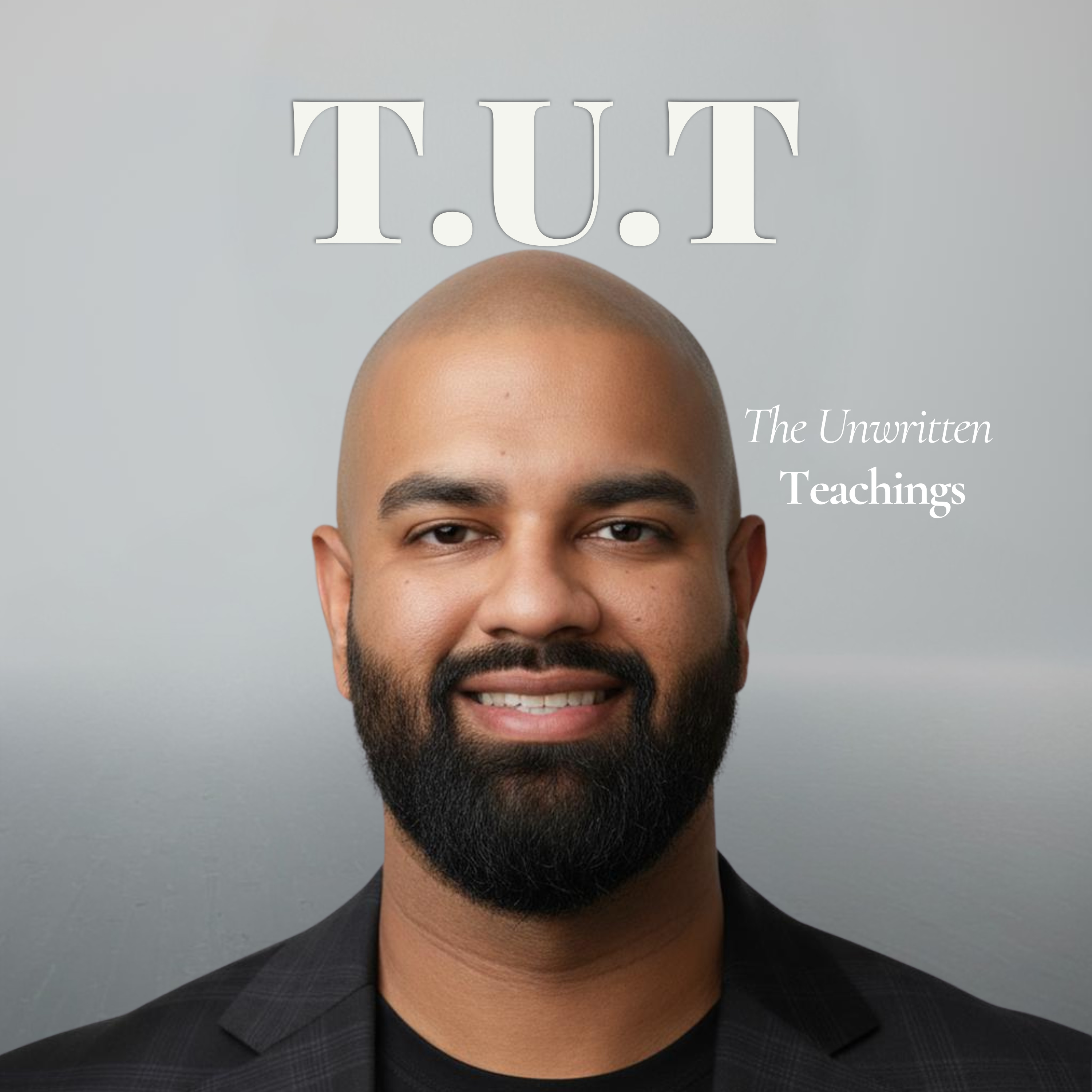
T.U.T — The Unwritten Teachings

T.U.T — The Unwritten Teachings

Hosted by Raj Tut

BusinessEntrepreneurshipInterviews guests

Episodes

70

Latest episode

Jun 2026

Language

EN

About the show

T.U.T — The Unwritten Teachings is where timeless wisdom meets modern ambition. Hosted by Raj Tut, entrepreneur and founder of Storyboard Living, the show captures conversations with seasoned leaders, builders, and thinkers who’ve already walked the path and have the scars, stories, and lessons to show for it. No headlines. No hype. Just the unwritten truths about success, leadership, and meaning — shared by those who’ve earned them. New episodes every two weeks. Brought to you by Storyboard Living — storyboardliving.com. Follow @ItsRajTut on all platforms.

Listen to episodes

60 recent
June 23, 202656 min

The Real Business Behind Interior Design with Julie Abner, Principal Designer & Owner at Julie Abner Interiors

In this episode, I sat down with Julie Abner, Principal Designer & Owner at Julie Abner Interiors, an award-winning full-service interior design firm based in St. Louis. Julie has been building her firm for nearly 20 years, with work featured in publications like St. Louis Magazine, Sophisticated Living, and St. Louis Homes + Lifestyles. We talked about her early creative influences, how her parents helped recognize her interest in design, and the path that took her from Southern Illinois to Chicago and eventually to St. Louis. Julie also shared how she transitioned from working under other designers into building a firm of her own.We also got into the real business behind interior design: earning client trust, managing process, building vendor relationships, avoiding trends that do not last, and creating spaces that feel personal rather than copied. Julie broke down how she reads a client’s inspiration images, why five photos can be more useful than 100, and how she balances a client’s vision with budget, scale, materials, and long-term livability. She also shared practical design ideas for elevated spaces on a budget, her view on AI in the design process, and the unwritten teaching she would pass on: value yourself, trust your instincts, stay focused, and do the work.Connect with the HostTwitter: ⁠twitter.com/ItsRajTut/ ⁠⁠ LinkedIn: ⁠⁠https://www.linkedin.com/in/rajtut/⁠⁠ Instagram: ⁠instagram.com/ItsRajTut⁠ TikTok: ⁠⁠https://www.tiktok.com/@itsrajtutConnect with the GuestLinkedIn: https://www.linkedin.com/in/julieabnerinteriors Website: https://www.julieabnerinteriors.com/Instagram: https://www.instagram.com/julie_abner_interiors/Timestamps for Key Segments00:00 Design hacks for an elevated look on a budget00:42 Storyboard Living multifamily acquisition note01:13 Introducing Julie Abner and her 20-year design career02:15 Growing up creative in Southern Illinois04:21 Choosing design instead of a traditional path05:33 Chicago, St. Louis, and the next career goal06:49 Learning the business before starting her own firm09:35 Moving from home office to The Hill studio10:48 Wearing every hat in the early years13:03 The first award and early validation15:34 How Julie earns trust with clients16:44 Balancing client vision with professional experience19:09 What designers see inside inspiration images21:33 Design lessons for commercial real estate spaces25:08 Budget-friendly ways to elevate a home or apartment27:37 Avoiding one-signature-style design30:02 Timeless design versus trends34:44 Staying current without copying what is overdone37:19 What separates great vendors from average vendors38:40 How AI fits into interior design41:06 Lessons from year one to year twenty43:49 Building a team, reputation, and confidence45:52 Julie’s goals for the next decade51:09 Rapid-fire design opinions54:18 Julie’s unwritten teachingThis podcast is brought to you by Storyboard Living. If you're looking to sell us a 40+ unit multifamily property in the St. Louis region, or another part of MO/IL, please email deals@storyboardliving.comConnect with us at our Website: https://storyboardliving.com/LinkedIn profile: https://www.linkedin.com/company/storyboard-living/

June 9, 20261 hr 0 min

How Tom Schlafly Turned A $137K Bet Into A St. Louis Institution with Tom Schlafly, President at Schlafly Beer

I sat down with Tom Schlafly, President at Schlafly Beer, co-founder and chairman of The Saint Louis Brewery, an attorney, author, civic leader, and minority owner of the St. Louis Blues. Tom helped pioneer craft beer in St. Louis when he opened what became Missouri’s first microbrewery in 1991, at a time when craft beer was virtually nonexistent locally and Anheuser-Busch dominated the city’s beer identity. We began with Tom’s deep family history in St. Louis, from his Swiss immigrant roots to his great-grandfather’s entrepreneurial path through banking, mineral water, railroad ties, and the family’s long connection to the region.This conversation explores how Tom used legal training, timing, patience, and a willingness to look foolish to build something durable in a market many people thought was impossible. We talked about the early laws that made brewpubs difficult in Missouri, why the first Tap Room location looked irrational in 1991, how the craft beer market has changed, and why brand credibility mattered more than gimmicks. Tom also shared his views on civic responsibility, downtown St. Louis, immigration, the future of the region, and the kind of leadership that helps boards and communities make better decisions. His throughline was clear: take the risk you will regret not taking, but build with enough seriousness that the work can outlast the original bet.Connect with the HostTwitter: ⁠twitter.com/ItsRajTut⁠⁠ LinkedIn: ⁠⁠https://www.linkedin.com/in/rajtut/⁠⁠ Instagram: ⁠instagram.com/ItsRajTut⁠ TikTok: ⁠⁠https://www.tiktok.com/@itsrajtutConnect with the GuestLinkedIn: https://www.linkedin.com/in/tom-schlafly-1ba26410 Schlafly Beer: https://www.schlafly.com/ Thompson Coburn Bio: https://www.thompsoncoburn.com/people/tom-f-schlafly/Timestamps for Key Segments00:00 Tom Schlafly’s introduction and the founding of Schlafly Beer01:11 Family history, immigration, and deep St. Louis roots03:05 Choosing downtown St. Louis over Clayton04:35 The Schlafly family’s entrepreneurial history09:12 Contrarian thinking and the origins of the brewery idea10:10 Discovering English beer while studying at Oxford12:09 Why a microbrewery could work in St. Louis13:16 Missouri liquor laws and the first microbrewery license 19:09 Early business challenges and regulated alcohol markets 21:23 Opening the Tap Room in a neglected downtown neighborhood26:21 Downtown St. Louis, real estate bets, and neighborhood change31:17 Craft beer competition and changing consumer behavior 36:03 Building the Schlafly brand with seriousness and stability37:57 Becoming a minority owner of the St. Louis Blues 39:20 Civic involvement, local impact, and “two zip codes”43:16 Why St. Louis still offers opportunity49:22 Favorite beers, best decision, mistakes, and final adviceThis podcast is brought to you by Storyboard Living. If you're looking to sell us a 40+ unit multifamily property in the St. Louis region, or another part of MO/IL, please email deals@storyboardliving.com Connect with us at our Website: https://storyboardliving.com/LinkedIn profile: https://www.linkedin.com/company/storyboard-living/

May 5, 20261 hr 4 min

Why Cities Will Start Dying Without Migration with Ness Sándoval, Professor at Saint Louis University

In this episode, I sat down with Ness Sándoval, a Professor of Demography and Sociology at Saint Louis University and one of the leading voices sounding the alarm on population decline. Ness walks through his personal journey from growing up in a small, segregated town in Nebraska to becoming deeply focused on demographic trends and spatial inequality. His early exposure to contrasting environments and access to education shaped his perspective on opportunity, migration, and long-term societal shifts.We dive into the reality that population growth as we’ve known it is ending, driven by declining birth rates, aging populations, and reduced migration. Ness explains how this shift will fundamentally impact housing, economies, and entire regions—especially cities like St. Louis. He outlines why migration is now the only path to growth, why young people are the key to survival, and why many regions are unprepared for what’s coming. The conversation highlights both the risks of inaction and the narrow window of opportunity cities still have to adapt before long-term decline becomes irreversible.Connect with the HostTwitter: ⁠twitter.com/ItsRajTut⁠⁠ LinkedIn: ⁠⁠https://www.linkedin.com/in/rajtut/⁠⁠ Instagram: ⁠instagram.com/ItsRajTut⁠ TikTok: ⁠⁠https://www.tiktok.com/@itsrajtutConnect with the GuestLinkedIn: https://www.linkedin.com/in/ness-s%C3%A1ndoval-a42ba938/Email: Sandoval@slu.eduTimestamps:00:00 Demographic collapse warning 01:07 Guest introduction and background 03:00 Early exposure to inequality and education 04:20 Transition from pre-med to demography 07:00 Discovering demographic trends and data 08:50 Global examples: Japan, Russia, Middle East 11:00 The Great Recession as a demographic shock 12:30 Why population decline matters economically 14:00 Housing demand collapse and empty towns 16:00 Migration as the only growth solution 19:00 Why St. Louis is losing population 22:00 Attracting young people and “stickiness” 24:00 COVID’s impact on births and deaths 26:00 Pittsburgh as a case study 28:00 Housing shortages and policy resistance 30:00 Immigration and growth in suburbs 34:00 Schools driving family migration decisions 37:00 Best vs worst-case future scenarios 42:00 Aging population and economic strain 46:00 School closures and declining youth population 49:00 Midwest’s future opportunity for growth 52:00 Why St. Louis fails at storytelling 55:00 Tracking migration with IRS and cell data 01:01:40 Where to follow Ness and closing thoughtsThis podcast is brought to you by Storyboard Living. If you're looking to sell us a 40+ unit multifamily property in the St. Louis region, or another part of MO/IL, please email deals@storyboardliving.com Connect with us at our Website: https://storyboardliving.com/LinkedIn profile: https://www.linkedin.com/company/storyboard-living/

April 21, 202646 min

A $1.5B Real Estate Bet on Aging America with Laurie Schultz, Principal & Co-Founder at Avenue, Viva Bene

In this episode, I sat down with Laurie Schultz, Principal & Co-Founder at Avenue, Viva Bene to discuss how aging demographics are reshaping real estate and why traditional senior living is due for a major transformation. Laurie shared her journey from growing up in St. Louis to building a career across apartments, healthcare real estate, and senior housing. She has helped develop more than $1.5 billion of projects and now focuses on solving one of the biggest unmet needs in housing. We also talked about how entrepreneurship often starts long before people realize it.Laurie explained why many older adults do not identify with the traditional senior living model and how that gap created the opportunity for active adult communities. We broke down Avenue’s Viva Bene concept, which combines age-restricted housing, social connection, and preventive healthcare services. She also shared how AI is changing development, why construction labor remains a challenge, and how housing could eventually become part of healthcare reimbursement models. This conversation is a masterclass in spotting demographic trends early and building around real human needs.Connect with the HostTwitter: ⁠twitter.com/ItsRajTut⁠⁠LinkedIn: ⁠⁠https://www.linkedin.com/in/rajtut/⁠⁠Instagram: ⁠instagram.com/ItsRajTut⁠TikTok: ⁠⁠https://www.tiktok.com/@itsrajtutConnect with the GuestLinkedIn: Laurie Schultz, CCIMWebsite: Avenue DevelopmentCompany Updates: Avenue LinkedInTimestamps for Key Segments00:00 Why traditional senior living is changing01:14 Introducing Laurie Schultz and Avenue01:56 Growing up in St. Louis and first career steps04:19 How entrepreneurship developed early06:33 Entering healthcare and senior housing real estate09:10 Aging in place vs moving to senior living10:07 Building Avenue through medical office projects14:31 Expanding into development, construction, and investment19:20 How AI is changing real estate development21:54 Why Viva Bene was created25:21 Why St. Louis became the first pilot market32:19 Early leasing success and expansion plans37:23 Challenges facing senior living today39:35 Designing active adult communities differently44:21 Laurie’s day-to-day and long-term missionThis podcast is brought to you by Storyboard Living.If you're looking to sell us a 40+ unit multifamily property in the St. Louis region, or another part of MO/IL, please email deals@storyboardliving.comConnect with us at our Website: https://storyboardliving.com/LinkedIn profile: https://www.linkedin.com/company/storyboard-living/

April 7, 202647 min

Why You Feel Exhausted, Stuck & Unhealthy with Sharnie Grewal, Functional Wellness Coach

In this episode, I sat down with Sharnie Grewal, Functional Wellness Coach focused on helping women over 30 optimize their health through a root-cause, functional approach. Sharnie shares her journey from growing up in London to becoming a physical therapist and eventually transitioning into entrepreneurship after experiencing her own health struggles. What stood out to me is how her personal frustration with low energy and being told “this is normal” pushed her to challenge conventional thinking and build something that actually helps people feel better.We dive deep into functional medicine, the importance of addressing root causes instead of symptoms, and the biggest health mistakes people make—especially around sleep, movement, and food habits. Sharnie also breaks down how identity, mindset, and daily choices shape long-term health outcomes. Beyond health, we talk about the realities of starting a business, overcoming money beliefs, and building a life that aligns with both family and purpose. This episode is a powerful reminder that your health—and your life—can change dramatically when you take ownership of it.Connect with the HostTwitter: ⁠twitter.com/ItsRajTut⁠⁠LinkedIn: ⁠⁠https://www.linkedin.com/in/rajtut/⁠⁠Instagram: ⁠instagram.com/ItsRajTut⁠TikTok: ⁠⁠https://www.tiktok.com/@itsrajtutConnect with our Guest:Website: www.sharniegrewal.comContact email: hello@sharniegrewal.comLinkedIn: https://www.linkedin.com/in/sharniegrewal/Instagram: https://www.instagram.com/sharniegrewal/Timestamps for Key Segments00:00 Overcoming exhaustion and “normal” burnout 01:17 Introduction to Sharnie’s business and niche 02:05 What her health coaching business does 02:52 Growing up in London and early interests 03:53 Path into physical therapy 06:44 Personal health struggles as turning point 08:00 Discovering functional medicine 10:30 What functional medicine actually is 13:07 Leaving traditional healthcare limitations 15:20 Starting a business with no experience 17:20 Building a wellness community online 20:27 How her coaching process works 23:15 Biggest health mistakes (sleep, food, movement) 30:47 Gut health and nutrition fundamentals 34:28 Money mindset challenges in entrepreneurship 39:30 Rapid fire health insights and habits 42:04 Daily routines and non-negotiables 46:14 Final message: your body can healThis podcast is brought to you by Storyboard Living.If you're looking to sell us a 40+ unit multifamily property in the St. Louis region, or another part of MO/IL, please email deals@storyboardliving.comConnect with us at our Website: https://storyboardliving.com/LinkedIn profile: https://www.linkedin.com/company/storyboard-living/

March 24, 20261 hr 2 min

Why Cities Rise or Fall Based on Their Downtown with Steve Smith, Co-Founder at Lawrence Group

In this episode, I sit down with Steve Smith, co-founder of Lawrence Group and founder of New + Found. Steve started Lawrence Group in 1983 in the attic of his home with just a few hundred dollars and a vision of building what he once called the “super firm” — a company that designs, builds, develops, and owns real estate. Over four decades, that vision has grown into a vertically integrated organization operating across architecture, development, construction, and hospitality.We talk about the mindset behind transformative real estate, including how Steve nearly went bankrupt on his first development, why he believes developers should lead change instead of chasing trends, and how the idea for City Foundry STL was born during a visit to Krog Street Market. We also break down the financing behind one of the most complex real estate deals in the country, how historic tax credits helped unlock massive redevelopment, and why investing in downtown St. Louis remains a mission larger than profit.Connect with our guest:Twitter: ⁠twitter.com/ItsRajTut⁠⁠LinkedIn: ⁠⁠https://www.linkedin.com/in/rajtut/⁠⁠Instagram: ⁠instagram.com/ItsRajTut⁠TikTok: ⁠⁠https://www.tiktok.com/@itsrajtutConnect with our guestLinkedIn: https://www.linkedin.com/in/steve-smith-faiaLawrence Group: https://thelawrencegroup.comNew + Found: https://newandfound.com Timestamps for Key Segments00:00 The moment City Foundry was conceived02:15 Introducing Steve Smith and Lawrence Group04:19 Growing up in an entrepreneurial household05:07 Deciding to become an architect at age 1006:07 Starting Lawrence Group with $7,50009:01 The failed development that nearly ended everything13:00 Rebuilding the architecture firm and delaying development16:06 The motorcycle museum that sparked new development21:00 Learning historic tax credits and adaptive reuse24:34 Creating markets instead of following comps27:54 Studying other cities to inspire developments29:27 The origin story of City Foundry STL35:04 Environmental cleanup and the brownfield strategy44:05 Financing one of the most complex deals in the country48:54 Measuring success beyond financial return52:16 Why Steve keeps investing in downtown St. Louis55:02 Staying calm during crises and downturnsThis podcast is brought to you by Storyboard Living.If you're looking to sell us a 40+ unit multifamily property in the St. Louis region, or another part of MO/IL, please email deals@storyboardliving.comConnect with us at our Website: https://storyboardliving.com/LinkedIn profile: https://www.linkedin.com/company/storyboard-living/

March 10, 202654 min

How Dr. Sonia Cajigal Is Rebuilding Allergy Care with Sonia Cajigal, Allergy/Immunologist at St. Louis Family Allergy

In this episode, I sat down with Sonia Cajigal, an Allergy/Immunologist at St. Louis Family Allergy, to talk about her path from an accelerated medical program into allergy and immunology, and eventually into building her own private practice in St. Peters, Missouri. She has a strong clinical background, but what stood out to me was how intentionally she has built a more modern, flexible, patient-centered model of care. We talked about the difference between training to become a physician and learning, in real time, how to become a business owner. Sonia also shared how her own experience with allergies helped shape the way she thinks about patient care and innovation.We also went deep on what is changing inside allergy treatment today. Sonia explained oral and sublingual immunotherapy for food allergies, the difference between food allergies and intolerances, and why newer options like Quick-LI are creating a much faster path to relief for environmental allergy sufferers. Beyond the medicine, we discussed the business realities of private practice: choosing location strategy, managing overhead, handling insurance headaches, delegating operations, and deciding whether growth should mean getting bigger or becoming more specialized. One of the biggest themes from this conversation was that meaningful innovation often starts before the broader market fully accepts it.Connect with the HostTwitter: ⁠twitter.com/ItsRajTut⁠⁠LinkedIn: ⁠⁠https://www.linkedin.com/in/rajtut/⁠⁠Instagram: ⁠instagram.com/ItsRajTut⁠TikTok: ⁠⁠https://www.tiktok.com/@itsrajtutLinkedIn: https://www.linkedin.com/in/sonia-cajigal-a3476616bWebsite: https://saintlouisfamilyallergy.com/Practice Profile: https://www.mercy.net/doctor/sonia-rani-cajigal-md/St. Louis Family Allergy — private allergy, asthma, and immunology practice in St. Peters — https://saintlouisfamilyallergy.com/Timestamps00:00 Food allergies, myths, and why treatment has changed01:26 Sonia Cajigal’s medical background and accelerated training path05:53 The moment allergy and immunology clicked06:59 Why she chose to build her own private practice08:11 The first steps to launching a medical business10:12 Location strategy and why she opened in St. Peters13:33 New allergy therapies: oral and sublingual immunotherapy17:21 Success rates, patient comfort, and treatment goals19:28 Environmental allergies, allergy shots, and Quick-LI23:18 Equipment, technology, and evaluating new tools26:31 Private practice vs. hospital systems27:39 Why food allergies are rising34:09 Food allergy vs. intolerance: what parents get wrong38:15 What frustrates her most about the healthcare system43:49 The biggest surprises of business ownership and her advice for foundersThis podcast is brought to you by Storyboard Living.If you're looking to sell us a 40+ unit multifamily property in the St. Louis region, or another part of MO/IL, please email deals@storyboardliving.comConnect with us at our Website: https://storyboardliving.com/LinkedIn profile: https://www.linkedin.com/company/storyboard-living/#Podcast#Business#Healthcare#AllergyTreatment#PrivatePractice#FoodAllergies#Immunotherapy#MedicalEntrepreneurshipConnect with the HostConnect with the GuestAssets Mentioned During The EpisodeTimestamps for Key Segments

February 24, 20261 hr 9 min

The Modular Construction Playbook for Attainable Housing with Mark Turnbull, Founder at Module Building Systems

Mark Turnbull, founder of Module Building Systems, shares the journey of building an offsite construction company in Saint Louis with a mission to deliver high-quality, attainable housing at scale. Originally from Hamilton, Ontario, Mark traces his entrepreneurial roots from early real estate investments to a pivotal realization inspired by IKEA’s flat-pack model and Henry Ford’s manufacturing systems. After facing financial setbacks, including being nearly broke while pursuing the vision, he ultimately relocated to Saint Louis, leveraging relationships, grants, and creative capital structures to launch the company locally. The episode explores how winning a major startup competition and securing public-private support positioned the business for long-term impact.The conversation breaks down what Module Building Systems actually produces today—fully finished panelized wall systems that reduce construction costs and timelines while maintaining design flexibility. Mark explains why unreliable trades and process inefficiencies, not just materials, are the true bottlenecks in traditional construction. The discussion also examines a pilot housing initiative in North Saint Louis, the distinction between “affordable” and “attainable” housing, and the long-term vision for neighborhood-level revitalization without displacement. The episode concludes with insights on founder resilience, capital strategy, immigration pathways for talent, and leadership principles centered on mission, culture, and building trust.Connect with the Host:Twitter: ⁠twitter.com/ItsRajTut⁠⁠LinkedIn: ⁠⁠https://www.linkedin.com/in/rajtut/⁠⁠Instagram: ⁠instagram.com/ItsRajTut⁠TikTok: ⁠⁠https://www.tiktok.com/@itsrajtutConnect with our Guest:Website: https://www.modulebuildingsystems.com/LinkedIn: https://www.linkedin.com/in/markwturnbullTimestamps: 00:00 Founder risk, grants, and being tested 01:30 Mark’s background and why Saint Louis 02:55 Early entrepreneurship and real estate snowball 04:06 The “IKEA + Henry Ford” construction insight 05:16 Going broke, rebuilding, and choosing the U.S. 06:25 First Saint Louis trip, North City, and mission clarity 08:37 How Arch Grants works and how he positioned to win 10:02 New Markets Tax Credits and relationship-driven capital 12:09 Bridge loan, state appropriation timing, and survival mode 13:27 ADHD, hyperfocus, and the entrepreneur’s mindset 16:39 What Module Building Systems builds (panelized “secret sauce”) 18:32 30% cost savings, 50% faster timelines, and who it’s for 20:37 City pilot: minimum 10 homes, factory opening, execution plan 26:55 Dropping out, recruiting experts, and building the team 30:08 Why modular startups fail: leverage, overbuild, wrong market 36:50 Defining “attainable” and quality standards for longevity 41:14 North Saint Louis realities, brick maintenance, and design tradeoffs 43:38 Community input, block-by-block progress, and equity (not displacement) 45:06 Canada vs U.S. entrepreneurship and the Saint Louis opportunity 48:08 Can housing innovate like autos—and what must change 51:22 Founder advice: perseverance, networking, and leading with “why” 01:03:42 E-2 visa strategy, hiring Canadians, and NIW pathway 01:06:55 The books and principles shaping Mark’s leadershipThis podcast is brought to you by Storyboard Living.If you're looking to sell us a 40+ unit multifamily property in the St. Louis region, or another part of MO/IL, please email deals@storyboardliving.comConnect with us at our Website: https://storyboardliving.com/LinkedIn profile: https://www.linkedin.com/company/storyboard-living/#Leadership#Entrepreneurship#RealEstate#ModularConstruction#AttainableHousing#StLouisStartups#ConstructionInnovation

February 10, 20261 hr 13 min

The Leadership Shift Every Growing Company Faces with Rachel Wallis, CEO of Wallis Companies & Principal at The Sixth Level

Rachel Wallis is a second-generation business leader, former CEO of Wallis Companies, and founder of The Sixth Level, a leadership and culture consultancy. During her tenure, Wallis Companies grew into a multibillion-dollar enterprise with fuel distribution, convenience retail, and car wash operations across the Midwest. Rachel is also the first woman to serve as President of the Missouri Convenience Store Association and is the co-author of The Sixth Level, a book focused on building thriving, human-centered organizational cultures. Her career spans hands-on operational leadership, large-scale acquisitions, board governance, and now executive coaching and consulting.In this episode, Rachel and Raj explore leadership through the lens of culture, people, and long-term sustainability. Rachel shares insights on mental health and leadership, emphasizing the importance of seeking coaching and support just as one would medical care. The conversation dives deep into the convenience store industry, including data-driven decision-making, branding strategies, and the evolution of gas stations into experiential destinations—highlighted by the growth of Wally’s. Rachel also walks through the strategy and relationship-driven execution behind Wallis Companies’ most successful acquisition, her decision to step away as CEO, and the personal clarity that followed. The latter half of the episode focuses on The Sixth Level framework, its four core principles, and why modern organizations must adapt to what Rachel calls the “human potential era.” The episode closes with reflections on intentional leadership, presence, and integrating work and life with purpose.Twitter: ⁠twitter.com/ItsRajTut⁠LinkedIn: ⁠https://www.linkedin.com/in/rajtut/Instagram: ⁠instagram.com/ItsRajTut⁠TikTok: ⁠https://www.tiktok.com/@itsrajtutWebsite: https://www.sixthlevel.comLinkedIn: https://www.linkedin.com/in/rachel-wallis-andreassonBook: The Sixth Level00:00 Introduction and Rachel’s background01:51 Childhood and the origin story of Wallis Companies06:31 Growing up in the business and early lessons at home09:23 How the business scaled and the industry shifted over time12:28 Leadership principles: humility, people, and relationships15:06 Organic growth vs acquisitions and pivotal early deals20:01 Real estate strategy and fuel distribution explained23:54 Rachel’s path inside the company and becoming a leader29:48 How Rachel learned: MBA, peer groups, coaches, consultants32:56 Mental health, coaching, and why leaders should seek support34:11 Data, promotions, and “secret sauce” in convenience retail36:36 Convenience stores as destinations and the evolution of the experience37:12 Wally’s: concept, differentiation, and expansion plans42:02 The 2016 acquisition: strategy, relationships, and execution49:03 Stepping away as CEO and transitioning to a new chapter53:12 The Sixth Level: the book, culture flywheel, and core principles01:03:24 Generational engagement, hybrid work, and the future of leadership01:07:18 Closing lesson: intentional leadership and being present01:10:11 Where to find Rachel and learn more about The Sixth LevelThis podcast is brought to you by Storyboard Living.If you're looking to sell us a 40+ unit multifamily property in the St. Louis region, or another part of MO/IL, please email deals@storyboardliving.comConnect with us at our Website: https://storyboardliving.com/LinkedIn profile: https://www.linkedin.com/company/storyboard-living/#Leadership #Entrepreneurship#FamilyBusiness#BusinessGrowth#CompanyCulture#ExecutiveLeadership#WomenInBusiness

January 13, 20261 hr 0 min

What Actually Breaks Small Businesses (And How to Avoid It), with Shaun Hayes Entrepreneur, Best Selling Author, Speaker

Shaun Hayes returns for his second appearance to share hard-earned lessons from a career that spans entrepreneurship, banking, and executive leadership. He’s an author and speaker who has built and scaled businesses, evaluated thousands of business plans, and brings a pragmatic operator’s lens to what actually makes companies succeed or fail. This conversation frames his newest book, The Green Choice, as a “gut-check roadmap” for newly minted and aspiring entrepreneurs who want real-world perspective rather than motivational slogans.Across the episode, Shaun and Raj unpack the realities founders face when leaving “the mothership” of corporate structure: execution over planning, the infrastructure “step function” that forces constant reinvestment, and why cash flow (not just profitability) is the true survival metric in years 1–3. Shaun highlights common failure points—especially leases, poor financing structure, misunderstanding cash cycles, and underestimating the psychology of managing people. He also emphasizes the importance of mentorship, disciplined frugality early on, realistic expectations of team motivation, and the need to build a results-oriented culture. The conversation closes with actionable personal rules: do the tasks you avoid before 9 a.m., and do one uncomfortable thing every day.Connect with the HostTwitter: ⁠twitter.com/ItsRajTut⁠⁠LinkedIn: ⁠https://www.linkedin.com/in/rajtut/⁠Instagram: ⁠instagram.com/ItsRajTut⁠TikTok: ⁠https://www.tiktok.com/@itsrajtutConnect with the GuestLinkedIn: https://www.linkedin.com/in/shaun-hayes-7a613813/Timestamps00;00;12 Why founders misjudge how badly others want to win05;27;52 Why most businesses fail because of leases09;07;13 How Shaun can read a business by its margins and rent ratios14;12;56 Why business plans collapse the moment reality hits18;10;05 The infrastructure “step” problem when scaling24;31;44 The hard truth: not everyone wants success like you do28;13;14 Why cash flow matters more than profit34;14;44 The mindset shift from hourly pay to long-term payoff43;09;49 Location traps and how bad real estate decisions kill growth59;17;55 Two rules for success: before 9 a.m. and daily discomfort#Entrepreneurship #SmallBusiness #BusinessStrategy #CashFlow #Leadership #Management #Scaling #Startups #Mentorship #Sales #PricingStrategy #RealEstateInvesting #Multifamily #PropertyManagement #Operations #FounderMindset #BusinessSystems #RiskManagement #BusinessFinance #LeasingThis podcast is brought to you by Storyboard Living. If you're looking to sell us a 40+ unit multifamily property in the St. Louis region, or another part of MO/IL, please email deals@storyboardliving.comConnect with us at our Website: https://storyboardliving.com/LinkedIn profile: https://www.linkedin.com/company/storyboard-living/

Is this your show?

Claim this listing to keep it up to date, reach guests who want to pitch you, and manage bookings with Guestify.

Claim this listing

More Business podcasts