ConCensis is a sterile processing podcast from Censis Technologies. Each episode explores how hospitals and health systems can improve efficiency, safety, and visibility in their Sterile Processing Departments (SPDs). Hear insights from SPD leaders, healthcare professionals, and Censis experts on the latest tools, productivity hacks, and perioperative best practices.
Listen to episodes
60 recent
May 9, 2025Episode 11 min
Empowering SPD Teams with Precision: How CensiTrac Enhances Workflow and Accountability
In today’s fast-paced surgical environments, sterile processing departments (SPD) face rising pressure to deliver accuracy, speed, and accountability. Technology is no longer optional—it’s a necessity to meet these standards while supporting technician efficiency. With the complexity of instrumentation, especially in cases like ENT trays, traditional manual tracking can slow processes and leave room for errors. Solutions like CensiTrac are transforming this space by enabling visual and data-driven guidance that streamlines tray assembly and documentation. By integrating photo-based verification and robust reporting tools, SPDs can now reduce assembly time, improve traceability, and foster fair evaluations among staff. The result isn’t just faster processing—it’s stronger team morale and better alignment on performance. To understand how these gains are playing out on the ground, meet Alex Yanez, SPD Manager at Texas Health Flower Mound, as he shares firsthand how CensiTrac is changing the game.
June 6, 2025Episode 10 min
Precision at the Core: Elevating Patient Safety Through Sterile Processing
Behind every successful surgical procedure lies an invisible backbone—sterile processing. Often overlooked, this critical department ensures that every instrument is clean, traceable, and ready at a moment’s notice. As hospitals wrestle with efficiency, accountability, and staffing shortages, digital solutions like ConCensis are revolutionizing sterile workflows through real-time tracking and productivity tools. This isn’t just about logistics—it’s about empowering technicians with visibility and pride in their performance, transforming “just another task” into a data-driven mission. One technician who embodies this shift is Chelissa Gray, a Sterile Processing Technician at St. Dominic Hospital in Jackson, MS—hear how ConCensis has changed her daily work, and why she wouldn’t go back.
June 5, 2025Episode 126 min
From SPD to OR: AI in Surgery Is Raising the Bar on Patient Safety
Hospitals are facing mounting pressure from staff shortages, rising costs, and increasingly stringent compliance requirements. Surgical suites and sterile processing departments (SPDs) are two of the most resource-intensive areas, yet many still rely on manual processes and fragmented data. According to the American Hospital Association, nearly 1,400 hospitals, or 31% of hospitals, reported a critical staffing shortage to the federal government as of January 19, 2022, highlighting the urgent need for innovative solutions. In response, AI in surgery is gaining traction as a practical tool to augment clinical teams and streamline perioperative workflows without compromising patient safety. How can hospitals use AI to increase surgical efficiency, meet compliance standards, and improve patient outcomes without overwhelming already-burdened staff? This episode of ConCensis by Censis Technologies, hosted by Amy Chadoff, features Harshil Goradia, Chief Technology Officer and VP of IT at Censis. Together, they explore how AI in surgery is transforming sterile processing and operating rooms, highlighting real-world examples from hospital networks and unpacking how AI is shifting from pilot phase to enterprise necessity. Key Highlights: AI Drives Throughput Without Adding Burden: At St. Luke’s Health Network, AI tools helped increase sterilization throughput by 20%, processing 5,000 more trays a month with the same staff. Agentic AI Enables Real-Time Action: Emerging agentic AI can autonomously adjust surgical schedules, flag shortages, and optimize workflows, offering actionable insights instead of just analytics. Compliance and Safety at Scale: AI supports SPD technicians by cross-referencing IFUs in real time, identifying assembly errors, and improving standardization across facilities. Harshil Goradia is the Chief Technology Officer and VP of IT at Censis Technologies, where he leads R&D, AI innovation, and IT strategy. Prior to Censis, he served in the AI Center of Excellence at Fortive and spearheaded digital transformation initiatives in manufacturing and healthcare. His background spans predictive analytics, generative AI, and large-scale system integration, making him a thought leader in operationalizing AI across healthcare environments.
May 19, 2025Episode 12 min
Accelerating Patient Safety: How Low Temp Innovations Are Transforming Surgical Readiness
In today’s high-demand surgical environments, every second counts—especially in sterile processing. As healthcare systems push to improve patient outcomes and operating room efficiency, innovations in low temperature sterilization are becoming critical. Technologies like Velocity, with its seven-second readout capability, are drastically reducing instrument turnaround times, allowing OR teams to respond faster and with greater confidence. This is particularly impactful for delicate and essential tools like robotic and laparoscopic cameras, which can now be sterilized more quickly without compromising safety. The key isn’t just speed, however; it’s also rigorous inspection—from borescopes to visual aids to proper lubrication—to ensure instruments are fully functional before use. Effective SPD leadership bridges the gap between instrument prep and surgical success, and it all begins in the decontamination process. For an on-the-ground perspective on how these improvements are reshaping workflows and enhancing patient care, meet Ayesha Doggett, Manager at Cone Health in Greensboro, North Carolina.
May 19, 2025Episode 13 min
Why Sterilization Speed and Safety Matter More Than Ever in Patient Care
In today's healthcare environment, every minute and every detail matters—especially in sterile processing, where equipment readiness can be a matter of life and death. The evolution of sterilization technologies like Sterad has allowed hospitals and VA centers to move beyond outdated processes that once delayed surgeries and compromised patient care. High-level disinfection alone no longer cuts it when rapid, reliable sterilization is possible—and safer. For frontline teams, the ability to quickly turn over instruments without compromising on biological integrity or technician safety marks a true operational breakthrough. Sterad systems not only eliminate lengthy cooldown times but also deliver satisfaction across the board—from patients to surgeons to sterile processing teams. And with proactive, responsive service partners like Scott Johnson, even equipment maintenance becomes a non-issue. At the center of this experience is Annetta McKnight, Sterile Processing Service Chief at Carl Vinson VA Medical Center in Dublin, GA, who shares firsthand why dependable sterilization is foundational to modern healthcare.
May 19, 2025Episode 12 min
Bridging Gaps in Instrument Tracking: A Global Perspective on SPD Innovation
In healthcare environments where precision and accountability are paramount, sterile processing departments (SPDs) play a critical behind-the-scenes role. As hospitals worldwide embrace technology to close compliance gaps and improve operational transparency, the introduction of patient-centric tracking tools marks a major leap forward. Tying surgical instruments directly to patient records not only strengthens traceability—it reinforces trust in the system. At military and international medical facilities, where logistics are often more complex, having a robust tracking platform becomes essential. Modules tailored to specific needs, like patient tracking or loaner equipment, offer SPDs better oversight and support compliance with evolving standards. But the challenges don't end there—supply chain disruptions still pose a major hurdle, one that demands continued innovation and adaptability. To hear more about how this evolution plays out on the ground, meet Andrew Tony Green, Sterile Processing Manager at Landstuhl Regional Medical Center in Germany, and a frontline voice in the global SPD transformation.
May 19, 2025Episode 11 min
Empowering Accountability and Quality in Sterile Processing with CensisTrac
In today’s healthcare environments, the demand for precise tracking, accountability, and quality control in sterile processing departments has never been higher. As hospitals face increasing pressure to optimize workflows and ensure surgical instruments are accounted for, technology like CensisTrac is playing a pivotal role. By enabling real-time visibility and documentation, systems like these help transform how departments respond to issues and prove compliance with ever-stringent standards. The true power lies not only in the data captured but in how teams can use that data to self-correct, train, and continuously improve operations. Features such as quality feedback allow frontline staff to easily log defects, attach photos, and trigger follow-up actions—turning routine tracking into a proactive quality assurance strategy. This kind of integration doesn’t just enhance processes; it empowers people. To see how this vision comes to life, meet Amber VanRooyen, System Manager of Instrument Tracking Systems at MHealth Fairview in Minneapolis, and hear how her team uses CensisTrac to elevate performance and accountability.
June 6, 2025Episode 12 min
Inside the Sterile Core: How Accountability and Data are Transforming Healthcare
In the quiet hum of hospital backrooms, sterile processing departments serve as the guardians of patient safety—meticulously cleaning, assembling, and sterilizing surgical instruments. Yet for years, many of these departments operated in a fog of manual logs, handwritten checklists, and guesswork that left too much room for error. Today, the shift to digital tracking and automation is transforming sterile processing into a precision-driven science. With systems like ConCensis, every instrument's journey—from decontamination to storage—is logged and traceable, ensuring accountability and enabling swift quality control interventions. The data-rich environment also empowers managers with insights into tray usage, inventory optimization, and staff productivity—turning what was once reactive work into a strategic advantage. While digital adoption may be painful up front, as with many hospital tech transitions, the downstream benefits in safety, efficiency, and peace of mind are impossible to ignore. For a firsthand account of this transformation, meet Brenda "Jan" Prudent, Sterile Processing Manager at Eastern Idaho Regional Medical Center, who shares how technology has reshaped her department and why even the once-dreaded Decontam area is now embraced.
April 22, 2025Episode 134 min
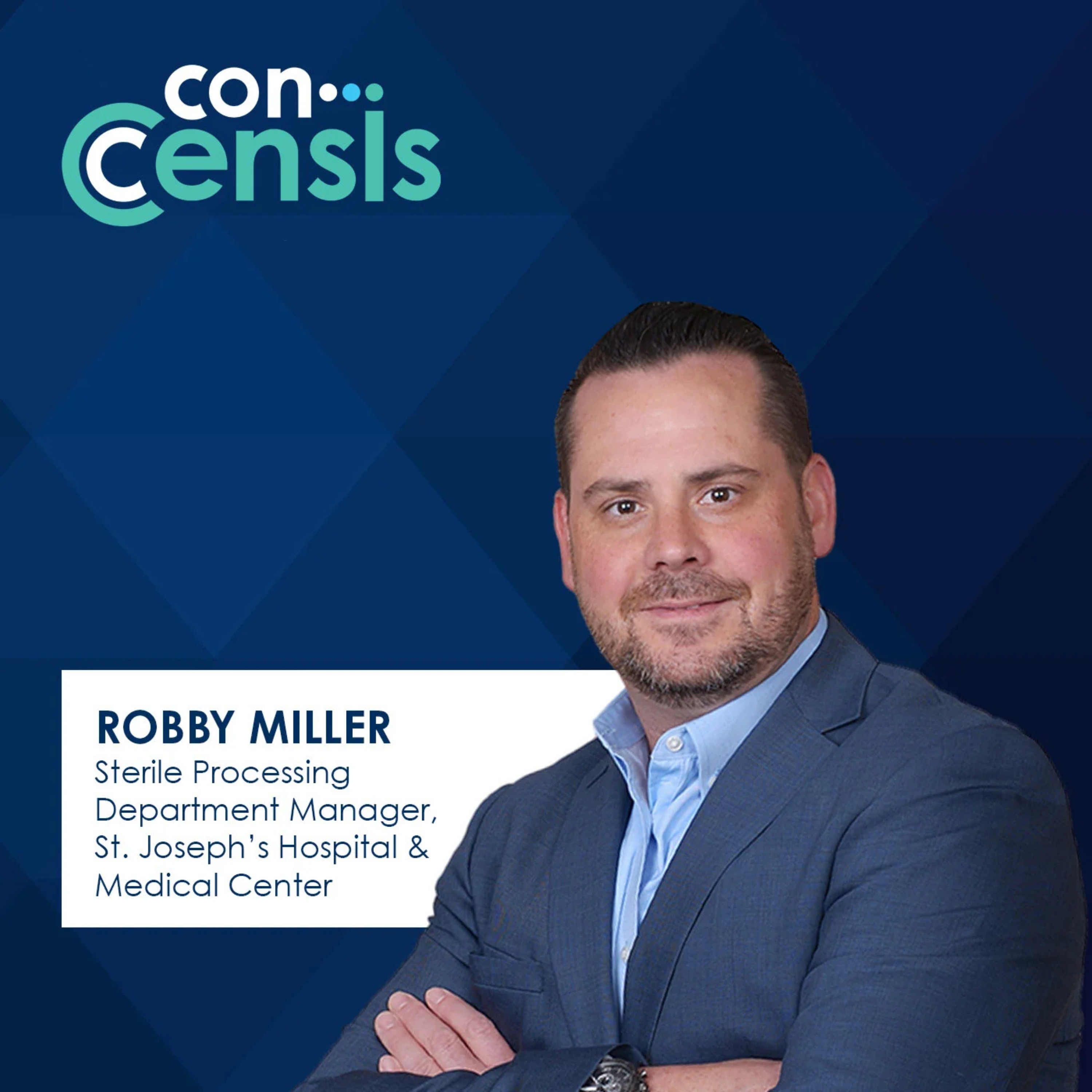
Inside the SPD Revolution: Robby Miller on Embracing CensisAI²
In this impactful episode of the ConCensis podcast, host Yasmeen Hassan sits down with Robby Miller, Sterile Processing Manager at St. Joseph’s Hospital Medical Center, to explore how artificial intelligence is revolutionizing the field of sterile processing. With nearly 30 years of experience in healthcare, Miller shares his journey from EMT to SPD leader, offering a candid look at how technology like CensisAI² is elevating efficiency, quality, and patient safety in surgical environments. Miller unpacks the evolving challenges in sterile processing—from regulatory compliance to managing increasingly complex surgical instruments—and explains how AI-driven tools are helping teams deliver cleaner, safer, and more reliable results. He also discusses the vital role of leadership in building processes, setting KPIs, and fostering a culture of continuous learning across healthcare teams. Key Takeaways: CensisAI² enables real-time tracking, performance coaching, and better compliance by transforming departmental data into actionable insights, allowing SPD leaders to fine-tune staffing, productivity, and tray quality with confidence. AI is helping reduce instrument errors and boost quality assurance by identifying trends in missing instruments, monitoring staff accuracy, and enabling predictive resource planning for high-volume surgical schedules. The future of sterile processing lies in automation and standardization, where tools like CensisAI² will support leaner tray assemblies, streamlined training for new technicians, and aggregated IFU data to ensure safer reprocessing at scale. Technology is most effective when paired with human leadership and clear communication, with Miller emphasizing the importance of educating staff on both the “how” and the “why” to drive successful tech adoption and buy-in. As sterile processing continues to evolve, Miller’s insights highlight how AI can serve as an extension—not a replacement—of the skilled technicians behind the scenes. Through smart deployment and a commitment to excellence, the future of surgical safety looks brighter, more efficient, and more connected than ever.
March 26, 2025Episode 119 min
Smart Tools, Safer Patients: Dr. Arpita Hazra Talks AI in Healthcare
In this insightful episode of the ConCensis podcast, host Amy Chodroff welcomes Dr. Arpita Hazra, a Clinical Patient Safety Data Specialist, to explore the evolving landscape of patient safety, risk management, and AI in healthcare. Drawing from her background in internal medicine, public health, and clinical data science, Dr. Hazra provides a compelling look at how hospitals and surgical centers can minimize risk—particularly through better sterilization, communication, and the integration of AI technologies. The conversation highlights real-world challenges, such as retained surgical instruments and post-op infections, and introduces the power of tools like CensisAI² in helping to automate instrument counts, improve documentation, and drive better patient outcomes. Dr. Hazra also emphasizes the importance of transparency and stakeholder involvement in the adoption of new technologies in the clinical environment. Key Takeaways: Sterile processing errors can lead to increased hospital stays, readmissions, and legal risks—emphasizing the need for precise, accountable systems. RFID and AI-driven tools are improving documentation and surgical instrument tracking, helping reduce retained foreign objects and post-op complications. CensisAI² supports hospitals with sterilization, inspection, and backend data reporting, enabling predictive analytics and better decision-making. Technology adoption succeeds when frontline staff are involved early, and communication around purpose and data usage is transparent and consistent. As healthcare systems continue to modernize, Dr. Hazra’s insights underscore the critical role of combining human vigilance with advanced tools to improve outcomes. By embracing innovation thoughtfully and fostering open dialogue across teams, hospitals can reduce risk, build trust, and ultimately deliver safer, more reliable care.
Is this your show?
Claim this listing to keep it up to date, reach guests who want to pitch you, and manage bookings with Guestify.