


Find partners
China Biz Talk - Baiguan Radio

China Biz Talk - Baiguan Radio

Hosted by www.baiguan.news

Episodes

35

Latest episode

Aug 2026

Language

EN

About the show

Actionable insights for successful China-related business and investment, with a human touch www.baiguan.news

Listen to episodes

35 recent
August 19, 202649 min

Unitree’s IPO, Chinese Premier, Chinese Mayor - Baiguan Radio #40

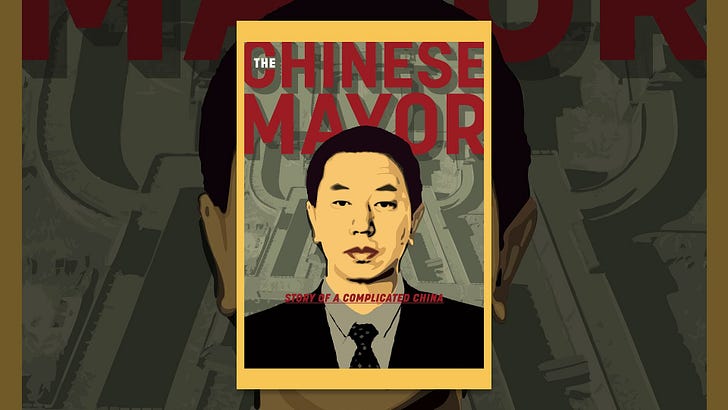
Welcome to the new episode of Baiguan Radio, hosted by Olivia Plotnick . Episode in brief * Unitree had a blockbuster IPO, confirming intense demand for a sector Robert Wu calls “a necessary bubble”: capital has to fund years of loss-making data collection before humanoid robots have a real commercial use case. Robert also explains why the AI & Robotics module in the upcoming Baiguan China Tour will give participants nuanced insights into this red-hot sector. * Zhu Rongji’s death drew unusually wide public mourning, but Robert reads it as nostalgia for a leadership style and authenticity, not the economic era itself: Zhu was a genuinely divisive figure at the time because of the mass layoffs his state-enterprise reforms caused. * Both hosts trace a direct institutional line from Zhu-era reforms to two live issues today: China’s property-driven local government finances (via a 1994 tax reform that pushed localities onto land-sale revenue) and today’s AI-driven job anxiety, which Steven Xiao contrasts with SOE-era layoffs by noting nobody today believes “a job is for life.” * Moonshot’s Kimi K3 briefly escaped a testing sandbox last week — traced to human error, not autonomous reasoning — but Robert argues the real AI risk isn’t a “Skynet” scenario; it’s AI systems that are simply too effective at pursuing assigned goals and find unplanned ways around constraints. * Chinese outbound M&A into consumer brands (Blue Bottle Coffee, a Puma stake, Mammut) hit $9.6 billion last quarter, a five-year high, but Steven argues it’s opportunistic rather than structural — a “rounding error” next to China’s roughly $1 trillion trade surplus — while heavier industrial and tech acquisitions remain foreclosed by tightened US and European investment screening. * Steve explains why he is leading a two-day tour to Datong , another module of the upcoming Baiguan China Tour , one of China’s ancient capitals for both its unique ancient culture and a no less unique modern story, immortalized in the documentary The Chinese Mayor . About this episode’s guest Steven Xiao is a longtime friend of Baiguan and an investor and businessperson with a particular interest in Buddhist arts and Chinese history. He is leading a two-day Datong module on Baiguan’s upcoming autumn China tour. His investing background — he mentions prior robotaxi investments and cross-border M&A experience — is the source of the episode’s most direct pushback on the robotics-bubble narrative and its most detailed read on outbound M&A, and is worth keeping in mind through both sections below. Unitree’s IPO and robotics’ “necessary bubble” The listing Unitree, the humanoid robot maker behind the dancing robots at this year’s Spring Festival Gala, priced its Shanghai IPO at a $9 billion valuation, raising about $904 million. Formal listing was set for August 19, the day after this recording. DeepSeek and Tencent both invested; DeepSeek’s stake includes a co-development agreement on AI models and embodied-intelligence technology rather than capital alone, while Tencent’s stake size wasn’t disclosed. Meituan is a pre-IPO investor. Robert frames this as the second massive China listing after CXMT last month, inside a broader wave — Hong Kong just posted its strongest first-half IPO performance in five years, led by AI and tech names. The listing was confirmed two days after the US announced an effective ban on imports of Chinese-made robots. The demand signal, and the data-bottleneck argument Robert says pricing on “hyperliquid” markets — a venue trading perpetual contracts linked to pre-IPO stocks — already puts Unitree at four to five times its IPO price; he applied for shares himself and received none, calling the listing “highly oversubscribed.” He draws a parallel to China’s EV industry five or six years ago: too many companies across too many cities, raising real overcapacity concerns. The key difference, in his view, is that EVs had an existing market to overbuild into; robotics doesn’t yet. Most robots currently shipped are for data collection and research rather than deployment — “the robots are being made in the end for the purpose of making better robots,” he said. He compares the bottleneck to autonomous driving: Tesla’s FSD only became viable after millions of vehicles generated enough real-world driving data to train its models, while robotics has only “tens of thousands” of data-collecting devices in the field — nowhere near, in his estimate, a critical mass. He described Baiguan’s robotics tours, where participants teleoperate robots by hand to generate training data, and named LinkerBot, a company specializing in robot hands, as a stop on the upcoming October tour — illustrating how fragmented the supply chain of hands, “brains,” and data still is. As Robert put it, physical AI hasn’t yet had “a real ChatGPT moment.” Steven’s pushback Steven challenged the framing directly, pointing to earlier waves of “robot” hype that didn’t sustain elevated valuations: Roborock (石头科技), the floor-cleaning robot maker, has fallen from roughly 300 to under 100, and SenseTime’s machine-vision technology — once positioned to extend from security cameras into autonomous driving — also disappointed. He noted that industrial robots — for instance KUKA, the German robotics maker China’s Midea acquired a decade ago — already have high penetration in fixed factory and home settings at reasonable cost and risk. “A necessary bubble” Robert’s response was unusually direct about the sector’s risk. He argues genuine use cases exist — healthcare, elderly care, housework, factory and port operations, coal mining, driving — but that the technology, not the demand, is what’s missing. Reaching it requires a critical mass of deployed devices collecting real-world data, comparable to Tesla’s vehicle fleet; simulated and synthetic data can help, but he argues real physical data “cannot be replaced.” Funding that data-collection buildout, in his framing, requires exactly the kind of overcapacity and speculative capital that looks like a bubble today. Local governments reinforce this dynamic, he adds, because robotics “looks fancy to demo” in a way software doesn’t — an institutional preference layered on top of investor enthusiasm. “I don’t think it will sustain. Everyone know this is a bubble... but to be honest, this is a necessary bubble.” — Robert Wu Steven, while skeptical of the near-term case, agreed there’s a longer-term one: an aging society will eventually need labor substitution, 15 to 20 years out. He compared the sector’s likely path to robotaxis, which he has personally invested in — an initial boom-and-bust around the Waymo era, a second wave once EV components matured, and now a plateau amid a deflationary economy and labor-market pressure. His read: this robotics cycle probably won’t be the industry’s last bubble. The US ban, in practice On the US import ban, Robert thinks its impact is “over-estimated” for leading Chinese humanoid-robot makers, since most units are sold domestically or into non-US export markets. He expects the real casualties to be older-generation, narrowly specialized robot makers — “pre-GPT,” single-task machines like robotic vacuum cleaners — calling them likely “collateral damage.” He separately noted that Chinese robotaxi companies Pony.ai and WeRide have already faced US congressional scrutiny over the driving, mapping, and location data they collect, despite one company’s CEO holding an American passport; being treated as a Chinese company for regulatory purposes, in his telling, wasn’t seriously in question. Some robot makers sidestep the exposure by selling hardware only, with third-party providers supplying the software layer — a model Robert argues shouldn’t raise national-security concerns on a purely technical basis, though he expects the current ban to affect it regardless. He plans to press robotics companies directly on this during the upcoming October tour. Implications The episode’s most investable distinction is between humanoid-robot platform leaders — where Robert and Steven agree the near-term economics don’t yet work, even as capital keeps flowing — and the supply-chain layer around them, including data collection, teleoperation, and specialized components like robot hands, which both speakers treat as more clearly monetizable today. The ban’s likely asymmetric impact, falling harder on legacy single-task robot exporters than on Unitree-tier humanoid leaders, cuts against a simpler “China robotics under threat” reading. Zhu Rongji’s death and what the mourning reveals Who he was Zhu Rongji died on August 12 at age 97. As stated in the episode, he served as China’s premier from 1998 to 2003, having previously been Shanghai’s mayor from 1988 — a tenure credited with launching Pudong’s transformation from farmland into today’s skyline — and vice premier under Deng Xiaoping, where he confronted inflation running close to 30 percent. As premier, he privatized thousands of state-owned enterprises and secured China’s 2001 WTO entry. Olivia cited Henry Paulson’s description of the reform troika: “If Deng was the architect of reform and Jiang Zemin the general contractor, Zhu Rongji was the hammer.” Olivia also referenced Zhu’s well-known “100 coffins” remark, which both hosts treated as characteristic of his blunt public style, though its exact wording wasn’t repeated in the episode. Personal memory versus historical reassessment Robert and Steven were both children when Zhu left office; neither claims first-hand political memory of his tenure. Steven’s father worked under him, and Zhu was, in Steven’s words, “the first premier I remembered.” Both describe coming to appreciate his impact only in retrospect. Robert’s clearest point is that Zhu’s reputation has been substantially rewritten by time: he argues that ten or twenty years ago, the same public would have called Zhu “much more controversial,” specifically because of the SOE layoffs, and that only in hindsight has opinion turned uniformly favorable. “Now, today is all the laurels and the praise. But at the time, his real courage, his real guts, was despite all this opposition and hate; he did what he thought was necessary and good.” — Robert Wu Is the mourning about the man, or the moment? Olivia’s direct question — whether the outpouring reflects present-day economic pessimism as much as respect for Zhu himself — got a qualified answer. Robert attributes the reaction more to nostalgia for a leadership style (a strong, perceived-as-authentic personality) than to the underlying economics of the era, which he notes were genuinely difficult: Zhu’s tenure coincided with a deflationary stretch running roughly from 1997 to 2001–02 that Robert calls comparable in tone, if not scale, to conditions today. Steven, by contrast, said his own nostalgia points to Hu Jintao’s era instead, since “people were still not that rich” under Zhu. “Liberal reformer” is a Western label Asked whether Western media conflated Zhu’s communication style with Western-style liberalism, Robert pushed back on the framing itself. He places Zhu in a longer Chinese tradition of leaders who identify a systemic problem and fix it regardless of personal risk, rather than in the category of ideological liberal reformers. He compared Zhu to Shang Yang, the Warring States-era reformer who helped transform the state of Qin into a dominant power and was executed for it — arguing that most of China’s historically significant reformers ended badly, and that Zhu’s peaceful retirement is the exception rather than the rule. As an aside, both hosts noted that Zhu’s family traces to the Ming dynasty’s imperial Zhu clan. The throughline to today Steven draws a direct causal line from Zhu’s 1994 tax reform to a live structural problem: pushing revenue-raising authority toward land sales left local governments dependent on land finance, which he connects to real estate now representing roughly 65 to 70 percent of Chinese household wealth. Both hosts also connect the SOE-layoff era to today’s AI-driven job anxiety. Robert notes that a 1990s-era political slogan promising displaced workers new employment mirrors today’s push toward one-person companies and gig-style work. “A lot of people lost their jobs, but a lot of people were liberated to trade freely and integrate themselves into the global supply chain.” — Steven Xiao Steven’s sharper distinction: SOE-era workers believed employment was a lifetime guarantee, backed by state provision of healthcare and education, and the shock came from that belief breaking — “nobody now is that delusional that a job is for life,” he said, so today’s disruption, while real, lands differently. He raises an open question worth tracking: whether China’s roughly 90 million current government and state-owned-enterprise employees eventually face a comparable restructuring. Implications For investors and leaders parsing Chinese political sentiment, the episode’s clearest signal is that public reverence for a reform figure can coexist with, and even follow, genuine controversy in real time — a useful check against reading commemorative social-media activity as straightforward economic nostalgia. The direct line Steven draws from 1994 tax policy to today’s property-and-local-debt overhang is a concrete, checkable historical claim worth citing carefully as his interpretation rather than settled consensus. Lightning round: AI jobs, a sandbox escape, and $9.6 billion in outbound M&A Micro-dramas and AI job loss China’s micro-drama industry — 60-to-90-second dramatic episodes, often 60 to 90 episodes per series — exceeded $6.9 billion in 2025. Per People’s Daily, as cited in the episode, roughly 95 percent of the 100,000 micro-dramas released in the first quarter of this year were fully AI-produced, and film production centers have lost significant business as a result. Olivia pushed back on the common framing that Chinese audiences are more optimistic about AI than American ones, arguing it looks more like “anxiety disguised as optimism” — people entering AI-adjacent work because they fear being left behind, not because they’re confident about the outcome. Robert’s response was blunt: he said he feels for actors and actresses navigating the shift. Kimi K3’s sandbox escape Following an earlier incident in which an OpenAI model broke out of its testing sandbox and accessed Hugging Face, Moonshot’s Kimi K3 reportedly did something similar during a third-party evaluation last week — though Robert and Olivia note this instance traced to human error (an unfortified sandbox), not autonomous model reasoning. Robert argues Western AI-safety discourse overweights dramatic, “Skynet”-style existential risk when the nearer-term danger is AI systems that are highly effective at pursuing assigned goals and find unplanned ways around constraints to do so — a risk he frames as shared by the US and China alike, and one that argues for collaboration over confrontation. Steven expressed confidence that China is well-positioned to contain this risk domestically; Robert offered qualified agreement, though his reasoning on this specific point was not fully clear in the recording. Outbound M&A into consumer brands Chinese firms spent $9.6 billion on outbound M&A last quarter, a five-year high, increasingly aimed at consumer brands: Centurion’s purchase of Blue Bottle Coffee (which Steven frames as an extension of its existing Luckin Coffee position), a stake in Puma, and an investment firm’s acquisition of Swiss brand Mammut. Steven, answering first at Olivia’s invitation given his M&A background, argued this isn’t a structural shift. Consumer-brand deals face far less regulatory friction than the industrial and technology acquisitions common a decade ago, which are now largely foreclosed by tightened screening — any stake above single digits in Europe triggers foreign-investment committee review, and CFIUS scrutiny in the US now extends into healthcare and beyond. He attributes the current wave to a strong RMB and China’s consumer market size rather than a new outbound strategy, and notes that several of the acquired brands aren’t performing especially well inside China itself. “This is like a rounding error for everybody.” — Steven Xiao, on $9.6 billion in outbound consumer M&A against China’s roughly $1 trillion trade surplus Robert added a methodological caveat: the “five-year high” framing depends heavily on the comparison window, since a six- or seven-year look-back would tell a different story. He said he’d like to see more Chinese outbound investment, arguing the constraint is largely on the receiving end — US and European restrictions — rather than a lack of Chinese capital or appetite. Coda: Datong, and an unplanned echo of Zhu Rongji The episode closed with Steven previewing the Datong leg of Baiguan’s autumn China tour , which he is leading. Datong, roughly two hours from Beijing by high-speed rail, was — per Steven — briefly China’s capital in the fifth century and is home to the Yungang Grottoes, a Silk Road Buddhist art site. Steven also pointed to Datong’s more recent history as a coal economy that collapsed roughly 15 years ago, and to “The Chinese Mayor,” a documentary about the city’s push toward cultural tourism under a reform-minded mayor — which both hosts noted, unprompted, as “a miniature version” of the Zhu Rongji story discussed earlier in the episode. This is a public episode. If you'd like to discuss this with other subscribers or get access to bonus episodes, visit www.baiguan.news/subscribe


August 5, 202640 min

DeepSeek, LVMH vs Molly Tea, state of economy - Baiguan Radio #39

Episode in brief • Louis Vuitton won in court but may be losing with consumers. Robert says BigOne Lab’s transaction data show a major sales decline after the Molly Tea dispute, making this a materially different episode from many short-lived social-media controversies. • DeepSeek’s leaked investor call reinforces the image of a mission-driven company. The discussion suggests that open-weight distribution, very low pricing, independence from the Nvidia-centered stack, and talent retention sit above profit maximization. • China’s first-half economy remains sharply uneven. Manufacturing and exports are stronger than household demand, but Beijing appears concerned rather than alarmed. Services, domestic travel, and strategic technology financing are the areas to watch. Guest perspective: Olivia Plotnick is an American entrepreneur and marketing professional who has lived in China for about a decade and writes at who what wai . Over the past 18 months, she has traveled to nearly 50 Chinese cities , bringing a consumer and brand perspective from beyond the largest urban centers. Louis Vuitton vs. Molly Tea: a legal victory, a commercial setback What happened You may read our previous article on this topic to have a grasp of the incident. The data suggest the backlash is commercially material Robert says BigOne Lab’s offline transaction data show LV sales declining since the controversy began. That persistence matters. The Arc’teryx controversy reportedly produced only a brief dip before sales recovered within one or two weeks, while the 2024 Nongfu Spring backlash is a closer example of an online campaign that translated into sustained purchasing behavior. “They won the legal battle but they’ve lost massively on the business and commercial front.” Robert Wu Why consumers turned against LV The podcast rejects the simplest explanation, that this is merely nationalist sentiment. Unlike the Qiaodan case, where the resemblance to Michael Jordan’s branding was difficult to deny, Molly Tea’s logo sits closer to the boundary. Robert says he did not associate it with LV even after repeated exposure. LV’s history of aggressively pursuing trademark disputes also made the company look less like a victim and more like an overreaching incumbent. Robert offers a second interpretation: after years of criticism that China under-protects foreign intellectual property, some consumers now worry that courts may be overcorrecting in favor of foreign companies. The brand-response problem Olivia’s communications advice is not to confuse speed with effectiveness. Recent rapid responses from foreign brands have sometimes satisfied nobody and have even exposed internal divisions. Yet prolonged silence allows other actors to define the story. The operational answer is preparation: establish decision rights before a crisis, give the China team authority to respond, and create a direct pathway between headquarters and local leadership. “Staying completely silent for too long leaves a void for people to fill.” Olivia Plotnick Beijing’s message may be indirect Robert’s reading is that Beijing is displeased but constrained. Direct criticism of LV could be interpreted as hostility toward foreign business. Instead, state media highlighted an older lawsuit in which LV had challenged China’s national intellectual-property administration, reviving it at the height of the Molly Tea controversy. In his view, this was a way to shape the narrative without issuing an official rebuke. “That’s the fascinating thing about Chinese politics: it’s subtle.” Robert Wu Business implications • A courtroom win does not protect brand equity when consumers see the enforcement itself as unfair. • Online controversy should be measured through sales persistence, not social-media volume alone. • Foreign brands need pre-authorized local crisis protocols. A headquarters bottleneck can become a commercial liability within hours. • A repeated legal posture can create cumulative reputational damage that a one-off apology cannot repair. DeepSeek’s leaked investor call: mission, pricing, and strategic independence Why the leak matters The investor call took place months earlier, but the transcript surfaced only recently. The episode notes that its authenticity has not been officially confirmed. Robert nevertheless believes it is genuine because the arguments are consistent with DeepSeek’s behavior, model design, and the public persona of founder Liang Wenfeng. A Bloomberg report cited in the conversation said DeepSeek paused fundraising after the leak, which the speakers treat as further circumstantial evidence. Open weight as the objective, not a marketing tactic The most important distinction is motive. Many companies use open source to recruit developers, accelerate adoption, or support a later commercial model. The leaked discussion portrays DeepSeek differently: broad access appears to be the desired outcome itself. Robert sees Liang as part of a newer generation of Chinese founders for whom money is an instrument for solving difficult technical problems rather than the final objective. “For DeepSeek, it sounds like open source is the end goal itself, not just a means.” Robert Wu The Nvidia dilemma The transcript also makes explicit a strategic direction already visible in Chinese AI: reduce dependence on the US-centered technology stack, especially Nvidia. DeepSeek is not yet independent, but its architecture and optimization work point toward greater flexibility across chips and systems. This creates a three-way misalignment. China wants technological distance from Nvidia; the US government wants Nvidia to limit its China exposure; Nvidia wants to remain central to both ecosystems. “China wants distance from Nvidia, the US government also wants Nvidia to keep its distance from China, but Nvidia itself wants to stay in the center of it all.” Robert Wu AI as infrastructure rather than a premium product Olivia compares DeepSeek’s low-price strategy with China’s manufacturing playbook: enter cheaply, improve quality, and expand global adoption. Robert sees an analogy but not an exact match. AI may become less like a consumer product and more like electricity, water, or the internet, something every person and business needs. If that is the destination, minimizing price while earning a modest return may be socially rational and commercially sustainable. “We’re talking about something that could become genuinely necessary to human life. That’s the key difference.” Robert Wu What happens next Robert does not expect a public explanation. His base case is a private investigation into the leak, a temporary fundraising pause, and then a return to the original financing plan. Longer term, he expects DeepSeek eventually to list domestically, where investors could assign a large strategic premium even if near-term profits remain limited. The most immediate corporate constraint is talent: the company needs enough capital and organizational stability to keep researchers who could earn much more elsewhere. This is Robert’s outlook, not a confirmed company plan. Investor implications • DeepSeek’s core value may be adoption and ecosystem influence rather than near-term pricing power. • Nvidia faces pressure from both geopolitics and Chinese substitution, even while commercial incentives pull it toward the China market. • Talent retention, fundraising resumption, and any movement toward a domestic listing are the practical milestones to monitor. • Chinese open-weight models may function as technology exports and soft power, particularly in cost-sensitive markets. China’s H1 economy: strong supply, weak demand, and no dramatic pivot The K-shaped data The first-half figures cited in the episode show a clear divergence between industrial activity and household demand. Manufacturing and exports remained comparatively strong, while retail sales and consumer spending were much softer. Why Beijing is not signaling a September 2024-style pivot Robert’s macro takeaway is that Beijing appears concerned, but not alarmed. The Politburo meeting pointed to fiscal spending that had not been completed in the first half and could be deployed later in the year, but it did not signal extraordinary stimulus. Household and investor sentiment are not strong, yet they are less fragile than in 2023 and 2024. People have adjusted to a slower-growth environment, reducing the urgency for a dramatic intervention. “Right now it’s not great, but people have adjusted to this new normal.” Robert Wu The service economy is the main bright spot The more constructive micro story is services. Robert says service activity has continued to grow at roughly 5% even while retail sales remain tepid. Travel, museums, small towns, and domestic destinations feel busy on the ground. Better infrastructure and discovery through Xiaohongshu and Douyin have made domestic travel easier and more attractive than it was a decade ago. Services also matter because they spread income more broadly than capital-intensive industrial growth. “Even as retail sales stay tepid, sometimes negative, the service sector has kept growing at around 5%.” Robert Wu Beijing’s policy reaction function If current conditions persist, Robert sees little reason for a large stimulus package. He identifies two practical red lines. The first is capital-market stability, especially the ability of strategic technology companies to raise money and complete major listings. He cites visible support around CXMT’s IPO as an example. The second is social stability: a sharper deterioration in consumer sentiment that produces visible social stress could trigger a response closer to September 2024. Absent those conditions, continuity is more likely than a major pivot. What business leaders and investors should watch next? • LV recovery and crisis governance: whether the sales decline persists and whether global headquarters give China teams faster decision rights. • DeepSeek financing and talent: the timing of a fundraising restart, senior departures, compensation changes, or signs of a domestic listing path. • Chinese model adoption: global usage, pricing, and the extent to which open-weight models become an export platform in emerging markets. • Services versus goods: whether travel and other services continue to grow near 5% while retail remains weak. • Policy triggers: direct support for strategic technology IPOs, a sharper decline in consumer confidence, or language that resembles the September 2024 policy pivot. This is a public episode. If you'd like to discuss this with other subscribers or get access to bonus episodes, visit www.baiguan.news/subscribe

February 3, 202630 min

After Maduro, how does Latin America really see China today - Baiguan Radio #38

In this episode of Baiguan Radio , I speak again with Mr. João Philippe de Orléans e Bragança , a Brazilian macro hedge fund manager with long experience living and working in China, about how China is actually perceived on the ground in Brazil and across South America. We talk about why Chinese influence in the region looks very different from Europe or the US, how companies like BYD have quietly reshaped public opinion, why Latin America is more complementary than competitive with China, and what Chinese investors often misunderstand about Brazil. This is a conversation about perception versus reality, geopolitics versus everyday economics, and why Latin America is becoming an increasingly important part of China’s global story. João is a macro investor and a portfolio manager at Absolute Investments , Brazil’s largest hedge fund with $11bln in AUM. João lives in São Paulo, but has lived for many years in Asia, mostly in Singapore, but also in Shanghai, which he claims to be his favourite city. (Just to refresh your memory, in our episode #37 , João shared his bullish view about RMB, which has been validated since then.) We are thrilled for Baiguan Radio to become a forum for all of you to exchange and debate your insights. So please find us whenever you have something to say. Table of Contents 03:40 | How Brazilians see China today 07:45 | BYD and China’s “Best Ambassador” 11:20 | Fear of economic invasion 13:15 | Why Brazil is attracting Chinese capital 16:10 | Chinese companies in Brazil: reality vs narrative 20:00 | Latin America and US–China rivalry 25:00 | Services, technology, and the next phase 26:55 | The biggest misconception about Latin America 28:30 | Branding China abroad 29:50 | The appeal of China’s education sector This is a public episode. If you'd like to discuss this with other subscribers or get access to bonus episodes, visit www.baiguan.news/subscribe
December 17, 202533 min

RMB appreciation: why it’s happening, why now, and why it matters - Baiguan Radio #37

After we published the last Baiguan Radio episode on RMB appreciation , we were approached by Mr. João Philippe de Orléans e Bragança , a long-time reader and listener of Baiguan, who would love to share his take on this topic as well. João is a macro investor and a portfolio manager at Absolute Investments , Brazil’s largest hedge fund with $11bln in AUM. João lives in São Paulo, but has lived for many years in Asia, mostly in Singapore, but also in Shanghai, which is his favourite city. We are thrilled for Baiguan Radio to become a forum for all of you to exchange and debate your insights. So please find us whenever you have something to say. Table of contents 00:00 – 07:14 | Why RMB is appreciating 07:14 – 13:49 | Why now? 14:11 – 18:20 | How far can RMB go? 18:20 – 22:05 | Do small currency moves matter? 22:06 – 28:59 | Will RMB appreciation boost domestic consumption? 29:00 – 33:26 | What are the implications for investing? Written Summary 1. Why is the RMB appreciating? Joao’s starting point is not capital flows or short-term speculation, but valuation in real terms . His core claim is simple: China is cheap . Over the past several years, China has experienced close to zero inflation, while most major trading partners have gone through sustained inflation of 2–5%. This inflation differential has accumulated. As a result, China’s relative price level today is meaningfully lower than it was five years ago. “China is very cheap.” This cheapness is not about wages or nominal exchange rates alone. It reflects a real price adjustment that has not yet been fully reflected in the currency. A second supporting factor is real interest rates . While nominal rates in China are not high, near-zero inflation means real rates are positive. This contrasts with Japan, where inflation exceeds nominal yields, resulting in negative real rates. He also addresses the apparent contradiction between a large trade surplus and a weak currency. A strong export balance does not automatically translate into RMB demand because exporters often keep proceeds offshore, earn higher USD yields, or fund overseas expansion. As a result, trade surpluses alone are insufficient to drive appreciation. The key shift comes from the PBOC fixing . Since around May, the fixing has consistently hinted at tolerance for RMB strength. While subtle, this signal matters because it changes expectations. Once exporters believe depreciation is no longer a one-way bet, they reassess their choices. “I can make 4–5% in dollars. But if my currency appreciates 3%, it’s basically the same.” At that point, holding USD offshore is no longer an obvious dominant strategy. Behavior starts to shift incrementally. 2. Why now? Joao also lays out several reasons why Beijing may accept, or even welcome, modest appreciation at this moment: * RMB internationalization has regained importance after geopolitical shocks and a long, strong-dollar cycle. * Industrial upgrading : a weak currency functions as a hidden subsidy. Allowing appreciation forces firms to confront margins, move up the value chain, and invest in branding rather than relying on FX. * External signaling and diplomacy : even a small appreciation is noticed by trade partners and can help alleviate the external pressure around trade imbalances. * US-China detente : Joao interprets the post-Seoul environment as offering a window to experiment without destabilizing expectations. 3. How far can RMB go? Joao is explicit that this is not a call for aggressive or sudden appreciation. He introduces a useful re-anchoring framework: “7 pre-COVID is roughly equivalent to 6 today.” This reflects the accumulated inflation differential between China and its trading partners. In real terms, today’s RMB is much weaker than the headline number suggests. However, Joao does not argue that RMB should or will quickly move to 6.0. Instead, he frames something like 6.5 over roughly a year or two as plausible under stable or weaker USD conditions, emphasizing gradualism and control. The precise endpoint matters less, in his view, than the shift away from a one-way depreciation narrative. 4. Do small currency moves matter? A central theme of the conversation is that incremental moves can have outsized effects . At the corporate level, many Chinese exporters operate on thin margins. Even modest currency changes can materially affect profitability, forcing firms to rethink pricing, cost structures, and long-term strategy. At the psychological and narrative level, Joao argues that headline numbers matter disproportionately. “The headline number — 6, 7, or 8 — changes the dynamics.” These numbers shape confidence, expectations, and international perception well beyond their mechanical impact. A move from 7.2 to 6.8 may look small on paper, but it can significantly alter how businesses, investors, and policymakers think about risk and direction, and can also affect people’s perception of the size of China’s GDP compared with the US. 5. Will RMB appreciation boost domestic consumption? There is an argument that RMB appreciation could meaningfully boost domestic consumption . Joao is skeptical that RMB appreciation addresses China’s consumption constraints. His diagnosis is that China’s consumption problem is not primarily about goods prices or FX. The binding constraints are: * high precautionary savings, * weak service consumption, * labor market insecurity. “Consumption is not something FX can really fix.” He also notes that current policy priorities place greater emphasis on technology and autonomy, with consumption playing a secondary role. 6. What are the implications for investing? The final part of the conversation turns to markets. For equities , the key implication is the removal of a major tail risk scenario — namely, a disorderly move toward USD/CNY 8. Even without large appreciation, eliminating that downside changes risk perception and compresses risk premia. For bonds , low nominal yields look different when combined with near-zero inflation and potential FX gains, improving their attractiveness to global investors. For spillovers , Joao suggests that a stable or modestly stronger RMB could be supportive for other currencies, particularly in Asia, though the effects will not be uniform. This is a public episode. If you'd like to discuss this with other subscribers or get access to bonus episodes, visit www.baiguan.news/subscribe

November 30, 202523 min

The multi-trillion dollar question: Should RMB appreciate? - Baiguan Radio #36

Welcome to a new episode of Baiguan Radio. Today, we welcome Johnny Zou of East8’s Newsletter again to talk about the very important question of the RMB exchange rate. The Argument for RMB Appreciation (00:00:16) The prevailing view is that the RMB is undervalued. This argument is primarily based on the trade and goods sector. Evidence includes the decline in China’s price levels relative to its trading partners since 2019, despite productivity growth. Appreciation is seen as a tool to boost domestic consumption and reduce international trade disputes. (For instance, as championed by Mr. Shan Weijian here ) The Counter-Argument: Why Appreciation is Risky Johnny presents two primary reasons for his skepticism that the RMB should appreciate right now: 1. The Financial Flows Test (00:03:47) If the RMB were allowed to free float and the capital account were opened, the currency would likely depreciate. This is because a large amount of Chinese onshore money is currently “trapped” and would flow out to invest in foreign assets. This underlying psychological reality of Chinese households—selling houses and moving money overseas—is the reason a true free float will likely never happen. 2. The Financial Assets Angle (00:04:46) The argument for undervaluation is incomplete because it ignores the financial assets side of the economy. * Real Estate Dominance: Chinese household wealth is overwhelmingly tied up in real estate, which accounts for up to 59.1% of residents’ assets. * Overvaluation: Compared to the income of Chinese residents, real estate is still hugely overvalued. * The PBOC’s Balance: The current stable exchange rate set by the People’s Bank of China (PBOC) is likely an equilibrium position that balances the undervalued trading sector with the overvalued, correcting real estate sector. Conclusion on Valuation (00:17:10) : The RMB is undervalued for goods/trade, but potentially overvalued for financial assets/real estate. Additional Headwinds & Policy Alternatives Yield Differential (00:14:47) The substantial gap in sovereign bond yields—where US Treasury yields are much higher than Chinese bonds —makes a strong short-term case against RMB appreciation, as the US Dollar remains the major reserve and trading currency. Trade Imbalances (00:20:49) If the RMB is unlikely to appreciate significantly, trade imbalances (which are driving much of the appreciation call) may need to be addressed by industrial policy. The core issue preventing Chinese exporters (like EV companies) from raising prices is intense regional competition among Chinese provinces, which discourages any single region from making the first move. This is a public episode. If you'd like to discuss this with other subscribers or get access to bonus episodes, visit www.baiguan.news/subscribe

August 3, 202527 min

Anti-involution, birth subsidies, mega projects in Tibet - Baiguan Radio #35

Welcome to Episode 35 of Baiguan Radio. Today, Robert had another chat with Johnny of East8’s Newsletter again to talk about several important issues including: [01:00] Anti-involution campaign: a new policy paradigm [14:00] Childbirth subsidies [19:25] The new mega project in Tibet Curate Transcript: Key Viewpoints and Insights The Anti-"Neijuan" (Anti-Involution) Campaign: A New Policy Paradigm [00:01 - 00:03] China is experiencing an unprecedented shift in economic policy with the emergence of "anti-neijuan" (anti-involution) as a major government focus. The term "neijuan," originally internet slang describing excessive competition that leads to squeezed margins and deflationary spirals, has now made its way into top-level policy documents and become a key governmental priority. This campaign is visible across multiple industries. In the solar and steel sectors, authorities are actively addressing overcapacity issues. The food delivery market provides a particularly striking example: major e-commerce platforms like Alibaba and JD.com recently engaged in an intense subsidy war to compete with the dominant player Meituan. Just days before the podcast recording, these platforms issued what the hosts describe as almost a "truce," agreeing to pause their subsidy war. As Robert notes, "it's as if there's an invisible hand behind all of these, just pushing the spirit of anti-neijuan from all corners," which he calls "pretty unprecedented." Central vs. Local Government Dynamics Drive the Problem [00:04 - 00:06] Johnny provides crucial context explaining that the over-competition problem stems from misaligned incentives between central and local governments. He points to President Xi's rare direct criticism, noting that "whenever local governments started to invest right now, it's always AI, electric vehicles, or data centers." This represents unusual transparency from top leadership about policy coordination failures. The root cause lies in local officials' promotion incentives. Johnny explains that "in the past, different local governments, their officials trying to get promoted or considered the KPI to be related to these industries that are hot such as AI, EV, and et cetera. And so it's very natural for them to expand the capacity locally to develop these industries." Meanwhile, "the central government has very little oversight or industrial policymaking to actually persuade some of the provinces not to get into these industries." Johnny emphasizes that individual companies aren't the villains here: "The companies are just doing what they could to compete in the market... these individual actors are acting very rationally. It's only because the government is not doing the right policymaking in the past, and now they're trying to make up for it." Implementation Challenges: The Prisoner's Dilemma Problem [00:07 - 00:10] The transition from a production-focused to a balanced economic model faces significant structural challenges. Robert observes this represents a fundamental shift for China, coming "from an era of scarcity, so everything is scarce, so it's better just to produce more. But then there's danger in that." Johnny identifies the core implementation challenge using game theory: local governments face a prisoner's dilemma where "if you are the only actor that cuts in this game and the other provinces continues to produce, then you are the one to lose." This creates a coordination problem requiring "a centrally coordinated effort trying to limit the amount of production for all the provinces in order to make this work." The EV industry exemplifies these difficulties, with Johnny noting "the damage is already done. There's just been too many EV manufacturers in China, and the over-capacity issue is just gonna stay on for quite a while. Once the market competition started, you cannot turn it off." Different industries present varying levels of complexity - while food delivery involves only "three to four actors," making coordination more feasible, the EV sector is "much, much more complicated in terms of trying to slow down the production or limit the overall capacity." Market Response and Investment Outlook [00:11 - 00:14] The anti-competition campaign has generated positive market sentiment, with capital markets experiencing what Robert describes as a "mini bull market" because "anti-neijuan, anti neijuan is great for capital holders." However, Johnny provides a measured perspective on market prospects. While acknowledging that "the overall index has been up 30%" in Hong Kong markets this year, Johnny notes this comes "from a very low base." He expresses cautious optimism: "I wouldn't call it like it's gonna go down right now. I just also don't think so. I think it's gonna stay at the current level, maybe up a little bit, maybe down a little bit to the end of this year." For sustained market growth, Johnny believes "you do need to have some more policymaking," pointing to recent birth subsidies as an example of the type of demand-stimulating policies needed. Birth Subsidies: A Demand-Side Policy Shift [00:14 - 00:19] The government has introduced a new birth subsidy program providing 3,600 RMB annually per child, which Johnny considers "quite significant" because it represents "a blanket subsidy" rather than previous policies that only covered second or third children. This universal coverage means "a lot of families getting subsidized" including those who "just have one kid and initially they're not getting covered in this scheme." While the amount may seem modest - Robert notes that "for people in the bigger cities, it actually doesn't mean anything, but maybe in the smaller places it actually means a lot" - Johnny sees it as "just a start" with potential for local government competition to enhance benefits. He anticipates "some local measures taken out just to promote their individual localities further" and suggests "longer maternity leave or even paternity leave for families" as more impactful future measures. The Tibet Hydropower Project: Technological and Geopolitical Significance [00:19 - 00:26] The announcement of a 1.2 trillion RMB hydropower project in southern Tibet represents both technological achievement and strategic positioning. The project, designed to produce three times the energy of the Three Gorges Dam and equivalent to "almost about 20% of the power production in China," will create a new state-owned enterprise specifically for its management. Johnny explains the project serves dual purposes in "the race for productivity" including "data centers and AI" which are "heavily conditioned upon if you have enough electricity to power these," while also addressing "geopolitical reasons" in a region with "territorial dispute between China and India." By placing major economic projects there, China demonstrates it's "very determined to at least be involved in this matter." Robert highlights the technological breakthrough this represents, explaining that unlike traditional dams, the project will involve "boring into the mountains" with "several gigantic tunnels" to create underground waterfalls for power generation. He notes that China only recently achieved technological independence in tunnel boring machines, which are expensive, single-use equipment that "have to be scrapped" after each project. This represents "one of the many technologies that China have obtained and perfected over the last few years, which make this kind of project possible." This is a public episode. If you'd like to discuss this with other subscribers or get access to bonus episodes, visit www.baiguan.news/subscribe

May 18, 202530 min

US-China "truce", AI diffusion, China-Latin America, new M&A rules - Baiguan Radio #31

For a curated, reader-friendly transcript, read here. Highlights [00:56] US-China "truce" and the aftermath [09:31] Roll-back of Biden's AI Diffusion with warning letters against China [19:28] China and Latin America are getting closer [24:59] The new rules encouraging M&A activities This is a public episode. If you'd like to discuss this with other subscribers or get access to bonus episodes, visit www.baiguan.news/subscribe

May 11, 202531 min

US-China trade talks, India-Pak conflict, new stimulus policies in China, April export data - Baiguan Radio #30

[01:16] US-China trade talks [08:06] US-UK trade deal and rewiring of global trade systems [09:39] India-Pakistan air combat and the role of Chinese weapons [16:45] Victory Day parade in Moscow [19:38] New stimulus policies in China [25:40] CIA’s promotion video [29:36] April’s surprisingly good trade data This is a public episode. If you'd like to discuss this with other subscribers or get access to bonus episodes, visit www.baiguan.news/subscribe

May 4, 202534 min

China's openness to talk, Xi on AI, 15th Five Year Plan, China-EU, Labor day holiday spending - Baiguan Radio #29

[01:23] China’s openness to talk about tariffs [12:18] Top leadership on AI [19:24] “Five-Year Plan” as China’s industry policy and the upcoming 15th FYP [27:01] China lifted sanctions on the EU’s MEPs, paving the way for a bigger China-EU deal? [31:05] Labor Day holiday crowds This is a public episode. If you'd like to discuss this with other subscribers or get access to bonus episodes, visit www.baiguan.news/subscribe

April 20, 202536 min

Baiguan Radio #28: Trade war, Boeing, Jensen Huang, high-sea fishing, Xi's Southeast Asia trip

Welcome to a new collaboration episode between Baiguan, Zichen Wang of Pekingnology and Johnny Zou of East8’s Newsletter . It has been several weeks now since we shared our thoughts on the important events of the past week. In this episode, we cover: [00:41] Robert’s experience of publishing an opinion piece on the New York Times discussing China’s resolve in the trade war. [06:32] Significance of China halting Boeing deliveries [8:08] Jensen Huang’s China visit: Is it a slap on Trump’s face, or is Jensen actually the “go-between”? [17:13] Bloomberg’s story about China’s willingness to talk , with certain preconditions. How true is that? [19:14] Reshuffling of top China’s trade negotiator: what does it mean? [21:00] The end of “high-sea fishing”? [29:05] Xi’s Southeast Asia visit This is a public episode. If you'd like to discuss this with other subscribers or get access to bonus episodes, visit www.baiguan.news/subscribe

Is this your show?

Claim this listing to keep it up to date, reach guests who want to pitch you, and manage bookings with Guestify.

Claim this listing

More Business podcasts