

April 28, 202532 min
Episodes
27
Latest episode
Apr 2025
Language
EN-GB
The MzN International podcast “Chasing Impact” is dedicated to all leaders out there who are busy building a better world. We are here because we know that building a better world is not only necessary but possible. That pushing our business or nonprofit organisation to the next level means acting with purpose over short-term goals. That “success” means not simply chasing the next grand donation or quarterly profit target but - chasing impact.

Patrick Watt’s insights into Christian Aid’s 75 years of locally-led development, in particular the strategic points on implementing localisation, and the decision to draw back from direct implementation.
Understanding Humanitarian Narratives: Insights from Zainab Moallin and Hande Akpınar In a recent podcast, Zainab Moallin, Research Officer at the Overseas Development Institute (ODI), and Hande Akpınar explored the complex world of humanitarian narratives. Their discussion, "Patterns and Divergences in the Narrative Landscape," examined how stories and frames influence beliefs, attitudes, and decisions in humanitarian contexts. Defining Humanitarian Narratives Moallin emphasized that narratives are not merely stories but constructed frames that justify humanitarian actions. They shape decisions on why, when, and where aid is needed, who delivers it, and who receives it. Media Double Standards and Racialized Narratives A significant portion of the conversation addressed media double standards, particularly in portraying refugees. Moallin highlighted the racialized narratives during the Ukraine crisis, where Ukrainian refugees were depicted favorably due to perceived cultural similarities to Europeans, contrasting with the portrayal of refugees from the Middle East and North Africa. Neutrality in Journalism The ethical challenge of journalistic neutrality was also discussed. Moallin noted that many news organizations prohibit journalists from taking stances on humanitarian issues, framing such positions as political rather than humanitarian. The Power of Narratives Moallin concluded that vulnerability is a construct shaped by narratives, determining who is deemed deserving of protection. She stressed the responsibility of readers to critically assess these narratives. Key Takeaways Moallin shared three key lessons: Recognize the Power of Narratives: Narratives shape perceptions and actions. Critical Thinking and Personal Agency: Evaluate humanitarian narratives critically. Responsibility of the Media: Support responsible and balanced reporting. For listeners, she highlighted two key messages: Question the Narratives: Recognize that narratives are constructed and may carry biases. Advocate for Fair Representation: Support unbiased representation of all affected by humanitarian crises. This insightful discussion underscores the importance of understanding and critically engaging with humanitarian narratives.

The pace of advances in AI is faster than anything we've ever seen in human history. Nathan explains how this can create a lot of overwhelm for leaders, leading to a disparate kind of view, with leaders saying, “ I don't know what the future looks like if I use AI but I know what it looks like if I don't .” The sentiment is that we know we have to do something with AI, we just don't know what. If it sounds familiar to you, tune into the episode. Chris Meyer zu Natrup, Managing Director at MzN, and Nathan Chappell, Senior Vice President at DonorSearch AI, discuss: What AI can do for a nonprofit organization, not tomorrow, but today. The difference between predictive AI and generative AI, and how NGOs can use both together to serve their mission in a much more strategic and precise way. The steps every leader needs to take with AI. “ I would identify where my biggest gap is, I wouldn't look at AI as this umbrella thing that could solve all my problems, I would get very specific on one gap or challenge that I have in my organization and then and only then would I look at the types of AI technologies .” Why Nathan believes that AI is the only scalable solution to reverse declines in charitable giving. There is a systemic decline in the number of people who are giving to charity in almost most developed nations, but Nathan describe two ways that AI can work to reverse this: It can create so much efficiency that an organization can now offload mundane tasks and instead spend more time human to human. By using AI at scale, nonprofits organizations will more intimately know their audience by using thousands of data points and will be able to identify those donors that will have the greatest lifetime value. Could AI actually make us more human and more empathetic by cutting through the dead digital overload that we are exposed to every day? What responsible AI looks like for humanity, and the outsized responsibility that the nonprofit sector has for ensuring we prioritize safety over scalability. Nathan closed by quoting Charlie Munger, Warren Buffett's business partner, who said “ show me the incentives and I'll show you the outcome ”. If we look at the AI arms race, scale has been prioritized over safety almost every time. What do we think the incentive is for the nonprofit sector? Resources The Generosity Crisis The Case for Radical Connection to Solve Humanity's Greatest Challenges, by Nathan Chappell, Brian Crimmins and Michael Ashley. Sgn up for MzN’s free webinar on proposal writing and AI - link to the webinar More on Nathan: Nathan Chappell is a Senior Vice President at DonorSearch AI, where he leads AI deployments for many of the largest nonprofit organizations in the United States. With over 10 years of experience in nonprofit leadership and fundraising, he is a co-author of the award-winning book, The Generosity Crisis: The Case for Radical Connection to Solve Humanity’s Greatest Challenges. He is also an inventor of multiple AI patents and a certified fundraising executive. Nathan is passionate about the responsible use of AI for social good and the ethical implications of AI for philanthropy. He is the co-founder of Fundraising.AI, a collaborative initiative that aims to guide best practices and accelerate the impact of AI on advancement. He is also a frequent public speaker, a Forbes Technology Council member, and a recipient of the 40 Over Forty Award for his contributions to the nonprofit sector. Nathan's mission is to reignite generosity and transform the future of fundraising through AI.
Darina frames equitable partnerships as the key to locally-led development. However, achieving such partnerships requires us to rethink the conventional project management model as we know it.
In this episode, Zoë Elliot from Women for Women International highlights the urgency to accelerate gender equality efforts. She discusses reaching marginalised women in conflict zones, the importance of crisis response funds, and the need to increase funding to women-led organisations.
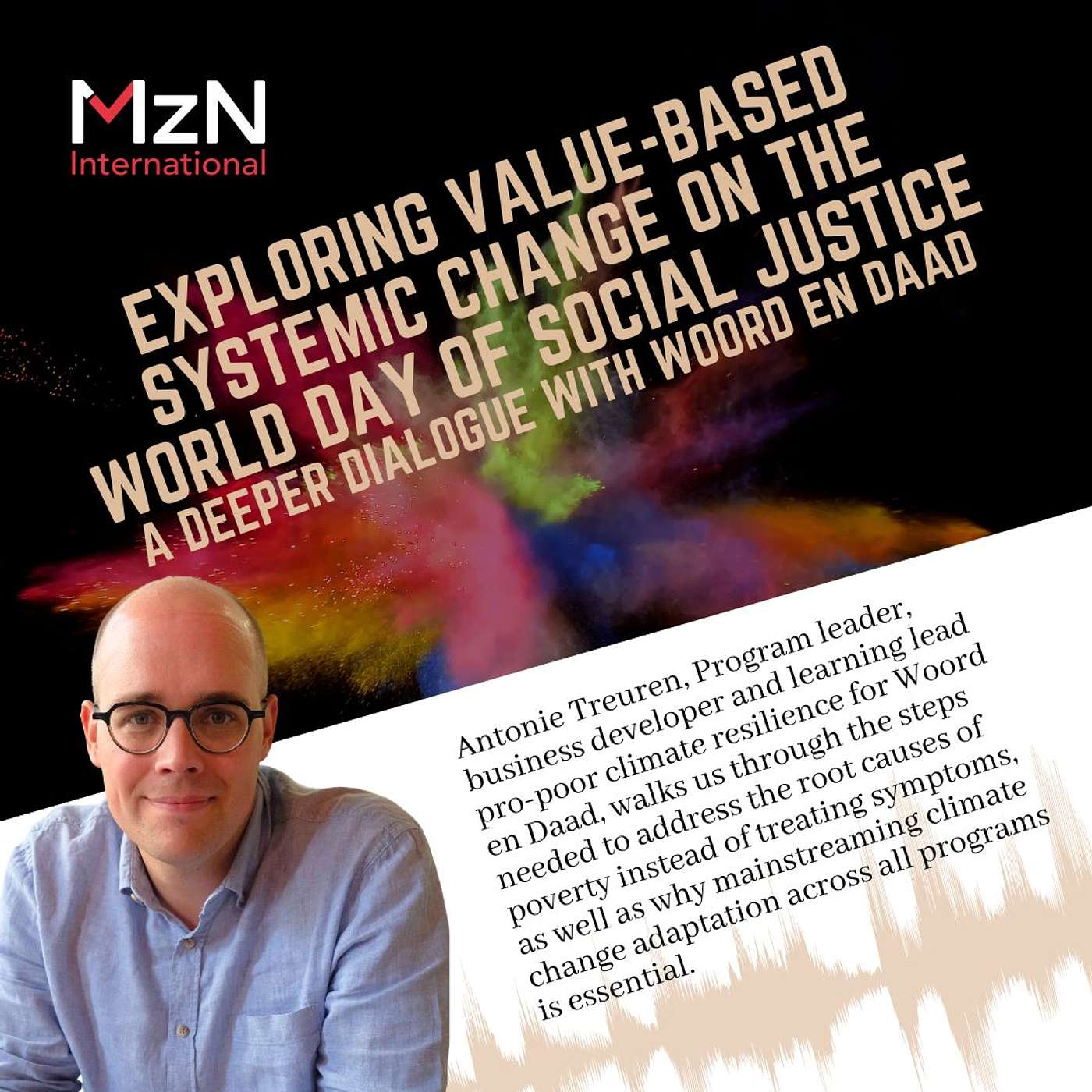
In this episode, Antonie Treuren, Program Leader and Business Developer for Woord en Daad, walks us through the steps needed to address the root causes of poverty instead of treating symptoms, as well as why mainstreaming climate change adaptation across all programs is essential. On this year’s World Day of Social Justice, we speak about: Letting the voice of the local people be heard, our local partners know better. We discuss the steps needed to empower those living in poverty to take on leadership roles and provide them with the necessary support. Systems change, it is more than just a buzzword. We discuss Woord en Daad’s guiding policy Value-based systemic change , aimed to influence the root causes of poverty and social-economic inequality. How to shift our mindset from a project-oriented approach to a partnership-focused one. Mainstreaming climate change adaptation across all programs using a systems approach. The push towards climate-related funds, such as the Loss and Damage Fund, increases competition. The Benkadi Project: Woord en Daad’s partnership across four West African countries, Benin, Burkina Faso, Ivory Coast and Mali, focused on policy making, planning and implementation related to climate change. Benkadi, meaning 'working together in the same direction', has a focus on Southern leadership. The project's main objectives include strengthening the position of vulnerable groups and communities in the four countries when it comes to the effects of climate change. It aims to provide equal access for these groups and communities to rights, capabilities, and opportunities to be more resilient to climate change. The project also seeks to implement concrete actions to reduce ecosystem degradation, such as deforestation, coastal erosion, and pollution caused by gold mining. The project aims to work closely with governments, local communities, and the private sector in achieving its goals. Find out more about the Benkadi Project
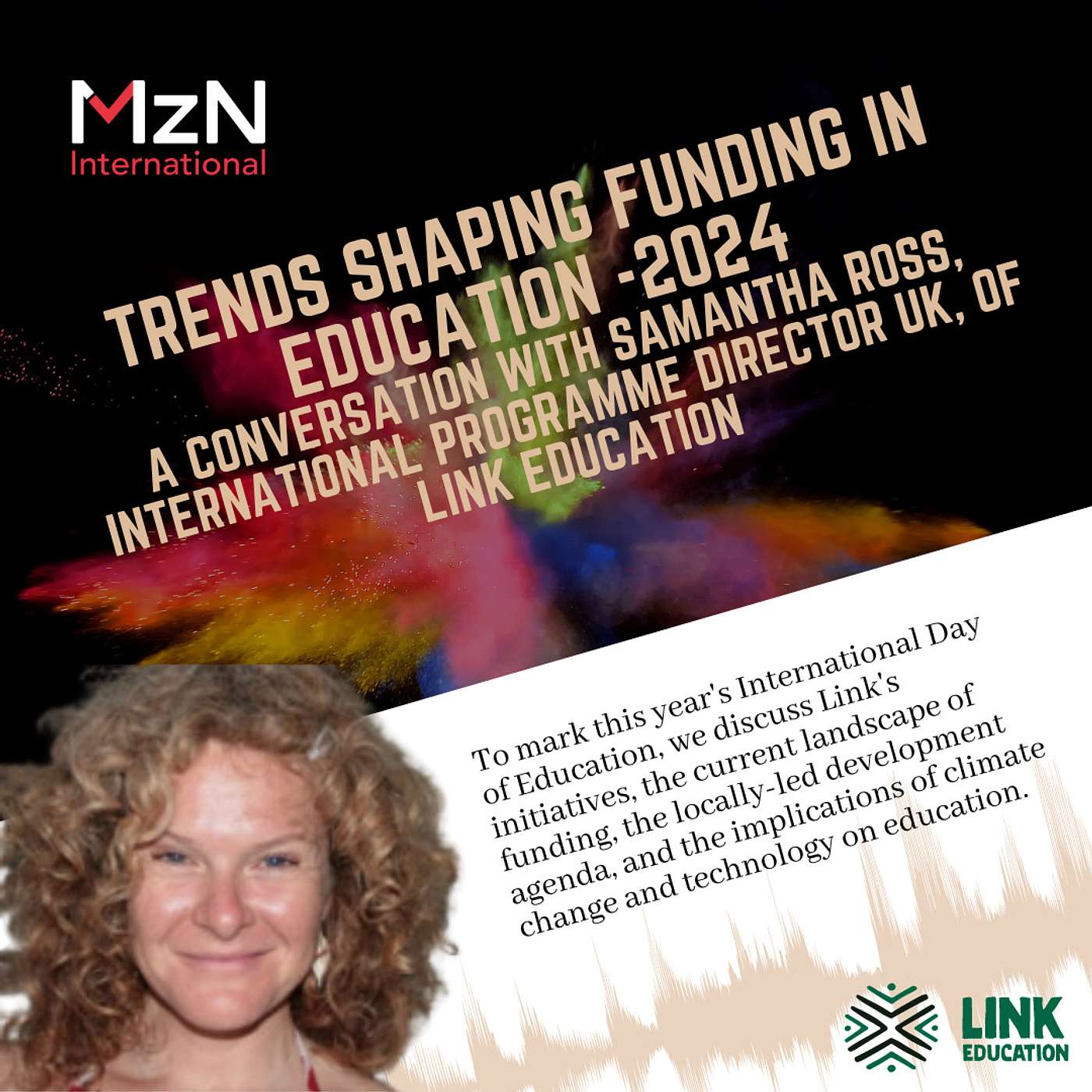
A conversation with Samantha Ross, International Programme Director UK, of Link Education To mark this year's International Day of Education, we discuss Link's initiatives, the current landscape of funding, the locally-led development agenda, and the implications of climate change and technology on education.
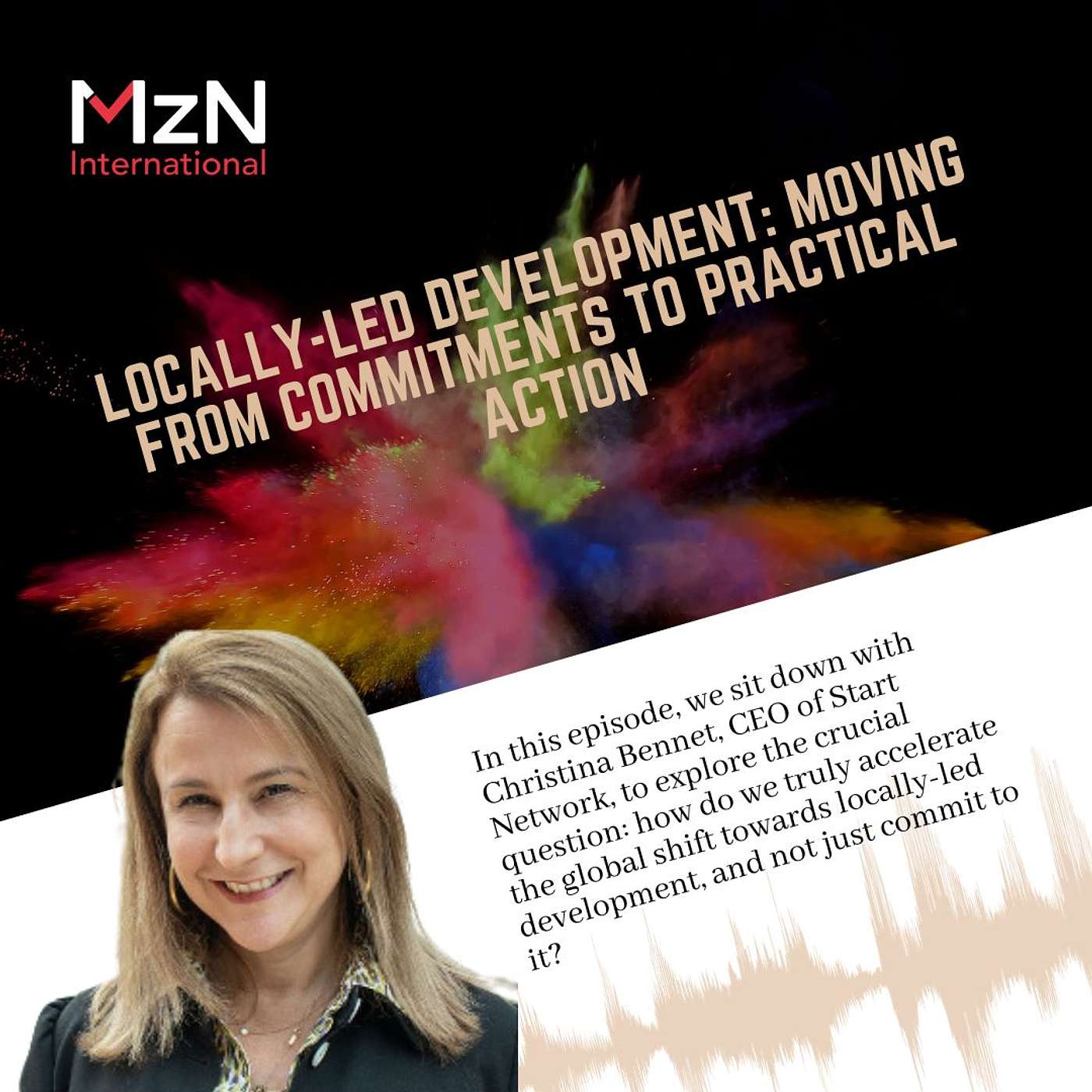
In this episode, we sit down with Christina Bennet, CEO of Start Network, to explore the crucial question: how do we truly accelerate the global shift towards locally-led development, and not just commit to it?

In this conversation, Hande Akpinar, a Senior Consultant at MzN International, discusses the dynamics of localization and trust-based giving with Wendo, the Founder and Executive Director of Dandelion Africa. While the podcast provides the full experience, here's a sneak peek at what you can expect: Founding Dandelion Africa: A Path Filled with Unique Challenges and Successes Wendo reflects on the inception of Dandelion Africa, highlighting the numerous challenges she faced as a founder, a woman, and a villager. Her journey led her to a leadership role she hadn't initially anticipated - The challenges of gaining trust in a grassroots organization, coupled with imposter syndrome and cultural biases against women in leadership, posed formidable obstacles. Nevertheless, the defining moments and the unwavering belief of an exceptional team in the organization's vision have been pivotal to Dandelion Africa's success. Exploring the Essence of Localization Wendo explains what localization means to her, and how to empower local communities to take ownership of their development. It's not just about freedom, but the freedom to be authentically creative and innovative without the fear of failure. She explains how transparency and open dialogue between donors and the NGO is crucial for effectively structuring localization. This core principle shapes the quality of partnerships, work, and innovation within the organization. She explains the steps that will allow for this to happen. Trust-Based Philanthropy: A Game Changer for Local NGOs Trust-based philanthropy has been instrumental in enabling Dandelion Africa to put localization into action. With unrestricted funding, this approach allows them to think outside the box, make mistakes, and communicate openly without fear of losing funding. In doing so, the organization can better serve the communities it is dedicated to. Bridging the North-South Divide: Trust and Capacity Building Wendo reflects on the global division between the North and South when it comes to funding and operations. In a world where some international partners might doubt the capacity of local organizations in the South to handle funding, project monitoring, or policy development, the need for trust and capacity-building becomes increasingly vital. Wendo emphasizes the importance of trust and capacity building, both among local organizations themselves and in partnerships with international NGOs. A Call to Action: Walk the Talk on Localization Wendo concludes with a passionate call to action. She insists that organizations should not just talk about localization; they need to put it into practice, and she explains how. By truly understanding the needs and capacities of local actors and trusting them to lead their development efforts, a profound transformation can occur. Find out more about Dandelion Africa’s mission to improve health and livelihoods for women in rural Kenya now
Claim this listing to keep it up to date, reach guests who want to pitch you, and manage bookings with Guestify.
Claim this listing
MUSICHYPEBEAST

Rob Break & Quentin DSouza

twotreeguysaudio
Aaron Hilligoss

Valerie Hail

Mediaite