Explaining how capital flows and asset markets work www.russell-clark.com
Listen to episodes
60 recent
October 23, 202614 min
ARE THESE MARKETS MACRO OR POLITICAL?
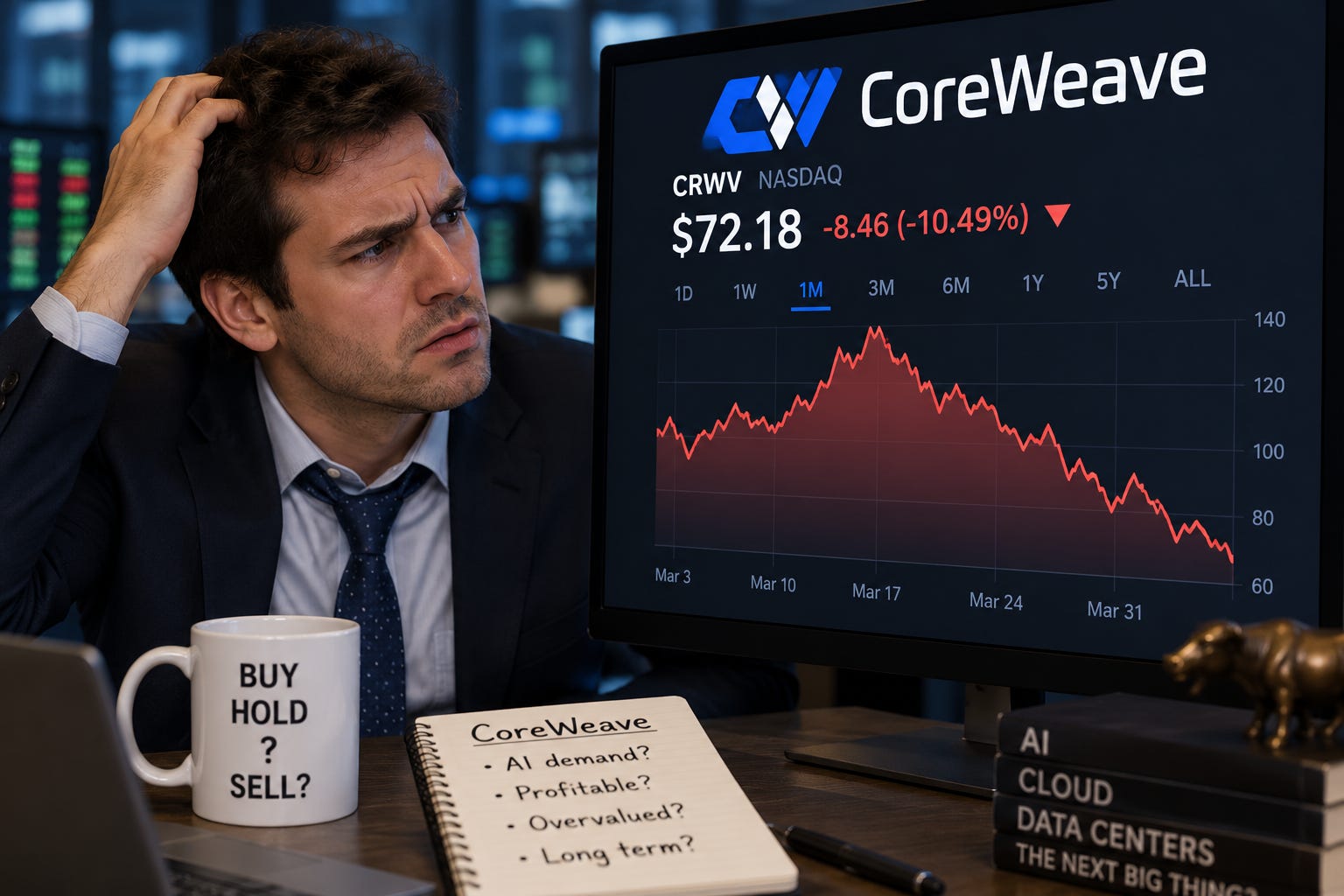
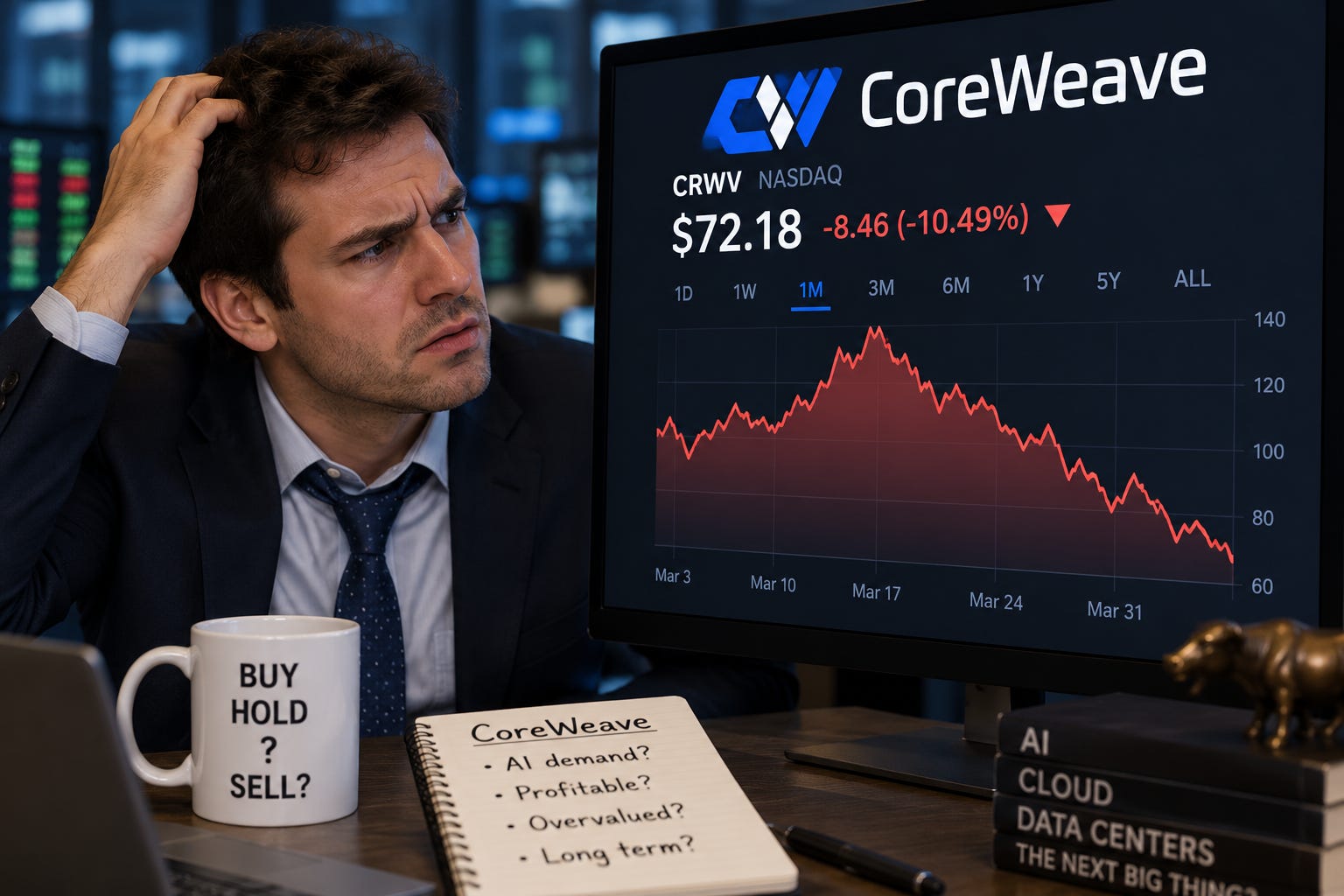
I have been looking at markets, and wondering why something like GLD/TLT looks like the SOX. GLT/TLT below. And here is the SOX. I know that the macro guys are super bearish. And they are bearish because of credit. We have French CDS. And we have Coreweave CDS So the macro view, and why markets are getting pummelled is that the markets are telling France to cut spending or raise taxes, and the market are telling Coreweave to raise equity and cut capex. This signal is so clear, we assume it must happen. So markets look at this signal, and assume deflation/depression. The final nail in the coffin is comparing AI to other build outs. And this then becomes a no brainer short. AI makes no logical sense, so sell sell sell. And from a macro point of view, it is VERY hard to argue with. But from a political point of view, I think the railway or dot com comparison is wrong. What we have seen in the Ukraine-Russia war is that AI and Starlink are strategic assets. Modern war, and modern power is build on satellites and compute. I think the better comparison is the build out of nuclear warheads after World War II. At that point, it was not question of how many warheads do we need? But whether we had more than the other guy. In fact Reagan explicitly increased spending to successful bankrupt the USSR. What markets are saying, in my mind, is the AI spend, and government spend is so much, we would like you to stop. So we are going to raise the cost of capital. But what I see, looking at politics, and reading SpaceX and Meta quarterly results, they are like, we don’t really care what you think - we are going to keep spending. If you like, you can think of AI as defence spending. From that perspective, there is way more spending that could be done. Defence spending used to be 10% of GDP. From a political point of view, arguing for a AI bust, and deflationary outlook seems mad to me. Now I could be wrong, and this month is saying I am wrong, but my favourite lead indicator, JGBs has tended to move earlier than treasuries for both inflation (yellow circles) and deflation (red circles). It was showing no signs of concern. Of course bond markets can be stupid, so I also look at Japanese banks, which are extremely sensitive to inflation/deflation pulses. Japanese banks rolling over on a relative basis tends to mark a strong deflation cycle. You could argue maybe there was a topping signal, but hard to see a rollover. In essence, we are entering a “war period” which means growth is good, and wasteful investment abounds, and capital gets destroyed. This reasoning also explains why copper has not been bothered by AI shenanigans. If you accept this political reason - then what is going to happen to Coreweave? Well either the US government steps in, or someone buys it. The US still needs more compute, just like it needed that extra nuke. And what about France? Well as the only truly independent nuclear arsenal in Western Europe, I am pretty sure a deal will get cut at some point. I must say I find the political argument far more convincing than the macro argument. This is a public episode. If you'd like to discuss this with other subscribers or get access to bonus episodes, visit www.russell-clark.com/subscribe
October 22, 20262 min
IS IT THE END OF AI - OR JUST THE FINAL UNWIND OF SITUATIONAL AWARENESS?
This is a free preview of a paid episode. To hear more, visit www.russell-clark.com Everywhere I look in markets is pricing the end of the AI trade. It is even turning up in sovereign bonds, with yields now falling, after rising for most of the year. I find it a bit odd, as every physical commodity price I look at is still going up. The issue here is that you have to be sure that equities are accurately pricing the future. SK Hynix has typically been pretty responsive to spot DRAM prices. Not for the last three months. Normally, starting from a point of “equities are wrong” is a recipe for disaster. But I can’t help but come back to some weird activity. One area in the AI space really confounds me.
October 21, 20268 min
SHORT SELLING WEALTH WARNING
I have written about AI and Coreweave a lot in the last few days. And I have received a lot of replies, almost universally bearish, and from a lot of managers and investors that I respect. And to be honest, if gives me pause. So I thought I should give some more detail on how I think. I am not a short term trader. When I go bearish on something, I expect it to fall for quite some time. I look at both demand and supply, and basically figure out when profits in an industry are going to go to zero. So for me a perfect bear case is when demand looks to be falling just as supply is coming on line. A good example has been iron ore in 2011, or oil in 2013, or restaurant franchises in recent years. My problem with being bearish AI, is that there is no clear sign that demand is falling. If anything, the opposite is true. The other bear argument is that there is excess capacity. Again, if this was true, pricing would be weakening, and I cannot find that. One area, that does look interesting is that financing is getting scarce. And I can get fully on board with that idea. The problem of course is that the underlying collateral has value, so it makes for a tricky short. Why do I mention this? Well short selling is dangerous. And it is particularly dangerous when consensus. For years, the market was bearish on Tesla. Social media was full of all the financial shenanigans that Elon Musk got up to, and how he needed capital. What happened? Tesla became the most shorted stock in the S&P 500 before rising 3000%. What happened to all those Tesla bears? Well hard to believe, but most of them write Substacks now. Many people were also bearish on crypto and bitcoin, for very sensible reasons. And we all know what happened there. So when I think something might be a short - I like it to have three qualities. 1 - none to little short interest. 2 - almost no bearish consensus. 3 - a committed share holder base. 4 - share price weakness in suppliers or customers And I avoid the following 1 - a high cost to borrow 2 - “never short a dream” 3 - key customers or suppliers shares prices are surging. Now just because Coreweave does not meet my standards as a short, does not mean its not a short. But what I can tell you for free in my career, is that if it is not a short (that is if it goes up instead of down) it could go up a LONG way. That is the risk reward is poor. I have no position in Coreweave, I am just intrigued by it. This is a public episode. If you'd like to discuss this with other subscribers or get access to bonus episodes, visit www.russell-clark.com/subscribe
October 19, 202612 min
THE TRUE MEANING OF COREWEAVE
(Apologies for this post - it is slightly more stream of consciousness that I like, but it is my thought process. Will follow up with more clear logic) When something does not make sense to me, my subconscious keeps nagging away at me. Generally speaking I trust my subconscious - its gets things right. If I wake up in the middle of the night, worried about a position, then I know its probably too big or just wrong. My best positions, both long and short are always when I am so excited, I just need to get the position on NOW. Historically speaking, the price action at Coreweave would normally motivate me to get heavily short Nvidia and the whole AI trade. And yet my subconscious stops me. This note is trying to work out why. Historically speaking, the set up look a slam dunk short on Nvidia. For example, many years ago I wondered why William Brother a pipeline company, whose main client was Chesapeake was doing so well, while Chesapeake was crashing. After taking a good look, I discovered that the deal Chesapeake had with William Brother was a fixed quarterly payment, no matter how much gas they piped. When the deal was signed, it was a win-win. Williams could show its investors steady revenue, and Chesapeake could cut costs by pumping as much gas as possible. The problem was that Chesapeake and its competitors where piping so much gas, prices were collapsing, and something had to give. I shorted William Brother confident there was limited upside, and big downside. I was correct. However, working out why the market was so divergent did take a couple of weeks digging. I am getting a similar confusion when I look at Coreweave, which I know is telling me something, but I just don’t know what. This always bugs me. First of all, Coreweave stock has been weak, but it is back to levels seen in July. It has been clear the market is struggling to price this business. But on the other hand, its CDS are at new highs of 1128 - and a level that implies serious concerns over its debt. This is most unusual. I would expect a stock price to be collapsing with the CDS this high. In fact, Coreweave trades at 6 times book. Is Coreweave reacting to problems with its customers? Well here is a little tricky, because its main customers also have data centres, but use neoclouds when they need extra capacity. Microsoft share price is close to highs. So that does not seem the problem. I wondered if neoclouds were getting squeezed by the hyperscalers, but pricing seems to be rising for neo clouds and hyperscalers. And if GPU rental prices are rising, its pretty safe to say GPU prices are stable too. So that’s not the problem. I think the problem comes for Coreweave outlook. They have been investing aggressively this year, with Capex in the first two quarters of near USD 15bn. But in their most recent outlook statement, saw up to USD13.5bn for Q3, and up to USD39bn for all of 2026. So Coreweave CDS seems to be reacting purely to capex plans. And now I know why Coreweave bugs me. Its share prices is falling because it has huge capex plans - which is good for Nvidia and all the other hardware stocks. Try as I might, I cannot find any data that shows falling prices in GPUs or AI costs. That is, unlike the William Brother/Chesapeake example above, there is no sign of a price war, or over supply. In fact PPI for semiconductors says the total opposite, as does DRAM spot prices. More logically, the market is probably pricing in an equity issuance. With a current market cap of USD 36bn, and guided capex of USD 36bn for 2026, and Barron’s suggested US 50bn for 2027. This level of capex would undoubtedly make current equity holders and debt holders nervous. I have had my concerns of AI capex before, and then along came the SpaceX IPO, which delivered Elon Musk the capital he needed to be build xAI. That is equity investors seem happy to fund at least Elon’s capex plans. This is what I would expect to see from the “capital war” that is being waged in AI. But this “capital war” is happening in a time that pools of capital are being run down. The question is when do we run out of capital? I am pretty sure, we can say that the credit markets are close to being tapped out. The question is whether the equity markets are tapped out or not. Now this is where it gets “weird”. Elon Musk has no problem tapping equity markets for capital, but the rest of the tech stack does. Nvidia is a good example. In the most recent quarter, its account receivables went up as it changed payment terms. Despite this, it should be noted that Nvidia also bought back share this quarter, to make USD 50bn of share repurchases this year. And now we get to the heart of the matter. I have puzzled over this chart for some time. The cost of capital rises, and yet equities get more expensive. Or a better way to understand it, is that US equity valuations are built on an understanding that share buybacks will continue no matter what relative valuations look like. Apple, which has conspicuously not entered the AI race, and essentially returns all cashflow to share holders, has just touched a new all time high. When Apple started its share buybacks, it was a no brainer trade. Is it still a no brainer trade today? Does it even matter? As long as share buybacks push the share price up, its MUST be considered value creating. What I am trying to say, is that modern US capitalism has become extremely focused on share holder return, with a heavy focus on share buybacks. This has led to a greater focus on raising capital via debt markets than via equity. If we look at shares outstanding on the S&P 500, it still bears no resemblance to the massive issuances we saw in 2000. What I am seeing is the culmination of two trends in US business. One if the blitzscaling model - that of massive capex to gain market share, and the other of creating share holder value via accessing the debt markets rather then equity markets. Both are now under pressure. First the blitzscaling model does not work if everyone does it. The idea of blitzscaling is to give you a dominant position, which allows you to set and raise prices. This is not happening yet. And the second as Coreweave shows, when everyone is blitzscaling, the debt markets are correct to get nervous. What does that mean for markets? Well its hard to see neocloud’s cutting capex. If you cut capex you admit you will be a subscale producer, and you are dead anyway. Oracle share prices has been under pressure for a year now, and no capex cut has been forthcoming. In some ways, US business represents the political position we are in now. Everyone HAS to spend, as they cannot afford to lose. The true meaning of Coreweave is that yields go much higher - for everyone. This is a public episode. If you'd like to discuss this with other subscribers or get access to bonus episodes, visit www.russell-clark.com/subscribe
October 16, 202615 min
THE DRAWBACK TO POLITICAL ANALYSIS OF MARKETS
My investment process is built around looking at how other investors have made mistakes from time to time, and then building a process to avoid that mistake, and if possible to profit it from it (which is big driver of my shorting process). In my first half of my career, I was heavily macro, as I found currencies were the main driver of investor mistakes. I did my best to quantify this process by formalising the use of NIIP and BIS cross country data. I think I was one of the first investors to do this. But during Covid and in 2021, I discovered that politics was a far more effective in predicting market moves. And a move to populist politics made me suggest GLD/TLT (long gold/short treasuries) was a good trade. But when I was researching politics as a driver of markets, I learnt a very awkward fact. Politics can change 5 to 10 years BEFORE markets react. That is the gap between politics changing and markets reacting can be quite long (a lifetime in modern fund management). I will start with most recent examples and work backwards. CHINESE TECH - 2021 The Chinese tech index, Hang Seng Tech index has been in a prolonged bear market since 2021. For most US investors, they may have been exposed to this via a BABA US or KWEB US long position. Chinese politics started to turn against its internet giants in 2019, initially limiting gaming time for children. But in November 2020, Chinese regulators cancelled the ANT financial IPO. Due to the raging bull market in tech, most investors ignored these salvos, and the tech index continued to rise. But there was a steady drip of new of regulatory backlash. In this case, the changing politics was becoming obvious in 2020, but the market rallied another 50% before finally cracking. BREXIT/TRUMP - 2016 The Brexit referendum and the first Trump election win were clear signs of a political realignment in the West, a realignment that continues to this day. At its heart were traditional left wing voters being up for grabs through a combination of social conservativism and fiscal liberalism. When Trump was first elected, the bond markets recognised the inflationary nature of his politics, which saw yields sell off sharply, but going fully bearish Treasuries then would have crushed you come 2019/2020. As mentioned numerous times, I found the JGB markets better lead on US treasury than anything else. In 2020, JGB yields sold off well before the US, and have continued to do so. This implies that Japanese investors are much more sensitive to US politics than American investors. I think there is a good reason for this. See the section below on Japan. Japan - 1990 For almost three decades the Nikkei was a byword for economic mismanagement and stagnation. Only a few years ago did it finally breach the high set in 1989. But for me, the Nikkei is almost 100% political driven. From a virtual standing start, Japan built a world conquering semiconductor industry in the 1980s. The rise of Japan created severe misgiving in the US, and led to a number of political agreements. The key one for me is the 1986, US-Japan semiconductor agreement. The main part of this agreement was that Japan agreed not to take any more market share from the Americans. The other, and much more famous agreement, was the Plaza accord, where the Japanese agreed to let the Yen appreciate. Down in this chart mean Yen appreciation. You would think an agreement to kneecap your most important industry and to allow a huge rise in your currency would be bad for markets, and you would have been right. But the Nikkei doubled from 1986 to 1990, before breaking lower. In this case there was a four year gap between changing politics and market recognition. LEAVING GOLD STANDARD - 1972 This is the wildest analysis of all. The 1970s are known as the stagflation era, where high inflation and interest rates acted as a break on stock markets and growth. For many macro investors, leaving the US leaving the gold standard was THE cause of inflation. But politically I would argue the opposite. When a country devalues, it is reducing the wages of its workers in the global market place. So while it may be temporarily inflationary locally, its overall effect is deflationary. I know a lot of people are going to struggle with the idea of devaluing as being deflationary. But if you look at the Great Depression, it was “beggar thy neighbour devaluations” that kept prices in check globally. The Great Depression ended when the US agreed to a strong currency, and from there we entered an inflationary era, but also an era of higher bond yields. What this means in practice, was that Nixon taking the US off the gold standard, was for the benefit of corporates, not workers. However the top in US yields did not happen for another 8 years. Of course for other countries, yields peaked when the US left the gold standard. The all time high in Swiss ten year bonds was in 1974. CONCLUSION I think the current political set up, which heavily favour billionaires and stock markets looks unsustainable. Taxes will have to rise, and most likely they will rise on wealth, rather than wages would be my read. But just because the politics has changed, markets can keep moving the opposite direction for sometime, even nearly a decade. Politically, this makes me favour gold over stocks. And in 2025, this started to come true, but in 2026 substantially reversed. Markets have reversed this year, but my read of politics remains the same. But as the above shows, sometimes it takes times for politics to fully leak to markets. This is a public episode. If you'd like to discuss this with other subscribers or get access to bonus episodes, visit www.russell-clark.com/subscribe
October 15, 20263 min
GLD/TLT AND COREWEAVE
This is a free preview of a paid episode. To hear more, visit www.russell-clark.com I had barely sent out an update on GLD/TLT when market action has come to test me. If you have been living under a rock, the AI trade has swooned as the bonds of Coreweave has been sold aggressively. They are now yielding 15%, or perhaps more importantly, as a big discount to par - signalling fears of default. I took a good look at Coreweave, and came up with two totally different outcomes. In one we enter a deflationary spiral in the tech space, with huge financial repercussions. Coreweave goes bust, and sets off a doom loop in the AI trade. In the other, inflation continues unchecked, and Coreweave is a buy here. GLD/TLT should point the way here, but as it happens, technically GLD/TLT is right in no man’s land at the moment. So let me explain the logic of these two outcomes, and which I think is more likely.
October 14, 20262 min
WHERE ARE WE WITH GLD/TLT?
This is a free preview of a paid episode. To hear more, visit www.russell-clark.com Years ago when I came up with GLD/TLT, I thought it was a great trade - but super simplistic. So simplistic, I thought people would laugh at me. But I have been pleasantly surprised at how many people have been influenced by this trade. I have even seen people use it in their own research. Now this is all great and dandy, but I had another investment catchphrase back in the day - “long bonds/short equities” which worked great, until it didn’t. But this is a risk for all managers - they become wed to an idea that is no longer valid. So even though GLD/TLT has been good to me, I am acutely aware that one day I will need to do a “ Reverse Lawrence Stroll (aka Kaiser Soze)”, which is I will need to cut my progeny off, and move to greener pastures. But is that day today?
October 13, 20263 min
END OF THE AI TRADE?
This is a free preview of a paid episode. To hear more, visit www.russell-clark.com Back in 2025, I shorted Nvidia on the back of the DeepSeek LLM model - but fortunately covered at a profit. It seemed very logical to me that the appearance of a much cheaper LLM model should be deflationary across the whole AI stack. But this analysis was wrong. Today, we are seeing another sell off in tech, on the back of announcement that Chinese chip company CXMT has made a breakthrough in memory chips. To be honest, Deepseek methods seemed to me to be very replicable, and so very likely to change the industry, while CXMT claims are very hard to verify, and also much easier to be kept out of the western AI chain. In other words, if DeepSeek was not a problem, then I struggle to think that CXMT will be either. That being said, its a good time to run through my AI checklist to see if its time to either get out of the way, buy the dip or that greatest feeling of all, time to short!
October 12, 20261 min
IS SHORT TLT DONE?
This is a free preview of a paid episode. To hear more, visit www.russell-clark.com There is a widely held belief that the cover of the Economist is a contra indicator. The Economist itself also covers this question in an article . The quantitative analysis concludes no. For me, I feel like the cover is too narrow. I feel you need to read the main lead article to see what their logic is to really get an idea of it contra indicator ability. For me, reading the article, it feels generally good news I think, as least in regards to short TLT.
October 9, 202616 min
AI AS A MACRO FACTOR
( I sat down today to try and work my way through the AI conundrum - below is a stream of consciousness style analysis - I suspect some with think me insane, and some will think me genius. Time will tell.) The weird thing about the AI boom is how familiar it seems to me. Back in the day, I made my name shorting mining and emerging markets, based on a very simple observation. I was looking at Chinese production of steel rising almost continuously from 2000. But I noticed from 2008 onwards, Chinese steel companies share prices were moving in the opposite direction to steel production. Basically, over production in China was driving margins down China rebar (type of steel) prices are published daily, and when they started to fall in 2011, I knew that the entire industrial commodity (iron ore, coking coal, copper, nickel) trade was at risk. This is capitalism at is finest, and best (in my view). What is so fascinating about AI, is that in China, they seem to have embarked on a similar price war model with tech. Every time I look at AI, Chinese AI pricing is much cheaper. See DeepSeek and MiMo below. And we see it in the performance of the Hang Seng Tech Index - which basically is so uncorrelated to either the Nasdaq or the Semiconductor index, you wonder if its really tech and not actually steel related! So like steel before it, Chinese tech industry competes via price. This is deflationary, and we see this in Chinese bond yields. Remember this is China, the other tech superpower, and its bond yields are low, and its stock market moribund. I will not put up graphs of the US stock market or bonds yields, everyone knows they are the complete opposite of China. How can we explain the difference? I think where as Chinese corporates are competing on price, US corporates are competing on capital. Who can invest the most, rather than who is the cheapest. This has lead to a capex boom. As I tell everyone, I think this is rational behaviour. If I saw Elon Musk entering my industry, I would also spend everything I could, because the other option would be eventual market share loss and decline, as we have seen with legacy car makers who failed to invest heavily in EVs. The problem for the legacy hyperscalers is that SpaceX has a USD 2 trillion market cap, for its current USD 55bn in revenue, which Musk can use to raise capital. He apparently wants to raise USD40bn. This is in addition to USD 20bn raised in corporate debt markets. For the hyperscalers, with cashflow, they generally do not issue equity (buybacks are more common), so they have also become heavily reliant on the bond market. And here is the big question. Do rising tech spreads indicate credit concerns? Or that the capital borrowed is so great, that they need to offer higher prices to get investors to lend to them? If I wanted to, I could easily paint this as tech rerun of the Chinese steel overcapacity story. And I am very tempted to do so, as many of financial guys on Substack has done, because its great marketing. But for me, I have a big problem. There is no sign that capital markets are buckling. What we have seen is equity do well even as high yield does poorly (macro trading has been poor of late due to these breakdowns). What I find fascinating as I think through this, is that corporate bond investors are basically now creating the inflation that is eating their principal. What I mean is that inflation is now being created by corporate bond issuance - not government bond issuance. Normally credit spread widening is a deflationary event. 1991 - Savings and Loans, 1998 - Asian Financial Crisis, 2007 - GFC, 2015 - China Deval, 2020 - Covid. But as noted above, we are seeing spread widening on RECORD issuance of tech related bonds. This issuance is going straight into data centres and Nvidia chips, which drives growth, and inflation. The spread widening is INFLATIONARY. Hence, when investors buy tech bonds, they are creating inflation, which also hurts treasury yields. Most financial chat has been about how Oracle CDS blow out marks the end of the AI trade (so far so wrong). If AI is driving inflation, then we can rely on our tried and tested deflation lead indicator, the 10 year JGB. Its track record in picking deflationary events remains unrivalled. Usually with credit concerns, as seen with HYG or Oracle CDS, you would expect JGBs to rally (ie yields fall) - but not this time, and this above analysis explains why. Amusingly, if seems if governments want lower bond yields, its looks like they would need to regulate the tech companies, as China has done. The weird thing is that this would be politically popular with voters, but difficult in practice given the amount of money in US politics these days. This is a public episode. If you'd like to discuss this with other subscribers or get access to bonus episodes, visit www.russell-clark.com/subscribe
Is this your show?
Claim this listing to keep it up to date, reach guests who want to pitch you, and manage bookings with Guestify.