Find partners
Can You Hear Us?

Can You Hear Us?

Hosted by Can You Hear Us?

Episodes

25

Latest episode

Oct 2024

Language

EN

About the show

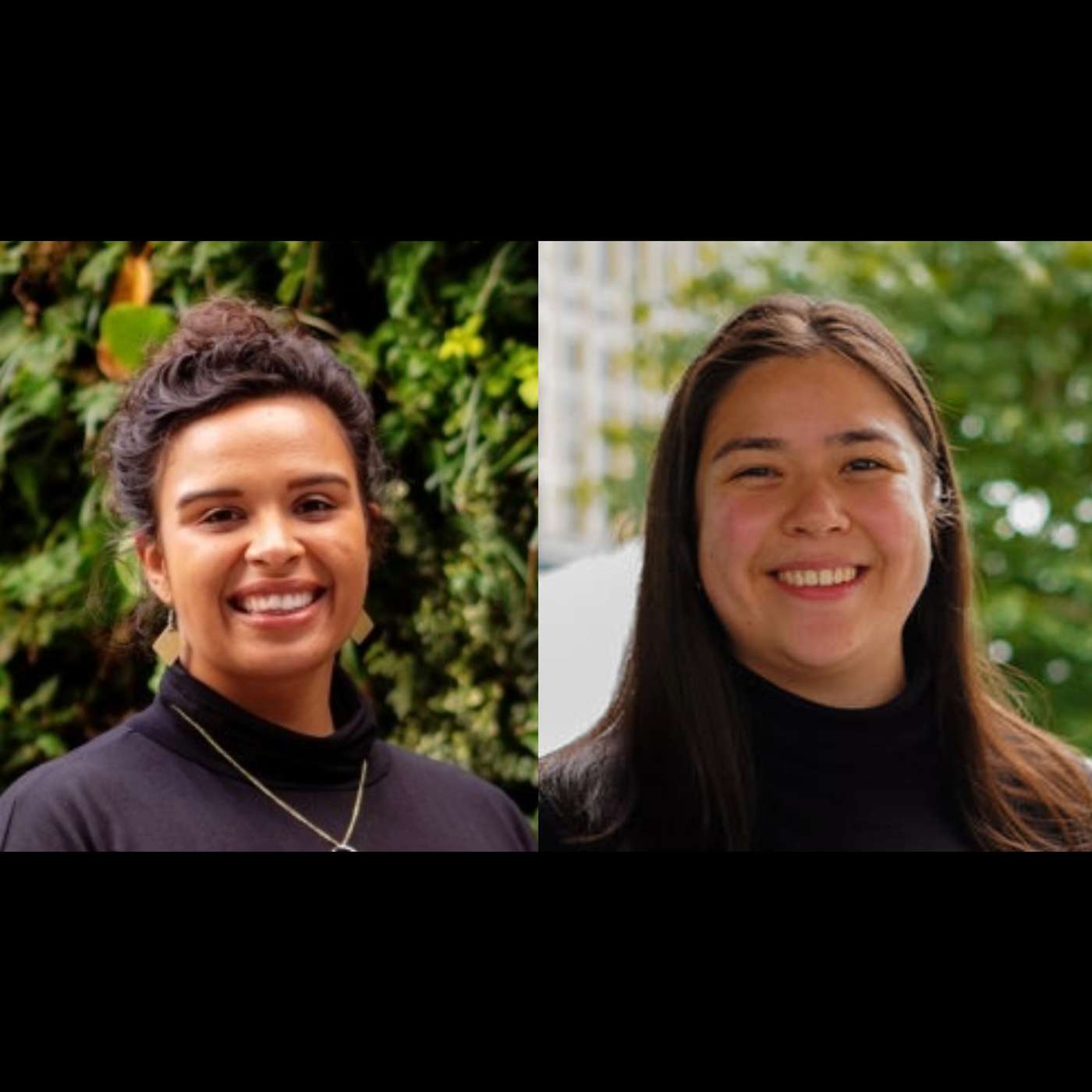
Can You Hear Us? is a podcast by Monica Abad Yang and Madiera Dennison in partnership with the Department of International Development at LSE. The podcast is the first initiative of its kind in the Department and has the overall aim to prioritise BIPOC women and femmes' specific experiences and narratives by creating a space where we can discuss a multitude of topics that affect us as women, women of colour (WOC) and women in professional spaces such as: Colourism or Work Life Balance. The name Can You Hear Us? originates from the COVID-19 pandemic as it is commonly repeated on Zoom but also symbolically reflects the work left to do to empower WOC.

Listen to episodes

25 recent
October 17, 2024Episode 2553 min

Final Reflections of Can You Hear Us?: A Conversation with Madiera and Mónica

In the final episode of Can You Hear Us?, the CYHU team hosts Madiera and Mónica in discussing the evolution of the podcast and their final reflections on the field of international development, both as an area of study and as portrayed through the podcast; their experiences with mentorship and community building; and the camaraderie they've developed over  years of collaboration. Mónica, Madiera and the rest of the Can You Hear Us? Team would like to thank the LSE ID Communications Team for hosting their series, and hope that the next generation of international development leaders, especially black, indigenous women of color, continue to create these spaces as the sector continues to shift. Book and film recommendations Madiera and Mónica suggest for folks interested in international Development:Madiera’s picks: Development as Freedom by Amartya Sen and All About Love: New Visions by bell hooks Mónica’s picks: Kicking Away the Ladder by Ha-Joon Chang  and The Culture Map: Breaking Through the Invisible Boundaries of Global Business by Erin Meyer
September 12, 2024Episode 241 hr 5 min

Soumya Dabriwal: Menstrual Hygiene, Social Impact and Entrepreneurship

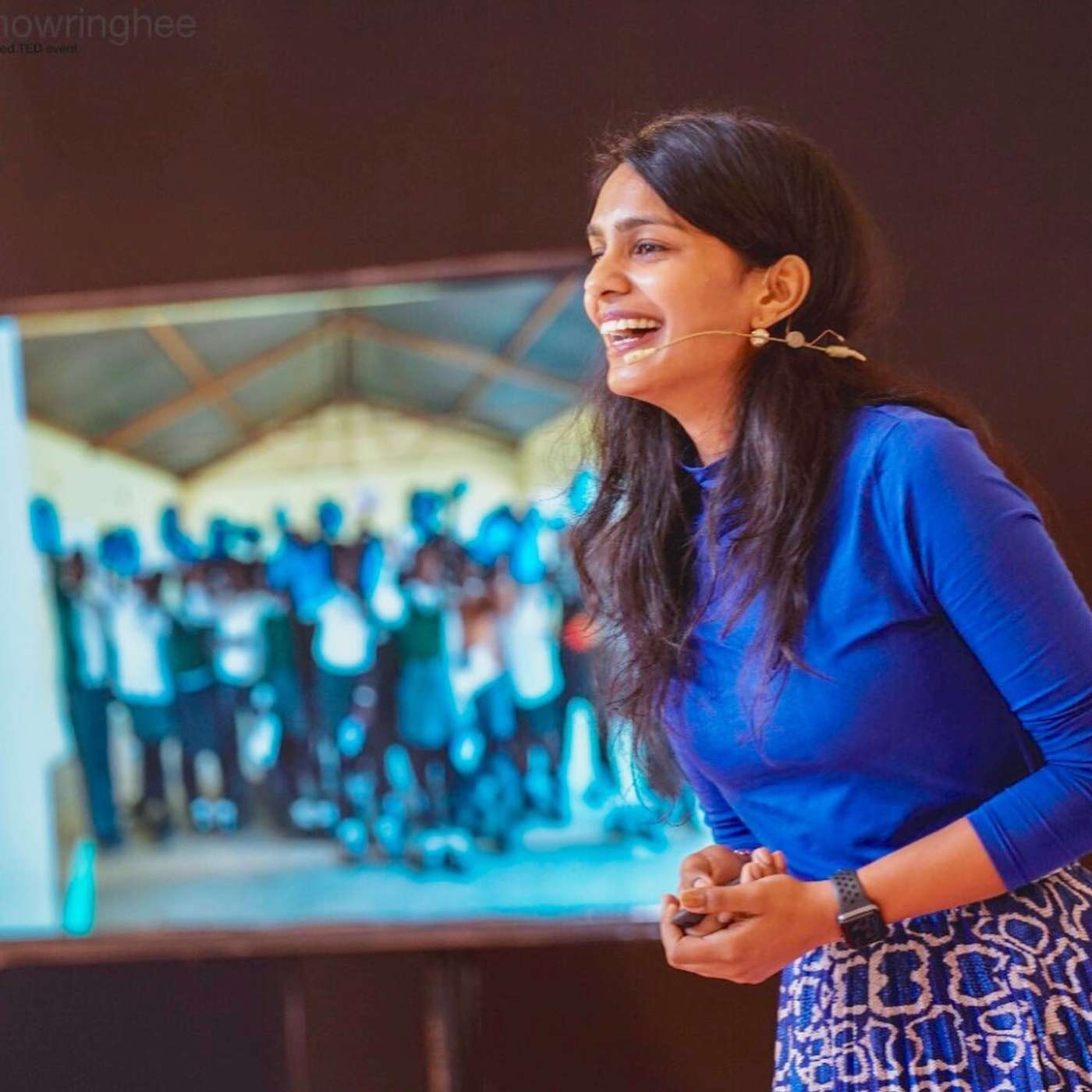
In today’s episode Can You Hear Us?,  is joined by Soumya Dabriwal; menstrual hygiene advocate, social entrepreneur and Founder of Project Baala - a menstrual health solutions provider with the sole aim of ending period poverty and illiteracy. Since 2018, Baala has provided 2.4  million reusable pads, conducted over 6,500 awareness workshops benefiting 800,000 menstruators across 4 countries around the globe and 26 states in India as well as generating income for an estimated 250 women as women’s health advocates. Join us to listen to Soumya walk us through the project’s three pillars (1) Awareness, (2) Sustainability and (3) Livelihood generation, her experience as a Ted X Speaker and Social Entrepreneur, and much more!Guest spotlight: https://projectbaala.com/teams/soumya-dabriwal/Links to other resources to spotlight shared by Soumya: Case Study, Warwick, UNDP“For a lot of us in the world we see  [menstruation] as biological phenomenon, but there is still a huge population where menstruation is a deterrent to economic productivity, to education [...] that’s the main inspiration: how can we maximise the potential of young girls and women in workspaces and educational spaces” - Soumya on the origins of Project Baala“The model came from a very bottoms up approach, everything that we do today in the organisation, is not something that we came up with while sitting in an office space or getting into a board room to discuss what are possible solutions or what could work. In fact it was being exactly where we needed the impact to be, so being in those communities, being in those slums, being in those villages or everything that we are building on as solutions” - Soumya on Project’s Baala’s model“You do not have to be extraordinary to do extraordinary things” - Soumya’s TedX quote and philosophy

August 20, 2024Episode 2331 min

So We Heard: Renushi on Gender, Education and International Development

Prompted by our youngest team member’s desire for shorter podcasts on her regular commute to and from LSE, Can You Hear Us?  is proud to present So We Heard, a series of bite-sized, informal chats dedicated to exploring academic theories, case studies, and current affairs within international development through the lens of black, indigenous, and women of color (BIWOC). With episodes lasting 30 minutes or less, Can You Hear Us team members join assistant producer, Ragini Puri, on a quick deep-dive into what topic within development is peaking theirinterest and why it matters. On this episode, Ragini is joined by Renushi, a gender and international development professional. She is the founder of the Sthri project- a feminist peer-support network for first generation college graduates in suburban Colombo.How important are informal networks for first-generation salaried workers? Within this group, what are the particular issues faced by BIWOC? To what extent is social mobility based on merit? We discuss this and a lot more in the final episode of So We Heard. Tune in to listen! Resourceshttps://www.apa.org/pubs/journals/releases/apl-apl0000915.pdf https://link.springer.com/article/10.1007/s11162-018-9523-1 https://firstgen.naspa.org/files/dmfile/FactSheet_04.pdf https://blog.ukdataservice.ac.uk/first-generation-university-students/

July 18, 2024Episode 221 hr 20 min

Andrea Ho a discussion on: US modern histographies, the carceral state and Indigenous Self-Determination

In today’s episode of Can You Hear Us?, sits down with Andrea Ho, a PhD student specialising in Modern U.S. history at Yale University, a Canadian Fellow at the Organisation of American States, and an activist both on and off campus. She focuses her research on ‘building upon existing community partnership with Indigenous communities and local advocates to continue her commitment to community engaged scholarship’. We discuss the history  and indigenous resistance to the carceral state, most notably focusing on the Diné (Navajo) Communities in New Mexico, United States.  Tune in to listen to her discuss indigenous self-determination, racial capitalism,  her involvement in Yale University’s Racial Capitalism and Carceral State Working Group, and insights into her thesis Freedom Beyond the Prison: Indigenous Incarceration and Resistance in the American West. Quotes from the interview:“Restorative justice is at the front of many people’s mind[s]. The Navajo nation, for example, practice peacemaking which is a form of dispute resolution. People are really thinking about what it means to punish someone and send them through a violent system” “Prisons are not a part of native societies. They are a means of political control by settlers over a group of people who are refusing to live the settler way” “Racial capitalism signifies a relationship between racism and capitalism which is intrinsic. Capitalism was racial from the beginning because it requires inequality. You cannot undo racism without undoing capitalism” “Organising and being in community with one another changes the way people view their place in society which is crucial to making any broader movement happen”Additional resources: Guest spotlight: https://history.yale.edu/people/andrea-hoZachary Schrag's The Princeton Guide to Historical Research on pages 90-93 has a great explanation of historiography!Building Community Not Prisons (BCNP) Campaign

July 2, 2024Episode 2126 min

So We Heard: Noura Discusses Food Maps as a Decolonial Feminist Research Methodology

Prompted by our youngest team member’s desire for shorter podcasts on her regular commute to and from LSE, Can You Hear Us?  is proud to present So We Heard, a series of bite-sized, informal chats dedicated to exploring academic theories, case studies, and current affairs within international development through the lens of black, indigenous, and women of color (BIWOC). With episodes lasting 30 minutes or less, Can You Hear Us team members join assistant producer, Ragini Puri, on a quick deep-dive into what topic within development is peaking their interest and why it matters.  In this episode, Ragini is joined by Noura Nasser, a lead researcher at CYHU. Noura is a PhD candidate at the LSE and her research looks into urban food practices by and for migrant communities.  What are food maps?What can we learn about urban migrant communities from food maps? How can food maps be used as a decolonial and feminist methodology to study urban migrant communities?  We discuss this and a lot more in the eight episode of So We Heard. Tune in to listen!  Resources:https://www.tandfonline.com/doi/full/10.1080/07409710701620243?scroll=top&needAccess=true

March 21, 2024Episode 2017 min

So We Heard: Doris Discusses Social Policy and China's Three-Child Policy (Part 2)

Prompted by our youngest team member’s desire for shorter podcasts on her regular commute to and from LSE, Can You Hear Us?  is proud to present So We Heard, a series of bite-sized, informal chats dedicated to exploring academic theories, case studies, and current affairs within international development through the lens of black, indigenous, and women of color (BIWOC). With episodes lasting 30 minutes or less, Can You Hear Us team members join assistant producer, Ragini Puri, on a quick deep-dive into what topic within development is peaking their interest and why it matters. In the second part of our two-part discussion on China’s Three-Child Policy, host Ragini Puri (CYHU Assistant Producer) and Doris Huang (CYHU and SWH Researcher) discuss how generational attitudes can be shaped by social policy.Resources:https://www.youtube.com/watch?v=HHpnceEki30

March 14, 2024Episode 1922 min

So We Heard: Doris Discusses Social Policy and China's Three-Child Policy (Part 1)

Prompted by our youngest team member’s desire for shorter podcasts on her regular commute to and from LSE, Can You Hear Us?  is proud to present So We Heard, a series of bite-sized, informal chats dedicated to exploring academic theories, case studies, and current affairs within international development through the lens of black, indigenous, and women of color (BIWOC). With episodes lasting 30 minutes or less, Can You Hear Us team members join assistant producer, Ragini Puri, on a quick deep-dive into what topic within development is peaking theirinterest and why it matters. On this episode, Ragini is joined by Doris, the very team member who voiced her desire for shorter podcasts. They discuss China’s Three-Child Policy and it’s pros and cons.Why does social policy subordinate economic policy?What effect could China’s Three-Child Policy have on gender equality?How could the policy lead to the feminisation of poverty?We discuss this and a lot more in the sixth episode of So We Heard. Tune in to listen! Resources:https://www.hrw.org/news/2023/02/22/its-time-abolish-chinas-three-child-policy https://www.dsb.cn/178629.html https://www.hengyang.gov.cn/hystjj/hdjl/zjdc/fkjg/20230111/i2910462.html https://www.youtube.com/watch?v=HHpnceEki30

February 22, 2024Episode 181 hr 17 min

The Humanitarian Development Nexus, Urban revitalization and Life in Academia: A Conversation with Lama Tawakkol

In season 4’s debut episode Can You Hear Us?, sits down with Dr. Lama Tawakkol, Lecturer in International Relations in the Department of Politics  at the University of Manchester to talk about everything from her research on the Humanitarian Development Nexus in Jordan and Lebanon to her appreciation for definitions and Cairo’s urban revitalization! Tune in to listen to her discuss how power dynamics operate within a capitalist and global economy, including within the politics of development policy and aid. As well as expand on her conceptual framework on how international development and humanitarian aid projects have extended and reproduced Western imperialism. Quotes from the interview:“ Like with any terms, these definitions, these terms, imperialism and colonialism the definitions for them are never uniform, they are always debated always contested between different scholars, and sometimes they are even used synonymously” - Lama on the Imperialism and Colonialism“And that’s the key thing; what is being prioritised? Yes things aren’t black and white but we need to be looking at who is benefitting and which interests are taking prominence in these project and in these policies etc” - Lama on the privatisation of public goods via the HDN“Put the people and the inhabitants first [...] have that be the compass” - Lama on Urban Revitalisation and revitalization initiatives“One of the key things is to not be afraid to bring one's perspective and ones experiences  into their research and their academic journey [...] in my experience this is how you find what you enjoy and what you are most passionate about, and they give you unique insights and contributions if we are thinking from an intellectual or academic perspective” - Lama on advice to future BIWOC in academia

January 16, 2024Episode 1725 min

So We Heard: Monica Discusses Mentorship

Prompted by our youngest team member’s desire for shorter podcasts on her regular commute to and from LSE, Can You Hear Us?  is proud to present So We Heard, a series of bite-sized, informal chats dedicated to exploring academic theories, case studies, and current affairs within international development through the lens of black, indigenous, and women of color (BIWOC). With episodes lasting 30 minutes or less, Can You Hear Us team members join assistant producer, Ragini Puri, on a quick deep-dive into what topic within development is peaking theirinterest and why it matters. In the first episode of 2024, Monica, a CYHU co-founder, joins Ragini to discuss mentorship. As a young professional, she brings personal insights to the conversation. How has the nature of mentorship evolved in the twenty-first century?What, if any, is the ideal mentor-mentee relationship?How can cultural nuances affect mentorship?We discuss this and a lot more in the fifth episode of So We Heard. Tune in to listen!Resources:Defining mentoring: https://nyaspubs.onlinelibrary.wiley.com/doi/abs/10.1111/nyas.14176

November 28, 2023Episode 1628 min

So We Heard: Madiera and Ragini Discuss Gender-Based Violence

Prompted by our youngest team member’s desire for shorter podcasts on her regular commuteto and from LSE, Can You Hear Us?  is proud to present So We Heard, a series of bite-sized,informal chats dedicated to exploring academic theories, case studies, and current affairs withininternational development through the lens of black, indigenous, and women of color (BIWOC).With episodes lasting 30 minutes or less, Can You Hear Us team members join assistantproducer, Ragini Puri, on a quick deep-dive into what topic within development is peaking theirinterest and why it matters. Since we are in the middle of the 16 Days of Activism against Gender-Based Violence Campaign, Madiera, one of CYHU’s founders, joins Ragini to discuss GBV. Can focussing on women’s vulnerability lead to their essentialisation?How do we further include men and boys in discussions of gender-based violence?What happens when GBV permeates a whole new space, like the virtual world?We discuss this and a lot more in the fourth episode of So We Heard. Tune in to listen!Resources:UNFPA’s virtual is real website: https://www.unfpa.org/thevirtualisreal

Is this your show?

Claim this listing to keep it up to date, reach guests who want to pitch you, and manage bookings with Guestify.

Claim this listing

More Business podcasts