Find partners
By All Means

By All Means

Hosted by Twin Cities Business

BusinessInterviews guests

Episodes

152

Latest episode

Jul 2025

Language

EN

About the show

Making business work in Minnesota. Entrepreneurs and leaders share the stories behind their beloved brands, and the ones you’ll want to know next

Listen to episodes

60 recent
July 23, 20251 hr 8 min

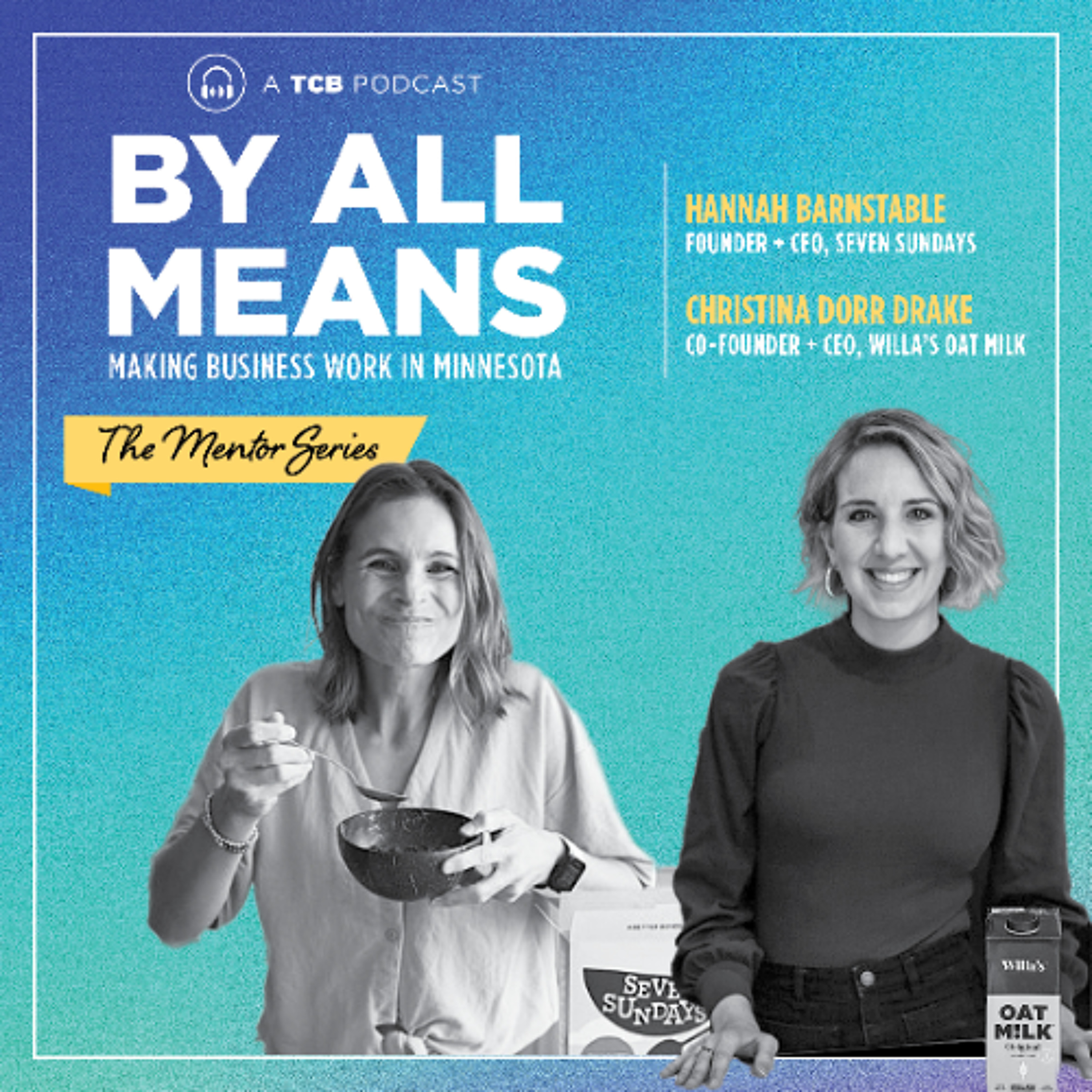
147. Breakfast Network: Seven Sundays + Willa's Oat Milk

What goes better together than cereal and milk? Christina Dorr Drake is the co-founder and CEO of Willa’s Oat Milk, a brand that is carving out space of its own in the increasingly crowded plant based milk case at select Target locations and grocery stores. Hannah Barnstable is the founder and CEO of Seven Sundays, a natural cereal brand now sold in more than 20,000 stores including Costco, Walmart, and Target. The parallels are uncanny: women founders who had worked in business before feeling the call to start purpose-driven brands that prioritize a healthy diet and planet. Both work with their husbands, and siblings. Both triumphed over a cancer scare. Both based in Minnesota. And both speak to the importance of having a network to lean on while building consumer brands in categories dominated by multinationals. In Office Hours with the College of Saint Benedict and Saint John’s University, chief operating officer Kara Kolomitz talks about the essential role of marketing—whether building a packaged food product, or a university.
July 9, 202553 min

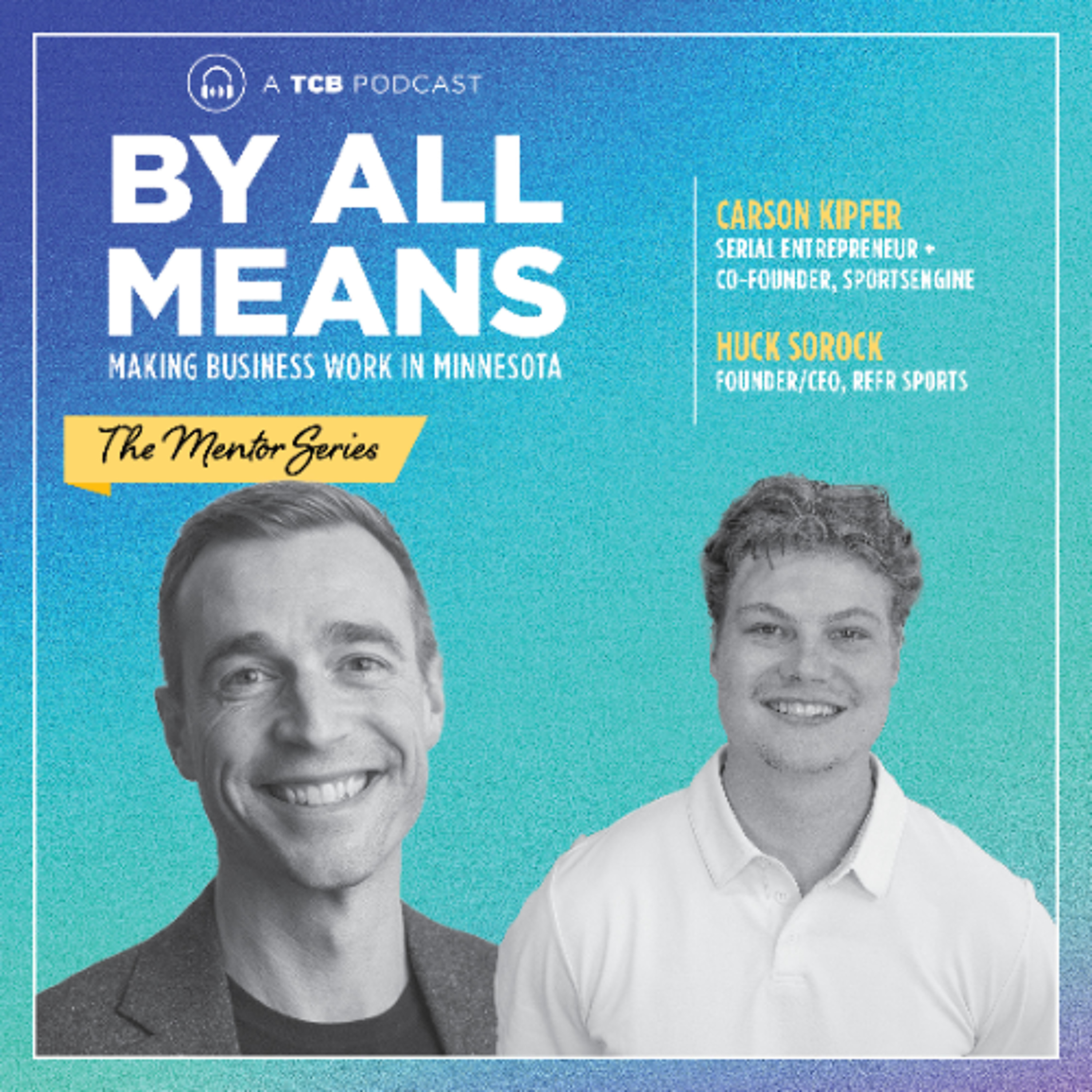
146. Designing a Sports Management Platform: Carson Kipfer + Huck Sorock

Huck Sorock was a hockey player who worked as a referee during high school to make some money. But it didn’t take long for the entrepreneurial juices to get get going when he saw the inefficiencies of the system hockey leagues used to assign referees to games—no way to swap games online; a lot of the organizing done on paper—and this was just a few years ago, Sorock is only 24. His experience led to the idea for  insight led to Refr Sports, a management tool used by leagues around the country for assigning officials, payments, invoicing, team websites and more. Refr raised a $535,000 pre-seed round in 2024, led by Groove Capital. Sorock and his co-founder Wyatt Gustafson also participated in a Techstars accelerator sponsored by the Minnesota Twins; they also won the student division of the MN Cup statewide startup competition in 2022. Like many entrepreneurs in the sports tech space, Sorock and Gustafson held up SportsEngine as their inspiration. Also started by college athletes turned founders back in 2008, SportsEngine grew into a major player for youth sports with 35 million monthly subscribers and eventually sold to NBC Sports. (You can hear the sports engine story with Justin Kaufenberg on episode 75 of By All Means.) A serial entrepreneur, Kipfer latest startup is Monoline, a personal umbrella quoting platform for insurance professionals that he launched with co-founders in 2022. He's also a mentor and investor in Refr sports and shares the advice he imparts to other first-time founders. In Office Hours, we talk about the similar mindset of athletes and entrepreneurs with Kelly Anderson Diercks, director of athletics for College of Saint Benedict.

June 18, 20251 hr 1 min

145 Automating an Exit: Janet Johanson + xBlock's Dena Neek

Think about the loss in productivity that happens when a valued employee leaves the company. The loss of institutional knowledge. Or the complete knowledge transfer required when a company changes hands. xBlock is a software tool that uses AI to capture and organize a company’s data—without any extra effort on the employees' part. Co-founder Dena Neek is an AI engineer with an MBA and a background in organizational psychology. She started out developing tech for the hospitality industry and realized her tool was a fit for mergers and acquisitions. Janet Johanson didn’t have anything like xBlock when she brought private equity partners into her company, Bev Source—now one of the larger beverage packing and ingredient distributors in North America—nor when she decided to step down as CEO. She offers Neek advice on scaling, marketing, leading, and exiting. In Office Hours, College of Saint Benedict and St. John’s University tech specialist Adam Konczewski dispels some fears around AI and offers advice for integrating technology without sacrificing human thinking and interaction.

June 3, 202557 min

144. An App to Improve Mental Health: Charlie Kratsch + Cadre's Luke Wendlandt:

Social media for good. That’s how Luke Wendlandt describes Cadre, an app that’s being marketed primarily to businesses as a stigma-free community for employees to address mental health concerns. More than 140 vetted professionals and peer experts hvae created content on Cadre, on any number of issues from anxiety to grief. Currently the app has about 5,000 users. Wendlandt has a big vision for Cadre to become an employee service as common as a 401k. He’s got a ways to go, but he does expect 2025 to be the year when mission meets margin, and Cadre reaches profitability. We introduce Wendlandt to an entrepreneur who believes the key to a building a successful business is surrounding yourself with people willing to take a critical look at your big idea. It’s Charlie Kratsch, the founder of Infinite Campus, an ed-tech platform used by 10 million K-12 students and their parents around the country for everything from seeing a student's grades to paying athletic fees. You can hear the full story of Infinite Campus on Episode 98 of By All Means. In this episode, Kratsch shares some personal experiences with mental health, and challenges Wendlandt with questions that could be the difference between Cadre being a passion project, and becoming a household name. In Office Hours with the College of Saint Benedict and Saint John's University, associate professor Corrie Gross talks about the mental health challenges students today. An environmental studies professor, she talks about the toll climate issues can take on young people today and how the classroom can be a safe space to discuss different viewpoints without judgement.

May 21, 202547 min

143. Promoting Play for Kids: Maia Haag + DeLonn Crosby

DeLonn Crosby is using technology to get kids off screens. His startup, SayKid, is a voice technology company that has developed a screenless, play-based learning platform in the form of a plush robot called the ToyBot. Equipped with Amazon Alexa voice technology, the ToyBot can play games, do magic tricks, and promote active learning by getting kids to think and move. A former corporate social responsibility officer for Target, Crosby’s career has straddled tech, marketing, and education. He founded SayKid in 2019 and in 2024, launched the current version of ToyBot direct to consumer. Now Crosby is thinking about scaling up and was eager to connect with another Minnesota entrepreneur who has built a business around engaging kids: Maia Haag, the founder and president of I See Me!, personalized books and gifts. Haag started her company before the iPad existed, and her first book, “My Very Own Name,” which uses animals to spell a child’s name in rhyme, quickly became a popular baby gift—and still is. Today, I See Me! Publishes more than 100 titles and sells books and gifts through major retailers and direct to consumers around the world. Haag offers Crosby advice on selling through Amazon, creating a simple marketing message, and the pros and cons of raising investment funds for his bootstrapped company. In Office Hours with College of Saint Benedict and Saint John’s University, assistant professor of history Brittany Merritt Nash takes us to the Bahamas, and reveals the Caribbean island’s surprising relationship with the Minnesota school.

May 7, 202555 min

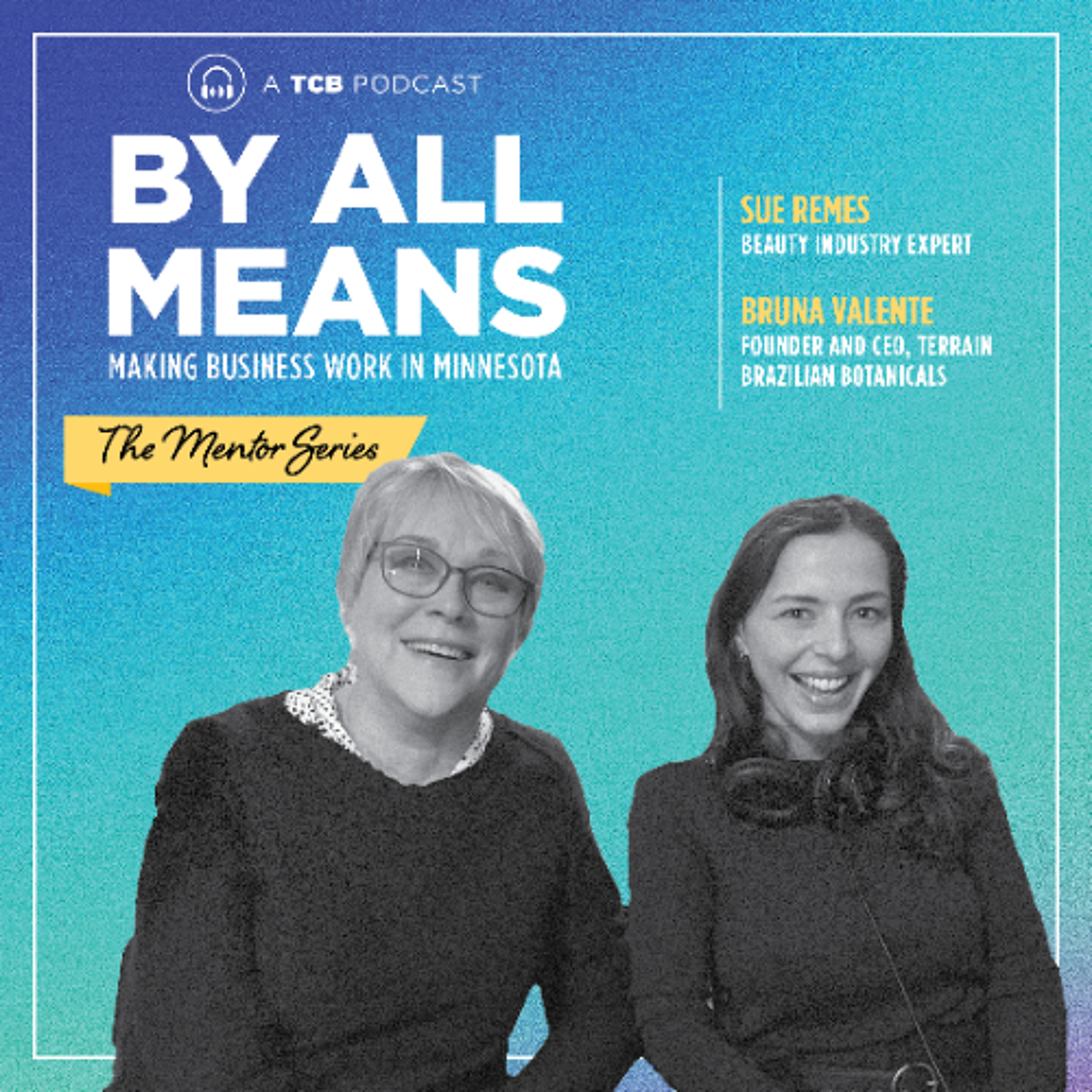
142. Building a Beauty Brand: Sue Remes + Terrain Brazilian Botanicals

Bruna Valente was a corporate marketer working in industrial manufacturing when a health scare sent her on a personal wellness journey, which led her to the rainforests of her native Brazil. There, she discovered natural botanicals that inspired her to create her own skincare products—face oils and lotion bars. She quickly realized they were good enough to sell. Minnesota-made Terrain Brazilian Botanicals is a small, but growing beauty brand now sold in luxury spas, hotels, boutiques, and online. Valente faces many decisions ahead: Does she set her sights on Sephora? How does she grow the audience, and the team? Does she raise money for the brand, which has been bootstrapped thus far? When beauty founders are mulling such questions, the person who is often on their wish list to meet is Sue Remes, a beauty consultant who worked with many of the biggest brands around the globe in her 30-plus year career, including Kiehl’s and Kevin Murphy. (You can hear her career story on Episode 22 of By All Means.) Remes shares the questions she asks of every founder before engaging in mentorship, perspective on how an indie brand can compete in a crowded field of multinationals, and how to succeed at retirement. In Office Hours with College of Saint Benedict and Saint Johns University, accounting and finance professor Boz Bostrom offers advice for early stage founders on creating a business plan, and not letting passion cloud the math on potential for profitability.

April 23, 20251 hr 3 min

141. Growing a Food Brand: Angie and Dan Bastian + Yoga Pops

Angie’s Boomchickapop–one of the most legendary homegrown Minnesota brands in recent history and the benchmark for just about every new packaged food startup hoping to make it big. As the story goes: Angie Bastian was a nurse; her husband Dan Bastian a teacher. They bought a kettle corn machine off the internet in 2002, and started selling at festivals, in hopes of making some extra money. Soon they were selling to grocery stores, building their own manufacturing center, and becoming the first truly national ready-to-eat popcorn brand. In 2017, the company was acquired by Conagra for an estimated $250 million. Today, another Minnesota-made popped snack is slowly gaining shelf space at stores around the country: Yoga Pops, made of popped water lily seeds—a snack as popular in India as popcorn is in America. Currently sold in 350 stores across the country, co-founders Nalini Mehta and Anita Balakrishnan want to make Yoga Pops a household name. They get advice from the Bastians on manufacturing, marketing, culture building, and what it really takes to build a lasting packaged food brand.. As Dan Bastian says, “Leaders work for their people, and then they in turn will work for you.” Stick around for Office Hours with Kingshuk Mukherjee, chair of global business leadership at College of Saint Benedict and Saint John's University. He talks about the school's entrepreneurial alums, the Bastians, and tariff volatility.

April 9, 202548 min

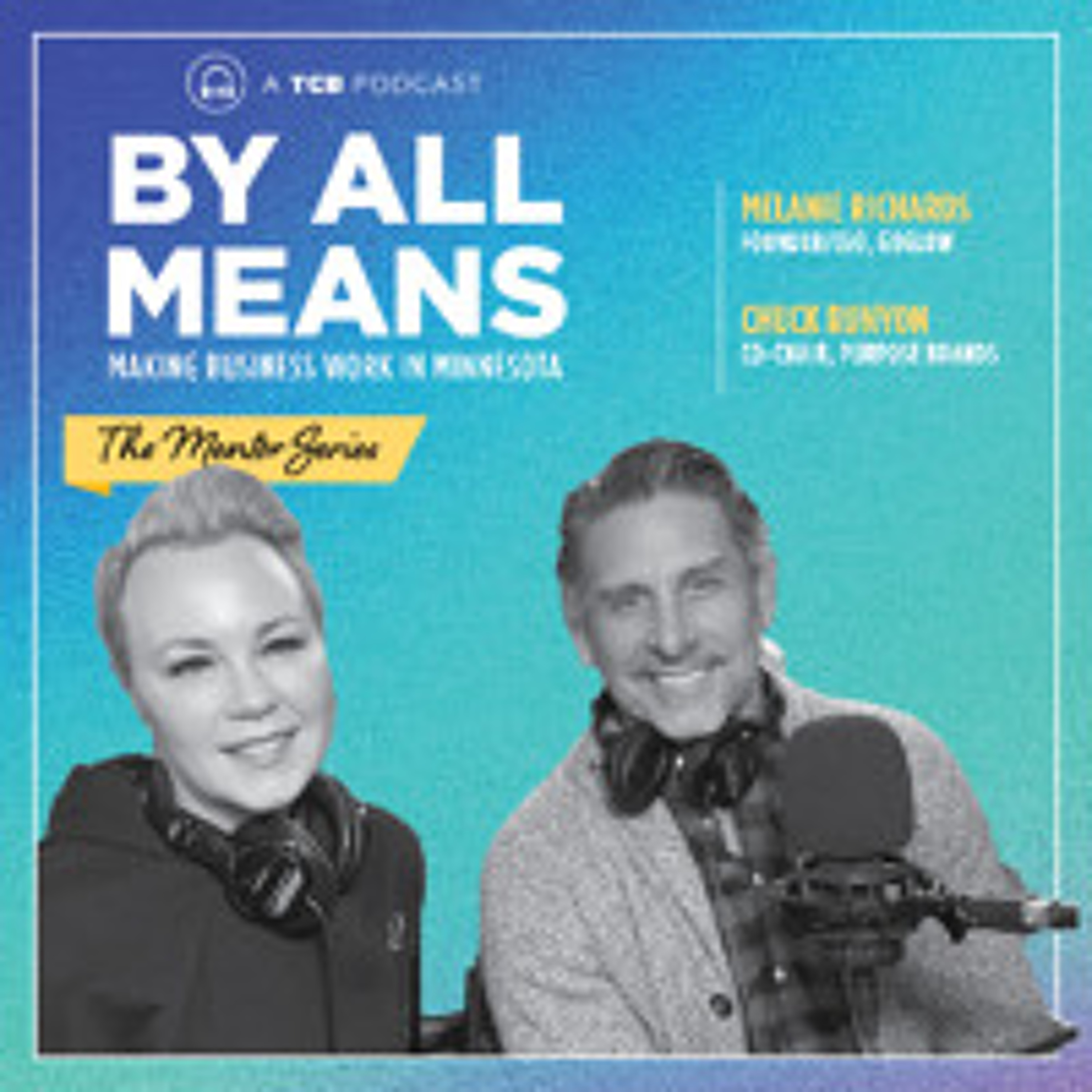
140. Scaling a Franchise: Chuck Runyon + Melanie Richards

In our first Mentor Series pairing, Chuck Runyon, co-founder of Anytime Fitness, the world's largest fitness franchise chain, and its parent company Purpose Brands (formerly Self Esteem Brands), which includes Orangetheory Fitness, Waxing the City, and several other franchise businesses in beauty and fitness talks about transitioning out the CEO role to board chair. He offers advice to Melanie Richards, founder and CEO of goGLOW. Richards started her spray tan business in 2011 and with seven corporate stores open, she started franchising in 2024. Now with 78 units sold across the country, Richards is navigating the change from scrappy founder to leader of a national brand. Plus: Office Hours wtih the College of Saint Benedict and Saint John's University. Economics professor Louis Johnston offers advice to founders on knowing what you're best at, what to hire out, and the importance of telling the story of your business.

July 31, 202454 min

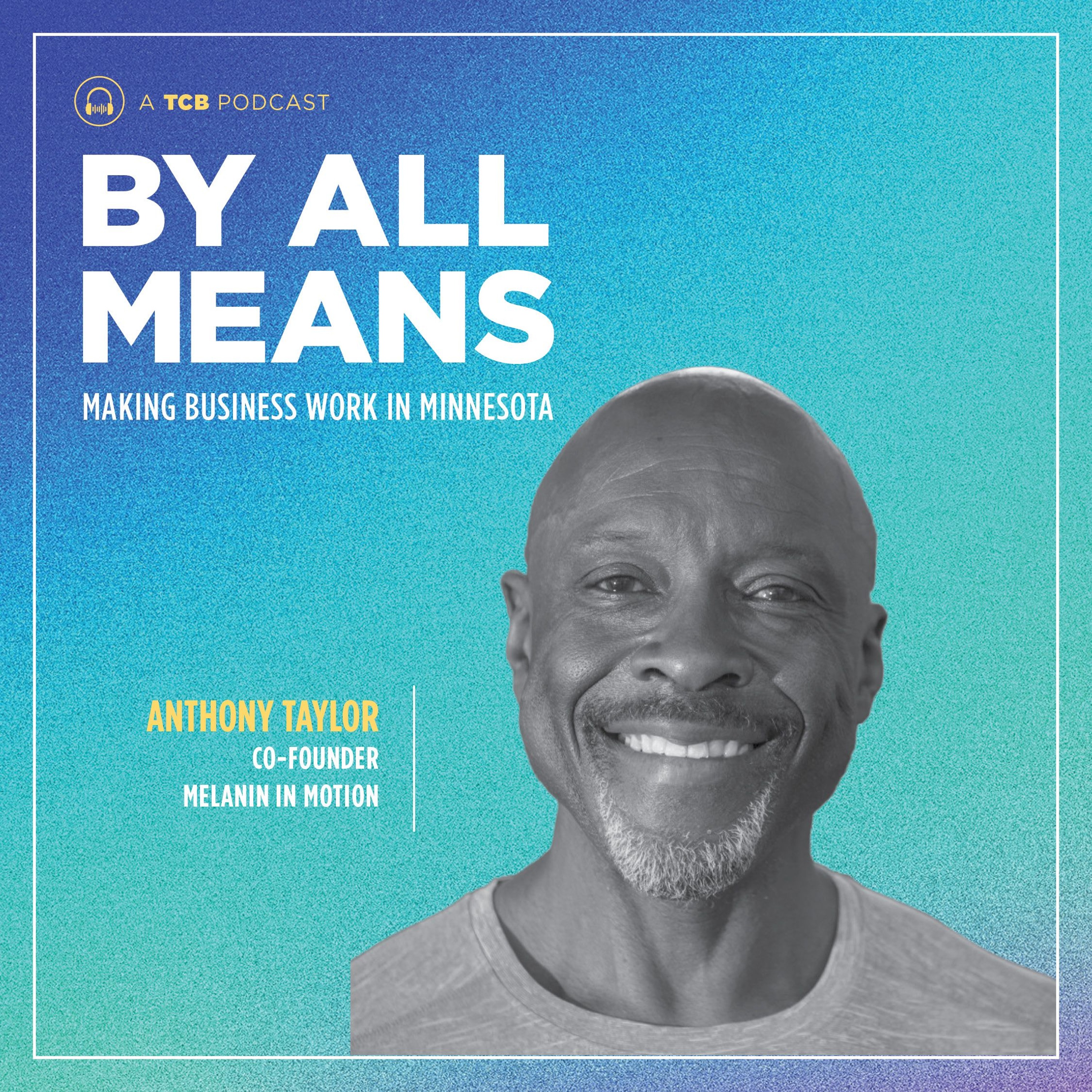
139. Community Development Innovator Anthony Taylor

A chemical engineer turned community development organizer, Anthony Taylor shares the career journey that led him to founding Melanin in Motion, a Community Wellness Center program that connects children of color—and their families – with active pursuits like skiing, cycling, kayaking. Melanin in Motion was a Twin Cities Business 2024 Community Impact Award winner. “I noticed my white friends, when they think about preparing their kids for law school, they’re putting them in the woods. That’s the secret for making more lawyers,” Taylor says. “I want all communities to realize the benefits of municipal, state, federal investment in natural places that can show up in children being resilient, confident, and collaborative.” Taylor talks about how working for successful Minnesota wellness companies, Life Time and Aveda, helped him become a well rounded leader, and what he learned from his own startups, Spa One and Simply Organic Beauty, that led him to shift course and work for the Loppet Foundation and as president of equity outdoors for the YMCA of the North. “Melanin in Motion really is the culmination of that idea, where we see culture as an asset,” Taylor says. He also gives us a preview of his next venture: RiverNorth Development Partners, a social impact development group that is working to create a business district in North Minneapolis that prioritizes “equity driven employers” that agree to create skilled jobs for area residents who have been marginalized. Ion Aerospace is first to sign on, with plans to open on West Broadway in 2025. Following our conversation with Taylor, we go Back to the Classroom with the University of St. Thomas Schulze School of Entrepreneurship where associate professor Alex Johnson teaches entrepreneurship. He talks about the pros and cons of starting a venture on your own versus within a larger organization, and explains the difference between an inventor and an innovator. “Inventors create things. Innovators identify the problem, the value, and build a solution.”

July 24, 202450 min

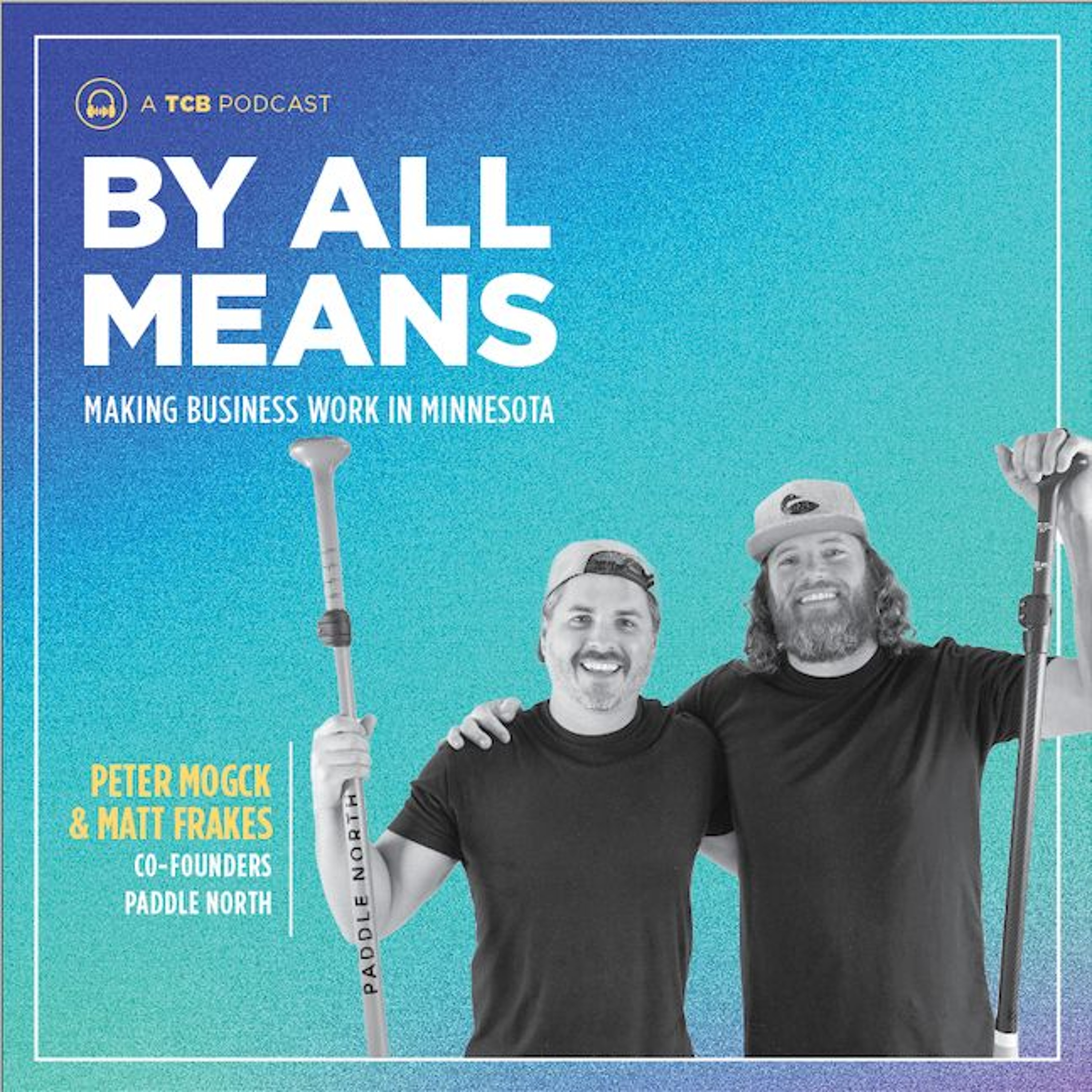
138. Paddle North Co-Founders/Owners Peter Mogck and Matt Frakes

Peter Mogck and Matt Frakes turned their love of Minnesota lake life, and their desire to start something of their own into Paddle North, a water gear manufacturer best known for its inflatable paddle boards. The company marks its 10th anniversary this year, now with a team of 25 employees, and a line of products that has expanded to include kayaks, utility docks, and apparel The founders share keys to their successful partnership—Frakes is a mechanical engineer; Mogck runs marketing and branding, and both say they have “short memories” when disagreements occur, keeping in mind that they always know they both want the same thing: to continue scaling this company. They each put in $15,000 to start it, and have grown without outside investors, utilizing pre-orders to pay for manufacturing, outsourcing some production to keep their overhead low, and through grassroots marketing, from popup shops to social media. Even on the most challenging, demanding days, Frakes says the two never lose site of how lucky they are: “Our day to day business is making toys for the water.” Following the conversation, we go back to the classroom with the University of St. Thomas Opus College of Business where Seth Ketron is an assistant marketing professor. He talks about the importance of crafting a brand story. “How do you come up with a message that resonates with people, that they’re willing to spread, and how do you make it easy for them to spread, and make sure it’s something that really matters to people.”

Is this your show?

Claim this listing to keep it up to date, reach guests who want to pitch you, and manage bookings with Guestify.

Claim this listing

More Business podcasts