Find partners
Business Trip

Business Trip

Hosted by Greg Kubin & Matias Serebrinsky

Episodes

69

Latest episode

Aug 2026

Language

EN-US

About the show

Business Trip explores the frontiers of brain and mental health through conversations with founders, investors, and researchers at the intersection of neuroscience and technology.

Listen to episodes

60 recent
August 27, 2026Episode 7648 min

Why Most Drugs Fail, and Why Virtual Tissue Models Beat Virtual Cell Models

Naren Tallapragada (co-founder of Tessel) joins to talk about the industry of modeling biology. While the field races to build virtual cell models, his team builds virtual tissue models, betting that predicting what an organ actually does matters more than predicting what genes a cell expresses. The goal: not just whether a drug works, but who it works for. In this episode, we discuss: Why 90% of drugs fail in clinical trials, and why neuro and Alzheimer's failure rates are even worse The multi-scale modeling problem: molecules, genes, cells, tissues, organs, and why picking the right level of resolution matters more than picking the "best" one The electron-and-lightbulb argument for why virtual cell models may be a beautiful solution to the wrong problem Organoids vs. animal models: where human cell models beat animals, and where both fail (like modeling behavior in mental health) Why Naren thinks defensibility in AI-driven biology comes from proprietary multi-organ data, not model architecture The case for precision medicine, and why it's been such a brutal business model to actually execute on Credits: Created by Greg Kubin and Matias Serebrinsky Host: Matias and Greg Produced by Nico V. Rey Find us at businesstrip.fm and psymed.ventures Follow us on Instagram and Twitter ! Theme music by Dorian Love Additional Music: Distant Daze by Zack Frank

July 9, 2026Episode 7524 min

Virtual Mitochondrial Models and the Case for Engineering Humans with Mariëlle van Kooten

Mariëlle van Kooten (CEO and co-founder of Powerhouse Biology) joins to make the case that mitochondria are the best place to start engineering the human body. Her team builds virtual mitochondria models to predict how a fix will behave before it ever touches a patient. Marielle is passionate about treating disease and human enhancement. In this episode, we discuss: Why mitochondria might be the most tractable place to start engineering human biology The difference between building a virtual mitochondria model and the industry-wide race to build a virtual cell Why a protein fix for one disease (say, Parkinson's-linked muscle weakness) could work across totally unrelated tissues The difference between Science vs. Engineering: why she left academia The case for human enhancement: longevity, resilience, and why the ethics conversation is stalled Credits: Created by Greg Kubin and Matias Serebrinsky Host: Matias and Greg Produced by Nico V. Rey Find us at businesstrip.fm and psymed.ventures Follow us on Instagram and Twitter ! Theme music by Dorian Love Additional Music: Distant Daze by Zack Frank

May 14, 2026Episode 7434 min

Brain Organoids: from Space to AI with Alysson Muotri

Professor Alysson R. Muotri (geneticist and developmental biologist at UC San Diego) joins for a far out conversation about sending brain organoids to the International Space Station and what they're teaching us about aging, neurological disease, and a new kind of AI. One month in orbit ages an organoid the equivalent of 10 years on Earth, and Alysson's lab has already used that compressed timeline to unlock an FDA-approved clinical trial for a drug developed in space. In this episode, we discuss: Why space accelerates brain aging The surprising role of "junk DNA" and endogenous retroviruses in neuroinflammation and neurodegeneration Why HIV antiretroviral drugs may be the key to treating neurological conditions What the decommissioning of the ISS and the rise of commercial space stations mean for biomedical research How brain organoids learn, remember, and inspire a new generation of AI algorithms beyond transformers The bioethics frontier: when do organoids become conscious and how would we even know? Credits : Created by Greg Kubin and Matias Serebrinsky Host: Matias and Greg Produced by Nico V. Rey Find us at businesstrip.fm and psymed.ventures Follow us on Instagram and Twitter ! Theme music by Dorian Love Additional Music: Distant Daze by Zack Frank
March 25, 2026Episode 7326 min

How Gilgamesh Landed a $1.2B AbbVie Deal in Psychedelics

Jonathan Sporn (CEO + Founder of Gilgamesh Pharma) joins for a deep dive into next-gen psychedelic medicines, why duration matters for real-world clinical use, and what it takes to build these therapies the way large pharma would—culminating in a partnership with AbbVie worth up to $1.2B. In this episode, we discuss: • Why Gilgamesh is building psychedelic medicines the way large pharma would • The thesis behind short-acting psychedelics and why long-duration trips are impractical for real-world psychiatry • How Gilgamesh designs molecules backwards from clinical needs • Effective approaches to the challenges of trial designs for psychedelics • What AbbVie’s deal and Spravato’s trajectory mean for psychedelics • How psychedelic medicines could reshape mental health Credits : Created by Greg Kubin and Matias Serebrinsky Host: Matias and Greg Produced by Nico V. Rey Find us at businesstrip.fm and psymed.ventures Follow us on Instagram and Twitter ! Theme music by Dorian Love Additional Music: Distant Daze by Zack Frank

January 27, 2026Episode 7242 min

Inside Philanthropy’s Role in Mental & Brain Health

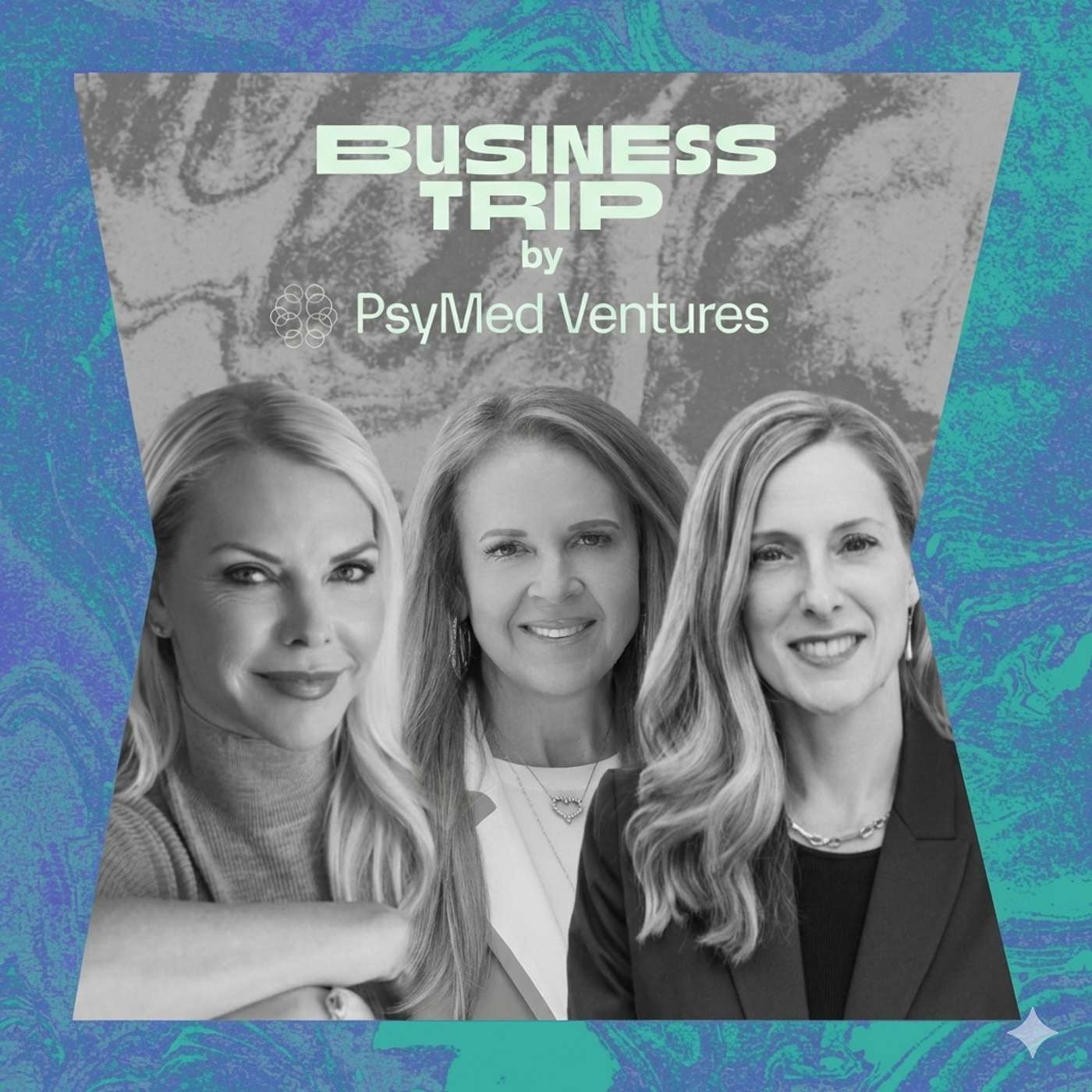
Greg speaks with three leaders in mental health philanthropy: Alyson Nieman from Mindful Philanthropy , Sabrina Gracias from Ortus Foundation , and Christena Huntsman Durham from Huntsman Mental Health Foundation , each offering a distinct perspective on how funding decisions get made and where the biggest gaps remain. In this episode we discuss: Trends in mental health philanthropy, and the 10-year challenge: how the field moves from roughly $2B to $35B in annual funding. Funding the clinic of the future: a $150M philanthropic gift behind the Huntsman Mental Health Institute’s crisis care center Youth mental health: how the Ortus Foundation is addressing regional gaps in the US Intermountain West Credits : Created by Greg Kubin and Matias Serebrinsky Host: Greg Kubin Produced by Caitlin Ner & Nico V. Rey Find us at businesstrip.fm and psymed.ventures Follow us on Instagram and Twitter ! Theme music by Dorian Love Additional Music: Distant Daze by Zack Frank

December 19, 2025Episode 7139 min

Rick Perry on paving the way for Ibogaine in America

Greg interviews Rick Perry, the former Governor of Texas and former U.S. Secretary of Energy and leading advocate for ibogaine, live at the Real Summit . In this episode, we discuss: How a former Texas governor moved from strict opposition to drugs to becoming a leading advocate for ibogaine after firsthand experience and veteran outcomes. Ibogaine’s impact on PTSD, opioid addiction, and traumatic brain injury, including Stanford-linked brain imaging data showing functional and structural improvement. How veterans are the proving ground that enabled Texas to commit $50M in public funding for ibogaine clinical trials. Why ibogaine requires intensive medical supervision and why rigorous trials are essential for legitimacy and scale. A vision where ibogaine reshapes addiction treatment, veteran care, and eventually criminal justice and homelessness policy. Credits : Created by Greg Kubin and Matias Serebrinsky Host: Greg Kubin Produced by Caitlin Ner & Nico V. Rey Find us at businesstrip.fm and psymed.ventures Follow us on Instagram and Twitter ! Theme music by Dorian Love Additional Music: Distant Daze by Zack Frank

November 24, 2025Episode 7048 min

Brain Shuttles: A New Path Into the Brain with James Gorman of the Wyss Institute

Matias interviews James (Jim) Gorman MD PhD from the Wyss Institute. Jim is Principal Investigator on the Wyss Institute Brain Targeting Program (BTP) . Jim leads a team developing new approaches to transport drugs through the blood brain barrier (BBB) into the CNS. In this episode, we discuss: Why the BBB blocks most modern drugs from entering the brain, creating the biggest bottleneck in neuro How brain shuttles hijack natural transport pathways like the transferrin receptor to move drugs across the BBB How new modalities that reach the brain can potentially treat diseases like Alzheimer’s, Parkinson’s, ALS, and lysosomal disorders Why delivery route of shuttles enable IV or subcutaneous dosing instead of invasive intrathecal injections How early data shows that shuttle-enabled antibodies clear amyloid faster, at lower doses, and with fewer side effects How the field is accelerating through a pre-competitive consortium model that lets multiple companies share shuttle platforms Credits : Created by Greg Kubin and Matias Serebrinsky Host: Matias Serebrinsky Produced by Caitlin Ner & Nico V. Rey Find us at businesstrip.fm and psymed.ventures Follow us on Instagram and Twitter ! Theme music by Dorian Love Additional Music: Distant Daze by Zack Frank

October 16, 2025Episode 6938 min

AI and the future of therapy with Luis Voloch of Jimini Health

Greg and Matias interview Luis Voloch, CEO and Co-Founder of Jimini Health, an AI behavioral health company. He previously co-founded and served as CTO of Immunai, where he applied machine learning to immunology and drug discovery. In this episode, we discuss: How LLMs expand the scope of machine learning from rule-based tasks to open-ended reasoning and dialogue Why healthcare adoption is tiered, beginning with clinician-facing AI scribes and moving toward patient-facing companies with human-in-the-loop to enhance quality of care Why human oversight is essential and how AI can augment complex clinical work instead of replacing it The competitive advantage from workflows, data, and trust via purpose built AI systems The path toward precision psychiatry, where continuous, language-based interactions can generate rich behavioral data to inform diagnostics, treatment, and drug discovery Credits : Created by Greg Kubin and Matias Serebrinsky Host: Matias Serebrinsky Produced by Caitlin Ner & Nico V. Rey Find us at businesstrip.fm and psymed.ventures Follow us on Instagram and Twitter ! Theme music by Dorian Love Additional Music: Distant Daze by Zack Frank

September 23, 2025Episode 681 hr 32 min

Startups, philanthropy, billionaires, academia, neuromodulation, psychedelics, AI and new therapies in bipolar, autism, and Parkinson’s with Rob Malenka

Matias interviews Rob Malenka. In this episode, we discuss: Why progress in psychiatry is slow because the brain is the most complex organ and many disorders are highly heterogeneous The bottlenecks including weak replicability in research, academic politics, perverse incentives, and pharma’s avoidance of neuropsychiatry How breakthroughs require early detection, rigorous science, and bridging academia with biotech through venture philanthropy How success depends on mission-driven, ethical people who align science, capital, and patient impact. The opportunities in neuromodulation, data-driven precision medicine, and combination therapies. Credits : Created by Greg Kubin and Matias Serebrinsky Host: Matias Serebrinsky Produced by Caitlin Ner & Nico V. Rey Find us at businesstrip.fm and psymed.ventures Follow us on Instagram and Twitter ! Theme music by Dorian Love Additional Music: Distant Daze by Zack Frank

August 21, 2025Episode 6754 min

Transforming Skin Cells into Neurons to Treat Alzheimer’s with Brendon Boot of Skin2Neuron

Greg and Matias interview Brendon Boot of Skin2Neuron. Brendon is a neurologist at Harvard and Mayo Clinic with prior experience as Medical Director at Biogen overseeing their Phase 1b Alzheimer’s trials. In this episode, we discuss: How skin-derived cells can be turned into neurons to repair the brain. Why replacing lost neurons may succeed where drugs have failed in Alzheimer’s. What makes autologous (self-derived) cell therapy safer and more effective. How testing in dogs brought stronger proof than traditional mouse models. Why this approach could shift Alzheimer’s treatment from slowing decline to restoring memory. Credits : Created by Greg Kubin and Matias Serebrinsky Host: Matias Serebrinsky & Greg Kubin Produced by Caitlin Ner & Nico V. Rey Find us at businesstrip.fm and psymed.ventures Follow us on Instagram and Twitter ! Theme music by Dorian Love Additional Music: Distant Daze by Zack Frank
Is this your show?

Claim this listing to keep it up to date, reach guests who want to pitch you, and manage bookings with Guestify.

Claim this listing

More Business podcasts