Find partners
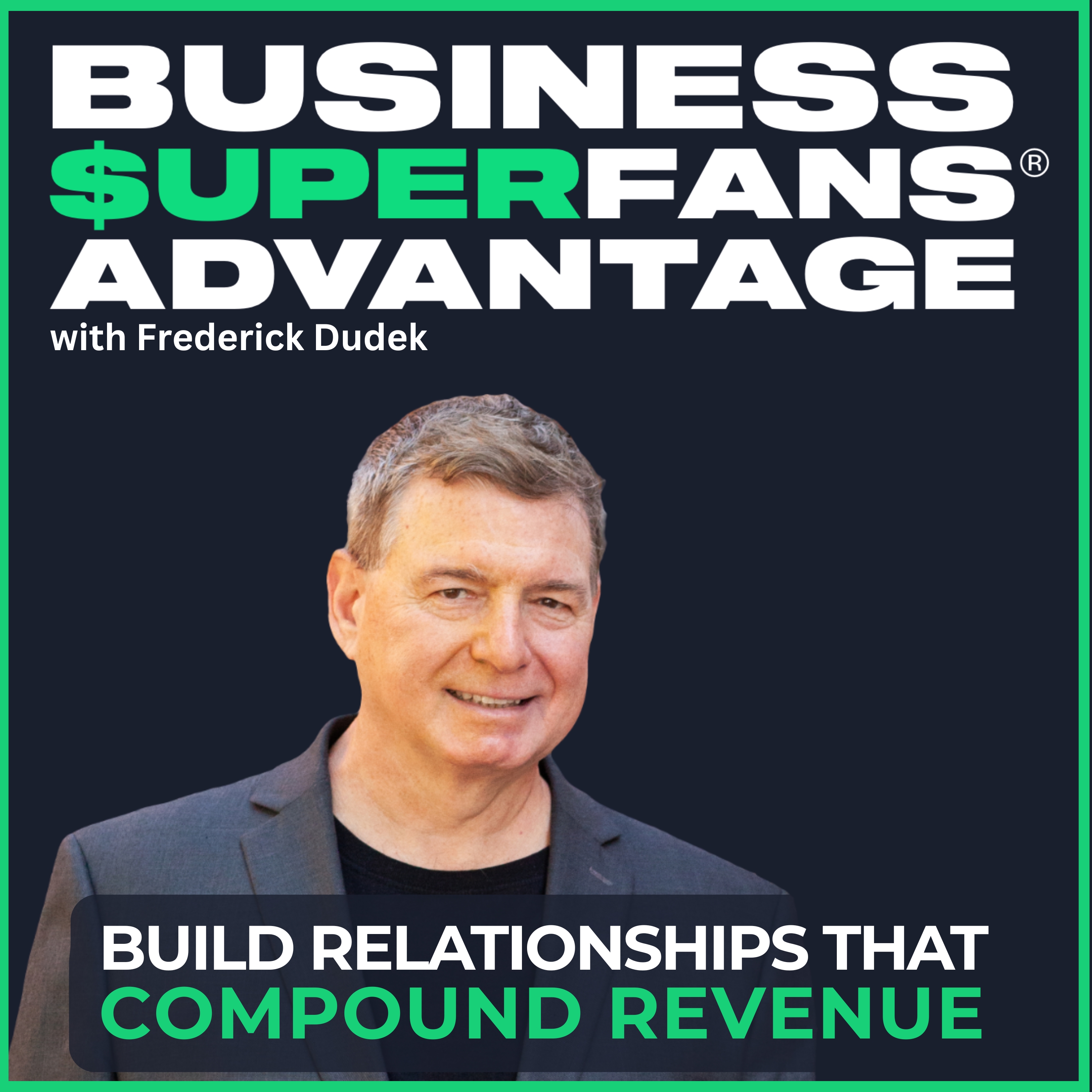
Business Superfans® Advantage: Predictable Growth for Service Entrepreneurs

Business Superfans® Advantage: Predictable Growth for Service Entrepreneurs

Hosted by Frederick Dudek | Business Prosperity Advisor

BusinessEntrepreneurshipInterviews guests

Episodes

224

Latest episode

Oct 2026

Language

EN

About the show

*Business Superfans® Advantage* is a weekly business growth podcast for service entrepreneurs who want predictable growth by leveraging their entire business ecosystem as a growth engine—the people, partnerships, and relationships that make their business work—and cultivating superfans who give the business a lasting advantage. Hosted by Frederick Dudek—Business Prosperity Advisor, author of *Creating Business Superfans®*, and creator of Revenue Reactor™, The Intelligent Business Growth System—the show explores the relationships, systems, and decisions behind sustainable growth. With decades of experience in SaaS, technology, and business growth, Frederick examines how culture, technology, AI, automation, and better operating systems can improve performance without losing the human touch. Through candid conversations with founders, CEOs, and business experts from around the world, guests share what worked, what failed, and what they wish they had known sooner. The show goes beyond customer acquisition to examine how customers, employees, contractors, suppliers, and partners shape: - Business growth and profitability - Marketing, sales, customer experience, reputation, reviews, referrals, and retention - Leadership, team performance, and accountability - Operations, AI, automation, and scalable systems Each episode turns hard-earned lessons into practical strategies you can apply to recognize what’s shaping your growth, make smarter decisions, turn strong relationships into superfans, and build a business that succeeds with or without you. Ready to stop chasing growth and start attracting it? Subscribe to *Business Superfans® Advantage* and turn today’s insights into action.

Listen to episodes

60 recent
October 23, 202639 min

How to Turn Your Email List Into Paying Clients by Following Up Like a Human with Ely Delaney | Ep. 225

Ely Delaney, founder of Purple Knight Marketing and author of The Follow-Up Code, shows how to turn your email list into paying clients by following up like a human instead of pitching. If your list is big, your open rates are low, and your follow-up sounds like every other sales email, the problem isn't email. Ely describes a client who went from about $35,000 to about $110,000 a month, and from 30 to as many as 100 workshop attendees a week, by changing nothing but how he wrote to his people. For service business owners who would rather build relationships than chase sales. Full show notes and transcript: FrederickDudek.com How to Turn Your Email List Into Paying Clients by Following Up Like a Human with Ely Delaney Why This Conversation Matters Most service business owners already have the list: past clients, old prospects, people they met once at an event. What they don't have is a way to stay in touch that people actually welcome. Ely Delaney, founder of Purple Knight Marketing and author of The Follow-Up Code , explains why value-first follow-up beats the pitch, and how changing nothing but your words can wake up a list that has gone quiet for years. Direct Answer You turn an email list into paying clients by following up like a human , not a pitch machine. Ely Delaney's approach: lead with value, write the way you talk, stay in touch consistently, and sell only occasionally. People buy when they're ready, sometimes years later, and consistent, caring follow-up makes you the first person they think of. Key Takeaways Lead with value, and let the sale be an afterthought. Share a book, an idea, or something useful first, so the rare offer gets read instead of sent to voicemail. Write the way you talk. Swap the voice your English teacher taught you for your own stories, style, and quirks; that is what creates an emotional response. Follow up for the long game. Plan for buyers who are ready today, next year, or ten years from now, and keep showing up until they are. Restart a cold list with an apology, not a pitch. Ely's "I'm such a slacker" email simply admits you've been out of touch and asks what's new in their world. Turn a sent email into a conversation. A day or two later, call and ask, "Did you get the thing?" It's a no-threat reason to talk. Thank the people who send you business. Referral partners, vendors, podcast guests, and hosts all keep sending business to people who show appreciation. Know when to send someone elsewhere. If another expert is the better fit, say so; that kind of honesty is what people remember and repeat. Key Insights to Share “Email's not dead, your emails just suck.” — Ely Delaney “We just changed the language. We just changed how we communicated.” — Ely Delaney “Friends make horrible clients, but clients can become amazing friends.” — Ely Delaney Timestamps 0:41 — From chamber networking to follow-up systems — How relationships built Ely Delaney's first business and his follow-up method. 4:28 — Four people, one recommendation — How nurtured relationships turn other people into your sales team. 7:18 — Lead with value, sell as an afterthought — Why a book recommendation earns more attention than a pitch. 14:25 — Relationships run both ways — What hosts, guests, vendors, and referral partners owe each other. 18:10 — From 30 seats to 100 — How changing the language took one client from about $35,000 to about $110,000 a month. 22:24 — The Follow-Up Code — Why writing like you talk makes people feel you're talking to them. 25:22 — Consultative selling plus emotional connection — How a no-pitch talk produced a client of more than four years. 30:35 — The ten-year follow-up — Why you never know when someone will be ready to buy. 33:22 — "Did you get the thing?" — The zero-threat check-in call that restarts conversations. 35:51 — The "I'm such a slacker" email — The re-engagement script behind over $12,000 in sales in one week. One Action Send Ely Delaney's "I'm such a slacker" email this week. Pick the people on your list you haven't contacted in months. Use the subject line "I'm such a slacker," admit you haven't stayed in touch the way you should, promise to do better, and ask one question: what's new and exciting in your world? Sign it with your name. No template, no graphics, no offer. Then compare the replies with what your usual emails get. Freddy D's Take Ely Delaney and I came at this from different directions and landed in the same place. He built his business at chamber events and on stages. I built mine selling software, where my customers became my sales team. Neither of us got there by pitching. What Ely adds is the part most owners skip: the words . His client didn't add a new offer or a new channel. He changed how he wrote to the people already on his list, and the room went from 30 seats to a wall knocked out for 100. That's the point I want service business owners to hear. Your list isn't dead. People are waiting to be treated like people. Send something useful, write like you talk, check in when you don't hear back, and say thank you to everyone who sends business your way. Do that long enough and you get Ely's ten-year call: someone you never sold to, who remembered you anyway. When they're ready, you're the first person they think of. That's a Business Superfan. Resources Purple Knight Marketing — Ely Delaney's company, where he helps business owners put their own voice into their follow-up. The Follow-Up Code by Ely Delaney — Ely's book on relationship-first email follow-up, built on the virtues of Bushido. Available on Amazon and through ConnectWithEly.com. ConnectWithEly.com — Ely Delaney's site, with links to the book and his free Follow-Up Fix mini course. The Go-Giver by Bob Burg — the book Ely keeps on his desk and recommends to everyone, on walking into a room asking who you can help. The Greatest Salesman in the World by Og Mandino — the book recommendation a reader credited with saving her business. Creating Business Superfans® by Frederick Dudek — The playbook for turning everyday customers, employees, and partners into Business Superfans who come back, refer others, and drive repeat revenue, so your business grows with or without you at the center. Get your copy. Revenue Reactor™ — The Intelligent Business Growth System for owner-led service businesses, built on the lessons from every episode of this show plus Frederick Dudek's book and frameworks. Get your free growth score and find out what is holding your business back. No credit card needed. Stop Guessing. Start Scaling. Drive predictable growth with proven, data-driven strategies. Get a complete growth assessment, pinpoint your biggest growth bottleneck, and generate a customized 90-day action plan in under 10 minutes, free at RevenueReactor.AI . About the Guest Ely Delaney is the Founder of Purple Knight Marketing, the author of The Follow-Up Code , and the creator of the Ultimate Follow-Up System, an evergreen process for nurturing relationships by email, social media, text, phone, and face-to-face. He started his first company, a web and graphic design agency, in 1995 and grew it through networking, and since around 2008 he has been speaking on and building relationship-focused follow-up systems. Through ghostwriting and coaching, he helps business owners put their own voice, stories, and personality into the words they send. Connect With Ely Website: ElyDelaney.com LinkedIn: linkedin.com/in/elydelaney Guest Offer Ely is offering listeners The Follow-Up Fix, a free mini-course on the five biggest mistakes he sees people make with email marketing and what to do instead. Find it, along with The Follow-Up Code , at ConnectWithEly.com (that's E-L-Y).

October 13, 20269 min

How Solo Business Owners Break the Feast-or-Famine Cycle and Build Steady Revenue

Frederick Dudek (Freddy D) shows solo business owners how to break the feast-or-famine cycle and build steady revenue, using lessons from guests Andy Audate, Kristen Nolan, and Kanika Vasudeva. If you hunt for work, deliver it, and then find the pipeline empty again, the answer isn't marketing harder; it's building a business where revenue comes back to you. Andy Audate described a client who went from about $80,000 a year to $60,000 a month over roughly four years once automated follow-up replaced manual selling. For solopreneurs, freelancers, and solo service providers. Full show notes and transcript: FrederickDudek.com How Solo Business Owners Break the Feast-or-Famine Cycle and Build Steady Revenue Why This Conversation Matters For a solo owner, there is no sales team to keep the pipeline full while the work gets done. Frederick Dudek (Freddy D) looks at what owners around the world say they are struggling with most, and for solopreneurs the answer is the revenue roller coaster. He explains why the fix isn't more hunting , and pulls three practical fixes from his conversations with Andy Audate, Kristen Nolan, Kanika Vasudeva, and David Ebner. Direct Answer Solo business owners break the feast-or-famine cycle by building revenue that comes back to them instead of hunting for new work. Give every client a reason to stay after the job, earn introductions rather than chasing referrals, and let a simple system handle follow-up and invoicing. Steady revenue comes from retention, reputation, and introductions. Key Takeaways Ask what each client still needs after the job. A maintenance plan, a quarterly review, a retainer, or an annual checkup turns a finished project into revenue that keeps arriving. Close the thank-you gap. A no-agenda "how are you doing?" after the sale keeps you remembered, and being remembered is how the phone rings. Ask for introductions, not referrals. Someone vouching for you directly does the trust-building for you, which matters most when you're the only salesperson. Pass the 15-second test. If people can't explain what you do in one sentence, they can't introduce you. Let a system remember for you. A simple opt-in and a written email sequence keep talking to past clients, vendors, and partners while you're on deadline. Automate invoices and reminders. Collecting money you've already earned shouldn't depend on working up the nerve on a Tuesday afternoon. Keep the human part human. Use technology as a step in the process, not a shortcut: the system carries the message, and you supply the personal touch. Key Insights to Share “The fix isn't more hunting, it's building a business where revenue comes back to you.” “Being remembered is how the phone rings.” “The system carries the message, you still supply the human part.” Timestamps 0:00 — 48% of solo owners have gone a month with no income — What owners in 57 countries say they're struggling with most. 1:05 — The feast-or-famine trap — Why hunting, delivering, and hunting again keeps the pipeline empty. 2:13 — Fix one: stop ending the relationship at the invoice — How Andy Audate's move to an ongoing offer changed his business. 3:24 — The thank-you gap — Why a no-agenda check-in keeps you remembered and the phone ringing. 3:43 — Fix two: get introduced instead of hunting — The difference between a referral and an introduction, from Kristen Nolan and Kanika Vasudeva. 5:01 — Kanika Vasudeva's 15-second test — Whether a stranger can tell what you do fast enough to introduce you. 5:11 — Fix three: let a system do the follow-up — Automated sequences, invoicing, and David Ebner's caution about shortcuts. 6:21 — Where steady revenue really comes from — Why most solo owners live at reach and how to get the middle working. 6:47 — Your one action this week — Map what past clients still need and ask your five happiest clients for an introduction. One Action List every client you've worked with in the last 12 months. Next to each name, write one thing they still need from you now that the job is done. Then pick your five happiest clients and send each of them a no-pitch thank-you. With two of them, add one question: "Who's one person you know who should know me?" That's asking for an introduction, not a referral. Freddy D's Take When I went looking for what solo owners struggle with most, I expected rising costs to top the list. It tied. The other answer was the roller coaster: a great month, then a month spent refreshing the bank app. I see the same trap over and over. You hunt, you find work, you deliver it, and while you're delivering, nobody is hunting. The advice to market harder assumes there's someone else to do it. For a one-person business, there isn't. What struck me, pulling this episode together, is that my guests had already handed us the answer from three directions. Andy Audate stopped selling one-time projects. Kristen Nolan and Kanika Vasudeva showed why an introduction beats a referral. And Andy, David Ebner, and my own cash flow episode all point to letting a system remember what you won't. Put them together and it's the middle of the chain: the clients who stay, the reputation they carry, and the introductions they make. The fix isn't more hunting, it's building a business where revenue comes back to you. Resources Simply Business solopreneur survey — the survey of 1,000+ solo owners cited for the 61% and 48% figures ( The Power of One: 2025 Solopreneur Report ). Global small business survey across 57 countries — the source for unpredictable income as the top struggle and the 45% cash flow figure (Bookipi, The Cost of Doing Business: A Global Small Business Snapshot ). Adobe Express / Talker Research — the survey behind five hats a day and 200+ extra hours a year. Episode 216 with Andy Audate of Progreta — moving from one-time projects to an ongoing offer, and the automated selling machine. Episode 222 with Kristen Nolan of Interview Valet — why an introduction beats a referral. Episode 218 with Kanika Vasudeva — the 15-second test. Episode 210 with David Ebner — technology as a step in the process, not a shortcut. Episode 221, Freddy D's Playbook — late payments and automating your invoicing. Creating Business Superfans® by Frederick Dudek — The playbook for turning everyday customers, employees, and partners into Business Superfans who come back, refer others, and drive repeat revenue, so your business grows with or without you at the center. Get your copy. Revenue Reactor™ — The Intelligent Business Growth System for owner-led service businesses, built on the lessons from every episode of this show plus Frederick Dudek's book and frameworks. Get your free growth score and find out what is holding your business back. No credit card needed. Stop Guessing. Start Scaling. Drive predictable growth with proven, data-driven strategies. Get a complete growth assessment, pinpoint your biggest growth bottleneck, and generate a customized 90-day action plan in under 10 minutes, free at RevenueReactor.AI .

October 9, 202637 min

How to Build a People-First Culture That Drives Referrals and Profit with Sandra Coker | Ep. 223

Sandra Coker of Human Power Solutions explains how to build a people-first culture that turns employees and contractors into your reputation, your recruiters, and your best source of referrals. If you see payroll as an expense and wonder why loyal customers, good hires, and referrals are hard to come by, the cause may be how your frontline feels about working for you. Coker says her firm grew into a seven-figure business on 98 percent referrals, and she keeps 50 contract facilitators loyal with birthday brownies, quarterly cards, and a holiday party. For owners and leaders of service firms, trade businesses, and growing teams. Full show notes and transcript: FrederickDudek.com How to Build a People-First Culture That Drives Referrals and Profit with Sandra Coker Why This Conversation Matters Most owners can tell you what payroll costs. Far fewer can tell you what the people on that payroll are saying about the company to customers, vendors, and friends. Sandra Coker, founder and CEO of Human Power Solutions and author of People Profit , makes the case to Frederick Dudek (Freddy D) that for service firms, trade businesses, and SMBs, the frontline is the company's reputation , and that leaders who trust, hear, and recognize those people get better customer experiences, easier hiring, and growth that arrives by referral. Direct Answer A people-first culture drives referrals and profit because the employees and contractors who deal with your customers are your reputation. Trust them with real work, correct mistakes in private, act on their ideas, and recognize the small moments in their lives. People who feel valued serve customers better and recommend your company without being asked. Stop Guessing How to Grow Your Business—Discover What to Focus on Next. Key Takeaways Your frontline is your reputation. The people who answer the phone, run the service call, or stand at the counter decide what customers think of you, so train and treat them as the professionals they are. Not delegating reads as distrust. Hand over real work, expect a few mistakes, fix them, and add the missing skill. Sandra's rule is that people learn by trying and thrive when trusted. Tone and body language set psychological safety. How you correct one person tells everyone else whether it is safe to speak up, so handle mistakes one-to-one. Ask the people who do the job how to fix it. Take a walk, hold a huddle, and hear it firsthand, because the report that reaches the executive table has already been filtered. Treat contractors like part of the team. Sandra's 50 contract facilitators get birthday brownies, quarterly cards, a shared online community, and a holiday party, and she wants them to pick her work first. Be worthy of the talent you want. A company people love working for recruits through its own staff. A company with a poor reputation pays for every hire. Recommend complementary providers. Sandra sends clients to trusted firms whose services sit beside hers, which makes her one of the client's trusted providers too. Key Insights to Share “They're not the reputation of the company, you are.” — Sandra Coker “People learn by trying and by making mistakes and they thrive when they're trusted.” — Sandra Coker “You've got to be worthy of that talent.” — Sandra Coker Get Practical Insights to Build a Stronger, More Profitable Business Timestamps 1:11 — From restaurant shifts to Human Power Solutions — Why treating people well became Sandra's operating rule long before she started a company. 5:01 — What Sandra told a room of bank tellers that morning — Why the frontline, and not the executive floor, is the company's reputation. 6:59 — Why not delegating says "I don't trust you" — How to hand over real work and let people learn from mistakes. 7:43 — Correcting in private versus chastising in public — How one public reprimand sends a whole team to update their résumés. 10:16 — Let the people doing the job fix the process — Why executives should take a walk and hold a huddle instead of relying on second-hand reports. 12:48 — The CEO who measured success by the divorce rate — How the way you run the workplace follows your people home. 16:46 — How Sandra keeps 50 contract facilitators loyal — Birthday brownies, quarterly cards, and a community that makes her their first choice. 20:44 — Being worthy of good talent — How a company people love working for turns its own staff into recruiters. 30:30 — The utility company pilot with field technicians — How a custom program raised satisfaction scores and gave techs pride in serving their community. 33:29 — A seven-figure business on 98 percent referrals — Why recommending complementary providers makes you a trusted provider too. One Action This week, take a walk. Pick one frontline role, such as the person who answers the phone, runs the service call, or greets the customer, and spend 20 minutes with the people who do it, without their manager in the room. Ask one question: "What would make this job easier for you to do well?" Write down what you hear, choose one suggestion you can put in place within the month, and when you do, tell the whole team whose idea it was. Stop Guessing How to Grow Your Business—Discover What to Focus on Next. Freddy D's Take Sandra said something to a room of bank tellers on the morning we recorded that every owner should hear: the executives upstairs are not the reputation of the company. The tellers are. I learned the same thing in Dale Carnegie management training. A manager is a facilitator whose job is to help the team succeed and to have their back. What I appreciated most is that Sandra lives it with people who aren't even employees. She works with 50 contract facilitators, and they get birthday brownies, quarterly cards, a community of their own, and a holiday party at a bowling alley. She wants them to choose her work first, and she says her firm is a seven-figure business built on 98 percent referrals. For service entrepreneurs and SMBs , here is the through-line. Paying an hourly employee for the afternoon so she can sit with a relative in the hospital is cheap money. So is replacing a broken monitor the next day. The little things are really the big things. The people who receive them tell your story to customers, to recruits, and to everyone they know. A reputation is built from the inside out. Resources Human Power Solutions (HPS) — Sandra Coker's professional development firm, which works with companies as a fractional chief learning officer. People Profit by Sandra Coker — her book on making work easier for the people who serve your customers. Revenue Reactor™ — The Intelligent Business Growth System for owner-led service businesses, built on the lessons from every episode of this show plus Frederick Dudek's book and frameworks. Get your free growth score and find out what is holding your business back. No card needed. Creating Business Superfans by Frederick Dudek — the source of the line about people crawling through broken glass for appreciation and recognition. Dale Carnegie management training — where Frederick Dudek learned to see a manager as a facilitator who helps the team succeed. Glassdoor — the employer review site mentioned as the place where negative comments about workplaces pile up. Stop Guessing. Start Scaling. Drive predictable growth with proven, data-driven strategies. Get a complete growth assessment, pinpoint your biggest growth bottleneck, and generate a customized 90-day action plan in under 10 minutes, free at RevenueReactor.AI . About the Guest Sandra Coker is the founder and CEO of Human Power Solutions (HPS), a Massachusetts professional development firm that works with companies as a fractional chief learning officer, from the executive team to the front line. She started in restaurant management, owned a fitness center for seven years, earned a master's degree in organizational leadership, and launched HPS in 2019. She is

September 17, 202637 min

How to Turn Podcast Guesting Into a $50,000 Client with Kristen Nolan | Ep. 222

Episode 222 Frederick Dudek | Business Prosperity Advisor Kristen Nolan of Interview Valet explains why strategic, well-matched podcast guesting builds more trust and revenue than chasing volume — and why the relationship an appearance produces matters more than the appearance itself. Why This Conversation Matters Most service entrepreneurs treat podcast guesting like a numbers game — get on as many shows as possible and hope something sticks. Kristen Nolan, who strategizes with clients on podcast guesting at Interview Valet, argues the opposite: a handful of well-matched appearances, treated as the start of a real relationship rather than a broadcast opportunity, builds more trust — and more revenue — than volume ever will. This episode is a practical reset for any founder, professional, or trade business owner using visibility as a growth channel. Direct Answer: Podcast guesting builds trust and revenue only when it's strategic, not frequent: match yourself to the right host and audience, lead with the audience's problem instead of your own bio, and treat the relationship as beginning — not ending — when the recording stops, through follow-up, repurposed content, and genuine appreciation. Key Takeaways Strategy beats volume. Being on every podcast that will have you reads as a "megaphone" — being selectively matched to the right host and audience makes you a "magnet" people want to learn more about. Make it about the audience, not yourself. The guests who convert lead with a problem the listener recognizes and a solution they can use — not a recap of their own career. The relationship starts, not ends, when recording stops. Repurposing the conversation into clips and staying in touch with the host afterward is where most of the return on a podcast appearance actually happens. Small, specific gestures build outsized trust. A handwritten note, a book picked for that person, or a branded gift creates a human touch that generic, mass-producible content can't replicate. Treat a host's show like being invited into their home. Showing up prepared, following through, and sending a genuine thank-you is the bare minimum — and most guests skip it. An introduction beats a referral. "Call my friend Kristen" transfers trust instantly and skips the vetting a cold referral still requires — which is what actually shortens a sales cycle. Service without expectation earns trust in an AI-saturated market. Offering an introduction or a recommendation with no ask attached is exactly the kind of human touch that's becoming rarer — and more valuable — as AI makes everything else easy to mass-produce. Stop Guessing How to Grow Your Business—Discover What to Focus on Next. Key Insights to Share We cannot mass produce that human touch." - "Relationships are the ultimate currency." Timestamps Chapters: 00:02 - Becoming a Magnet: Targeted, Intentional Messaging 05:54 - From Visibility to Revenue — How Interview Valet Strategically Places Guests 11:26 - From First Contact to On-Air: Kristen’s Client Onboarding Process 21:26 - From Podcast Novice to $50K Client — Onboarding Case Study 27:01 - Why Follow-Up Matters in Networking 35:29 - Key Takeaways & Action Steps Kindly Consider Supporting Our Show: Support Business Superfans® Advantage: Predictable Growth for Service Entrepreneurs Freddy D's Take Kristen put language to something I feel every time I host: most guests treat the podcast as the finish line, when it's actually the starting line. I've built a tool that extends a guest's visibility for months past the release date, and I've had only a handful of guests actually use it — because too many still think exposure alone is the win. What stuck with me most is her distinction between a referral and an introduction. A referral still makes me do the work of vetting a stranger; an introduction — "you need to talk to my friend Kristen" — skips that entirely, because the trust has already transferred. That's the whole game for service entrepreneurs and SMBs : the appearance, the follow-up, the small human gesture afterward, all of it exists to earn that kind of introduction. Chase the relationship, not the airtime, and the revenue follows on its own. Stand Out, Stay Remembered, and Strengthen Customer Relationships With Personalized Direct Mail and Gifts One Action This week, pick the last three people who helped you — a podcast host, a referral partner, a client — and send each one a specific, personalized thank-you (a note, a resource picked just for them, or better, an introduction to someone who could help them) instead of a generic "thanks for having me." If you were recently a podcast guest and never asked for the recording or clips, reach out to that host this week and ask — then repurpose at least one short clip so the appearance keeps working after the fact. Resources Interview Valet — the podcast guesting agency Kristen works for, which strategically places entrepreneurs on shows matched to their target audience. Podcast Guest Profits by Tom Schwab — referenced as a resource for learning how to guest effectively. Interview Valet's guest interview analysis — a tool referenced for past guests to evaluate their own podcast-guesting performance. Get Your FREE Revenue Growth Assessment Most businesses don't have a lead problem. They have hidden revenue leaks. Get your free Revenue Growth Assessment at RevenueReactor.AI. Cut Through the Digital Noise. Cultivate Mailbox Superfans. About the Guest Kristen Nolan is a Senior Client Account Manager at Interview Valet, a podcast guesting agency that strategically places service entrepreneurs and founders on shows matched to their ideal audience. A former decade-plus corporate sales and account management professional, she stepped away from the workforce for seven years to raise her family and re-entered it — new to podcasting entirely — through Interview Valet. She now coaches clients on guest strategy, interview readiness, and turning a single appearance into a lasting relationship. Get Practical Insights to Build a Stronger, More Profitable Business Guest Offer Kristen invites listeners who have been podcast guests to run themselves through Interview Valet's guest interview analysis to see how they show up as a guest, and points to Tom Schwab's book Podcast Guest Profits for anyone who wants to guest more effectively. Capture More Leads, Follow Up Faster, and Close More Business This podcast is hosted by Captivate, try it yourself for free. Copyright 2026 Prosperous Ventures, LLC

September 8, 20268 min

How to Turn Late-Paying Clients Into Fast-Paying Superfans | Ep. 221

Episode 221 Frederick Dudek | Business Prosperity Advisor Freddy D breaks down why cash flow leaks are rarely a sales problem — they're a relationship problem playing out with clients, suppliers, and referral partners. He shares three moves any owner can make this week to get paid faster. Why This Conversation Matters Cash flow trouble doesn't announce itself as a strategy problem — it shows up as a Sunday night problem, with the same pressure hitting professional and trade service owners from the U.S. to Western Europe. This episode reframes a problem most owners try to solve by selling more, showing instead why the real fix lives in how relationships are managed with the clients, suppliers, and partners who already owe the business money. It's a practical reset for any owner tired of chasing invoices that should have already been paid. Direct Answer: Cash flow leaks rarely come from not earning enough — they come from money already earned sitting outside the bank account too long. The fix isn't more customers or more invoices; it's stronger relationships and automated systems with every stakeholder touching the money, so clients, suppliers, and partners pay and perform on time because the relationship is worth protecting. Key Takeaways Cash flow problems are relationship problems in disguise. Late payments usually trace back to unclear terms or a client relationship that never earned real trust — not a lack of demand for the work. More revenue isn't the fix for a collections leak. If money is already leaking out through slow-paying clients, generating more sales just multiplies the exposure instead of closing the gap. Getting paid on time is a byproduct of being retained and respected, not a separate skill. Clients who see the business as a trusted partner rather than a vendor create far less invoice friction. Cash flow is a whole-stakeholder problem, not just a customer problem. Suppliers, distributors, and referral partners respond to the same relationship investment with better terms and faster priority when it's needed most. An unclear contract and a weak relationship require two different fixes. Honestly diagnosing the top overdue invoices reveals whether the business needs better terms or better trust — mixing up the two wastes effort. Automating invoicing and follow-up removes the emotional avoidance that lets overdue invoices linger. A system that consistently chases payment outperforms an owner who has to remember to. The best time to build the relationship that gets you paid is before you need the money. Trust built in month one is what keeps a client from becoming a month-three collections problem. Stop Guessing How to Grow Your Business—Discover What to Focus on Next. Key Insights to Share "That's not a business that's failing, that's a business that's healthy on paper and starving in practice." ~ Frederick Dudek (FreddyD) Timestamps 0:00 — Cold open: the global cash flow crisis by the numbers — U.S. and Western Europe late-payment stats frame why this leak hits everywhere. 1:52 — Welcome to Episode 221: cash flow, the Sunday night problem — Frames why this leak feels different from every other revenue leak. 2:20 — Why working capital gets squeezed by how often payments are late, not just how long they take — Reframes the true driver of cash flow pressure. 4:23 — Why revenue is the last stage, not the first move — How poor collections quietly undoes everything upstream of it. 6:18 — Cash flow is a whole-stakeholder problem — Extends the fix beyond customers to suppliers, distributors, and referral partners. 7:32 — Three moves to make this week — Diagnosing overdue invoices, automating follow-up, and building trust before the money is on the line. 9:37 — Episode close and the free Revenue Leak Score CTA — Where to check your own business for the leaks this episode describes. Kindly Consider Supporting Our Show: Support Business Superfans® Advantage: Predictable Growth for Service Entrepreneurs One Action This week, pull your top five overdue invoices and be honest about each one: was the payment term unclear, or is the relationship weak? Those are two different fixes — a contract problem and a trust problem — so don't treat them the same. Then check whether your invoicing and follow-up sequence is automated; if it still depends on you remembering to chase people, turn it into a system that runs on its own. Finally, with any new client relationship you start this month, invest in the trust and communication that keeps you from having to chase them in month three. If you want to see where your own business might be leaking revenue in ways you haven't spotted yet, the free Revenue Leak Score at RevenueReactor.AI takes about 10 minutes and gives you a real starting point. Stand Out, Stay Remembered, and Strengthen Customer Relationships With Personalized Direct Mail and Gifts Freddy D’s Take This episode tackles the leak owners feel before they can name it — the one that shows up as a Sunday night worry rather than a strategy slide. What makes it useful is the reframe: cash flow trouble isn't proof a business isn't earning enough, it's proof that money already earned is sitting in weak relationships and weak systems. That distinction changes what an owner does next. Instead of pushing for more leads and more invoices — which only increases exposure when the real leak is in collections — the fix runs through the same discipline that builds Business Superfans : clear terms, consistent communication, and a track record that earns trust before the money is ever on the line. The seven-stakeholder lens matters here too — suppliers, distributors, and referral partners respond to the same relationship investment that gets a client to pay on time. For service entrepreneurs and SMBs , the takeaway is durable: revenue is the last stage of the sequence, not the first, and getting paid well is a byproduct of being retained and respected everywhere money moves through the business. Resources Get Your FREE Revenue Leak Assessment Most businesses don't have a lead problem. They have hidden revenue leaks. Get your free Revenue Leak Score at RevenueReactor.AI. Cut Through the Digital Noise. Cultivate Mailbox Superfans. About the Guest Frederick Dudek has spent 40+ years advising service businesses and has personally conducted hundreds of discovery and partnership conversations — including this one — making him well-positioned to name the exact moment a promising conversation turns into a missed opportunity, and why it usually isn't about the pitch itself. Get Practical Insights to Build a Stronger, More Profitable Business Guest Offer Get Your FREE Revenue Leak Assessment RevenueReactor.ai Capture More Leads, Follow Up Faster, and Close More Business This podcast is hosted by Captivate, try it yourself for free. Copyright 2026 Prosperous Ventures, LLC

September 3, 202613 min

Stop Killing Sales by Listening for an Opening Instead of Understanding | Ep. 220

Episode 220 Frederick Dudek | Business Prosperity Advisor A real, unedited LinkedIn conversation shows exactly how a promising partnership talk quietly turned into a lost opportunity. Freddy D breaks down four listening mistakes that kill sales and partnerships long before anyone notices. Why This Conversation Matters Every service business owner, salesperson, and networker has been on one side of this conversation or the other — the one doing the pitching, or the one who quietly stopped being heard. This episode breaks down a real, unedited example of how a promising partnership conversation turned into a lost opportunity, not because of a bad product or a rude approach, but because of how the conversation was run. It's a practical reset for anyone who wants their next sales, networking, or partnership call to build a relationship instead of just chase a close. Direct Answer: You can kill a sale, or a valuable partnership, without being rude, without a weak product, and without being bad at sales. It happens when you listen for an opening to pitch instead of listening to understand the other person's business, priorities, and what they are deliberately not trying to build right now. Key Takeaways Listen for understanding, not an opening. Waiting for permission to pitch is a different activity than actually diagnosing what the other business needs — and prospects can tell the difference. Context outranks the literal word. A "someday" mention isn't a present-tense decision; repackaging it as one manufactures a choice nobody asked to make. Fit runs in both directions. Your sales process should determine whether you can create value for the customer's business — not bend their business around what you sell. Outcome and method aren't the same thing. "I want more revenue" doesn't always translate to "I need more leads" — check follow-up, retention, referrals, and reputation first. A generated lead isn't proof of a healthy process. The revenue leak can happen entirely after the lead already arrived. Every relationship carries value beyond today's transaction. Protect it even when the immediate deal doesn't close — the next introduction or referral may come from it anyway. Stop Guessing How to Grow Your Business—Discover What to Focus on Next. Key Insights to Share "Don't listen for an opening. Listen for understanding." Timestamps 0:00 — Cold open and show introduction — Previews the core lesson before the story that inspired it. 1:59 — Welcome to Episode 220: how to kill a sale without trying — Frames why listening, not rudeness or product quality, decides whether a deal survives. 4:20 — Lesson 1: Don't listen for an opening, listen for understanding — The difference between waiting to pitch and actually diagnosing a prospect's business. 6:37 — Lessons 2 and 3: context over words, and fit runs both ways — Why a "someday" comment isn't a decision, and why a sales process shouldn't reshape the customer's business. 8:58 — Lesson 4: don't confuse the outcome you want with your default method — Why "more leads" isn't always the fix, using the doctor-and-sore-elbow analogy. 11:20 — The Business Superfan question to ask before every sales call — Replacing "how do I close this person?" with "how do I strengthen this relationship?" 13:40 — Episode close and free Revenue Leak Score CTA — Where to check your own business for the leaks this episode describes. Kindly Consider Supporting Our Show: Support Business Superfans® Advantage: Predictable Growth for Service Entrepreneurs One Action Before your next sales call, networking conversation, or partnership discussion, write down one question you will ask purely to understand the other person's business, not to find your opening. Ask it early, actually listen to the answer, and only then decide honestly whether what you offer fits what they need. If you want to see where these same conversations may be quietly costing your own business revenue, take the free Revenue Leak Score at RevenueReactor.AI — it takes about 10 minutes. Stand Out, Stay Remembered, and Strengthen Customer Relationships With Personalized Direct Mail and Gifts Freddy D’s Take This episode is Freddy D's Playbook at its most practical — a single hour-long conversation, dissected in real time, that shows exactly where good deals quietly die. What makes it useful is not the story itself; it is the discipline underneath it. Frederick did not walk away because the other person's system was bad — by his own account, it may be excellent. He walked away because the conversation never adjusted once the fit was not there, and because a future possibility got repackaged as a present-tense decision in the follow-up. For service entrepreneurs and SMBs , the lesson compounds well beyond this one call: every prospect, referral partner, or networking contact who feels unheard is a door quietly closing on future recognition, retention, and referrals — the very things predictable revenue is built on. The fix is not a better pitch. It is a better question, asked earlier, and actually listened to. Resources Revenue Reactor ( RevenueReactor.AI ) — Frederick's self-sufficient revenue-leak assessment platform, referenced throughout as the model he's protecting from being forced into a "book more Zoom calls" sales process. Go High Level — the CRM/automation platform Frederick uses to route and personally follow up with Revenue Reactor leads when it makes sense. Get Your FREE Revenue Leak Score Most businesses don't have a lead problem. They have hidden revenue leaks. Get your free Revenue Leak Score at RevenueReactor.AI. Cut Through the Digital Noise. Cultivate Mailbox Superfans. About the Guest Frederick Dudek has spent 40+ years advising service businesses and has personally conducted hundreds of discovery and partnership conversations — including this one — making him well-positioned to name the exact moment a promising conversation turns into a missed opportunity, and why it usually isn't about the pitch itself. Get Practical Insights to Build a Stronger, More Profitable Business Guest Offer Take the FREE Business Revenue Leak Assessment Capture More Leads, Follow Up Faster, and Close More Business This podcast is hosted by Captivate, try it yourself for free. Copyright 2026 Prosperous Ventures, LLC

August 31, 202641 min

Build a Client-Acquisition System People Actually Believe In with Esther Stewart | Ep. 219

Episode 219 Frederick Dudek | Business Prosperity Advisor Esther Stewart, founder of Cotnowl, reveals why most client-acquisition strategies fail — not from bad tactics, but from a lack of belief, focus, and fit. She shares how committing to one ad-driven system, qualifying leads honestly, and following up consistently turns clients into lifelong partners and referral sources. Why This Conversation Matters Most service entrepreneurs and SMBs don't have a lead problem — they have a follow-through problem. They split their attention across too many marketing channels, sell to whoever will say yes instead of who actually fits, and let great client relationships go quiet the moment the invoice is paid. Esther Stewart's path from ultra-high-net-worth wealth management into building her own attraction-marketing business shows what changes when a founder commits to one belief-aligned system and treats client relationships as ongoing partnerships rather than one-time transactions. Direct Answer: Esther Stewart, founder of Cotnowl, explains that predictable client acquisition comes from committing fully to one belief-aligned marketing channel, qualifying prospects for fit before the sales call, and consistently following up so past clients and referrals keep compounding into new revenue instead of quietly leaking away. Key Takeaways Belief drives conversion. If you — or your prospect — don't believe the strategy will work, it won't. Screen for belief and address mindset before you start optimizing tactics. One fully committed channel beats three half-hearted ones. Esther tested email drip campaigns, LinkedIn, and paid ads, but paid ads — run with full conviction — became the channel that actually scaled her business. Qualify for fit before you sell. Esther now states the exact strategy and expectations before the sales call so mismatched prospects self-select out, protecting both the relationship and her time. Bad-fit referrals build more trust than forced sales. Frederick's own story shows that redirecting a mismatched prospect to a competitor created a superfan who later sent easier, faster-closing business his way. Follow-up is where most revenue quietly leaks. Businesses that never re-engage past customers around key events or dates leave a "gold mine" of repeat and referral revenue untapped. Listening, not talking, is the real relationship skill. Removing ego and letting a frustrated client "deflate the balloon" first — as in Frederick's HP story — turns confrontation into partnership. Direct mail is underused precisely because inboxes are crowded. Since spam laws don't apply to postal mail, a postcard or handwritten note can cut through digital noise other channels can't. Stop Guessing How to Grow Your Business—Discover What to Focus on Next. Key Insights to Share "If you don't believe something will work for you, it will not work." — Esther Stewart, Founder of Cottnowl, From Business Superfans® Advantage , Ep. 219 Timestamps 0:40 — Esther Stewart's path from Merrill Lynch to founding Cotnowl — How an accidental finance career led to building her own attraction-marketing agency. 5:57 — Building the Morgan Stanley marketing system under SEC restrictions — Why understanding regulatory constraints early shaped Esther's later ad-first strategy. 9:05 — Why paid ads outperformed email and LinkedIn for client acquisition — How to find the one channel worth fully committing to. 9:51 — The belief filter Esther now uses before every sales call — How stating the strategy upfront screens out bad-fit prospects before they cost you time. 12:12 — A client Esther didn't know had already converted — How an automated funnel can capture and nurture leads you never see coming. 18:22 — Treating front-line staff as "directors of first impressions" — Why the team touching customers daily is part of the growth engine, not separate from it. 19:23 — Turning a lost sale into a referral machine — How redirecting a bad-fit prospect to a competitor created faster, easier future sales. 24:48 — The "deflating the balloon" strategy for angry clients — How letting a client vent first turned a $500K refund threat into an expanded sale. 29:38 — The hidden cost of never following up with past customers — Why failing to re-engage past clients is one of the biggest sources of leaked revenue. 37:03 — Why direct mail still cuts through when inboxes can't — An overlooked channel for attraction marketing precisely because it can't be spammed. Kindly Consider Supporting Our Show: Support Business Superfans® Advantage: Predictable Growth for Service Entrepreneurs Freddy D’s Take sther's story lands on something I see service entrepreneurs get wrong constantly: they treat marketing like a buffet instead of a commitment. She tried email, LinkedIn, and paid ads — and the moment she stopped splitting her energy and went all-in on the channel that actually worked, everything compounded. That's the belief piece she talks about; it's not woo-woo, it's focus . What I appreciated most, though, was her point about qualifying for fit before the sale . I've walked away from deals that weren't right for the customer, and it's cost me nothing — it's actually created some of my fastest, easiest sales down the road, because that redirected prospect became an advocate instead of a bad review waiting to happen. Her story about the client she didn't even know had converted through her own funnel is a perfect example of what happens when your acquisition system — not just your hustle — is doing the work of reaching new people and turning them into long-term partners. If you're still relying on referrals and hope, this conversation is your nudge to build something more predictable. Stand Out, Stay Remembered, and Strengthen Customer Relationships With Personalized Direct Mail and Gifts One Action This week, pick the one marketing channel that has actually produced results for you — even modest ones — and put everything else on pause for 30 days so you can fully commit to it instead of splitting your attention three ways. While you're at it, pull up your customer list and send one personal note or email to a past client you haven't spoken with in the last six months; that follow-up alone often surfaces the next sale you didn't know was waiting. If you want a second set of eyes on where your revenue might be leaking, the free Revenue Leak Score at RevenueReactor.AI is a fast way to find out. Resources Cottnowl — Esther Stewart's attraction-marketing agency, helping founders and thought leaders build belief-aligned paid advertising systems. (cotnowlofficial.com — spelling human review required) Esther Stewart's YouTube channel — referenced as a free resource; specific URL not given in the transcript (human review required) Creating Business Superfans — Frederick Dudek's bestselling book, referenced by Frederick during the conversation Get Your FREE Revenue Leak Score Most businesses don't have a lead problem. They have hidden revenue leaks. Get your free Revenue Leak Score at RevenueReactor.AI. Cut Through the Digital Noise. Cultivate Mailbox Superfans. About the Guest Esther Stewart is the founder of Cotnowl, an attraction-marketing agency that helps thought leaders and service-based founders build belief-aligned paid advertising systems to attract ideal-fit clients. She spent years in high-net-worth wealth management at Merrill Lynch and Morgan Stanley before leaving corporate finance to build her own marketing business, investing more than $250,000 in mentorship and strategy education along the way. Today she helps founders turn one focused acquisition channel into a predictable, referral-generating growth engine. Get Practical Insights to Build a Stronger, More Profitable Business Guest Offer Esther invites listeners to explore the free marketing resources and educational content on her YouTube channel and website, and to book a call with her if they want help building their own attraction-marketing system. Capture More Leads, Follow Up Faster, and Close More Business Companies mentioned in this episode: Cottn Owl Merrill Lynch Morgan Stanley HP This podcast is hosted by Captivate, try it yourself for free. Copyright 2026 Prosperous Ventures, LLC

August 11, 202640 min

Turn Your LinkedIn Profile Into a Client Pipeline with Kanika Vasudeva | Ep. 218

Episode 218 Frederick Dudek | Business Prosperity Advisor Kanika Vasudeva, founder of Kanika Energy Coach, explains the five-stage LinkedIn Client Attraction System she uses to help service business owners turn a blank profile into a steady stream of inbound clients — without ad spend, cold outreach, or a marketing team. Why This Conversation Matters Most founders treat LinkedIn like a digital résumé instead of a client-attraction engine, and that mismatch quietly caps how many ideal clients ever find them. Kanika Vasudeva walks through the five-stage system she uses to turn an invisible profile into a source of inbound clients and referral partnerships — proof that visibility, not ad spend, is often the real growth lever service businesses are missing. Direct Answer Businesses attract clients on LinkedIn by working through five stages — positioning that clarifies who they help, content that draws the right people in, human conversations that build trust, outreach that expands visibility, and a clear closing process — turning a passive profile into a consistent source of inbound clients and referral partnerships. Authority Statement Kanika Vasudeva spent 18 years growing companies inside Fortune 500 corporations before building her own coaching business from zero during a family health crisis, and has since used LinkedIn to relocate and rebuild client pipelines across Brussels, Oman, Sydney, and Perth — giving her a tested, repeatable system for turning a LinkedIn profile into a client-attraction engine for service businesses of any niche. Key Insights to Share Root Cause: Profiles Built Like a Résumé — Most LinkedIn profiles talk about the owner's credentials instead of the reader's problem, so prospects scroll past without seeing themselves in it. Misconception: A Referral and an Introduction Are the Same Thing — A referral is a name a prospect still has to chase and pitch cold; an introduction transfers trust immediately and can collapse the entire sales cycle. Strategic Shift: Fishing, Not Guessing — Kanika's five-stage system (Positioning, Content, Conversations, Visibility, Closing) reframes LinkedIn as a diagnosable process instead of random posting. Practical Method: Stories, Scars, and Specificity — Content that converts isn't broadcast expertise; it's a specific story tied to the exact struggle the intended audience has faced. Business Consequence: One Month, One Referral Partnership — A mortgage broker with zero LinkedIn presence signed an ongoing referral partnership with a property developer within 30 days of applying the system. Measurable Outcome: Posts Now Live Almost Twice as Long — Average LinkedIn post lifespan has grown from roughly 2.4 days to 4.6 days, meaning consistent presence matters more than posting frequency. Key Takeaways Write your profile for the reader, not your résumé. Prospects decide in seconds whether they see themselves in your content — a profile built around your credentials instead of their problem gets scrolled past. Use the fishing framework to diagnose where LinkedIn is stuck. Positioning gets you near the right fish, content is the bait, conversations reel people in, outreach casts a wider net, and closing gets the catch in the boat — if leads aren't converting, find which stage is broken. Lead with stories, scars, and specificity. Generic advice doesn't build trust; a specific story about a struggle your exact audience has faced does. An introduction beats a referral every time. A referral is a name you still have to chase and pitch cold; an introduction transfers trust and can collapse the sales cycle into a single conversation. Give your profile the 15-second test. If a stranger can't tell what you do and whether they want to be in your world within 15 seconds, the positioning isn't done yet. Consistency beats frequency on LinkedIn. Posts now stay active roughly 4.6 days on average — nearly double what it was a few years ago — so a steady presence outperforms constant posting. A dormant referral network needs re-feeding, not replacing. When an aging referral pipeline plateaus, repositioning around a specific niche on LinkedIn can revive inbound interest faster than rebuilding from scratch. Stop Guessing How to Grow Your Business—Discover What to Focus on Next. Timestamps Chapters: 00:06 - Understanding Client Attraction on LinkedIn 06:12 - The Power of LinkedIn in Business Networking 12:21 - The Power of Storytelling in Sales 14:55 - The Human-Centric Approach to Business 26:50 - Building a Referral Network 33:26 - Optimizing Your LinkedIn Presence 38:12 - Transforming LinkedIn: From Resume to Relationship Builder Kindly Consider Supporting Our Show: Support Business Superfans® Advantage: Predictable Growth for Service Entrepreneurs Freddy D’s Take Kanika Vasudeva's story starts with a crisis, not a business plan — a family health emergency that forced her out of the safety of a corporate career and into building something of her own, with no plan B. What she built from that pressure is worth studying: a repeatable, five-stage system for turning LinkedIn from a digital résumé into a genuine client-attraction engine. What stands out for service entrepreneurs and SMBs is how much of her system runs on a principle I've built my own sales career on — stories, not credentials, are what earn trust. Her "stories, scars, and specificity" framework and my own experience closing a deal over a beer instead of a pitch deck are really the same lesson wearing different clothes. The mortgage broker case study is the clearest proof: zero LinkedIn presence to an ongoing referral partnership in 30 days, with no ad spend. That's what happens when positioning and content finally speak to the reader instead of the founder — visibility compounds into relationships, and relationships compound into revenue. One Action This week, run the 15-second test on your own LinkedIn profile — hand it to someone who doesn't know your business and time how long it takes them to explain back to you what you do and who you help. If they can't do it in 15 seconds, rewrite your headline and About section around the reader's problem, not your résumé. If you want a fuller picture of where else your business is leaking revenue, the free Revenue Reactor Score at RevenueReactor.AI can show you in a few minutes. Stand Out, Stay Remembered, and Strengthen Customer Relationships With Personalized Direct Mail and Gifts Cut Through the Digital Noise. Cultivate Mailbox Superfans. Resources Kanika Energy Coach Pty Ltd — Kanika's LinkedIn coaching and done-for-you client-attraction practice. "Fully Booked on LinkedIn" — Kanika's upcoming 8-week live course/mastermind for building a client pipeline on LinkedIn from zero. LinkedIn — the platform at the center of the conversation's system and case studies. Stop Guessing How to Grow Your Business—Discover What to Focus on Next. About the Guest Kanika Vasudeva is the founder of Kanika Energy Coach, a LinkedIn personal-branding and client-attraction coaching practice based in Perth, Australia. After 18 years growing companies inside Fortune 500 corporations, she built her own business from scratch during a family health crisis — now helping service entrepreneurs and coaches sign clients through LinkedIn via one-on-one coaching, done-for-you services, and her upcoming "Fully Booked on LinkedIn" course. Cut Through the Digital Noise. Cultivate Mailbox Superfans. Guest Offer Kanika invites listeners to connect with her on LinkedIn (Kanika Vasudeva), where she shares ongoing content on LinkedIn positioning, content, conversations, and closing sales — and where she's launching her "Fully Booked on LinkedIn" course. Capture More Leads, Follow Up Faster, and Close More Business Links referenced in this episode: linkedin.com/in/kanika-vasudeva This podcast is hosted by Captivate, try it yourself for free. Copyright 2026 Prosperous Ventures, LLC

August 2, 202641 min

How to Increase Property Value by Turning Overlooked Land Into a Revenue Asset with Matthieu Mehuys | Ep. 217

Episode 217 Frederick Dudek | Business Prosperity Advisor Belgian landscape architect Matthieu Mehuys explains how regenerative land design turns overlooked dirt into measurable revenue: lower construction costs, higher tenant retention, and property value gains reaching into six figures. Why This Conversation Matters For real estate developers, property owners, and service entrepreneurs alike, land is too often treated as a cost center instead of an asset. This conversation with landscape architect Matthieu Mehuys reframes site design as a direct lever on construction costs, tenant retention, and long-term property value — the kind of revenue leak most founders never think to audit. Direct Answer Regenerative land design increases property value by working with a site's natural terrain instead of against it. Landscape architect Matthieu Mehuys shows how converting overlooked land features into functional assets cuts construction costs, improves tenant retention, and can raise property value by up to 100% over time. Matthieu Mehuys holds a master's degree in landscape architecture, spent years studying regenerative farming and permaculture systems around the world, and has scaled Pallonia Landscape Architects into a firm managing multi-hectare development projects across five continents — including a current 150-hectare regenerative farm build in Costa Rica — giving him a field-tested view of where land design and business outcomes intersect. Key Takeaways Landscaping is a balance-sheet decision, not a cosmetic one. Treat site design as a line item that affects construction cost, occupancy, and resale value — not an afterthought once the building is done. Audit your "unusable" land before writing it off. Slopes, easements, and drainage areas that look like dead space may be your property's biggest untapped amenity. Design with the terrain, not against it, to cut construction costs. Working with a site's natural contours can eliminate large chunks of the earthworks and drainage spend standard "cookie-cutter" plans require. Curb appeal is a churn lever. If tenant or customer retention is slipping, check the physical environment before assuming it's a pricing or marketing problem. Educate prospects on what they're losing before you pitch what you offer. Show a prospect the hidden cost of their current plan first; the sale becomes secondary once they see the gap. Show up early to create your own luck. Arriving days ahead of a conference and working a personal network turned into a six-figure client relationship. Small environmental investments can return many times their cost. A $20,000 landscaping spend was tied to an estimated $600,000 in retained and new tenant value. Stop Guessing How to Grow Your Business—Discover What to Focus on Next. Key Insights to Share Selling high-ticket services means educating before pitching. Mehuys uses a Challenger Sale–style approach — surfacing a prospect's hidden costs and missed opportunities before ever proposing his services. Timestamps Kindly Consider Supporting Our Show: Support Business Superfans® Advantage: Predictable Growth for Service Entrepreneurs One Action This week, walk your own property — or your next project's site plan — and identify one feature you've been treating as "unusable" (a slope, an easement, a drainage area, an awkward corner) and ask what it could become instead of what it costs to remove. If you want a structured way to see where else you're leaving revenue on the table, the free Revenue Reactor Score at RevenueReactor.AI is a useful next step. Stand Out, Stay Remembered, and Strengthen Customer Relationships With Personalized Direct Mail and Gifts Freddy D’s Take Matthieu's story is a reminder that the biggest revenue leaks often hide in plain sight — literally, in the dirt. Developers spend enormous energy optimizing the building and almost none optimizing the land it sits on, then wonder why construction costs run high, and tenants don't stay. What stands out strategically is how Matthieu sells: he doesn't lead with beautiful gardens; he leads with the hidden cost a prospect is already paying. That's a lesson for any service entrepreneur charging a premium — show the client what their current approach is costing them before you ever describe what you offer. It collapses the sales cycle because the prospect discovers the gap themselves. There's also a retention story here that applies well beyond real estate. Whether it's a rental property, a storefront, or a service experience, the environment a customer walks into is doing quiet, constant work — either building loyalty or eroding it. Matthieu's $600,000 tenant story is a vivid case for treating environment as a retention investment, not an expense. Cut Through the Digital Noise. Cultivate Mailbox Superfans. Resources Pallonia Landscape Architects — Matthieu's regenerative land-design firm, working across five continents. 12 Universal Laws of Nature: How to Use Your Land to its Full Potential — Matthieu's book on applying nature's operating principles to land and business. The Challenger Sale — the sales book Matthieu credits for his educate-first approach to consultative selling. Free Land Potential Assessment — Matthieu's online tool for evaluating a property's untapped value (link: Human review required). Stop Guessing How to Grow Your Business—Discover What to Focus on Next. About the Guest Matthieu Mehuys is a Belgian landscape architect and founder of Pallonia Landscape Architects, working on regenerative land-design projects across five continents. He's the author of 12 Universal Laws of Nature: How to Use Your Land to its Full Potential and currently leads a 150-hectare regenerative farm redevelopment in Costa Rica. He helps real estate developers, multifamily owners, and property investors turn overlooked land into measurable financial value. Cut Through the Digital Noise. Cultivate Mailbox Superfans. Guest Offer Matthieu offers a free, short online assessment that scores whether a property or piece of land is reaching its full potential — and offers a follow-up conversation with him for anyone who wants to dig deeper. Capture More Leads, Follow Up Faster, and Close More Business Companies mentioned in this episode: Paulownia Landscape Architects Alfonso Quadra This podcast is hosted by Captivate, try it yourself for free. Copyright 2026 Prosperous Ventures, LLC

July 22, 202638 min

Build Recurring Revenue by Turning Clients Into Advocates with Andy Audate | Ep. 216

Episode 216 Frederick Dudek | Business Prosperity Advisor Andy Audate built two marketing-technology companies by fixing his own biggest leak: landing great clients, then losing them the moment the project ended. He breaks down the automated systems that turn one-time work into recurring revenue and referral-generating advocates. Why This Conversation Matters Most service businesses and marketing agencies land a client, deliver the project, and immediately start hunting for the next one — leaving recurring revenue and referral potential on the table. Andy Audate, who built two marketing-technology companies serving thousands of small businesses, explains how automating the follow-up (not just the sale) turns past clients into a lasting source of both monthly revenue and warm introductions. Direct Answer: Turning one-time clients into recurring revenue starts with automating the relationship, not just the sale. Andy Audate builds lead-generating funnels and CRM-driven follow-up sequences that keep talking to past customers, vendors, and partners after the invoice is paid — turning transactions into long-term relationships that generate monthly revenue and warm introductions. Key Takeaways Stop selling one-time engagements. Andy replaced one-time-payment (OTP) projects with a recurring software offer, so the relationship — and the revenue — continues after delivery instead of ending at the invoice. Automate the relationship, not just the sale. His "automated selling machine" (an opt-in offer plus a written email sequence) keeps talking to past clients, vendors, and partners long after the work is done. Introductions beat referrals. A referral still leaves the prospect to chase you down; a warm introduction from a happy client shortens the sales cycle almost to nothing. Recurring revenue forces you to keep earning trust. Andy treats every client as "a long-term friend," not a closed deal, because monthly billing means re-earning the business every single month. Recognize people, not just accounts. Personal touches around Halloween, Thanksgiving, and the holidays — or life events like a new baby — turn transactional customers into advocates who actively promote the business. Let systems do the follow-up you don't have time for. Andy's makeup-academy client grew from under six figures a year to $60,000 a month once automated landing pages and email sequences replaced manual sales calls. Your whole ecosystem can be your sales team. Employees, vendors, and complementary businesses can all become advocates when the relationship is actively maintained — not just the end customer. Stop Guessing How to Grow Your Business—Discover What to Focus on Next. Key Insights to Share From Ticket Sales to Marketing Systems. Andy's path ran from owning T-Mobile/MetroPCS franchise stores as a teenager, to selling tickets for motivational-speaker events, to accidentally building his first "marketing funnel" when the 2020 pandemic forced a 13-city speaking tour online as a webinar. The One-Time-Payment Trap. Years of $18,000–$45,000 one-time projects generated real revenue but no recurring freedom — the shift came when Andy white-labeled Go High Level as his own CRM product, Progreta, and started keeping 100% of the recurring revenue instead of an affiliate commission. The Automated Selling Machine. A repeatable system — a lead-magnet offer, landing pages, and email sequences written to sound like they're coming from a team member — that replaced live sales calls and let clients close deals without Andy or his team on the phone. Relationship Maintenance as a Growth Engine. Case studies of a local makeup-academy owner and a London-based client (Carly) show how automated follow-up with past clients, vendors, and partners produces both recurring revenue and referral-driving advocates. Introductions vs. Referrals. Why a warm introduction from a happy client collapses the entire sales cycle in a way a referral — which still requires the prospect to chase you down — never does. Timestamps Chapters: 00:14 - The Journey of Motherhood 09:00 - The Journey to Building a Marketing Software Company 20:01 - The Evolution of a Business Relationship 27:30 - Creating Superfans: The Power of Connections 29:53 - Building Business Superfans Through Relationships Kindly Consider Supporting Our Show: Support Business Superfans® Advantage: Predictable Growth for Service Entrepreneurs Freddy D’s Take Andy's story is a masterclass in noticing your own leak before you go fix anyone else's. He spent years delivering excellent one-time projects — websites, courses, funnels — and generating real money, but no freedom, because the relationship ended the moment the invoice cleared. The fix wasn't a bigger ad budget. It was building automated systems that kept the conversation going with clients, vendors, and partners long after delivery. What stands out most is his distinction between a referral and an introduction. A referral is still a cold start — the prospect has to pick up the phone and chase you. An introduction, like the ones Andy's clients make for him, skips that step entirely. That's the difference between hoping for recurring revenue and building a system that produces it. The makeup-academy case study says it best: the technology didn't replace the relationship; it protected time for it. For any service entrepreneur juggling delivery and business development, that's the through-line worth stealing. Stand Out, Stay Remembered, and Strengthen Customer Relationships With Personalized Direct Mail and Gifts One Action This week, pick the five most recent one-time clients, vendors, or projects you closed and put them into a single, simple follow-up sequence — even three short check-ins over the next month, with zero pitch attached — the same way Andy replaced manual sales calls with automated touches. That's the seed of the recurring-revenue and introduction engine he describes. If you want to see where else your business might be leaking recurring revenue or referrals, the free Revenue Reactor Score at RevenueReactor.AI can help pinpoint it. Cut Through the Digital Noise. Cultivate Mailbox Superfans. Resources Go High Level — the CRM platform Andy's companies (Progreta and GHL Engine). GHL Engine — Andy's technical support and training company, serving roughly 2,500 Go High Level users. andyaudate.com — Andy's website, referenced as the place to learn more about him. Stop Guessing How to Grow Your Business—Discover What to Focus on Next. About the Guest Andy Audate is a marketing technologist and co-founder of Progreta , a white-label Go High Level CRM platform, and GHL Engine , a technical support and training company serving roughly 2,500 Go High Level users. Together, his companies support more than 3,000 small businesses, helping them replace one-time projects with automated, relationship-driven recurring revenue. Guest Contact Info https://www.linkedin.com/in/andyaudate/ Cut Through the Digital Noise. Cultivate Mailbox Superfans. Guest Offer Andy invites listeners to learn more about him and his companies (Progreta and GHL Engine) at andyaudate.com. Capture More Leads, Follow Up Faster, and Close More Business Companies mentioned in this episode: T Mobile metropcs Progretta GHL Engine GoHighLevel This podcast is hosted by Captivate, try it yourself for free. Copyright 2026 Prosperous Ventures, LLC

Is this your show?

Claim this listing to keep it up to date, reach guests who want to pitch you, and manage bookings with Guestify.

Claim this listing

More Business podcasts