
Find partners
Brazil (is not) for Beginners

Brazil (is not) for Beginners

Hosted by Brazil (is not) for Beginners

BusinessInterviews guests

Episodes

51

Latest episode

Aug 2026

Language

EN-US

About the show

Brazil (is not) for Beginners is a podcast about the opportunities and challenges of doing business in Brazil. Host Isaac Matzner is the co-founder of Teddy and has been living and working in Brazil for the better part of a decade. He is based in São Paulo.

Listen to episodes

51 recent
August 6, 2026Episode 755 min

Beyond Landmarks: The Changing Nature of Brazilian Luxury Travel

In this episode of Brazil (is not) for Beginners, Isaac Matzner sits down with Mayra Iguchi, partner at HIP Hotels to learn about the Brazilian luxury travel market. With over 20 years in the travel industry, Mayra has had a front-row seat to one of the most significant shifts in Brazilian consumer culture: the evolution of the affluent Brazilian traveler from someone checking landmark boxes in Paris and New York to someone seeking unique experiences like booking remote game lodges in South Africa or a multigenerational family trip that offers a local taste of Egypt while meeting the needs of a large and diverse family. HIP, a representation company that acts as the local sales arm for international luxury travel brands looking to reach the Brazilian market, has a deceptively simple model: be the expert in the room that international brands don't have locally. Understand the agents, know the clients, speak the language — literally, if possible — and above all, be patient. Mayra walks us through how the company was built at the intersection of two growing forces: international luxury brands eager to tap into Brazil's expanding middle and upper class, and Brazilian travelers increasingly willing to prioritize experience over familiarity. In 2024 alone, Brazilian travelers spent $28 billion abroad. The forecast for 2030 is $44 billion. The conversation covers a lot of ground — how Brazilian travelers think about luxury, why multigenerational travel is one of the fastest-growing trends, the role of the travel agent in an age of AI and information overload, and what international brands consistently get wrong when they try to enter the Brazilian market. The lesson that comes up again and again: relationships first, business second. And for those willing to invest in both, Brazil rewards loyalty in kind. Other key topics include: How HIP's business model works — and why Mayra spent her early years explaining it before even talking about the product The shift in the Brazilian traveler from 'checking landmark boxes' to seeking authenticity and immersion in travel How Brazil is emerging as a luxury travel destination Multigenerational and 'nostalgic travel' — going back to countries of origin as a luxury experience The installment payment culture (parcelamento) and how it expands the Brazilian luxury travel market Why the travel agent remains essential in an era of information overload, especially for affluent clients How AI is reshaping the industry — useful in the back office, but keeping human connection front and center And much more…

July 2, 2026Episode 61 hr 0 min

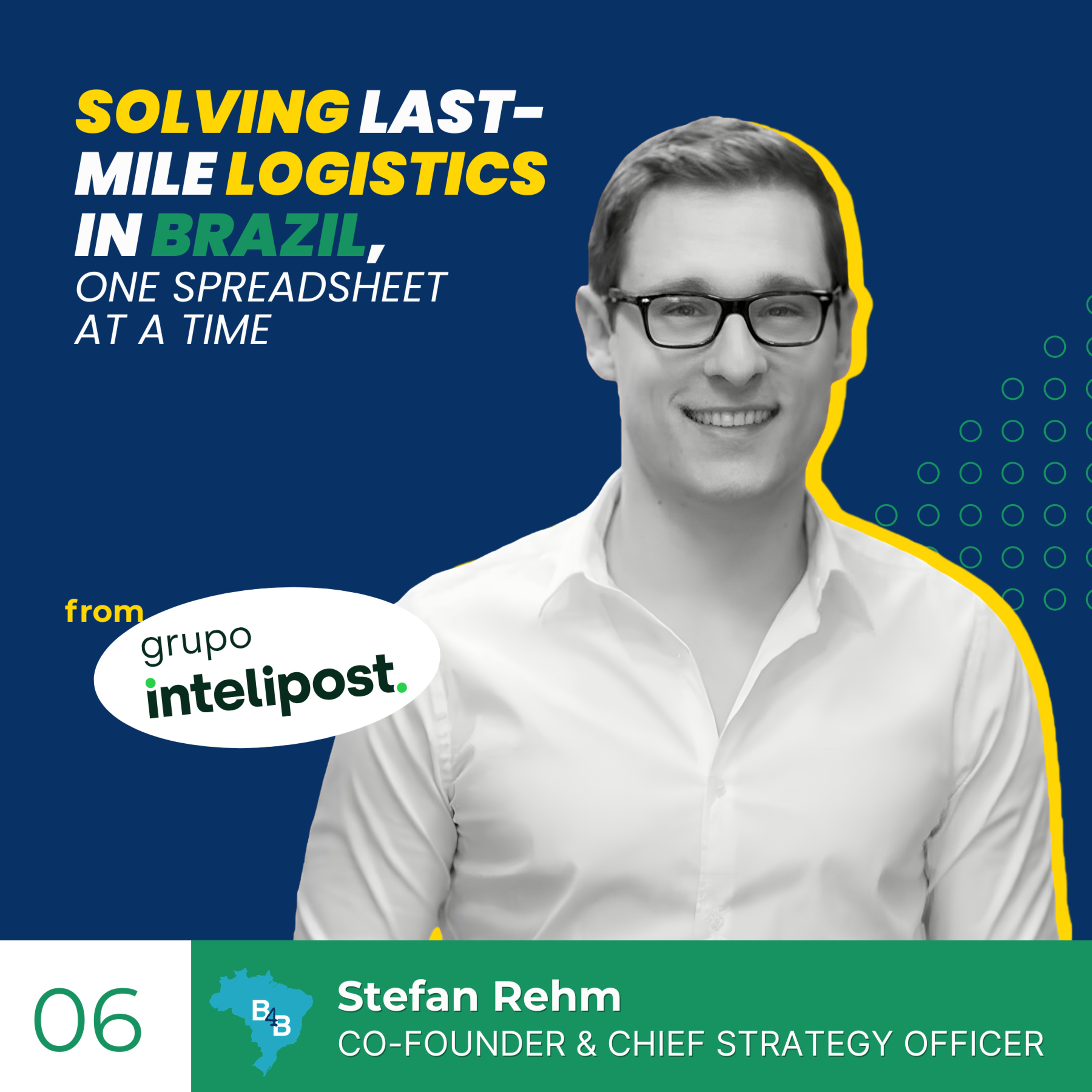
Solving Last-Mile Logistics in Brazil, One Spreadsheet at a Time

In this episode of Brazil (is not) for Beginners, Isaac Matzner sits down with Stefan Rehm, co-founder and CEO of Intelipost. German by birth, Brazilian by choice, Stefan arrived in São Paulo in 2012 with a one-year visa, no Portuguese, and a mandate to scout e-commerce investments for a Berlin-based VC fund. Fourteen years later, he's still here and running one of Brazil's oldest and most enduring tech startups. The story of Intelipost starts with a wine company, a warehouse, and a Friday night Excel spreadsheet. Embedded at Evino as his fund's forward-deployed logistics expert - a title he gave himself - Stefan discovered that nobody in Brazilian e-commerce could tell you, with any precision, the actual cost of shipping or where a package was during the delivery. Stefan built a workaround . The market came to him. And when his boss asked whether they should invest in logistics or just solve it themselves, they chose to invest in him to solve it. What followed was two years of product-building with three early customers - Evino, Amaro, and Petlove - before a competitive scramble between two emerging ecommerce giants handed Intelipost its first enterprise contract and its first real inflection point. The conversation covers the full arc: How Stefan ended up in Brazil, the early startup scene with its focus on ecommerce and the gap between German and Brazilian logistics in 2012, the foreign founder advantage in a market that rewards fresh eyes and forgives naivety, and what it actually means to build a company for 14 years when you thought you were signing up for two. Stefan also reflects on the laws that didn't "take off," the hallway conversations where deals are really made, and his advice for anyone thinking about starting something. Other key topics include: Why Brazil in 2012 looked like a once-in-a-generation bet - and how that wave felt from the inside The foreign founder advantage: how arriving unbiased, and being forgiven for not knowing the rules, created real opportunity A logistics 101 - from Roman generals to Correios, and why e-commerce changed everything The two problems Intelipost was built to solve: 55% cart abandonment and 70% of customer complaints about tracking How a Friday night Excel spreadsheet became a company - and why the market came looking for the spreadsheet Building with early customers iteratively: Evino, Amaro, Petlove, and what signing a contract before you have a product actually means The impact and challenges of success across enterprise breakthroughs and rising customer expectations How the pandemic took logistics strategy from cost center to strategic boardroom agenda item The law that didn't take off - and what that story reveals about doing business in Brazil The cafezinho, the hallway, and why the real decisions in Brazilian business happen between the meeting and the elevator Advice for founders: start with a problem you've felt, not a sector you've researched And lots more!

June 4, 2026Episode 51 hr 8 min

Guilherme Hannud on Finding Empathy and Freedom in the Art of International Trade

In this episode of Brazil (is not) for Beginners , Isaac sits down with Guilherme Hannud, international trade veteran, serial entrepreneur, and author — a man who has spent 55 years representing Brazilian businesses across more than a dozen countries and helping foreign companies find their footing in Brazil. Guilherme’s story starts early: washing cars at 12, raising 27 caged birds in a São Paulo apartment, and then landing as an exchange student in a Norwegian farming community of 633 people in North Dakota — an experience that would shape everything that followed. By the early 1970s, he was in West Africa with a list of 100 products from a delegation of African businessmen he’d met at a dinner by chance. Instead of selling them the products, he asked a different question: why not help build the industries to make them locally? That instinct — rooted in what he calls freedom over dependency — became the philosophy behind a career that took him through Senegal, Nigeria, Ivory Coast, and beyond, representing Brazilian manufacturers at a moment when Brazil was just beginning to discover its own industrial identity. The conversation moves between decades and continents, but returns again and again to the same ideas: that lasting business relationships are built on honesty and exceeding expectations, that trade is really about bringing different civilizations into contact, and that Brazil’s greatest untapped resource is the 40 million people still outside its formal economy. Guilherme also shares the story of the Life Recycling Association he co-founded 23 years ago — a model that turned social inclusion and waste recovery into a profitable enterprise, without subsidies. Other key topics include: Brazil's industrialization in the 1960s and '70s — and why the shift from exporting coffee to manufacturing changed everything How a chance dinner with an African trade mission in 1972 launched a career in West Africa Why building industries in partner countries creates more durable business than simply selling products The cultural distances that make international trade harder — and more rewarding — than domestic business What Brazilian companies need to understand before going abroad, and what foreign companies miss about Brazil Why Brazil is a medium and long-term strategic partner regardless of short-term political or economic turbulence The Life Recycling Association and turning social inclusion into a sustainable business model And lots more…

May 7, 2026Episode 41 hr 14 min

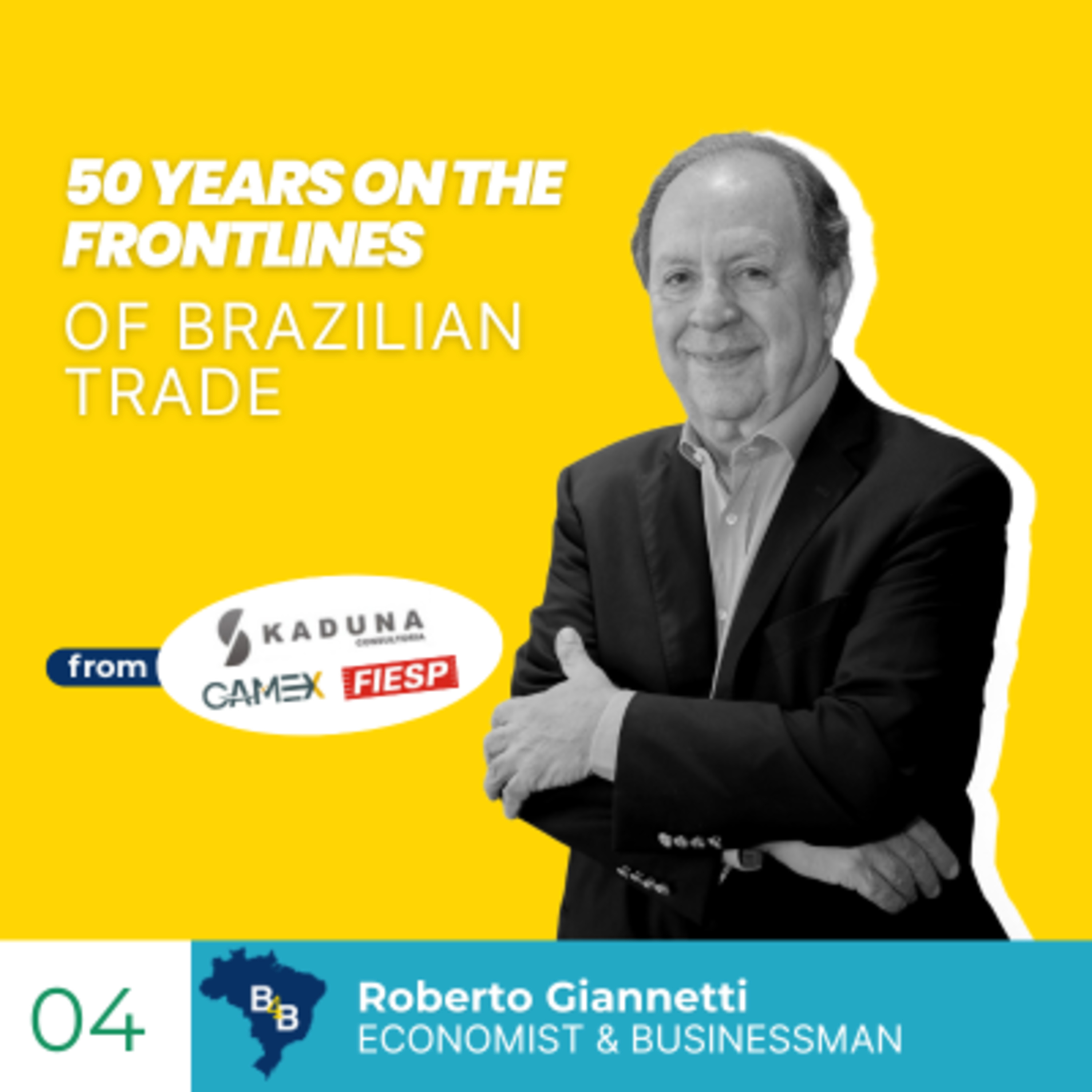
50 Years on the Front Lines of Brazilian Trade with Roberto Giannetti

In this episode of Brazil (is not) for Beginners, Isaac Matzner sits down with Roberto Giannetti da Fonseca, economist, trade diplomat, and one of the most seasoned voices in Brazilian international trade. With a career spanning half a century — across both government and the private sector — Roberto offers a rare firsthand account of how Brazil's economic relationship with the world has evolved, and the forces that will shape it going forward. Roberto graduated as an economist from USP just as the first oil shock hit the world economy, and found himself on what he calls a "trade battlefield" — a generation of Brazilians called upon to build a trade surplus and keep the country solvent. What followed was 50 years on the front lines: co-founding Cotia Trading with his best friend and growing it from zero into Brazil's second-largest exporter by 1985, just behind Vale. From airlifting chilled beef to Nigeria and building Guaraná bottling plants to compete with Coca-Cola, to selling Brazilian steel to a pre-industrial China, Roberto's early career reads like an adventure in global commerce. The episode moves through Brazil's most turbulent economic decades — the debt crisis of the 1980s, hyperinflation, the Collor Plan, and the Plano Real — with Roberto as both a witness and an architect of policy. He eventually joined the FHC government as head of CAMEX, Brazil's foreign trade policy body, where he created APEX, championed floating exchange rates before they were popular, and used export taxes on raw leather to force-build a domestic shoe industry. The conversation closes with Roberto's vision for Brazil's role in the 21st century: food superpower, biodiversity guardian, and emerging energy giant — and the infrastructure gaps that still stand in the way. Other key topics include: How the 1973 oil shock turned exporting into a patriotic mission for Roberto's generation Building Cotia Trading from zero into Brazil's second-largest exporter in under a decade The Nigeria chapter: airlifting beef, building 79 cold stores, and launching Guaraná to beat Coca-Cola Selling Brazilian steel to China in 1985 — when Beijing still ran on bicycles Why hyperinflation quietly destroyed Brazilian export competitiveness from 1987 onward The debt crisis, the moratorium of 1987, and Roberto's case to European ambassadors in Geneva The Collor Plan, the Plano Real, and the three pillars that finally stabilized the economy How Roberto went from loudest outside critic of FHC's exchange rate policy to head of CAMEX Creating APEX and using an export tax on raw leather to build Brazil's shoe industry The case for open economies — and why protectionism makes industries lazy Brazil's three missions for the 21st century: food superpower, biodiversity guardian, energy giant Why cultural fluency — not just market knowledge — is non-negotiable for anyone doing business in Brazil And lots more!

April 2, 2026Episode 31 hr 11 min

Taking Calculated Risks and Building with Purpose with Tsai Chi-Yu

In this episode of Brazil (is not) for Beginners, Isaac Matzner sits down with Tsai Chi-yu, Founder and CEO of Stay, to discuss his entrepreneurial journey, the lessons he learned working on scaleups in the early Brazilian tech ecosystem and, and why he is dedicated to building with meaning.Taiwanese by birth and Brazilian by heart, Tsai's trajectory goes from banking in the US and France to entering the early tech ecosystem in Brazil. He shares lessons from the early days of scaling operations at Uber Brazil and recounts his experience as part of the team orchestrating 99's impressive turnaround from single digits to nearly 40% market share. Tsai shares key insights gained at each stage: from understanding market dynamics and the demands of high-stakes operations, to his focus on hiring for drive and his view on taking calculated risks.He also delves into the hard-won lessons from past ventures, notably the 2022 shutdown of Hash despite the significant capital it raised, and the importance of resilience and strategic thinking when innovating in Brazil. The conversation highlights how these experiences ultimately led him to focus on Brazil's private pension system with Stay. Driven by a mission to address the country's demographic shifts and an unsustainable system dominated by legacy providers, Tsai emphasizes how his continuous search for big problems and meaningful impact drives his approach to building and running Stay.Other key topics include:- Growing up Taiwanese in Brazil — and finding freedom in being multi-cultural- What Uber and 99 taught him about talent density, ambition, and risk-taking culture- One-way vs. two-way doors — and why most people are more conservative than they need to be- His experience at Hash and what the macro environment of 2022 exposed about cash-intensive business models- Brazil's demographic shift and the structural crisis facing the public pension system (INSS)- The opportunity Stay is pursuing around private pensions - less than 10% of Brazilians have private pensions and five big banks dominate 90% of that market- Building a direct, high-performance culture that blends Brazilian warmth with international efficiency- And lots more!

March 5, 2026Episode 21 hr 14 min

Uncorking Brazilian Wine and Its Place in the Global Wine World

In this episode of Brazil (is not) for Beginners , host Isaac Matzner sits down with Alykhan Kareem, co-founder and former CEO of Sonoma Market, Latin America's leading premium wine marketplace, for a deep dive into Brazilian wine and the Brazilian Wine industry. While Argentina and Chile dominate South American wine discussions, Alykhan reveals how Brazil—with 150 years of winemaking history rooted in its history of Italian immigration—is quietly producing world-class wines. Isaac and Alykhan enjoy six carefully selected bottles, while they talk about Brazil’s unique wine story—from sparkling wines that compete with champagne to Italian grape varietals that went extinct in their homeland but flourish in southern Brazil. He explains how the country’s distinct wine regions are producing everything from delicate Pinot Noirs to bold Merlots that hold their own against global competition. Beyond the tasting, Alykhan unpacks the economic realities shaping Brazilian wine, and shares colorful stories from the trenches like discovering exceptional producers hidden in the forests of Serra Gaúcha. Beyond the tasting, Alykhan unpacks the economic realities shaping Brazilian wine, and shares colorful stories from the trenches like discovering exceptional producers hidden in the forests of Serra Gaúcha. Other key topics include: How 19th-century Italian immigration planted the seeds of Brazil’s wine industry Brazil’s emergence as a sparkling wine powerhouse The natural wine movement and Eduardo Zenker’s controversial story How Brazilian terroirs differ from neighboring Chile and Argentina The impact of taxation, import costs, and the “custo Brasil” on wine production The elegance and challenges of doing business in Brazil’s wine industry And lots more…

February 5, 2026Episode 132 min

Beyond Big Banks: How Sicoob’s Cooperative Model is Helping to Shape the Future of Financial Access in Brazil

Welcome to the new season of Brazil (is not) for Beginners ! To kick things off, host Isaac Matzner sits down with Louize Oliveira, Coordinator of Sustainability at Sicoob, one of Brazil’s largest banking cooperatives. While Brazil has historically been dominated by big-banks, Louize explains how Sicoob, which serves over 9 million members across 2,400 cities – including 450 communities where traditional banks simply don't exist – together with other cooperatives, are charting a different course. She shares the largely unknown history of cooperative banking in Brazil, from its origins in Brazil’s 19th-century colonies to Sicoob's powerful "phygital" model that blends local presence with digital solutions. Louize further delves into Sicoob's innovative approach to financial education, particularly how identifying "teachable moments" can transform financial literacy, reduce credit risk, and build customer loyalty. This conversation reveals how understanding local needs, fostering community, and embracing a sustainable growth mindset are not just good principles but crucial competitive advantages in Brazil's unique market. Other key topics include: The fundamental differences between cooperative banking and traditional banks. Sicoob's growth and its impact on financial inclusion throughout Brazil. The historical roots and evolution of the cooperative banking movement in Brazil. The critical role of financial education and literacy in Brazil's post-pandemic economic landscape. How "teachable moments" are utilized to increase financial understanding and reduce debt. Sicoob’s "phygital" model: leveraging both physical branches and digital tools for broader reach. Navigating the complexities and vast opportunities within Brazil's financial sector. And lots more...

December 11, 2025Episode 2032 min

Season 3 Recap

In this special Season 3 recap of Brazil (is not) for Beginners , we look back on 19 episodes featuring founders, executives, investors, and creators working across Brazil’s most dynamic sectors. Through extended excerpts and fresh reflections, this recap highlights the themes that emerged most clearly in 2025: complexity, adaptability, creativity, and the deep importance of relationships. Across conversations about fraud prevention, beer innovation, agroforestry, search funds, insurance, pet care, governance, culture, entrepreneurship, and many more topics, a picture emerges of a country that is challenging, sometimes unpredictable, but endlessly rewarding for those who choose to build and work here. Guests this season showed how Brazilian business is shaped not just by regulation and bureaucracy, but by human behavior, local rhythms, community connections, and cultural fluency. This episode revisits some of the season’s most powerful moments, including reflections on trust, social mobility, uncertainty, innovation, purpose, and the small expressions that reveal how Brazilians think, act, and relate. From micro-entrepreneurs to CEOs, early-stage founders to corporate leaders, everyone faced the same reality: Brazil demands adaptability — but rewards those who commit.

November 27, 2025Episode 191 hr 5 min

Inside Angel Investing with Lucas Lima from LASP Capital

In this episode of Brazil (is not) for Beginners, Isaac Matzner sits down with Lucas Lima, partner at LASP Capital and experienced angel investor, to explore the many facets of investing in new entrepreneurs in Brazil. Lucas explains how the early-stage investment process works, from identifying promising opportunities and evaluating potential businesses to understanding founder motivations and deciding when and how to get involved. The conversation also delves into Lucas’s own experience as an entrepreneur, including the story of his company, Men’s Market. He reflects on the lessons he learned from founding, running, and eventually selling the business, and how those experiences inform the way he supports and mentors the companies he invests in today. Other topics include: Identifying a market opportunities and understanding product market fit as well as capital dynamics The challenges and learnings that come with building a startup The process of evaluating startups and spotting green and red flags Challenges faced by new founders in Brazil Building trust and managing relationships between founders and investors Advice for new investors and mistakes to avoid Understanding the Brazilian startup ecosystem And lots more…

November 13, 2025Episode 1849 min

Corporate Governance in Practice with Alexandre D’Ambrosio

In this episode of Brazil (is not) for Beginners, Isaac Matzner hosts Alexandre D’Ambrosio, a lawyer and former executive at major corporations such as Votorantim, Santander and Vale. Together, they explore the nuances of corporate governance and the bicultural perspective of business that Alexandre brings from his years living and working in both the United States and Brazil. Throughout the conversation, Alexandre reflects on the processes of developing professionalization and strong corporate governance at large companies while navigating the cultural and structural realities of the Brazilian corporate environment. He and Isaac also discuss board relationships, change management and crisis management inside large organizations and what it takes to do business in Brazil (as a local and as a foreigner), offering an insider’s look at the challenges and opportunities of operating or working in Brazil. Other topics include: The process of privatizing Brazilian companies The important role of Boards in supporting strong corporate governance Lessons from the Vale tragedies in Brumadinho and Mariana Shifting the company’s leadership perspective Rebuilding stakeholder trust after company crises Adapting to the Brazilian corporate style Bringing executives and employees together toward a common goal And lots more…

Is this your show?

Claim this listing to keep it up to date, reach guests who want to pitch you, and manage bookings with Guestify.

Claim this listing

More Business podcasts