Find partners
Connecting the Dots: Senior Living Success with Matt Reiners

Connecting the Dots: Senior Living Success with Matt Reiners

Hosted by Connecting the Dots

BusinessEntrepreneurshipInterviews guests

Episodes

198

Latest episode

Aug 2026

Language

EN

About the show

This is Connecting the Dots: Senior Living Successwith Matt Reiners, Girl Dad, Husband, 2x Tech Co-Founder, and Senior Living Enthusiast where we dive right into what drives the senior living industry. Matt interviews thought leaders from all parts of the industry as we cover everything from resident & staff satisfaction to innovative technology, community culture, to finance & operations. If you're in the senior living industry, it's safe to say this podcast will have something for you.

Listen to episodes

60 recent
August 18, 202636 min

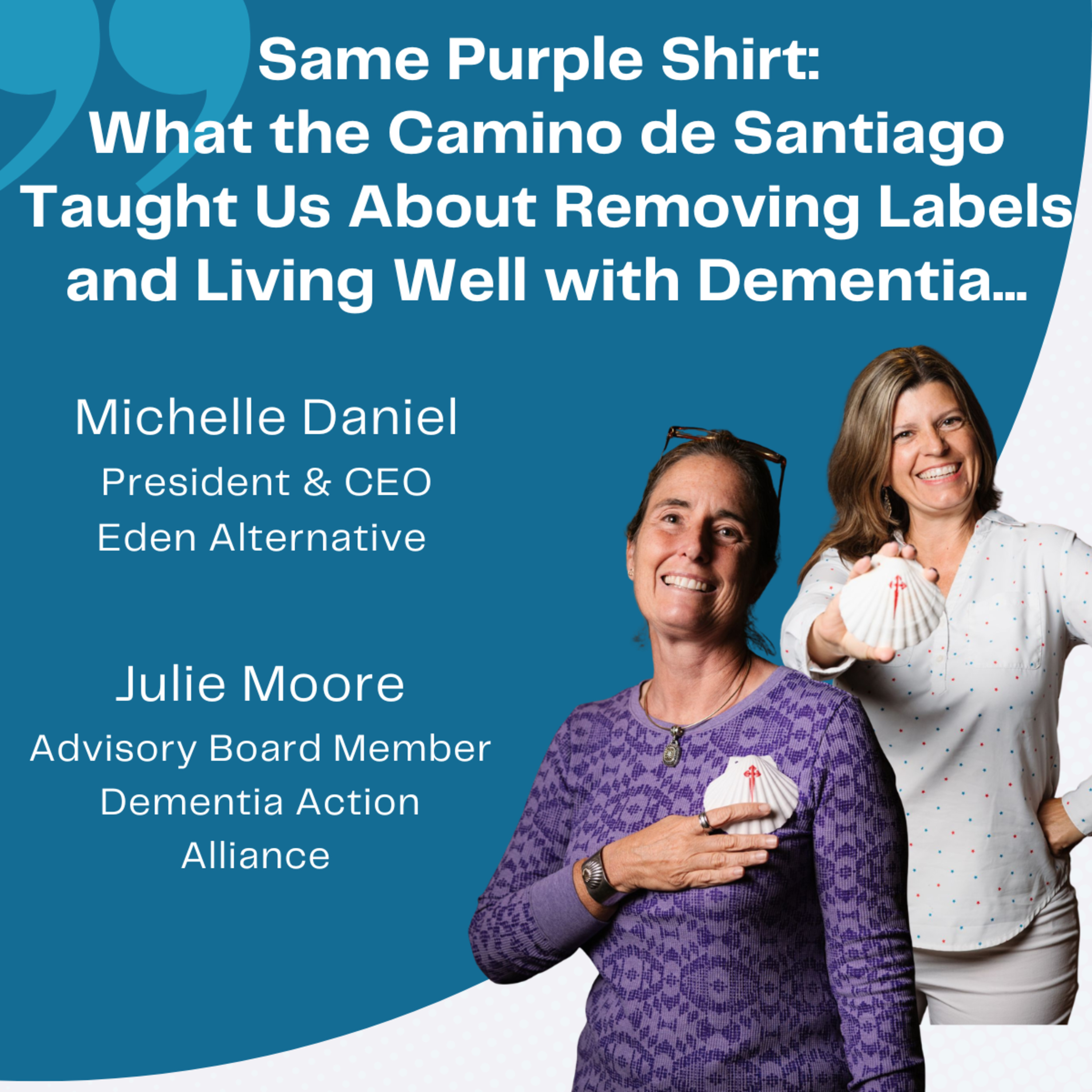
What the Camino de Santiago Taught Us About Removing Labels and Living Well with Dementia with Michelle Daniel - CEO at The Eden Alternative & Julie Moore - Advisory Board Member at DAA

What happens when researchers, physicians, care partners, and people living with dementia all walk the same road — in the same purple shirt, with no labels? In June 2026, Michelle Daniel and Julie Moore joined Walking the Talk for Dementia , a global immersive initiative that pairs a four-day, 40-kilometer walk along the Camino de Santiago in Spain with a two-day symposium, alongside 96 people from 35 countries. In this conversation, they bring those lessons home. Michelle has spent 31 years in eldercare and leads The Eden Alternative. Julie has been a care partner for four parents through Alzheimer's and other dementias — and three years ago, was diagnosed with early-onset dementia herself. Together they unpack what it means to design environments that remove barriers instead of asking people to adapt, why the "tragedy narrative" does more damage than the diagnosis, and how well-being — not happiness — makes room for joy and sorrow to sit side by side. It's a conversation about labels, listening, and the difference between being in charge of someone and care partnering with them. Resources Mentioned The Eden Alternative — www.edenalt.org Dementia Action Alliance — www.daanow.org Walking the Talk for Dementia (founder: Fernando Perez) — www.walkingfordementia.org Dementia Resources — dementia-resources.com Creating Moments of Joy by Jolene Brackey Guest Bios Michelle Daniel — President & CEO, The Eden Alternative, Inc. Michelle Daniel is the President and CEO of The Eden Alternative, an organization she has been part of since 2000, when she first encountered its work as a graduate student. Her calling found her earlier than that — in a high school social justice class in the Washington, D.C. area, where a teacher read her journal entries about a great aunt in a New Orleans nursing home and told her she'd found her life's work in advocacy for older adults. Thirty-one years later, Michelle has served as an administrator and a family care partner, and now leads an organization dedicated to person-directed care and to changing how our culture sees elders and people living with brain change. Learn more at www.edenalt.org . Julie Moore is an advisory board member of the Dementia Action Alliance, an outreach mission of The Eden Alternative. A lifelong learner with ten associate degrees and a bachelor's degree, Julie spent her career supporting people with physical and developmental disabilities, work that shaped her understanding of accommodation, advocacy, and the limiting assumptions that come attached to a diagnosis. She served as a care partner for both of her parents and both of her parents-in-law as they lived with Alzheimer's and other dementias. Three years ago, Julie was diagnosed with early-onset dementia herself. Today she is an advocate at the community and state level, a research participant, a runner and cyclist, and — as of June 2026 — a Camino de Santiago pilgrim. Learn more at www.daanow.org . Julie Moore — Advisory Board Member, Dementia Action Alliance

August 11, 202640 min

The Hidden Part B Money 9 of 10 Nursing Homes Give Away with Eric Hansen - Founder & CEO at Burst Billing

Eric Hansen is the founder and CEO of Burst Billing , a medical billing company on a mission to help nursing homes reclaim the Medicare Part B supply reimbursements they're owed and almost never collect. He got his start in senior care as a CNA before moving into portable x-ray and lab sales, where he saw firsthand how the system's "medicine by prophecy" approach — over-supplying to be safe — quietly drained facilities' already-thin margins. He walked away from a six-figure salary to bet that nine out of ten nursing homes were giving their profits away, and that he could win it back for them. In just two years, Burst Billing has grown to 17 states and recovered more than $1 million in reimbursements for its clients. Self-taught in AI with over 2,000 hours behind him, Eric has built a fleet of agents that keep his company lean — and he's refreshingly candid that his ultimate goal is to make Burst unnecessary by helping the entire industry collect these dollars on its own. Show Notes: 00:00 — Introduction 02:01 — Meet Eric Hansen: the bet that 9 of 10 nursing homes are giving profits away 03:44 — From CNA to founder: how Eric got into senior care and spotted "medicine by prophecy" 06:31 — Going all in: disproving the model, the weekend that changed everything, proving yourself wrong 10:13 — On the naysayers: "You'll stop caring what others think when you realize how little they do" 12:31 — What is a Part B supply? The reimbursements nursing homes leave on the table, and why "free" is expensive 16:21 — The math: 2% margins, $500/day beds, and profit "like filling five beds without filling a bed" 18:51 — The elephant in the room: why billing for more actually reduces Medicare fraud, waste, and abuse 23:18 — Growing Burst Billing: 17 states, $1M+ recovered, and a company designed to disappear 26:08 — Handing work to AI agents: the first job to delegate, goal-based AI, and the line never to cross 32:19 — Starting from zero with AI: the learning curve, Notebook LM, and MVP discipline 36:34 — AI in everyday life: relationship management, staying lean, fighting misinformation 39:39 — A parting thought: the 9.7M caregiver shortage and whether AI could bring people back home 41:38 — Closing thoughts

August 4, 202631 min

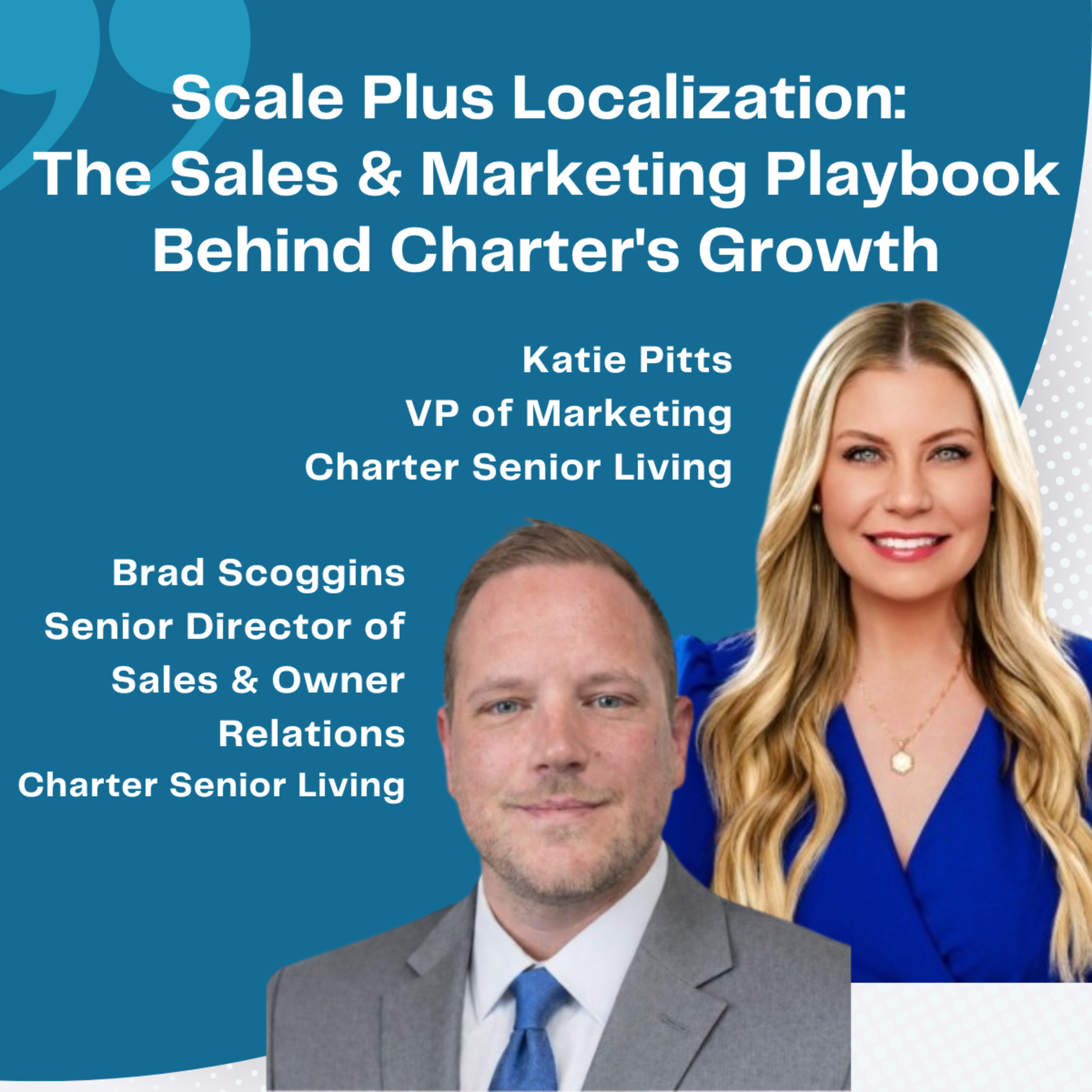
Scale Plus Localization: The Sales & Marketing Playbook Behind Charter's Growth with Katie Pitts, VP of Marketing & Brad Scoggins, Senior Director of Sales & Owner Relations of Charter Senior Living

In this episode, I sit down with two friends and two of my favorite people in the industry — Katie Pitts, VP of Marketing, and Brad Scoggins, Senior Director of Sales & Owner Relations, both at Charter Senior Living. Charter has grown from nine communities to more than 70 in just ten years, and we get into what that growth actually looks like on the ground: what happens when you take over a new community, how you win over an anxious staff, and how you scale without turning every community into a cookie-cutter version of the last. Katie shares her "scale plus localization" framework, Brad breaks down prospect-centered selling and why follow-up is the industry's most underrated skill, and we talk culture champions (not culture vampires) throughout. Key Takeaways Transitions are about people first. Before anything changes, the job is building trust fast and reassuring staff that exceptional care isn't going anywhere. Scale plus localization wins. Strong frameworks let you grow, but senior living is a local sell — the best programs leave room for local flavor. Hire for culture. Getting to 100 communities depends on culture champions who live the mission, not just strong résumés. Follow-up is the differentiator. Prospect-centered selling and genuine follow-up beat the old cookie-cutter numbers game every time. Brand beats budget. The best marketers ahead won't have the biggest ad spend — they'll build trust through transparency and education. Timestamps 02:59 — What actually happens when Charter takes over a new community 05:23 — The marketing side: keep the name or change it? 07:00 — Embracing the culture (and why Brad started as a dishwasher) 09:29 — From 9 to 70+ communities and the "scale plus localization" framework 11:24 — Thinking differently about sales at scale, and hiring culture champions 13:58 — What drew Katie back to the provider side 18:30 — People, processes, or tech: what's hardest to integrate 21:19 — Why follow-up is the industry's most underrated skill 23:13 — Reading the data on newly acquired communities 26:49 — What Charter intentionally says "no" to 29:20 — What most people underestimate about scaling Notable Quotes "We're a business of people taking care of people." — Brad Scoggins "No culture vampires — just culture champions." — Brad Scoggins "Senior living is a local sell." — Katie Pitts "Some of the best marketers in the years to come may not be the ones with the largest ad budgets, but the ones who build a brand on transparency, trust, and education." — Katie Pitts Mentioned in This Episode Charter Senior Living — https://www.charterseniorliving.com/ Katie Pitts on LinkedIn — https://www.linkedin.com/in/katie-pitts-2613015/ Brad Scoggins on LinkedIn — https://www.linkedin.com/in/brad-s-scoggins-16642b73/ Charter's mission: "Enhance the human spirit" About the Guests Katie Pitts is the VP of Marketing at Charter Senior Living, where she leads brand and marketing strategy across the organization's growing portfolio. With nearly two decades of experience spanning both the agency and provider sides of senior living, she champions a "scale plus localization" approach that balances company-wide systems with hyper-local, market-specific marketing. Brad Scoggins is the Senior Director of Sales & Owner Relations at Charter Senior Living. Having grown up in the industry — starting as a dishwasher before rising through the ranks over nearly six years at Charter — he brings a people-first, prospect-centered philosophy to sales, coaching teams to build trust through genuine connection and relentless follow-up.

July 28, 202643 min

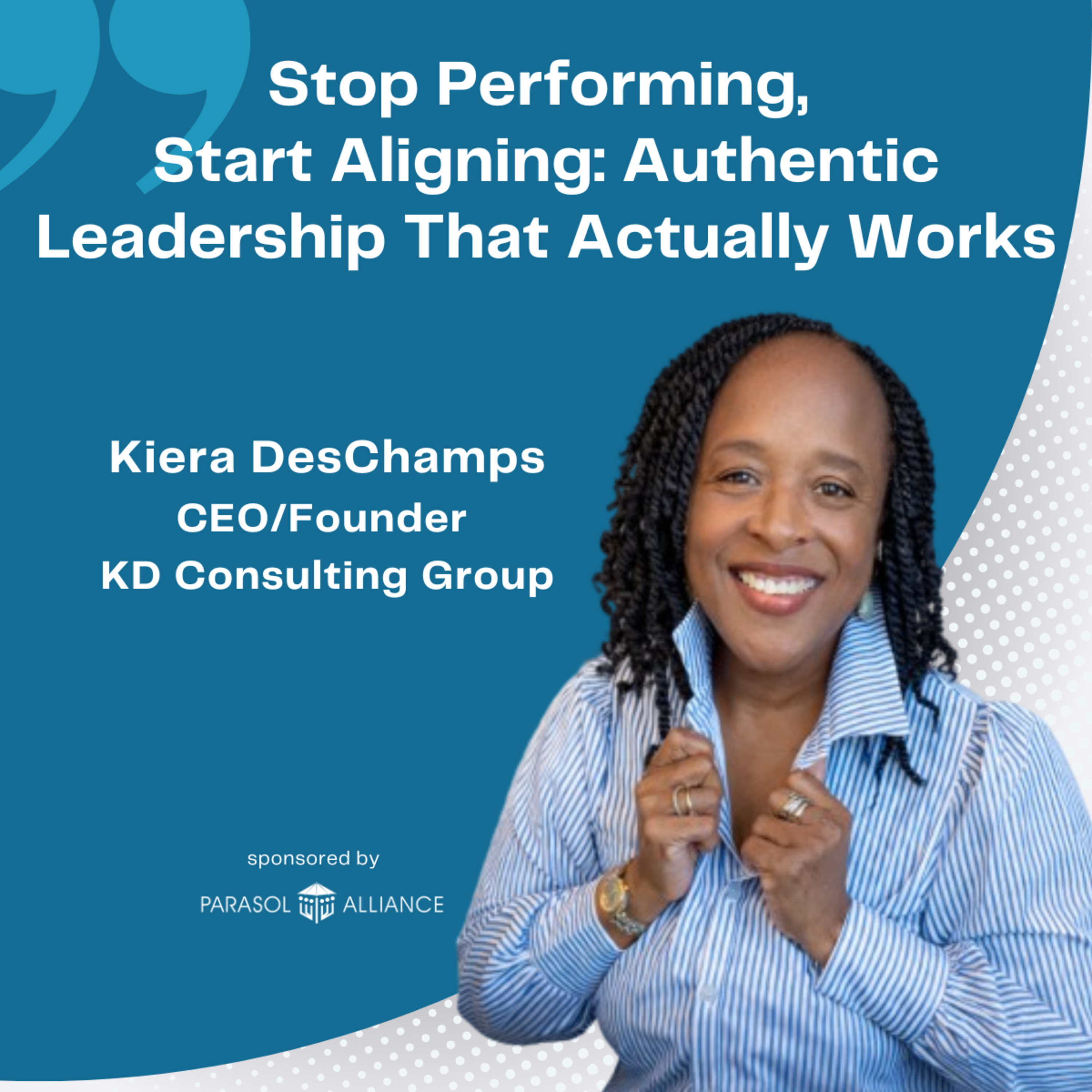
Stop Performing, Start Aligning: Authentic Leadership That Actually Works with Kiera DesChamps – CEO/Founder at KD Consulting Group

Show Notes What happens when leaders stop performing and start leading from alignment? In this episode, Matt sits down with Kiera DesChamps — CEO/Founder of KD Consulting Group, leadership strategist, keynote speaker, and author of You Are the Brand: Stop Performing. Start Aligning . Kiera shares how she went from "bossy" middle child to leadership strategist, why so many accomplished leaders feel burned out, and how misalignment quietly costs organizations their culture, retention, and results. Whether you lead in senior living, healthcare, nonprofits, or business, this conversation is a practical, honest look at what authentic leadership actually requires. Timestamps 02:00 – Welcome and introduction 04:40 – Kiera's story: the "bossy" middle child who was always a leader 06:27 – From counseling and higher ed to the senior living space 09:00 – "You Are the Brand": what it really means and why it matters now 13:00 – The trap of "fake it till you make it" and the cost of misalignment 16:03 – How to really know a company's culture (the smoke-break test) 16:52 – The rise of the empathetic leader: meeting people where they are 20:53 – Stop performing, start aligning: the daily signs you're leading for approval 27:33 – Why leaders who look successful on paper still feel burned out 32:04 – The LEADer™ Model explained: Listen, Engage, Adapt, Deliver, Execute Results 36:13 – The one challenge every industry shares: misalignment 40:07 – The one mindset shift every leader can make today 41:00 – What's next for KD Consulting Group: courses, keynotes, and the Brand Brunch 43:25 – Closing thoughts Guest Bio Kiera DesChamps is the CEO/Founder of KD Consulting Group, a leadership strategist, keynote speaker, executive coach, and author of You Are the Brand: Stop Performing. Start Aligning. Be Unapologetically You. Kiera helps leaders and organizations strengthen leadership, optimize sales performance, and create exceptional client experiences by aligning people, processes, and purpose. She is the creator of the LEADer™ Leadership Model, a practical framework that equips leaders to communicate with confidence, build trust, and execute results. Known for her authentic storytelling and practical leadership strategies, Kiera challenges leaders to stop leading for approval and start leading from alignment. Her work has helped organizations improve culture, strengthen teams, increase performance, and create meaningful, measurable results.

July 21, 202651 min

Why Innovation Starts With Culture, Not Technology with Therese Ten Brinke - Executive Director, Innovation and Impact at Eskaton

In this episode of Connecting the Dots , I sat down with my longtime friend Therese Ten Brinke, Executive Director of Innovation and Impact at Eskaton. Therese is a gerontologist, educator, and innovation leader, and she makes a case I keep coming back to: real innovation in senior living doesn't start with AI or robotics — it starts with people and culture. We got into why the words we choose shape how we age, how technology can empower rather than manage decline, and why the best ideas never come out of a conference room. Key Takeaways: Innovation starts with understanding people, not buying technology — the tech is just one tool among many. Language shapes culture: focusing on what people can't do breeds learned helplessness, while focusing on possibility builds empowerment. When care teams help shape a solution, resistance disappears — Eskaton saw adoption climb from 90% to 100% by listening first. Real innovation often isn't a tech problem at all; it's a workflow, communication, or culture problem that has to be solved first. Technology should expand what's still possible for older adults, not just compensate for decline. The best problems aren't solved in a conference room — they're solved by sitting with residents and care partners. Timestamps: [01:30] Welcome and introduction to Therese Ten Brinke [03:20] Therese's story: her Nana, a skilled nursing summer, and a volunteer trip to Costa Rica [06:00] Why the U.S. views aging differently — and her choice to change the narrative [08:05] Innovation begins by understanding people, not buying technology [10:40] Why the best tech partners ask about culture and workflow before pitching [12:30] "Innovation isn't something we buy — it's something we build together" [13:15] How language shapes culture: learned helplessness vs. possibility [15:30] The Sync Labs case study — listening first drove adoption to 100% [21:00] Piloting the right way and solving the real problem [26:25] Building a culture-first organization and the Eskaton Academy [30:50] "One voice": weaving culture through everything, not just compliance [33:05] Technology as a tool of empowerment, not decline [37:30] What older adults have taught her about technology [44:00] Why staff are often more resistant to technology than residents [45:50] What gives her optimism about aging — and her advice: start with your people [51:10] Closing thoughts Notable Quotes: "Innovation isn't something we buy — it's something we build together." "Technology shouldn't just compensate for what someone has lost. It should expand the possibilities of what remains possible." "The best problems aren't solved in a conference room — they're solved when we're talking to people." Resources & Mentions in This Episode: Eskaton — https://www.eskaton.org Therese Ten Brinke on LinkedIn — https://www.linkedin.com/in/therese-ten-brinke-b30128299/ Eskaton Academy; Sync Labs (AI documentation startup, University of Pennsylvania) Dr. Bill Thomas; Jennifer Carson; LiveWell (Connecticut)' About The Guest: Therese Ten Brinke is the Executive Director of Innovation and Impact at Eskaton, one of Northern California's largest nonprofit senior living organizations. A gerontologist, educator, and innovation leader, she has spent more than 14 years reimagining what aging can look like across AI, robotics, digital health, and person-directed care. Her work lives at the intersection of culture, technology, and human connection, guided by one conviction: innovation starts with people, not platforms. SEO Meta Description: Gerontologist Therese Ten Brinke of Eskaton on why innovation in senior living starts with culture and people — not technology — and how language shapes aging. Subscribe & Connect: Enjoyed this one? Follow Connecting the Dots wherever you get your podcasts, and share it with someone in senior living who'd appreciate it.

July 14, 202635 min

Nonprofit vs. For-Profit Senior Living Sales: What Actually Changes with Bri Stewart, VP of Sales Operations at Watercrest Senior Living Care Group

Episode Summary What really changes between nonprofit and for-profit senior living sales—and what stays exactly the same? In this episode of Connecting the Dots , I sit down with Bri Stewart, VP of Sales Operations at Watercrest Senior Living , to explore the unique challenges and opportunities of leading sales across both models. Drawing from her experience in hospitality, nonprofit Life Plan Communities (CCRCs), and for-profit senior living, Bri explains why great sales isn’t about pressure—it’s about trust, emotional intelligence, and putting people first. We discuss how sales cycles differ between CCRCs and rental communities, why hospitality is reshaping the resident experience, how technology can strengthen—not replace—relationships, and why leaders who focus on people ultimately see the strongest business results. Whether you’re a sales counselor, executive director, regional leader, or operator, this conversation offers practical insights for growing occupancy while staying true to your mission and culture. About Bri Stewart Bri Stewart is the Vice President of Sales Operations at Watercrest Senior Living. With leadership experience spanning hospitality, nonprofit Life Plan Communities, for-profit senior living, consulting, and private equity, Bri specializes in building high-performing sales cultures that scale revenue without sacrificing identity. Her leadership philosophy combines operational excellence with emotional intelligence, helping teams create meaningful relationships that drive both occupancy and resident satisfaction. Timestamps 1:32 – Bri’s journey from hospitality to senior living 6:20 – Lessons learned across nonprofit and for-profit organizations 9:00 – Why emotional intelligence matters more than sales scripts 11:25 – Listening as a competitive advantage 11:55 – Technology that helps sales teams stay present 15:02 – Nonprofit vs. for-profit sales: the biggest differences 18:55 – Building trust through financial conversations 19:37 – Becoming a trusted advisor, not just a salesperson 23:37 – “Hunter with a heart”: balancing empathy and accountability 28:36 – Hospitality, service recovery, and keeping your brand promise 31:23 – Technology adoption: why nonprofit organizations often move differently 35:41 – Scaling revenue without sacrificing your people-first culture 37:47 – Closing thoughts Key Takeaways The fundamentals of senior living sales are the same regardless of ownership model: build trust, listen well, and become a trusted advisor. Nonprofit CCRCs require longer sales cycles, greater financial planning conversations, and patient relationship-building. Rental communities often involve more urgency, requiring exceptional service delivery and rapid recovery when issues arise. Hospitality principles are becoming a competitive differentiator across senior living. Technology should remove administrative work so sales professionals can be more present with prospects—not replace the human connection. The best leaders focus on people first because sustainable financial results naturally follow.

June 30, 202627 min

Leading with Purpose: Building a Better Future for Aging Services with Rob Liebreich, CEO & President at Goodwin Living

What does it take to build an organization that puts people before competition? In this episode, I sit down with Rob Liebreich , CEO & President of Goodwin Living , to discuss how purpose-driven leadership is reshaping aging services. Rob shares the personal story that brought him into senior living, why he believes organizations should freely share their best ideas, and how Goodwin Living is tackling workforce shortages, expanding access to brain health, and investing deeply in its employees. From housing and healthcare to preventative wellness and community partnerships, this conversation explores what it means to lead with courage while preparing for the future of aging. Whether you’re a senior living executive, healthcare leader, or simply passionate about creating stronger communities, this episode offers practical leadership lessons with a refreshing dose of optimism. Guest Bio Rob Liebreich is the CEO & President of Goodwin Living, a faith-based nonprofit organization serving nearly 5,000 older adults across Northern Virginia and the Washington, D.C. region through senior living communities, healthcare services, and innovative wellness programs. Under Rob’s leadership, Goodwin Living has expanded its impact through initiatives focused on workforce development, preventative health, brain wellness, and community partnerships. He is a nationally recognized advocate for sharing best practices across aging services, believing that collaboration—not competition—creates better outcomes for older adults, caregivers, and communities. Show Notes with Timestamps 1:00 – Introduction to Rob Liebreich and Goodwin Living 3:00 – Rob’s journey from telecommunications to senior living 6:15 – The demographic shifts reshaping aging services over the next five years 9:05 – Why workforce shortages will define the future of care 10:10 – Expanding beyond senior living communities into preventative health 13:05 – Why Goodwin Living openly shares its best ideas with the industry 16:10 – Lessons learned from COVID and leading with generosity 17:20 – The origin of the Stronger Memory program and scaling innovation 19:00 – Building a culture that invests in people first 20:25 – Tuition assistance, citizenship support, student loan repayment, and employee development 24:00 – Preparing Goodwin Living—and the broader industry—for what’s next 27:15 – Final thoughts on courage, purpose, and the future of aging services

June 16, 202623 min

The AI-Enabled Senior Living Marketer: Strategy, Automation, and Action with Carsten Ellsworth - Director of Marketing at Avista Senior Living

In this episode of Connecting the Dots , I sit down with Carsten Ellsworth , Director of Marketing at Avista Senior Living , to explore what it really means to become an AI-enabled marketer. Carsten shares how he “accidentally” found his way into senior living through an internship that turned into a nine-year career, and how his passion for marketing has evolved alongside the rise of AI. Rather than treating AI as a shortcut or content machine, Carsten sees it as a tool for deeper thinking, better strategy, and building real systems that improve the way marketing teams operate. The conversation covers practical ways senior living marketers can use AI today, from campaign strategy and reporting to business frameworks, automation, app-building, and data analysis. Carsten also offers a grounded perspective for leaders who feel behind: the key is not mastering everything at once, but taking action and applying AI to the next real problem in front of you. Guest Bio: Carsten Ellsworth is the Director of Marketing at Avista Senior Living , where he leads marketing strategy across a diverse portfolio of senior living communities. An AI-enabled marketer, Carsten is passionate about using artificial intelligence to enhance strategic thinking, improve workflows, analyze data, and build practical systems that help teams move faster and make smarter decisions. His approach to AI is rooted in experimentation, action, and the belief that these tools can empower marketers to expand what they are capable of creating. Time Stamps 02:38 — Carsten’s path into senior living 03:45 — The moment AI became empowering 07:22 — Practical AI value in senior living marketing 08:25 — Building AI business frameworks 11:13 — Turning a spreadsheet into a real internal app 13:18 — Avoiding AI slop 15:37 — Balancing data, intuition, and AI insights 17:26 — First steps for marketers who feel behind 20:38 — Why AI-enabled people will have the advantage 22:08 — What separates marketers who thrive from those who struggle 22:54 — Final thoughts on empowerment and possibility Carsten Ellsworth, Director of Marketing at Avista Senior Living, joins Matt Reiners to discuss how AI-enabled marketers can use strategy, automation, data, and action to build real marketing systems in senior living.

June 9, 202630 min

What’s the Yap? with Rachel Keller - ChatGPT, Claude, or Copilot? How to Choose the Right AI for the Job

In this episode of What’s the Yap? , I welcome back Rachel Keller back to the senior living industry and dives into one of the most common questions surrounding AI today: Which AI tool should you actually be using? Rachel shares her experience using ChatGPT, Claude, and other AI tools in both her personal and professional life, discussing where each platform excels and how professionals can think more strategically about AI adoption. The conversation explores practical use cases, productivity hacks, AI-powered caregiving applications, and why emotional intelligence may become even more valuable as artificial intelligence continues to advance. Whether you’re just getting started with AI or looking to deepen your usage, this episode offers practical advice on choosing the right tools while staying focused on the uniquely human skills that technology can’t replace. Guest Bio Rachel Keller is a senior living leader known for her passion for innovation, technology adoption, and operational excellence. After spending time in the dental industry, Rachel has returned to senior living, bringing fresh perspectives on AI, workforce efficiency, caregiver support, and the importance of human connection in an increasingly digital world. Throughout her career, she has been an advocate for leveraging technology to improve experiences for both employees and residents while maintaining a strong focus on relationships and emotional intelligence. TL;DR: Rachel Keller joins Matt Reiners to discuss ChatGPT, Claude, Copilot, and the future of AI in senior living. Learn how to choose the right AI tool, improve productivity, and develop the human skills that matter most in an AI-driven world.

June 2, 202628 min

The Real Data Story Behind Senior Living Occupancy in 2026 with Maggie Seybold, VP of Customer Insights at WelcomeHome

Senior living occupancy is climbing, but the headline numbers only tell part of the story. In this episode, I sit down with Maggie Seybold , Vice President of Customer Insights at WelcomeHome, to explore what the latest data reveals about occupancy, sales performance, and resident retention across thousands of senior living communities. Drawing from WelcomeHome’s extensive benchmark data, Maggie explains why average occupancy figures can be misleading, how top-performing operators are generating stronger results with fewer leads, and where many communities are losing prospects in the sales process. The conversation also examines the growing influence of AI on senior living search behavior, the importance of post-tour engagement, and why operators should focus just as much on length of stay as they do on move-ins. Maggie shares practical insights on the metrics that matter most, the strategies high-growth communities are using to increase occupancy, and what operators should be doing now to prepare for the next generation of senior living consumers. WelcomeHome Data Report Link. What does senior living occupancy really look like in 2026? Maggie Seybold of WelcomeHome shares data-backed insights on occupancy trends, sales performance, AI-driven search behavior, resident retention, and what separates top-performing communities from the rest. Episode Timestamps 2:00 – Introduction to Maggie Seybold and WelcomeHome 3:20 – The real story behind today’s occupancy numbers 5:20 – Why occupancy averages don’t tell the whole story 6:00 – The KPIs that actually matter in senior living sales 8:15 – The industry’s biggest missed opportunity: post-tour follow-up 11:00 – Why sales teams struggle with closing 11:45 – How AI is changing senior living search behavior 15:20 – The risks and opportunities of AI-driven discovery 16:15 – What top-performing communities do differently 19:40 – Occupancy protection and the importance of length of stay 22:30 – The surprising relationship between sales cycle length and resident retention 24:30 – How high-growth communities accelerate occupancy gains 26:15 – Preparing for the next generation of senior living consumers 28:20 – Maggie’s outlook on the future of senior living sales and marketing 29:00 – Closing thoughts

Is this your show?

Claim this listing to keep it up to date, reach guests who want to pitch you, and manage bookings with Guestify.

Claim this listing

More Business podcasts