Find partners
Aftermarket Champions Podcast

Aftermarket Champions Podcast

Hosted by Entytle, Inc.

Episodes

26

Latest episode

Feb 2025

Language

EN

About the show

Aftermarket champions podcast brings to you the best & the brightest minds in the Industrial Aftermarket Leaders space. Hear their stories of transformation, growth, their success & challenges with people, process, technology and data. Whether a seasoned or up-and-coming Industrial Aftermarket leader, this podcast offers the blueprint to success for all. The podcast is hosted by Vivek Joshi, CEO & co-founder of Entytle as well as founder of the Aftermarket Champions community and will feature a host of top and middle Industrial Aftermarket leaders, Industry analysts, amongst others.

Listen to episodes

26 recent
February 5, 2025Episode 833 min

The Subscription Shift: How Servitization is Reshaping Manufacturing

In this episode of the Aftermarket Champions podcast, host Vivek Joshi interviews Christian Kowalkowski, a professor at Linköping University and director of the Center for Business Model Innovation. They discuss the significance of business model innovation, particularly in the context of servitization within the manufacturing sector. Kowalkowski shares insights on the challenges faced by manufacturers, the importance of cultural shifts, and the evolving expectations of customers. The conversation also touches on the marketing strategies necessary for successful subscription models and the future of business model innovation in various industries.Takeaways1. Business model innovation is crucial for sustained competitive advantage.2. Servitization allows manufacturers to create new revenue streams.3. Cultural shifts within organizations are essential for successful transformation.4. Customer expectations are evolving towards performance-based outcomes.5. The transition from CapEx to OpEx is reshaping business models.6. HR challenges can hinder the progress of servitization initiatives.7. Effective risk management is vital in subscription-based models.8. Different industries have varying receptiveness to subscription models.9. Marketing strategies must adapt to new business models and customer engagement.10. The future of business model innovation is promising, with many opportunities for growth.
January 22, 2025Episode 736 min

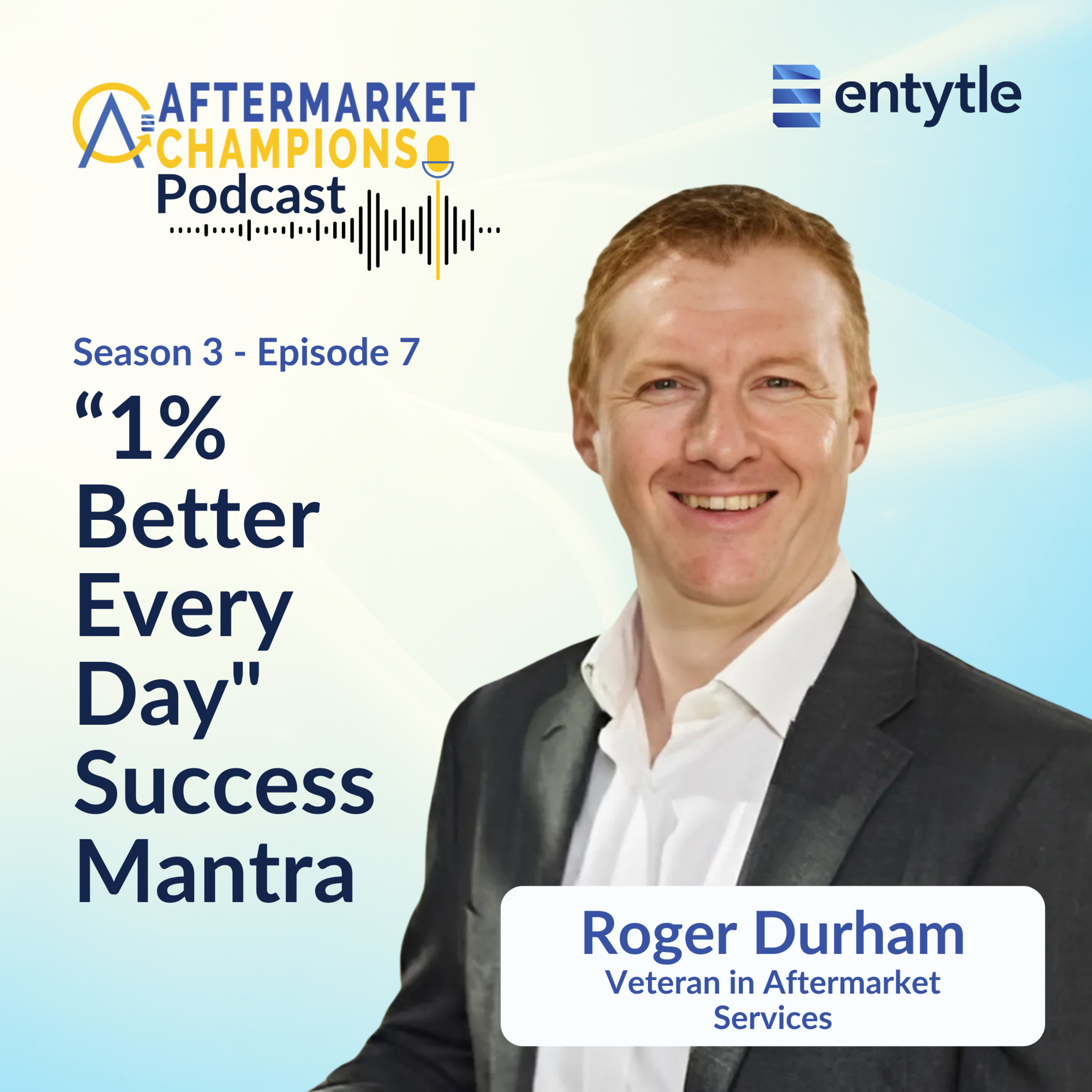
1% Better Every Day" Success Mantra

In this episode of the Aftermarket Champions podcast, host Vivek Joshi speaks with Roger Durham, a veteran in aftermarket services. They discuss Roger's journey from engineering to service leadership, the importance of transformation and continuous improvement in the aftermarket sector, and the challenges of managing complexity in service transactions. Roger emphasizes the significance of a customer-centric approach, the 1% improvement philosophy, and the balance between technology and human factors in achieving success. The conversation also touches on the realities of AI in the industry and the need for strategic investment in technology to drive growth. Takeaways: Roger fell into service by accident but found his passion. Transformation in aftermarket services is crucial for success. Continuous improvement is key to staying competitive. The 1% improvement philosophy can lead to significant gains. Balancing technology and customer needs is essential. Change management requires a focus on people and processes. Managing complexity in service transactions is challenging but necessary. Profit growth should be prioritized over volume growth. AI is a tool, not a solution; define the problem first. Investing in technology must align with customer solutions.

January 8, 2025Episode 639 min

Why a $30 Part Matters as Much as a $30,000 One?

In this episode of the Aftermarket Champions Podcast, host Vivek Joshi interviews Ryan Cook, a senior business unit manager at Franklin Electric. Ryan shares his extensive experience in the aftermarket services sector, discussing the importance of treating all parts equally, regardless of their price. He emphasizes a customer-centric approach, the significance of data-driven decision-making, and the need for dedicated teams in aftermarket operations. The conversation also touches on the complexities of managing aftermarket services, the role of packaging in customer experience, and the challenges posed by e-commerce. Ryan concludes by reflecting on the balance of luck and talent in achieving career success. Takeaways - A $30 part is just as important as a $30,000 part. - Customer-centric strategies are essential for success. - Data-driven decision-making enhances business arguments. - Dedicated teams are crucial for aftermarket success. - Packaging impacts customer perception and experience. - Complexity in aftermarket operations is a constant challenge. - E-commerce requires meticulous management of part data. - Tribal knowledge can lead to operational risks. - The ease of doing business is critical for customer satisfaction. - Building relationships is key to career advancement.

December 18, 2024Episode 538 min

The Service Leader's Guide to Technology Adoption

In this episode of the Aftermarket Champions podcast, Vivek Joshi interviews Mark Hessinger, a seasoned leader in aftermarket services. Mark shares his extensive career journey, highlighting his global experiences and transitions from software support to equipment manufacturing. He discusses the importance of understanding cultural differences in customer expectations and the critical role of technology investments in enhancing service operations. Mark emphasizes the need for a clear vision aligned with corporate goals and offers insights on managing technology implementation journeys effectively. He concludes with advice for leaders looking to adopt new technologies in their organizations. Takeaways: - Mark Hessinger has a rich background in aftermarket services. - He emphasizes the importance of continuous education in career progression. - Cultural differences significantly impact customer expectations and service delivery. - Investing in technology is crucial for improving service operations. - A clear vision aligned with corporate goals is essential for technology investments. - Managing scope creep is vital during technology implementation. - Bite-sized projects help demonstrate progress in long-term initiatives. - Team collaboration is key to successful technology adoption. - Understanding stakeholder priorities is critical for gaining support. - Learning from experiences and being open to feedback drives personal growth.

December 4, 2024Episode 435 min

Lessons in Service Leadership with Shari Litow

In this episode, Vivek Joshi interviews Shari Litow, the Director of Aftermarket and Services at AMF Bakery Systems. Shari shares her journey from the chemicals industry to capital equipment, discussing her role in enhancing customer experience and service innovations. She emphasizes the importance of building a digital experience, managing change effectively, and the challenges of finding and training talent in a rapidly evolving workforce. Shari also highlights the significance of operational excellence in driving growth and offers valuable lessons for new leaders in the industry.Takeaways:Shari Litow is the Director of Aftermarket and Services at AMF Bakery Systems.AMF focuses on capital equipment for the baking industry.Shari's role includes parts management, technical documentation, and customer service.Transitioning from chemicals to capital equipment involved significant learning.Customer experience is central to AMF's strategy.Building a digital experience is crucial for customer engagement.Change management requires involving employees in the process.The industry faces challenges in finding skilled labor.Operational excellence can drive growth in aftermarket services.Surrounding yourself with knowledgeable people is key to success.

November 20, 2024Episode 331 min

Sales gets the First Deal, Service wins the Rest

In this conversation, Vivek Joshi interviews Andrew Syzek from ATS Automation, exploring Andrew's journey from military service to a successful career in the service industry. They discuss the importance of customer experience, the dynamic relationship between sales and service, and the need for collaboration across functions. Andrew shares insights on becoming an aftermarket champion, the role of leadership in service, and the significance of service maturity and change management. The conversation emphasizes the necessity of storytelling in service delivery and the impact of service on business success. 00:00 - Introduction to Service and Career Paths 03:03 - The Journey into Service and Customer Experience 05:55 - The Importance of Customer Experience in Service 08:59 - Sales and Service: The Dynamic Relationship 11:58 - Collaboration Across Functions in Service 15:04 - Becoming an Aftermarket Champion 17:57 - The Role of Leadership in Service 20:49 - Service Maturity and Change Management 23:56 - Storytelling in Service Delivery Takeaways: Service can be a business as well. Sales sells the first one, service sells the rest. There's always room for growth in service. The importance of life cycle management is huge. You need champions for the aftermarket. Service experience has an outsized impact. You have to over-serve your customers at special moments. Change management is key to moving up the staircase. Collaboration across functions is essential for service success. Understanding customer needs is crucial for effective service.

November 6, 2024Episode 234 min

Beyond Products: Embracing Servitization in Manufacturing

In this conversation, Vivek Joshi interviews Meindert Flikkema, a professor of innovation strategies for services, discussing the evolution of service innovation, the transition from consulting to academia, and the challenges and opportunities in the field. They explore the shift towards servitization in manufacturing, the impact of digitalization, and the generational changes affecting service perceptions. The conversation also addresses labor shortages, barriers to large-scale digital servitization, and the characteristics that distinguish successful service innovation champions. Finally, they discuss future trends, particularly the role of sustainability and venture capital in shaping business models. Chapters 00:00 - Introduction to Service Innovation and Meindert Flikkema 02:58 - Transitioning from Consulting to Academia 05:52 - The Shift to Servitization in Manufacturing 09:00 - Challenges and Opportunities in Service Innovation 11:58 - The Role of Digitalization in Service Transformation 14:56 - Generational Changes and Their Impact on Services 18:03 - Navigating Labor Shortages and Skills Gaps 20:57 - Barriers to Large-Scale Digital Servitization 24:07 - Identifying Champions in Service Innovation 27:06 - Future Trends in Service Innovation and Sustainability Takeaways: - Service innovation emerged as a distinct field due to a lack of focus on services in traditional business models. - The shift to servitization is gaining momentum, driven by sustainability and digitalization. - Labor shortages are a significant challenge for service innovation in manufacturing. - Companies often struggle with the transition to service-oriented business models due to persistent misconceptions. - Digital servitization is becoming essential, yet many companies remain stuck in pilot phases. - Successful service innovation requires client involvement and commitment from both sides. - Maturity models are crucial for understanding the progression of service innovation. - Regulatory pressures can drive innovation more effectively than market potential alone. - Venture capitalists are increasingly favoring service-oriented business models. - The future of service innovation will be shaped by sustainability and technological advancements.

October 23, 2024Episode 140 min

From Operations to Strategy: The New Role of Service with Jan van Veen

In this episode of Aftermarket Champions, Vivek Joshi interviews Jan van Veen, CEO of More Momentum, discussing the evolving landscape of aftermarket services and strategies for B2B manufacturers. They explore the importance of customer-centric service innovation, the challenges faced by organizations in executing service strategies, and the need for patience and a long-term vision in transformation efforts. Jan emphasizes the significance of building domain expertise and learning from other industries to drive service success. Chapters 00:00 - Introduction to Aftermarket Strategy 02:51 - Jan's Journey in Services and Consultancy 05:57 - Understanding Strategy in the Context of Services 08:57 - The Importance of Customer-Centric Service Innovation 11:59 - Challenges in B2B Service Execution 14:57 - Transforming Service Organizations 17:58 - The Role of Technology in Service Strategy 21:03 - Building Domain Expertise for Service Success 24:04 - Networking and Learning from Other Industries 27:00 - The Need for Patience in Transformation 29:52 - Conclusion and Future Directions Takeaways Service is evolving from operational functions to strategic business lines. Digital capabilities are essential but not a strategy in themselves. Understanding customer needs is crucial for service innovation. B2B manufacturers must develop strategic and commercial capabilities in service. Transformation in service organizations requires time and patience. Networking and learning from other industries can provide valuable insights. Companies are increasingly recognizing service as a key pillar of corporate strategy. The journey of service transformation is gradual but impactful. Investing in domain expertise is vital for understanding customer applications. Successful service organizations are those that adapt to changing customer needs.

July 17, 2024Episode 737 min

Decoding Aftermarket Success: Strategies and Reflections with Chad Sloan

In this episode of the Aftermarket Champions Podcast, host Vivek Joshi interviews Chad Sloan (Director, Global CS&I Sales) from Axcelis Technologies, who emphasizes the importance of starting with customer challenges to develop effective aftermarket solutions. He highlights that understanding customer needs allows for the creation of standardized solutions, crucial for managing limited resources efficiently.Chad points out that OEMs have a unique advantage due to their comprehensive capabilities and global infrastructure, which can be leveraged to provide tailored solutions. Additionally, he stresses the need for having the right people to build trust and relationships with customers, which is essential for successful engagement and problem-solving.Chad also discusses the critical role of the sales force, advocating for the use of tools and automation to minimize administrative burdens and maximize customer interaction time. This approach ensures that salespeople can focus on developing relationships and understanding customer needs, rather than being bogged down by internal tasks.A significant challenge identified is the "silver tsunami," referring to the retiring of experienced workers and the loss of their valuable knowledge. Chad suggests that AI could be a solution to capture and retain this knowledge, but it must be implemented carefully to avoid security risks.Reflecting on his career, Chad notes that successful aftermarket service providers distinguish themselves through a deep understanding of their market, strong customer relationships, and meticulous attention to detail. Mastery of data and detailed knowledge builds credibility and trust with customers, which are crucial for long-term success.For those beginning their careers, Chad advises being curious, open to new opportunities, and willing to embrace uncomfortable challenges. He believes that while luck plays a role, sustained success is driven by hard work and making the most of opportunities.The conversation concludes with a reflection on the balance between luck and personal effort in achieving career success. Chad's journey illustrates that while initial breaks may come by chance, sustained success results from hard work, attention to detail, and maintaining strong customer relationships.

July 3, 2024Episode 634 min

Navigating Industrial Service Evolution: Insights from R.A. Jones Coesia

In this episode of the Aftermarket Champions Podcast, host Vivek Joshi interviews Paul Wolf (Director of Customer Service) from R.A. Jones, Coesia about his journey in the Customer service domain of the Industrial OEM industry. While talking about his journey, Paul passionately underscores RA Jones's commitment to a customer-centric approach, emphasizing the proactive understanding and anticipation of customer needs. This strategy not only fosters enduring client relationships but also elevates satisfaction and loyalty levels. Moving into training methodologies, Paul discusses the pivotal shift away from traditional classroom settings to interactive, video-based learning tools. This adaptation aligns with industry-wide digitalization trends, prioritizing swift information retrieval and efficient problem-solving. He addresses the challenges posed by a shifting workforce, particularly among younger generations who favor accessing information over retaining it. Paul highlights the critical role of knowledge management in transferring expertise from seasoned veterans to new hires, stressing the importance of capturing and standardizing knowledge effectively. Moreover, he emphasizes R.A. Jones Coesia's global approach to service, maintaining a delicate balance between standardized practices and localized adaptations to ensure consistent and effective support worldwide. Throughout, Paul underscores the significance of continuous customer feedback in refining service delivery, ensuring R.A. Jones Coesia remains agile and responsive to evolving customer needs and technological advancements in the industry.

Is this your show?

Claim this listing to keep it up to date, reach guests who want to pitch you, and manage bookings with Guestify.

Claim this listing

More Business podcasts