Find partners
Well-Led Schools

Well-Led Schools

Hosted by Adrienne Hornby

Episodes

82

Latest episode

Oct 2026

Language

EN

About the show

As the rates of professional stress and burnout increase for school leaders, teachers and staff, the solution lies in how we lead our schools and prioritise workplace wellbeing to become "Well-Led" Schools - those that lead with “wellbeing in mind.” Join experienced Wellbeing Consultant, Strategist, Speaker and School Leader Adrienne Hornby for a host of inspiring conversations with experts and forward thinkers. Covering all things teacher wellbeing, school leadership and culture building - you'll walk away with ideas and recommendations on ways to evolve your leadership, create a mentally healthy workplace and ultimately influence the lives and learning of our students.

Listen to episodes

60 recent
October 5, 2026Episode 141 hr 13 min

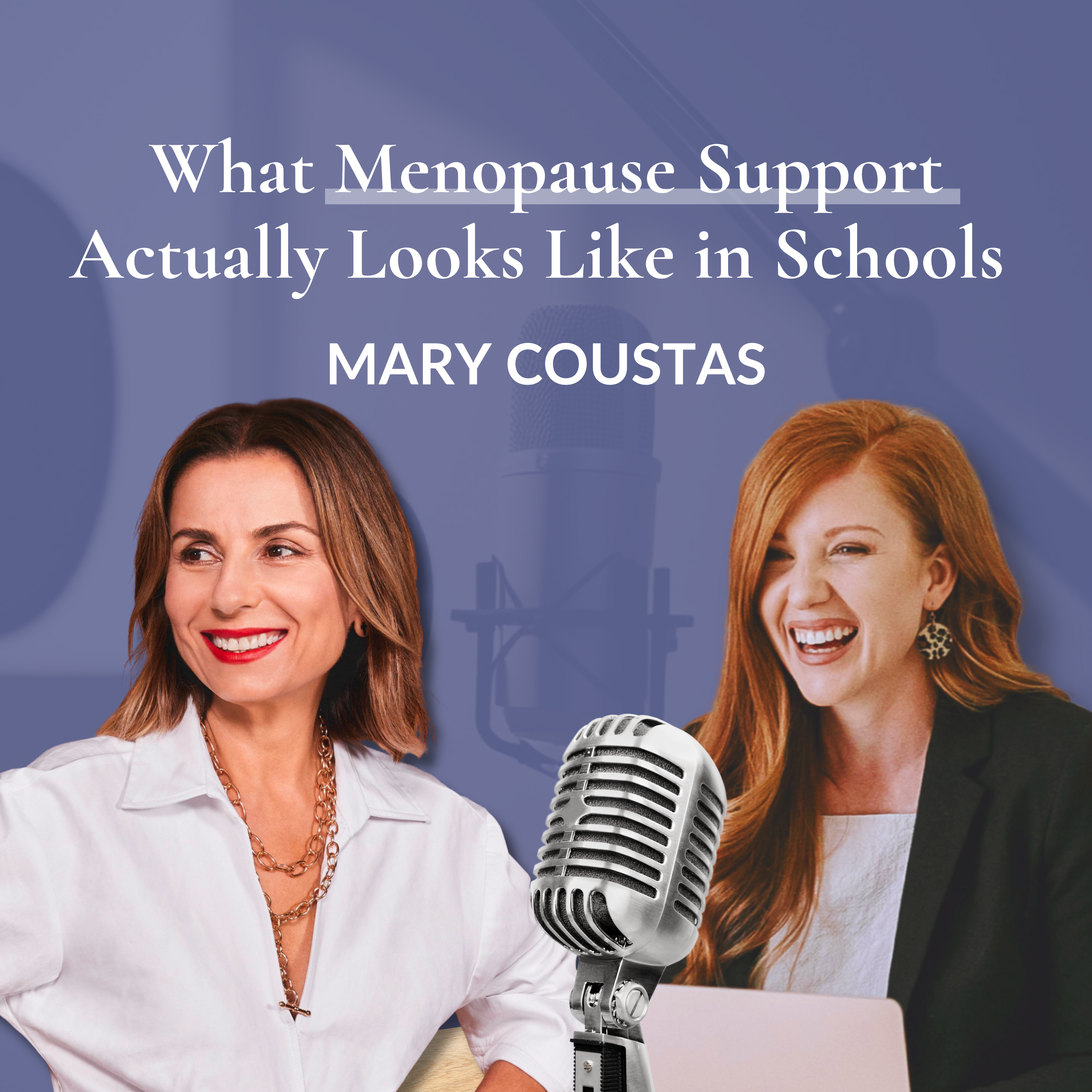
What Menopause Support Actually Looks Like in Schools with Mary Coustas

Women make up 72% of Australia's school workforce, and every one of them will navigate perimenopause and menopause. Many do so during peak leadership years, carrying symptoms easily mistaken for burnout. With one in two educators reporting burnout and fewer than half feeling encouraged to discuss health at work, this is a psychosocial safety issue, not just a health conversation. If you are a male leader or early career educator, do not skip this. Building sustainable, psychologically safe schools requires understanding what impacts nearly three-quarters of our colleagues. To open Term 4 and mark Menopause Awareness Month, I am joined by Mary Coustas. Best known for her iconic character Effie, Mary is also an acclaimed author and advocate. After a decade-long IVF journey, Mary met menopause immediately upon entering motherhood. It didn't just hit her; it king hit her. She wrote MaryPause to make sense of it, then co-founded UnPause, a digital health platform connecting women with menopause-literate doctors, now partnered with Teachers Health. In this episode, we explore: Mary's story navigating IVF, motherhood, and sudden menopause The three biological phases and when to pay attention Symptoms beyond hot flushes, from rage to imposter syndrome Why women are misdiagnosed with depression when depleted How burnout and perimenopause work in cahoots What genuine organisational support looks like in schools Streamlined clinical care via UnPause and Teachers Health About Mary Mary Coustas is an iconic Australian actor, writer, and comedian, celebrated for her Logie Award-winning character Effie, who debuted in Wogs Out of Work before headlining the television sitcom Acropolis Now. Alongside her extensive stage and screen career, Mary is an accomplished author. Her memoir, All I Know, documented her decade-long journey through 23 rounds of IVF, the loss of her daughter Stevie, and her path to motherhood. In 2025, Mary published MaryPause, transforming her experience into an open, national resource. That same year, she co-founded UnPause, a digital health platform that gives women direct access to specialised clinical care, symptom tracking, and ongoing midlife support. Mary continues to tour nationally, currently performing in her stage show Frigid to Feral, using comedy, candour, and lived experience to dismantle systemic stigmas. LINKS AND RESOURCES UnPause: Telehealth Menopause Care, Australia-wide: unpause.com.au/?srsltid=AU7gw4U4aYsznwkcQbC1DqoW2qCZr-cUvrYox_hO1QSRsKsJFI4lEpNz Book: MaryPause by Mary Coustas: unpause.com.au/marypause?srsltid=AU7gw4WF_tP9kOwEzuNzrM_F_cL3zqJFqF65ihU1yNQi-PE08aC3iNTD Connect with Mary Websites: www.maryandeffie.com unpause.com.au LinkedIn: www.linkedin.com/in/mary-coustas-43347938b/?isSelfProfile=false Instagram www.instagram.com/mary_coustas/ www.instagram.com/unpauseposse/ www.instagram.com/effiegoodthanks/ www.instagram.com/unleashed.show/ Connect with Adrienne: Website: adriennehornby.com.au LinkedIn: linkedin.com/in/adrienne-hornby-a4126a205 Staff Wellbeing Survey: adriennehornby.com.au/staff-survey Well-Led Schools Partnership Program: adriennehornby.com.au/school-partnerships
September 14, 2026Episode 1357 min

What 4,536 Australian Educators Told Us About School Staff Wellbeing

Only 57% of Australian school staff report that work positively affects their mental health, and 1 in 2 are currently experiencing burnout. When I sat down to write the Staff Wellbeing Across Australia report, I originally set out to produce a concise 10-page summary. One hundred and ten pages later, the data made one thing undeniably clear: we cannot keep treating systemic workplace conditions as individual coping failures. In this solo episode of the Well-Led Schools Podcast, I walk you through the key findings, surprising insights, and critical takeaways from our analysis of over 4,500 educators across ICSEA bands. We move beyond broad national averages to examine the actual psychosocial hazards driving the erosion of morale in our schools, and more importantly, what staff are actually asking for to fix it. In this episode, I share: Why a short summary turned into an extensive national breakdown and the specific numbers that led to the deep dive into the state of staff wellbeing in each setting How breaking data down by ICSEA bands reveals the true, nuanced reality of workplace stressors Why resilience and wellbeing workshops and training ranked at the bottom of staff requests, and what educators actually want instead An honest look at the demand, capacity, and leadership challenges in below average ICSEA secondary schools and specialist settings Why 67% morale and 77% positive culture in one specific setting proves that workplace conditions are changeable How moral injury and self-determination theory explain who is leaving the profession and why How to take radical responsibility, conduct your own staff assessment, and use this report to drive meaningful change LINKS AND RESOURCES Read the full report: https://mailchi.mp/adriennehornby/band-report-full Read the summary report: https://mailchi.mp/adriennehornby/band-report-summary Connect with me via: Website: adriennehornby.com.au LinkedIn: www.linkedin.com/in/adrienne-hornby-a4126a205/ Email: hello@adriennehornby.com.au School Partnerships: adriennehornby.com.au/school-partnerships/

September 1, 2026Episode 121 hr 24 min

Who Holds the Leaders? Principal Wellbeing and Sustainable Leadership with Elsie Clelland

Conditions in primary schools are more likely to be reported as positive according to our State of Staff Wellbeing in Australia report. Above-average ICSEA primary schools recorded the strongest results in the national dataset, with 67% of staff reporting high morale and 77% a positive culture. However, below-average ICSEA primary settings carry a very different load characterised by severe resourcing constraints, complex student behaviours and needs, and intense support demands. But across every primary band, we see a common pattern where a school’s culture and overall wellbeing inevitably rise and fall with the person leading it. This leaves us with a critical systemic gap that is rarely funded, timetabled, or surveyed: who is holding the leaders? This week I’m joined by Elsie Clelland, who spent more than thirty years in Western Australian education, including twenty as a principal across four primary schools and four very different regions. A Foundation principal of a brand-new school, WA Primary Principal of the Year, Harvard Fellow and former Executive Director, Elsie now works directly with school leaders through her consultancy, Flourishing Leadership, specialising in resilience first aid. Elsie candidly shares what those twenty years cost her, unpacking how high visibility came at the expense of strategy and long hours, the warning signs she rationalised away, how unhelpful coping strategies crept in when no support structures were holding her, and how the fear of judgement prevented her from asking for help. This conversation examines what it actually takes to build sustainable leadership practices while carrying heavy organisational weight. IN THIS EPISODE: Why highly relational leaders often default to being visible for everyone else, while neglecting their own capacity How to release the unrealistic expectation of performing exceptionally across every domain at once Why school leaders routinely run on empty, in ways they would never allow a car to run What happens when unaddressed stress leads to hidden coping strategies and a culture of masking amongst principals How practical boundaries actually work, and why advice like “just close your door” fails without context and self-management How stepping off-site and giving yourself explicit permission to stop, reflect and seek support protects long-term leadership sustainability The importance of establishing a trusted, peer network to debrief on challenges and who hears your real answer to “how are you going?” Communicating boundaries to your community as a whole-school expectation, not a personal apology How leveraging appreciative inquiry and highlighting existing wins helps protect staff morale and build organisational hope “If anything in this episode raises something for you, support is available. Lifeline 13 11 14. Connect with Elsie: Website: flourishingleadership.com.au/ LinkedIn : linkedin.com/in/elsie-clelland-4806222b1/ Connect with Adrienne: Website : adriennehornby.com.au LinkedIn: linkedin.com/in/adrienne-hornby-a4126a205

August 18, 2026Episode 111 hr 16 min

Rebuilding Trust and Culture in Complex Schools with Sue Chandler

Staff in below-average ICSEA secondary schools reported the toughest conditions in the State of Staff Wellbeing in Australia report, with poor leader-staff communication at an average of 71%, staff shortages at 63%, and lack of trust amongst staff sitting at 58%. The data tells a clear story of stacking stressors, incivility and leadership churn. In these complex environments, capable leaders are constantly being pulled into reactive mode, away from what their school needs most: relational connections. But I am reluctant to encourage these leaders to “be more relational,” as the complexities in these schools make that part of the job more challenging. Instead, I want to explore real, practical ways to build relationships and trust amidst strain. This week, as part of our Band 1H spotlight, I am joined by Sue Chandler, educational consultant, mediator and author of The Relational School . Drawing on over three decades of experience across teaching, counselling, school leadership and conflict resolution, Sue partners with schools to design relational frameworks and build cultures where both wellbeing and engagement can thrive. Together, we unpack why a relational culture in complex schools is part of the core infrastructure that everything else depends on. We explore why real cultural change doesn’t live in a wellness workshop, but in the small, repeated organisational moves leaders make every day. IN THIS EPISODE Why Sue rejects the term “behaviour management”, and what shifting “behaviour development” actually asks of school leaders Why relying solely on restorative practice arrives too late if we fail to proactively solve the underlying problems driving behaviour How staff exhaustion is directly fueled by bolting relational approaches onto fundamentally compliance-based systems How to find the sweet spot by balancing high relationships with high accountability, rather than trading one for the other Why the exact same relational skills must be applied consistently across students, staff and parents to build true whole-school alignment How to build relational culture into a school’s architecture so it survives leadership churn and system disruption About Sue Chandler Sue Chandler is an education consultant and author of The Relational School. She works with schools across Australia to help leaders build cultures where relationships, professional thinking and organisational systems work together to support both staff and students. Sue is passionate about helping schools move beyond behaviour management towards lasting cultural transformation. Connect with Sue Chandler: Website: www.transformativeschools.com.au LinkedIn: www.linkedin.com/in/suechandler/ Email: sue@transformativeschools.com.au Connect with me via: Website: adriennehornby.com.au LinkedIn: www.linkedin.com/in/adrienne-hornby-a4126a205/ School Partnerships: adriennehornby.com.au/school-partnerships/

July 13, 2026Episode 101 hr 6 min

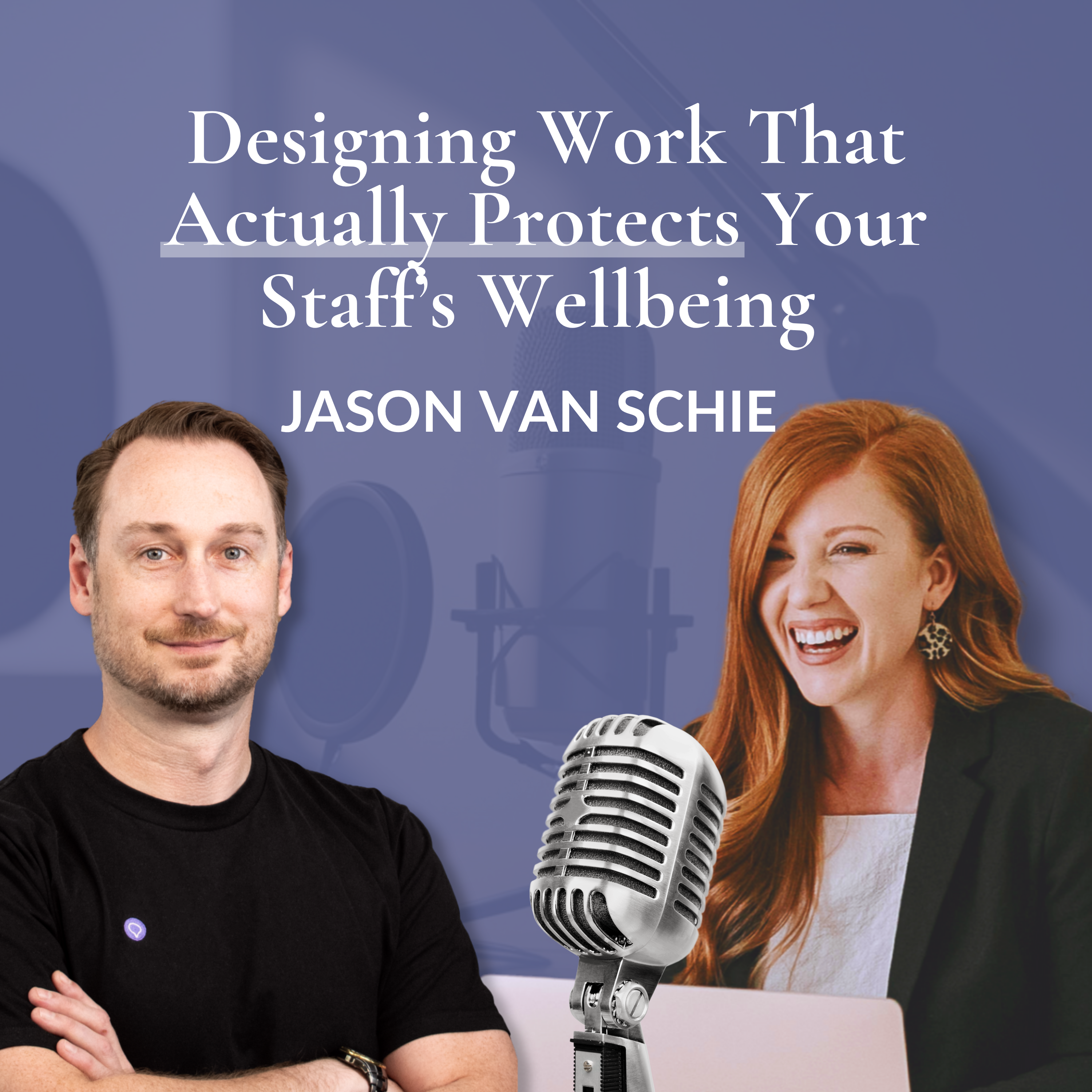
Designing Work That Actually Protects Your Staff’s Wellbeing with Jason van Schie

Most schools have spent years working on staff wellbeing. They’ve written policies and frameworks, funded programs, and scheduled wellbeing days. And yet the workers' compensation data reports that education now sits among the worst-performing sectors in the country for psychological injury claims, alongside healthcare and first responders. In this episode, I sit down with Jason van Schie, organisational psychologist and founder of FlourishDx, to unpack why. Jason has worked in psychosocial risk management since 2007, in his words “before it became cool,” and he is one of the clearest voices in the country on what it takes to create work that is genuinely good for people - for staff’s wellbeing and efficacy, and the greater good of the school community. Together, we name the shift schools are being asked to make from an ad-hoc wellbeing model (yoga, free coffee, the occasional wellbeing day) to a systems lens that looks at the design and conditions of the work itself. We dig into why prevention has to come before the wellbeing layer, why broad consultation and leader commitment are the heartbeat of the process, and why you cannot manage psychosocial risk without measuring it. If you have ever run a staff survey and watched nothing change, or rolled out a wellbeing program that landed flat, this conversation explains what was missing and what to do instead. Guest Resources Flourish DX Academy ISO 45003 Foundations Course: https://www.45003.org/enroll/1423388 Psych Health and Safety Podcast: https://www.psychhealthandsafety.com/ PHSCON — Psych Health and Safety Conference: 8-9 September 2026, Hyatt Regency Sydney https://psychhealthandsafetyconference.com/ Connect with Jason van Schie LinkedIn: https://www.linkedin.com/in/jasonvanschie/ Website: https://flourishdx.com Connect with me via: Website: https://adriennehornby.com.au LinkedIn: https://www.linkedin.com/in/adrienne-hornby-a4126a205/ School Partnerships: https://adriennehornby.com.au/school-partnerships/

June 16, 2026Episode 91 hr 8 min

Why Your Psychosocial Risk Assessment Isn’t Stopping Staff Burnout

Most school leaders understand that psychosocial safety is a legal obligation. Very few have figured out how to make it feel like anything more than a compliance activity. In this solo episode, I unpack the gap between obligation and opportunity, and what it actually takes to move psychosocial safety from a four-step process on a page to something genuinely woven into how a school leads, communicates and operates. Drawing on data from almost 80 schools and thousands of staff, I walk through common psychosocial hazards in Australian schools, why they are connected rather than isolated, and why the four-step risk management process, while important, is actually the easiest part of the whole process. The real work is not in the paperwork. It’s the leadership commitment and authentic ongoing consultation that determine whether any of it sticks. What I cover in this episode: What is missing from the four-step risk assessment process in many schools The national data: the most common psychosocial hazards in Australian schools and why they compound each other Why good communication underpins the entire process, and how to ensure your messaging lands How to embed wellbeing into your school’s way of doing and not let it be an initiative layered on top of others Leadership commitment as the foundation: why it falters, what it actually requires, and the personal and professional skills that make it land Why the hardest feedback can be the most important data you will ever receive What the Safe Work Australia Code of Practice actually requires of school leaders, and why most schools are not quite there yet Resources and links mentioned: Article: The Wellbeing Weave: The Three Phases of Addressing Staff Wellbeing in Well-Led Schools adriennehornby.com.au/the-wellbeing-weave-the-three-phases-of-addressing-staff-wellbeing-in-well-led-schools/ Article: Embedding a Sustainable Wellbeing Ecosystem: The Key to Psychosocial Safety and Staff Wellbeing adriennehornby.com.au/designing-a-sustainable-wellbeing-ecosystem-the-key-to-psychosocial-safety/ Podcast: Creating a School Culture Where Staff Feel Seen, Heard and Valued with Daniela Falecki https://adriennehornby.com.au/creating-a-school-culture-where-staff-feel-seen-heard-and-valued-with-daniela-falecki-season-3-episode-10/ Waverley Christian School Case Study: https://www.linkedin.com/posts/adrienne-hornby-a4126a205_most-school-wellbeing-initiatives-fail-or-ugcPost-7465421290833805312-QVL9/?utm_source=social_share_send&utm_medium=member_desktop_web&rcm=ACoAADQvl1EBSRJtRkz0cewFH4TjXfHExS9B0F4 If you enjoyed this episode, don’t forget to subscribe and leave a review wherever you get your podcasts.

May 26, 2026Episode 81 hr 10 min

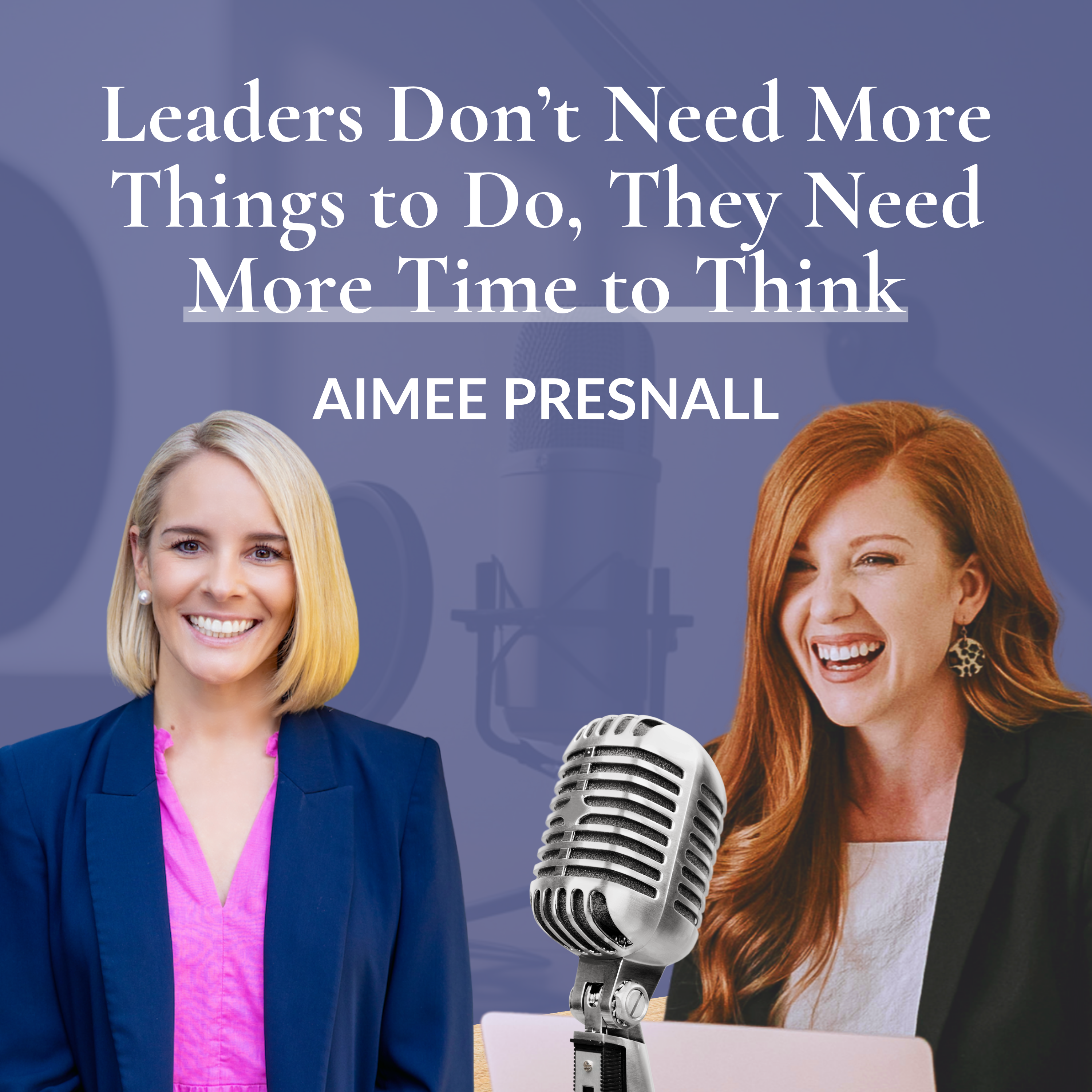
Leaders Don’t Need More Things to Do, They Need More Time to Think with Aimee Presnall

What if the one thing that would make the biggest difference to your wellbeing, strategic clarity and positive school culture as a school leader isn’t another strategy or initiative, it’s simply more time to think? In this episode of Well-Led Schools, I’m joined for the third time by Aimee Presnall - leadership coach, TEDx speaker and founder of Wellnest. After more than 16 years in education, Aimee built her career around one observation that kept repeating itself: brilliant school leaders burning out while the systems around them kept asking for more. Aimee’s recent TEDx talk landed on something leaders feel in their bones but rarely hear said out loud: that we’re treating the shadow, not the source; that when leaders don’t have time to think, everything downstream suffers, their clarity, their team’s culture, and ultimately their students. We go deep on what actually changes when leaders are given space to develop the human skills needed to lead people well, why one-off PD rarely shifts anything, and what it takes for schools to build a genuine coaching culture rather than a tick-box one. In this episode: Why leaders don’t need more things to do, but rather need more time to think Clarity vs certainty: what staff want vs what leaders can actually give Why giving yourself dedicated time to think feels so difficult How recognising your default, high-pressure habits creates the fastest leadership shift What one-off PD misses in comparison to navigating the “messy middle” of long-term coaching The three pathways into middle leadership (aspiring, accidental, anointed), and how they shape your mindset LINKS AND RESOURCES Connect with Aimee Presnall via: Wellnest: www.well-nest.com.au TED Talk: youtu.be/qjGM4esebQU?si=5eyFpR_-0KbUngty LinkedIn: www.linkedin.com/in/aimee-parkinson/ Connect with me via: Website: adriennehornby.com.au LinkedIn: www.linkedin.com/in/adrienne-hornby-a4126a205/ Email: hello@adriennehornby.com.au School Partnerships: adriennehornby.com.au/school-partnerships/

May 6, 2026Episode 71 hr 18 min

From Programs to System: Building Whole-School Wellbeing That Works with Justin Robinson

Most schools have wellbeing programs or initiatives. Very few have wellbeing embedded into the way they function and flourish. That is the difference between bolting something on and creating real, lasting change. In this episode, I am joined by Justin Robinson, co-founder of the Wellbeing Distillery and formerly the founding director of the Institute of Positive Education at Geelong Grammar School. Justin has worked with hundreds of schools across Australia and internationally, and his approach is built on the idea that wellbeing has to be embedded across the whole school community, not delivered as a series of disconnected initiatives. We unpack what it actually takes to move from add-on programs to embedded practice, and why so many schools get stuck in the cycle of doing more without seeing more results. In this episode: Why a collection of programs is not the same as embedded wellbeing The four partners every school needs to engage: leaders, staff, students and families The most common mistake schools make when rolling wellbeing out across the whole community How adopting the mindset that "wellbeing is a shared responsibility" changes the way you design your whole approach Practical starting points for schools that want to shift from doing wellbeing to being a wellbeing-led school LINKS AND RESOURCES 7 Habits of Wellbeing-Wise Families: https://drive.google.com/file/d/18SmHYlVuY60XGq_g3b8bMYkUrmq5AdAE/view?usp=drive_link Wellbeing Compass Brochure: https://drive.google.com/file/d/1L_GRARsSBWpkcTN3rrCaQJOS2qY-uZ8F/view?usp=drive_link Connect with Justin: Website: thewellbeingdistillery.com Email: justin@thewellbeingdistillery.com LinkedIn: linkedin.com/in/jrobinson-wellbeing Connect with Adrienne: Website: adriennehornby.com.au LinkedIn: linkedin.com/in/adrienne-hornby-a4126a205 Email: hello@adriennehornby.com.au Staff Wellbeing Survey: adriennehornby.com.au/staff-survey Well-Led Schools Partnership Program: adriennehornby.com.au/school-partnerships
April 21, 2026Episode 61 hr 2 min

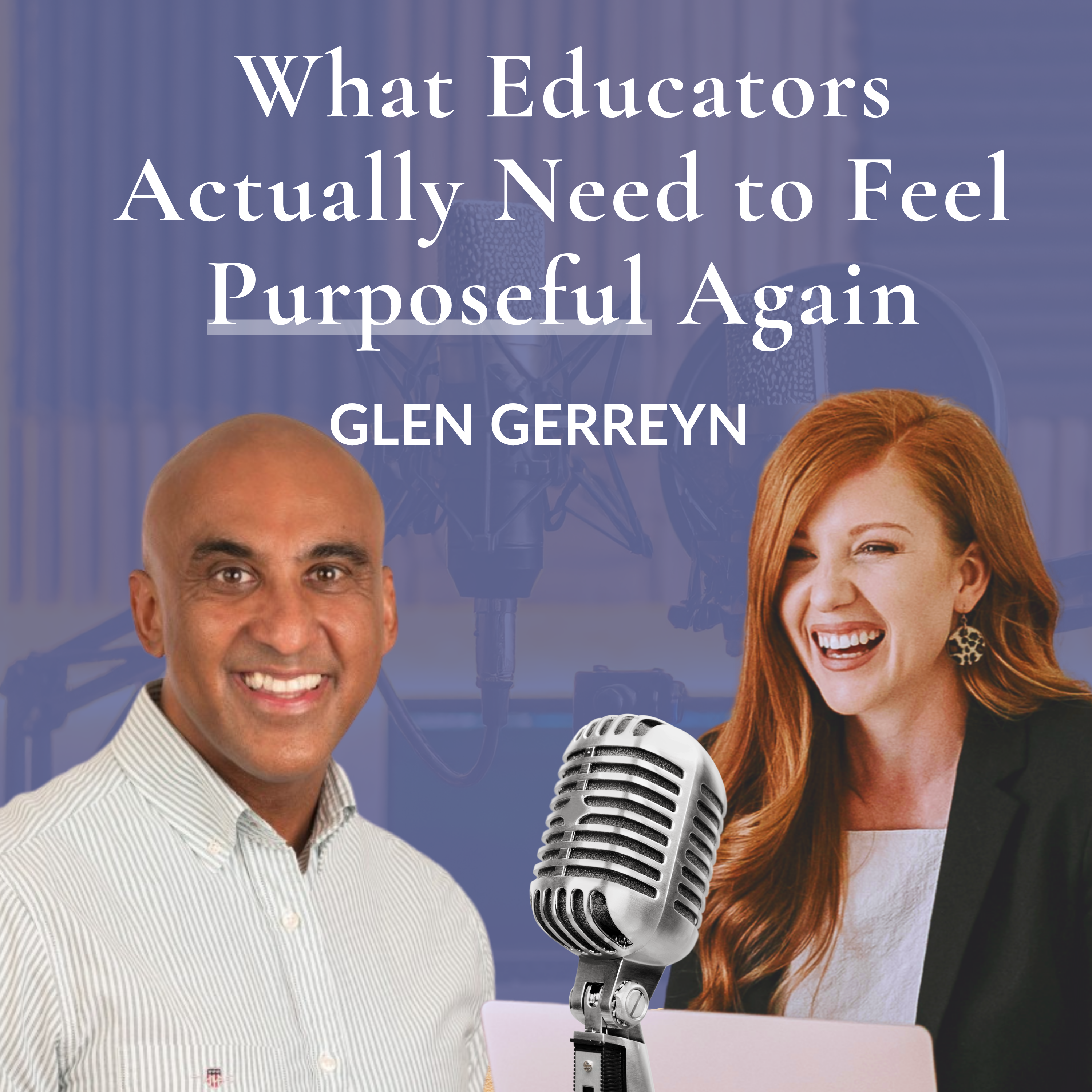
What Educators Actually Need to Feel Purposeful Again with Glen Gerreyn

It’s the start of a new term. Some of your staff may be walking back into school running on empty, not because they don’t care, but because they’ve lost sight of why it matters. What educators actually need to feel purposeful again isn’t another wellbeing afternoon or a gratitude wall. According to this week’s guest, it’s a reconnection to vision, and that’s something a school can teach, build and sustain. In this episode of Well-Led Schools, I'm joined by Glen Gerreyn, speaker, author, youth advocate and founder of The Hopeful Institute. His work, spanning two decades and hundreds of schools globally, is grounded in one powerful idea: hope is not a passive feeling. It's a skill. It's a strategy. And it can be taught. In this episode: Glen's personal origin story: from elite athlete to disability pension to Young Australian of the Year The three components of Hope Theory: goals, pathways, and agency Why disengagement is often a vision crisis, not a behaviour problem The Hopeful Schools Framework and how it works in practice Why purpose and meaning matter as much as curriculum in education What leaders can do to build hope into school culture systemically About Glen Gerreyn: Glen Gerreyn is a speaker, author and youth advocate who has dedicated his career to building hope in young people and the educators who work with them. After overcoming a serious a chronic illness that ended his career as a state champion sprinter, heGlen rebuilt his life through purpose, resilience and connection to meaning, and was named Young Australian of the Year in 1998. He is the founder of The Hopeful Institute and has worked with more than 300 schools across Australia and worldwide. His work draws on Charles Snyder's Hope Theory and translates it into practical frameworks that schools can embed into their culture. He is also the author of Men of Honor, a book on sexual ethics and character development for young men. Links and Resources 50 Book Summaries for Educators 7 Infographics (burnout, procrastination and more) Well-Led Schools Partnership Program If this episode resonated, leaving a review wherever you are listening means the world. Thank you for listening! Connect with Glen via: Website: www.thehopefullinstitute.com/ LinkedIn: https://www.linkedin.com/in/glengerreyn/ Pinterest: https://au.pinterest.com/glengerreyn/ Connect with me via: My website: adriennehornby.com.au LinkedIn: linkedin.com/in/adrienne-hornby-a4126a205/ Email: hello@adriennehornby.com.au

May 22, 2023Episode 201 hr 16 min

EP 20: The Power of Resilience: Redefining Self-Care for Educators With Ellen Ronalds Keene

Self-care is so much more than bubble baths and face masks… The self-care that really makes a difference in our resilience involves developing a deep sense of self-awareness and the ability to advocate for what we truly need to flourish and thrive in life and at work. In this episode, I am joined by educator and teacher wellbeing coach, Ellen Ronalds Keene where we exchange anecdotes and ideas about resilience, teacher wellbeing and the importance of putting yourself as a person first. About Ellen: Ellen Ronalds Keene is an educator, wellbeing coach, podcaster producer and digital homebody. She spent a decade as a high school music teacher before moving into the online business world. After struggling to find a way to fit into standard inflexible workplace schedules, Ellen decided instead to design a flexible life and work around her chronic illnesses. Following passions for education, all forms of audio, and online communication, Ellen works from home and now splits her time between 2 businesses: the boutique podcast production agency, Perk Digital and the teacher wellbeing support hub, Self-Care for Teachers. In this episode, we cover: The importance of advocating for your health and needs What it means to be a resilient educator Separating your personal identity from your professional identity Common strains teachers and leaders experience that could be impacting wellbeing Tell-tale signs you aren’t putting yourself first Tips for seeking support from your leaders and supervisors Links and Resources: Join our online wellbeing course for educators today Blog Article: The Hot Debate: Who Is Actually Responsible For Teacher And Staff Wellbeing? Blog Article: The Top Rated Initiatives To Improve Staff And Teacher Wellbeing (And How To Address Them) Blog Article: 10 Steps To Take This Term To Improve Staff Wellbeing At Your School Blog Article: 9 Reasons to Put Staff Wellbeing at The top of Your Priority List Thank you so much for listening. I’m so honoured that you’re here and would be so grateful if you could leave me a review on Apple Podcasts or on your preferred podcast app, that way we can inspire and educate even more people together. Connect with Ellen: On Instagram @selfcareforteachers On Facebook On LinkedIn Website: https://selfcareforteachers.com.au The Teacher Wellbeing Podcast Connect with me via: My website Linkedin Instagram Email See omnystudio.com/listener for privacy information.

Is this your show?

Claim this listing to keep it up to date, reach guests who want to pitch you, and manage bookings with Guestify.

Claim this listing

More Business podcasts