Find partners
UNPAK3D Podcast

UNPAK3D Podcast

Hosted by UNPAK3D Pod

Episodes

26

Latest episode

May 2026

Language

EN

About the show

A podcast for operators by operators UNPAK3D Podcast stands for unpacking these journeys by Decrypting, Decoupling, and Decompressing. We Decrypt concepts like "hiring great people", "finding product-market fit"; we Decouple the outcomes of businesses from the ebbs and flows of the journey; we Decompress by learning how these operators take a step back from their business.

Listen to episodes

26 recent
May 14, 20261 hr 2 min

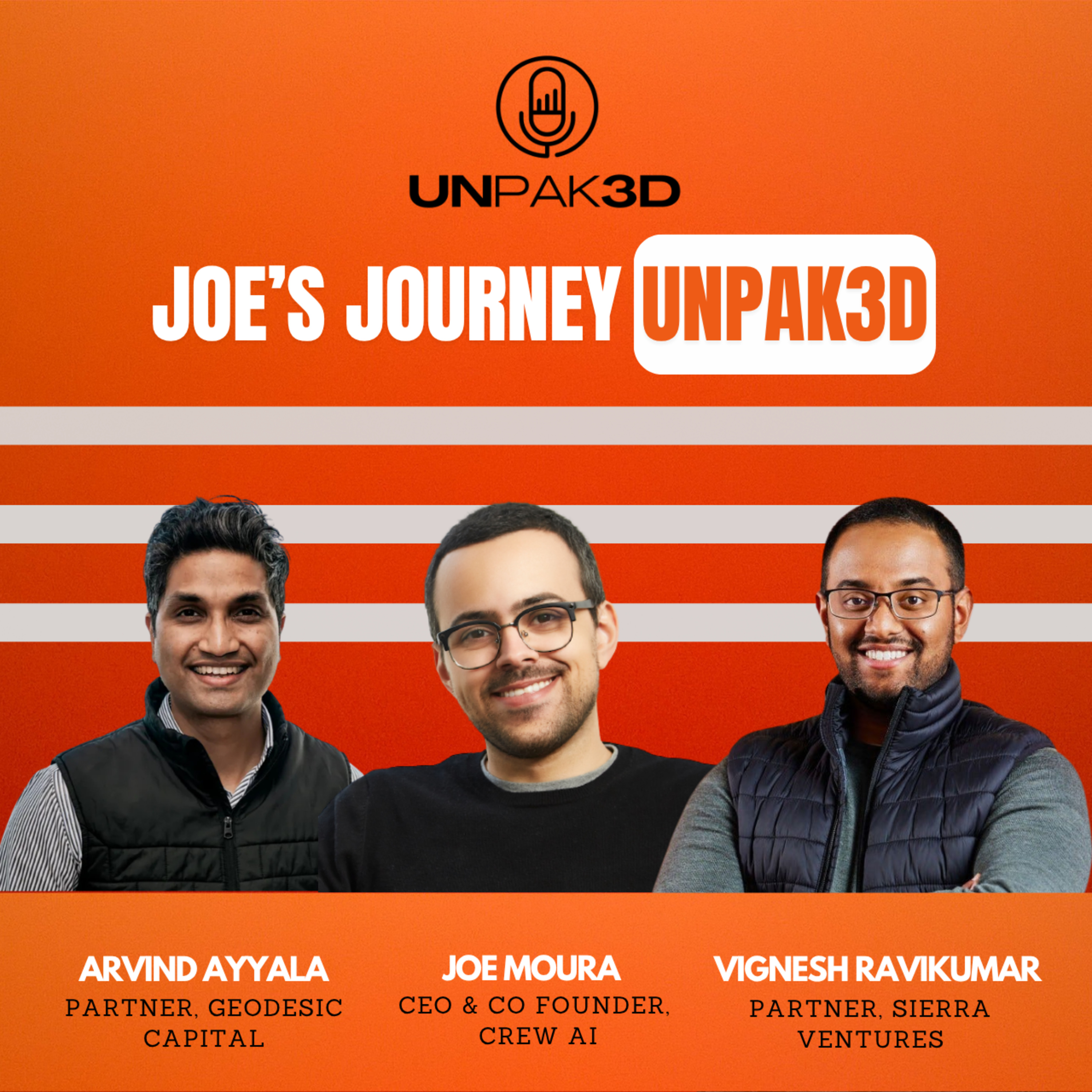
Ep. 26: From Anniversary Side Project to 2 Billion Agent Executions, Joe Moura, CEO of CrewAI

CrewAI just crossed 2 billion agent executions — but founder Joe Moura thinks building agents isn't even the hard part. The real value gap? Getting them to production. Joe joins Vignesh and Arvind to break down why most enterprise AI projects fail at planning, not technology, how Oracle cold-approaching him at the SF Ferry Building validated the business, and what it takes to get Fortune 500 companies actually running agents at scale.Time Stamps:(0:00) Introduction and Joe's path from Clearbit to CrewAI(4:47) What makes CrewAI different in the agent builder market(10:24) Why code-first, multi-agent, and the no-code platform customers demanded(16:16) Real use cases: KYC automation and fraud detection(18:23) How Joe became the "face" of CrewAI to drive adoption(25:04) Enterprise AI: why planning fails companies more than technology(33:17) The data readiness trap — when security pulls the plug(42:44) Partnership strategy: selling with IBM to the US DoD(46:16) Low-ego CEO: learning sales from his own AEs(52:42) The future: fine-tuning comeback and long-horizon agentsThis episode is brought to you by Stifel Bank — our trusted partner for fund banking and wealth management. Learn more at stifel.com.Where to find Joe Moura:LinkedIn: https://www.linkedin.com/in/joaomdmoura/CrewAI: https://www.crewai.com

April 23, 20261 hr 2 min

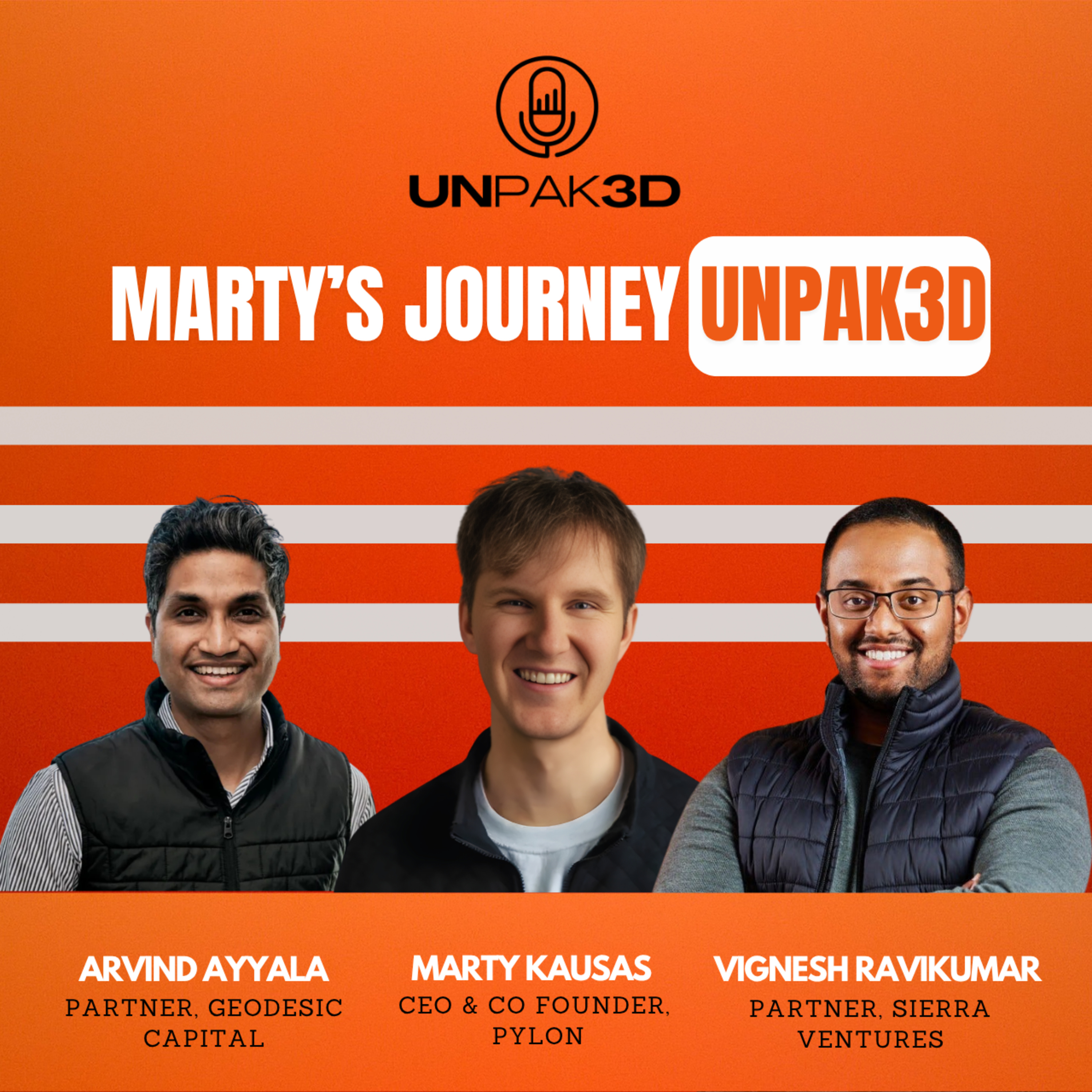
Ep 25: 2 Co-Founders, 5 Dead Ideas, Then Pylon w/ Marty Kausas, CEO @ Pylon

For 40 years, the safe bet in enterprise software was Zendesk or Salesforce. Marty Kausas, founder of Pylon, thinks picking either for customer support today might now get you fired.Before Pylon worked, Marty spent 2 years cycling through 2 co-founder breakups and 5 dead ideas. Today, Pylon has 5x'd revenue two years running, raised a $31M Series B from a16z and Bain Capital, and migrated 150+ customers off legacy support platforms. We cover the "happy grinder" culture, why B2B support is a completely different problem than consumer, the per-seat vs outcome pricing debate, and why Marty thinks buying Zendesk is now the risky move.This episode is brought to you by Stifel Bank — trusted banking and venture debt partner for Sierra Ventures' portfolio. Learn more at stifel.com.Chapters:(0:00) Cold open and intro(2:02) Meet Marty and Pylon(3:06) Co-founder breakups and 5 dead ideas(10:13) Salesforce → Support Force(13:29) LinkedIn as 80% of Pylon's pipeline(22:05) Why B2B support isn't ticket deflection(28:33) Not Sierra, not Decagon(32:34) The context layer(39:34) Shipping 40% faster as a compound startup(55:12) Why you might get fired for buying ZendeskWhere to find Marty Kausas:- LinkedIn: linkedin.com/in/mkausas- Pylon: usepylon.com

March 19, 20261 hr 3 min

Ep. 24: From $3.7B Exit to $5.5B Company: What Jyoti Bansal Actually Learned the Second Time

Jyoti Bansal was days away from taking AppDynamics public when Cisco made a $3.7 billion offer that changed everything. Now his second company, Harness, is valued at $5.5B — and he's built it on a contrarian thesis: AI is producing more code than ever, but code isn't the finished product. We cover the real story behind the Cisco acquisition, why his best sales reps from AppDynamics failed in the early days of Harness, how he runs 16 product modules as "startups within a startup," and why 70% of engineering time still happens after the code is written.This episode is brought to you by Stifel Bank.Timestamps(0:00) Trailer(0:52) Introduction and welcome(2:36) Jyoti's journey from small-town India to Silicon Valley(6:01) Three lessons from AppDynamics that shaped Harness(10:29) Proving value — not just finding the problem(17:23) The sales hiring mistake: matching reps to your stage(27:42) 72 hours from IPO to Cisco's $3.7B acquisition(33:57) Startups within a startup — Harness's M&A playbook(39:06) AI's productivity paradox: more code, less throughput(48:44) The "two AIs" framework and where moats really live(58:50) How Jyoti decompresses

February 12, 202659 min

Ep 23: The Anti-Vibe AI Revolution, Scott Dietzen of Augment Code

Is "vibe coding" enough for the enterprise? Scott Dietzen explains why professional engineers need an expert AI, not a toy.In this episode, we sit down with Scott Dietzen, Former CEO of Augment Code and Former CEO of Pure Storage. Scott breaks down why the current "vibe coding" trend—where non-engineers generate simple apps from scratch—fails to address the needs of large-scale enterprise software.Key Topics Discussed:The Context Engine Moat: Why passing 20 million lines of code into a context window doesn't work, and how Augment solves this with a real-time semantic map.Agentic AI: Moving beyond simple chat to AI agents that can handle parallel tasks like testing and code reviews.Security First: How Augment secured SOC 2 and ISO certifications to win enterprise trust where competitors failed.Leadership & Hiring: Scott's framework for building high-trust teams and why he never had to ask for a raise in his career.Timestamps(00:00) Intro (02:52) Augment: The Anti-Vibe Coding (05:39) From Chat to AI Agents (11:04) The Problem with Fine-Tuning (13:05) Building a Context Engine (23:23) Security as a Moat (29:40) Hiring for Trust (43:30) PLG vs. Enterprise Sales (54:37) The Myth of the Solo Founder (57:19) Leadership & Burnout

January 22, 20261 hr 2 min

Ep 22: Building Category-Defining AI Companies with Gokul Rajaram

In the final episode of the year, we sit down with legendary operator and "company helper" Gokul Rajaram. Gokul shares his unfiltered thesis on the current AI landscape, explaining why he is bearish on infrastructure and middleware companies while betting big on the application layer.We dive deep into his "Compound or Die" philosophy, why startups need to launch their second product immediately after finding product-market fit, and the return of the "996" work culture in Silicon Valley.Key Topics Discussed:The Big Three in AI: Why Document Processing, Browser Automation, and Voice Agents are the most exciting unlock right now.The Infrastructure Trap: Why the model layer and "middleware" companies are being squeezed, and why application layer companies have the real leverage.Compound or Die: Why the old rule of waiting for $10M ARR to launch a second product is dead, and why you must build a compound startup now.Metrics that Matter: Why you should ignore top-line growth in favor of Gross Revenue Retention (GRR) and Net Revenue Retention (NRR).The New Work Ethic: The reality of "996" (9 am to 9 pm, 6 days a week) and "007" (12 am to 12 am, 7 days a week) culture in AI-native companies.Future Roles: The rise of the "AI Ops" engineer and the return of the "Forward Deployed Engineer"Timestamps(01:10) - Introduction and Gokul’s journey from Google to Angel Investing.(04:05) - AI themes to watch and avoid(11:03) - How to build defensibility at the Application Layer.(19:50) - "Compound or Die": Launching your second product early.(22:27) - Why GRR and NRR matter more than top-line revenue.(30:03) - Advice for non-AI native SaaS companies: Pivot or Perish.(35:50) - The future of Voice AI and why middleware might be dead.(43:58) - Founder Archetypes and the return of intense work culture (996/007).(53:07) - Emerging Roles: The AI Ops Engineer and Forward Deployed Engineers.(1:00:00) - Gokul’s mental model for decompressing: The "Second Brain".

December 18, 20251 hr 10 min

Ep. 21: Disrupting the Custodial Duopoly and Building the "Robinhood for Advisors w/ Jason Wenk CEO @ Altruist

In this episode, we sit down with Jason Wenk, Founder and CEO of Altruist. Jason shares the "lightbulb moment" he had watching Robinhood take off, realizing that Registered Investment Advisors (RIAs) were stuck using archaic, disjointed technology while consumers were getting sleek, digital experiences.We unpack how Altruist is taking on the industry giants (the "Duopoly") through vertical integration and why Jason believes legacy custodians have zero incentive to innovate. We also dive deep into the controversial side of company building: the return of "hardcore" work culture, hiring for intensity, and why Jason believes the era of soft startups is over.(00:00) Intro & The Origin Story: From starting at Morgan Stanley at 19 to the serial entrepreneur journey that led to founding Altruist.(18:18) Disruption Thesis: The "Robinhood Moment" & Vertical Integration: How seeing the mobile trading revolution inspired Jason to rebuild the custodial stack, and why the "Duopoly" incumbents (Schwab/Fidelity) struggle to innovate due to high margins and inertia.(39:22) The Playbook: Scaling to Billions: Altruist’s Go-to-Market strategy: How they gained initial traction by targeting the "hungry and underserved" small advisors that the giants ignored, and eventually moved upmarket.(42:20) The AI Future: "Hazel" and The Bionic Advisor: Why Altruist is pivoting hard into AI agents, how "Hazel" renders traditional CRMs obsolete, and Jason's prediction on when AI will replace human financial advice (featuring the $15k fence story).(57:03) Founder Mode: Culture, Intensity & Performance: A deep dive into building a "hardcore" culture, the return of the "996" mindset, and Jason's personal routine (including the gene mutation that lets him thrive on 4.5 hours of sleep).

November 26, 20251 hr 0 min

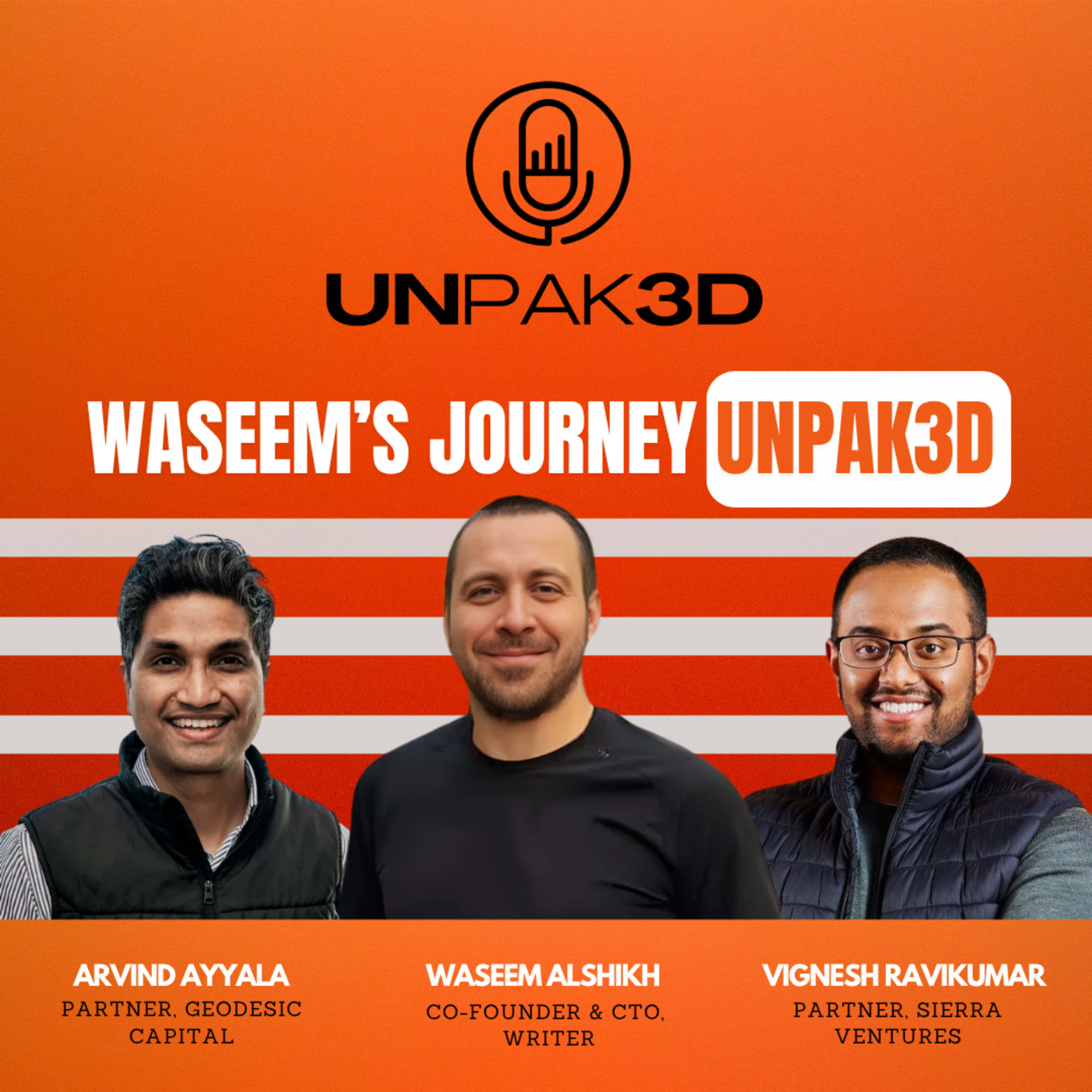
Ep. 20: From Hype to Production: Inside Writer’s Playbook for Deploying Enterprise AI w/ Waseem Alshikh, CTO @ Writer

In this episode of UNPAK3D, we sit down with Waseem Alshikh, co-founder and CTO of Writer, to unpack the reality of deploying Generative AI in the enterprise. While the consumer market chases the latest AGI hype, Waseem explains why the enterprise roadmap requires a different approach: predictability, domain specificity, and a shift from simple content generation to executing complex actions.We dive deep into Writer's "full-stack" strategy—owning the LLM family (Palmera), the graph-based context layer, and the application layer—and why this architecture is critical for security and accuracy in regulated industries like healthcare and finance. Waseem also shares his contrarian take on "small" models, the necessity of change management to unlock real ROI, and why he defines AGI not as General Intelligence, but as "Artificial Governance Intelligence".00:15 — Introductions & Writer’s core mission03:25 — The enterprise AI gap: predictability vs. hype07:40 — Domain-specific models and why they outperform general models12:55 — Synthetic data, grounding, and how Writer trains models18:10 — Building the enterprise context layer (knowledge graphs)22:45 — On-prem, small models & deployment realities28:15 — How enterprises are shifting their AI buying behavior33:30 — Competing with OpenAI & managing roadmap pressure39:35 — Multimodality and why it’s emerging inside the enterprise45:25 — Unit economics, ROI & end-to-end task automation51:15 — Competing for talent + Waseem’s view on AGI55:55 — Decompression, customer stories & closing thoughts

October 30, 20251 hr 11 min

Ep 19: Community Is the New Moat: Stack Overflow’s Second Act with Prashanth Chandrasekar

Stack Overflow has been the home for developers for over a decade — but the rise of AI is changing everything. In this episode, we talk to Prashanth Chandrasekhar, CEO of Stack Overflow, about how he’s reinventing the company from an ad-based community platform to an enterprise SaaS and data licensing business at the center of the AI ecosystem.We discuss:How Stack Overflow’s data powers models from OpenAI and GoogleWhat it takes to lead a “people transformation” during industry disruptionThe future of developer communities and the rise of agentic AI in the enterpriseWhy he believes community is more important than ever in the AI ageA must-listen for anyone building in AI, developer tools, or enterprise SaaS.00:00 – Intro and Prashanth’s journey from Rackspace to Stack Overflow05:30 – Rebuilding the team: leading a people and culture transformation10:40 – How Stack Overflow built its enterprise SaaS motion18:00 – The pivot from community and ads to enterprise and recurring revenue27:00 – Lessons from leading through change: hiring slow, acting fast27:30 – The OpenAI partnership and data licensing strategy33:00 – Stack Overflow’s role in the AI tech stack41:00 – How enterprises like Uber are building internal copilots using Stack Overflow data45:00 – The economics of high-quality data and premium licensing49:00 – The agentic AI opportunity in the enterprise54:00 – How AI is changing software development and product velocity1:00:00 – Why community will matter even more in the age of AI

September 18, 20251 hr 0 min

Ep. 18: AI for the CFO — Numeric’s Playbook with Parker Gilbert, CEO of Numeric

Parker Gilbert, founder & CEO of Numeric, joins the UNPAK3D podcast to walk through why finance teams are finally ready for AI-driven modeling, how Numeric approaches the hardest part (financial data and reliability), and the practical GTM playbook for selling to CFOs.Parker explains his path from strategy and scaling early-stage companies to starting Numeric, the “aha” problem Numeric solves for the office of the CFO, and how the product balances automation with auditability. We dig into data quality, model scaffolding, customer feedback loops, pricing and go-to-market lessons, and the fundraising choices that shaped Numeric’s early growth. If you’re a founder or CEO wrestling with forecasting, finance headcount, or how to productize ML for accounting teams, this episode offers concrete takeaways and real-world tradeoffs to consider.00:00 — Intro & Parker’s background05:55 — Founding Numeric — the problem and the “aha”09:46 — Product demo & early customers (initial signals)14:10 — Data quality, modeling limits & reliability45:34 — Go-to-market, customers, pricing & metrics55:09 — Why now — vision, risks, and next steps

August 14, 20251 hr 5 min

Ep. 17: Why the Smartest Companies Will Fire SaaS and Hire AI with Surojit Chatterjee from Ema AI

From $50B mobile ads at Google to taking Coinbase public, Surojit Chatterjee has spotted — and seized — every major tech inflection point. Now, as CEO of Ema, he’s betting on “AI employees” to transform how enterprises work.In this episode: spotting trillion-dollar trends, building AI that works across industries, and why the future belongs to first-principles thinkers.(0:16) Surojit’s journey: Google, Flipkart, Coinbase, and the leap to Ema(7:20) The “AI employee” vision — and why no one got it at first(14:07) Spotting tech inflection points: lessons from mobile, crypto, and AI(17:15) Horizontal vs. vertical AI: the case for building broad and deep(27:33) Hiring in the agentic AI era: first-principles thinkers over resumes(34:44) Running lean: using AI instead of humans where possible(39:08) Why legacy SaaS struggles to adapt to AI(42:59) Overcoming employee fear and resistance to AI adoption(50:03) The pitch to executives: freeing people from “soul-crushing” work(52:57) Is 2025 still the year of AI experimentation?(55:09) Avoiding plateaus: chaining AI employees for exponential impact(1:00:19) The adoption curve: innovators, fast followers, and scaling(1:01:19) Decompression and founder mindset: meditation, family, and doing nothing

Is this your show?

Claim this listing to keep it up to date, reach guests who want to pitch you, and manage bookings with Guestify.

Claim this listing

More Business podcasts