Featuring life, health, transformational coaches & creatives being the change they want to see in the world! Be inspired as they share what they are doing to make the world a better, kinder and more sustainable place for us all as they navigate the journey between coach and entrepreneur. And share their expertise to make your life better in the process. Jill Hart - The Coach's Alchemist & Host, You World Order Showcase Podcast Contact: https://hartlifecoach.com hartlifecoach.substack.com
Listen to episodes
60 recent
November 14, 202644 min
Proof Over Perfection: Rebuilding Confidence Through Small Steps with Carol Hudnell
What if you don’t need to overcome perfectionism before moving forward? In this episode, Jill talks with Carol Hudnell, founder of The Next Chapter Lab and Design Your Pivot After 50, about navigating change when the roles and identities that once defined you no longer fit. Carol shares how small, imperfect experiments can help you rebuild confidence, strengthen self-trust, and create tangible evidence of who you’re becoming—without overwhelming yourself or waiting until you feel completely ready. Together, they explore why becoming a beginner again can feel so uncomfortable in midlife, how community helps us separate disappointing results from personal failure, and why sustainable progress must honor your real capacity—not some imaginary “perfect day.” If you’ve been waiting for more confidence, clarity, or certainty before taking your next step, this conversation will help you begin exactly where you are. Website: http://www.pivottowholeness.com Substack https://coachcarolh.substack.com/ Next Chapter Lab https://www.skool.com/the-next-chapter-lab-4634/about Save Your Seat for workshop https://pivottowholeness.kit.com/451a897d4a YouTube www.youtube.com/@pivottowholeness SKOOL https://www.skool.com/design-your-pivot-after-50-7602 The Next Chapter Lab IG https://www.instagram.com/pivottowholeness/ FB https://www.facebook.com/people/Pivot-to-Wholeness/61562163476496/ Want premium clients from your content? Grab a free Client Acquisition Audit and I’ll show you exactly where your message, offer, and CTA are leaking conversions—and the 3 fixes to turn your podcast/Substack into a client pipeline. 👉 Book here: https://coachsalchemist.com This podcast uses the following third-party services for analysis: Podtrac - https://analytics.podtrac.com/privacy-policy-gdrp This is a public episode. If you'd like to discuss this with other subscribers or get access to bonus episodes, visit hartlifecoach.substack.com/subscribe
November 11, 202623 min
A World Inside: What If Your Imagination Could Change Your Reality?
What if you could step into an entirely different world whenever you wanted? Not just picture it. Not just wish for something different. Actually experience what it feels like to be somewhere else, living another possibility, even if only for a few minutes. And what if that experience could change how you move through your everyday life? That’s where my conversation with Yasmine Gulzar, creator of Star DreamQuest , took us. And it was a wonderful place to explore. Yasmine has developed something she calls Bubbles , an imaginative experience that invites us to create worlds of our own, step inside them, and discover what becomes possible when we give ourselves permission to play. But there’s a much deeper story behind these bubbles. Sometimes Imagination Is the Place We Go to Survive Years ago, Yasmine was fighting for her life. She spent months in the hospital with serious heart problems, struggling to breathe and wondering whether she would survive to raise her six children. During those frightening moments, she discovered something extraordinary about her imagination. She could transport herself somewhere else. Sometimes she was an octopus, swimming freely through the ocean, moving her eight tentacles through the water without the pain and fear she was experiencing in her physical body. Other times, she found herself on a beautiful beach with her children, who appeared as playful little creatures. These experiences became a source of comfort during an incredibly difficult time. Yasmine doesn’t ask anyone to believe that these imaginary worlds are physically real. In fact, she encourages people to approach the experience without expectations. Just play. Her story also includes the medical treatment that helped save her life. She readily acknowledges its importance. The imaginary worlds gave her another way to experience moments of peace alongside what was happening in her physical reality. And eventually, those experiences became the foundation for Star DreamQuest. My Own World Inside a Bubble I’ve actually experienced Yasmine’s approach myself. When we first worked together, I created a world where I was an elephant. Not a person riding an elephant or standing beside one. I WAS the elephant. Playing in the water. Splashing around. Experiencing the world without having to think about sales funnels, grocery shopping, making dinner, or any of the responsibilities that fill our human lives. And here’s what’s interesting. I can still go there. That imaginary world has stayed with me, and when I revisit it, I experience that wonderful sense of freedom again. There’s something about stepping outside our usual identity, even temporarily, that allows us to experience life from an entirely different perspective. We spend so much time thinking about what needs to happen next that we forget we can simply enjoy being. Yasmine’s bubbles give us permission to remember. What Happens When AI Meets Imagination? This is where our conversation became especially fascinating. Yasmine has spent the past year developing Star DreamQuest, combining her imaginative exercises with artificial intelligence. Instead of simply imagining a world, you can now use AI to help bring that world into view. Imagine creating a character with the head of an owl, the neck of a giraffe, and the arms of an octopus. Or designing an entire ecosystem where the water is clean, the creatures are happy, and everything works together beautifully. You can create it, explore it, and continue adding to it through small daily quests. And Yasmine’s vision goes even further. What happens when we begin sharing these imaginary worlds? Could families create experiences together? Could communities imagine possibilities that bring them closer? Could coaches help their clients explore what a desired future actually feels like? Instead of AI telling us what to think or who to become, we remain the creators. AI becomes another tool for expressing what’s already inside us. I find that possibility fascinating. What If We Made Friends With Our Fears? One of my favorite parts of our conversation was Yasmine’s approach to fear. She described an exercise where someone imagines a frightening monster. Rather than fighting it or trying to make it disappear, they approach it with curiosity. They talk to it. They ask why it’s there. And sometimes that enormous monster becomes something much smaller and less frightening. One of Yasmine’s clients even imagined taking his monster out for coffee and a walk through a meadow. I love that image. Because fear doesn’t always disappear just because we decide we’re ready to move forward. Sometimes we learn to move forward with it. We can acknowledge what’s frightening us without allowing it to determine every choice we make. And maybe a little imagination helps us discover another way to respond. Everything Begins in Our Imaginations Near the end of our conversation, we explored what it might look like if people everywhere began imagining more beautiful possibilities together. Communities built around cooperation rather than competition. Worlds where everyone has room to thrive. Experiences that help us see through someone else’s eyes, fins, or tentacles. There’s something wonderfully playful about all of it. And underneath that playfulness is an idea I keep coming back to. Everything humanity has created began as something someone imagined. Every invention, every business, every community, every new possibility. Someone had to imagine it before it could exist. That doesn’t mean everything we imagine automatically becomes real. But imagination gives us somewhere to begin. And when we can experience a different possibility, even briefly, we may find ourselves noticing opportunities we previously overlooked. That’s how change begins. Inside us. And perhaps, eventually, in the world we share. Listen to the Full Conversation There’s so much more to this conversation than we could include in the shorter video. Yasmine shares additional stories from her journey, the development of Star DreamQuest, and her vision for connecting people through imagination. Listen to the complete, unabridged interview with Yasmine Gulzar on the You World Order Showcase Podcast. You can learn more about Yasmine and explore Star DreamQuest at stardreamquest.space . I’d love to hear from you. If you could create a world inside your imagination, with absolutely no limitations, what would it look like? Would you go somewhere peaceful? Become another creature? Build a world completely unlike anything you’ve experienced? Tell me in the comments. Because change begins with you. And everything begins in our imaginations. With love & clarity, Jill Hart💜The Coach’s Alchemist Amplify Your Voice • Monetize Your Mission • Get Visible This is a public episode. If you'd like to discuss this with other subscribers or get access to bonus episodes, visit hartlifecoach.substack.com/subscribe
November 10, 202650 min
Beyond Manifestation: Creating Worlds Your Future Self Can Already Feel | Yasmine Gulzar
What if imagination wasn’t simply something happening inside your head — but somewhere you could actually go? Yasmine Gulzar, creator of StarDreamQuest, joins me for a wonderfully playful conversation about imagination, manifestation, AI, and what happens when we stop merely picturing the future we want and begin experiencing it before it arrives. Yasmine calls these imagined experiences Bubbles — vivid little worlds where you can step into a desired moment, engage your senses, amplify the feeling, and allow your mind and body to become familiar with an experience that hasn’t happened yet. And yes… sometimes that means becoming an octopus. Or, in my case, an elephant. But underneath the playfulness is a fascinating idea: when we repeatedly experience possibility in our imagination, do we become better able to recognize it when pieces of that possibility begin appearing in our everyday lives? We explore how Yasmine developed Bubbles during one of the most difficult periods of her life, why play may be more powerful than forcing ourselves to “believe,” and how AI is opening an entirely new dimension by allowing us to turn imagined characters, environments, and experiences into worlds we can actually see and develop. Then we take the idea even further. What happens when imagination becomes something we can share ? Could communities create worlds together? Could coaches help people experience possibilities rather than simply talk about them? Could AI become a creative partner that helps us build and explore realities that don't exist yet? This conversation goes from manifestation and nervous-system familiarity to elephants, octopuses, AI, miracles, synchronicities, world-building, and Yasmine’s much bigger vision for StarDreamQuest. Most importantly, it’s an invitation to stop making the future quite so serious. Maybe you don’t have to force it. Maybe you can play there first. https://stardreamquest.space Want premium clients from your content? Grab a free Client Acquisition Audit and I’ll show you exactly where your message, offer, and CTA are leaking conversions—and the 3 fixes to turn your podcast/Substack into a client pipeline. 👉 Book here: https://coachsalchemist.com This podcast uses the following third-party services for analysis: Podtrac - https://analytics.podtrac.com/privacy-policy-gdrp This is a public episode. If you'd like to discuss this with other subscribers or get access to bonus episodes, visit hartlifecoach.substack.com/subscribe
November 4, 202626 min
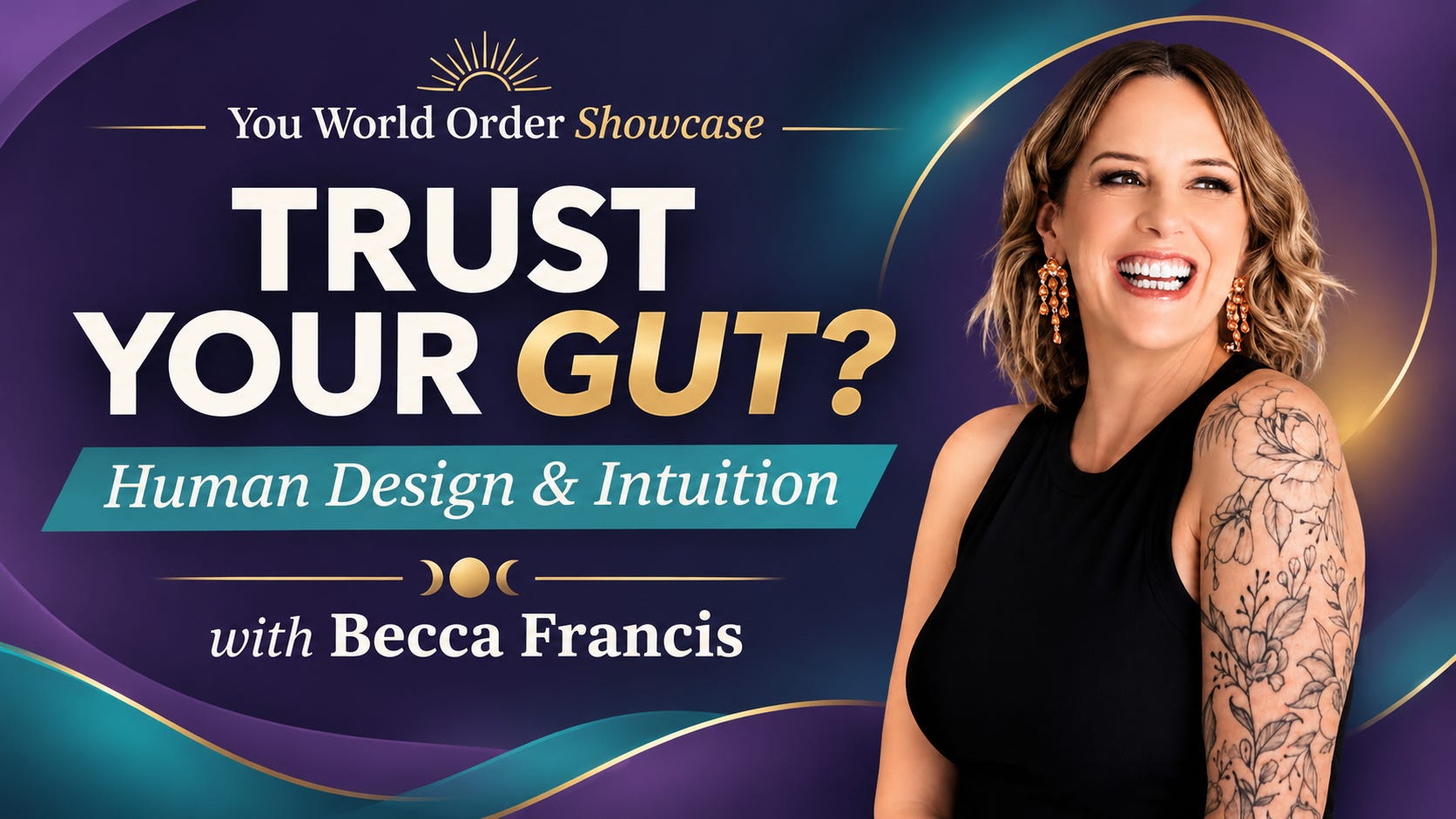
Why “Trust Your Gut” Might Be Bad Advice
We’ve all heard it. Trust your gut. Follow your intuition. Listen to that little voice inside. Okay, but what if you don’t know what your intuition sounds like? What if your gut tells you one thing on Tuesday and something completely different on Thursday? And how do you know whether you’re receiving some kind of intuitive message or just telling yourself what you want to hear? These are some of the questions I explored with Becca Francis , a psychic medium, spiritual advisor, and Human Design teacher, on the You World Order Showcase Podcast. What I particularly enjoyed about this conversation was how practical Becca is about something that can seem pretty mysterious. What if intuition works differently for everyone? One of the things Becca explained is that Human Design offers a way to explore how we process information and make decisions. If you’re unfamiliar with Human Design, it’s a system that uses your birth information to create a chart describing your energetic makeup. Becca uses it to help people understand their own patterns rather than continually trying to operate like someone else. She discovered Human Design in her late 40s, after spending years trying to fit into expectations that never quite suited her. Within nine months of discovering and experimenting with it, she’d left a corporate career she’d been trying to escape for 15 years. I love Human Design for a similar reason. It feels like permission to be yourself. We spend so much of our lives being told we’re too much of this, not enough of that, too loud, too sensitive, too ambitious, too whatever. And somewhere along the way, we start believing we need to become someone else to be successful or accepted. What if we don’t? Your intuition isn’t necessarily your thoughts Here’s where our conversation got particularly interesting. Becca explained that mental chatter and intuition aren’t necessarily the same experience. You know that thing where you get an idea, and then your brain spends the next 45 minutes arguing with itself about whether the idea was any good? I suspect we’ve all been there. Becca teaches a simple exercise to help people get out of their heads and pay attention to what’s happening in their bodies. Relax your jaw. Let your tongue relax. Take a breath. Notice what you’re feeling. That’s it. No elaborate ceremony required. She also recommends keeping a journal of intuitive impressions. Write down what you noticed, when it happened, and what was going on around you. Then revisit your notes later. The idea is to develop trust through observation rather than expecting yourself to magically know what to believe. And I think there’s something useful in that approach regardless of how you understand intuition. What about connecting with people who’ve died? We also explored Becca’s work as a psychic medium and her belief that connecting with loved ones who’ve passed isn’t something reserved for a handful of specially gifted people. She described how these experiences might involve a familiar smell, a song, an image, or simply a feeling. I’ve had experiences of my own with spiritual guides, including one named Joan who appeared to me looking rather like a Matisse painting, complete with red lipstick, a red scarf, and unicorns. Yes, unicorns. 😂 Becca’s suggestion for anyone interested in exploring this kind of connection is surprisingly simple. Find somewhere quiet. Perhaps play music that reminds you of someone you love. Sit with their photograph if you’d like, and pay attention to what you experience. You don’t need to force anything or decide immediately what an experience means. Just notice. One phrase she uses with her students is “What if?” What if that wasn’t simply a coincidence? What if there’s something worth exploring? I like the openness of that question. You can be curious without having to arrive at a conclusion. The part that stayed with me Toward the end of our conversation, Becca made a point about self-trust that I thought was particularly useful. We keep being told to trust ourselves, but how exactly do we do that when we’ve spent years questioning our own judgment? Her answer was to start noticing, experimenting, recording our experiences, and looking back at what we discover. Trust develops through experience. And isn’t that an interesting way to approach life in general? Whether you’re exploring spirituality, making decisions about your business, or wondering what you want the next chapter of your life to look like, you don’t have to have everything figured out before you begin. You can get curious. Try something. Pay attention. Adjust. You might discover that the answers you’re looking for aren’t quite where you’ve been searching. Listen to the complete conversation Becca and I covered considerably more than I’ve shared here, including the different intuitive senses, how Human Design relates to mediumship, and some personal experiences that made this conversation especially fun. 🎧 Listen to the full, uncut You World Order Showcase Podcast episode with Becca Francis below. 🎁 Develop Your Intuition If you’d like to explore your own intuition, Becca offers a free five-day intuition challenge at BeccaFrancis.com/intuition . One more thing about knowing where you’re going All this talk about understanding ourselves and trusting our own direction reminds me of something I teach in my work with coaches and spiritual entrepreneurs. Before you start following somebody else’s strategy for getting visible, it’s worth knowing what you actually want that visibility to accomplish. What’s your endgame? Because building an audience and building a business that supports the life you want aren’t necessarily the same thing. I’ve created a free quiz to help you explore that. Take the Is Your Visibility Leading Somewhere Quiz It will help you see where your visibility efforts are taking you and what might need some attention. After all, knowing where you want to go makes it a whole lot easier to recognize which opportunities are worth following. And which ones you can happily leave for somebody else. With love & clarity, Jill Hart💜The Coach’s Alchemist Amplify Your Voice • Monetize Your Mission • Get Visible This is a public episode. If you'd like to discuss this with other subscribers or get access to bonus episodes, visit hartlifecoach.substack.com/subscribe
November 2, 202630 min
What If “Trust Your Gut” Is Bad Advice? How to Recognize Your Real Intuition with Becca Francis
We’re constantly told to trust our intuition —but what if the way you’ve been trying to hear yours isn’t actually how your intuition speaks to you? And how do you know whether that sudden thought, feeling, image, or knowing is genuine intuition… your mind creating a story… or perhaps even communication from someone you love who has passed? In this episode of The You World Order Showcase Podcast , I’m joined by Becca Francis , Lisa Williams Certified Spiritual Adviser, internationally certified psychic medium, healer, and Human Design teacher, for a fascinating conversation about the intersection of Human Design, intuition, self-trust, and mediumship . Becca challenges one of the most common pieces of spiritual advice: “Trust your gut.” Because how can you trust something when you don’t yet know what it feels like—or how your intuition is designed to communicate with you? Human Design can offer clues about how you receive information, make decisions, and distinguish your inner knowing from the mental chatter we’ve been conditioned to rely on. We also explore something even more intriguing: Could you already be receiving signs or communication from loved ones who have passed without realizing it? Becca shares what spirit communication can actually feel like, why different people experience it through different senses, and how something as simple as asking “What if?” can help you become more receptive to the subtle things you might otherwise dismiss as coincidence. You’ll discover why self-trust doesn’t necessarily come before intuition—it can be built through evidence. Becca recommends recording those unexpected knowings, sensations, images, or messages and then looking back later to see what proved accurate. Over time, those little validations can help you recognize your own intuitive language. If you’ve ever wondered, “Was that my intuition… or did I just make that up?” this conversation may completely change the question you ask next. In this episode, we explore: Why “trust your gut” may not work for everyone How Human Design can help you understand your unique intuitive signals The difference between mental chatter and inner knowing Why intuition can show up through your body rather than your thoughts How to begin recognizing communication from loved ones in spirit Why some people see, hear, feel, or simply know The simple “What if?” practice Becca teaches her students How keeping an intuition journal can build genuine self-trust 🎁 Develop Your Intuition Becca has created a free 5-day intuition challenge designed to help you experiment with your intuition, explore some Human Design, and begin discovering how your own inner knowing communicates with you. Visit BeccaFrancis.com/intuition to get started. ✨ Ready to amplify your voice, monetize your mission, and attract clients without chasing them? Visit CoachesAlchemist.com to schedule your free Client Acquisition Audit and discover where your client journey may be breaking down—and what to focus on next. This podcast uses the following third-party services for analysis: Podtrac - https://analytics.podtrac.com/privacy-policy-gdrp This is a public episode. If you'd like to discuss this with other subscribers or get access to bonus episodes, visit hartlifecoach.substack.com/subscribe
October 28, 202617 min
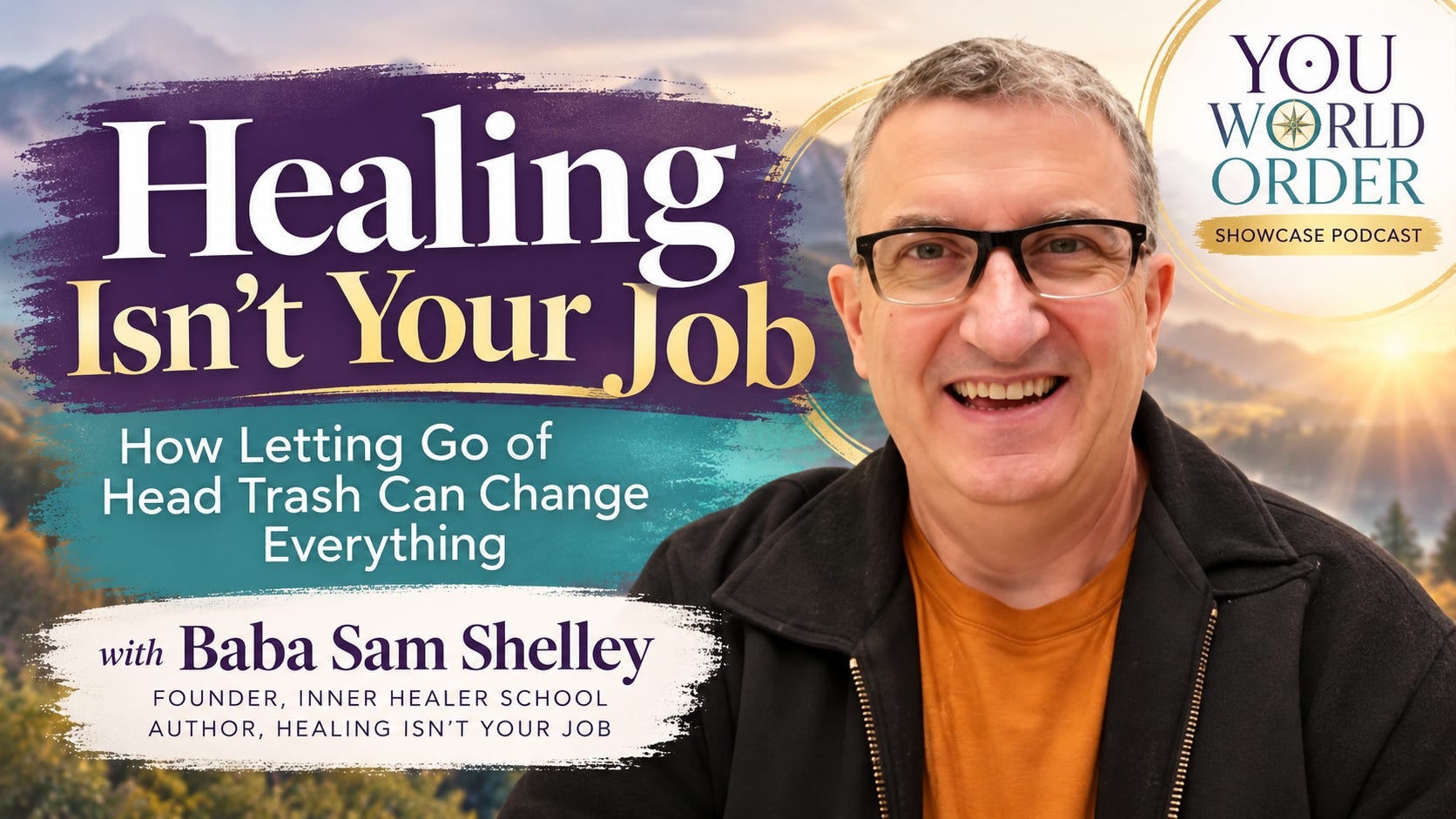
Healing Isn’t Your Job: What Happens When You Stop Fighting Your Mind?
What if healing begins when we stop trying so hard to make it happen? Imagine spending 38 years of your life being sick. Multiple diagnoses, 13 medications a day, and eventually needing a cane and walker just to get around. Now imagine someone telling you that perhaps the answer isn’t another treatment, another protocol, or another expert. Maybe it’s learning to stop believing everything your mind tells you. That’s the conversation I had with Baba Sam Shelley , founder of the Inner Healer School and author of Healing Isn’t Your Job , on this episode of the You World Order Showcase Podcast. Sam’s story is extraordinary. He describes living with multiple sclerosis, bipolar disorder, migraines, and other chronic conditions before experiencing what he considers a profound healing transformation. But what interested me wasn’t simply his recovery story. It was his explanation of how easily we turn healing into another full-time job. When Your Mind Becomes the Problem Solver When something goes wrong in our lives, our minds immediately get busy. What’s causing this? What should I do? What happens if it gets worse? Who has the answer? And before long, we’re researching, comparing treatments, reading books, and collecting opinions from people who are absolutely certain they know what we should do. Sam calls this mental chatter “head trash.” It’s the endless stream of thoughts that convince us something is wrong, something needs fixing, and we need to figure it out immediately. The problem is that our thoughts aren’t necessarily telling us the truth. They’re often guesses, predictions, old beliefs, or imaginary conversations about things that haven’t happened. And yet we treat them as facts. The Moment Everything Changed Sam originally started meditating for one simple reason. He desperately wanted peace. He wasn’t trying to cure his illnesses. He just wanted some relief from the mental noise that had accompanied years of physical and emotional suffering. Like many people, he initially believed meditation meant stopping his thoughts. So he sat there telling his mind to stop thinking. Which, of course, became another thought. Then something occurred to him: “If I’m aware of my thoughts, then I’m not my thoughts.” That realization opened an entirely different question. If he wasn’t his thoughts, who was he? Over time, Sam describes developing a deep sense of connection with what he calls his perfect spirit, an essential part of himself that existed beyond his diagnoses and circumstances. He says that within 14 months, his health had transformed dramatically. He describes returning to a neurologist whose examinations revealed a very different picture from the one documented during his years of illness. His experience is personal, not evidence that meditation can cure conditions such as MS or bipolar disorder. But it led him to explore how our relationship with our thoughts influences the way we experience life. Are You Practicing Healing or Performing It? One of my favorite parts of our conversation was Sam’s distinction between performance healing and real healing. Performance healing is what happens when we become so focused on doing everything correctly that healing itself becomes another source of pressure. We follow the prescribed routine, buy the supplements, practice the techniques, and check all the boxes. And then we worry because we aren’t seeing the results we expected. Sam suggests that sometimes we’re simply following someone else’s blueprint. That doesn’t mean useful practices or professional guidance have no value. It means we can become so consumed with searching outside ourselves that we stop paying attention to our own experience. I love the way he describes his book as being about subtraction rather than addition. Instead of asking what else we need to do, perhaps we could occasionally ask what we’re ready to put down. Your Pain Is Real. It Doesn’t Have to Become Your Identity. There’s an important distinction here, particularly in spiritual conversations. Acknowledging our deeper spiritual nature doesn’t mean denying physical pain, emotional suffering, or the need for medical care. Sam makes this point himself. We can recognize that something hurts without allowing that experience to become the complete definition of who we are. He shares the Buddhist teaching about two arrows. The first arrow represents the pain we experience. The second is the story we create around that pain. Why is this happening? Will it ever stop? What does it mean about my future? We may not be able to immediately remove the first arrow. But perhaps we can begin changing our relationship with the second. What If You Let Yourself Enjoy Life Now? Toward the end of our conversation, I returned to the question that inspired the episode. If healing isn’t our job, whose job is it? Sam’s answer was that our bodies possess an innate capacity for repair and regulation, and our role is to create conditions that support that capacity. Rest. Presence. Less unnecessary stress. And something we frequently overlook. Joy. A warm cup of coffee. Playing with your dog. Listening to music. Sitting outside and noticing the world around you. Not because these things guarantee healing, but because life is happening right now, even when circumstances aren’t ideal. And we deserve to experience it. Perhaps the invitation isn’t to abandon the things that support our well-being. It’s to stop turning our lives into endless improvement projects. Because there’s a difference between caring for yourself and constantly treating yourself as something that needs fixing. Listen to the Full, Uncut Conversation Hear Baba Sam’s complete story, including his experience with chronic illness, his spiritual awakening, the role of meditation, and why he believes trusting your inner wisdom can change your relationship with yourself. Connect With Baba Sam Shelley If this conversation resonates with you, Sam has several resources where you can explore his approach more deeply. * Book: Healing Isn’t Your Job on Amazon . Explore his approach to releasing mental struggle and reconnecting with your inner wisdom. * Free community: Inner Healer School on Skool . Connect with Sam and others exploring presence, self-trust, and a different relationship with healing. * Substack: Follow Baba Sam Shelley for his writing and reflections. This episode explores one guest’s personal healing experience and spiritual perspective. It is not medical advice, and practices such as meditation should complement rather than replace appropriate medical care. Never discontinue prescribed medication without consulting a qualified healthcare professional. I’d Love to Hear Your Thoughts Have you ever noticed yourself turning personal growth or healing into another thing you have to get right? What might change if you gave yourself permission to stop fixing everything for a little while? I’d love to hear your perspective in the comments. With love & clarity, Jill Hart💜The Coach’s Alchemist Amplify Your Voice • Monetize Your Mission • Get Visible Ways to Work With Me If you’re building a business around your ideas, expertise, or message, here are a few ways I can help you turn your visibility into something that actually leads somewhere. 💜 Build a Client Acquisition System Join Client Acquisition for Coaches , my free community for coaches and spiritual entrepreneurs who want a simpler, more sustainable way to turn content, visibility, and relationships into clients. 🔍 Get Clear on Your Next Best Move Book a Client Acquisition Audit and I’ll take a look at what you’re already doing, where opportunities may be getting missed, and what I’d recommend as your most logical next step. 🌱 Build Your Substack Join Learn Substack for practical help growing your publication, using Notes, building your audience, and connecting your Substack to the rest of your business. ✨ Set Your Substack Up Right Want help getting the pieces in place? Join me for the Substack Setup Intensive . Annual Learn Substack members receive 50% off the Intensive. 📌 Get More… This is a public episode. If you'd like to discuss this with other subscribers or get access to bonus episodes, visit hartlifecoach.substack.com/subscribe
October 28, 202647 min
Healing Isn’t Your Job: What Happens When You Stop Believing Every Thought
For 38 years, Baba Sam Shelley says being sick was practically a full-time job. By his early 40s, he was living with five diagnoses doctors called incurable, taking 13 medications a day, and relying on a cane and walker. Fourteen months after changing his relationship with his anxious mind, he says his life—and his health—looked dramatically different. In this episode of The You World Order Showcase Podcast , Baba Sam joins Jill Hart to explore the provocative idea behind his book, Healing Isn’t Your Job . What if the mind constantly trying to diagnose, fix, predict, and protect you isn't actually the part of you that knows the way forward? They explore the difference between thoughts and inner knowing, why Sam calls anxious mental chatter “head trash,” the role presence played in his journey, and how healing practices themselves can sometimes become another source of pressure. Sam shares the realization that changed everything for him: if you can observe your thoughts, you are not your thoughts. This is a conversation about getting quiet enough to hear the wisdom beneath the noise, questioning the stories we automatically accept as truth, and allowing more presence, trust, joy, and ease into our lives. Because maybe your job isn’t to figure out how to heal. Maybe your job is to stop getting in the way of the wisdom that already knows what to do. https://www.skool.com/inner-healer-school https://babasamshelley.substack.com/ Want premium clients from your content? Grab a free Client Acquisition Audit and I’ll show you exactly where your message, offer, and CTA are leaking conversions—and the 3 fixes to turn your podcast/Substack into a client pipeline. 👉 Book here: https://coachsalchemist.com This podcast uses the following third-party services for analysis: Podtrac - https://analytics.podtrac.com/privacy-policy-gdrp This is a public episode. If you'd like to discuss this with other subscribers or get access to bonus episodes, visit hartlifecoach.substack.com/subscribe
October 27, 202625 min
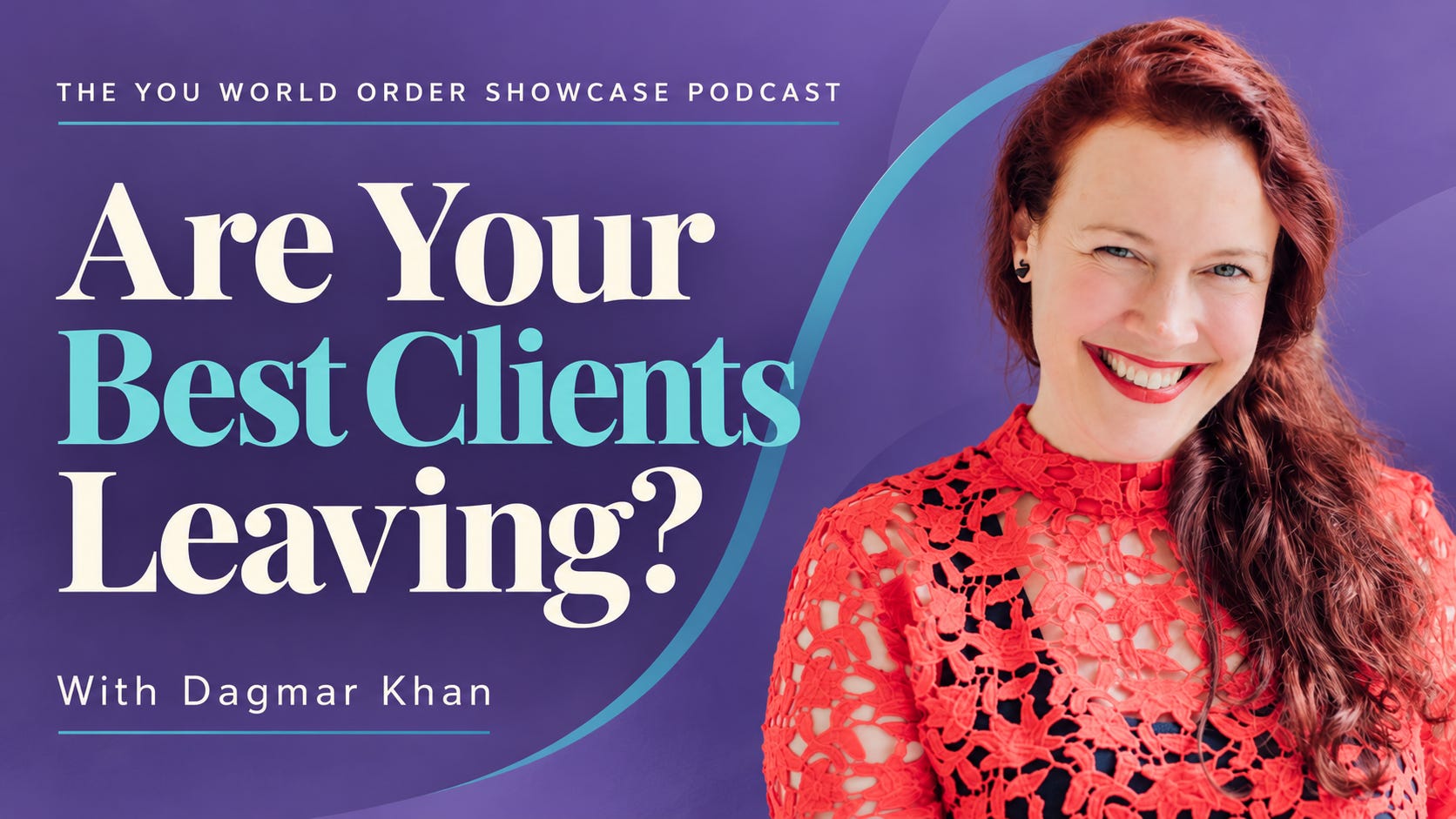
Are You Accidentally Telling Your Best Clients to Leave?
Are You Accidentally Telling Your Best Clients to Leave? You pour yourself into your clients. You help them make meaningful changes, celebrate their breakthroughs, and build relationships that go far beyond a transaction. Then your program ends, everyone says goodbye, and you’re back at your computer wondering where the next clients will come from. Sometimes a client has received exactly what they needed and is ready to move on. But sometimes the relationship ends because your business has no clear place for it to continue. That distinction is at the heart of my conversation with Dagmar Khan | Client Success creator of the Clients for Life method. We explored what happens when coaches and spiritual entrepreneurs build a client journey that makes room for continued growth. When Graduation Feels Like Starting Over Dagmar described a graduation call in December 2020. Her clients were celebrating a year of growth, sharing their experiences, and acknowledging everything they had accomplished together. It was the kind of moment a coach works toward. Yet she was feeling dread. As she watched people leave the Zoom room, she realized she had no next chapter to offer them. She had invested deeply in these relationships, and now she faced the pressure of filling another cohort. That experience led her to examine how a transformational business could support clients beyond an initial program. What would need to change so people could continue growing with a guide they already trusted? Give Your Clients Somewhere to Grow A program with an end date can serve a valuable purpose. The question is what happens afterward, especially when clients want continued support. Dagmar’s approach begins with a curriculum that develops alongside the client. Someone may initially need foundational skills. Later, they need help applying those skills, navigating setbacks, or exploring possibilities they couldn’t have imagined when they began. The support that helps someone get started may look very different from the support that helps them keep growing. Your offers can reflect that progression, giving clients a meaningful next step when it fits their goals. This requires listening. Before creating another program, ask your clients what they’re working toward, where they feel stuck, and what kind of support they would welcome next. Their answers can reveal opportunities you might otherwise overlook. More Information Isn’t Always More Helpful During our conversation, I brought up something I see often: coaches trying to deliver everything they know in one enormous package. The intention is generous, but clients still have to find the time and energy to use it. Someone balancing a business, children, or care for an aging parent may need help with one immediate challenge. A focused workshop, practical tool, or smaller offer can give them something they can apply now. Dagmar also pointed out that intensive experiences have their place. Some clients want concentrated support to make progress quickly. Designing a thoughtful client journey means considering the result someone wants and the way they can realistically engage with the work. A useful first experience can build trust and help a client recognize whether deeper support is right for them. Build a Community People Can Return To One of my favorite parts of this conversation was exploring how relationships can evolve without disappearing. I grew up in a military family, moving every couple of years and saying goodbye to people I thought I would never see again. Years later, online communities made some of those connections possible again. Having a place to reconnect mattered. A client community can offer that same possibility. People can ask questions, share what they’re learning, celebrate progress, and contribute their own experience as they grow. Over time, the relationships between members become part of what makes the space valuable. For coaches, that creates an opportunity to walk alongside people through different seasons of their development. Listen to the Full Conversation Dagmar and I explore client relationships, community, and the practical choices that can help your business support a longer journey. Connect With Dagmar Dagmar is here on Substack at Clients for Life . Visit her publication and send her a message about what resonated with you from our conversation. She also shared a free Clients for Life Design Session , where she explores your current offers and helps you map a personalized client journey. As you look at your own business, consider this: when a client finishes working with you, do they know what’s possible next? With love & clarity, Jill Hart💜The Coach’s Alchemist Amplify Your Voice • Monetize Your Mission • Get Visible Ways to Work With Me If you’re building a business around your ideas, expertise, or message, here are a few ways I can help you turn your visibility into something that actually leads somewhere. 💜 Build a Client Acquisition System Join Client Acquisition for Coaches , my free community for coaches and spiritual entrepreneurs who want a simpler, more sustainable way to turn content, visibility, and relationships into clients. 🔍 Get Clear on Your Next Best Move Book a Client Acquisition Audit and I’ll take a look at what you’re already doing, where opportunities may be getting missed, and what I’d recommend as your most logical next step. 🌱 Build Your Substack Join Learn Substack for practical help growing your publication, using Notes, building your audience, and connecting your Substack to the rest of your business. ✨ Set Your Substack Up Right Want help getting the pieces in place? Join me for the Substack Setup Intensive . Annual Learn Substack members receive 50% off the Intensive. 📌 Get More Mileage From What You Already Create The Intentional Pin Tool helps you turn your existing Substack posts, articles, podcasts, products, and other content into strategic Pinterest pins designed to keep sending people back to your work long after you publish it. You don’t need to do all of these. Start with the one that solves the problem you’re working on right now. This is a public episode. If you'd like to discuss this with other subscribers or get access to bonus episodes, visit hartlifecoach.substack.com/subscribe
October 26, 202632 min
Why Great Clients Leave—and How to Design a Business They Can Grow With
What if your best clients aren’t leaving because your coaching failed—but because your business quietly tells them their journey with you is over? In this episode, Jill welcomes Dagmar Khan, creator of the Clients for Life methodology, to explore the hidden design flaw that keeps transformational businesses trapped in a revolving cycle of constantly finding new clients. Dagmar shares how to create an intentional client journey that gives people meaningful ways to continue learning, evolving, and contributing long after their first program ends. Together, Jill and Dagmar discuss why extraordinary transformation deserves an extraordinary client experience—and how long-term client relationships can deepen both your impact and your income. You’ll discover: The simple sign that your offers may be designed for clients to leave Why a program’s end date shouldn’t mean the relationship has to end How to create a clear next chapter for your clients Why small initial wins can lead to greater transformation and lifetime client value How community, co-creation, and collaboration encourage clients to stay Why serving existing clients more deeply can be more sustainable than constantly reacquiring new ones If you love your clients and want to continue walking alongside them as they grow, this conversation will help you rethink what becomes possible after the initial transformation. Connect with Dagmar on Substack: https://clientsforlife.substack.com Claim your free Clients for Life Design Session: https://embodiedgrowth.co/design-session Ready to build a more connected path from visibility to paying clients? Schedule your free Client Acquisition Audit: https://thecoachesalchemist.com This podcast uses the following third-party services for analysis: Podtrac - https://analytics.podtrac.com/privacy-policy-gdrp This is a public episode. If you'd like to discuss this with other subscribers or get access to bonus episodes, visit hartlifecoach.substack.com/subscribe
October 21, 202610 min
Stop Using PDFs: How a Free Skool Community Can Become Your Next Client Attraction Engine
You know the routine. Someone discovers your content, downloads your free PDF, gets added to your email list, and then... what? You send a welcome sequence. Maybe they open a few emails. Maybe they don’t. Eventually, you make an offer and hope they remember why they subscribed in the first place. There’s nothing inherently wrong with email marketing. But I’ve been thinking about whether we’re making client attraction more complicated than it needs to be. What if we stopped trying to move people through a funnel and started inviting them into a conversation? That’s exactly what I explored with Lidia Axe , a former PwC director, London Business School EMBA graduate, and community-building strategist who helps coaches and experts turn their knowledge into paying clients using Skool. And her approach challenges some familiar assumptions about how we attract, nurture, and convert potential clients. Your Cmmunity Can Be the Lead Magnet One of Lidia’s strongest points was beautifully simple: Treat your free community as your lead magnet. Instead of offering another downloadable workbook, invite people into a space where they can learn something useful, ask questions, and connect with others who share their interests. You can still provide the resources you would normally include in a lead magnet. The difference is what happens afterward. A PDF is generally a one-way interaction. Someone downloads it, reads it (hopefully), and moves on. A community creates opportunities for ongoing conversation. Members can ask for clarification, share experiences, celebrate progress, and get to know the person behind the business. For coaches especially, that’s important. People aren’t simply purchasing information. They’re deciding whether they trust you enough to invite you into some aspect of their lives. A free community gives them an opportunity to experience your approach before making that decision. One Simple Win Is Enough Here’s where I think many coaches make things unnecessarily difficult. We assume that if we’re giving something away for free, it needs to be impressive. So we build an enormous course, create dozens of resources, and organize everything into complicated learning pathways. Meanwhile, the person joining our community just wants help solving one problem. During our conversation, we discussed the importance of giving members one simple win at a time . Lidia emphasized that a free Skool community doesn’t need multiple classrooms or an elaborate curriculum. One classroom can be enough. She shared the example of a community member offering a seven-day fatigue reset. Rather than trying to teach everything about wellness, the offer focuses on a specific experience. That’s something coaches can learn from. Make the promise clear. Make the first step achievable. Give people an opportunity to experience progress. Then build from there. A Community Needs More Than Content Lidia made a comparison that made me laugh because it’s so accurate. Remember Tamagotchis? Available still on Amazon! This is an affiliate link (I’ll receive a very small commission at no cost to you if you chose to purchase one of these through this link) Those little digital pets needed constant attention. Forget about them for a few days, and things didn’t go particularly well. Lidia compared running a community to caring for a Tamagotchi. You can’t create a Skool group, upload a few lessons, and disappear. Well, you can. But don’t expect much to happen. Community requires participation. That doesn’t mean spending every waking hour responding to posts. It means showing up consistently, encouraging conversations, and giving people reasons to return. In my own community, we use recurring activities like our Daily Notes Boost to bring people together. Members share what they’re creating, explore each other’s work, and support one another. The activity itself matters, but the relationships developing around it matter even more. And that’s something a static lead magnet simply cannot reproduce. Build Rituals People Look Forward To One of my favorite ideas from our conversation was Lidia’s approach to community rituals. She recommends creating recurring activities that reflect your community’s personality. In her community, she holds Failure Celebration Wednesdays . Yes, they celebrate failures! We spend so much time highlighting wins that we sometimes forget how much we learn when something doesn’t work. Lidia encourages members to share those experiences rather than hide them. It’s memorable, a little unconventional, and perfectly aligned with her philosophy of learning through action. Other examples she shared include community crawls, weekly accountability, and regularly scheduled updates. The point isn’t to copy somebody else’s activities. It’s to establish something your members recognize, appreciate, and anticipate. You know you’ve created something meaningful when people notice that a favorite community ritual hasn’t happened. You Don’t Have to Be Everything to Everyone Another important part of our conversation centered on expectations. Lidia has a refreshingly direct approach to community leadership. She once told her members that if they were waiting for a babysitter, she wasn’t coming. Her point wasn’t that members shouldn’t receive support. It was that building a business requires personal responsibility. You can provide resources, organize events, and communicate opportunities without reminding people every ten minutes that something is happening. And you don’t have to appeal to everyone. In fact, Lidia believes that having a distinctive personality and point of view can help attract the right people. I agree. When you try to make everyone comfortable, you can end up creating something that doesn’t feel particularly meaningful to anyone. The goal isn’t to build the largest possible community. It’s to create a place where the right people want to participate. A Community Can Be Free and Still Support a Business This is where the conversation gets especially interesting for coaches. A free community doesn’t have to remain your only offer. Lidia described several ways to create paid opportunities once members are engaged and interested. These include premium access to learning materials, masterminds, group cohorts, and one-time offers. For example, she uses a drip-released learning experience in her free community while offering an option to pay for immediate access. The important distinction is that you’re not requiring someone to buy before they’ve had an opportunity to get to know you. You’re building trust through participation and offering additional support when it makes sense. Of course, Lidia was equally clear about something else. If you’re building a community to make money, you’re building a business. That means marketing, onboarding, customer support, administration, and all the other responsibilities that come with entrepreneurship. A low-cost platform doesn’t eliminate the work. But it can give you a more personal way to attract and nurture potential clients. Maybe the Real Shift Is From Collecting Leads to Building Relationships What stayed with me most after our conversation wasn’t a particular Skool feature. It was the reminder that community is fundamentally about people. We can become so focused on funnels, automation, conversion rates, and growing email lists that we forget what we’re actually trying to accomplish. We’re trying to connect with people who need the work we’re here to do. We’re trying to build trust. We’re trying to create opportunities for meaningful transformation. And yes, we’re trying to build sustainable businesses along the way. For coaches and transformational entrepreneurs, those goals don’t have to compete. A thoughtfully designed community can bring them together. The question isn’t how much content you can give away. It’s what kind of experience you can create that makes people want to stay. That’s where relationships begin. And relationships are where sustainable businesses grow. Listen to the Full Conversation In my conversation wi… This is a public episode. If you'd like to discuss this with other subscribers or get access to bonus episodes, visit hartlifecoach.substack.com/subscribe
Is this your show?
Claim this listing to keep it up to date, reach guests who want to pitch you, and manage bookings with Guestify.