Find partners
The Vernon Richard Show

The Vernon Richard Show

Hosted by Vernon Richards and Richard Bradshaw

TechnologyBusinessInterviews guests

Episodes

37

Latest episode

Jul 2026

Language

EN

About the show

Vernon Richards and Richard Bradshaw discuss all things software testing, quality engineering and life in the world of software development. Plus our own personal journeys navigating our careers and lifes.

Listen to episodes

38 recent
August 24, 2026Episode 381 hr 13 min

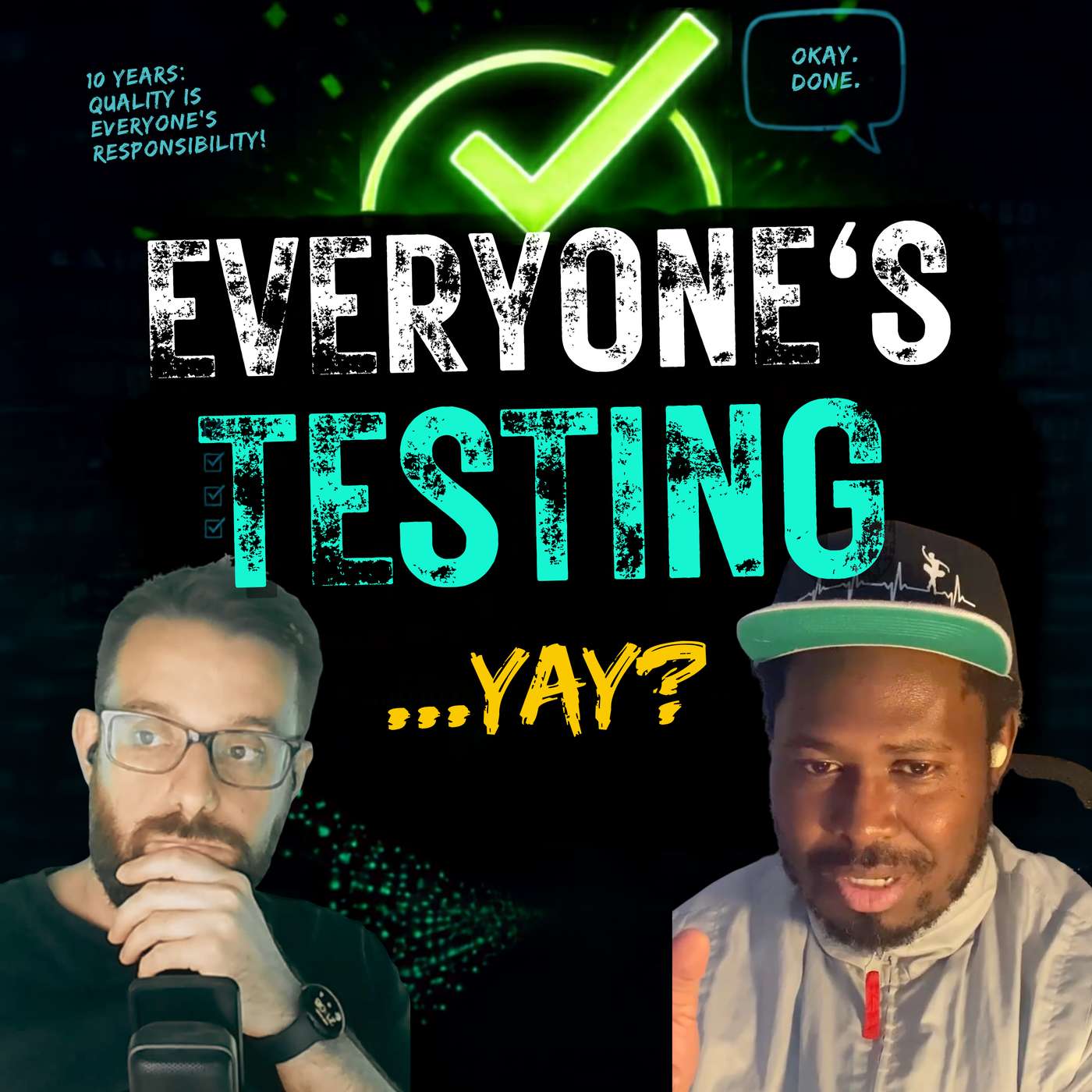
Everyone's doing testing now! ...Yay?

Rich reckons testers and QEs are the best positioned engineers of the next few years. Vern's question is whether a market that knows exactly what it wants also knows what it needs. Tell us which of us you think is closer, and why. If you violently agree or violently disagree, definitely tell us. Questions, comments, concerns, corrections, all of it is welcome, and the more of you who share what is actually happening where you work, the better a picture the rest of us get. Drop a comment on the post, drop a comment on the video, or come and find us on LinkedIn. And if you got something out of this one, like it, subscribe, and send it to the person you were arguing with about this last week. Links to stuff we mentioned during the pod: 03:34 and 11:33 - Rich's LinkedIn post , the one this whole episode is built on Rich's LinkedIn Rich's website 26:09 - Vern's newsletter, Yeah, But Does It Work? 30:02 and 37:52 - Steven Devonport Steve's comment on the post , and his follow up question about whether visibility and transparency are the currencies we should be spending 35:17 - Exploratory data analysis 40:28 - Huib Schoots 40:46 - Keith Klain Keith's blog, Quality Remarks 43:21 - Oracles and Evals 46:59 - If you’re wondering the term “The Fat Controller” comes from, here’s the Wikipedia entry for Sir Topham Hatt 49:51 - Rashik Prasad Rashik's comment about wearing more hats 50:58 - ELT stands for Executive Leadership Team aka The C-Suite. SLT is the Senior Leadership Team, the layer below 55:26 - Jason Smith Jason's comment about responsibility being distributed while accountability is not 58:10 - The episode where we talked about quality coaches and specialists being distributed across teams 1:00:48 - James Thomas , friend of the pod James's blog 1:04:23 - Episode 34, 6 AI Tool Ideas That Will Transform How You Test , where tool idea #1 is the LLM that reads your tickets for you 1:09:27 - The jagged frontier Helen Toner ’s article Taking Jaggedness Seriously where I first heard the term The paper where Ethan Mollick coined the term Vernon Richards and Richard Bradshaw on the show The Vernon Richard Show on LinkedIn and YouTube 00:00 - Intro 01:31 - ⚽️ Fresh World Cup wounds and new specs 03:34 - Careful what you shout from the rooftops 06:25 - The market is being very clear about what it wants 08:11 - Wanting vs needing 10:50 - Nobody enjoys writing test cases. Turns out that was practice 11:33 - The post, read out in full 13:38 - Rich joined that project as the AI QA and then… 15:50 - Building an agent felt suspiciously familiar 17:17 - "It's not my work": testing what the agent wrote 18:23 - Some engineers have not adapted, and it is not a skills problem 20:10 - The person on the project who found more bugs than Rich did 22:20 - "I don't know what a dedicated QA would have done" 24:09 - Two job numbers heading in opposite directions 26:09 - More code, more surface area: the maths from Vern's newsletter 28:06 - Why the model swore blind that Finnish was not on the list 30:02 - Steven Devonport takes issue with the word evolving 32:16 - Rich reckons most of the AI testing problem is old news 35:17 - The AI crowd reinvented exploratory testing and gave it another name 37:52 - Steve's tangent: which currency should we be spending? 42:46 - When 70/30 drifts to 55/45, who makes the call? 43:21 - We used to be handed our oracles 45:28 - Vern's problem with calling it a black box 46:59 - The Fat Controller heuristic (and his new name) 48:56 - The prompt was still asking for values that no longer existed 49:51 - Rashik Prasad: if everyone owns quality, who holds its shape? 50:58 - What an AI first mandate actually does to a company 52:45 - Everyone has hold of a different part of the elephant 55:26 - Jason Smith: responsibility travels, accountability stays put 56:29 - Four or five people changes more than you would think 59:09 - Your pod is not the only pod 1:01:12 - Responsible for the outcome, allowed to decide nothing 1:02:46 - Ten factories became a hundred 1:04:48 - The standards check nobody could build until now 1:05:28 - Vern remembers what everyone did to the linters 1:09:33 - Mostly right, most of the time, and the trap inside that 1:10:46 - Why Rich is excited anyway 1:12:05 - The market wants what it wants 1:12:43 - Wrap up
July 7, 2026Episode 3759 min

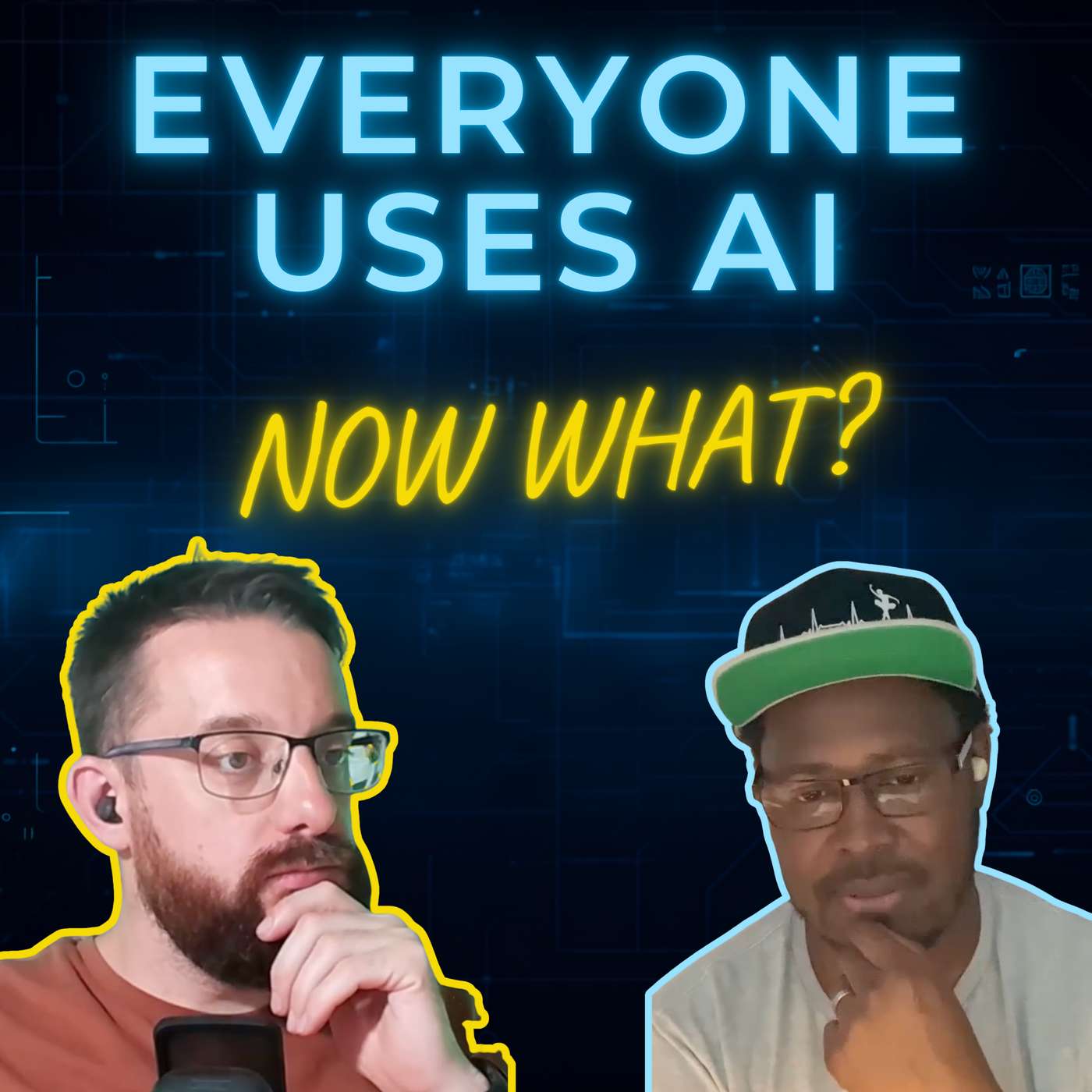
The Trust Recession Is Here. Now What?

Call to action - How are you proving you can actually use this stuff? Certs? Stories? A suspiciously long list of tools on your CV? We want to hear what the market is asking of you right now, especially if you're hiring or job hunting. And if your CV says "I use Copilot", ask yourself the question before Rich does: so what? Drop us a message on LinkedIn and let us know. AI is becoming an expectation rather than a differentiator. So if everyone is using it, how do you actually stand out? In this episode, Richard and Vernon discuss the changing job market, why simply saying "I use AI" no longer means much, and how to demonstrate real value in an industry that's changing faster than ever. From AI certifications and CVs to storytelling, trust, and communicating your impact, they explore what professionals should be focusing on next. **In this episode:** * Why AI is no longer enough to make you stand out * The return of certifications—and whether they matter * How to communicate your value beyond your CV * Why impact beats tool lists every time * Building with AI vs. building AI * The skills that will matter most in the years ahead If you enjoyed the discussion, don't forget to like, subscribe, and let us know your thoughts in the comments. How are you proving your value in the age of AI? Chapters 00:00 - Intro 01:19 - Welcome (Tees, Tiles, Travel, and Trouwen) 05:15 - Where should you place your bets right now? 08:29 - Wait, certifications are back? 11:50 - Do you still have your GCSEs on your CV? 13:34 - The three flavours of AI work 15:43 - Vern's guide to surviving the trust recession 20:04 - The AI etiquette flip nobody announced 21:27 - How to blow an opportunity in one DM 26:05 - Here comes the trough of disillusionment 29:53 - Rich's two-word CV test 32:31 - Manual, skilled, or knowledge work? (Vern's ATD talk preview) 35:58 - Testing has been rehearsing this for decades 40:15 - CV bullets that make Rich want to interview you 44:01 - How good at AI are you, really? 46:05 - The four levels Vern pinched from Dan North 48:30 - "It's my mission": how Rich works with AI 51:30 - The skill nobody's talking about 52:45 - Next time: who's looking after all these agents? 58:10 - Wrap up Links to stuff we mentioned during the pod 01:31 - OfferZen (who are still around - yay!) sponsored one of the Let's Test events in South Africa. The speakers got a tee for presenting! I would love it if we could figure out a way to run Let's Test South Africa again because it was an incredible event… 03:05 - Congratulations Beren and Elaine! ❤️ Other notable guests from the software world included: Cassandra H. Leung ( website and LI ) Ard Kramer ( LI ) Zeger Van Hese ( LI ) Viola Korte ( LI ) Geert van de Lisdonk (who Vernon rudely didn't mention but can also be found on LI 🤦🏾‍♂️) 05:47 - John Cutler John talks about Bets, Boards, Missions and North Stars from 2021 but if you want to read something more recent… … you should check out John's newsletter John's LinkedIn 08:52 - Anthropic's certifications (or learnings at least) 08:20 - Google's AI certifications (or learnings at least) BE ADVISED: These may not be the same ones Rich mentioned - YMMV! 12:12 - Chris Armstrong Chris's blog Chris's podcast The Testing Peers (of PeersCon fame!) Chris's YouTube Chris's LinkedIn 21:27 - Gergely Orosz aka The Pragmatic Engineer Here's the post about AI-written messages and it turns out Gergely had another example of this happen more recently 😬 The Pragmatic Engineer newsletter Also, if by some miracle you're reading this Gergely, I've learned how to pronounce your name properly now 🤦🏾‍♂️🙏🏾 VR 26:05 - The Gartner hype cycle (peak of inflated expectations, trough of disillusionment) 32:20 - Vernon's talk at Agile Testing Days 2026 If Testers Had a Dragon's Den Pitch, Would Anyone Invest? Hit him up for a discount code! 44:01 - An X post about how companies are talking about AI proficiency at the org level 46:05 - Dan North's talk on dynamic teams and skill levels It turns out (because Dan) he's done several talks on this topic! There's this (the first one I watched and the one Vernon had in mind)… and you can see the levels part here but honestly watch the whole thing because it's great There's also this which is a bit more recent and he explains it differently to the first talk 55:11 - OpenAI's article on harness engineering

June 10, 2026Episode 361 hr 5 min

The Job Your Boss Thinks You Do Is Disappearing

The chaps dig into another Keithism to see where it takes them. Keith Klain published a blog post that drew a line in the sand for testers. His conclusion is blunt: there's a specific type of testing work that too many in our industry believe is our raison d'etre, while the market is rapidly reassessing its value (and not in a good way!). Chapters 00:00 - Intro 01:12 - Welcome (may contain traces of Premier League banter) 03:00 - Who is Keith Klain and why should you listen to him? 06:30 - Checking vs testing: what's the actual difference? 12:00 - Keith's warning: AI is coming for the… 12:56 - The CEO has one job… 14:04 - …and they have two ways to do it 15:31 - If your value isn’t the amount of tests you’ve executed, what is it? 19:42 - Richard's updated AiT principle: shared understanding over assumed understanding 23:53 - Shift left is more than "test the requirement first" 27:18 - The ways your perceived value is constantly moving. 31:57 - Maaike's stance: what if you refuse to use AI entirely? 34:09 - Too big to fail? What AI investment really means for the industry 39:53 - The skill no one taught testers that now matters most 42:54 - "Become the insufferable AI person" and other survival tactics 45:22 - Keith's call to action 47:09 - Why no one at Test Coast said "risk" when asked why they test 51:01 - AI summaries as input to other AI: the risk nobody designed for 54:00 - How one bad step ruins everything 55:27 - Statistics, Hugging Face, and the skills testers need to learn next 57:43 - There’s more than one way to “be technical” 59:54 - A rallying cry from Rich to the testing community 01:04:00 - Forward-deployed engineers: just a QE by another name? Links to stuff we mentioned during the pod: 03:00 - Keith Klain Keith's blog Quality Remarks The blog post that triggered this episode: "Checking isn't testing. Soon it won't be employment either." Keith's LinkedIn 19:33 - ELT stands for Executive Leadership Team aka The C-Suite. The folks who have job titles like Chief Executive Office (CEO), Chief Technology Officer (CTO), etc. 20:00 - You can find Richard's AiT Principles here And you can listen to his new ideas about those principles in Episode 33 “Six Principles of Automation in Testing: Still Relevant in 2026?” We’ll add a link to the talk as soon as we can 27:18 - Vernon's Credibility Playbook 27:18 - Vernon’s upcoming Agile Testing Days talk “ If Testers Had a Dragon’s Den Pitch, Would Anyone Invest? ” DM Vern if you’re interested in going as he might be able to help… 😉 32:00 - Maaike's LinkedIn post Vernon referred to during the episode You should subscribe to her blog too 34:14 - John Cutler John’s newsletter John’s LinkedIn 37:26 - Simon Wardley If you're not following Simon Wardley, please follow Simon Wardley! His work on Wardley Maps and situational awareness in strategy is essential reading Simon's LinkedIn 46:38 - Rapid Software Testing (RST) is the methodology created by James Bach and Michael Bolton. 47:12 - The Test Coast Conference where Richard delivered a keynote 49:44 - Vidya Ranganathan’s fanbloodytastic post about the different kinds of risks we should be considering Vidya's LinkedIn 56:48 - Hugging Face The Hugging Face website The Wikipedia page

April 27, 2026Episode 3558 min

“Testing isn't a specialism"? You keep using that word…

"Testing Is Not a Specialism" - You keep using that word… Vernon got triggered. A bold LinkedIn post declared "PSA: testing is not a specialism. Thank you for your time." Mic drop, walk off stage, no explanation. And it wasn't just one person. So Vernon did what any self-respecting tester would do: he asked why. And didn't get an answer. In this episode, Vernon and Richard dig into why some developers seem to find the idea of testing as a specialism genuinely laughable, what happens when you confuse a skill with a role, and why, in a world where everyone's building agentic workflows, nobody seems to notice that they're writing skills.md files full of testing knowledge. They also explore how AI is already reshaping what's expected of every role on a software team, why "knowing what good looks like" has never mattered more, and what skill stacking means for testers who want to stay ahead of the curve. Chapters 00:00 - Intro 01:17 - Vern's welcome rant 01:42 - The topic: Is testing a specialism? 07:17 - Rich gets a chance to speak 😅 07:29 - Good Testers vs Bad Testers 11:15 - Aren't we all developers now anyway? 13:06 - There's testing and there's Testing 15:01 - Testers communicating their value 18:34 - If testing isn't a specialism, where does that leave agents and skills? 20:30 - The lads cook up a new way to reframe the situation 23:53 - Who should do testing? 32:27 - Vern believes these folks are saying one thing and doing another 35:02 - Rich wants to know what happens to the 0.5x Testers? 40:02 - Skill Stacking 45:36 - The thing most people haven't done but need to 50:04 - Are we all Domain Translators now? 54:23 - Wrap up Links to stuff we mentioned during the pod: 01:42 - Paul's interesting LinkedIn post that triggered Vernon 03:34 - The question I asked on LinkedIn about why "people" get so triggered about testing as a role 05:33 - Greg's interesting post about test management and levels of competence 06:31 - Jade Rubick's post questioning whether QA should exist at all! 10:46 - Angie Jones (the only thing Angie is terrible at is being terrible!) Angie's blog Angie's LinkedIn 14:11 - The episode When Everything Sounds Like Testing… How Do You Explain What You Really Do? 14:46 - Funnily enough, Vernon is giving this talk at Agile Testing Days 2026 ! It's called If Testers Had a Dragon's Den Pitch, Would Anyone Invest? DM Vernon if you would like a discount code for the conference! 15:07 - The very cool GreaTest Quality Conference 27:25 - Jason Bourne a fictional character from some of the best movies ever (especially the first two ^VR) 28:29 - Anne-Marie Charrett The excellent book in digital or physical versions Anne-Marie's website Be sure to check out the blog which is no longer pay-walled 🥳 Anne-Marie's LinkedIn 28:29 - James Bach The Test Jumper description we refer to James' blog James' LinkedIn 51:02 - Nate B. Jones (Shout out Martin for putting Vernon on to it 🙏🏾 The post about developer roles mentioned in the episode Nate's newsletter Nate's website Nate's YouTube Nate's LinkedIn 56:52 - Vernon did write Vernon Version 3 - Now with added AI! all about the skills he thinks he needs to develop going forwards Please like, subscribe, and share 😊 ^VR Got thoughts on whether testing is a specialism? We genuinely want to hear from you. Vernon still doesn't have an answer to his question. Run it past a friendly developer and let us know what they say. Drop us a message on LinkedIn and if Paul or Greg are listening, the invitation to come on the pod is very much open.

March 2, 2026Episode 3451 min

6 AI Tool Ideas That Will Transform How You Test

In this episode, Richard and Vernon explore the evolving concept of automation in quality, especially in the context of AI and Gen AI. They discuss how new technologies are blurring the lines between testing and quality, and what this means for the future of software development and testing practices. 00:00 - Intro 00:52 - Welcome and weekly catch-up 01:11 - Vern's deep dive into the AI rabbit hole 02:39 - Rich’s quit(er) work week, new threads, and dentists 04:15 - Richard buys a domain and we started the pod proper 06:09 - Tool idea #1: Using an LLM to evaluate user stories and acceptance criteria automatically 07:35 - Is analysing a story "testing" or "quality"? The ISTQB static analysis debate 10:27 - Vernon's diabetes analogy: AI is forcing us to finally do what we always said we should 12:19 - Better stories = better testing: how quality work amplifies everything downstream 13:11 - Tool idea #2: "If we made this change, what areas of the system would be impacted?" 14:23 - Distilling years of system knowledge into 5–10 questions an agent could ask 18:37 - Tool idea #3: The PR Analyser — summarising code changes through a testing and quality lens 21:45 - Vernon's "1 unit of effort, 5 units of testing" — the quality multiplier effect 23:29 - Comparing story analysis to actual implementation: where did understanding diverge? 24:43 - Tool idea #4: Dynamic test selection — cherry-picking the right tests to run first 27:05 - Tool idea #5: An agent that analyses failed builds and attempts to fix them 27:28 - Why Richard's first attempt always "fixed" the test instead of the code (and what was missing) 29:21 - Dan's AI agents: one thinking partner, one employee monitoring production 32:42 - The documentation goldmine: why AI-generated RCA notes might matter more than the fix 33:39 - Tool idea #6: A holistic quality dashboard pulling insights across stories, code, tests, and process 36:43 - John Cutler on context: it's not data you pass around — it's formed through interaction 40:43 - More options than ever: whether it's testing, quality, or static analysis — you can do it differently now 41:56 - The real skill: spotting the opportunity to make yourself more effective 42:30 - Ge Hill's Lump of Code Fallacy and why task analysis matters 43:34 - Why Richard got into automation: efficiency, not because he was told to 45:03 - Vernon's big question: in a world where agents can do everything, what's your performance review about? 46:52 - Context, craft, and product knowledge can't be delegated to tools yet 48:29 - Call to action: What are you building? What tools couldn't you build before that you can now? 49:29 - Upcoming: Test Automation Days and PeerCon Live in Nottingham Links to stuff we mentioned during the pod: 04:15 - Automation in Quality Richard bought the automationinquality.com domain! The concept explored throughout this episode. 05:28 - Kalpesh Sodha aka Kalps Shout out to Richard's colleague who played devil's advocate on the "is it testing or quality?" question 07:31 - Static analysis 29:44 - Dan "The Agile Guy" Elliott His post about how he uses AI agents as a "thinking partner" and an "employee" with different missions and capabilities Dan’s website Dan's LinkedIn 36:52 - John Cutler John Cutler's piece on how context isn't just data you move around — it's formed through interaction between people John's newsletter John's LinkedIn 42:37 - Rob Sabourin My quick Perplexity search for Rob's public material on Task Analysis Rob's Linkedin 42:45 - Michael “GeePaw” Hill His Lump of Code Fallacy . The idea that coding isn't just one activity — there are three flavours of work that occur when you code Michael’s website Michaels Mastadon 49:35 - Test Automation Days Richard will be keynoting at Test Automation Days Make sure you say hi if you’re there 50:10 - PeersCon Vernon and Richard will be recording a live episode at PeersCon ! If you're there, come say hi and grab a mic 🎙️

February 23, 2026Episode 331 hr 3 min

Six Principles of Automation in Testing: Still Relevant in 2026?

In this episode, Richard Bradshaw and Vernon discuss the relevance and application of the six principles of automation in testing in the context of AI advancements. They explore how these principles hold up in 2026, the challenges faced in automation, and the future of testing strategies. 00:00 - Intro 01:47 - Welcome (Richard is not at home 👀) 02:07 - Ramadan, cooking without tasting, and plastic teeth 🦷 04:01 - Today's topic: revisiting the AiT principles ahead of a keynote 04:58 - What is Automation in Testing (AiT)? 06:49 - Principle 1: Supporting Testing over Replicating Testing 07:01 - Vernon's take: testing is a performance, not a click sequence 08:22 - What the industry promised vs what automation actually does 08:49 - The serendipity you lose when a human isn't testing 09:59 - Agentic testing: observing more, but still not replicating humans 10:56 - The danger of anthropomorphising AI output 12:10 - LLMs always give an answer — and that's the problem 13:03 - Principle 2: Testability over Automatability 13:14 - Vernon's take: narrow vs broad — operate, control, observe 14:38 - Making apps automatable for the robots but not the humans 15:37 - The shiniest framework in a broken testing context 16:40 - If it's testable, it's probably automatable — but not vice versa 16:55 - Automation strategy vs testing strategy: when they compete, everyone loses 17:46 - The problem has always been testing, not automation 19:57 - Principle 3: Testing Expertise over Coding Expertise 20:18 - Vernon's take: testing expertise lets you leverage the tools 21:47 - The spoonfed tests problem: great at automating, lost without guidance 22:36 - The "code school" era: everyone told to learn to code 22:51 - Coding agents have changed the maths on this 26:01 - The new nuance: test design and framework knowledge over writing the code 28:44 - Evaluating code is a testing problem — and LLMs can help you do it 30:43 - Are agents as good as a junior developer? 31:42 - Outcome Engineering (O16G) and the race to write the AI principles 32:13 - Simon Wardley: we're in the wild west again 33:22 - Principle 4: Problems over Tools 33:29 - Vernon's take: the hammer and the nail 34:07 - Don't let your problems be shaped by the framework you have 34:36 - New automation opportunities beyond testing: PRs, logs, story review 35:30 - Principle 5: Risk over Coverage 36:12 - Vernon's take: 100% coverage ≠ 100% risk coverage 38:00 - The one test case, one automated test fallacy 39:04 - Where in the system is the risk? Do you even know your layers? 39:49 - Probabilistic vs non-deterministic: refining the language around AI 40:53 - Coverage as intentional vs coverage as a number someone picked once 43:15 - Principle 6: Observability over Understanding 43:24 - Vernon's take: just-in-time understanding vs reading everything upfront 44:12 - What the principle was actually about: making automation results observable 47:00 - Does this principle belong in testing, or has it grown into quality? 49:00 - So... what's missing? 50:00 - The four pillars: Strategy, Creation, Usage, and Education 57:05 - Automation in Quality: the bigger opportunity 01:01:00 - Wrap up + Vern's Lead Dev panel Links to stuff we mentioned during the pod: 04:00 - Automation in Testing (AiT) The principles live at automationintesting.com AiT was co-created by Richard Bradshaw and Mark Winteringham 04:00 - Test Automation Days The conference where Richard is giving his keynote — testautomationdays.com 24:48 - James Thomas The "kid in a candy shop" himself — James's blog and LinkedIn 31:42 - Outcome Engineering (016G) The article Richard shared before recording — worth tracking down if you're interested in where agentic development practices are heading 32:13 - Simon Wardley If you're not following Simon Wardley, please follow Simon Wardley! His work on Wardley Maps and situational awareness in strategy is essential reading Simon's LinkedIn 43:30 - Abby Bangser Vern's go-to person for all things observability. Abby's LinkedIn 46:04 - Noah Susman As it turns out, the quote Vern's referencing: advanced monitoring as "indistinguishable from testing" was not by Noah! It was Ed Keyes at GTAC 2007 . Noah's blog and LinkedIn 59:30 - Angie Jones Vern's been reading Angie's work on testing AI-enabled applications here and here . Angie's website and LinkedIn 01:01:30 - The Lead Dev panel Vernon will be part of " How to Measure the Business Impact of AI " — happening 25th February, free to sign up 01:02:00 - Richard's Selenium Conf talk " Redefining Test Automation " — the talk that the Test Automation Days keynote is shaping up to be a spiritual successor to.

January 26, 2026Episode 3253 min

This Was Supposed to Be About Testing

This was supposed to be about testing.Instead, it turned into a conversation about burnout, money, leadership, community, AI, and what it actually takes to build a sustainable life in tech.Richard and Vernon kick off 2026 reflecting on what they’re changing, what they’re rebuilding, and how testing and quality fit into a future shaped by intention rather than hustle. Links to stuff we mentioned during the pod: 05:19 - The Malazan Book of the Fallen by Steven Erikson 14:59 - The $1k Challenge by Ali Abdaal Vernon took part in last year 17:23 - The video from Daniel Pink on how to have a successful year Here's where Daniel talks about having a Challenger Network (but the whole video is 😙🤌🏾) 18:46 - Toby Sinclair Toby's website Toby's LinkedIn 19:24 - Keith Klain Keith's blog Keith's podcast Keith's LinkedIn 19:25 - Agile Testing Days conference 35:45 - What is Model Drift ? 41:06 - Glue work Tanya's Glue Work presentation which you can read or watch Vernon's talk about how glue work impacts Quality Engineers , Testers, etc. 48:06 - Gary "GaryVee" Vaynerchuk Gary's website Gary's YouTube 00:00 - Intro 00:54 - Greetings & where have we been? 01:32 - The holidays 02:34 - Rest & mood 04:00 - Routines for success 05:59 - Push-up challenge! 08:35 - Dopamine detox 10:28 - THE EPISODE BEGINS! 10:29 - What are our personal 2026 themes (rather than resolutions)? 10:59 - Rich's 2026 themes 13:10 - Vern's themes 17:58 - Friendship, loneliness, and being the initiator 21:28 - Rich has a two itches. One about writing... 21:56 - ...and another about hats 25:23 - Vern's leadership focus and testing foundations 31:06 - AI work: data mindset, agents, and the vibe coding divide 40:11 - Rant about AI testing being stuck in the past 46:37 - Do "cool" shit and "talk" about it. How to stand out from AI Slop 50:10 - Our podcast themes for 2026

October 21, 2025Episode 311 hr 0 min

Shifting Left: Agile vs. Waterfall in QA

In this episode of the Vernon and Richard show, the hosts engage in light-hearted banter about football before diving into a deep discussion on QA, QE, and testing. They explore the concept of 'shift left' in software development, comparing its application in agile versus waterfall methodologies. The conversation shifts to the evolving roles of QA and QE in the context of AI's impact on the industry, emphasizing the importance of task analysis and building a quality culture within teams. The episode concludes with reflections on managing expectations in QA roles and the future of jobs in the field. 00:00 - Intro 00:48 - Welcome and "Hey" (may contain traces of ⚽️) 04:45 - Olly's first question: Does shift left lend itself more to waterfall (than other methodologies)? 14:41 - Olly's second question: Does this limit how much agile can be used? Is there potentially a new methodology that can emerge from this? 22:31 - Olly's third question (remixed by Rich a little): " ...is it more now a case of making people aware that they can, should be considering things ahead of development? " 34:24 - Olly's fourth question: How far can you shift-left before it becomes overstepping? 51:53 - Olly's... which question is this now?! Next question! That works!: Where does the QA role end? Links to stuff we mentioned during the pod: 04:26 - Olly Fairhall Olly's LinkedIn Here's a link to what Olly sent us 04:45 - Waterfall (in software development) Wikipedia article about the history of the term This article goes into a little more detail about the different phases and characteristics of the model 07:29 - Dan Ashby 's (yes DAN'S!) famous diagram is part of his often cited " Continuous Testing " post 07:50 - For folks who don't understand that reference, it's... taken (🥁) scene from the movie Taken 08:10 - Rich's Whiteboard used to get a lot more love😞 22:31 - Olly's questions and thoughts that are guiding our conversation. Thanks Olly! 44:12 - The book " Who Not How " by Dan Sullivan and Dr. Benjamin Hardy 46:33 - Elisabeth Hendrickson Get Elisabeth's excellent book Explore It! Elisabeth's LinkedIn 46:49 - Alan Page Alan's newsletter Alan and Brent 's podcast Alan's LinkedIn 51:53 - Kelsey Hightower Kelsey did a Q&A at Cloud Native PDX and you can listen to the question and answer I was trying to describe here . I urge you to listen to the whole thing. Kelsey is an excellent orator, storyteller, and all-around human ❤️ 55:33 - Rob Sabourin My quick Perplexity search for Rob's public material on Task Analysis Rob's Linkedin 56:59 - Vernon's newsletter "Yeah But Does it Work?!" The issue mentioned is called " What Is The Vaughn Tan Rule and How Does It Impact Testing? " and talks about where we might start with unbundling

October 1, 2025Episode 301 hr 0 min

Measuring Software Testing When The Labels Don’t Fit

This episode is about the struggle to explain, measure, and name the work testers and quality advocates actually do — especially when traditional labels and metrics fall short. Links to stuff we mentioned during the pod: 05:05 - Defect Detection Rate (DDR) The rate at which bugs are detected per test case (automated or manual) No. of defects found by test team / No. of Test Cases executed) *100 15:06 - David Evans' LinkedIn 24:57 - Janet Gregory Janet's website Janet's LinkedIn 26:01 - Defect Prevention Rate Perplexity search results here 28:28 - Jerry Weinberg Jerry's Wikipedia page (his books are highly recommended) 49:33 - Shift-Left: The concept of moving testing activities earlier in the software development lifecycyle. Some resources explaining the Shift-Left concept (Perplexity link) 00:00 - Intro 01:11 - Welcome & "woke" testing 😳 03:15 - QA, QE, Testing… whatever we call it, how do we measure if we're doing a good job? 03:44 - Vernon’s first experience with testing metrics: more = better? 05:00 - Defect Detection Rate enters the chat 06:41 - Rich reverse engineers quality skills needed in the AI era 10:54 - How do we know if we’re doing any of this well? 12:40 - Trigger warning: the topic of coverage is incoming 😅 16:54 - Bugs in production 21:09 - Automation metrics: flakiness, pass rates, and execution time 24:29 - Can you measure something that didn’t happen? (Prevention metrics) 27:43 - Do DORA metrics actually measure prevention? 32:03 - Here comes Jerry! 33:50 - The one metric the business cares about... 36:23 - QA vs QE: whose “quality” are we "assuring"? 39:25 - What's the story behind the numbers? 48:29 - Rich brings in Shift Left Testing 50:14 - Metrics that reach beyond engineering 53:14 - Rich gets a new perspective on QE and the business 56:50 - Who does this work? Testers? QEs? Or someone else?

September 9, 2025Episode 2953 min

When Everything Sounds Like Testing… How Do You Explain What You Really Do?

In this episode, Richard and Vernon delve into the complexities of Quality Assurance (QA), Quality Engineering (QE), and testing in software development. They explore the evolution of these concepts, their interrelations, and the importance of metrics in assessing quality. The conversation highlights the need for a holistic approach to quality, emphasizing that both prevention and detection of bugs are essential. The hosts also discuss the challenges of defining these terms and the future of quality in the industry. Links to stuff we mentioned during the pod: 08:50 - Dan Ashby We're referring to Dan's 's excellent post called " Continuous Testing " (featuring his famous diagram!) 17:13 - Jit Gosai Jit's blog Jit's Quality Engineering Newsletter Jit's LinkedIn 19:24 - Quality Talks Podcast Stu's Quality Talks podcast that he co-hosts with Chris Henderson Stu's LinkedIn Chris's Linkedin 19:55 - The Testing Peers podcast 22:00 - DORA Metrics: DORA metrics are a set of key performance indicators developed by Google’s DevOps Research and Assessment team to measure the effectiveness of software delivery and DevOps processes, focusing on both throughput and stability 26:13 - A link from Episode 10 where Vern discusses Glue Work (be sure to check out the show notes on that episode) Quick overview of DORA metrics 34:43 - The Credibility Playbook A video course by Vernon as he experiments with building digital products. Check it out and let him know what you think of it! 😊 46:24 - Ali Abdaal Ali's website Ali's YouTube 00:00 - Intro 01:36 - Welcome 02:40 - Today's topic: What the hell is QA? QE? Testing? And is it all changing? 03:00 - Why is this bugging Rich? 05:11 - Fruit fly tangent 🍌🍊🍎🪰🐝🦋 06:27 - Rich's take on QA, QE, and Testing 08:31 - Vern's take on QA, QE, and Testing 11:15 - Is shift-left testing the same as QE? 13:05 - When the team tests early... is that QE then?! 16:18 - What's the big deal if we can’t define QE clearly? 19:27 - Why the Efficiency Era makes this even harder 22:55 - Trying to draw the Testing, QA, QE, Venn diagram 27:24 - Getting the QA, QE, Testing blend just right. What's the right mix? 29:52 - The kinds of work we take on as our careers grow 34:08 - What Testers get rewarded for 45:34 - How Ali Abdaal helped Vern think differently about quality 48:18 - Rich talks measurement

Is this your show?

Claim this listing to keep it up to date, reach guests who want to pitch you, and manage bookings with Guestify.

Claim this listing

More Technology podcasts