Find partners
The Transfer Files: Inside the World of Federal Innovation

The Transfer Files: Inside the World of Federal Innovation

Hosted by Federal Laboratory Consortium

TechnologyBusinessScienceInterviews guests

Episodes

0

Language

EN-US

About the show

The Transfer Files: Inside the World of Federal Innovation features engaging and thought-provoking conversations about a range of topics related to federal technology transfer. Each episode reveals insights, expertise and experiences from a professional in the technology transfer ecosystem – including researchers, T2 professionals, entrepreneurs and more.

Listen to episodes

43 recent
19 min

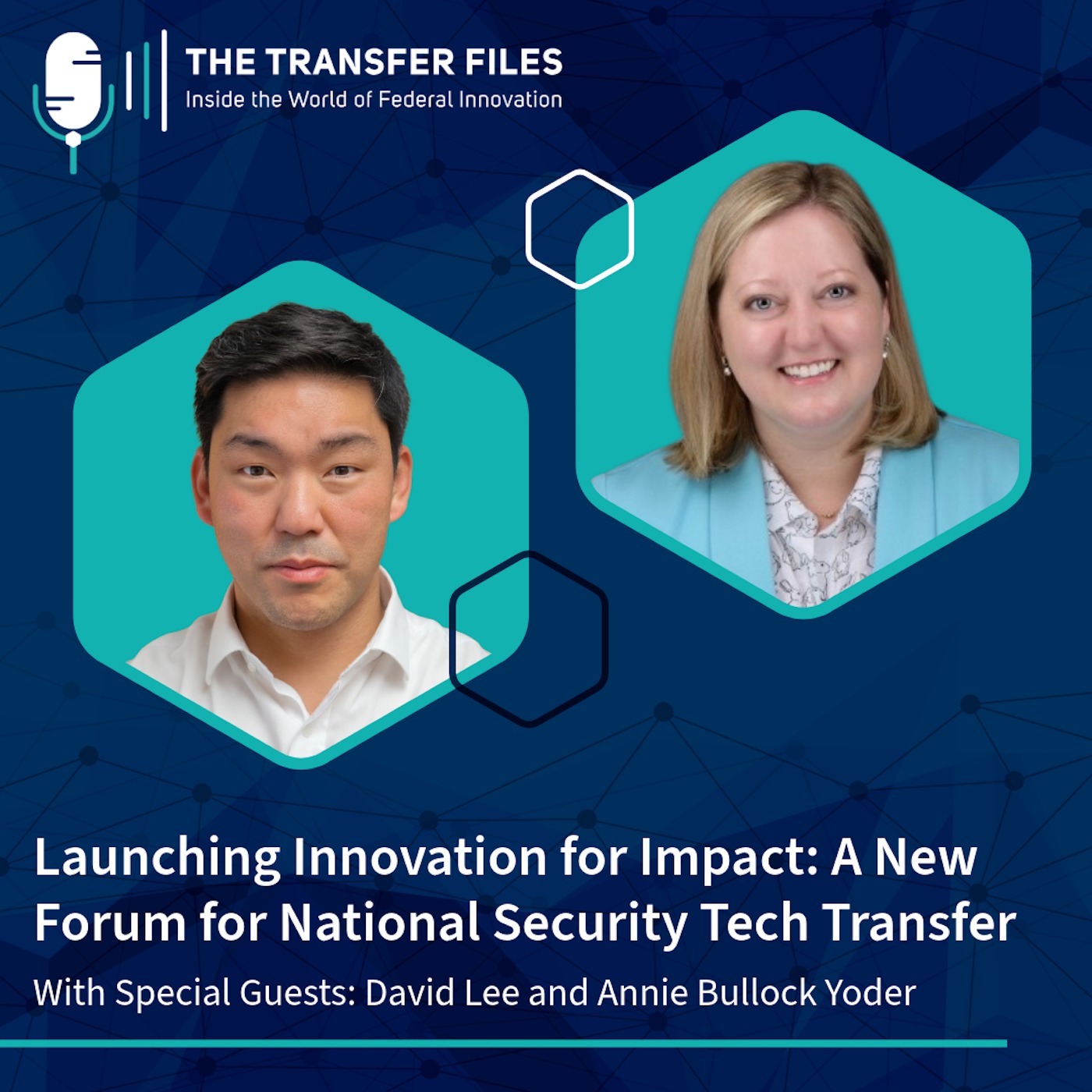
Launching Innovation for Impact: A New Forum for National Security Tech Transfer

Technology transfer is already challenging, but it gets even more complicated when national security is involved. Federal labs are trying to move important research and capabilities out into the world, while also protecting sensitive information, managing risk, and making sure the wrong details do not end up in the wrong hands.That is the thinking behind Innovation for Impact: A National Security Technology Transfer Forum, a new FLC event taking place December 1 through 3, 2026, in Leesburg, Virginia. I am joined by FLC Vice Chair David Lee and FLC Promote Committee Chair Annie Bullock Yoder to talk about why this forum was created, who it is meant to serve, and what attendees can expect from the federal-only training tracks and Industry Engagement Day.This conversation looks at the larger moment facing the federal innovation community right now. There is a real need for speed, collaboration, and practical training, but there is also a need to protect the research, resources, and partnerships that matter most. David and Annie share how this new forum is being shaped around those realities and why bringing the right people into the same room could make a meaningful difference.In This Episode:[02:43] Annie Bullock Yoder explains how the idea for Innovation for Impact grew out of the FLC’s post-COVID shift away from regional in-person training events.[03:28] National security has become a critical focus for federal technology transfer, especially as labs balance accelerating innovation with protecting sensitive resources and data.[04:35] David Lee describes the forum as a way to bring together practical in-person training and stronger engagement with industry partners.[05:26] The event is designed to give tech transfer professionals and supporting attorneys focused training, then connect that critical mass of federal lab expertise with industry.[06:57] The event will take place December 1 through 3 at the National Conference Center in Leesburg, Virginia.[07:27] The first two days will focus on federal-only legal and tech transfer training tracks, while the third day will serve as an Industry Engagement Day.[08:12] Potential partners include academia, defense contractors, companies interested in entering the defense space, and state or local agencies working in homeland security.[09:19] Possible training topics include handling classified material in CRADAs, working with security offices on DD 254s, and managing university partnerships with foreign collaborators.[10:52] Success will be measured partly through feedback, but also through the longer-term relationships, agreements, and technology outcomes that may follow the event.[12:09] Strong attendance would be an early sign of success and would show whether there is real demand for this kind of focused FLC-led event.[13:16] Survey responses and return attendance would help the FLC understand whether the training and partnering opportunities provided meaningful value.[14:19] If the model works, similar forums could eventually be adapted for other federal lab focus areas such as biotech, pharma, energy, environment, infrastructure, or agriculture.[15:30] Practical reasons to attend include training, knowledge-sharing, networking, and the chance to make industry partners more familiar with federal lab capabilities.[16:51] The planning timeline includes the June 15 topic submission deadline and the goal of opening registration before the end of August.Resources: Federal Labs ConsortiumFederal Labs Consortium - FacebookInnovation for Impact: A National Security Technology Transfer ForumFLC Vice Chair David LeeFLC Promote Committee Chair Annie Bullock Yoder

35 min

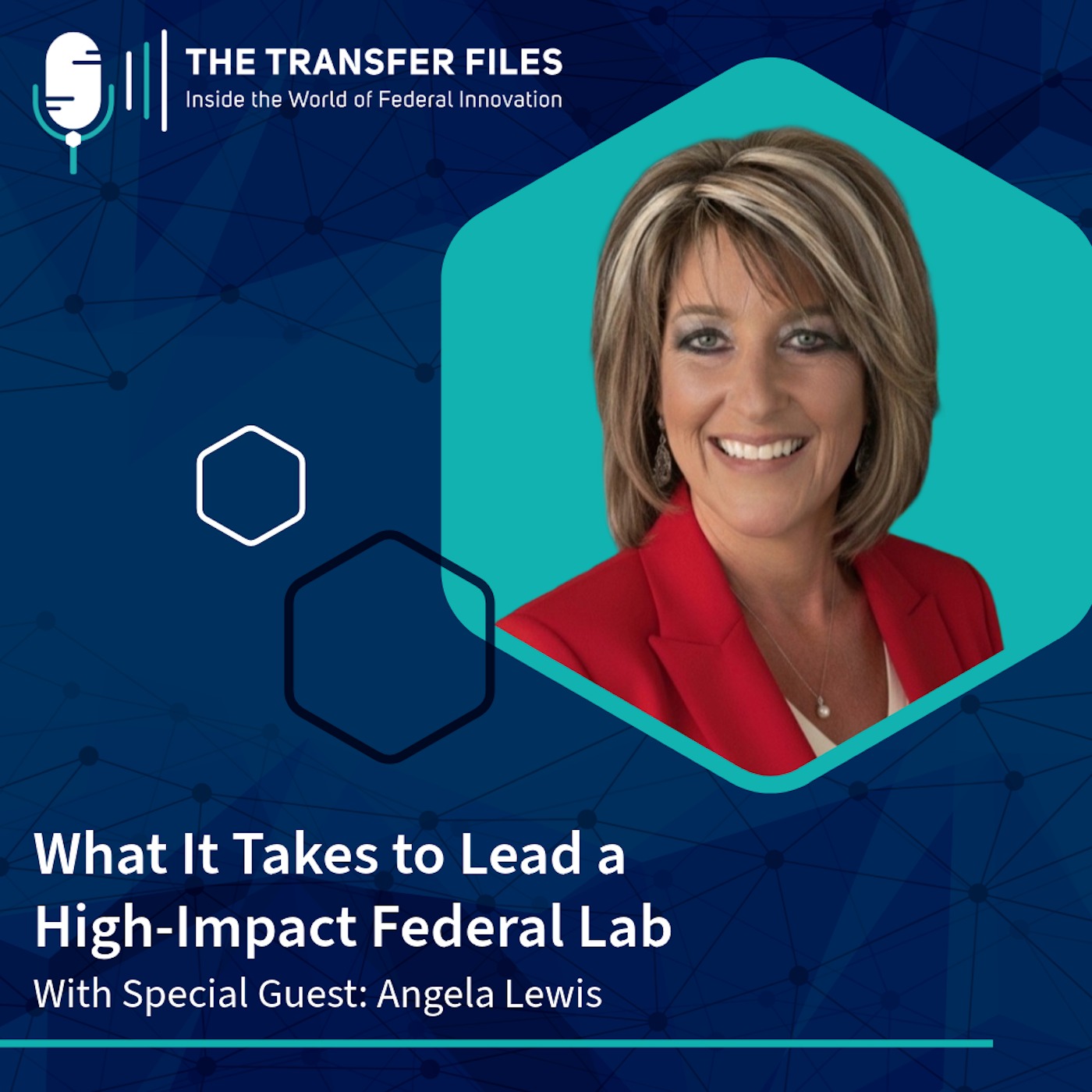
Angela Lewis: What It Takes to Lead a High-Impact Federal Lab

Federal laboratories play a critical role in moving ideas from research into real-world use, but that work depends on more than technical expertise. It takes leadership, strong partnerships, and a clear understanding of how innovation supports the mission. At Naval Surface Warfare Center Crane Division, that mission is centered on delivering capability to the warfighter, and technology transfer has become an important part of how that work gets done.Dr. Angela Lewis, Technical Director at NSWC Crane and the 2025 FLC Lab Director of the Year, brings more than three decades of experience across operations, strategy, and leadership. She has helped shape how one of the Navy’s most mission-critical labs approaches innovation, builds external partnerships, and connects research with outcomes that support national security. She was also featured in last year’s Lab Directors Forum at the FLC National Meeting, where she shared perspective on leading in complex environments and using technology transfer as a strategic tool.This conversation follows Dr. Lewis’ career journey, including how her understanding of technology transfer evolved and why culture matters so much when building a strong innovation ecosystem. She also shares practical lessons for other federal labs, from engaging leadership to creating the structures, incentives, and partnerships that help technology transfer move from good ideas to measurable mission impact.In This Episode:[02:16] Dr. Angela Lewis shares how she first came to Crane as a high school intern, knowing very little about the organization but recognizing it as a place that offered strong career opportunities in her community.[03:10] Her career path at Crane has included continuing education, leadership development, and opportunities to grow while staying connected to the daily mission of supporting warfighters.[06:09] Technology transfer helps Crane build the right team for each phase of a project, from academic research to small business prototyping to large defense partners capable of fielding solutions at scale.[07:07] Dr. Lewis explains that her view of technology transfer changed while serving as chief of staff and hearing Crane’s T2 director explain the range of mechanisms available for working with outside partners.[09:14] Because Crane operates much like a zero-profit business, the organization has to deliver on cost, quality, and schedule in order to maintain demand from program offices.[12:01] Dr. Lewis frames technology transfer as part of being a good steward of taxpayer-funded intellectual property and making sure federally developed ideas have a path to broader impact.[15:17] Crane’s innovation ecosystem includes research and education partnerships across 39 states, 60 universities, and more than 168 industry partners.[16:03] Dr. Lewis says technology transfer could not remain the responsibility of one office if Crane wanted it to become part of the organization’s DNA.[18:50] Building a true innovation ecosystem requires more than a list of contacts; Dr. Lewis describes it as an active process of seeking out the right partners and maintaining meaningful engagement.[20:10] Crane deepens outside relationships through efforts like the Distinguished Lecture Series, temporary faculty programs, and collaborative joint research projects.[21:03] The Indiana Research Consortium shows how shared vision and active collaboration can make a multi-party CRADA work at scale.[22:37] The consortium’s turning point came in 2024, when Purdue University, Indiana University, and Notre Dame signed a Memorandum of Understanding to create a formal structure around shared defense technology priorities.[24:53] By its third event in 2024, Silent Swarm had grown from 17 participating technologies to more than 50, creating a larger venue for industry, academia, and government labs to collaborate.[26:34] Silent Swarm brings together realistic environments, platforms, data collection, government subject matter experts, and operators who can evaluate technologies in a warfighting context.[27:35] Dr. Lewis says metrics matter, but the real measure of technology transfer success is whether partnerships are aligned with the Navy’s most pressing mission needs.[29:26] Strong technology transfer culture depends on leadership behavior, especially making T2 visible, measured, and clearly tied to the organization’s priorities.[30:05] During annual strategic alignment discussions, Crane’s leadership team reviews technology transfer and partnership activities alongside budgets, workload, and project planning.[32:09] For technology transfer professionals, Dr. Lewis’ practical advice is to use the Federal Laboratory Consortium network and learn from peers rather than trying to build programs alone.Resources: The Transfer Files - Federal Labs ConsortiumFLC Learning CenterDr. Angela Lewis - Federal Labs ConsortiumDr. Angela Lewis - Naval Sea Systems CommandNSWC Crane Announces Its First Female Technical DirectorDr. Angela Lewis - LinkedIn

29 min

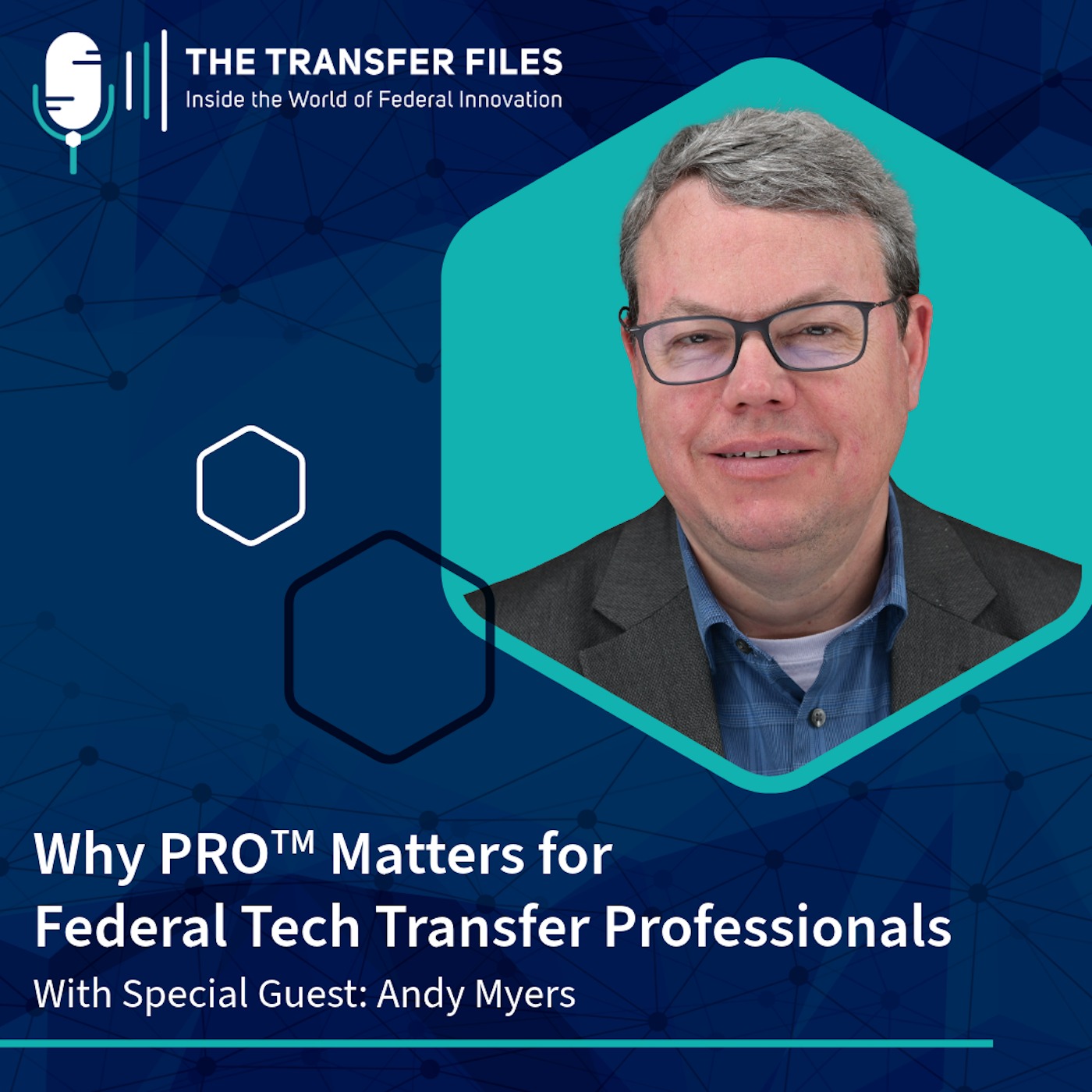
Andy Myers: Why PRO™ Matters for Federal Tech Transfer Professionals

Turning research into something people can actually use sounds straightforward, but in the federal world, it’s anything but. It takes people who can move between science, business, and policy, people who know how to translate complex ideas, build the right partnerships, and guide innovations out of the lab and into the real world. That “in-between space” is where a lot of the real work happens, and it’s where this conversation begins.My guest today is Andy Myers, who leads technology transfer activities at the Kansas City National Security Campus. His career spans small business research, academia, and nearly a decade in federal tech transfer, and it all traces back to a simple but important skill of learning how to explain science to people who aren’t scientists. We talk about how that ability shaped his path, what his day-to-day work actually looks like, and how his role within a Department of Energy national security environment brings a different perspective, especially with its focus on manufacturing and moving technologies closer to real-world use.We also dig into something new that’s taking shape across the field. The Federal Laboratory Consortium is rolling out a verification for Professional Registered ORTAs, or PROs, and Andy walks through what it is and why it matters. In a space where most professionals don’t follow a traditional path, the goal is to create more consistency with shared standards, clearer expectations, and a sense of progression that helps both individuals and the broader tech transfer community move forward with a little more direction.In This Episode:[02:21] Andy shares how his career began in chemistry and gradually shifted toward communication and tech transfer[03:08] The importance of explaining science to non-scientists and operating in that “in-between” space[03:47] What technology transfer really involves, from commercialization to legal and business considerations[04:33] Moving from small business research into academia and eventually federal tech transfer[05:18] A look at Andy’s role leading tech transfer at the Kansas City National Security Campus[06:12] How DOE labs operate under a government-owned, contractor-operated model[06:58] The unique national security mission tied to the campus and its broader ecosystem[07:34] Why the campus focuses more on production and manufacturing than pure research[08:13] How their work brings technologies closer to real-world commercial applications[08:49] Examples of tech transfer areas including additive manufacturing, electronics, and cybersecurity[10:07] The challenge of entering a field with no clear or traditional career path[11:12] Why shared standards and a common language matter across federal tech transfer[12:27] Introducing the PRO designation and how it fits into the broader professional landscape[13:43] How PRO compares to other certifications and why the federal space needs its own[14:58] What PRO (Professional Registered ORTA) actually represents for practitioners[16:06] The balance between experience, training, and community involvement in earning the designation[17:14] Why PRO is designed to be meaningful but not overly burdensome to achieve[18:08] How the designation builds trust with partners and external stakeholders[19:13] Walking through the application process and key requirements[20:07] Timeline expectations and how applications will be reviewed[21:02] Why ongoing learning and participation in the community are part of the criteria[21:47] How PRO could have accelerated Andy’s own professional development[22:33] The value of having a clearer roadmap instead of learning through trial and error[23:12] Advice for experienced professionals considering applying for PRO[24:02] The shift from learner to mentor and how PRO supports that transition[25:08] The growing importance of federal tech transfer in national competitiveness[26:04] Real-world examples of tech transfer success, from airport scanners to everyday tech[27:02] Reflecting on the broader impact of federal innovation and why the work mattersResources: The Transfer Files: Inside the World of Federal InnovationAndy Myers - FLCAndrew Myers - LinkedInKansas City National Security CampusPRO (Professional Registered ORTAs)

45 min

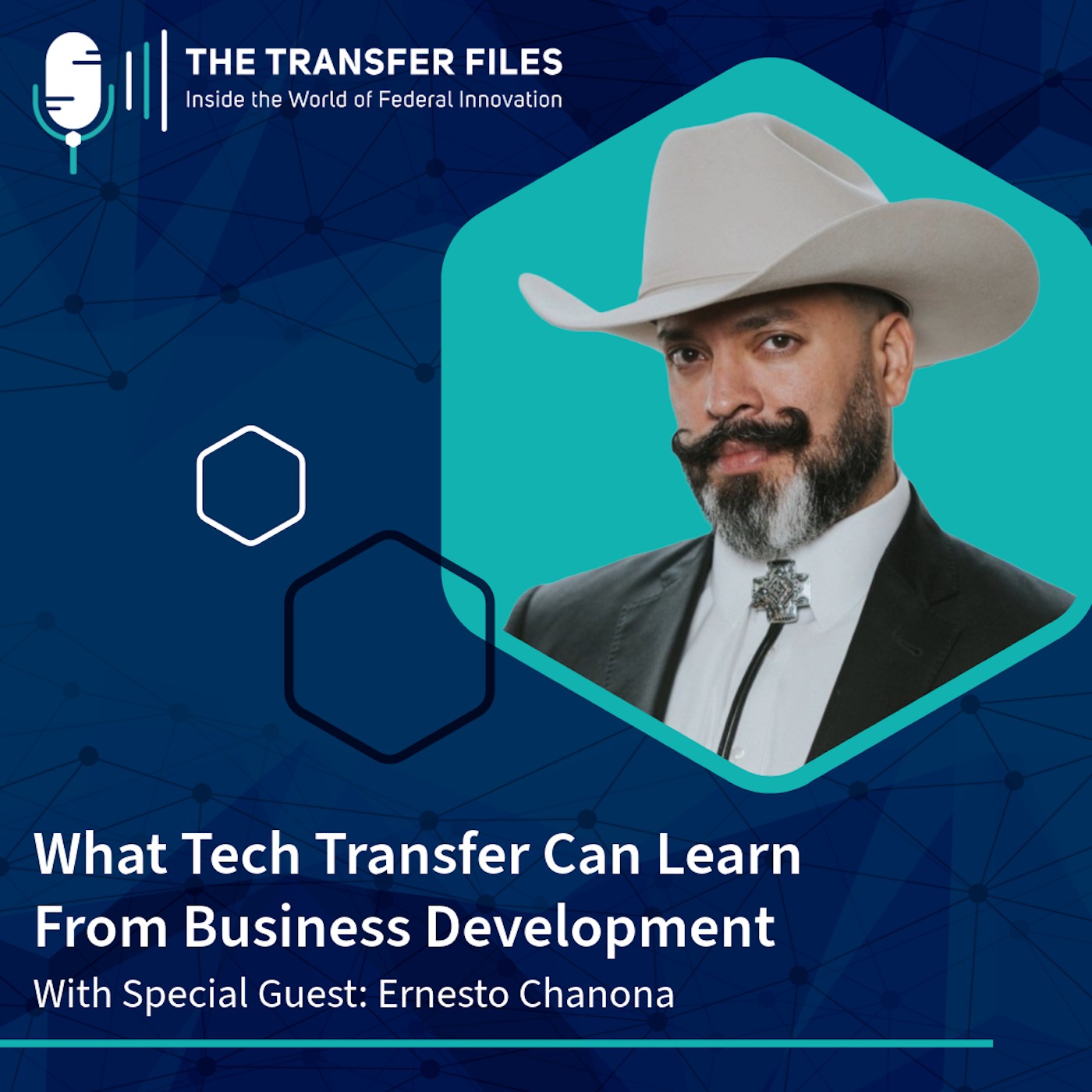
Ernesto Chanona: What Tech Transfer Can Learn from Business Development

Strong science doesn't automatically lead to commercial success. There's a gap between breakthrough research and real-world impact that trips up even the most promising technologies. Business development or the art of building relationships, positioning innovations, and navigating markets is where many tech transfer offices find themselves stretched thin or stuck.My guest Ernesto Chanona the CEO of American Business Development knows both sides of this world. He earned his PhD in pharmacology and did postdoctoral work at the National Cancer Institute developing immunotherapies. But instead of continuing down the traditional academic track, he made a sharp turn into business development at Maryland's Department of Commerce, helping life science companies expand internationally. Years later, he founded American Business Development to work with tech transfer offices, startups, and foreign companies trying to break into the U.S. market.In this conversation, he walks through what business development actually looks like in life sciences including equal parts sales, technical expertise, and strategic consulting. We talk about the bandwidth crunch hitting tech transfer offices, building frameworks that scale, and why he insists the best marketed technology usually wins over the best science. He shares hard-won lessons about pitching investors, navigating the fragmented U.S. healthcare system, and why his best advice is deceptively simple: ask for help. People in this field genuinely want technologies to succeed, and trying to figure it all out alone is where most innovators get stuck.In This Episode:[02:08] Ernesto's unconventional path from pharmacology PhD to business development.[06:58] Defining what a business developer does in life sciences—more than just sales.[07:49] The three pillars: salesperson, subject matter expert, and consultant.[11:20] Why business developers hold critical relationships that can't easily be replaced.[13:45] The underappreciated role of federal labs in the innovation ecosystem.[17:04] Where tech transfer offices struggle most with business development.[19:00] Bandwidth challenges and why being short-staffed creates the biggest gaps.[20:00] First steps when evaluating whether a technology needs partners or better positioning.[21:13] Building scalable BD frameworks—internal operations and external consistency.[22:53] What separates commercially ready technologies from those needing development.[23:44] The role of luck and market validation in commercial readiness.[24:46] Deploying demo units to universities for voice-of-customer feedback.[26:03] Balancing high-risk innovations with near-market technologies.[28:20] The biggest mistakes organizations make when pitching to investors.[28:51] Why the size of your ask matters more than you think.[30:12] The importance of detailed, well-researched outbound messaging.[33:08] ABD Capital Connect event during J.P. Morgan Healthcare Week.[35:02] International expansion challenges and competition from China.[36:28] Why the fragmented U.S. healthcare system confuses foreign companies.[38:18] The problem with one-person in-country hires versus team-based approaches.[39:40] Why the best marketed technology wins, not just the best science.[42:01] Final advice: It takes a village, so leverage your network and ask for help.[43:06] How willing people are to help when you're motivated to bring something to market.Resources: The Transfer Files Podcast - FLCAmerican Business Developmenternesto@americanbizdev.comErnesto Chanona - LinkedInErnesto Chanona - Johns HopkinsABD Capital Connect

54 min

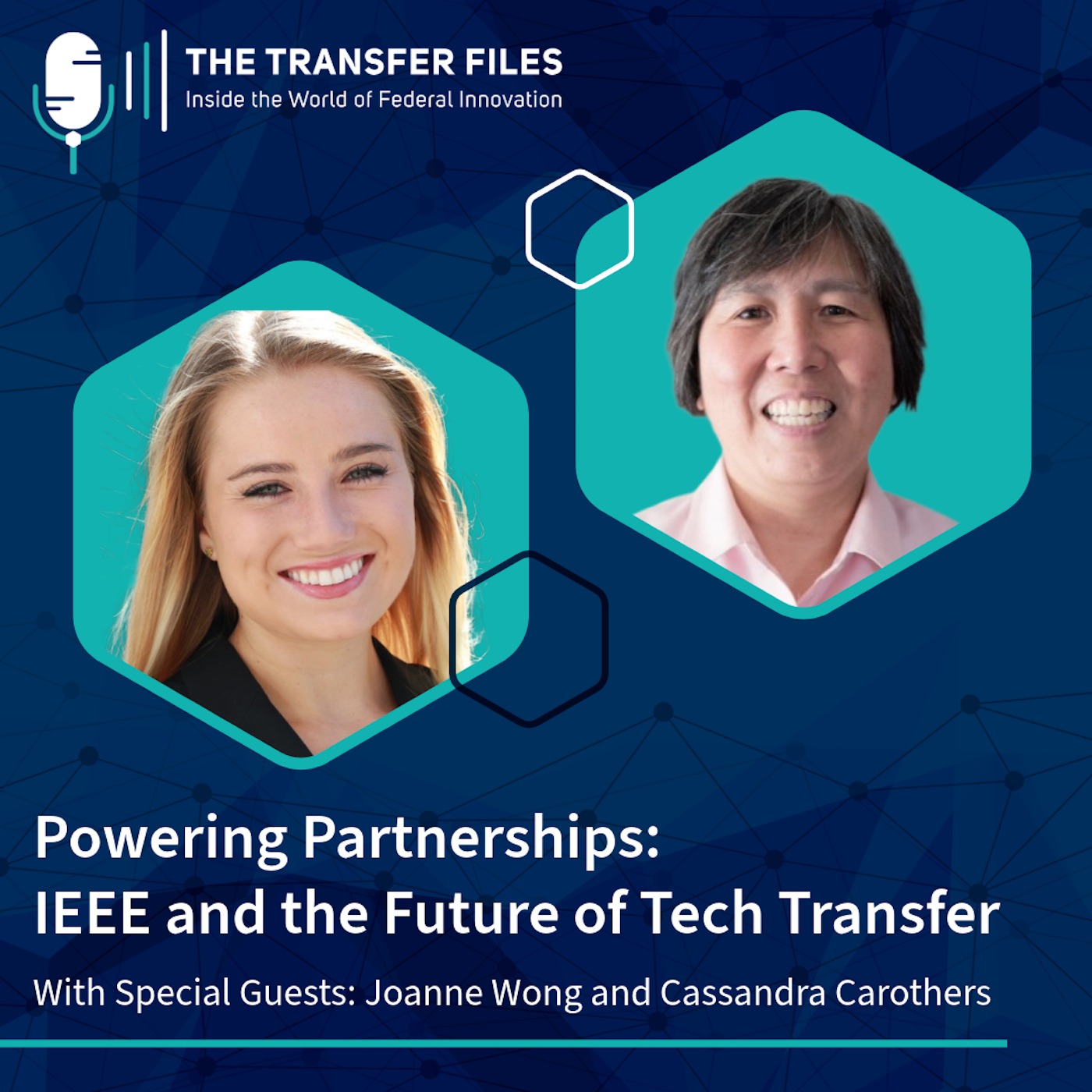
Powering Partnerships: IEEE and the Future of Tech Transfer

Welcome back, everyone and welcome to Season 3 of the Transfer Files! We are so glad you're here, and we're kicking things off with a conversation that gets at the connective tissue of innovation, the organizations that help move ideas out of the lab and into the world. Today we're joined by Joanne Wong and Cassandra Carothers, two guests from IEEE, the world's largest technical professional organization dedicated to advancing technology for humanity. Joanne is an engineer by training with a career spanning IBM, HP, SAP, and Cisco, who later founded her own startup and found her way into venture capital and now volunteers with IEEE Entrepreneurship. Cassandra brings a global perspective, having started her career advising C-suite executives in Asia before moving into early stage deep tech investing and founding Departure Capital, a firm focused on frontier tech for existential resilience. Together they've been building something really exciting within the IEEE ecosystem that we'll get into today.If you work anywhere near research, standards, startups, or industry partnerships, chances are you've touched IEEE in some way whether through their publications, conferences, standards development, or their growing work in entrepreneurship and technology commercialization. That reach is exactly why this conversation matters so much for the federal tech transfer community. We talk a lot about moving inventions to market, but standards, industry alignment, and global technical networks are often the difference between a promising prototype and a technology that actually scales. So today we're digging into how IEEE connects researchers with industry, where standards intersect with commercialization, and what opportunities exist for federal labs and tech transfer offices to plug into that ecosystem. We also have an important update from the broader FLC community. Our Executive Director Paul Zielinski recently announced that he'll be retiring. His leadership has shaped not just the FLC, but the federal tech transfer ecosystem more broadly including expanding programs, strengthening interagency collaboration, and helping position tech transfer as a core part of the federal innovation mission. Paul is here to reflect on that journey, talk about what's changed in the field, and what he sees ahead for our community. In This Episode:[02:18] Joanne shares her background as an engineer, moving from IBM and major tech firms to founding her own startup.[02:54] Joanne describes how she fell into venture capital and connected with REDD's Capital out of California.[03:11] She introduces her volunteer role with IEEE Entrepreneurship and gives an overview of the organization.[03:55] Cassandra takes over and walks through her global career path from Hong Kong consulting to US-based venture capital.[05:33] Cassandra introduces Departure Capital and her focus on frontier tech for existential resilience.[06:02] The conversation turns to why they launched the Hard Tech Venture Summit and what "hardware is hard" really means.[07:22] Discussion of Moore's Law limitations and why innovation must return to hardware fundamentals to support AI growth.[08:47] The case that the world's biggest problems are physical, requiring atoms not just bits.[09:14] The roots of venture capital and the US government's early role as the first tech investor are explored.[10:28] Why manufacturing is a critical and often overlooked piece of the hard tech startup puzzle.[11:10] Where hardware founders most commonly get stuck between the lab and the market.[12:00] The challenges of team building, go-to-market strategy, and moving from prototype to mass manufacturing.[12:48] Funding gaps, regulatory hurdles, and the stigma around investing in hardware-heavy startups.[14:30] Stakeholder misalignment explored with manufacturers, engineers, investors, and regulators all optimizing for different things.[15:44] The origin story of the Hard Tech Venture Summit and its inaugural event in San Francisco.[16:30] Why startups and investors are regional and why that drove the decision to host multiple summits.[17:22] How the summits are volunteer-driven through IEEE and interest in expanding to Latin America, Europe, and Asia-Pacific.[18:52] What makes the Hard Tech Venture Summit different from a typical startup conference or demo day?[20:09] How attendees are hand-selected and vetted to ensure genuine hardware focus with no deep tech tourists.[21:35] The roundtable format explained with small curated groups designed for real conversation, not pitching.[22:02] How the safe, judgment-free environment encourages honest feedback between founders, investors, and ecosystem partners.[23:29] Day two of the summit is a half-day manufacturing workshop designed for early stage founders.[24:13] How mentors help founders understand manufacturing contracts, yields, and timelines in a personalized setting.[25:59] Future goals around tracking data, capital mobilization, and measuring real outcomes from the events.[27:00] Where federal labs and the FLC fit into the hard tech ecosystem and how they can get involved.[29:14] How people from federal labs can find and connect with the Hard Tech Venture Summits.[30:23] Hopes for a joint partnership between IEEE Entrepreneurship and FLC and spreading the word to 500,000 IEEE members.[31:43] Three to five year vision includes concrete metrics, capital mobilized, and building a true sense of community and continuity.[34:08] FLC Executive Director Paul Zielinski has announced his retirement.[35:05] Paul reflects on how difficult it was to walk away from something he's been passionate about for decades.[36:24] Paul is most proud of the sense of community that the FLC has built over the years.[37:42] Why modernization was a priority from launching the podcast to redesigning FLC Business and embracing digital tools.[38:20] How COVID unexpectedly accelerated digital transformation at FLC while reinforcing the value of in-person connection.[39:04] The focus on professional development, learning tracks, and positioning tech transfer as a respected profession.[40:43] The mentorship program, online learning, and a teaser about an upcoming announcement to raise the prestige of the profession.[42:02] How the FLC has evolved and grown its facilitate pillar and moving from administration to action.[44:06] How Paul has seen the role of federal labs in the innovation ecosystem evolve over his 30-plus year career.[45:04] The parallel growth of environmental law and tech transfer law in the 1980s and how that shaped his career.[46:09] Looking ahead to AI, quantum science, and how FLC platforms are beginning to adopt AI tools.[46:44] What qualities Paul hopes to see in his successor including passion, advocacy, vision, and the ability to listen and act.[49:25] Reflections on serving at the White House level and across multiple agencies throughout his career.[50:03] Paul shares his retirement plans and his hope to stay connected to the tech transfer world and see the many friends he's made along the way.Resources: Federal Labs IEEEIEEE EntrepreneurshipHard Tech Venture SummitsJoanne Wong - LinkedInjoanne.wong@ieee.orgREDDS CapitalCassandra Carothers - LinkedIncassandra@departure.vccassandra@ieee.orgDeparture Capital - LinkedInPaul Zielinski - LinkedIn

13 min

What’s Ahead for Federal Tech Transfer in 2026

Happy New Year and welcome back! While the podcast is between seasons, we’re continuing to bring you brief FLC updates so you can stay connected to what’s happening now and what’s coming next across the Federal Laboratory Consortium. These short check-ins will drop every two weeks until the show returns with full-length episodes when Season 3 launches in March.For this update, I’m joined by Paul Zielinski, Executive Director of the FLC. Paul walks through what 2026 is shaping up to look like, including plans for the upcoming National Meeting, leadership elections, and several new tools and resources in development. We also touch on how AI is showing up more frequently in tech transfer work and what the FLC is doing to modernize its support for the community.In This Episode:[00:02] We’re kicking off with a quick FLC update. [00:46] Paul Zielinski joins me to talk about what’s ahead for the Federal Laboratory Consortium in 2026.[01:34] Paul shares the latest on the federal budget outlook and why it supports plans for an in-person National Meeting.[02:01] We confirm the National Meeting is planned for May 12–14 in Seattle and why that matters for the community.[02:32] Paul explains how the National Meeting serves as both the FLC’s business meeting and a major networking opportunity.[03:15] We discuss awards, sessions, and how funding disruptions affected submissions this year.[03:33] Paul outlines the upcoming elections, including board and regional leadership positions.[04:25] He talks about the importance of volunteer leadership and ways members can get involved at different levels.[05:39] We reflect on how interest in AI has grown rapidly within tech transfer offices over the past two years.[06:03] Paul previews modernization efforts, including website improvements and member input opportunities.[06:54] He shares updates on the Green Book, including the new online version and plans for print.[07:42] Paul introduces plans for an interactive Green Book app designed to stay continuously up to date.[08:25] We discuss the upcoming T2 Mechanisms Matrix and how a guided, bot-based tool could help users choose agreements.[09:39] Paul explains why the FLC is beginning work on a new three-year strategic plan.[10:19] We talk about how member surveys and feedback directly shape FLC priorities and tools.[12:06] Paul highlights existing and upcoming AI tools and what may return in the year ahead.[12:36] We wrap up with a look forward to Seattle and continued updates over the coming months.Resources: The Transfer Files2026 FLC National MeetingPaul Zielinski - LinkedInPaul Zielinski: The Federal Budget and Its Impact on Research and Tech Transfer

32 min

Season Recap: The Mission, the Matchmaking, and the Impact of Federal Innovation

As we reach the end of the year and settle into the holiday season it feels right to look back and reflect. This podcast has grown so much over its first two seasons. I hope that means you are enjoying these conversations and sharing them with friends and colleagues and planning to come back next season for more.Today, we’re revisiting the voices that shaped our year. We kick things off with Katharine Ku, the former Executive Director of Stanford’s Office of Technology Licensing, followed by Representative Bill Foster, who offers a unique perspective as both a scientist and a Congressman. We’ll also hear from Phil Weilerstein, founder of VentureWell, on his work with emerging innovators.Later, we look at the ecosystem as a whole with Gabe Mounce from the Air Force Research Laboratory, Brian Darmody from the Association of University Research Parks, and TEDCO’s Stephen Auvil. Together, these guests remind us what it really takes to move ideas into the world, and why people remain at the heart of innovation.In This Episode:[01:46] In honor of the end of the year we are reflecting as we look back at conversations from this past year with ecosystem builders, licensing matchmakers, leaders, and others who helped shape the season.[05:12] Katharine Ku enters with a story about the early skepticism surrounding Google’s search technology and the quiet confidence that guided Stanford’s licensing approach.[08:04] Representative Bill Foster shifts the narrative toward the intersection of science and entrepreneurship and how lab resources can spark unexpected commercial breakthroughs.[11:15] Phil Weilerstein reframes the challenges innovators face by showing how mindset change often matters more than technical ability when pursuing commercialization.[14:31] Brian Darmody illustrates how research parks and innovation districts formed as universities recognized the need to support startups and attract industry talent.[16:49] Stephen Auvil offers a pointed reminder that trust and human relationships often determine whether a promising technology finds the right problem to solve.[20:07] The discussion turns to the operational side of the ecosystem as Paul Zielinski outlines how shutdowns and shifting timelines affect awards meetings and national planning.[23:03] The upcoming national meeting and the real world constraints that shape participation including travel limits, continuing resolutions and agency approvals.[27:08] A revealing moment surfaces as new learning tools and structured pathways highlight how education and trust continue to strengthen lab to market work.[30:34] The season begins its close with a look ahead to March and the steady momentum of the community even during quieter holiday periods.Resources: The Transfer FilesKathryn Ku - Wilson SonsiniLessons From a Tech Transfer Trailblazer With Katharine KuPhil Weilerstein - LinkedInPhil Weilerstein: Building the Next Generation of Science-Driven EntrepreneursGabe Mounce - LinkedInGabe Mounce: Powering the Space Valley Through Federal Tech TransferBrian Darmody - LinkedInBrian Darmody: How Research Parks Fuel Innovation EcosystemsStephen Auvil - LinkedInStephen Auvil: Advancing Innovation Between Labs and StartupsPaul Zielinski - LinkedInPaul Zielinski: The Federal Budget and Its Impact on Research and Tech Transfer

26 min

Ben Solomon: How FedTech Builds Startups From Federal Lab Inventions

There’s something exciting happening right now in the world of federal innovation, and it feels like the momentum is building faster than ever. When research inside government labs actually finds its way into the hands of entrepreneurs who know how to run with it, that’s where real impact shows up. And that’s the story we’re digging into today, how ideas turn into companies, and how communities working together can make that leap possible.My guest today is Ben Solomon, the founder and CEO of FedTech. Ben started out as a business-minded student who wanted to be close to technology but wasn’t a scientist himself, and that curiosity ended up shaping an entire ecosystem. After going through the NSF I-Corps program, he realized just how big the gap was between government-funded research and private-sector opportunities, and he built FedTech as a bridge. Ten years later, they’ve helped more than a thousand startups, spun out over 200 companies from federal inventions, and supported founders who have raised billions to bring new solutions to life.In our conversation, Ben talks about what it actually takes to move a technology from the lab bench into the real world, what separates successful entrepreneurial teams from the ones that stall, and why flexibility, persistence, and community matter more than any single breakthrough. He also shares where he sees tech transfer headed next—simpler licensing, more accessible collaboration, better funding for commercialization, and a stronger pipeline of talent coming into the field. It’s a generous, grounded look behind the scenes at how innovation really gets built.In This Episode:[00:02] The power of community at FedTech and how collaboration creates value.[00:41] How Ben’s path into entrepreneurship began through the NSF I-Corps program.[01:20] Ben describes discovering the gap between federal research and commercialization.[02:40] He shares lessons from launching an early robotics startup and what it taught him.[04:28] Ben explains why customer discovery and market validation drive every FedTech program.[05:53] The conversation turns to the importance of iteration and learning quickly from failure.[06:07] Ben defines what FedTech is and its role as a bridge between federal R&D and entrepreneurs.[06:51] We hear how FedTech’s startup studio forms teams around federal inventions.[07:40] Ben highlights success stories, including Canopy Aerospace’s acquisition of a NASA spinoff.[08:54] Discussion of accelerators and researcher training that support companies new to government work.[12:15] We learn about the common challenges startups face moving technology into a product.[14:36] Ben identifies the traits that predict founder success: flexibility, grit, and resourcefulness.[17:38] The rise of AI emerges as a major area of momentum across federal labs and industry.[19:04] Ben looks ahead at the future of tech transfer and reducing barriers for entrepreneurs.[21:22] He emphasizes the need for funding dedicated specifically to commercialization.[22:38] Ben offers advice for tech transfer professionals, entrepreneurs, and students entering the field.[24:34] We explore FedTech’s upcoming programs and international expansion initiatives.[26:07] Closing reflections and appreciation for the FLC community and collaborative mission.Resources: FedTechBen Solomon - LinkedIn

56 min

How the Catalyst Coaching Program Helps Researchers Turn Innovations into Impact

Researchers are advancing extraordinary science inside our federal labs, but translating that expertise into language the private sector can immediately understand is its own skillset. Oak Ridge National Laboratory decided to tackle that challenge head on. The result is the Catalyst Coaching Program, a high-impact initiative that helps early and mid-career researchers sharpen their message, clarify the value of their work, and engage industry partners with greater confidence and purpose.In this episode, we take a look inside Catalyst with the people who built it. Jennifer Caldwell, Director of Technology Transfer at ORNL, shares why the lab needed a new model for communication and collaboration. Susan Ochs, ORNL’s Engagements Program Manager with decades of experience across the DOE system, explains how the program evolved from earlier outreach efforts and why it’s resonating with researchers. Along with Dr. Angelique Adams, CEO of Angelique Adams Media Solutions and Director of the Leadership in Engineering and Entrepreneurship Program at the University of Tennessee, talks about the communication framework she developed to help scientists present their technologies in a way that lands with industry decision makers.We break down the shift from the original Safari program to Catalyst, the one-on-one coaching that transforms how researchers talk about their work, and the real-world outcomes that follow, including stronger pitches, new partnerships, successful TCF awards, and industry engagement that begins long before licensing discussions start. You’ll also hear how Catalyst is helping ORNL researchers move faster, connect more effectively, and bring their innovations into the marketplace with clarity and impact.In This Episode:[03:00] Jen explains how the earlier Safari program began as a way to break down barriers between ORNL and industry.[03:31] ORNL shifts toward concierge-style engagement to create stronger private-sector connections.[04:33] The team discusses why Safari was vital for showcasing ORNL’s breadth of innovation.[05:13] Safari receives national recognition and becomes a catalyst for modernizing ORNL’s outreach.[06:18] Susan highlights why long-term relationships are central to tech transfer success.[07:14] Safari entrepreneurs return as mentors for Energy I-Corps applicants, showing the program’s ripple effect.[08:03] COVID forces ORNL to rethink its engagement strategy and accelerate virtual communication tools.[09:01] ORNL collaborates with Angelique to redesign the program around concise, industry-ready messaging.[10:13] Catalyst launches with strong DOE support and earns internal recognition for its early success.[11:11] Susan shares why ORNL’s early attempts at virtual engagement didn’t work and what needed to change.[12:05] The team explains what makes Catalyst different from traditional communication training.[13:18] Catalyst helps identify researchers who are ready to move their work toward commercialization.[14:27] Small cohorts ensure each participant receives customized, high-touch coaching.[15:26] How personalized coaching builds confidence and sparks clarity in researchers’ presentations.[16:16] Why humility and a beginner’s mindset support real transformation.[16:51] Catalyst skills begin translating into measurable commercialization outcomes.[17:11] ORNL sees long-term impacts through stronger licensing, partnerships, and DOE program engagement.[18:45] The curriculum that helps researchers shift from technical to industry-focused communication.[19:22] Researchers learn how decision makers think, assess risk, and evaluate potential collaborations.[20:22] Angelique explains why her industry background builds trust and credibility with participants.[21:51] A high-stakes capstone event ensures researchers apply what they learn in real conversations.[22:53] The program teaches researchers to transform traditional presentations into clear, concise pitches.[23:16] Researchers develop both conversational and slide-driven formats to use across settings.[24:05] Catalyst helps researchers direct industry interest to ORNL’s partnerships and licensing teams.[25:10] Participants begin applying Catalyst skills to internal leadership situations as well.[26:00] ORNL integrates commercialization managers to provide cross-functional perspective.[27:21] One-on-one coaching becomes the turning point for overcoming fear and refining delivery.[28:36] Angelique shares where listeners can access her 15-point communication checklist.[29:02] The discussion turns to audience awareness and reducing jargon for non-experts.[30:36] Angelique explains how analogies help researchers translate complex science simply.[31:14] Michelle Kidder’s journey showcases how communication skills led to licensing and major TCF wins.[32:38] A radiopharmaceutical team uses Catalyst tools to build partnerships and launch a major workshop.[33:48] Quantum researchers transform their messaging and influence statewide investment discussions.[35:28] Catalyst skills continue delivering long-term value across research programs.[36:03] The program strengthens pipelines into TCF, vouchers, and DOE’s I-Corps program.[37:55] Catalyst becomes part of a larger DOE commercialization arc that amplifies impact.[38:53] The alignment between Catalyst and DOE funding programs becomes clear.[39:10] The guests look ahead to the next Catalyst cohort and what’s planned for FY26.[40:49] The new monthly FLC Update segment with Executive Director Paul Zelinsky.[41:53] Paul explains how the lapse in appropriations is affecting federal agencies and confirms FLC remains operational.[42:38] The mixed agency operating status, carryover funds, and essential services during the lapse.[43:27] He clarifies FLC’s communication boundaries with Congress and highlights the release of the FLC Annual Report.[44:56] Significant leadership turnover across agencies and why broad distribution of the report matters.[46:09] Upcoming deadlines, key events, and preparations for the national meeting.Resources: Oak Ridge National LaboratoryJennifer Caldwell - ORNLJennifer Caldwell - LinkedInSusan Ochs - ORNLDr. Angelique AdamsDr. Angelique Adams - LinkedIn

37 min

Darryl Thomas: How APEX Accelerators Empower Small Businesses in Government Contracting

It’s easy to assume government contracts are only for the big players. But in reality, small and mid-sized businesses are often the engine behind federal innovation. The challenge is knowing where to begin, even if it feels like a maze of rules, acronyms, and red tape. That’s where APEX Accelerators come in. They help businesses get certified, spot the right opportunities, write stronger proposals, and manage contracts without losing momentum. In short, they make the path to government work far more accessible.My guest today is Darryl Thomas, Executive Director of NAPEX, the National APEX Accelerator Alliance. He leads a nationwide network of more than 90 accelerators that help businesses of all sizes build the confidence and know-how to succeed with the federal government. Darryl shares how these programs boost local economies, open doors for entrepreneurs, and strengthen our broader innovation ecosystem.We also dig into NAPEX’s new partnership with the Federal Laboratory Consortium (FLC) with a collaboration focused on connecting more businesses with federal technologies and resources to help them grow. Together, NAPEX and FLC are turning innovation into impact and making sure more American companies have a seat at the table.In This Episode:[00:54] Darryl explains what APEX Accelerators are and how they help companies navigate certifications, proposals, and compliance.[01:23] We learn how these programs strengthen local economies and the national innovation ecosystem.[02:02] Darryl shares how his career began in auditing and business development before moving into small business support.[03:51] The Illinois P-TECH program transitions into what is now the APEX Accelerator network under the Department of Defense.[04:09] Darryl walks through the federal realignment that placed APEX within the Office of Small Business Programs.[05:05] He reflects on leading the program at the state level and how that experience prepared him to serve nationally.[06:25] Darryl talks about scaling collaboration and training for advisors across all APEX programs.[07:45] The conversation turns to how APEX leverages expertise to support accelerators facing challenges.[08:36] Darryl explains why federal contracts are a massive, often untapped market for small businesses.[09:14] We hear how APEX advisors use real-world procurement experience to help companies avoid pitfalls.[10:05] Darryl highlights National APEX Day and how events connect entrepreneurs with real assistance.[11:11] Discussion of how APEX coaches companies to develop government-focused marketing strategies.[12:17] How APEX provides access to expensive market research tools at no cost to clients.[13:39] Step-by-step, Darryl outlines how APEX supports businesses through registration, bidding, and contract performance.[15:57] Darryl discusses how any business, even startups, can begin conversations with an APEX Accelerator.[17:04] The role of capability statements and when businesses may need prior performance.[18:43] Darryl shares examples of retired military members and new entrepreneurs who needed guidance after receiving contracts.[20:04] The importance of cash flow and client diversity when contracting with the government.[21:23] We hear success stories that show persistence pays off, including a business that grew from homelessness to millions.[22:27] A woman-owned business learns the difference between calling itself “certified” and being officially certified.[23:14] The company goes on to become a $20 million success story after working with APEX.[24:00] We discuss the new strategic partnership between NAPEX and the Federal Laboratory Consortium.[25:15] Darryl explains how this collaboration will help grow the defense industrial base and foster innovation.[26:26] How FLC technologies can bolster contractor competitiveness and align with APEX’s mission to educate, facilitate, and promote.[27:41] Darryl shares how NAPEX recognizes FLC as a strategic partner and integrates their resources across accelerators.[28:31] The shared mission and the “tech transfer is a contact sport” mindset.[29:43] APEX aims to help businesses not just compete for contracts but thrive in them.[30:18] How APEX now helps strengthen the defense industrial base through innovation and cybersecurity.[31:37] Discussion of building resilient supply chains and accelerating technology transfer to the warfighter.[32:31] Darryl describes how APEX reduces government risk by preparing companies to perform and comply.[33:28] He highlights the importance of solid accounting and audit readiness for federal contractors.[34:39] The structure of NAPEX and how it unites 90 accelerators nationwide.[35:45] APEX now includes over 650 trained staff supporting businesses across 300 offices.Resources: National APEX Accelerator AllianceDarryl Thomas - LinkedIn

Is this your show?

Claim this listing to keep it up to date, reach guests who want to pitch you, and manage bookings with Guestify.

Claim this listing

More Technology podcasts