Find partners
The Strange Attractor

The Strange Attractor

Hosted by Samuel Wines // Ecotone Studio

ScienceSocietyCultureInterviews guests

Episodes

23

Latest episode

Jun 2026

Language

EN-AU

About the show

Welcome to The Strange Attractor, an experimental podcast exploring ways of being, seeing, and doing that are grounded in the interconnectedness and the systems view of life. Drawing on complexity science, philosophy, wisdom traditions, and bio-inspired design, we explore how learning to see differently can help us build and create a more resilient and regenerative future.

Listen to episodes

23 recent
June 29, 2026Episode 221 hr 6 min

What Does Dubstep Have to Do With Regeneration? ft. Murray Gray | TSA E22

Send us Fan MailWhat connects a Shoreditch nightclub at 2am, a palm agroforestry project in the Amazon, and the question of whether anything can ever truly be 'regenerative'?In this long-form conversation on Strange Attractor, Sam sits down with Murray Gray – CEO of Sustainable Table, former systemic venture builder at Metabolic, and Fresh Ventures – to trace a throughline from DJing and the early dubstep scene in Shoreditch all the way to financing the transition to circular, bio-based economies.We get into the tension between systems thinking and mechanistic thinking, and why you need both – the yin-yang dynamic between the rigour of structure that enables the flow of emergence. We talk about 'lowercase entrepreneurialism', the unglamorous work of actually making things happen, and why the boring stuff (regulation, legal structures, governance) is where the real leverage usually hides.Murray shares hard-won lessons from building systemic venture studios, the trap of analysing everything before you act, and the shift from asking 'are you regenerative?' to 'are you regenerating?' – a move from noun to verb that changes who's in the room and who gets left out.And we go deep on finance: why so much of what gets called 'high risk' is really a perception problem, how patient capital works on 25–30 year timescales, and what it actually takes to fund the people doing the most important, most intangible early work.A wide-ranging, warm and occasionally provocative conversation about doing the thing rather than just talking about it, exploring systems thinking, patient capital, venture studios, and why the hardest work is usually invisible.00:00 - Launching The Strange Attractor and Vision02:13 - Introducing Murray and Starting Conversation03:27 - Opening Remarks and Welcome03:36 - Discussing the Building Systemic Ventures Paper05:05 - Murray's Diverse Path and Operational Focus07:55 - Personality Insights and Connecting Diverse Themes09:19 - Conversation Flow and Mutual Understanding11:12 - Balancing Planning and Action in Systems12:14 - Electronic Music Scene as Systemic Innovation Example15:19 - Discovering Systems Thinking and Circular Economy17:38 - Evolving Awareness of Systemic Properties19:04 - Tools, Language, and Prompt for Discussion19:55 - Seeing Connections Yet Struggling to Act20:15 - Challenges Translating Insight into Action23:21 - Addressing Key Issue and Initiating Discussion24:22 - Systemic Venture Building Framework Overview26:14 - Venture Studio Support and Ongoing Presence28:50 - Venture Survival Metrics and Founder Support30:37 - Complex Challenges and Excitement in Venture Work32:07 - Building Impact Ecosystem and Community Support34:50 - Navigating Regulatory Barriers and Value Decisions37:58 - Radical Shifts and Process Philosophy Insights40:13 - Personal Struggle and Turning Point44:28 - Shift After Group Meeting and Brazil Case46:15 - Regenerative Agroforestry in Brazil and Long-Term Impact51:27 - Patient Capital and Long-Term Return Considerations53:46 - Rational and Perceptual Barriers to Funding55:46 - Building Infrastructure and Trust for Innovation59:08 - Applying Solutions Across Sectors and Challenges01:03:17 - Conclusion and Looking Forward to Next EpisodeKeep Following the PatternSam's InstagramSubstackCoLabs CoLabs NewsletterThis is an evolving experiment.The Strange Attractor is produced by Ecotone Studio — a creative practice exploring the fertile edge where art, science, technology and philosophy meet.Like the ecosystems we are a part of, this project is designed to evolve. Every conversation changes the next one.If there’s a question you’d like us to explore, a guest we should invite, or a theme you think deserves more attention, drop us a line. We’re especially interested in the spaces between disciplines—the ecotones where unexpected ideas emerge. If you’re building something thoughtful, beautiful or regenerative, or simply wrestling with questions that matter, we’d love to hear from you. Thanks for listening. Until next time — stay curious.

May 18, 2026Episode 211 hr 32 min

The Age of Algae: Seaweed, Systems & Regenerative Futures ft. Vasundhara Gaur & Simon Beirouti from Compound | 21

Send us Fan MailPlastic is everywhere, and not just in landfill. It’s in our clothes, our water, and the invisible systems that make 'single use' feel normal. We sit down with Simon and Vasundhara from Compound, a CoLabs venture exploring algae biomaterials, to ask a simple question with massive consequences: what if we could replace soft plastics with materials grown from seaweed?Vasundhara brings an industrial design lens and a fast prototyping mindset, while Simon comes from tech and systems thinking. Together, they unpack why materials are the best place to start when you’re building towards a circular bioeconomy: fewer regulatory roadblocks than food, less capital intensity than carbon projects, and a direct path to everyday products people can actually touch. We also get into the uncomfortable history of petrochemical plastics, how wartime speed and cheap oil locked in “heat, beat, treat” manufacturing, and why the real challenge now is changing incentives, language, and consumer stress around recycling.From invasive kelp like Wakame to local blue economy collaborations, we explore what resilient, bioregional supply chains could look like in Australia. Then we go deeper: biological time versus industrial time, designing for change and imperfection, and flipping the culture from unboxing to 'boxing it up' at the end of a product’s life.If you care about regenerative materials, seaweed packaging, microplastics, PFAS, or life-centred design, hit play. Subscribe, share the episode with a mate, and leave a review so more people can find this work.Keen to hear more about Compound? WebsiteInstagramLinkedinVasundharaSimonKeep Following the PatternSam's InstagramSubstackCoLabs CoLabs NewsletterThis is an evolving experiment.The Strange Attractor is produced by Ecotone Studio — a creative practice exploring the fertile edge where art, science, technology and philosophy meet.Like the ecosystems we are a part of, this project is designed to evolve. Every conversation changes the next one.If there’s a question you’d like us to explore, a guest we should invite, or a theme you think deserves more attention, drop us a line. We’re especially interested in the spaces between disciplines—the ecotones where unexpected ideas emerge. If you’re building something thoughtful, beautiful or regenerative, or simply wrestling with questions that matter, we’d love to hear from you. Thanks for listening. Until next time — stay curious.

April 28, 2026Episode 201 hr 29 min

Utilium: A Nature-Based Biofilm Buster ft. Dr. David Stapleton | E20

Send us Fan MailDavid is a researcher-turned-innovator with three decades in biomedical science, a PhD-era discovery that reshaped our understanding of energy metabolism, and a new company, Utilium, born from a hospital bed and a handful of rocks from Bunnings.In this episode, we sit down with one of CoLabs' Impact Members to explore his bio-inspired approach to biofilms: the invisible microbial communities that cost global industry $2–3 trillion a year, fuel antibiotic resistance, and lurk in the rubber seal of your washing machine.David shares how crustaceans (who somehow keep their shells immaculate in an ocean seemingly devoted to the degradation of most things) became the blueprint for a technology that could transform healthcare, marine infrastructure, food production, and more.In this conversation, we explore how daydreaming is a useful method for ideation, the freedom that comes with constraint, trusting your instincts, and why the gold is always hiding in the detail.What we coverHow David isolated AMPK (AMP-activated protein kinase) – a breakthrough enzyme central to energy metabolism – using a Velcro analogy and an analog lab setup, pre-internetThe brutal economics of academic research: falling grant success rates, frozen samples, and an unceremonious exitA winding path through cannabis terpenes, horse probiotics, and ship biofouling that eventually pointed to biofilmsWhat biofilms actually are – and why treating them as a bacterial problem misses the point entirelyThe first experiment: two rocks, some oregano oil, and 93 days in Port Phillip BayHow working with almost no equipment led David to discover something he would have missed in a fully-equipped labThe role of AI (including a helpfully sarcastic session with Gemini) in checking assumptions and staying honestBiofilm's reach: washing machines, chronic wounds, hospital sinks, dairy farms, pipes, marine hulls... a near-infinite problem space!Why antibiotic resistance is the wrong frame, and what crustacean shell chemistry suggests as an alternativeWhere Utilium is headed, and which applications David is backing firstKeen to learn more about Utilium? LinkedinWebsite Patched UpKeep Following the PatternSam's InstagramSubstackCoLabs CoLabs NewsletterThis is an evolving experiment.The Strange Attractor is produced by Ecotone Studio — a creative practice exploring the fertile edge where art, science, technology and philosophy meet.Like the ecosystems we are a part of, this project is designed to evolve. Every conversation changes the next one.If there’s a question you’d like us to explore, a guest we should invite, or a theme you think deserves more attention, drop us a line. We’re especially interested in the spaces between disciplines—the ecotones where unexpected ideas emerge. If you’re building something thoughtful, beautiful or regenerative, or simply wrestling with questions that matter, we’d love to hear from you. Thanks for listening. Until next time — stay curious.

March 4, 2026Episode 191 hr 31 min

From Ocean Pests to Regenerative Products ft. Henry Cole from ROPA #19

Send us Fan MailKelp forests are disappearing into white rock deserts, and Henry Cole is wading straight into the problem—then bottling the solution. We bring you a frontline look at how invasive seaweed and exploding urchin populations can be harvested to restore reefs and transformed into premium skincare actives and agricultural inputs that people already want.Henry’s journey runs from deep-sea fishing and oil-and-gas diving to helping build Victoria’s first commercial seaweed farm. The science landed; the scaling dragged. Meanwhile, wakame kept spreading, and long-spine urchins carved out barren 'Moonscapes' across Victoria and Tasmania. That mismatch unlocked a practical pivot: remove what harms ecosystems now and convert it into high-value products that fund more removal. Think wakame-derived fucoidan and fucoxanthin for barrier support and collagen-friendly skincare; think water-soluble chitosan from urchin shells replacing harsh antifungals in farms, improving seed protection, and adding film-forming performance to hair care and sunscreens. After extraction, the remaining biomass flows into fertilisers and foliar sprays to rebuild soil health—no waste, just new value.We dive into shark gates and tuna ranching, government policy gaps, and why 'commercial capacity' is the missing link between plans and thriving reefs. Henry breaks down how authorisations, pro dive teams, vessels, and onshore processing create a true ocean-to-shelf pipeline, while partnerships with abalone divers, Surfers for Climate, and research groups steer work to where it counts. The vision is clear: within a decade, juvenile kelp returns, apex predators follow, and coastal towns gain new jobs in bioproduct manufacturing alongside healthier fisheries and tourism.This is a story of logistics and hope, engineering and ethics, and a business model built on collaborative advantage. If you’re curious about the bioeconomy, seaweed science, chitosan, and how consumer products can drive real restoration, you’ll find a roadmap you can act on. Subscribe, share with a friend who loves the ocean, and leave a review to help more people find conversations that turn problems into products.Keen to know more? Check out what Henry's up to here:WebsiteInstagramHenry's LinkedInKeep Following the PatternSam's InstagramSubstackCoLabs CoLabs NewsletterThis is an evolving experiment.The Strange Attractor is produced by Ecotone Studio — a creative practice exploring the fertile edge where art, science, technology and philosophy meet.Like the ecosystems we are a part of, this project is designed to evolve. Every conversation changes the next one.If there’s a question you’d like us to explore, a guest we should invite, or a theme you think deserves more attention, drop us a line. We’re especially interested in the spaces between disciplines—the ecotones where unexpected ideas emerge. If you’re building something thoughtful, beautiful or regenerative, or simply wrestling with questions that matter, we’d love to hear from you. Thanks for listening. Until next time — stay curious.

January 27, 2026Episode 181 hr 27 min

Rethinking Design, Systems & the Future of Materials with Sarah D'Sylva from Hyloh | #18

Send us Fan MailWhat if the issue isn’t the material itself, but the system wrapped around it?In this conversation, we jump straight into the uncomfortable truth that there are no sustainable materials – only better choices made in context. Joining us is designer and Halo co-founder Sarah de Silva, as we unpack how coatings, building codes, logistics, incentives and infrastructure can quickly turn a ‘green’ option into a risky one. We explore how designers and decision-makers can find their way back to integrity, through clear end-of-life thinking, transparency and honest trade-offs.We move beyond slogans and into what actually works. Think material passports that track what things are made of and where they’ve been. Think facade-as-a-service and take-back models that plan for recovery from day one. Think internal marketplaces that keep fit-out and retail materials circulating rather than sending them to landfill. We dig into why paper-versus-plastic isn’t a morality tale, when mono-material PET can outperform fibre, and why local infrastructure often decides the real-world outcome.Place matters, and Australia has a rare opportunity right now. We talk bioregional manufacturing, smarter import standards, and pairing Indigenous knowledge with processing close to feedstocks. From fast-growing kelp to hemp, we highlight materials with outsized potential when paired with circular systems, and get real about what actually drives change within organisations: risk, talent and resilience.If you’re working in circular design, packaging, architecture or supply chains, this conversation offers a grounded path from theory to practice. Give it a listen, share it with someone who writes specs, and tell us the one barrier you’d love to see removed next.Keen to see more about Hyloh? WebsiteMaterials Encyclopaedia BookSarah's LinkedInKeep Following the PatternSam's InstagramSubstackCoLabs CoLabs NewsletterThis is an evolving experiment.The Strange Attractor is produced by Ecotone Studio — a creative practice exploring the fertile edge where art, science, technology and philosophy meet.Like the ecosystems we are a part of, this project is designed to evolve. Every conversation changes the next one.If there’s a question you’d like us to explore, a guest we should invite, or a theme you think deserves more attention, drop us a line. We’re especially interested in the spaces between disciplines—the ecotones where unexpected ideas emerge. If you’re building something thoughtful, beautiful or regenerative, or simply wrestling with questions that matter, we’d love to hear from you. Thanks for listening. Until next time — stay curious.

November 28, 2025Episode 171 hr 16 min

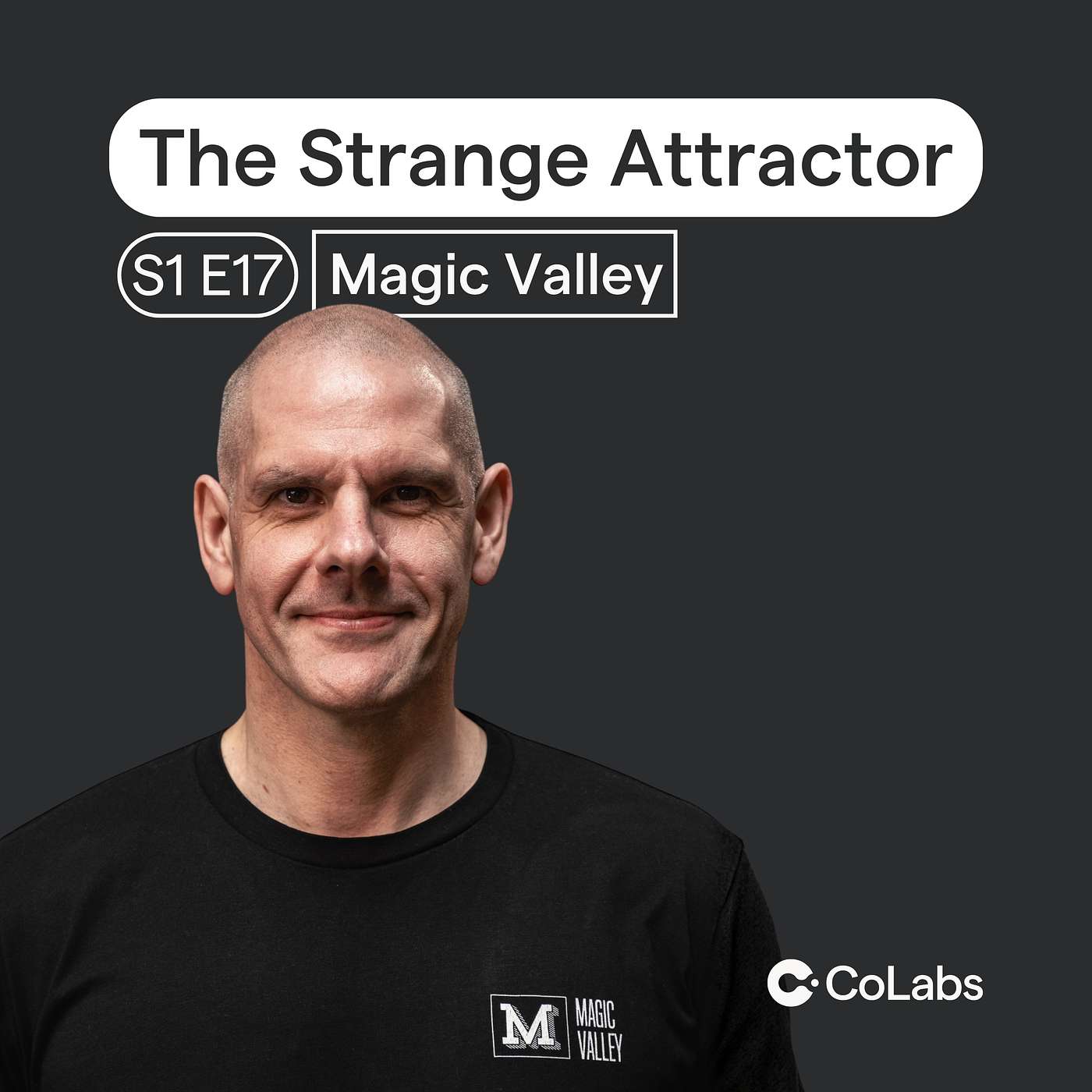
From Lab Bench To Dinner Plate: Funding, Regulation, And The Future Of Cultivated Meat In Australia with Paul Bevan | #17

Send us Fan MailWhat does a $10k cultivated meat dumpling taste like?Pretty great.But honestly, that’s not the point.The real story is how fast that price is free-falling, and what that unlocks for real food on real plates. In this episode, we sit down with Magic Valley CEO Paul Bevan to get past the headlines and into the gritty, resilient work of building a cultivated meat company in Australia.We kick off with culture, because tech is easy compared to humans. Paul shares why hiring for outcomes over optics is essential, and how the best interns don’t wait for job descriptions; they earn them by solving obvious problems early.From there, we dig into the power of storytelling and marketing, especially when you don’t have a product yet. In emerging categories, education is the product. Media isn’t vanity, it’s scaffolding. It is how you build trust with investors, regulators and supply chain partners.Then we talk money. Mission-aligned angels, smaller VCs who understand timelines, matched grants like the Industry Growth Program, and making the most of Australia’s R&D Tax Incentive. We touch on why crowdfunding works best when you already have a crowd, and why disciplined runway beats hype every time.And the plot twist? The economics are finally shifting. Food-grade suppliers are undercutting pharma, bioreactors once costing millions are dropping into six-figure territory, and culture media is falling fast with a credible path to one dollar a litre. Add FSANZ’s dedicated cellular agriculture pathway, and the route to viable products looks far more concrete than the doom-scrolling suggests.If you’re into cultivated meat, future-fit food systems or the art of founder survival in tough markets (with integrity, clarity and a dash of cheek), this episode is for you.Hit subscribe, share with a friend who geeks out on food tech, and drop us your biggest question.Keen to hear more about Magic Valley? Website LinkedInInstagramYoutubeKeep Following the PatternSam's InstagramSubstackCoLabs CoLabs NewsletterThis is an evolving experiment.The Strange Attractor is produced by Ecotone Studio — a creative practice exploring the fertile edge where art, science, technology and philosophy meet.Like the ecosystems we are a part of, this project is designed to evolve. Every conversation changes the next one.If there’s a question you’d like us to explore, a guest we should invite, or a theme you think deserves more attention, drop us a line. We’re especially interested in the spaces between disciplines—the ecotones where unexpected ideas emerge. If you’re building something thoughtful, beautiful or regenerative, or simply wrestling with questions that matter, we’d love to hear from you. Thanks for listening. Until next time — stay curious.

October 2, 2025Episode 161 hr 9 min

Crafting with Life: Mycelium, Biodesign, and a Regenerative Materials Economy with Amanda Morgan from Fungi Solutions | #16

Send us Fan MailIf you could ask a living material to help fix our mess, what would you grow first – packaging, panels, or leather? We sit down with Amanda from Fungi Solutions to share how mycelium turns waste streams into durable, lightweight, and compostable products that actually work at scale. From early experiments binding fashion off-cuts to refined packaging that replaces polystyrene, we map the practical steps, the surprises, and the mindset shift from manufacturing to collaboration with living systems.We get specific on biofabrication: substrates, environmental tuning, and the difference between compressive strength and torsion when you’re eyeing the built environment. Amanda walks us through treatments and finishes – waterproofing, laser texturing, surface skins – and why designing for decomposition is a feature, not a flaw. We talk testing before certification, how to manage MOQs as a small team, and the honest limits today: organics are ready now, plastics need pretreatment and more R&D. Along the way, there’s additive manufacturing with mycelium pastes, sculptural interiors people refuse to throw away, and the sensory surprise of a material that feels like cork meets velvet.Zooming out, we explore the circular economy infrastructure at a systems-level scale. From waste mapping, regional feedstock modelling, and how AI might supercharge biomaterials (automating humidity, predicting contamination, and powering local facilities). We celebrate community labs, open-source cultivation, and non-traditional pathways into STEM, because access fuels innovation. And there’s fresh news: mycelium leather is now available for distribution, with R&D underway to push performance and craft. Suppose you are one of those wonderful humans who care about sustainable packaging, biomaterials for construction, regenerative manufacturing, or want to see fungi outcompete foam. In that case, this conversation offers an insightful take from someone who is actively pushing forward in this space.Enjoyed the chat? Follow, share with a friend who geeks out on biodesign, and leave a review to help more people discover these regenerative solutions.Keen to learn more? Check out the links below: AmandaWebsiteInstagramLinkedInKeep Following the PatternSam's InstagramSubstackCoLabs CoLabs NewsletterThis is an evolving experiment.The Strange Attractor is produced by Ecotone Studio — a creative practice exploring the fertile edge where art, science, technology and philosophy meet.Like the ecosystems we are a part of, this project is designed to evolve. Every conversation changes the next one.If there’s a question you’d like us to explore, a guest we should invite, or a theme you think deserves more attention, drop us a line. We’re especially interested in the spaces between disciplines—the ecotones where unexpected ideas emerge. If you’re building something thoughtful, beautiful or regenerative, or simply wrestling with questions that matter, we’d love to hear from you. Thanks for listening. Until next time — stay curious.

June 29, 2025Episode 151 hr 22 min

Stem Cell Banking for Pets: Paloma Newton's Journey to Building Elita | #15

Send us Fan MailWhat happens when a hospitality veteran with a passion for problem-solving discovers her new puppy is predisposed to joint issues? For Paloma Newton, it sparked, naturally, led to an Australian-first in pet healthcare.Paloma's path to founding Elita is anything but conventional. Infact, her entire journey is about as unconventional as can be, but like most great innovators, the meandering path is the one most often taken. From call centres to cocktail bars, advertising agencies to venture capital, her career spanned across many industries before she found herself asking a deceptively simple question: why can't I bank my dog's stem cells for future use? When veterinarians responded with 'great idea, but we can't do it,' she recognised not just a gap in the market but a genuine opportunity to improve pet healthcare.The science behind Elita's approach is both elegant and powerful. By extracting and preserving a pet's own stem cells while they're young (currently during routine desexing), owners gain access to a biological insurance policy. These cells can later be used to treat conditions like arthritis, hip dysplasia, and potentially even kidney disease – all without risk of rejection since they're the animal's own cells. 'The worst thing that can happen is they don't work,' Paloma explains, contrasting this with pharmaceutical options that often carry significant side effects. Currently, they bank enough stem cells for ten potential treatments, making it  remarkably cost-effective compared to donor stem cell therapies.What makes Paloma's story particularly compelling is how her varied background became her superpower. With no formal science training, she approached the problem with fresh eyes and a beginners mind, both of which pair perfectly with her determination to execute quickly. 'My style of being a founder is execution over everything,' she says, describing how she built the company from CoLabs before even hiring scientists (bold move, we know). This fearlessness, coupled with a vision for more ethical healthcare that extends beyond profit margins, positions Elita Genetics at the forefront of a transformation in how we care for our animal companions.Curious about banking your pet's stem cells or learning more about this revolutionary approach to pet healthcare? Visit their website or follow Paloma and her inspiration, Chief Morale Officer Edgar Allen Paws, and join in on their journey toward better, more personalised pet medicine.Keep Following the PatternSam's InstagramSubstackCoLabs CoLabs NewsletterThis is an evolving experiment.The Strange Attractor is produced by Ecotone Studio — a creative practice exploring the fertile edge where art, science, technology and philosophy meet.Like the ecosystems we are a part of, this project is designed to evolve. Every conversation changes the next one.If there’s a question you’d like us to explore, a guest we should invite, or a theme you think deserves more attention, drop us a line. We’re especially interested in the spaces between disciplines—the ecotones where unexpected ideas emerge. If you’re building something thoughtful, beautiful or regenerative, or simply wrestling with questions that matter, we’d love to hear from you. Thanks for listening. Until next time — stay curious.

March 24, 2025Episode 141 hr 31 min

Make It Stick: Plasma as a Platform Technology for Better Biomolecule Binding with Culturon | #14

Send us Fan MailWhen Stuart Fraser looked at the tech his physicist colleague Marcella showed him – a two-nanometer carbon layer that could bind biomolecules with unprecedented strength – he immediately recognised its world-changing potential. 'If I didn't commercialise this, it would be a tremendous waste for society,' he recalls thinking.That moment transformed Fraser from a redundant academic to the founder of Culturon, an Australian biotech company revolutionising how we attach biomolecules to surfaces. Alongside Research and Business Development Manager Bailey Logan, Stuart is tackling problems ranging from diagnostic testing to agricultural innovation with their elegantly simple, cool plasma treatment technology.At its core, Culturon solves a mundane but crucial problem: laboratory plastic plates hate the expensive proteins scientists try to put on them. They've unlocked extraordinary capabilities by using cold plasma to create an ultra-thin carbon coating that forms incredibly strong bonds with any – proteins, DNA, complex sugars, or fats – without chemical linkers. Moreover, these plates and products can be stored at room temperature for months, eliminating costly cold shipping and expanding access to remote areas – reducing both the economic and environmental footprint associated with doing science. What began as a solution for lab diagnostics has blossomed into applications spanning multiple industries. From enhancing seed germination and creating simple soil carbon measurement tools for farmers to developing potential alternatives to harmful PFAS chemicals in cookware, Culturon demonstrates the power of platform technologies. Like the beginning of infinity, every new collaboration reveals unexpected possibilities.Fraser and Logan's journey highlights how curiosity-led transdisciplinary innovation can create exponential value. 'Scientists, artists and people of faith are all trying to explain the world, but we just do it with different tools,' Fraser observes. In Culturon's case, these tools strive to create a future where diagnostics are more accessible, agricultural practices are more sustainable, and waste is significantly reduced.Ready to explore how surface technology could transform your field? Discover what happens when brilliant minds cross disciplines and challenge conventional thinking.Keen to see more? Check out their: WebsiteLinkedinKeep Following the PatternSam's InstagramSubstackCoLabs CoLabs NewsletterThis is an evolving experiment.The Strange Attractor is produced by Ecotone Studio — a creative practice exploring the fertile edge where art, science, technology and philosophy meet.Like the ecosystems we are a part of, this project is designed to evolve. Every conversation changes the next one.If there’s a question you’d like us to explore, a guest we should invite, or a theme you think deserves more attention, drop us a line. We’re especially interested in the spaces between disciplines—the ecotones where unexpected ideas emerge. If you’re building something thoughtful, beautiful or regenerative, or simply wrestling with questions that matter, we’d love to hear from you. Thanks for listening. Until next time — stay curious.

February 10, 2025Episode 1348 min

Redefining Cancer Diagnostics: The Promise of Precision Oncology with Martin from Oncoparse | #13

Send us Fan MailJoin us as we welcome Martin Thompson, the visionary CEO and founder of Oncoparse, who has transformed personal adversity into groundbreaking innovation in the fight against pancreatic cancer. From his journey as an electrical engineer to co-founding Lenexa Medical, Martin's story is a testament to the power of design-led thinking and interdisciplinary collaboration. Discover how the University of Melbourne's biodesign course is fostering a new wave of startups by pairing engineering and business students, all focused on addressing critical clinical needs.Explore cutting-edge pancreatic cancer treatment through the lens of precision oncology, where we discuss the revolutionary promise of KRAS-targeted therapies and ctDNA-based approaches. Our conversation delves into how a collaborative ecosystem, bolstered by AI and data analysis, is driving forward the identification of oncogenic genes and shaping the future of cancer diagnostics. With the potential for exponential growth as more data becomes available, we're on the brink of transformative advancements that could redefine patient outcomes.Navigating the challenging landscape of early-stage MedTech and BioTech funding in Australia, we discuss our vision for creating a supportive platform to empower innovation. In this chat, you'll learn about the hurdles and opportunities faced by one of our startups and also hear how initiatives like venture studios and alternative venture support pathways could serve to support more groundbreaking ideas. Through personal stories and Martin's unique perspective, this conversation allows us to understand his relentless drive to tackle significant health issues, motivated by a deep-seated desire to make a tangible difference in the world of cancer innovation.Keep Following the PatternSam's InstagramSubstackCoLabs CoLabs NewsletterThis is an evolving experiment.The Strange Attractor is produced by Ecotone Studio — a creative practice exploring the fertile edge where art, science, technology and philosophy meet.Like the ecosystems we are a part of, this project is designed to evolve. Every conversation changes the next one.If there’s a question you’d like us to explore, a guest we should invite, or a theme you think deserves more attention, drop us a line. We’re especially interested in the spaces between disciplines—the ecotones where unexpected ideas emerge. If you’re building something thoughtful, beautiful or regenerative, or simply wrestling with questions that matter, we’d love to hear from you. Thanks for listening. Until next time — stay curious.

Is this your show?

Claim this listing to keep it up to date, reach guests who want to pitch you, and manage bookings with Guestify.

Claim this listing