Find partners
Sleeping Barber - A Marketing Podcast

Sleeping Barber - A Marketing Podcast

Hosted by Sleeping Barber

Episodes

234

Latest episode

Aug 2026

Language

EN

About the show

Ready to rethink business strategy and supercharge your marketing game? Join hosts Marc Binkley and Vassilis Douros as they break down big questions at the crossroads of strategy, marketing effectiveness, and creative impact. From real-world case studies to hot-off-the-press business news, each episode dives deep into how modern companies navigate complexity. Plus, interviews with global thought leaders bring you fresh insights and actionable strategies to drive growth and build unforgettable customer experiences. This is your backstage pass to smarter thinking and better business results.

Listen to episodes

60 recent
August 20, 202626 min

SBP 229: The PostPod - Lessons from Pats McDonald. AI Won't Decide the Future of Marketing. We Will.

AI is going to take our jobs. AI will commoditize creativity. AI will make strategy worse. But AI isn't making those decisions. We are. In this PostPod, Marc and V reflect on their conversation with Pats McDonald, Chief Strategy Officer at dentsu, and explore one of the most important ideas emerging from the AI conversation: human agency still matters. They discuss why AI may eliminate barriers without eliminating expertise, how LLMs naturally pull marketers toward the average, the danger of settling for “strategy-ish,” and why faster answers don't necessarily produce better thinking. The conversation also explores what AI means for specialists and generalists, how marketing organizations may need to evolve, and why companies may eventually need to onboard their AI systems with the same strategic frameworks, principles and ways of working they use to onboard their people. Because the biggest question may no longer be what AI can do. It's what we're going to choose to let it do. Chapters: 00:00 Stop Blaming AI 00:46 Reflecting on Pats McDonald 02:02 AI, Jobs and Human Agency 03:00 AI Is Removing Barriers to Entry 05:13 Why Expertise Still Matters 06:36 Design for Difference, Not Sameness 09:27 The Danger of “Strategy-ish” 11:24 When AI Becomes “Good Enough” 13:53 Do We Still Need Specialists? 14:58 The Marketer of the Future 16:16 Why AI Still Needs Human Expertise 17:07 Turning Ideas Into Reality Faster 20:16 Human Agency Still Matters 20:27 AI and Strategic Drift 21:30 Keeping AI Inside the Strategic Framework 24:00 Should Companies Onboard Their AI? 26:29 Final Thoughts
August 18, 202628 min

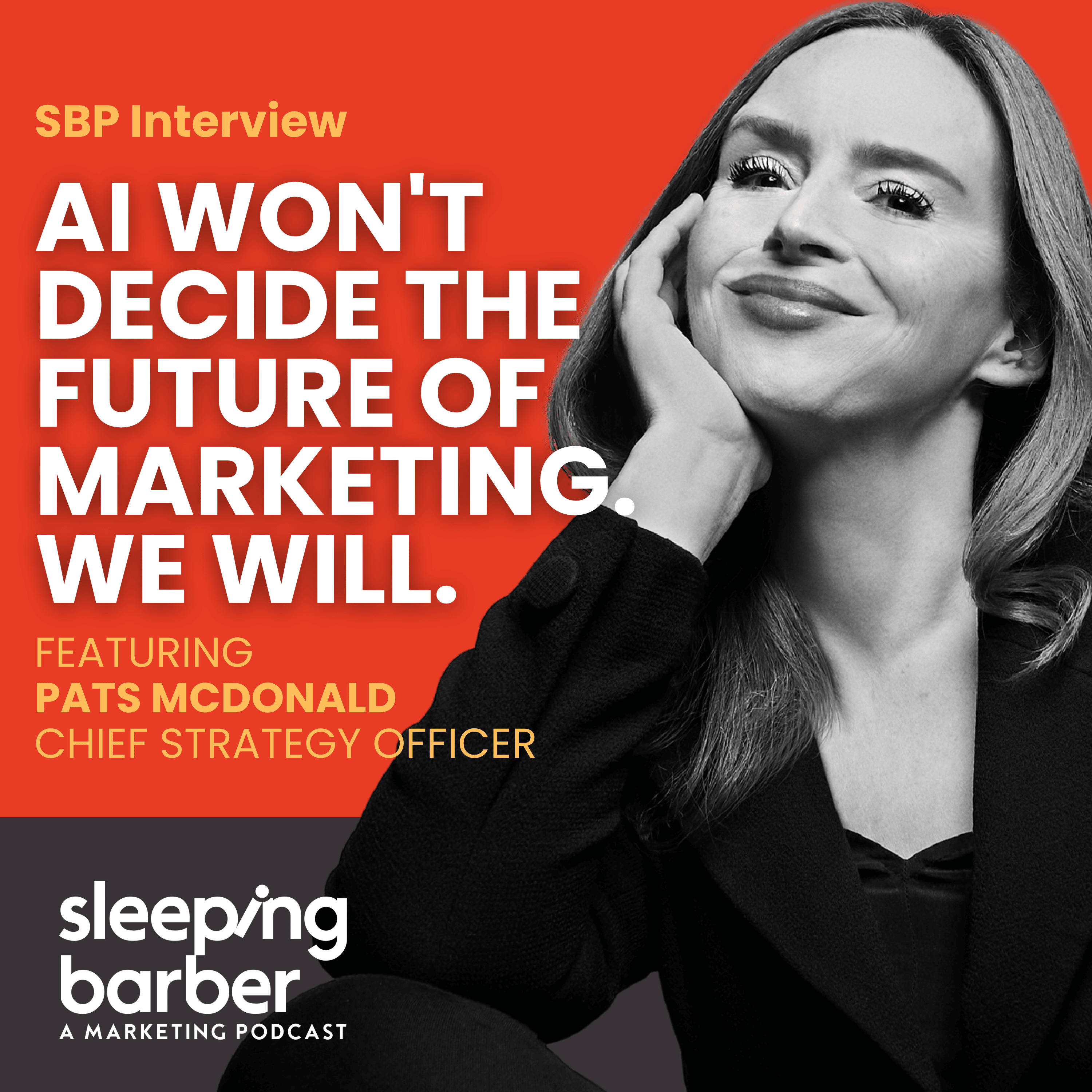
SBP 228: Interview - AI Won't Decide the Future of Marketing. We Will. With Pats McDonald.

What if the biggest mistake we're making with AI is the way we talk about it? Pats McDonald, Chief Strategy Officer at Dentsu Creative, joins the Sleeping Barber Podcast to challenge one of the dominant narratives surrounding artificial intelligence: that AI itself is determining what comes next. Her argument is simple: AI doesn't make these choices. People do. We explore what that means for marketers, strategists and leaders as AI becomes embedded in everyday marketing practice. Pats explains why AI's greatest opportunity isn't simply doing more with less, but enabling ideas that previously weren't possible. We discuss the danger of “strategy-ish”—plausible, polished strategic thinking that never gets somewhere genuinely distinctive—and why strategists should use AI to identify category conventions so they can deliberately break away from them. We also tackle one of the biggest organizational questions surrounding AI: if technology increasingly performs the work traditionally given to junior marketers, how do we develop the next generation of senior talent? Plus: Why strategists need to understand both consumers and algorithms Why curiosity may become more valuable than having all the answers How AI can expose category clichés and strategic blind spots Why data hygiene and fact-checking become even more important How AI could become institutional memory for brands Why marketers should design for difference rather than scale sameness What responsible AI leadership actually looks like Ultimately, Pats leaves us with a powerful distinction: Stop saying “AI will.” Start asking what people, enabled by AI, will choose to do. Chapters: 00:00 - Introduction 01:03 - Stop Saying “AI Will” 02:58 - How AI Is Changing Strategy 05:40 - Doing What Wasn't Possible Before 06:50 - What Happens to Junior Talent? 08:35 - Specialists vs. Generalists 11:35 - Curiosity as a Strategic Skill 13:45 - Can AI Accelerate Curiosity? 15:10 - Why Leaders Must Keep Learning 16:50 - The Danger of “Strategy-ish” 18:10 - Designing for Difference, Not Sameness 19:45 - AI, Bias and Strategic Blind Spots 21:05 - Why AI Still Needs Fact-Checkers 22:45 - Can AI Prevent Strategic Drift? 24:15 - AI as Institutional Brand Memory 25:55 - Great Examples of AI in Creativity 27:35 - AI Becomes Part of the Creative Toolkit 28:50 - Human Agency and the Future of AI 30:05 - Stop Saying “AI Will”

August 13, 20261 hr 7 min

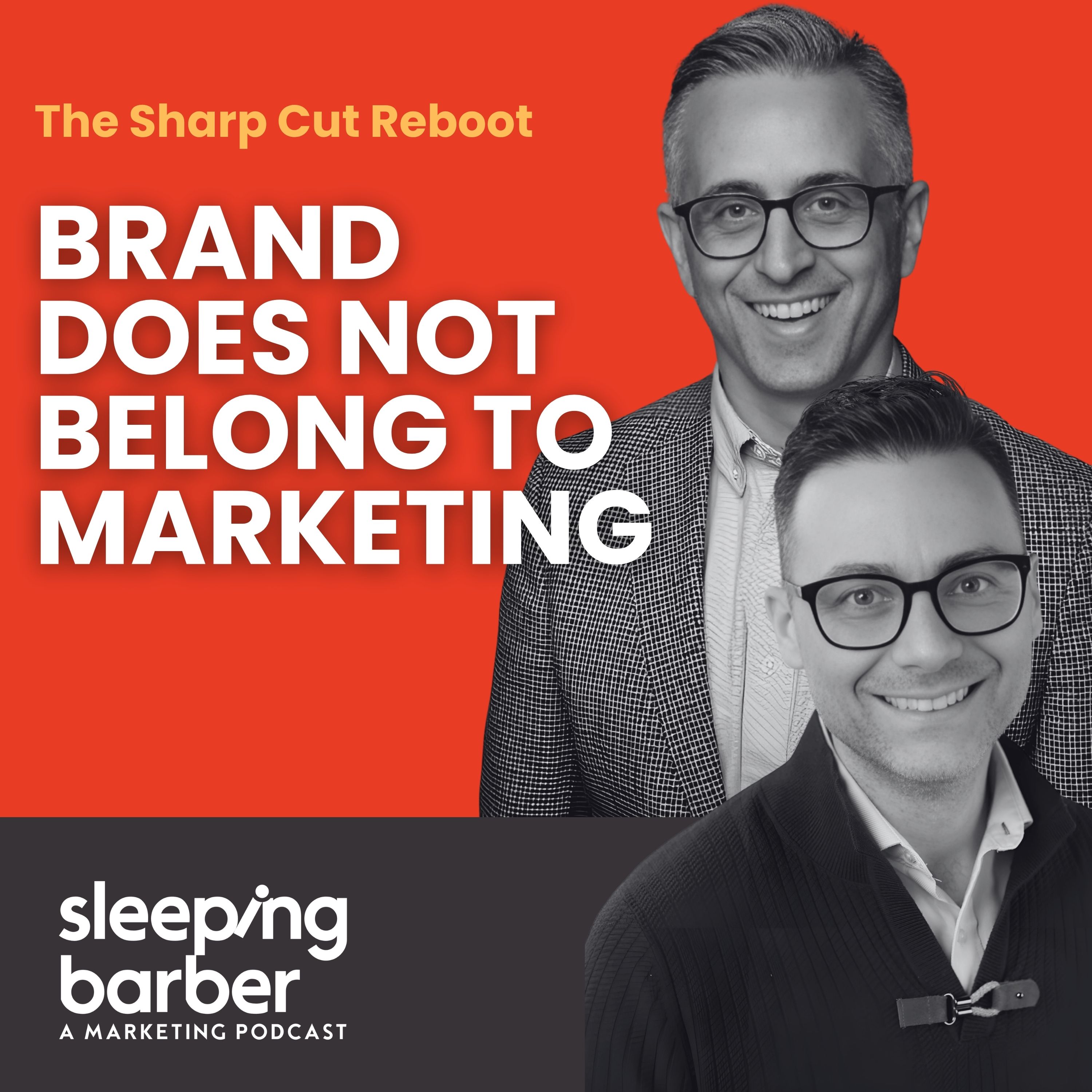
SBP 227: The Sharp Cut - Brand Does Not Belong to Marketing

Ask ten marketers to define brand and you get ten answers. Ask them who owns it and you get one: marketing. Marc and V think that second answer is the problem. In this reboot of episode 4, they work through three questions with no guest and no script. What is brand? Marty Neumeier calls it the gut feeling people have about you. Roger Martin calls it generating confidence. Both descriptions point at things the promotion team does not control. Who owns it? V argues brand needs its own team, possibly reporting to the CEO, because the frontline, the packaging, the product roadmap and the customer service queue all write the brand whether marketing likes it or not. Marc pushes back on where the line sits, and lands on why an ad only ever amplifies the truth. Why is any of it useful? This is where it gets uncomfortable. NPS goes up when you lose customers. Last click hands the credit to the channel that was standing closest to the till. Share of search actually predicts something. And the retention economics everyone repeats turns out to be a thought experiment nobody checked. Recorded in 2021. Republished because the org chart problem has not moved.

August 11, 202629 min

SBP 226: The Barber's Brief - The AI Efficiency Trap: When Doing More With Less Backfires

What happens when AI makes marketing more efficient, but every dollar saved gets taken out of the marketing budget? Welcome back to the Barber’s Brief, where we unpack the marketing stories, ideas and creative work that caught our attention. This week, we start with what might be one of the unintended consequences of the AI revolution: the efficiency spiral . As marketers use AI to accomplish more with less, are they inadvertently proving that their organizations need less marketing investment? We also explore why marketing may have the "loneliest seat at the table," despite having one of the broadest views of the business, and why marketers need to reconnect what they do to financial outcomes if they want greater influence inside organizations. Then we turn to Google. A German court ruling could fundamentally change the relationship between platforms, publishers and AI-generated answers by treating Google's AI Overviews as Google's own content. If an answer belongs to Google, does the responsibility for that answer belong to Google too? Finally, Marc's Ad of the Week takes us back to Cannes with Columbia Sportswear's Expedition Impossible , a brilliantly committed challenge to flat-earthers that demonstrates why great creative showmanship is about much more than spectacle. In this episode: The AI efficiency spiral Why AI should be treated as a growth tool, not simply a cost-saving tool Marketing's "panoramic view" of the business Why marketing needs to get beyond communications Connecting marketing activity to financial outcomes Google's emerging responsibility for AI-generated answers The changing economics of AI search Columbia Sportswear's Expedition Impossible Why showmanship makes great advertising memorable Chapters: 00:00 Welcome to the Barber's Brief 00:34 The AI Efficiency Spiral 01:01 How CMOs Are Funding AI 02:15 Why Smaller Companies May Be Winning With AI 03:22 AI as a Growth Tool, Not a Cost-Cutting Tool 05:49 Marketing Has the Loneliest Seat at the Table 06:12 Marketing's Panoramic View of the Business 08:43 Does the Rest of the Business See Marketing Differently? 10:42 Why Marketing Feels Unpredictable 12:31 Should Everything Marketing Does Link to Financial Outcomes? 13:39 Marketing's Retreat Into Communications 15:16 Getting Marketing Back Into the Business 16:36 Google's AI Search Liability Problem 18:45 When Google Becomes the Answer, Who Is Responsible? 20:18 How AI Overviews Are Changing Search Behaviour 23:18 Ad of the Week: Columbia's Expedition Impossible 24:02 Challenging Flat-Earthers to Find the Edge of the Earth 25:35 Why Columbia's Commitment Made the Idea Work 27:11 Showing a Different Side of Columbia 28:08 Why Showmanship Makes Advertising Great 28:57 Closing Thoughts

August 6, 202626 min

SBP 225: The PostPod - Lessons from Traci Alfford. Good Work Is a Habit Not a Score

What actually makes marketing effective? It's tempting to point to great creative. Or strong media. Or impressive results. But after our conversation with Effie Worldwide CEO Traci Alford , we realized effectiveness is something much bigger. In this Post-Pod we unpack the four-part system behind effective marketing and discuss why leadership, culture and organizational alignment often matter more than any individual campaign. Topics include: Why effectiveness is a system—not a scorecard Objectives, insight, creativity and learning Why marketers struggle to define the real problem Bravery versus risk The importance of common language across the C-suite Why incentives may be working against effective marketing We also introduce another edition of our Quick Fire round, highlighting the biggest ideas from the episode. Chapters: 00:00 - Welcome to the Post-Pod 00:40 - First Impressions of Traci Alford 01:20 - Effectiveness Is a System 03:10 - Are We Solving the Right Problem? 05:15 - Great Systems Need Great Teams 07:30 - Stakeholder Management & Common Language 10:40 - Do Incentives Work Against Marketing? 14:45 - Future Demand & Long-Term Thinking 17:40 - Bravery vs Risk 21:50 - Global Insights vs Statements of Fact 24:05 - ⚡ Quick Fire 24:20 - Best Quote 24:40 - Biggest Insight 25:10 - Most Practical Takeaway 25:40 - Biggest Challenge for Marketers 25:50 - Debate Question 26:05 - Closing Thoughts

August 4, 202638 min

SBP 224: Interview - Good Work is a Habit, Not a Score. With Traci Alford

Most companies treat effectiveness like a scoreboard. Traci Alford, Global CEO of Effies Worldwide, sees the entries from 130 countries, and she says that is exactly where it goes wrong. Measuring the crop does not grow it. In this conversation recorded in Cannes, Traci lays out the 4 things behind every winning case: understand the business problem find a real insight rather than a statement of fact execute the creative brilliantly, and measure what happened so you can learn from it. Plenty of companies are strong at 1 or 2. Almost nobody is strong at all 4, and fewer still can tell the story that ties them together. Traci also draws a line most of the industry blurs. Brave is not the same as risky. Risk means you have not thought about your headwinds. Brave means you made a calculated choice and you can defend it in the room. And her data says you cannot do it halfway. Stick to your knitting and execute well, or take the real swing. Hovering in the middle is where work dies. Marc and V push on the parts that hurt. Why the short term always wins the budget fight. Why agency relationships go sour when a campaign is the only unit of measurement. Why marketing jargon loses the room. And where technology spend quietly eats the money that could have gone into media. Traci keeps coming back to the same place. This is a people business, and the habit has to live at the executive table, not just in the marketing team. Timestamps 00:00 Cold open and welcome 02:37 The 4 pillars behind every winning case 05:39 Brave is not the same as risky 09:18 Why this is a people business 13:24 The short term trap and shared accountability 18:28 Talking to the C-suite without the jargon 24:07 Insight is the one most people fail 29:34 Risk retreat, tech debt, and opportunity cost 36:16 What to take home from Cannes Show Notes Links Effie Worldwide: https://effie.org/ Tubi "Rabbit Holes" Super Bowl spot https://www.youtube.com/watch?v=mROTZBUM1Yk Previous SBP episode with Karen Pearce, Rethink Ehrenberg-Bass Institute 95:5 rule https://marketingscience.info/news-and-insights/the-955-rule-is-the-new-6040-rule

July 30, 202621 min

SBP 223: The Sharp Cut - Brand Awareness Is The Wrong Metric

Brand awareness is one of the most reported metrics in marketing. It's in almost every board deck. Almost every brand tracker. Almost every agency review. But what if it's measuring the wrong thing? In this Sharp Cut, Marc and V explore why mental availability matters more than awareness, why Category Entry Points (CEPs) outperform personas as a planning framework, and why marketers should stop asking "Who is our customer?" and start asking "What buying situations do we need to own?" Topics include: Mental availability vs brand awareness Why awareness often fails to predict growth The power of Category Entry Points Creative as a targeting system Why Meta is moving away from hyper-targeting The measurement framework marketers should actually use If you've ever presented a rising awareness score alongside a flat business result, this episode is for you. Chapters: 00:00 - Welcome to Sharp Cuts 00:35 - Why Brand Awareness Is Misleading 02:00 - Mental Availability vs Awareness 03:45 - What Should We Measure Instead? 05:15 - Category Entry Points Explained 07:10 - The Seven Whys Framework 08:00 - Why CEPs Changed the Conversation 09:00 - Creative Becomes the Targeting Tool 11:00 - Why Meta Is Broadening Audiences 12:30 - Two Performance Marketers Confess 15:30 - Where CEPs Go Wrong 16:30 - The Three Cs of Prioritization 17:30 - Distinctive Assets & Memory 18:30 - Bailey's Case Study 19:00 - Stop Measuring Brand Love 20:30 - The New Measurement Framework 21:30 - Final Takeaways

July 28, 20261 hr 3 min

SBP 222: SBP Interview - Feels vs. Deals: The Real Battle for Q4. With Andrew Tindall and Vanessa Chin.

What actually mattered at Cannes? More importantly... What should marketers do differently because of it? In this special collaboration between The Sleeping Barber , That's What I Call Marketing , and System1 , we unpack the biggest lessons from Cannes Lions and turn them into practical advice for the second half of the year. Topics include: Mark Ritson & Byron Sharp's rare appearance together Why creativity still beats optimization AI's real role in advertising The rise of creators Why memory—not impressions—is becoming the metric that matters Why audio may be marketing's biggest opportunity The Q4 creative playbook If you're planning campaigns for the second half of the year, this conversation is your roadmap. Chapters: 00:00 - Welcome & Why This Conversation Matters 01:20 - What Really Happened Between Byron Sharp & Mark Ritson 05:35 - Where They Still Disagree 06:15 - Why Consistency Is Marketing's Biggest Weakness 09:20 - What Marketers Often Misunderstand 11:45 - AI After Cannes: Hype vs Reality 17:15 - Are We Already Bored of AI? 18:35 - Brand Characters, Consistency & Memory 23:40 - Why Audio Could Be Marketing's Next Big Opportunity 31:30 - Why Radio Still Works 37:20 - Creators: What Most Brands Get Wrong 43:30 - Memory Is Becoming Marketing's Most Important Metric 51:50 - The Q4 Playbook 54:00 - Feels vs Deals 59:00 - Why Great Christmas Ads Return Every Year 1:00:30 - Final Advice for Marketers

July 23, 202623 min

SBP 221: The PostPod - Lessons from Ty Heath. B2B Marketing is Playing the Game on Hard Mode.

Ty Heath has a way of making complex marketing ideas feel deceptively simple. After our latest conversation with the former LinkedIn B2B Institute leader, we sat down to unpack the biggest ideas that stayed with us—from why B2B is simply "marketing on hard mode," to why confidence may be the true outcome of great B2B marketing. Along the way we explore: Why the same marketing principles apply across B2B and B2C Buying committees and why complexity changes execution—not human behaviour Why the best B2B brands build ecosystems instead of campaigns The power of contrarian thinking Why strategy should outlast trends Confidence, memory and long-term brand building If you've ever wondered whether B2B marketing really plays by different rules, this conversation may change your mind. 00:00 - Welcome Back & First Reactions 01:15 - Why B2B Is "Marketing on Hard Mode" 02:15 - The B2B Institute as a Marketing Cheat Code 03:30 - Buying Committees and What Makes B2B Different 06:10 - Are B2B and B2C Actually That Different? 07:15 - Has B2B Creativity Finally Matured? 09:35 - Campaigns vs. Ecosystems 12:00 - Why Event Marketing Builds Memory 13:30 - The Contrarian Marketer 15:10 - Chasing Trends vs. Building Strategy 17:30 - Objectives Before Tactics 18:10 ⚡ Quick Fire Begins 18:35 - Best Quote 19:15 - Most Surprising Insight 20:20 - Biggest Missed Question 21:45 - Most Practical Takeaway 22:15 - Challenge for Marketers 23:10 - Closing Thoughts

July 21, 202640 min

SBP 220: Interview - B2B Marketing is Playing the Game on Hard Mode. With Tyrona Heath.

B2B marketing isn't playing a different game. It's playing the same game on hard mode. In this episode, we're joined by Ty Heath, Global Director of Thought Leadership Go-to-Market at LinkedIn and co-founder of the B2B Institute. Fresh off serving as Jury President for the Creative B2B Lions at Cannes, Ty shares what separated the best work from the rest—and why B2B creativity is entering a new era. We discuss: What won at Cannes B2B Lions Why B2B creativity has matured The role of emotion in B2B Buying committees and "viability" Why ecosystems beat campaigns The origin story of the B2B Institute Long-term thinking inside LinkedIn Why B2B marketers are playing the game on "hard mode" Whether you work in B2B, B2C, media, or brand strategy, this conversation offers practical lessons on creativity, leadership and marketing effectiveness. Chapters: 00:00 - Welcome Back, Tyronna Heath 00:38 - Tyronna’s New Role at LinkedIn 01:11 - Winning an Effie for “Only on LinkedIn” 02:58 - Becoming Jury President for the Creative B2B Lions 05:24 - Reviewing 355 Cannes Entries 07:20 - Has B2B Creativity Finally Matured? 09:14 - What Effective B2B Creativity Looks Like 12:00 - Why the Best Ideas Can Be Explained in One Sentence 13:24 - What Is Still Missing from B2B Creative? 16:01 - Why Ecosystems Can Be More Powerful Than Campaigns 18:09 - The Role of Emotion in B2B Decision-Making 18:23 - Cannes as a B2B Brand Experience 21:37 - The Origin Story of the B2B Institute 25:25 - How the B2B Institute Built Its Influence 28:05 - Thought Leadership and Betting on What Won’t Change 31:09 - Human Behaviour as the Enduring Marketing Truth 32:43 - Where B2B Creativity Goes Next 34:15 - Why B2B Marketing Is “Hard Mode” 37:07 - LinkedIn’s Long-Term B2B Playbook 38:01 - Building Authority, Credibility and Confidence 39:10 - The B2B Institute as a Marketing Cheat Code 40:05 - Where to Follow Tyronna and the B2B Institute

Is this your show?

Claim this listing to keep it up to date, reach guests who want to pitch you, and manage bookings with Guestify.

Claim this listing

More Business podcasts