Find partners
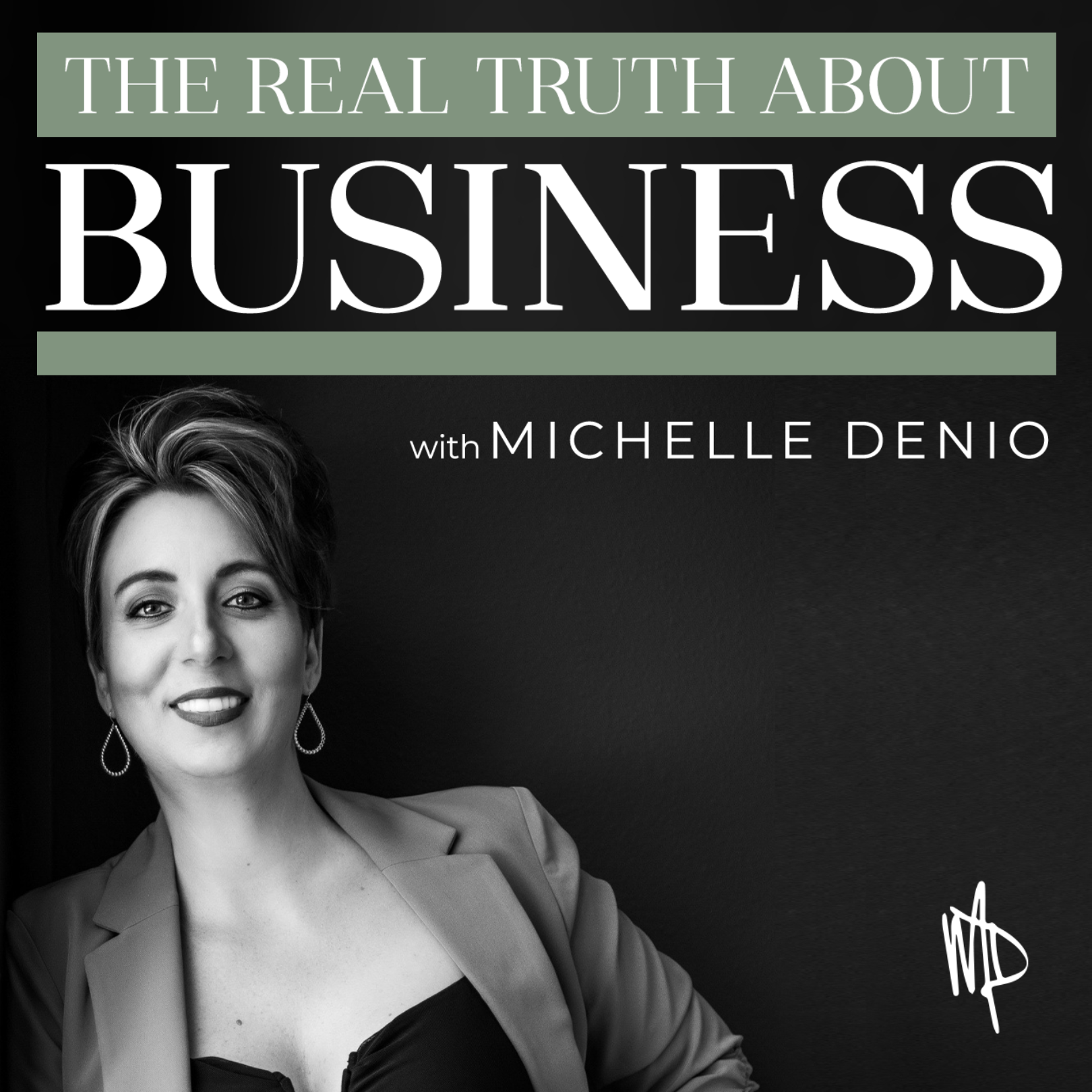
The REAL Truth About Business: Business Strategy for Service Based Entrepreneurs

The REAL Truth About Business: Business Strategy for Service Based Entrepreneurs

Hosted by Michelle DeNio | Business Strategist

Episodes

379

Latest episode

Aug 2026

Language

EN

About the show

The Real Truth About Business is a business strategy podcast for service-based entrepreneurs, coaches, and consultants who are done with generic advice and ready for data-driven strategic planning that actually works. Hosted by Michelle DeNio, a business strategist based in Sarasota, Florida, this podcast delivers practical insights on business growth strategy, pricing for profit, lead generation, sales process development, and strategic business planning. Whether you're a solopreneur, small business owner, online coach, or consultant, you'll get no-fluff guidance on building a sustainable, profitable business. Each episode covers topics like: strategic business planning, pricing strategy, sales funnel optimization, client acquisition, relationship marketing, profit-focused decision making, and CEO mindset development. Perfect for growth-stage entrepreneurs who want clarity, structure, and results. Michelle is the creator of the Focused Visionary Framework and host of over 300 episodes focused on helping service-based business owners break through revenue plateaus using her three-pillar approach: Pricing, Pipeline, and Sales. For more on how to work together and explore the Focused Visionary Framework, visit michelledenioconsulting.com.

Listen to episodes

60 recent
September 9, 202619 min

How to Close a Sale Without Being Pushy: Sales Closing Techniques That Actually Work [Ep. 381]

If asking someone to buy makes you immediately worry that you’re being pushy, your definition of “closing the sale” probably needs to change. In this episode of The Real Truth About Business podcast, I’m breaking down sales closing techniques that help service-based entrepreneurs guide potential clients toward a decision without manipulation, pressure, or aggressive sales tactics. Closing isn’t about convincing someone to hand over their credit card. It’s about listening, understanding what they actually need, making the right recommendation, asking for the sale, and following up intentionally. After 9 years of experience, I’ve seen how often business owners generate plenty of leads but lose revenue growth because they never confidently move those leads through the final stages of their sales process. We’re talking about what to say on sales calls and in DMs, how to establish follow-up before the conversation ends, why proposals can hurt your conversion rate, and when to stop selling completely. What You'll Learn: How to redefine closing as guiding someone toward a decision instead of convincing them to buy Why listening is one of the most effective sales closing techniques How to recommend the right offer based on what a potential client actually tells you What to say when someone tells you they need time to think about your offer How to establish follow-up expectations without feeling like you're nagging or chasing Why proposals, overselling, and continuing to pitch after someone says yes can hurt your sales process Episode Highlights: [00:00] Introduction: Why “closing the sale” feels so uncomfortable [02:00] The aggressive sales tactic that inspired this episode [04:00] Step one: Stop talking and start listening [06:15] Step two: Make a recommendation based on what you heard [08:30] Step three: Ask for the sale without burying the ask [10:00] What to say when someone needs time to think [12:30] Setting the expectation for follow-up before the conversation ends [14:00] Why I'm not a huge fan of sending proposals [15:30] Stop selling when the client says yes [16:30] Why a no is still a successful sales decision [17:15] Auditing your sales process and handling hesitation [18:15] Wrap-up: Intentional sales don't require aggressive tactics Key Takeaways: Closing a Sale Is Not About Convincing Someone The phrase “close the sale” has picked up a lot of baggage. It can immediately sound aggressive, manipulative, or like you need some magical sales script that convinces someone to buy before they change their mind. That's not how I define closing. Closing a sale is simply guiding someone toward a decision. That's it. You can generate leads, have great conversations, build relationships, and create an incredible offer. But at some point, someone has to make the final decision to work with you. Inside the Focused Visionary Framework, this is why Pipeline and Sales are two separate pillars. Getting people into your world matters. But your sales process has to intentionally move those people toward a decision. Step One: Stop Talking and Start Listening Closing starts with listening. One of my favorite ways to start a sales conversation is simply: “Brain dump me.” Tell me what's going on. What are you struggling with? Where are you stuck? What's creating anxiety? Give people permission to talk without trying to package everything into a polished explanation. Most of the time, they'll tell you exactly what they're struggling with. Your job is to listen and ask clarifying questions. If someone tells me they need more clients, I'm not immediately selling them a lead generation strategy. I want to know why they think they need more clients. Are they at capacity? Are their current leads not converting? Is their pricing wrong? What's actually happening? Listen before you recommend anything. Step Two: Make a Recommendation Once you understand the problem, recommend the next best step. You don't have to present every offer in your business. In fact, don't. Tell them which option you believe is the best fit based on what they just told you. Use their own priorities to explain your recommendation: “Based on everything you told me, here's what I recommend.” Or: “One of the things you said was really important to you was…” You're showing them that you listened. People want to feel seen and heard. When your recommendation clearly connects their needs to the right offer, the sales conversation becomes significantly more natural. Step Three: Actually Ask for the Sale Don't bury the ask. Don't end a great sales conversation by saying, “I'll send you some information,” and leave everything completely open-ended. Ask them how they're feeling. “Based on what we talked about, how does this feel?” “Does this feel like the right next step for you?” “What are you thinking?” Then stop talking. You do not need to immediately fill the silence or start overselling yourself. Their response gives you information. Maybe they have a question about timing. Maybe they've been burned by another coach. Maybe they're concerned about the investment. Let them tell you what's actually creating hesitation. When They Say “I Need to Think About It,” Do This “I need to think about it” doesn't mean you immediately end the conversation and hope they eventually come back. Respect their decision to think about it while establishing exactly what happens next. You might say: “Absolutely. Take a few days to think about it. I'm going to put a note on my calendar to follow up with you next Thursday. If I don't hear from you before then, I'll reach out Thursday. How does that sound?” Now you've established the expectation. When Thursday comes around, you aren't awkwardly chasing them. You're doing exactly what you told them you would do. And then you need to actually follow up. Integrity matters. If you told someone you were going to follow up on Thursday, follow up on Thursday. Stop Letting Proposals Do the Selling for You I'm not a huge fan of sending proposals unless they're actually necessary. Why? Because proposals can disappear into someone's inbox. Or the person opens it, immediately scrolls to the price, and makes a decision without the context of the conversation you just had. If you need to send a custom proposal, consider recording a video walking them through it. Explain what's included and why you made those recommendations based on the conversation you had. And before you send the proposal, establish when you'll follow up. Don't send it into the abyss and hope for the best. When They Say Yes, Stop Selling This one sounds obvious, but people do it constantly. The client says yes. Then you keep talking. You start explaining more features, adding bonuses, justifying the investment, and trying to convince someone who already told you they're ready. Stop. They said yes. Move into your process. Tell them what happens next. Send the payment link. Book the first call. Get them onboarded. You no longer need to sell them. A No Is Still a Decision The goal of a sales conversation isn't to make every person buy. The goal is to help someone make a decision. And sometimes the decision is no. If someone isn't a good fit and you're seeing red flags, let them go. If they decide the offer isn't right for them right now, respect the decision. You don't need to convince them otherwise. Closing is about moving someone toward a yes or no , not forcing every conversation into a yes. Audit Your Sales Process I want you to look at your current sales process and ask yourself: Where am I actually asking for the sale? What happens after I make the recommendation? What are my steps for moving someone toward a decision? How am I handling follow-up? And am I establishing that follow-up before the conversation ends? These techniques work whether you're closing on Zoom, over the phone, through text, or inside your DMs. The format can change. The sales process doesn't have to. Listen. Recommend. Ask. Establish the follow-up. Follow through. And know when to stop selling. You don't need to become more aggressive at sales. You need to become more intentional about helping people make a decision. FREE WORKSHOP REGISTRATION - THEY FOUND YOU...NOW WHAT? Resources Mentioned Get your FREE Ceo Income Plan Book a CEO Strategy Call Learn more about The Missing Piece Intensive Learn more about The Focused Visionary Accelerator <a href="https://links.michelledenioconsulting.com/sz4x" rel="noopener noreferrer"...


September 2, 202618 min

Everything in Business Is a Choice: But Every Choice Has a Trade Off [Ep. 380]

If you’re frustrated that your business results don’t match the goals you’ve set, it might be time to look at the choices you’re making along the way. In this episode of The Real Truth About Business podcast, I’m breaking down one of the most important principles in business strategy: you get to choose how you run your business, but you also have to accept the trade-offs that come with those choices. You can choose your pricing strategy, how much you work, whether you build a team, how you market, and how aggressively you pursue revenue growth. But you can’t make one choice while expecting results that require a completely different one. After 9 years of experience working with service-based entrepreneurs, I’ve seen how quickly this disconnect creates frustration and revenue plateaus. The goal isn’t to make the “right” choice. It’s to understand the reality of your choice, build the strategy around it, and own the results that come with it. What You'll Learn: How to recognize when your expectations don't match the business choices you've made Why every pricing strategy comes with trade-offs around volume, capacity, and profit How to build a business strategy around the lifestyle you actually want Why choosing to market less can create a less predictable pipeline How staying a solopreneur impacts capacity and revenue growth The one question to ask before making any major business decision Episode Highlights: [00:00] Introduction: Everything in business is a choice [02:00] Why there really aren't many rules in business [03:00] Pricing for profit and what happens when you choose not to raise your prices [05:30] When your pricing choices don't support your revenue goals [07:30] Building a business strategy around the lifestyle you actually want [10:00] The question to ask: If I choose this, what else am I choosing? [12:00] Choosing not to market consistently and accepting a less predictable pipeline [13:30] Staying a solopreneur and navigating capacity constraints [15:00] Making a choice, owning it, and building the strategy around it [16:30] Wrap-up: The three takeaways for making better CEO decisions Key Takeaways: You Get to Make the Choice, But You Don't Get to Skip the Trade-Off One of the greatest things about owning a business is that almost everything is a choice. You can choose what you charge. You can choose how many hours you work. You can choose whether you grow, scale, hire employees, stay a solopreneur, post every day, or completely rethink your business model. There really aren't that many rules. But here's the part we don't talk about enough: you don't get to make a choice and then opt out of what comes with it. Every yes has a trade-off. Every no potentially closes a door. The problem isn't necessarily that you're making the wrong choice. The problem is when you're expecting a result that doesn't align with the choice you made. If You Choose the Price, You're Also Choosing the Volume I recently attended an SBDC event where we were talking about pricing for profit. Someone raised the concern that his clients would look at the numbers and say they simply couldn't raise their prices because the market wouldn't support it. And my immediate thought was: that's their choice. You can absolutely choose not to raise your prices. But then you also need to understand what that means for your revenue, profitability, capacity, and workload. If you choose a lower price, you're also choosing the client volume required to reach your revenue goal. If the lower price requires more clients, that means more delivery time and potentially reaching your capacity ceiling faster. Inside the Focused Visionary Framework, Pricing cannot exist separately from Pipeline and Sales. Every pricing decision changes what the rest of your business needs to produce. Build the Strategy Around Your Actual Life I have a client who told me point blank that she likes living a lazy life. And I loved that she owned it. It isn't my job to convince her that she needs to work harder. My job as her strategist is to ask: How do we build a business strategy around the lifestyle you actually want? If she doesn't want a calendar full of calls, we're not going to build an offer ecosystem dependent on tons of one-to-one delivery. If she doesn't want to market everywhere, we need a simpler marketing strategy. Maybe growth happens more slowly. That's okay. The disconnect happens when you say you want to work less, don't want to market, aren't interested in selling, and want to double your revenue in six months. Depending on the business, those choices probably don't support that expectation. Ask: If I Choose This, What Else Am I Choosing? This is the question I want you to start asking yourself: If I choose this, what else am I choosing? If I choose not to raise my prices, I'm choosing the volume required at my current price. If I choose not to market consistently, I'm choosing a less predictable pipeline. If I choose not to build a team, I'm accepting that capacity may eventually create a ceiling. If I choose not to use Instagram, I need to choose another way to consistently market my business. There are two sides to every decision. Your job as CEO is to understand both before deciding whether that choice actually supports the business you want. There's a Strategy for Almost Every Choice You don't want to be on Instagram? Fine. Where do you want to market? You don't want to sell constantly? Okay. Could retention, recurring revenue, or repeat clients reduce the number of new sales you need? You don't want to raise your prices? Fine. Can you handle the volume required at your current price, or can you improve your costs and profitability somewhere else? You want to remain a solopreneur? Great. Then we need offers that allow you to increase revenue without continually adding more delivery hours. This is why I always say that every strategy works, but they're not all going to work for you. Your job isn't to follow someone else's business strategy. It's to understand your choices well enough to build the right strategy around them. Your Expectations Have to Match Your Choices This is where facts over emotion matters. You can look at the numbers and decide you aren't comfortable charging the price the calculator recommends. That's okay. But if that lower price means the big wish-list goal you've created will take longer to achieve, you need to be willing to accept that too. You have two options. Change the choice. Or change the expectation. What doesn't work is holding tightly to both when the numbers tell you they don't coexist. Make the Choice and Own It There are three things I want you to take away from this episode. First, you are the business owner. You get to make whatever choice you want. Second, you have to be willing to accept what comes with that choice. Ask yourself, “If I choose this, what else am I choosing?” Third, once you've made an informed choice, own it. Don't immediately second-guess yourself because someone else is doing something different. Don't abandon the strategy because somebody got in your ear. Constantly changing your mind makes it incredibly difficult to build a predictable pipeline, market consistently, and maximize your profitability. Make the choice. Understand the trade-off. Build the strategy around it. Then take action. That's what it means to operate like the CEO of your business. FREE WORKSHOP REGISTRATION - THEY FOUND YOU...NOW WHAT?? Resources Mentioned Get your FREE Ceo Income Plan Book a CEO Strategy Call Learn more about The Missing Piece Intensive Learn more about The Focused Visionary Accelerator Download the FREE Lead and Conversion Tracker Subscribe to the Sunday Morning Brew Newsletter About the Host: Michelle DeNio is a business strategist based in Sarasota, Florida, specializing in helping service-based entrepreneurs break through revenue plateaus using her Focused Visionary Framework. With over 300 podcast episodes and 9 years running her consulting business, she helps coaches, consultants, and service providers scale sustainably through strategic planning, pricing optimization, and sales process development. Connect with Michelle Website <a...

August 26, 202621 min

How Should You Pay Yourself as a Business Owner? (And How Often?) [Ep. 379]

If you’re paying yourself whatever is left after your software, contractors, taxes, and business investments are covered, you don’t actually have an owner pay strategy. In this episode of The Real Truth About Business podcast, I’m breaking down how to think about paying yourself as a business owner, including how much you should pay yourself, how often you should get paid, and why your payment schedule needs to reflect how money actually flows into your business. After 9 years of experience working with service-based entrepreneurs, I see too many owners generating revenue while treating their own paycheck as optional. Your business strategy should support your life, and that means intentionally planning for owner pay instead of hoping there’s money left over. We’ll talk about personal income needs, cash flow, payment cadence, owner draws, and how to make investment decisions after accounting for your paycheck. Revenue growth matters, but financial strategy is what turns that revenue into a business that actually pays you. What You'll Learn: How to determine how much your business actually needs to pay you Why “whatever is left” is not a sustainable owner pay strategy How your business structure can affect the mechanics of paying yourself How to create a payment schedule based on when revenue enters your business How percentage-based owner pay and reserve accounts can create consistency Why investment decisions should account for your paycheck before you spend the money Episode Highlights: [00:00] Introduction: How much are you actually paying yourself? [02:15] Why owner pay is part of your overall profit strategy [05:00] Why paying yourself last needs to stop [07:15] Owner draws, S Corps, and how business structure affects payment [09:30] Determining how much your personal life needs from the business [11:00] Matching your paycheck cadence to when your revenue comes in [13:30] Using percentages and reserve accounts to pay yourself consistently [16:00] How investments affect your paycheck and cash flow decisions [18:15] The two numbers every business owner needs to know [20:00] Wrap-up: Making owner pay a routine part of your business Key Takeaways: Stop Paying Yourself Whatever Is Left Here’s what I hear constantly when I ask business owners how much they pay themselves: “I don't know. Whatever is left.” Or: “I take a draw when I need it.” Meanwhile, the business is paying for software, contractors, taxes, programs, marketing, and other investments. Then you look at the bank account and decide whether there’s enough remaining to pay yourself. That is not a payment strategy. If we’re building businesses that are supposed to support our lives, we cannot consistently treat ourselves as the last person who gets paid. Your business needs to have an intentional plan for paying you. Start With What Your Personal Life Actually Requires Before deciding how much to pay yourself, look at your personal expenses. What does your business need to provide for your life? If you need $3,000 per month to cover your personal expenses, that needs to become part of the financial plan. You shouldn't automatically drop your paycheck to $1,500 because you decided to spend another $1,500 somewhere else in the business. Think about it another way. If you were looking for a job tomorrow, what is the minimum salary you would accept? Most of us would never take a job without considering whether the salary could support our lives. Yet we become business owners and suddenly stop applying that same standard to ourselves. Your business may not be able to pay your ideal amount immediately, especially if it's newer. But you should at least know the number you're working toward. How You Pay Yourself Depends on Your Business Structure The mechanics of paying yourself can depend on your business structure. For many single-member LLCs and sole proprietors, that may mean taking an owner's draw by transferring money from the business to yourself. As I explain in the episode, an owner's draw is not treated as a business expense on your profit and loss statement. An S Corporation works differently and generally involves paying the owner reasonable compensation through payroll. This is where I want to be very clear. I am not a CPA, tax strategist, or lawyer. Work with your own qualified tax professional to determine the appropriate structure and payment method for your specific business. Your Pay Schedule Should Match Your Cash Flow One of the reasons business owners struggle to pay themselves consistently is that business revenue doesn't always arrive consistently. This is where understanding your cash flow becomes important. Look at how your clients actually pay you. Maybe most of your recurring payments arrive between the 15th and 25th. It may not make sense to take identical weekly paychecks when most of your revenue enters the business later in the month. You could instead take a larger monthly payment after that revenue arrives. If your income is project-based and comes in throughout the month, another option is deciding that a percentage of each payment goes toward owner pay. The goal is to build a cadence around how your business actually makes money. Create a System That Makes Paying Yourself Routine Paying yourself shouldn't be something you remember to do after everybody else gets paid. It should become routine. One option I use is creating a separate reserve account specifically for owner pay. A predetermined percentage of deposits can automatically move into that account, creating a pool of money specifically designated for your paycheck. Then you're not looking at one big bank balance and mentally treating all of that money as available to spend. You've already identified what's yours. Inside the Focused Visionary Framework, we talk about Pricing, Pipeline, and Sales because those are what help generate the revenue. But financial strategy answers the next question: What happens to that money after it arrives? Make Investment Decisions After Accounting for Your Pay Paying yourself first doesn't mean you can never invest in your business. It means you understand what the investment is actually costing you. If you want to invest in a new program, contractor, piece of software, or other opportunity, ask what that decision affects. Does it reduce your paycheck this month? Does it require debt? Could you wait until more revenue comes in? Would a payment plan make more sense? Could you create a cash injection offer to generate the additional money? There isn't one universal right answer. The important shift is making the decision from facts instead of spending the money first and discovering afterward that there isn't enough left to pay yourself. Know Two Things: How Much and How Often There are two key decisions I want you to make. First, how much do you need and want to pay yourself? Second, how and when are you going to pay yourself? Maybe that's a percentage of every dollar that comes in. Maybe it's one lump sum each month. Maybe you create a reserve account and pay yourself on a consistent schedule. Your exact system will depend on your revenue model and financial situation. What matters is that you have a system. Revenue Growth Is Only the Beginning Business strategy can help you generate more money. Financial strategy helps you decide what to do with it. That's the conversation I want us having more often because generating impressive revenue doesn't mean much if the business still isn't paying the person running it. So start with your numbers. Determine how much you need to pay yourself. Look at when money enters your business. Decide how you're going to create a consistent owner pay cadence. Then make your other financial decisions around that reality. You are the CEO. Your paycheck needs to be part of the plan. Resources Mentioned Get your FREE Ceo Income Plan Book a CEO Strategy Call Learn more about The Missing Piece Intensive Learn more about The Focused Visionary Accelerator Download the FREE Lead and Conversion Tracker Subscribe to the Sunday Morning Brew Newsletter About the Host: Michelle DeNio is a business strategist based in Sarasota, Florida, specializing in helping service-based entrepreneurs break through revenue plateaus using her Focused Visionary Framework. With over 300 podcast episodes and 9 years running her consulting business, she helps coaches, consultants, and service providers scale sustainably through strategic planning, pricing optimization, and sales process development. Connect with Michelle <a...

August 19, 202626 min

High-Ticket vs. Scalable Offers: They Are NOT the Same Thing [Ep. 378]

If you think scaling your business means creating a high-ticket offer, you may be building the exact offer that keeps you stuck at your current capacity. In this episode of The Real Truth About Business podcast, I’m breaking down the critical difference between high-ticket and scalable offers and why confusing the two can limit your revenue growth. High-ticket is a price point. Scalability is about increasing revenue without your time, expenses, or resources increasing at the same rate. For service-based entrepreneurs, that distinction matters when you're designing an offer suite around your actual life and business strategy. After 9 years of experience, I’ve seen entrepreneurs pack expensive offers with so many deliverables that their profitability and capacity actually decrease. We’re talking about pricing strategy, VIP days, asynchronous support, repeatable services, group programs, and how to audit whether your current offers can handle the business growth you’re asking for. What You'll Learn: The critical difference between a high-ticket offer and a scalable offer How to identify when your high-ticket pricing strategy is actually limiting revenue growth Why one-to-many offers aren't automatically scalable How VIP days, asynchronous support, and repeatable services can increase capacity How to audit your current offers to determine what happens if sales suddenly double How to build an offer ecosystem around revenue, profit, capacity, and the life you want Episode Highlights: [00:00] Introduction: Why high-ticket and scalable are not the same thing [02:15] High-ticket is price. Scalability is capacity [04:15] Client example: When limited working hours require scalability, not higher prices [07:00] Why packing high-ticket offers with deliverables creates a revenue ceiling [10:30] The problem with assuming one-to-many automatically means scalable [12:30] VIP days as a scalable service-based offer [15:00] Why asynchronous support is one of my favorite scalable business models [18:00] Creating repeatable processes and productized services [20:30] Why lower-ticket offers can sometimes produce better profitability [22:00] The capacity audit: What happens if your sales double tomorrow? [24:00] Combining high-ticket and scalable offers in your offer ecosystem [25:30] Wrap-up: Build around revenue, profit, capacity, and your life Key Takeaways: High-Ticket Is a Price Point. Scalable Is About Capacity. This is the distinction I want you to remember. A $10,000 offer can be completely unscalable if every sale adds hours and hours of delivery to your calendar. A $500 or $1,000 offer can be incredibly scalable if you can sell more of it without dramatically increasing the time required to fulfill it. Scalability is your ability to increase revenue without your time, expenses, or resources increasing at the same rate. So instead of asking, “How do I create a high-ticket offer?” ask yourself, “What kind of offer actually supports the way I want to grow my business?” A High-Ticket Offer Can Still Create a Revenue Ceiling This entire conversation came from working with a client who had very limited working hours in her current season of life. Because her capacity was limited, she assumed she needed a high-ticket offer. The problem was that the offer she created required almost all of her available working hours for one client. That isn't solving the capacity problem. If every high-ticket client requires 10, 15, or more hours to fulfill, eventually you hit a ceiling. You can raise the price, but there are still only so many clients you can physically serve. What she actually needed was scalability. We needed to create a way for her to serve more people without her workload increasing at the same rate. One-to-Many Is Not Automatically Scalable When people hear scalable, they often immediately think: Membership Course Group program One-to-many offer But one-to-many is only scalable if you have the many . If your audience isn't large enough to consistently fill the offer, creating a membership or group program doesn't automatically solve your revenue problem. I've watched business owners launch group offers that didn't fill, not because the offer was bad or because they did anything wrong, but because they simply didn't have enough people in their audience yet. Your pipeline still matters. Inside the Focused Visionary Framework, Pricing, Pipeline, and Sales have to work together. An offer can look incredibly scalable on paper and still fail to produce revenue if you don't have enough qualified buyers to support it. There Are More Ways to Scale Than You Think You do not have to immediately create a course or membership. VIP days can be highly scalable because you're selling speed, expertise, and a specific outcome within a defined period. As you repeat the process, you often become faster and more efficient at delivering it. Asynchronous support is another model I love because it gives clients access without requiring another Zoom call on your calendar. I've used asynchronous support in groups, one-to-one offers, day-long offers, week-long offers, and monthly support. You can also create repeatable or productized services. When you develop a clear framework or process you can execute repeatedly, your delivery becomes more efficient over time. Lower Ticket Doesn't Automatically Mean Less Profitable There is so much emphasis on high-ticket pricing strategy in the online business space, but sometimes a lower-priced offer gives you significantly more room to scale. You have to look beyond the total price and evaluate the actual delivery. I have a $500-per-month client offer that requires relatively little of my time. Compare that with a $4,800 four-month one-to-one offer that includes calls and WhatsApp access. On paper, the second offer looks like the better revenue-generating offer. But once you calculate the time required to fulfill each one, the $500 offer could actually generate more money per hour. That's why you have to evaluate both revenue and capacity . Ask What Would Happen If Sales Doubled Tomorrow Here's a simple capacity audit you can do right now: What would happen if sales doubled tomorrow? Would your workload double? Would you immediately need to hire? Would your calendar become completely full? Would your client experience start falling apart? If the answer is yes, your offer probably isn't very scalable. For example, if my one-to-one sales doubled tomorrow, my workload would substantially increase. But if sales inside the Focused Visionary Accelerator doubled, my workload would increase only slightly. I might extend a Q&A or eventually add another call, but my delivery time wouldn't double alongside the revenue. That's scalability. You Can Have High-Ticket AND Scalable Offers This doesn't have to be an either-or decision. Your business can have a higher-ticket, higher-touch offer with limited capacity alongside a more scalable offer that allows you to serve additional clients. A scalable offer could also become an entry point before someone moves into your higher-ticket service. Or it could become a retention offer that allows clients to stay in your ecosystem after completing your primary service. This is why I love offer strategy. There are so many ways to design an offer ecosystem around how you work best and how your clients get the best results. The goal isn't to copy someone else's business model. It's to find the right combination for your business. Build Your Offer Suite Around the Business You Actually Want Stop assuming higher ticket automatically means higher growth. Come back to your North Star and ask what you're actually trying to create. What revenue do you want? What profit do you want? What capacity do you have? What kind of life are you trying to build? Then create the offer suite that supports those answers. Your right-fit client can fit into the way you choose to serve. You don't have to force yourself into a specific business model simply because the online space has decided it's the “right” way to scale. This isn't about charging more for the sake of charging more. It's about building a service-based business that can actually handle the growth you're asking it for. And sometimes what you need isn't another high-ticket offer. You need a scalable one. Resources Mentioned Get your FREE Ceo Income Plan Book a CEO Strategy Call Learn more about The Missing Piece Intensive Learn more about The Focused Visionary Accelerator Download the FREE Lead and Conversion Tracker Subscribe to the Sunday Morning Brew Newsletter About the...

August 12, 202619 min

Direct Selling vs. Soft Selling: Sometimes You Just Have to Ask for the Sale [Ep. 377]

If you’re saying you want more sales but rarely directly ask people to buy, your sales problem might be simpler than you think. In this episode of The Real Truth About Business podcast, I’m breaking down the difference between soft selling and direct selling, when to use each, and why service-based entrepreneurs need both for consistent revenue growth. After 9 years of experience, I see business owners creating content, mentioning offers, sharing client wins, and assuming their audience will figure out the next step. But people are busy and overloaded with information. Sometimes your best business strategy is simply making the sale easier. We’re talking about direct invitations, follow-ups, clear calls to action, and knowing exactly where someone should go next in your pipeline. If your sales process feels slow or you’re sitting at a revenue plateau, this episode will help you evaluate whether you actually have a sales problem or whether you simply aren’t selling enough. What You'll Learn: The difference between soft selling and direct selling and when to use each Why mentioning your offer is not the same as actually asking for the sale How direct follow-up can move qualified leads through your sales process Why every prospect needs a clear next step in your pipeline How to make direct selling feel simpler by focusing on helping buyers make decisions What sales actions to track before deciding your offer, funnel, or messaging needs to change Episode Highlights: [00:00] Introduction: Why wanting more sales requires actually selling [02:00] Soft selling and keeping your offers top of mind [04:30] When it’s time to stop hinting and directly ask for the sale [08:00] Why interested prospects are already giving you permission to sell [11:30] Creating clear next steps throughout your pipeline [15:00] Using your lead tracker to make consistent sales actions easier [18:00] Wrap-up: Stop making the buying decision for your prospects Key Takeaways: Soft Selling Keeps Your Offer Top of Mind Soft selling absolutely has a place in your business strategy. I do it on this podcast all the time. I mention the Focused Visionary Accelerator. I share client stories and results. I tell you about the Sunday Morning Brew. That is soft selling. It creates awareness and keeps your offers visible. But soft selling requires your audience to connect the dots. They have to notice the offer, remember it, find the link, and decide what to do next. In an environment where people are consuming massive amounts of content, that can create unnecessary friction. Sometimes You Need to Directly Ask for the Sale Direct selling is different. It sounds like: “You told me you were interested. Here’s the link.” Or, “I have two spots available. Are you ready to talk again?” That can feel uncomfortable, especially if you associate direct selling with unsolicited pitches. But there’s a huge difference between randomly pitching someone and following up with a qualified lead who has already expressed interest. Your job is not to decide whether someone can afford it, whether they’re too busy, or whether they’re ready. Your job is to clearly present the next step and let them make the decision. Your Pipeline Should Tell You What Happens Next Inside the Focused Visionary Framework, this is where Pipeline and Sales work together. Every person in your pipeline should have a logical next step. Maybe they downloaded a lead magnet and the next step is a workshop. Maybe you had a coffee chat and there’s another resource that makes sense. Maybe they already expressed interest in your offer and the next step is a direct invitation to buy. When that path is clear, selling becomes much simpler. You’re not trying to convince someone. You’re helping them understand what comes next. Stop Burying the Sale If you have an offer, promotion, deadline, or open client spot, say it. Don't bury the actual offer at the bottom of a 500-word email and assume everyone will find it. Don't mention something once on social media and assume your entire audience saw it. Don't make someone hunt through your website to figure out how to work with you. People are busy. Make buying easier. Sometimes the best direct sales message is incredibly simple: Here’s what I have. Here’s why I think it could help you. Here’s what to do if you’re interested. Don’t Call It a Sales Problem Until You Look at Your Sales Actions Before you change your pricing strategy, rebuild your offer, rewrite your sales page, or create another funnel, look at the actual data. How many people did you personally invite to buy this week? How many follow-ups did you send? How many new conversations did you start? How many direct calls to action did you make? You can change your offer, content, funnel, and messaging all day long. But eventually, somebody still has to sell it. Revenue growth requires sales actions. Make It Easier for People to Say Yes Direct selling doesn't have to mean pressure. Think about it as removing friction from your sales process. Your prospects are busy. They may not see every email, social post, podcast episode, or call to action. A clear follow-up can actually make their decision easier. So use soft selling to create awareness and build trust. Then, when the moment calls for it, make the direct ask. Sometimes you really do just have to ask for the sale. Resources Mentioned Get your FREE Ceo Income Plan Book a CEO Strategy Call Learn more about The Missing Piece Intensive Learn more about The Focused Visionary Accelerator Download the FREE Lead and Conversion Tracker Subscribe to the Sunday Morning Brew Newsletter About the Host: Michelle DeNio is a business strategist based in Sarasota, Florida, specializing in helping service-based entrepreneurs break through revenue plateaus using her Focused Visionary Framework. With over 300 podcast episodes and 9 years running her consulting business, she helps coaches, consultants, and service providers scale sustainably through strategic planning, pricing optimization, and sales process development. Connect with Michelle Website Threads Instagram LinkedIn Facebook

August 5, 202625 min

Stop Shrinking Yourself to Fit the Box [Ep. 376]

If your business feels heavier than it should, this episode is for you. So many service-based entrepreneurs hit a revenue plateau not because they lack strategy, but because they've built a business around someone else's rules instead of their own strengths. In this episode of The Real Truth About Business podcast, I'm talking about why so many business owners outgrow the niche, title, or business model they originally chose and why forcing yourself to stay there can lead straight to burnout. I'll share my own journey of stepping back into my financial expertise, why I'm expanding my offers to include profit strategy, and how embracing all of my skills has created more business growth, more aligned clients, and more excitement than I've felt in a long time. If you've been wondering whether your business strategy still fits who you are today, this conversation will challenge you to stop waiting for permission and start building a business that's actually aligned with where you're going. What You'll Learn: Why forcing yourself into a narrow niche can stall business growth and create burnout How to identify gaps in your client experience that you're uniquely qualified to fill Why your past experience and multiple skill sets are valuable assets in your service-based business How aligning your offers with your strengths can increase revenue growth and client results Why making strategic, profit-driven decisions creates a more sustainable business How to stop following made-up online business rules and build a strategy that works for you Episode Highlights: [00:00] Introduction: Does your business still feel like you? [04:40] Why hiding your experience may be costing you opportunities [09:20] The problem with online business "rules" and forced specialization [14:00] Filling the gaps your clients actually need instead of sending them elsewhere [21:20] What changed when I stopped forcing myself into a box [23:50] New profit-focused offers and why paying yourself comes first [26:00] Final encouragement to build your business your way Key Takeaways: Your Business Should Evolve With You After nearly 10 years in business, I've realized something that I think more service-based entrepreneurs need to hear: the business you built five years ago may not be the business you're meant to run today. We evolve. Our experience grows. Our interests shift. Yet so many business owners keep trying to fit inside an identity they outgrew because someone once told them to niche down or stay in their lane. That's exactly what creates so much unnecessary frustration. When your business strategy no longer reflects your strengths, growth starts to feel like an uphill battle. Instead of creating offers that genuinely excite you, you're trying to maintain a version of your business that no longer fits. Stop Ignoring Skills That Create Better Results One of the biggest realizations I've had this year is that I've been hiding one of my greatest strengths. My accounting background and financial expertise have always influenced the way I help clients build profitable businesses, but I wasn't talking about it because I didn't think it "fit" my brand. The truth is, my clients don't want another disconnected expert. They want someone who understands the entire picture. That's why I've expanded into profit strategy. It allows me to connect business strategy with the financial decisions that actually drive sustainable revenue growth. When you already have the skills to solve a bigger problem for your clients, don't assume you have to send them somewhere else simply because someone else owns that title. Build Around Alignment, Not Permission The biggest lesson from this episode is simple: there are best practices in business, but there are very few rules. If you're constantly waiting for permission to evolve, you'll stay stuck serving yesterday's version of yourself. Instead, look at where your clients have gaps. Ask yourself what knowledge, experience, and skills you've been minimizing because they don't fit neatly into your current offer. Building a profitable service-based business isn't about becoming everything to everyone. It's about owning the value you already bring and creating offers that align with who you are today. That's where sustainable business growth happens. Resources Mentioned Get your FREE Ceo Income Plan Book a CEO Strategy Call Learn more about The Missing Piece Intensive Learn more about The Focused Visionary Accelerator Download the FREE Lead and Conversion Tracker Subscribe to the Sunday Morning Brew Newsletter Connect with Michelle Website Threads Instagram LinkedIn Facebook About the Host: Michelle DeNio is a business strategist based in Sarasota, Florida, specializing in helping service-based entrepreneurs break through revenue plateaus using her Focused Visionary Framework. With over 300 podcast episodes and 9 years running her consulting business, she helps coaches, consultants, and service providers scale sustainably through strategic planning, pricing optimization, and sales process development.

July 29, 202626 min

Are You Outsourcing Too Soon? [Ep. 375]

If you feel like you should be hiring, delegating, or building a team but your numbers aren’t reflecting that growth, this episode is going to challenge that decision. In this episode of The Real Truth About Business podcast, I’m breaking down why outsourcing too soon is one of the fastest ways to hurt your profitability and stall your business strategy. This is for service-based entrepreneurs who are stuck in a revenue plateau, feeling overwhelmed, and thinking the solution is to hire more help. After 9 years of experience, I can tell you that’s not always the answer. Inside this episode, I walk you through when outsourcing actually makes sense, how to identify real bottlenecks in your pipeline and sales process, and how to protect your profit while still scaling your business. What You'll Learn: Why outsourcing too soon can decrease your profit instead of increasing it How to identify whether you need strategy or support in your business The difference between hiring for capacity vs hiring for status How to determine if something is actually worth delegating Why understanding your sales process and pipeline matters before hiring How to make outsourcing decisions that support real revenue growth Episode Highlights: [00:00] Introduction: The “hire more” message in the online space [03:00] Why outsourcing has become a status symbol [06:00] Profit vs workload: what actually matters [10:00] Real example: paying a team but not paying yourself [14:00] Why doing everything yourself can reveal what actually matters [18:00] The danger of outsourcing without understanding strategy [21:00] Identifying real bottlenecks in your business [24:00] When outsourcing actually makes sense [26:00] Final thoughts on hiring strategically Key Takeaways: Hiring Does Not Automatically Mean Growth Here’s what I see constantly. Business owners assuming that hiring is the next step to scale. After 9 years of working with service-based entrepreneurs, I can tell you that’s not always true. Hiring without strategy does not create growth. It creates expense. You can have a full team and still not be profitable. And that’s the part no one talks about. A profitable solo business will always outperform an unprofitable business with multiple contractors. Profit Should Always Be the Priority Outsourcing should increase your profitability, not just decrease your workload. That’s the standard. If hiring someone is not: Creating more revenue Increasing your capacity to sell Improving your conversion rate Then it’s not supporting your business growth. Inside the Focused Visionary Framework, this directly impacts your Pricing and Pipeline pillars. Because every expense you add affects your bottom line. Most People Don’t Know What They’re Actually Outsourcing This is one of the biggest issues. You hire someone because: You don’t like doing it It takes too long Someone told you to But you haven’t asked: Do I even need this? When you don’t understand the strategy behind what you’re outsourcing, you also don’t know: What success looks like What ROI should be Whether it’s actually working And that’s how money gets wasted. You Might Not Be as Busy as You Think This one might sting a little. Most service-based entrepreneurs are not overwhelmed with essential work. They’re overwhelmed with unnecessary work. That could look like: Creating content that doesn’t convert Being on platforms that don’t bring clients Overcomplicating your marketing When you strip your business back to what actually drives revenue growth, you often realize you don’t need as much help as you thought. Hire to Solve a Bottleneck, Not a Feeling This is the shift. You don’t hire because you feel overwhelmed. You hire because you’ve identified a specific bottleneck: You’re at capacity with clients You can’t take on more sales calls A repeatable process is slowing you down When you know exactly what the problem is, you can hire the right support to fix it. That’s how outsourcing strengthens your sales process instead of complicating it. Strategy Comes Before Support This is one of the most important takeaways. If your pipeline isn’t working, hiring someone to bring in more leads won’t fix it. If your conversion rate is low, more visibility won’t fix it. You need to understand: Where your leads are coming from How they’re moving through your sales process Where they’re getting stuck Only then does outsourcing make sense. Otherwise, you’re just adding more activity without improving results. You Need to Know If You Need Brains or Hands This is the simplest way to look at it. Do you need: Strategy (brains) Execution (hands) Most people hire hands when they actually need brains. They hire someone to do the work before they understand what the work should be. And that disconnect is what leads to wasted time, money, and energy. Smart Outsourcing Supports Sustainable Growth Outsourcing is not the problem. Timing is. When done correctly, outsourcing: Frees up your time for revenue-generating activities Strengthens your pipeline Improves your sales process Increases your profit But when done too soon, it does the opposite. That’s why this decision matters so much. Because the goal is not just to grow your business. It’s to grow it profitably. Resources Mentioned Get your FREE Ceo Income Plan Book a CEO Strategy Call Learn more about The Missing Piece Intensive Learn more about The Focused Visionary Accelerator Download the FREE Lead and Conversion Tracker Subscribe to the Sunday Morning Brew Newsletter About the Host: Michelle DeNio is a business strategist based in Sarasota, Florida, specializing in helping service-based entrepreneurs break through revenue plateaus using her Focused Visionary Framework. With over 300 podcast episodes and 9 years running her consulting business, she helps coaches, consultants, and service providers scale sustainably through strategic planning, pricing optimization, and sales process development. Connect with Michelle Website Threads Instagram LinkedIn Facebook

July 22, 202624 min

Pricing Mistake That's Costing Your Business Thousands: Lifetime Value vs One Time Revenue [Ep. 374]

If you’re focused on how much you can make from a client right now, there’s a good chance you’re leaving thousands of dollars on the table. In this episode of The Real Truth About Business podcast, I’m breaking down one of the most overlooked pricing strategies in service-based businesses: lifetime value versus one-time revenue. This is for service-based entrepreneurs who are stuck in a revenue plateau, constantly chasing new clients, and wondering why their revenue growth feels inconsistent. After 9 years of experience, I can tell you this is one of the biggest gaps in pricing strategy. Inside this episode, I walk you through how to use lifetime value to increase profit, stabilize your pipeline, and simplify your sales process without constantly being in client acquisition mode. What You'll Learn: The difference between lifetime value and one-time revenue in your business strategy Why focusing only on one-time sales is hurting your revenue growth How to use retention to increase your conversion rate and profit Why client acquisition is more expensive than client retention How to structure offers that support long-term business growth How to calculate and use lifetime value in your pricing strategy Episode Highlights: [00:00] Introduction: The pricing strategy most people overlook [03:00] Lifetime value vs one-time revenue explained [06:00] Why high-ticket one-time offers aren’t always more profitable [10:00] Real examples of retention increasing revenue [14:00] How subscriptions and retainers build lifetime value [18:00] Why client acquisition is draining your resources [22:00] How to structure offers for long-term profitability [26:00] The impact of retention on your pipeline and sales process [30:00] How to calculate your average client lifetime value Key Takeaways: One-Time Revenue Is Limiting Your Growth Here’s what I see constantly. Business owners focusing on closing the biggest sale possible upfront. After 9 years of working with service-based entrepreneurs, I can tell you that approach often limits your revenue growth. Yes, you might make $5,000 from one client. But then what? If there’s no next step, no retention, no ongoing relationship, you’re back to square one. Back to lead generation. Back to selling. Back to starting over. That cycle is what creates inconsistency in your business. Lifetime Value Changes Everything When you shift your business strategy to focus on lifetime value, your entire model changes. Instead of asking: “How much can I make right now?” You start asking: “How much is this client worth over time?” That could look like: Retainers Renewals Upsells Repeat offers Inside the Focused Visionary Framework, this strengthens your Pricing and Pipeline pillars immediately. Because you’re no longer relying on constant new leads to sustain your business. Retention Is More Profitable Than Acquisition This is where the numbers matter. Every time you acquire a new client, it costs you: Time Energy Marketing effort Sales conversations But when you retain a client? That cost disappears. Which means your profit increases without doing more work. Even a small increase in retention, just 10 percent, can significantly impact your overall revenue growth and stability. Most Businesses Are Closing the Door Too Soon This is one of the biggest pricing mistakes. You complete a project, deliver the service, and move on. No follow-up. No next step. No retention offer. So the client assumes the relationship is over. Not because they don’t want to continue. But because you didn’t show them how. That’s lost revenue. That’s lost opportunity. And that’s exactly why so many service-based entrepreneurs feel stuck in a revenue plateau. Your Offers Should Lead Somewhere Every offer in your business should have a next step. That could be: A retainer A maintenance package A follow-up service A higher-level offer When you build your sales process this way, your pipeline becomes more predictable and your conversion rate improves. Because you’re not constantly starting from zero. Pricing Should Reflect the Full Relationship This is where most people get it wrong. They price their offers based on: Time Market rates What others are charging But they don’t factor in: Retention Referrals Repeat business When you understand your average lifetime value, you can price more strategically. You might: Lower your entry price to increase retention Create easier entry points Focus on long-term profitability instead of short-term gain And that’s how you build a sustainable business model. Profit Comes From Stability, Not Spikes This is the real goal. Not random high months followed by low months. But consistent, predictable revenue growth. When you focus on lifetime value: Your pipeline stabilizes Your sales process becomes easier Your profit increases Because you’re building on existing relationships instead of constantly chasing new ones. You Need Data to Make This Work This is not guesswork. You need to know: How long clients stay with you How much they spend over time How often they come back Once you have that data, you can: Adjust your pricing strategy Improve your offers Increase your overall profitability This is CEO-level decision making. And it’s what allows you to scale sustainably. Resources Mentioned Get your FREE Ceo Income Plan Book a CEO Strategy Call Learn more about The Missing Piece Intensive Learn more about The Focused Visionary Accelerator Download the FREE Lead and Conversion Tracker Subscribe to the Sunday Morning Brew Newsletter About the Host: Michelle DeNio is a business strategist based in Sarasota, Florida, specializing in helping service-based entrepreneurs break through revenue plateaus using her Focused Visionary Framework. With over 300 podcast episodes and 9 years running her consulting business, she helps coaches, consultants, and service providers scale sustainably through strategic planning, pricing optimization, and sales process development. Connect with Michelle Website Threads Instagram LinkedIn Facebook

July 15, 202624 min

Business Scaling Starts With One Thing Most Founders Skip [Ep. 373]

If you feel like you’re working hard but not actually getting closer to your goals, this episode is going to show you exactly why. In this episode of The Real Truth About Business podcast, I’m breaking down the one foundational piece most service-based entrepreneurs skip when trying to scale: a clear, specific destination. This is for business owners who are stuck in a revenue plateau, trying different tactics, and still not seeing consistent business growth. After 9 years of experience, I can tell you this is rarely about needing more strategies. Inside this episode, I walk you through how defining your “North Star” transforms your business strategy, strengthens your pipeline, and simplifies your entire sales process so you can actually scale. What You'll Learn: Why most founders are stuck using tactics instead of real business strategy How a clear “North Star” drives sustainable revenue growth The difference between strategy, tactics, and direction in your business Why vague goals are slowing your sales process and pipeline How to create a scaling plan that actually works for your business Why borrowing someone else’s strategy is keeping you stuck Episode Highlights: [00:00] Introduction: The cross-country road trip analogy [02:00] Why most business owners are “driving in circles” [04:00] The problem with vague goals like “I want to scale” [06:00] What a true North Star looks like in business [10:00] Real examples of specific, actionable business goals [14:00] Why copying someone else’s roadmap doesn’t work [18:00] Strategy vs. tactics: what most people get wrong [22:00] How to use your North Star to make better decisions [26:00] Why clarity simplifies your entire business strategy [30:00] Final thoughts on scaling and long-term growth Key Takeaways: Scaling Starts With a Clear Destination Here’s what I see constantly. Service-based entrepreneurs saying they want to “scale” or “grow,” but they can’t clearly define what that actually means. After 9 years of working with business owners, I can tell you this is the biggest reason people stay stuck. If your goal is vague, your business strategy will be vague. And when your strategy is vague, your pipeline, pricing strategy, and sales process all become inconsistent. You’re moving, but you’re not moving in the right direction. That’s why it feels like you’re spinning your wheels. Your North Star Drives Everything The most important concept in this episode is your North Star. This is not a general goal. This is a specific, measurable destination. Not: “I want to hit six figures” “I want to scale” But: “I want to add $2,000/month in recurring revenue every month” “I want to pay off $1,000/month in debt from my business” “I need 4 qualified sales calls per month to hit my revenue goals” Inside the Focused Visionary Framework, this is what drives every decision across your Pricing, Pipeline, and Sales pillars. Because once you know exactly where you’re going, everything else becomes clear. Most People Are Using Tactics Without Strategy This is where things break down. You’re asking: Should I post on Instagram? Should I start a podcast? Should I launch a workshop? But those are not business strategy decisions. Those are tactics. Tactics are just “turns” on the road. Without a clear destination, you can take all the right turns and still end up going in circles. That’s why more effort doesn’t always lead to more revenue growth. Borrowing Someone Else’s Strategy Won’t Work This is one of the biggest traps in the online space. You see someone else’s roadmap and think: “That worked for them, so it should work for me.” But what you don’t see is: Their starting point Their capacity Their actual goal If their destination is different, their strategy will be different. Trying to follow it anyway is like taking a scenic road trip when your goal is to get somewhere fast. You’ll end up frustrated, delayed, and off track. Clarity Makes Decision-Making Simple When you have a clear North Star, everything becomes easier. Every decision becomes a simple filter: Does this move me closer to my goal? Or does it take me further away? That applies to: Offers Investments Marketing strategies Hiring decisions This is how you simplify your business strategy without constantly second-guessing yourself. Scaling Requires Strategic Thinking At a certain point, you cannot rely on trial and error anymore. Throwing spaghetti at the wall works early on. But if you want real business growth and consistent revenue, you need: Clear targets Defined timelines Intentional planning This is the shift from operator mode to CEO mindset. And it’s what separates businesses that grow from businesses that actually scale. You Don’t Need More Strategy. You Need More Clarity This is the truth. Most service-based entrepreneurs don’t need another tactic, another funnel, or another platform. You need: A clear destination A strategy aligned to that destination Consistent execution That’s what creates momentum. That’s what stabilizes your pipeline. And that’s what allows you to scale without burning out. Resources Mentioned Get your FREE Ceo Income Plan Book a CEO Strategy Call Learn more about The Missing Piece Intensive Learn more about The Focused Visionary Accelerator Download the FREE Lead and Conversion Tracker Subscribe to the Sunday Morning Brew Newsletter About the Host: Michelle DeNio is a business strategist based in Sarasota, Florida, specializing in helping service-based entrepreneurs break through revenue plateaus using her Focused Visionary Framework. With over 300 podcast episodes and 9 years running her consulting business, she helps coaches, consultants, and service providers scale sustainably through strategic planning, pricing optimization, and sales process development. Connect with Michelle Website Threads Instagram LinkedIn Facebook

July 8, 202631 min

Q2 Lessons on Revenue, Gut Checks, and Coming Back to What Works [Ep. 372]

Tired of attending events that leave you inspired but unchanged? Same. That's why The Middle isn't built around speakers and note-taking. It's built around conversations, strategy, problem-solving, and real-time implementation with founders who are actively building businesses. You'll leave with more than inspiration. You'll leave with clarity, decisions, new friends, potential new clients and a plan. If your business felt messy, inconsistent, or just off this past quarter, this episode is going to normalize a lot of what you’re experiencing. In this episode of The Real Truth About Business podcast, I’m walking you through my full Q2 debrief, the wins, the challenges, and the decisions that directly impacted my business strategy and revenue growth. This is for service-based entrepreneurs who are in a season where things aren’t linear, where revenue might be flat, and where you’re questioning what’s actually working. After 9 years of experience, I can tell you this is part of business growth. Inside this episode, I break down what actually happened behind the scenes, what I learned about pricing strategy, offers, and pipeline, and how simplifying your business strategy is often the fastest way forward. What You'll Learn: Why revenue growth can feel inconsistent even when your business is working The difference between revenue and profit in real business strategy How overcomplicating your offers and marketing impacts your sales process Why simplifying your pipeline leads to more sustainable business growth The role of intuition and decision-making in your business strategy How to evaluate what’s actually working in your business Episode Highlights: [00:00] Introduction: Q2 recap and what to expect [03:00] Podcast growth and audience expansion [06:00] Revenue vs. profit reality check [10:00] Event launches, cancellations, and lessons learned [15:00] The overwhelm of trying to be everywhere at once [20:00] Why simplifying marketing and content matters [23:00] Offer misalignment and creating from pressure [26:00] Losing clients and what it revealed [28:00] Restructuring offers and pricing strategy [30:00] Final reflections and moving into Q3 Key Takeaways: Revenue Does Not Equal Business Success Here’s what I see constantly. Business owners hitting higher revenue months and assuming that means everything is working. After 9 years of working with service-based entrepreneurs, I can tell you that’s not always true. This quarter was a perfect example of that. I had one of my highest revenue months followed immediately by one of my lowest. And even in that high revenue month, a large portion of that money was allocated to expenses tied to events. Which means it wasn’t profit. Inside the Focused Visionary Framework, this is a Pricing and Profitability conversation. If you don’t understand where your money is going, your revenue growth doesn’t actually translate into business growth. More Strategy Isn’t Always the Answer This is where things really started to break down. I tried to be everywhere: Instagram TikTok Threads Email Podcast And what happened? I completely overwhelmed myself. There is a limit to how much content one person can create, even when you’re “repurposing.” And when your business strategy becomes too complex, your execution slows down. This is where most service-based entrepreneurs get stuck. They think more visibility equals more revenue, but without a clear sales process and aligned strategy, it just creates noise. You Cannot Force Offers That Aren’t Aligned One of the biggest lessons from Q2 was around creating offers from pressure instead of intention. I launched something because I felt like I “needed” it, not because it made sense. And it didn’t land. Not because the idea was bad, but because it wasn’t aligned. This is something I see constantly. Business owners creating offers to fix perceived gaps instead of looking at what actually works. And when your offers aren’t aligned, your sales process becomes harder than it needs to be. Simplifying Your Business Strategy Changes Everything The biggest shift in this quarter was coming back to what actually works. Not what’s trending. Not what everyone else is doing. Not what feels like the “next level.” But what actually works for me. For me, that looks like: Relationship-based marketing Long-form content Direct conversations Simpler offer structure And when I simplified: My energy came back My clarity came back My strategy became sustainable again Your Buyers Need Flexibility This was one of the most important realizations. I was offering a 12-month commitment because it made sense on paper. But in reality, it was creating resistance in my sales process. So I changed it. Now there’s a lower barrier to entry, more flexibility, and a structure that actually supports how people make buying decisions. This directly impacts your conversion rate. Because your pricing strategy isn’t just about numbers, it’s about accessibility and trust. Growth Doesn’t Always Look Impressive on Paper This is the truth most people don’t talk about. On paper, this quarter wasn’t the most impressive: Revenue was relatively flat There were setbacks There were pivots But behind the scenes: Clarity increased Alignment improved Strategy strengthened And that is what sets up the next level of revenue growth. Coming Back to What Works Is the Strategy At the end of the day, this is what this episode is really about. You don’t need more complexity. You don’t need more strategies. You don’t need more offers. You need to: Look at what’s working Let go of what isn’t Simplify your business strategy That’s how you create consistency. That’s how you stabilize your pipeline. And that’s how you build a business that actually supports long-term growth. Resources Mentioned Get your FREE Ceo Income Plan Book a CEO Strategy Call Learn more about The Missing Piece Intensive Learn more about The Focused Visionary Accelerator Download the FREE Lead and Conversion Tracker Subscribe to the Sunday Morning Brew Newsletter About the Host: Michelle DeNio is a business strategist based in Sarasota, Florida, specializing in helping service-based entrepreneurs break through revenue plateaus using her Focused Visionary Framework. With over 300 podcast episodes and 9 years running her consulting business, she helps coaches, consultants, and service providers scale sustainably through strategic planning, pricing optimization, and sales process development. Connect with Michelle Website Threads Instagram LinkedIn Facebook

Is this your show?

Claim this listing to keep it up to date, reach guests who want to pitch you, and manage bookings with Guestify.

Claim this listing

More Business podcasts