AI Data Centers Want Buffalo’s Power. Residents Say No. | The Public Good Podcast
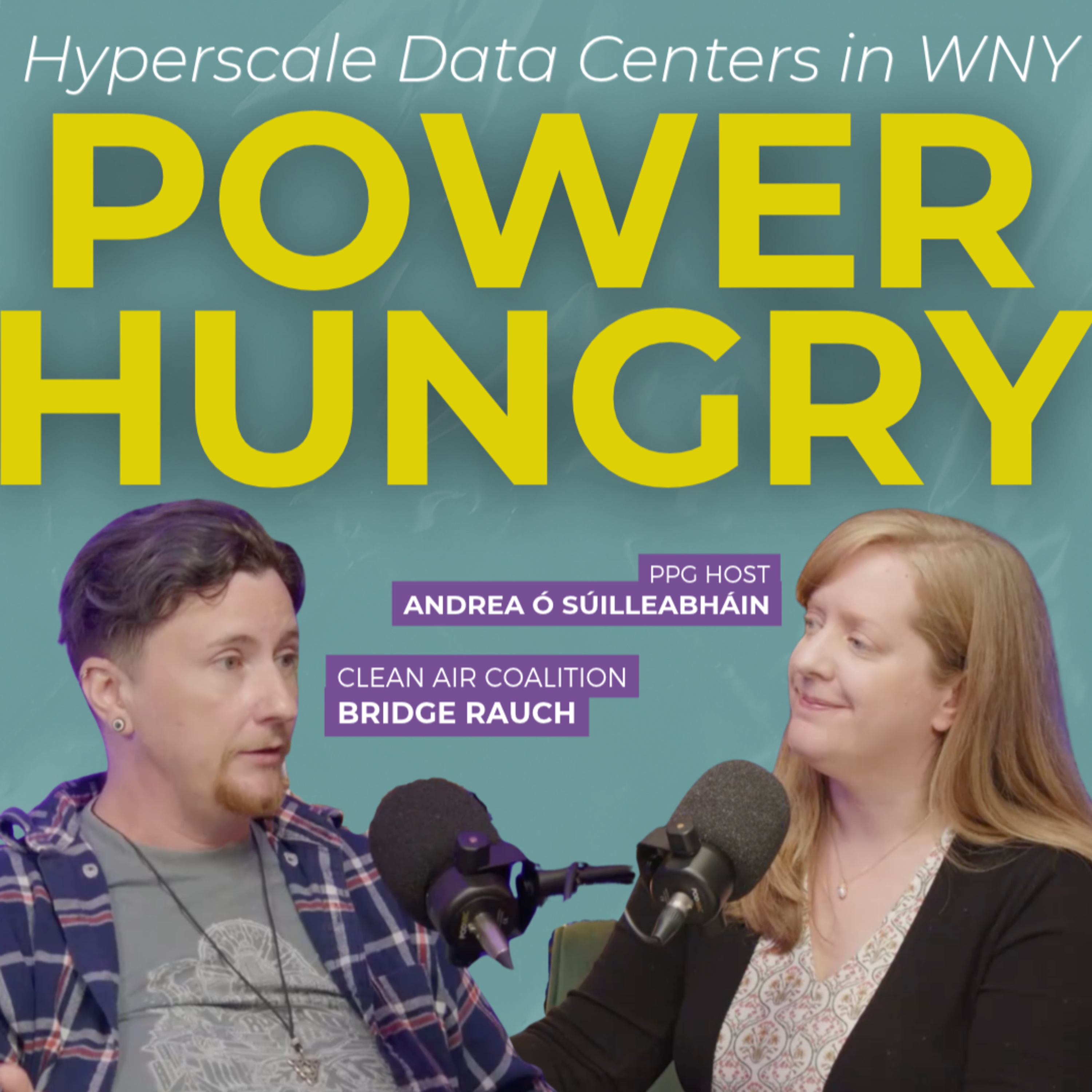
Proposed and operating data centers in Erie and Niagara counties could use more electricity than every home in both counties combined. They bring noise, water use, and pollution. They bring very few permanent jobs. In this episode of The Public Good, Andrea Ó Súilleabháin of Partnership for the Public Good (PPG) is joined by Bridge Rauch, environmental justice organizer with the Clean Air Coalition of Western New York, to talk about the growing fight over hyperscale data centers. Bridge explains how data centers went from small computer rooms on college campuses to giant AI and cryptocurrency operations. They talk about the 300 megawatt proposal at the Tonawanda Coke site, where no one knows yet who would use the computing power. They also look at Niagara Falls, which has been dealing with these facilities for about 10 years. They also cover what neighbors are doing about it. More than 200 people showed up to a Tonawanda planning board meeting to say no to a data center and yes to renewable power. Buffalo’s Common Council is expected to consider a two-year moratorium on data centers of 20 megawatts or larger. Bridge also explains the rules now on the table. New York’s Responsible Data Center Development Act would put a one-year moratorium on facilities of 20 megawatts and up. The governor’s executive order covers 50 megawatts and up. That leaves a gap, and local zoning can fill it. In this episode: What a hyperscale data center is, and how it’s different from the ones we’ve always had Why data centers use so much power but create so few lasting jobs The Tonawanda Coke site proposal and how neighbors responded What a moratorium does, and why local zoning matters Why Clean Air and PPG say no subsidies for data centers How to get involved How to take action: Call your council member and ask them to support a moratorium Urge Governor Hochul to sign the Responsible Data Center Development Act Submit comments to the Public Service Commission on the draft scope of the environmental impact statement