Find partners
The Language Worker

The Language Worker

Hosted by Rita Prazeres Gonçalves

Episodes

107

Latest episode

Jun 2026

Language

EN

About the show

The Language Worker is the result of my deep gratitude to the world for continuing to allow me to work on language projects, teaching, mentoring, and reflecting on the phenomenon of language and what it means for humanity. The most visible part of the project - the podcast - is an opportunity to learn and share the knowledge I acquired over more than 25 years of doing what I love the most: working with language. Here, we focus on Knowledge. RSSVERIFY This podcast is also available as a videocast on YouTube: https://www.youtube.com/@thelanguageworker My LinkedIn Page: LinkedIn: https://www.linkedin.com/in/ritaprazeresgoncalves/

Listen to episodes

60 recent
July 7, 202611 min

Terminology Governance: How to Turn Company Language into a Strategic Asset

The real backbone of sustainable language operations is terminology governance. We need to look beyond term lists and databases to explore how organizations can build clear decision‑making structures around their key concepts, who should own what, and how to keep everyone aligned from marketing and product to localization and technical communication. Before we implement a terminology strategy, we must think about practical governance models, typical stakeholder roles, and approval workflows, connecting them to the everyday reality of translators, terminologists, and LSPs. What goes wrong when governance is missing? You tell me! What starts working when terminology becomes a managed corporate asset instead of an afterthought? It's a terminology dream you can make possible. If you work in the language industry and want your terminology to stop being a firefight and start being a strategic tool, this episode is for you.

June 23, 20268 min

Corporate Terminology: Why Your Words Matter More Than You Think

In this episode of The Language Worker, I talk about corporate terminology in simple, practical terms: what it is, how it shows up in your daily work, and why it’s not “just jargon” if you treat it with care in every scenario. From internal emails and training materials to contracts, marketing copy, UX text and multilingual content, the words your organization chooses shape how people understand what you do and how you work together. I connect this to terminology management because having a simple term list or termbase helps your brand voice stay consistent across products, services, and languages. Inconsistent terminology creates problems for teams, clients, and translators, especially when you’re working on localization and global content. A set of agreed-upon terms can reduce misunderstandings, speed up reviews, improve translation quality, and even strengthen your SEO content strategy by aligning keywords with how you actually talk about your business. Every company (large or small, public or private, product or service) should look at terminology as part of strategy, not as an afterthought at the end of the content or translation process. If you care about clear communication, customer experience, international markets, or being found online for the right keywords, this one is for you.

January 21, 20265 min

Trends for freelancers in 2026: Tech, Collaboration, Expansion & Deep Expertise (translators)

Have you thought about the biggest trends shaping the language industry in 2026? I will break down four key trends that every freelance language professional and every LSP or content-focused company needs to watch closely this year: tech integration, collaboration, expansion, and deep knowledge.You will hear how increased tech integration and interactive learning tools are changing how linguists and companies work, train, and deliver multilingual content at scale. Rita explains why collaboration is accelerating, from LSP mergers to groups of freelancers forming “pretend companies” that stay independent while pooling resources, niche expertise, and capacity. This video also explores expansion: freelancers and companies diversifying services (subtitling, e-learning, game localization) and actively targeting new markets and direct clients around the world.If you are a freelance translator, subtitler, localization specialist, LSP owner, or a company relying on multilingual communication, this 2026 outlook will help you make smarter decisions about skills, services, and partnerships. Watch until the end, share your thoughts in the comments, and use these trends to position yourself or your organization for long-term success in the language business.

June 14, 202623 min

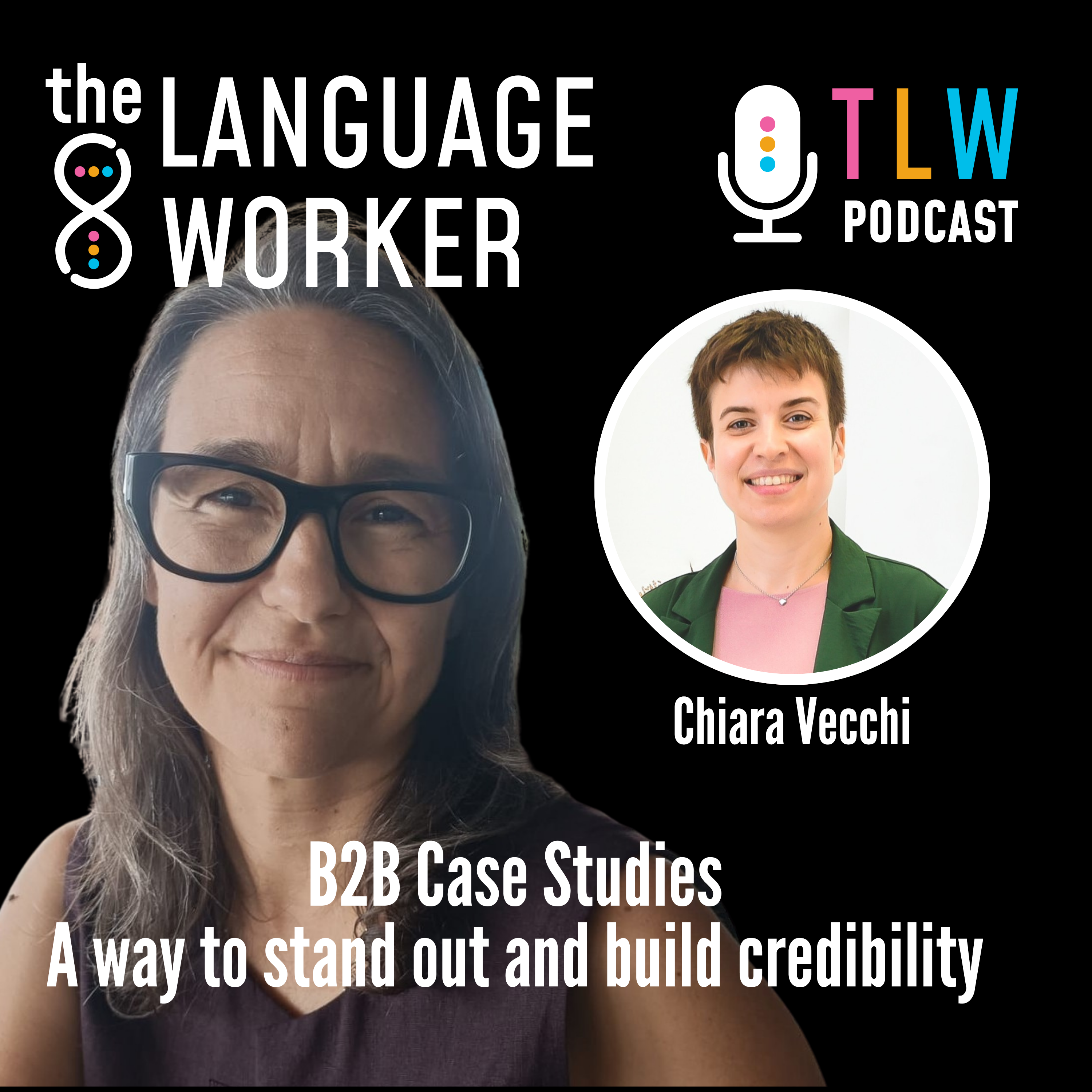
B2B Case Studies - A way to stand out and build credibility (for language freelancers and companies)

In this episode of The Language Worker, I talk to down with Italian translator and B2B case study writer Chiara Vecchi, MA AITI, to explore how case studies can become one of the most powerful marketing assets in a language or B2B business. Drawing on her background as an English and German into Italian translator in beauty, cosmetics, medical, travel and hospitality, Chiara explains how she helps B2B brands showcase real-life client stories that resonate with Italian decision-makers and drive new business. We unpack what a B2B case study service actually looks like: from selecting the right clients to interview, through gathering information in a structured way, to writing polished narratives that can be repurposed across websites, blogs, newsletters and sales conversations. Chiara walks us through her process for stepping into the end client’s shoes, asking the right questions, and turning a successful project into a story that builds trust, proves ROI and positions her clients as the obvious choice in their market.

May 17, 202632 min

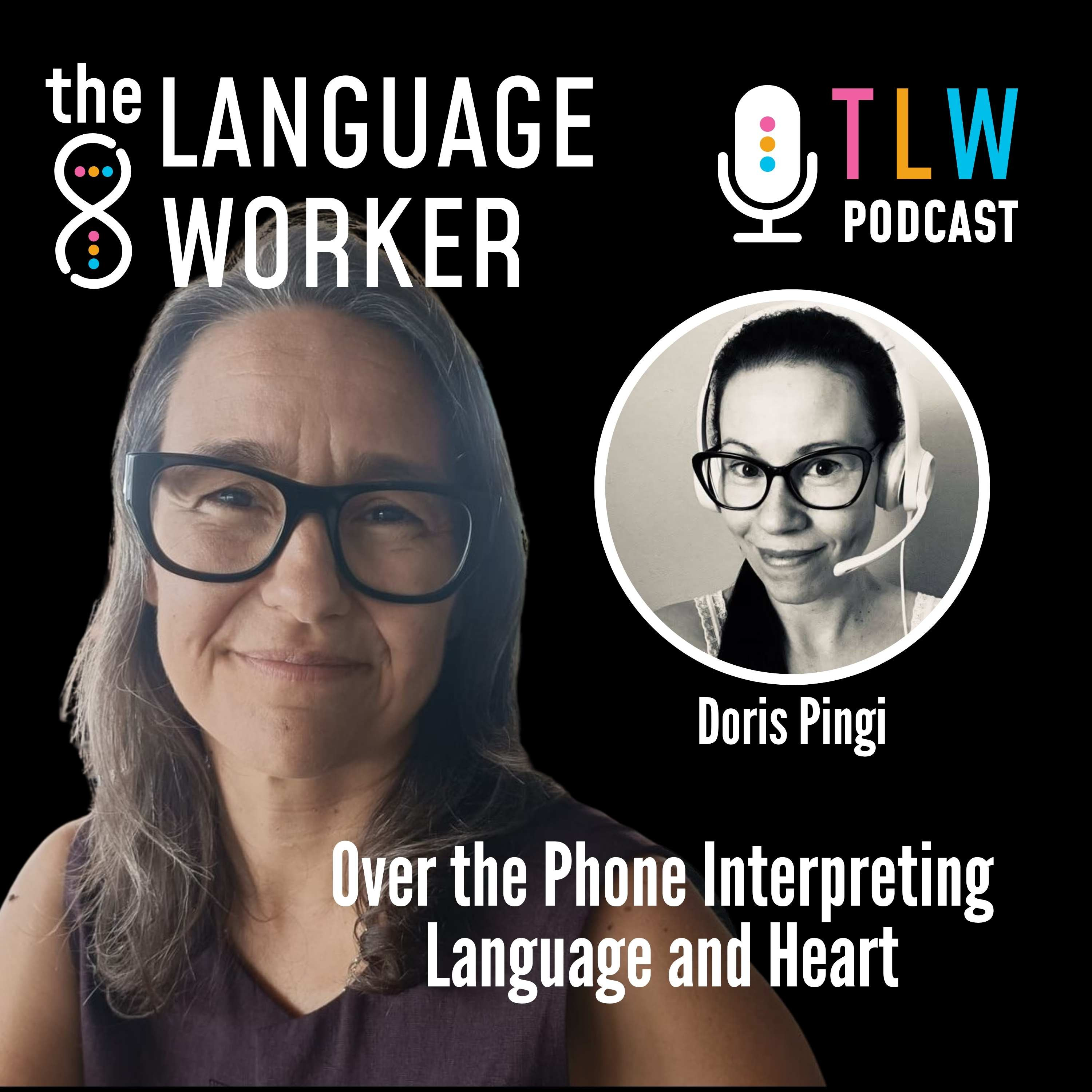
Over the Phone Interpreting: A New Path for Translators?

Interpreting is one of those jobs in the language Industry that are becoming more and more talked about.I invited Doris Pingi, an OPI - Over the Phone Interpreter - because I think it's about time to bring this profession to the forefront.I heard about it for the first time almost 20 years ago, while living in California, one of my clients was looking for OPIs to create a new team that would cater the needs of Portuguese speakers who needed linguistic support in the US.Talking to Doris was an amazing opportunity to learn more about this very particular skill from the point of view of someone who lives and breaths Language and Emotional intensity while living her professional dream.Buckle up, this gets real and intense.

April 28, 202626 min

AI, Translation and Quality: A Client‑Side View on Multilingual Content

How is AI changing the way companies think about translation, quality, and multilingual content? In this episode, I talked to Hristina Karagueorguieva, localization manager, to see what goes on before choosing tools, vendors, and workflows. We explore questions like: What really changes when a company starts using AI for translation instead of relying only on humans? How do you decide who should translate your content: freelancers, small agencies, or big providers? What do you need to have in place before you choose tools and partners, and how do you prepare if your company suddenly needs to grow into many new markets? I also ask Hristina what “good quality” means now that we expect basic things like spelling and grammar to be correct by default. We talk about why simply counting errors is no longer enough, how people actually read and feel content, and why we need to rethink quality so it reflects real user experience and business goals—not just word‑for‑word correctness.

March 27, 202628 min

A Tool to Help you Learn Languages - How can an App Help you?

This episode I bring together a language industry veteran and a software developer to explore how WordBox came about and how it changes the way we collect and truly learn new words in any language. Paul shares his early beginnings in the language space, reflecting on how his first steps in the industry shaped his life. Kirill talks about leaving Russia and moving to Barcelona, how that move changed his relationship with languages, and how the two of them eventually met there and now work side by side on WordBox to support learners around the world. They talk about how WordBox becomes a single, safe home for every unfamiliar word you want to keep. WordBox lets learners add words manually, via AI, or by exchanging lists with others, then dive into meanings, examples, synonyms, antonyms, and pronunciation, and finally review everything through flashcards, short-story contexts, and exercises.

March 12, 202652 min

SEO Crash Course - Learn SEO and get more clients

Learn SEO and make your content stand out immediately! I talked to SEO Translator Maja about how learning SEO changed her business and the services she can now offer to her clients. There are many agencies hired, many websites tested and discarded... Now, Maja takes control of her website and helps her clients do the same. Learn quick tips you can implement right now. Help potential clients find you and your freelance business! Use it for your website, your blog, or your LinkedIn profile.

December 16, 202542 min

From Nurse to Medical Translator: How to Turn a Lifetime of Care into Language Work

In this episode, my guest is a former nurse who reinvented herself as a medical translator and communicator after health issues forced her to leave her career in its original format. She shares how a childhood steeped in first aid and Red Cross training led to decades in nursing across several countries, and how ending her career left her feeling completely lost until languages opened a new door. Kathrin explains how she niched down into medical and life sciences translation, built on medical English, clinical experience, and SEO‑savvy branding to become a specialist rather than a generalist translator.​ We also talk about her groundbreaking project “How to Speak Cancer”: a volunteer‑driven book and movement that makes cancer communication clearer for patients, caregivers, and medical communicators, now being translated into 18+ languages by 30+ volunteers. She also introduces MetTalks, her webinar‑meets‑podcast series on medical communication, and her new co‑authored book on making clinical trials more human and accessible.

December 12, 202534 min

From Languages to the Big Screen – A Life in Subtitling and Audiovisual Translation (Portuguese)

It’s fascinating to discover the stories behind the people we “only” bump into on social media. For years I knew that Rosário was the driving force behind Sintagma, but we had never actually sat down to talk calmly about how everything happened behind the scenes – and it was definitely worth the wait. In this episode, I sit down with Rosário Valadas Vieira, founder and director of Sintagma, one of the key names in subtitling and audiovisual translation in Portugal. We talk about her journey, how Sintagma was born, how the Portuguese multimedia industry has grown and reinvented itself, and how streaming platforms have transformed subtitling, dubbing and accessibility work. If you work with languages, audiovisual content, localisation, or dream of subtitling films and series, this conversation takes you right into the real backstage of the Portuguese market and shows you, without filters, the skills it needs today.

Is this your show?

Claim this listing to keep it up to date, reach guests who want to pitch you, and manage bookings with Guestify.

Claim this listing

More Business podcasts