Find partners
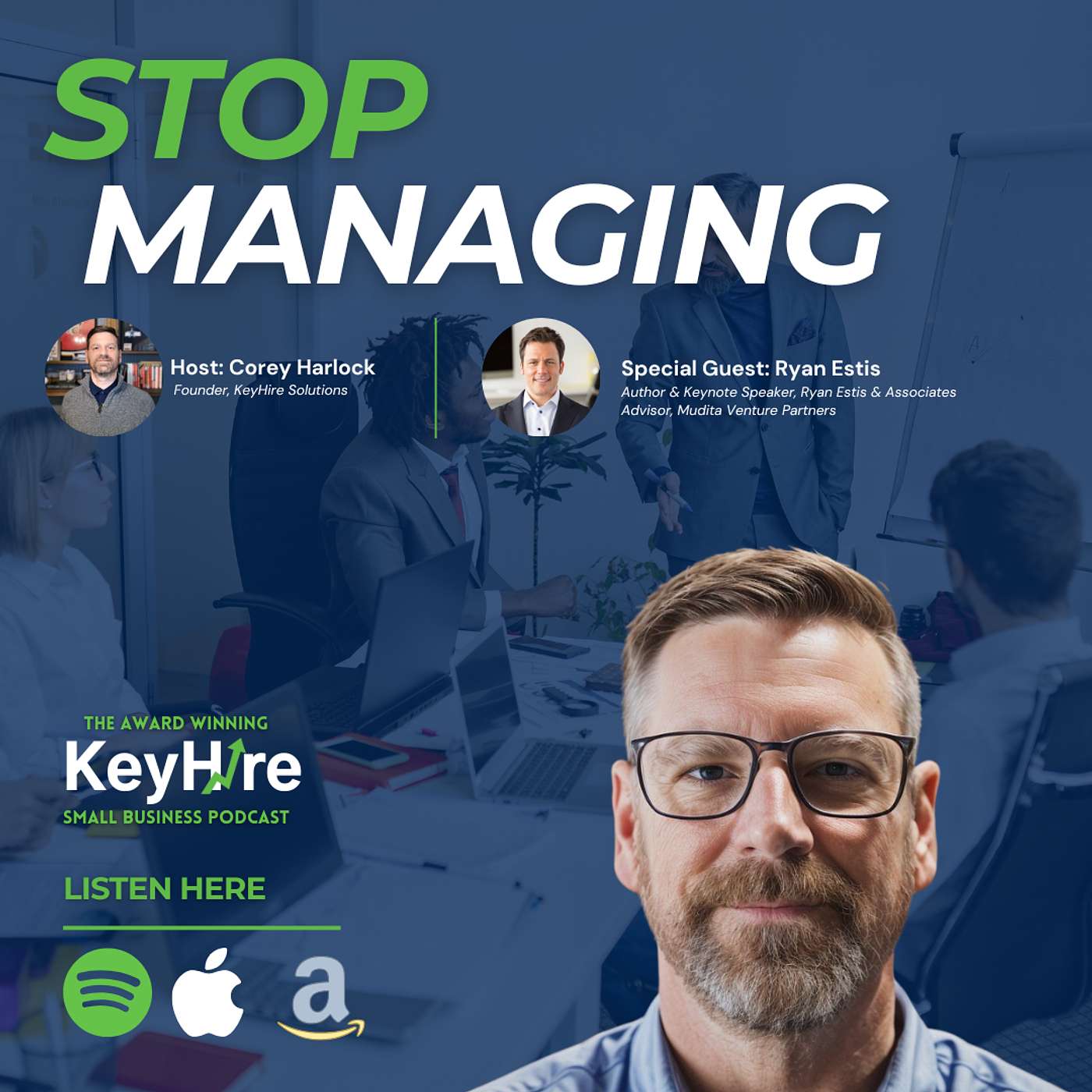
The KeyHire Small Business Podcast

The KeyHire Small Business Podcast

Hosted by KeyHire Solutions

BusinessInterviews guests

Episodes

152

Latest episode

Aug 2026

Language

EN

About the show

Welcome to the Award Winning KeyHire Solutions Small Business Podcast, where we cover small business issues, including leadership development, hiring strategies, management structure, business growth, workplace culture, entrepreneurship, and more. We’re here to help you stop grinding and start growing. Join us for weekly chats about small business management with Corey Harlock, our organization design, candidate experience, talent acquisition, and employer branding expert, and CEO of KeyHire Solutions. As an entrepreneur, Corey understands the challenges that business owners face when scaling their businesses. Follow Corey on LinkedIn @CoreyHarlock Join our Mailing List @ keyHire.Solutions (http://keyHire.Solutions)

Listen to episodes

60 recent
September 7, 202638 min

Every Small Business is in the Health Insurance Business (with Bill Hammett)

Text us your comments or topic ideas for future shows. Something new is coming. We’re building the next chapter of The KeyHire Small Business Podcast. More practical conversations, new perspectives, and more ways to help business owners grow. Keep an eye on this space. We’ll share more soon. You might be in the widget business, the plumbing business, or the car business. You are also in the health insurance business, whether you like it or not. If benefits feel like a giant expense you shop for once a year, hand off, and hope your people appreciate, this episode will change how you think about it. On this episode of The KeyHire Small Business Podcast, Corey Harlock sits down with Bill Hammett, owner of Hammett Health Insurance Services and a certified healthcare reform specialist with over 20 years of experience, to talk about how small business owners can turn employee benefits from a painful line item into a powerful investment. Early on, Bill makes a point that reframes the entire conversation: since World War II, Americans get their health insurance through their employers, which means every business owner, whether they sell widgets, plumbing, or cars, is also in the health insurance business whether they like it or not. From there, Corey and Bill dig into what actually moves the needle on cost, coverage, and employee loyalty. One of the biggest ideas in this episode is that you are not really shopping for health insurance, you are shopping for brokers. Bill explains that the underlying product is largely a commodity, so the real difference comes from the broker's strategy, process, and advocacy. He walks through how larger companies can move beyond fully insured plans into level funding or self funding, taking on some risk in exchange for real savings, and why prescription drug costs have exploded from three percent of premiums in the late 90s to roughly 25 percent today. What makes this conversation especially valuable is the shift from buying more benefits to understanding the benefits you already have. Bill and Corey explore practical, low cost strategies any owner can use: mail order pharmacy programs that deliver a three month supply for the price of two, generic drugs, telehealth, urgent care versus the emergency room, and asking for pre authorizations to stay in network. As Bill puts it, before you buy the 17th line of coverage, make sure your people understand benefits one through 16. The most powerful takeaway may be treating benefits as compensation, not an HR expense. If you pay someone $80,000 and spend another $15,000 to $20,000 on benefits, you do not have an $80,000 employee, you have a six figure investment. Corey and Bill discuss how communicating that investment, even building an incentive around keeping premiums low, can boost retention, help you win candidates, and turn employees into educated healthcare consumers who assign real value to what you provide. For small business owners weighing the seven candidate drivers during hiring, benefits have moved to the top of the list post COVID. This episode is a must listen for small business owners, entrepreneurs, and HR leaders who feel stuck with rising premiums, confused by open enrollment, or unsure whether their broker is truly working for them. Bill also shares how to pressure test your current broker and offers to share his Leave No Stone Unturned presentation with listeners. If you want to lower benefits costs, keep more money in your business, and make your team feel genuinely taken care of, tune in for a clear, surprisingly engaging conversation that proves benefits do not have to be shackles you are simply stuck with. KEY TAKEAWAYS You are not shopping for health insurance, you are shopping for brokers: the product itself is a commodity, and a dozen agents can quote you the same plan at the same price. The difference is the broker's process, their opinion, and the strategy behind how they bring it to your employees. Above about 50 employees in California, and in some places down to two, the funding model becomes a lever: level funding and self funding let employers take on some of the risk the carriers have been profiting from for decades. The upside is real, and so is the downside, so the cash question comes first: if two major claims hit in January and you are out $150,000 on two people, can the business absorb it? Prescription drugs went from roughly 3% of premium in the late 90s to about 25% today: it is the fastest escalating piece of the medical premium, and it is where a lot of the recoverable dollars are hiding for employers who look, from rebates to sourcing medication differently. There should always be a second set of eyes on your benefits: a strategy your broker believes in will stand up to questioning and alternate quotes. If your broker is your brother-in-law, your neighbor, or your buddy from college and nothing has changed in years, the likely reason is that nobody is shopping it, because moving a policy is far more work than telling you everything looks good. Benefits are compensation, not an HR expense: if you pay $80,000 and spend another $15,000 to $20,000 on benefits, you do not have an $80,000 employee, you have a six figure investment. Two companies offering $90,000 are not making the same offer when one can show another $18,000 going into that person's family, and most employees only ever see the $200 coming out of their check, not the $1,000 the employer puts in on top of it. Sometimes the answer is not better benefits, it is better understanding of the benefits you already bought: mail order pharmacy that delivers a three month supply for the price of two, generic drugs, telehealth including telehealth for mental health, knowing where the nearest urgent care is instead of defaulting to the emergency room, and asking the doctor for pre authorization to stay in network. Before you buy the 17th line of coverage, make sure your people understand benefits one through 16. An educated healthcare consumer behaves differently: they pick a plan that actually fits, they know where to go when something goes wrong, and they assign a higher value to what you are paying for. Same plan, same price, but the educated employee is healthier, happier, and more appreciative than the one down the street who got no education at all. Corey floats an incentive line around benefits: tell the team what the company spent last year, and if next year comes in flat, everyone shares in the savings. If premiums had climbed 10% instead, that money was going out the door anyway, and now your people are working the problem with you instead of resenting the deduction. Confusion has a hard cost: unnecessary ER visits, avoided care that was actually necessary, the wrong plan selected at enrollment. It costs the employer, the employee, time, and health. And after you spend all that effort winning a candidate over, handing them a 47 page booklet is not onboarding, it is homework. LINKS & RESOURCES Connect with Bill Hammett on LinkedIn: https://www.linkedin.com/in/billhammett/ Learn more about Hammett Health Insurance Services: https://www.hammetthealth.com Follow Bill on Instagram for his Monday benefit breakdowns and Friday healthcare policy recaps: @healthcarebill Ask Bill for his Leave No Stone Unturned presentation: text the show using the link in the show notes and we will connect you Connect with Corey Harlock on LinkedIn: https://www.linkedin.com/in/coreyharlock/ Learn more about KeyHire Solutions: https://www.keyhire.solutions Subscribe on Apple: https://podcasts.apple.com/us/podcast/the-keyhire-small-business-podcast/id1643962763 Subscribe on Spotify: https://open.spotify.com/show/1FT9oqXSek3jMfiKrZPLQs EPISODE CHAPTERS 0:00 – Introduction: do your people know what you actually invest in their benefits? 1:42 – A teaser about what is coming for the podcast, plus Tony Manganiello and Barry Moline recaps 4:33 – Meet Bill Hammett: owner of Hammett Health Insurance Services and certified healthcare reform specialist 5:30 – Every business is in the health insurance business, whether they like it or not 6:44 – The product is a commodity, so you are really shopping for brokers 7:35 – Fully insured versus level funded and self funded, and where strategy moves cost 8:55 – Prescription drugs: from 3% of premium in the late 90s to 25% today 10:15 – What happens if a catastrophic claim hits a self funded plan 11:27 – The loyal team that got older, got sick, and could not get quoted 13:43 – Negotiating hospital bills and becoming a consumer of your own healthcare 15:23 – When your broker is your buddy and nobody is shopping the policy 16:47 – The seven candidate drivers, benefit stipends, and why benefits now lead the list 19:15 – Benefits as compensation: the six figure employee nobody talks about 20:34 – Put the benefits number in your all hands meeting, and the dentist goodie bag story 22:33 – Making it a quarterly conversation about our investment in you 23:50 – Mail order pharmacy, education, and benefits one through 16 25:33 – Building an incentive line around keeping premiums flat 26:35 – Why an educated healthcare consumer behaves differently 28:12 – The real cost of healthcare confusion

August 31, 202649 min

One Sentence Increased Sales 15% (The Science of Ethical Influence)

Text us your comments or topic ideas for future shows. Influence is happening to you all day long. The only question is whether you can see it, and whether you are willing to use it honestly. If you have ever tried to move someone toward a decision and hit nothing but pushback, this episode is for you. On this episode of The KeyHire Small Business Podcast, Corey Harlock sits down with Barry Moline, CEO of BJM Solutions and author of Connect! How to Quickly Collaborate for Success in Business and Life, to unpack the science of influence and persuasion and how small business owners can use it to sell more, lead better, and build stronger teams. This is not a conversation about manipulation or gimmicks. Barry, a certified trainer in Dr. Robert Cialdini's method of ethical influence, sets one clear ground rule early: everything discussed has to be true, has to make sense to the other person, and has to be wise enough that you would recommend it to your own family. That standard separates real persuasion from the snake oil salesman who makes the sale today and is long gone when it stops working tomorrow. From there, Barry walks through three practical elements of ethical influence that any business owner can start using immediately. The first is enhancing relationships. He explains why liking begins with curiosity, asking questions and making people feel seen instead of trying to impress them. He covers unity, or finding common ground, and why simply calling your people a team can build loyalty. And he breaks down reciprocity, the chocolate shop and Costco effect, where giving something away, even information or a compliment, creates goodwill that comes back later. The second element is reducing uncertainty. Here Barry shows how authority and social proof help customers feel confident enough to say yes. He shares why you should never read your own bio, how a simple introduction as our expert can lift sales, and why testimonials, reviews, and award-winning credentials matter so much. Corey and Barry also offer a practical tip for business owners: if you want customer testimonials, write a draft for your happy clients and let them edit it, because most people will never write one from scratch. The third element is motivating people to act. Barry explains ethical scarcity and how it differs from the endless fake sales that train buyers to wait. He covers consistency, the power of getting a small yes first, and ties it back to Chris Voss and the art of the strategic no. Finally, he explains reducing friction, using a furniture store that boosted couch sales simply by offering to haul away the old one, and why understanding why customers say no is one of the most valuable things you can learn. What makes this episode work is how usable it is. Corey keeps bringing the ideas back to the small business owner who wears too many hats, and every concept comes with a real-world example you can apply to your sales team, your leadership, your marketing, and even your everyday conversations. If you are a business owner, sales leader, consultant, or entrepreneur who wants to communicate more effectively, build trust, and move people toward yes without feeling salesy, this episode is a must-listen. Tune in for a smart, engaging conversation on behavioral economics, ethical influence, and the persuasion techniques that quietly shape every decision around us. KEY TAKEAWAYS Ethical influence has three tests: it has to be true, it has to make sense to the person you are talking to, and it has to be wise enough that you would recommend it to your own kids, spouse, or colleagues. If what you are moving someone toward fails any of those, you are not persuading, you are manipulating, and you will see that person again tomorrow. Liking starts with curiosity, not credentials: people do not walk away impressed by your background, they walk away liking you because you asked about theirs. Barry describes it as a volleyball rally rather than an interrogation, and Corey points out it is the same skill that separates the best leaders, who ask questions and make people feel seen, from the ones who just talk. Unity is built by naming it: find common ground and then say it out loud. Call the group a team, whether that is team sales, team IT, or team plumbers, and put people in logo shirts. It sounds hokey the first time a leader says it, but people want to belong to something, and they notice the leader who gives them that. Reciprocity is targeted karma: the chocolate shop that hands out samples sees sales climb 50% to 150%, and the farmers market vendor who has someone handing fruit to passersby outsells the booth with a bowl on the table. A bowl is not a gift; a person giving it to you is. The same applies to information, a heads up, or a compliment, and none of it is one for one, so do not expect the return today. Never read your own bio: reciting your background is bragging, but the same words coming from someone else confer authority. A London real estate firm lifted rentals by over 15% by having the receptionist say let me introduce you to our expert in the Chelsea area instead of just transferring the call. Hang the diplomas, the certificates, and the awards, because authority works even when nobody says a word about it. When people cannot find an expert, they go to the crowd: that is why reviews, award-winning credentials, and testimonials carry so much weight. If you want testimonials, do not just ask, because roughly nine out of ten happy customers will never write one. Draft it for them and let them edit it, and most will say yes. Scarcity only works when it is real: the endless President's Day, Fourth of July, and Labor Day sale trains buyers to wait for the next one. A limited run of 25 pieces, an early bird conference rate tied to a real planning deadline, or 17 seats actually left is honest scarcity, and honest scarcity is the only kind that keeps working. Get the small yes first, or use the strategic no: a police department could not get anyone to put a two foot lawn sign up, so they asked for a three by five postcard in the window instead. Everyone said yes, and weeks later most of those same people took the sign. The flip side is Chris Voss territory, where asking are you against this lets people say no and feel in control, which clears the way for the real conversation. Reducing friction is the one most owners skip: a furniture store was losing couch sales over one unanswered question, what do we do with the old one. They started hauling old couches away and sales took off. When someone says no, ask why, because you may be able to fix it for them, and if not, you have just learned something for the next customer. LINKS & RESOURCES Connect with Barry Moline on LinkedIn: https://www.linkedin.com/in/barry-moline-29b99a53/ Learn more about Barry Moline and BJM Solutions: https://barrymoline.com Email Barry directly: barry@barrymoline.com Get the book, Connect! How to Quickly Collaborate for Success in Business and Life: https://www.amazon.com/Connect-Quickly-Collaborate-Success-Business/dp/1977209084 Connect with Corey Harlock on LinkedIn: https://www.linkedin.com/in/coreyharlock/ Learn more about KeyHire Solutions: https://www.keyhire.solutions Subscribe on Apple: https://podcasts.apple.com/us/podcast/the-keyhire-small-business-podcast/id1643962763 Subscribe on Spotify: https://open.spotify.com/show/1FT9oqXSek3jMfiKrZPLQs EPISODE CHAPTERS 0:00 – Introduction: there is a science to moving people toward yes 1:50 – Looking back at Stefan Boehmer on incentive plans and Tony Manganiello on employee cash flow 4:33 – Meet Barry Moline: CEO of BJM Solutions and author of Connect! 5:23 – What behavioral economics actually means 6:38 – Chris Voss and the power of a no oriented question 7:47 – The ethics umbrella: true, makes sense, and wise 11:26 – The snake oil salesman and why trust outlasts the sale 12:15 – The three elements: relationships, uncertainty, and action 13:51 – Learning the method from Dr. Robert Cialdini, and why liking starts with questions 16:27 – The high school experiment and what it taught Corey about curiosity 20:15 – Unity, common ground, and the Calgary Flames jersey in Nashville 22:27 – Call yourselves a team, and why logo shirts work 24:46 – Reciprocity: the chocolate shop, the fruit vendor, and the Costco effect 29:17 – Targeted karma: giving information, a heads up, or a compliment 30:18 – Reducing uncertainty: authority, uniforms, and never reading your own bio 31:44 – The Chelsea rental study and the power of our expert 34:30 – Social proof, reviews, and the award-winning label 36:20 – How to actually get testimonials: write the draft for them 36:48 – Motivating action and the problem with fake scarcity 39:19 – Consistency, the small yes, and the lawn sign study 40:19 – Letting people say no so they feel in control 43:31 – Reducing friction: hauling away the old couch 45:48 – Barry recaps all three elements 46:47 – Where to find Barry and the book

August 24, 202640 min

Give Your Employees a 40% Raise Without Touching Payroll (with Tony Manganiello)

Text us your comments or topic ideas for future shows. If your best people are getting called with an offer of a dollar an hour more, you do not have to win that bidding war. You just have to help them keep more of the money they already earn. On this episode of The KeyHire Small Business Podcast, Corey Harlock sits down with Inc. Magazine contributing columnist, keynote speaker, and author Tony Manganiello to reveal something that sounds too good to be true: how to give every one of your employees the equivalent of up to a 40% raise without touching payroll or your bottom line. If you are a small business owner losing sleep over retention, watching competitors call your best people and dangle an extra dollar an hour, this conversation offers a different path. Instead of getting pulled into an expensive bidding war for talent, Tony explains how helping employees manage cash flow, not just spending, can build loyalty, reduce turnover, and give your team more of the money they already earn. At the center of the episode is Tony's Cash Flow Mastery System, developed while helping an Inc. 500 company hit that list three times in four years. He introduces a simple but powerful idea: your income is a shovel, and most people are using it to dig a hole instead of fill one. When you get a raise, the shovel just gets bigger, and lifestyle inflation swallows the difference. Corey and Tony connect this to the real cost of financial stress in the workplace, citing research that 59% of employees are financially stressed, 56% say it hurts their work, and stressed employees can waste up to 7.3 hours a week on the clock. Tony breaks down what he calls the 50-50 drain: many people must gross 40% or more of their income just to cover debt payments, and roughly half of those payments are pure interest. He uses a striking mortgage example, showing how a homeowner can pay about $163,000 over seven years and reduce the balance by only about $30,000. Once employees see these numbers, Tony says, they experience a clarity moment, realizing their struggle was never a personal failure but the result of a system, what he calls the payment matrix, designed to benefit lenders. The conversation reframes how business owners think about their largest line item. Payroll is often automated and forgotten, but Tony argues it deserves the same scrutiny as any major investment. He shares his forgotten customer concept: if a customer is anyone who exchanges value with you, then your employees, who trade time for money, are your first customers and deserve to be treated like it. Corey ties this directly to KeyHire's philosophy that your candidate and employee experience is your best recruiting and retention tool. For owners wondering about time and cost, Tony explains that implementation is straightforward. After due diligence, his team does the work, pricing on a per employee basis so it never becomes a barrier to entry. This episode is especially valuable for small business owners focused on employee retention, team engagement, and reducing turnover in a tough economy without inflating payroll. Corey also references his August 10th solo episode on candidate experience and last week's conversation with Stefan Boehmer on incentive programs. If you want to take better care of your people, strengthen loyalty, and give your team a raise that costs you nothing, this episode is a must-listen. KEY TAKEAWAYS Teach cash flow management, not spending management: most workplace financial wellness programs stop at budgeting and trimming expenses, which keeps people shoveling in the same direction. Tony's Cash Flow Mastery System changes the direction of the shovel, and the equivalent of a 40% raise surfaces on its own out of the same income. Your income is a shovel and you are either digging a hole or filling it: when the raise comes, the shovel just gets bigger, lifestyle inflation absorbs it, and payday stops feeling like progress. That is why the stress shows up at every income level, including people earning six figures and people approaching what Tony calls the retirement cliff, where you do not fall off and die, you just work until you do. Financial stress is a productivity line item: 59% of employees are financially stressed, 56% say it negatively affects their work, 80% of HR leaders see it hurting productivity, 78% of business leaders connect it to turnover, and a stressed employee can waste up to 7.3 hours a week on the clock, close to 15% of the week. A healthy debt to income ratio is healthy for the lender, not the borrower: nobody stops to ask how much you have to gross to bring home enough to cover your payments. For most people that is 40% or more of gross income, and 48% to 53% of those payments are pure interest. Tony calls it the 50-50 drain: half your income is spoken for before it arrives, and half of what you pay out disappears into interest. The mortgage math nobody runs: a $300,000 home at 6.7% carries a payment of about $1,945 a month. Over seven years, which is roughly how often people move or refinance, that is about $163,000 in payments and only about $30,000 off the balance. As Tony puts it, if someone asked you for $1,900 a month for seven years and promised to hand back $30,000 at the end, you would tell them where to go. Call it a mortgage and people ask where to sign. Payroll is the biggest line item on the P&L and the one nobody scrutinizes: it is automated, paid out, and forgotten. Tony compares it to spending $100,000 a month on a click through campaign where the landing page fails half the time and the opt in form fails the rest. You would fix the page. Most owners never look at what happens to the money after the check hits the account. Your employees are your forgotten customer: if a customer is anyone who exchanges value with you, then the person trading time for your money is your first customer. Corey connects it to the point from his August 10th solo episode, that your candidate and employee experience is your sales process for talent, and you already know how to run a sales process. Clarity starts with two numbers: how much you have to gross to cover your debt payments, and how much of each monthly payment is actual interest, which the APR will not tell you. When employees run those two numbers they hit the clarity moment, and Tony says the motivation problem solves itself because they immediately want to know what to do next. LINKS & RESOURCES Connect with Tony Manganiello on LinkedIn: https://www.linkedin.com/in/tonymags Learn more about Tony Manganiello: https://tonymags.com Read The Payday Blindspot: https://speakerhub.com/cta/nGHkcn Email Tony directly: tony@tonymags.com (mention the KeyHire podcast in the subject line) Connect with Corey Harlock on LinkedIn: https://www.linkedin.com/in/coreyharlock/ Learn more about KeyHire Solutions: https://www.keyhire.solutions Subscribe on Apple: https://podcasts.apple.com/us/podcast/the-keyhire-small-business-podcast/id1643962763 Subscribe on Spotify: https://open.spotify.com/show/1FT9oqXSek3jMfiKrZPLQs EPISODE CHAPTERS 5:10 – Meet Tony Manganiello: Inc. columnist, keynote speaker, and author 6:17 – The Cash Flow Mastery System and where the 40% comes from 7:18 – Two payday expectations and the real cost of financial stress at work 9:28 – Your income is a shovel: digging the hole versus filling it 10:28 – The retirement cliff and why stress hits every income level 11:21 – Who a healthy debt to income ratio is actually healthy for 13:51 – Retention, bidding wars, and the dollar an hour problem 16:05 – The forgotten customer: your employees are your first customers 18:45 – Payroll is automated, forgotten, and never scrutinized 19:44 – The click through campaign analogy and the 50-50 drain 22:09 – Deferred interest, the payment matrix, and where this system came from 28:31 – Rehiring your current employees and taking care of the whole team 30:48 – The two numbers every employee should calculate first 33:44 – The mortgage example: $163,000 in payments, $30,000 off the balance 35:52 – What implementation actually costs an owner in time and money 37:11 – How to reach Tony and the free book for listeners

August 17, 202648 min

Why Your Best Salesperson Should Out-Earn You (with Stefan Boehmer)

Text us your comments or topic ideas for future shows. If your best salesperson is out-earning you, that is not a problem to fix. That is the plan working. On this episode of The KeyHire Small Business Podcast, Corey Harlock sits down with Stefan Boehmer, Managing Director and Fractional CFO of Texas Advisory Services, to tackle one of the trickiest parts of building a sales team: the compensation plan. If you have ever struggled to land those big killer salespeople who love to close and make money, the comp plan is often the make-or-break piece. And as this conversation shows, getting it right does not have to be complicated. Stefan brings a CFO’s discipline to a topic that gives many small business owners heartburn. Early on, he lays out the foundation: SMART goals that are specific, measurable, achievable, relevant, and time-bound. Just as important, he argues, the goals should be personal and something the individual can actually influence. If your operations person cannot impact a company-wide number, it does not make sense to tie their incentive to it. A big part of the episode is the distinction between business development and account management. Corey and Stefan break down why these are two very different roles that attract two very different people. Some salespeople love the hunt and the adrenaline of landing new business. Others thrive on relationships, upselling, and nurturing accounts over time. They also explore how the length of the sales cycle matters, and why a fast transactional seller can fail in a long-tail relationship role, and vice versa. From there, the conversation gets practical. Stefan walks through the KPIs he would incentivize for each role, from number of leads and conversion rates for BD to order intake, gross margin, and expanding the footprint for account managers. One of the most surprising takeaways is that he weights account managers more heavily than business development, because relationships are future-oriented and difficult to duplicate if that person leaves. He even shares a story of an account manager who worked a deal for nine years and walked away with a million-dollar payout, and why that check should be honored, not resented. Corey drives home a principle he repeats often: there should be no voodoo in the math. Every salesperson should be able to calculate to the penny what they earned, and it should match exactly what the owner pays out. The two also dig into when incentives should kick in, why quarterly payouts with an 80 percent achievement threshold protect the business, and how unit-based incentives can jumpstart new products or services. Perhaps the most valuable message is for owners who feel the sting of writing big commission checks. If you have a well-designed plan and someone is maximizing it while injecting real money into your business, do not scale it back just because they are making more than you. Stefan and Corey also call out the discretionary bonus as a trap, using a memorable story about a “generous” plan that left a top performer confused and underwhelmed. If you are a small business owner, sales leader, or entrepreneur trying to build a comp plan that attracts and retains top talent, this episode is a must-listen. Tune in for a clear, practical conversation on sales compensation, incentive plans, KPIs, and building a team that keeps growing. KEY TAKEAWAYS Make the goals SMART and make them personal: specific, measurable, achievable, relevant, time-bound, and tied to something the individual can actually move. If a goal is company-wide only, it does not matter how well that person performs, so the incentive stops changing behavior. Business development and account management are two different jobs for two different people: hunters chase new relationships and cold calls, account managers nurture, upsell, and expand what is already there, and people always default to the one they are most comfortable with. Give each seat its own KPIs: BD gets number of leads and conversion rate with a minimum margin requirement, while account managers get order intake, gross margin, and expanding the footprint into new departments and add-on services. Weight account managers more heavily than BD: cold calling can be handed to a new employee, but a relationship built over years cannot be rebuilt, which is why the account manager who worked one deal for nine years and walked away with a million-dollar check earned every penny of it. No voodoo in the math: every salesperson should be able to calculate their payout to the penny and land on the same number the owner has, which is why Stefan avoids complicated or interlinked KPIs like cash flow that nobody can trace back to their own work. Pay quarterly, but not in Q1: an 80 percent achievement threshold before the first payout protects the business and keeps people hungry, with unpaid quarters accumulating forward, while unit-based add-ons for new products or services can pay out right away. Do not punish a plan that is working: adjust for a bigger territory or goals that were set wrong, but if someone is maximizing a well-built plan and injecting real money into the business, take a deep breath and write the check. And skip the discretionary bonus, which feels generous to the owner and underwhelming to the employee. LINKS & RESOURCES Connect with Stefan Boehmer on LinkedIn: https://www.linkedin.com/in/stefanboehmer/ Learn more about Texas Advisory Services: https://www.texas-advisory.com/ Connect with Corey Harlock on LinkedIn: https://www.linkedin.com/in/coreyharlock/ Learn more about KeyHire Solutions: https://www.keyhire.solutions Subscribe on Apple: https://podcasts.apple.com/us/podcast/the-keyhire-small-business-podcast/id1643962763 Subscribe on Spotify: https://open.spotify.com/show/1FT9oqXSek3jMfiKrZPLQs EPISODE CHAPTERS 0:00 – Introduction: why the comp plan makes or breaks your sales hire 5:05 – Stefan’s background and what Texas Advisory Services does 6:50 – SMART goals and why an incentive has to be personal 7:52 – Business development vs account management: two roles, two people 10:17 – Why the length of the sales cycle decides who succeeds 12:08 – No voodoo in the math 13:08 – The KPIs to incentivize on the business development side 15:36 – Behaviors, outcomes, and watching the early warning indicators 18:53 – Capping BD commission, and how high the cap should go 21:06 – Building the account manager plan: order intake, margin, footprint 23:16 – Why account managers get weighted more heavily than BD 24:32 – The nine-year deal and the million-dollar payout 28:06 – When incentives kick in: quarterly payouts and the 80 percent threshold 30:50 – Unit-based incentives for launching new products and services 33:20 – When your salesperson out-earns you, do not scale the plan back 38:48 – Why the discretionary bonus is a trap

August 10, 202636 min

Why Great Candidates Ghost You

Text us your comments or topic ideas for future shows. On this episode of The KeyHire Small Business Podcast, Corey Harlock breaks down why so many small business owners take great candidates through their process only to watch them ghost before the final interview or the offer, and why candidate experience may be the most underused advantage a small business has. Corey’s core message is simple but often overlooked: candidates are customers too. Generating candidates has never been easier, between job boards and a thousand AI sourcing tools. What happens after you find them is what decides whether you land them. And as a small business, you are not Google. The people applying to your job have never heard of you, they are interviewing at several other companies, and they are there to be educated on you as much as you are there to evaluate them. If you are excited about a candidate, at least one other company is too, which means you are already on the clock. The episode focuses on three challenges. The first is hiring speed. Corey makes an important distinction: speed to hire is not about rushing, it is about using the correct process for the role and then holding the timeline. A CNC operator who walks in, passes a shop floor test, and shows they know the machine should have an offer before they leave the building. A manager or director role should move from first contact to offer within about ten business days. He explains why entry level candidates come off the market almost immediately, and why rescheduling an interview because you are busy tells a great candidate they are an inconvenience. If a client asked for time tomorrow, would you push them to next week? The second challenge is the hiring system. Corey emphasizes consistency, the same people asking the same questions in the same order, and shares the one question that tells you whether someone belongs in the process at all: if you love the candidate and they do not, will you hire the candidate anyway? He also gives a sharp warning about C players, toxic high performers, and anyone who hates accountability, because they will either scare a candidate off or sabotage the interview outright. From there he walks through the peer to peer conversation that is a problem solving discussion rather than an interrogation, the owner interview that focuses on culture, and the power of giving candidates the good, the bad, and the ugly. Selling a future culture you have not built yet breaks trust on day one. Honesty gets you a hell yes or a hell no, and keeps you away from the amber flag maybe. The third challenge is ownership. Corey argues that screening resumes should not fall on the business owner, especially now that AI tools make nearly every resume look polished and every phone screen look worth taking. He shows how to hand screening to a trusted team member armed with ten or twelve clear non-negotiables and a scoring threshold, so owners protect their time while the process keeps moving. Once a candidate is on site, though, nobody gets to say they are busy this week. This episode is especially valuable for small business owners, entrepreneurs, and hiring managers who are competing for high quality talent, losing candidates late in the process, or trying to build a repeatable hiring system. Corey also points listeners to a free hiring assessment in the show notes, a 15 question tool that takes about three minutes and reports back where your process is strong and where it is costing you. Your sales process is designed to close business. Your hiring process should be designed to close people. Tune in for a practical, numbers backed conversation on candidate experience, hiring speed, interview systems, and how to stop losing the people your business needs. Stop grinding, start growing. KEY TAKEAWAYS Candidates are customers too: 83% of talent says a negative experience can change their mind about a company they liked, 87% say a positive one can win them over to a company they doubted, and 66% say it directly influences whether they accept an offer. Generating candidates is the easy part: job boards and AI sourcing tools will find people for you. Nothing about your process after that point is automated, and that is where great candidates are won or lost. They have never heard of you: in a market with more jobs than people, it is not the candidate’s job to research you. It is your job to make the case, and to assume that anyone you are excited about is excited by someone else too. Speed to hire is not rush, rush, rush: it is picking the correct process for the role and then staying on the timeline. Entry level gets an offer before they walk out the door. Manager and director level is ten business days from first contact. Every reschedule sends a message: pushing an interview because you are busy tells a candidate they are an inconvenience, and it previews what working there will feel like. If you have to move it, offer them something better, not a slot next week. Same people, same questions, same order, and only your A players: if you would hire the candidate over someone’s objection, that person does not belong in the process. Never put a C player, a toxic high performer, or anyone who hates accountability in front of a candidate you want. Give them the good, the bad, and the ugly: selling a culture you are still building breaks trust on day one. Every job is perfect for someone, so put everything on the table and aim for a hell yes or a hell no. The amber flag maybe is the worst outcome in hiring. Screening is not the owner’s job: AI written resumes make everyone look qualified, so screening costs more time than it ever has. Hand it to someone you trust with ten or twelve non-negotiables and a scoring threshold, and protect your calendar for the interviews that matter. LINKS & RESOURCES Free hiring assessment, 15 questions in about three minutes: https://www.keyhire.solutions/scorecard Connect with Corey Harlock on LinkedIn: https://www.linkedin.com/in/coreyharlock/ Learn more about KeyHire Solutions: https://www.keyhire.solutions Subscribe on Apple: https://podcasts.apple.com/us/podcast/the-keyhire-small-business-podcast/id1643962763 Subscribe on Spotify: https://open.spotify.com/show/1FT9oqXSek3jMfiKrZPLQs EPISODE CHAPTERS 0:00 - Why great candidates ghost you 0:35 - Show intro 1:23 - Housekeeping, and two episodes worth going back for 2:34 - Candidates are customers too: 83%, 87%, 66% 3:27 - Generating candidates is the easy part 5:29 - You are not Google, and they have never heard of you 6:49 - They are on a recon mission, not there to sell you 7:58 - Challenge one: hiring speed 8:23 - The correct process for an entry level role 10:21 - Manager and director: ten business days 11:29 - Every reschedule burns your clock 12:09 - Would you push a client to next week? 13:34 - How to move a meeting without losing the candidate 14:17 - Speed is not rush, rush, rush 14:35 - Challenge two: the hiring system 15:31 - Who to include, and the question that decides it 17:00 - Never put a C player in front of a candidate 18:51 - Same people, same questions, same order 20:16 - The peer conversation, not an interrogation 20:44 - The owner interview is about culture 21:15 - Do not sell a culture you have not built yet 22:35 - The good, the bad, and the ugly 24:16 - Every job is perfect for someone 24:59 - The amber flag maybe 25:53 - Challenge three: who owns the process 26:17 - AI resumes mean everyone looks good 26:37 - Non-negotiables and a scoring threshold 28:22 - Everyone makes time, especially for the on site 30:15 - Your process is a preview of what it is like to work there 31:00 - Close candidates the way you close deals 31:16 - The free 15 question hiring assessment 31:58 - If 80% of a process was wasted, would you keep it? 33:03 - Closing thoughts

August 3, 202648 min

1 in 3 Job Posts Are Fake: The Candidate Harvesting Trap (with Katrina Kibben)

Text us your comments or topic ideas for future shows. One in four US employers are now using AI in their hiring. And one in three job posts are not real jobs at all. On this episode of The KeyHire Small Business Podcast, Corey Harlock sits down with keynote speaker, LinkedIn Top Voice, and bestselling author Kat Kibben to unpack why AI recruiting is really a math problem that most companies are getting wrong. Kat has spent more than 15 years helping organizations like Zoom, Monster, and Olly write better job posts and navigate hiring with confidence, with work featured in the New York Times, NPR, and Forbes. Kat's core message is simple but powerful: AI cannot find what you cannot define. And most businesses, especially small businesses, have a definition problem. When you never clearly outline what you are looking for, every step that follows, from interview questions to scorecards to the first ninety days, is built on a shaky foundation. Early in the conversation, Corey and Kat find instant common ground on the number one mistake business owners make when they hire. They do not define the role. Instead, they build what Corey calls a wish list, a job description packed with responsibilities no single person could ever handle. Kat explains that a strong job post is not about industry or seniority. It comes down to four categories of information: aptitude and the tools you use, teamwork and who you work with, who you present ideas to, and autonomy or whether you can do the work on your own. Both admit their own hiring record proves the point, with Kat noting that even as a recruiting expert running a recruiting business, only one in four early hires was the right one. From there, the discussion moves into how AI is reshaping recruiting and hiring, for better and for worse. Kat ran a head to head test of the major large language models, feeding each one identical information and asking for a job post. The results hallucinated a location that did not exist, invented an inaccurate pay range, and exaggerated requirements back into old school formats, because these tools are trained on decades of flawed job postings. Kat warns that AI is a tone thief, and explains why prioritizing speed over results leads to biased screening, rejection loops, and lawsuits. The episode also takes a fascinating and slightly alarming turn into candidate harvesting, fake job posts, and the rise of fraudulent candidates. Kat walks through activity now being investigated by the FBI and CIA, where foreign agencies mirror the job postings of well known American companies to collect resumes, then send AI backed candidates into interviews at large organizations to steal entire code bases and client lists. Corey shares his own firsthand experience interviewing three separate candidates who all listed the same three companies, every one of which turned out to be a fake website. What makes this conversation so valuable is how practical it stays. Kat and Corey agree that great hiring is a discipline, not a gut decision, and that most owners get it right only one in three or one in four times. They dig into how to build interview scorecards from a well defined job post, why you have to define what a good answer sounds like before you ever ask the question, why communication and timeline transparency keep top candidates engaged, and how findable job titles help the right people discover your role. If you are a small business owner, entrepreneur, or leader trying to use AI in your hiring process without falling into expensive traps, this episode is a must listen. Tune in for a smart, data backed conversation on job postings, AI recruiting, candidate screening, and why defining what you want is still the most important hiring decision you will ever make. Stop grinding, start growing. KEY TAKEAWAYS AI cannot find what you cannot define: the job post sits at the bottom of everything, and if you get it wrong, your interview questions, your screening decisions, and your six month performance benchmarks are all built on nothing. You are writing a wish list, not a job post: a job post exists so that anyone reading it can say a clear yes or a clear no, and if unqualified people keep applying, the post was never clear enough to let them decide. Four categories make a job post work: the tools you use and how you use them, who you work with, who you present ideas to, and whether you can do the work autonomously. Not years of experience, not degrees, not detail oriented. AI is a tone thief trained on bad data: in a head to head test of the major models with identical inputs, one invented a location that did not exist, one added an inaccurate pay range, and all of them reformatted requirements back into the old templates they were trained on. Speed is not a benchmark of success: time to fill measures things you do not control, and when you anchor people to time, they start rejecting anyone scored below an eight. That checkbox looks like efficiency and can get you sued. Your job post is an attack surface: one in three postings are not real jobs, foreign agencies mirror well known company postings to harvest resumes, and fraudulent candidates have used deepfake video to get hired and walk out with code bases and client lists. Define what a good answer sounds like before you ask the question: if you skip that step, you will default to whoever communicates most comfortably, which is bias, not assessment. Findability is free and almost nobody does it: Google your job title alongside the word resume. If the resumes you would hire do not come up, nobody is going to find your role. LINKS & RESOURCES Kat Kibben's company, Three Ears Media: https://threeearsmedia.com/ Connect with Kat Kibben on LinkedIn: https://www.linkedin.com/in/katrinakibben/ Connect with Corey Harlock on LinkedIn: https://www.linkedin.com/in/coreyharlock/ Learn more about KeyHire Solutions: https://www.keyhire.solutions Subscribe on Apple: https://podcasts.apple.com/us/podcast/the-keyhire-small-business-podcast/id1643962763 Subscribe on Spotify: https://open.spotify.com/show/1FT9oqXSek3jMfiKrZPLQs EPISODE CHAPTERS 0:00 - Introduction: one in four employers use AI, one in three job posts are fake 1:06 - Housekeeping and today's guest 2:34 - Kat's background and how job posts became the whole problem 4:34 - The number one mistake: you never defined the role 5:10 - What a job post is actually for 6:12 - The four categories every job post needs 7:48 - Hiring is a discipline, and the experience gap owners never close 9:07 - Even a hiring expert gets it wrong three out of four times 9:54 - Why using AI to recruit is a math problem 10:33 - AI cannot find what you cannot define 12:49 - Hiring for current revenue instead of future revenue 14:01 - AI is a tone thief: the battle of the LLMs 15:55 - Speed over results, and the screening checkbox that gets you sued 18:05 - Losing good candidates to your own calendar 19:12 - Publish your timeline before you post the job 21:14 - Why owners freeze on the final decision 22:02 - Define it up front so you know it when you see it 23:11 - Turning the job post into your interview scorecard 24:10 - What happens when you wing the interview 25:09 - Define what a good answer sounds like 26:42 - 37% quit in the first 90 days 27:42 - Using AI on interview questions means going line by line 27:56 - LLMs are not smart, they are word predictors 30:05 - Talk back to the tool 30:34 - The good enough culture that sunk hiring 31:30 - AI optimized resumes and the easy apply problem 32:32 - When 90% of your applicants look great 33:41 - Fake jobs, fake candidates, and the FBI investigation 36:08 - Corey's story: three candidates, three fake companies 37:38 - The deepfake test: turn your head to the left 38:21 - Indeed's agents and the monolithic algorithm problem 40:10 - Rejection loops that follow candidates across companies 41:35 - Actionable advice: spend your time on the job post 42:53 - Findability, and why made up job titles hurt you 43:48 - Results over speed 46:36 - Where to find Kat 47:25 - Corey's closing thoughts on how long hiring actually takes

July 27, 202637 min

Your Best Employee Is About to Quit — And It's Because of This One Meeting (with Steven Rogelberg)

Text us your comments or topic ideas for future shows. Nearly half of all one-on-one meetings are considered suboptimal by the employees sitting in them, even when management thinks they went great. The meeting you keep canceling might be the one holding your team together. On this episode of The KeyHire Small Business Podcast, Corey Harlock sits down with Dr. Steven Rogelberg, Chancellor's Professor of Organizational Science, Management, and Psychology at UNC Charlotte and the world's leading scholar on meetings, to talk about why the one-on-one is the most overlooked and most powerful tool in a leader's arsenal. Steve is the author of Glad We Met: The Art and Science of One-on-One Meetings, a research-backed guide that reframes the one-on-one from a calendar item into a driver of engagement, retention, and performance. And as he explains, it matters even more for small businesses. When you have 20 people and one quits, 5% of your staff just walked out the door. The turnover a 100,000-person company can absorb is genuinely disruptive to a team of 20. Early in the conversation, Corey and Steve define what a one-on-one actually is, and just as importantly, what it is not. It is not a status update meeting that serves the manager. It is not the place to discipline someone or drop them onto a performance plan. A true one-on-one is orchestrated by the manager but built for the employee, a designated space where the employee sets the agenda and feels genuinely seen. Steve shares research showing that employees who experience meaningful one-on-ones are more engaged, provide better customer service, help their peers more, stay longer, and even work more safely on the job. One of the most counterintuitive ideas in this episode is that doing one-on-ones well actually gives leaders time back. A regular cadence means employees save their issues for the scheduled meeting instead of interrupting all day, fewer mistakes need expensive fixing, and your top talent stops leaving. Steve also tackles the fear many owners and newer managers feel: if I am not talking, am I showing my value? His answer, backed by data, is blunt. The more the manager talks, the lower the ratings of effectiveness. Competence is displayed through actions, and the one-on-one is where leaders flex a different muscle entirely: listening, curiosity, and interpersonal trust. He even explains the neuroscience of why talking is so hard to stop, since talking a lot activates the same parts of the brain as good food and sex. Corey and Steve dig into the traps small business owners fall into, from replacing an employee's idea with their own to disempowering the very people who could become ambassadors for the business. Corey lays out the math on turnover that should scare every owner: a DIY hire succeeds only 25 to 33% of the time, and replacing a top performer who knows your business is closer to a one in ten shot. Steve draws a memorable parallel to parenting and to Michael Jordan's career, showing how lifting others up is what made him truly great. He also walks through his six research-backed strategies: regularity, never canceling, talking less, letting employees drive the agenda, following up with backward calls to past conversations, and understanding the signals leaders send. Because when a manager chooses to skip the one-on-one, they are signaling that their people don't really matter. This episode is essential listening for small business owners, entrepreneurs, and new managers who want to improve employee engagement, boost retention, reduce turnover, and build a stronger leadership team. Whether you dread one-on-ones or simply have never had a system for them, Steve offers a practical, human, and surprisingly efficient approach. Listen in, then grab Glad We Met on Steve's website, where all proceeds are donated to the American Cancer Society. Stop grinding, start growing. KEY TAKEAWAYS A one-on-one is for the employee, not the manager: it is not a status update, not a discipline session, and not a performance plan; it is a designated time where the employee's agenda drives the conversation and they feel genuinely seen. Turnover hits small businesses harder: when you have 20 people and one quits, 5% of your staff just walked out, and Corey's math is worse than most owners think, with DIY hires succeeding only 25 to 33% of the time and top performers closer to one in ten to replace. Talking less makes you more effective: the research shows a direct relationship between how much a manager talks and how poorly the meeting is rated, and the three most powerful things out of your mouth are "help me understand," "tell me more," and "how can I support you." One-on-ones give you time back: a regular cadence means fewer daily interruptions because employees save issues for the meeting, fewer costly mistakes to fix, and less time lost to replacing talent you should have kept. Quality beats quantity, but regularity is non-negotiable: 15 or 20 fully dialed-in minutes every week or every other week gets you the benefits, and if you must move one, move it up rather than back, because canceling signals that your people don't matter. Don't replace your employee's idea with your own: unless you know for sure it's wrong and the consequences are serious, let it run; people grow through mistakes, and employees whose ideas gain traction become ambassadors and your best recruiters. LINKS & RESOURCES Steven Rogelberg's website and free resource library: https://stevenrogelberg.com Get Steve's book, Glad We Met: The Art and Science of One-on-One Meetings (all proceeds donated to the American Cancer Society): https://stevenrogelberg.com Connect with Corey Harlock on LinkedIn: https://www.linkedin.com/in/coreyharlock/ Learn more about KeyHire Solutions: https://www.keyhire.solutions Subscribe on Apple: https://podcasts.apple.com/us/podcast/the-keyhire-small-business-podcast/id1643962763 Subscribe on Spotify: https://open.spotify.com/show/1FT9oqXSek3jMfiKrZPLQs EPISODE CHAPTERS 0:00 - Introduction: half of all one-on-ones are failing and nobody says so 1:10 - Housekeeping: the BD sales funnel roundtable and today's guest 3:28 - Why owners avoid one-on-ones, and why small businesses can least afford to 4:37 - What a one-on-one actually is, and what it is not 6:48 - The counterintuitive part: good one-on-ones give you time back 8:27 - Not a discipline session: why invited feedback lands differently 9:43 - Talk less, listen more, and why your brain fights you on it 11:15 - Twenty focused minutes is enough 12:27 - Does listening make a new manager look weak? 16:14 - The turnover math: your odds of replacing a top performer 18:18 - One-on-ones at home: the parenting parallel 20:04 - Stop replacing your employees' ideas with your own 24:11 - Don't clone yourself: building ambassadors instead of bottlenecks 26:23 - The Michael Jordan switch 27:26 - The six strategies: regularity, never cancel, talk less, and signals 31:02 - Will the first meetings run long? The first-date rule 32:17 - No retribution: protecting the one-on-one as a safe space 33:45 - Where to find Steve, and why his book proceeds fight cancer 35:23 - Corey's closing thoughts on one-on-ones and your best people

July 20, 202641 min

AI Marketing Strategy: Why 88% of Marketers Are Doing It Backwards (with Sara Nay)

Text us your comments or topic ideas for future shows. If tax season taught you anything, it's that doing more isn't the same as doing it right. The same is true for marketing in the age of AI. On this episode of The KeyHire Small Business Podcast, Corey Harlock sits down with Sara Nay, CEO of Duct Tape Marketing and author of Unchained: Breaking Free from Broken Marketing Models, to talk about why so many business owners are jumping straight to AI tools without a strategy to guide them. The numbers set the stage: 88% of marketers now use AI in their day-to-day roles, but most are leading with tools instead of a plan. Sara explains why that approach is exactly backwards. AI can be incredible for repurposing, drafting, and finalizing content, but only after you've done the harder work first: defining where your business is trying to go, understanding your ideal clients, and building the messaging that sets you apart. Skip that, and you end up with generic, over-polished “slop” that anyone could produce and that no one actually connects with. One of the most valuable threads in this conversation is authenticity. Sara shares how her most polished, perfectly structured LinkedIn posts consistently underperform, while her off-the-cuff rants take off. The lesson for small business owners is clear: in a noisy, AI-saturated market, being human, messy, and real is a competitive advantage. She also breaks down how to train AI properly using ideal client interviews, leadership input, and competitive research, so the content it creates genuinely sounds like you. The discussion moves naturally into hiring, where Corey and Sara find striking common ground. Sara explains why bringing in a single junior marketer and expecting them to be strategic, run every channel, and understand metrics is one of the most common and costly mistakes she sees. Corey connects it to a familiar hiring trap: hiring for today's revenue instead of tomorrow's, and hiring on potential without the systems to support it. As Sara puts it, “Don't throw good people at bad systems.” They also unpack why defining the role clearly and setting honest expectations matters just as much in marketing as it does in hiring. For business owners feeling overwhelmed, Sara offers a practical roadmap. She walks through the Duct Tape Marketing strategy process: auditing what's actually working, mapping the customer journey, building pillar and hub pages that rank in both Google and AI platforms, and running 90-day marketing sprints with real tracking in place. One client saved $40,000 in wasted spend in just three months simply by learning what was working and what wasn't. Her top advice: set up metrics you understand, know your ideal clients on a deep level, and don't overlook the back half of the funnel, including retention, repeat business, and referrals. This episode is especially valuable for small business owners, entrepreneurs, and fractional CMOs who want to use AI without losing their voice, stop wasting money on scattered marketing, and make smarter hiring decisions. If you're ready to put strategy before tactics and stop grinding to start growing, this conversation is a must-listen. KEY TAKEAWAYS Strategy comes before tools: 88% of marketers use AI, but leading with tools instead of a plan produces generic content anyone could make; define where the business is going, understand your ideal clients, and build differentiated messaging first. Authenticity outperforms polish: Sara's most perfectly structured LinkedIn posts consistently underperform, while her off-the-cuff rants take off, because in an AI-saturated market people connect with content that feels human and real. Train AI on you before you let it write: feed it ideal client interviews, leadership input, and competitive research, then hand it your own recorded thinking so the output actually sounds like you instead of generic slop. One junior marketer can't be the whole department: expecting a single early-career hire to set strategy, run every channel, and own the metrics is one of the most common and costly mistakes; a fractional lead plus specialists in each lane works far better. Don't throw good people at bad systems: undefined roles and hiring for today's revenue instead of tomorrow's set marketers up to fail, so define the role clearly and set honest expectations before anyone starts. Know what's actually working: one client saved $40,000 in wasted spend in three months just by tracking channels properly; set up metrics you understand, know your ideal clients deeply, and don't neglect retention, repeat business, and referrals. LINKS & RESOURCES Connect with Sara Nay on LinkedIn: https://www.linkedin.com/in/saranay/ Get Sara's book, Unchained: https://unchainedmodel.com Learn more about Duct Tape Marketing: https://ducttapemarketing.com Connect with Corey Harlock on LinkedIn: https://www.linkedin.com/in/coreyharlock/ Learn more about KeyHire Solutions: https://www.keyhire.solutions Subscribe on Apple: https://podcasts.apple.com/us/podcast/the-keyhire-small-business-podcast/id1643962763 Subscribe on Spotify: https://open.spotify.com/show/1FT9oqXSek3jMfiKrZPLQs EPISODE CHAPTERS 0:00 - Introduction: 88% of marketers use AI, but most skip the strategy 1:02 - Housekeeping: a listener comment on AI polish and hiring 3:19 - Meet Sara Nay and Duct Tape Marketing 4:33 - Is AI replacing marketers? Why strategy still comes first 6:15 - Why polished posts flop and off-the-cuff rants take off 7:58 - Training AI properly so the content sounds like you 11:49 - What “strategy before tactics” actually looks like 14:49 - The real cost of doing marketing without knowing what works 17:56 - Zone of genius: starting small with fractional help 20:22 - The junior-marketer mistake: one hire can't do it all 23:52 - The two biggest hiring mistakes owners make 26:46 - Hiring for your stage: builders vs. process-followers 30:25 - Tactical mistakes: doing everything, tracking nothing 32:34 - Content that ranks: hub pages and pillar topics 35:15 - Top advice: metrics, ideal clients, and the back half of the funnel 37:31 - Where to find Sara, plus Corey's closing thoughts on hiring

July 13, 202636 min

I Burned Out Twice Before I Fixed This (with Kelly Lorenzen)

Text us your comments or topic ideas for future shows. If your to-do list never gets shorter, this episode is for you. On this episode of The KeyHire Small Business Podcast, Corey Harlock sits down with Kelly Lorenzen, CEO of KLM Consulting, Marketing, and Management, a firm with 24 years of experience helping family owned businesses start, grow, and scale. Kelly introduces her CODA method, a practical framework for helping business owners identify what they should keep, outsource, delegate, and automate so they can finally step into the role of true CEO. The conversation opens with a striking statistic: 75% of entrepreneur business owners have limited to low levels of delegator talent, according to Gallup, and 42% of small business owners experienced burnout last year. These numbers set the stage for a discussion about why so many owners end up trapped doing work they should have handed off long ago, and what it costs them. Kelly walks through the CODA method step by step. K is for the tasks only the owner can truly do: hiring decisions, culture, key partnerships. O is for tasks that should be outsourced to fractional experts, a fractional CFO or a fractional CMO, people who can do the work faster and better at a fraction of the cost of a full time hire. D is for tasks that can be delegated to the existing team, often to people who have been quietly waiting for the chance to step up. And A is for tasks that can be automated entirely, using the AI and operations tools now available to even the smallest businesses. One of the most practical ideas in the episode is how to build the delegation infrastructure. Kelly recommends creating video SOPs by recording yourself doing the task, on Zoom, on a phone, wherever it happens. That library becomes the training foundation for every future hire, so the work gets done the right way even when the owner is not in the room. Corey and Kelly also dig into the mindset challenges that make delegation so hard. The type A personality that builds a business is often the same personality that refuses to let go of it. The 80-20 rule applies here: someone else doing something 80% as well as the owner is still getting it done, and with time, coaching, and the right system, that person may get to 100%. The episode closes with Kelly's practical advice for getting started: pick one major thing that would relieve real pressure, find the right person or partner to take it, and then keep going, one item at a time, one week at a time. The goal is not to hand everything off overnight, it is to build enough momentum that the owner wants to keep clearing the list. If you are a small business owner who is doing too much, wearing too many hats, and wondering why you started this thing in the first place, this episode gives you a clear path forward. KEY TAKEAWAYS Most owners aren't wired to delegate: 75% of entrepreneurs have limited to low delegator talent and 42% of small business owners burned out last year, and the CODA method (Keep, Outsource, Delegate, Automate) gives owners a structured way to figure out what to keep and what to hand off. Do what you love and outsource everything else: pick the tasks you dislike, are slow at, or that drain your energy, and give those away first rather than trying to hand off everything at once. Record yourself doing the job before you hire someone to do it: video SOPs, recorded on Zoom or a phone, become a training library so new hires can do the work the same way even when the owner isn't in the room. Mismatched delegation breaks good employees: handing someone two roles that use opposite sides of their brain, like accounting and social media, sets them up to fail at both; the fix is aligning tasks with what each person is actually good at, even if that means shifting duties across several people. The 80-20 rule makes letting go easier: someone else doing a task 80% as well as the owner still counts as done, and with coaching and time they can get to 100%; expecting perfection on day one is what causes owners to snatch tasks back. Start with one thing, not everything: pick the single task that would relieve the most pressure, find the right person or partner for it, and keep working through the list one item at a time instead of trying to overhaul everything at once. LINKS & RESOURCES Connect with Kelly Lorenzen: https://www.duplicatemyself.com Connect with Corey Harlock on LinkedIn: https://www.linkedin.com/in/coreyharlock/ Learn more about KeyHire Solutions: https://www.keyhire.solutions Subscribe on Apple: https://podcasts.apple.com/us/podcast/the-keyhire-small-business-podcast/id1643962763 Subscribe on Spotify: https://open.spotify.com/show/1FT9oqXSek3jMfiKrZPLQs EPISODE CHAPTERS 0:00 – Introduction: the stats on delegation and burnout 2:29 – What the CODA method stands for and how it works 4:54 – Why business owners get addicted to chaos instead of their product 7:26 – Overcoming the mindset that makes delegation so hard 10:05 – How to run the CODA method with your own team, step by step 11:47 – Building video SOPs so the work gets done without you 14:48 – The delegation mistake that breaks people: mismatched duties 21:24 – Deciding what to truly keep, and taking the elevator to the C-suite 23:26 – The 80-20 rule and giving people time to get to 100% 28:05 – Kelly's advice for getting started with delegation

July 6, 202648 min

Stop Doing Your Own Sales. Seriously. (with James Hayden)

Text us your comments or topic ideas for future shows. If your best salesperson is still you, this episode will change how you think about your next hire. On this episode of The KeyHire Small Business Podcast, Corey Harlock sits down with James Hayden, managing partner at Hayden Marketing Inc. and fractional CRO with 30 years of experience fixing broken B2B sales engines. James has worked with more than 140 companies and helped generate over $1 billion in revenue, and his focus is on helping founders and emerging leaders build sales teams that do not depend on one person to function. James and Corey break down how a founder can tell when they have become the bottleneck in their own sales engine, why the same passion that built the business also creates blind spots, and what actually needs to happen in the first 30, 60, and 90 days after bringing in a first sales leader. They cover the difference between a sales leader and a salesperson, how the type of sale determines the type of hire, why category-creating products face a harder sales cycle, and the risk of hiring someone whose only experience is inside a big company. If you are still the primary driver of revenue in your business, or your last attempt to change that did not work, this conversation will give you a clear framework for how to do it right. KEY TAKEAWAYS Every founder eventually becomes the bottleneck: the passion and drive that built the business also create blind spots, and the very thing that made a founder a great salesperson can make it harder to build a team that sells without them. A sales leader is not a salesperson: the first 90 days should focus on building repeatable process, an ideal customer profile, and a shared sales lexicon, not booking meetings, and owners who expect calls in week one are setting the hire up to fail. The type of sale determines the type of hire: someone who filled inbound orders for an off the shelf product has a completely different skill set than someone who can run a 12 to 18 month relationship sale, and founders who hire based on impressive numbers alone often end up with someone who cannot do the actual job. Selling something the market does not know it needs is the hardest sale there is: founders with category creating products have to build demand before they can even compete on why their company is the right choice, a challenge most off the shelf sales hires have never had to face. Big company experience can be a red flag, not a green light: sales leaders who have only sold inside a recognized brand often have not built the muscle to create demand from scratch, and owners can get won over by polish instead of the tactical work the role actually requires. Do not hire for the business you have today: hire someone capable of running the business you want to have in five years, not just the one on your P&L right now. LINKS & RESOURCES Connect with James Hayden: https://jamesbhayden.com Connect with Corey Harlock on LinkedIn: https://www.linkedin.com/in/coreyharlock/ Learn more about KeyHire Solutions: https://www.keyhire.solutions Subscribe on Apple: https://podcasts.apple.com/us/podcast/the-keyhire-small-business-podcast/id1643962763 Subscribe on Spotify: https://open.spotify.com/show/1FT9oqXSek3jMfiKrZPLQs EPISODE CHAPTERS 0:00 – Introduction: why every founder eventually becomes the bottleneck 2:49 – How to know if you are the ceiling on your own growth 6:32 – Why the founder's biggest strength creates blind spots 14:06 – The first 30, 60, and 90 days after hiring your first sales leader 19:17 – Building an ideal customer profile and a shared sales lexicon 22:29 – Sales leader vs salesperson, and the impatience that sinks new hires 29:17 – Category demand: selling something the market does not know it needs 33:50 – The product adoption lifecycle and finding your early adopters 35:04 – James' top advice before you hire your first sales leader 39:44 – Why hiring from a big company is usually a mistake

Is this your show?

Claim this listing to keep it up to date, reach guests who want to pitch you, and manage bookings with Guestify.

Claim this listing

More Business podcasts