
Find partners
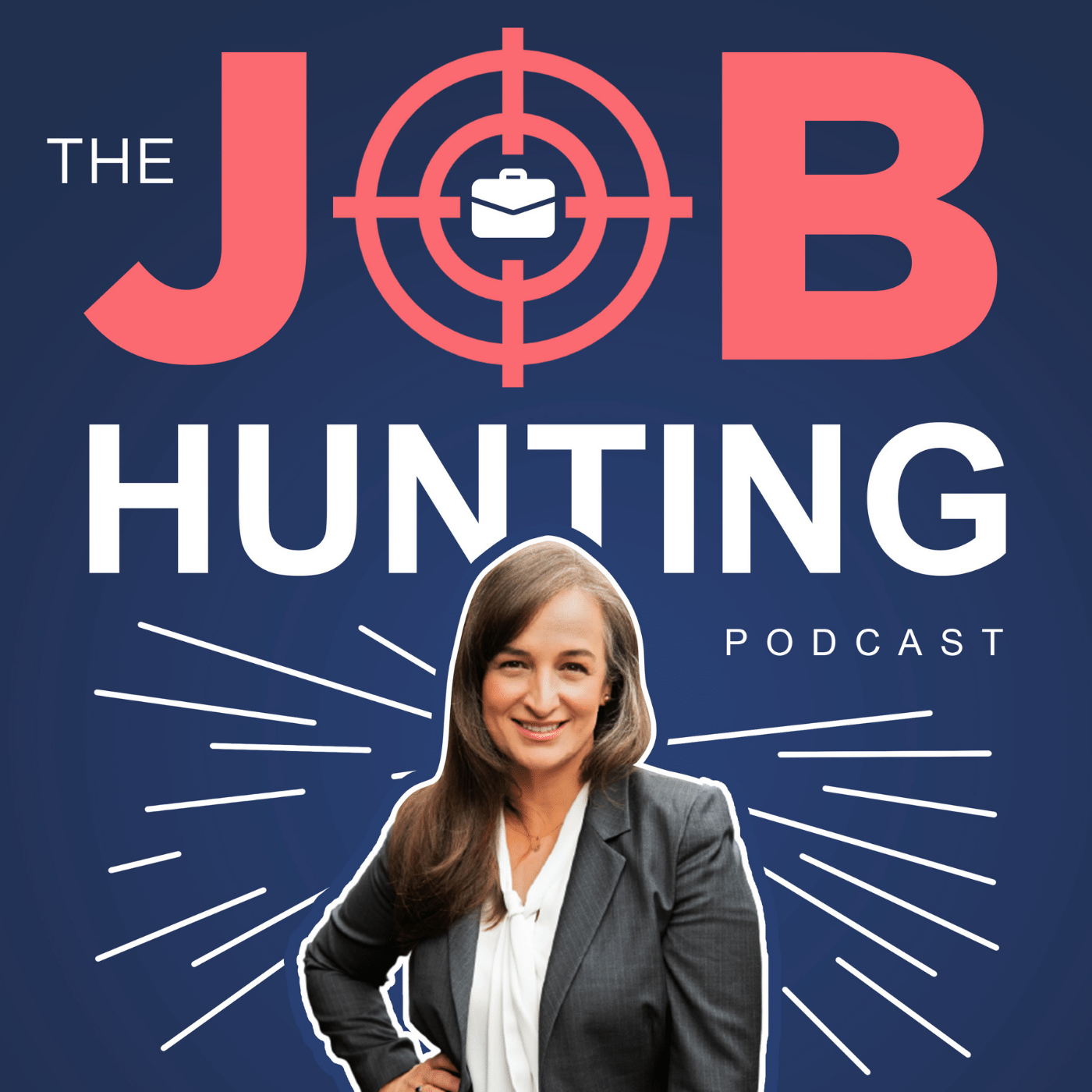
The Job Hunting Podcast

The Job Hunting Podcast

Hosted by Renata Bernarde

Episodes

348

Latest episode

Nov 2026

Language

EN

About the show

The podcast with Expert Insights for Navigating the Modern Job Market. Hi, my name is Renata Bernarde. In 2018, I left my job to help others get their careers on track. My love for coaching started at a very young age. Over time, I realized that many professionals don’t know how recruitment & selection work, which negatively impacts their career progression. Today I host The Job Hunting Podcast and I also have a series of career services for corporate professionals. My signature coaching program is called Job Hunting Made Simple, a roadmap teaching professionals the steps and framework to make career advancement simpler and less stressful. Please subscribe, leave me a rating, write a review, and let the people you care about know about this podcast. You can also learn more about me and my coaching services on www.renatabernarde.com Do you want me to be a guest on your podcast? Speak at your event? Coach you? Reach out via email at www.renatabernarde.com, and let’s make it happen!

Listen to episodes

60 recent
November 17, 202650 min

Why Smart Professionals Get Overlooked, with Davina Stanley

Episode 348 - Experienced professionals often assume their expertise will speak for itself. But as careers progress, influence depends increasingly on the ability to synthesize information, communicate judgment, and make your value easy for others to understand. In this article, I explore why clear thinking and communication become more important with seniority, and what that means for job interviews, leadership, and career advancement. There is a problem I see repeatedly among experienced professionals: they have accumulated decades of expertise, yet they struggle to communicate that expertise in a way that makes other people immediately understand its value. This becomes particularly visible during career transitions. A senior executive walks into a job interview with 20+ years of experience and, to answer questions, spends too much time on context and background before getting to the point. A technical specialist presents an impressive result but assumes the numbers will explain why the result matters. It doesn’t. A leader takes a complex issue to the executive team and gives them everything they already know rather than leading them on what should happen next. None of these people lack experience. In many cases, experience is contributing to the problem. That tension was at the center of my recent conversation with Davina Stanley, who has spent nearly 30 years helping professionals communicate complex ideas to senior executives and boards. Stanley learned structured communication techniques while working as a communication specialist at McKinsey and has since coached leaders and teams on how to make complex thinking easier for decision-makers to understand. The larger career lesson from our conversation is important: as your career progresses, being knowledgeable is not enough. You increasingly need to demonstrate that you can decide what matters, interpret it, and communicate a point of view. That ability is one of the clearest signals of professional judgment. Read the full Blog on the Website Book a Free Introductory Meeting with Renata Join 5,000+ Readers of The Job Hunting Newsletter: Subscribe Now 31 Days of Action for Job Seekers Find Your Talents: Learn About Your Strengths, and Watch Your Career Grow Lear More About Renata's career coaching and courses Timestamps to guide your listening: Why 20 or 30 years of experience can make clear answers harder (5:14) One main idea on top, no more than five supporting points, and a story under each (7:43) The CEO candidate who “fact bombed” every answer (10:41) Why interview answers spend too long on the situation (12:57) “What they’ve done rather than what they’ve delivered” (21:40) “Polished nonsense”: what AI does to your story (22:27) A brain dump you never edit, then one page for your message (33:37) Links mentioned in this episode: Book a 1-hour career consultation with me to prep for your job interview Episode 342 - What if confidence isn't the thing holding you back? I'm sharing what I'm seeing in the job market right now, from executive presence and relatability to why being more human may be your biggest advantage in the age of AI. Four-minute video of Renata Bernarde on the SBS Insight TV show Davina most recent books Engage and Elevate Davina Stanley’s website About the host, Renata Bernarde Hello, I'm Renata Bernarde, the Host of The Job Hunting Podcast . I'm also an executive coach, job-hunting expert, and career strategist. I teach corporate, non-profit, and public professionals the steps and frameworks to help them find great jobs, change, and advance their careers with confidence and less stress. Watch the Episodes on YouTube Follow Renata on Social Media: LinkedIn Instagram Facebook X / Twitter

November 3, 202648 min

How to Communicate Your Value in Job Interviews With Helen von Dadelszen

Episode 347 - Years of experience do not always translate into a convincing interview. I explore how to make your expertise clearer, prepare without sounding scripted, and recognize when interviewer bias is part of the problem. A professional can spend 25 years becoming good at their work and still struggle to explain that work in a job interview. Asked about a difficult decision, they begin with the organizational history, describe the stakeholders, explain the constraints, and eventually reach the decision itself. By then, the interviewer may have stopped following. The candidate leaves knowing they had more to offer than the conversation revealed. I see versions of this problem in my coaching practice. Experienced professionals often assume that preparation means finding more examples, anticipating more questions, and making sure nothing important is left out. Yet the difficulty is frequently one of selection: deciding what another person needs to understand, and making that understanding possible within a few minutes. More experience provides more material, but it does not automatically provide a clearer answer. This was the challenge I wanted to explore with communication and vocal coach Helen von Dadelszen, whose background includes HR and recruitment. Our conversation raised a question that matters to candidates and employers alike: how much of what we call competence in an interview is actually the ability to communicate competence? Improving that ability can help someone progress. Confusing it with the whole of their professional value can lead employers to overlook capable people. R ead the full Blog on the Website Book a Free Introductory Meeting with Renata Join 5,000+ Readers of The Job Hunting Newsletter: Subscribe Now 31 Days of Action for Job Seekers Find Your Talents: Learn About Your Strengths, and Watch Your Career Grow Lear More About Renata's career coaching and courses Timestamps to guide your listening: 00:00 Why great professionals struggle to say what they have done 01:15 Competence or communication: what recruiters should separate 03:49 Habit 1: Putting your whole career into one answer 07:47 Habits 2 and 3: A flat tone and a blank face 12:26 Neurodivergence and masking: should you tell the panel? 15:05 Habit 4: Rushing and mumbling, and the one-line fix 18:09 Laid off and doubting yourself: where to start 20:33 When interviewer bias is real (and what you control) 26:57 What executive presence really is 29:16 Habit 5: Trailing off, and the four-step PREP fix 33:05 Speaking up in meetings without sounding unsure 39:58 The one thing to do before any important conversation 42:04 Will AI make you a worse communicator? Links mentioned in this episode: Book a Career Consultation with me to prep for your job interview Helen Von Dadelszen’s website Helen’s book Helen’s LinkedIn profile Helen’s YouTube Channel About the host, Renata Bernarde Hello, I'm Renata Bernarde, the Host of The Job Hunting Podcast . I'm also an executive coach, job-hunting expert, and career strategist. I teach corporate, non-profit, and public professionals the steps and frameworks to help them find great jobs, change, and advance their careers with confidence and less stress. Watch the Episodes on YouTube Follow Renata on Social Media: LinkedIn Instagram Facebook X / Twitter

October 20, 20261 hr 2 min

AI, Jobs and Your Future: What Professionals Over 40 Need to Know

Episode 346 - As AI reshapes the workplace, experienced professionals face a new challenge: combining decades of expertise with emerging technological capabilities. Professor Jon Whittle explains why successful AI adoption depends on much more than technology, and what professionals over 40 can do to remain competitive. Artificial intelligence is changing how organizations operate, what employers expect, and how professionals demonstrate their value. For experienced workers, the challenge is not to abandon decades of expertise, but to learn how to apply it in a workplace being redesigned around AI. For professionals in their 40s, 50s and 60s, the conversation about artificial intelligence has become increasingly difficult to ignore. Every week brings another prediction about disappearing jobs, another announcement about AI agents performing sophisticated tasks, or another company explaining how technology will allow it to operate with fewer employees. For people who have spent decades building expertise, professional relationships and a reputation for delivering results, the uncertainty raises a legitimate concern: how much of that accumulated experience will employers value in five or ten years? As a career coach working primarily with experienced corporate professionals, I see how this uncertainty affects people's confidence. Some are already looking for work after redundancy, while others are considering whether their current roles will remain relevant. Many understand that they need to learn about AI but are unsure what meaningful proficiency looks like, particularly when their professional strengths have traditionally been leadership, strategy, communication and organizational judgment rather than technology. I recently revisited this question with Jon Whittle, an AI expert with more than three decades of experience, a former senior leader at CSIRO's Data61, and now a professor at Melbourne Business School. When we first spoke earlier this year, I was considerably more concerned about AI's implications for careers than he was. Several months later, despite significant advances in the technology, his position had not fundamentally changed. What emerged from our conversation was a more useful way to think about career resilience. The biggest challenge for experienced professionals may not be that AI makes their expertise obsolete, but that employers increasingly expect them to combine that expertise with capabilities they have not yet developed. This is an important distinction because it shifts the conversation from defending an existing career to actively shaping its next stage. Read the full Blog on the Website Book a Free Introductory Meeting with Renata Join 5,000+ Readers of The Job Hunting Newsletter: Subscribe Now 31 Days of Action for Job Seekers Find Your Talents: Learn About Your Strengths, and Watch Your Career Grow Lear More About Renata's career coaching and courses Timestamps to guide your listening: 0:00 Is AI really coming for your job? 1:04 The AI veteran who never expected this in his lifetime 4:44 More worried than earlier this year? 7:02 Why AI companies are asking to be regulated 9:54 The “uniquely human” skills AI is already eroding 14:52 Leading AI with imposter syndrome 18:31 50-something with a strong career? Start here 23:40 Why 80% of AI success isn’t technical 29:48 What not to do, and why a gap helps 33:56 What 60 Minutes missed about AI and hiring 40:28 Why 200 applications get you nowhere 46:34 Why an AI professor now posts every day 50:56 He left a 1,000-person role, with no website 54:43 Don’t build the website first Links mentioned in this episode: Book Podcast Jon Whittle’s Substack: Being Human in an AI World 60 Minutes Australia Investigation into AI in Recruitment60 Minutes Australia Investigation into AI in Recruitment Reset Your Career Podcast episode 311 with Leanne Brannigan: When the Recruiter Becomes The Candidate About the host, Renata Bernarde Hello, I'm Renata Bernarde, the Host of The Job Hunting Podcast . I'm also an executive coach, job-hunting expert, and career strategist. I teach corporate, non-profit, and public professionals the steps and frameworks to help them find great jobs, change, and advance their careers with confidence and less stress. Watch the Episodes on YouTube Follow Renata on Social Media: LinkedIn Instagram Facebook X / Twitter

October 6, 202653 min

Your Experience Is Not Your Value: How to Explain What You Really Bring

Episode 345 - After decades of work, many experienced professionals can describe what they have done but struggle to explain why it matters now. This episode explores how understanding your value, rather than relying on titles, credentials and experience alone, can change the way you approach job searches, career transitions and the next stage of your working life. One of the hardest career questions for an experienced professional should, in theory, be one of the easiest: What is your value? After 20, 25, or 30 years of work, there is plenty of evidence to draw from. You have qualifications, projects, promotions, difficult problems solved, teams led, budgets managed, relationships built, and lessons learned the hard way. Yet in my work as a career coach, I regularly meet accomplished professionals who struggle to explain why any of this should matter to the person sitting across from them in a job interview. The problem is rarely a lack of experience. More often, they have confused experience with value. That distinction became the central idea in my recent conversation with Helen Palmer, creator of value(x) hub and the broader Self unLimited approach to working life. Helen argues that value is not a fixed characteristic we accumulate over a career. It is contextual, plural and dynamic. What one employer prizes, another may barely notice. What mattered enormously to us professionally at 35 may matter considerably less at 55. “Value is in the eye of the beholder,” Helen told me. For experienced professionals, this idea is more challenging than it first appears. It means that having impressive credentials, a senior title, or a long track record does not automatically make our contribution relevant to the next opportunity. It also means we cannot outsource the work of interpreting our experience to employers and expect them to reach the conclusion we hoped for. Read the full Blog on the Website Book a Free Introductory Meeting with Renata Join 5,000+ Readers of The Job Hunting Newsletter: Subscribe Now 31 Days of Action for Job Seekers Find Your Talents: Learn About Your Strengths, and Watch Your Career Grow Lear More About Renata's career coaching and courses Timestamps to guide your listening: 00:00 Why capable people can't describe their value 00:50 Twenty years of friendship, and one question about value 03:54 Value vs values: what value literacy means 06:07 Why time for money is nobody's real value exchange 08:33 Value you create for your employer vs value for you 14:10 "My boss doesn't value it": value is in the eye of the beholder 17:51 What your old credential tells the person reading your application 19:47 "I'm an accountant" is a feature, not your value 23:11 Why most value proposition statements fall flat 24:11 Months without interviews: do you still value the work? 26:37 You don't need passion from every job (the workscape) 31:11 When what you value changes in your 50s 32:50 The value exchange ledger, and why you time-box it 39:22 When your identity is welded to your job title 42:18 "You should stay": leaving when there's nothing left to give 44:53 Seeing your career in eras, and grieving the old one 49:54 Break the egg: Helen's advice if you're unsure what's next 51:21 Where to find Helen Links mentioned in this episode: Understanding “workscape” Value-literacy Helen Palmer’s LinkedIn profile About the host, Renata Bernarde Hello, I'm Renata Bernarde, the Host of The Job Hunting Podcast . I'm also an executive coach, job-hunting expert, and career strategist. I teach corporate, non-profit, and public professionals the steps and frameworks to help them find great jobs, change, and advance their careers with confidence and less stress. Watch the Episodes on YouTube Follow Renata on Social Media: LinkedIn Instagram Facebook X / Twitter

September 22, 202651 min

How to Build a Portfolio Career Without Starting Over, with Kate Dillon

Episode 344 - Career change after 40 does not have to mean abandoning everything you have built. In this conversation with Kate Dillon, we explore portfolio careers, small career experiments, transferable career capital and how to create more professional options without making an unnecessary leap. There is a particular kind of career dissatisfaction I see frequently among experienced professionals. They are successful by conventional measures. They have seniority, expertise, a respectable salary and two or three decades of professional history behind them. Yet increasingly, they feel uneasy about the idea that the next ten or fifteen years of their working life should look much like the last ten or fifteen. The problem is that many people interpret this uneasiness as evidence that something dramatic needs to happen. They imagine leaving their employer, retraining completely, launching a consultancy, buying a business or finally pursuing the idea they have been quietly carrying around for years. Then reality intervenes. There is a mortgage, children at university, aging parents, a lifestyle built around a certain income, and a professional reputation that took a long time to establish. This is where the conversation about career change can become unnecessarily binary. Stay or leave. Corporate career or entrepreneurship. Employment or consulting. Security or freedom. My conversation with Australian lawyer, strategist and entrepreneur Kate Dillon offered a much more useful possibility: perhaps the next stage of an experienced professional's career does not require abandoning what came before. It may instead involve building outward from it. Read the full Blog on the Website Book a Free Introductory Meeting with Renata Join 5,000+ Readers of The Job Hunting Newsletter: Subscribe Now 31 Days of Action for Job Seekers Find Your Talents: Learn About Your Strengths, and Watch Your Career Grow Lear More About Renata's career coaching and courses Timestamps to guide your listening: 00:00 The myth that you have to pick a lane 02:47 How she built a portfolio career (it wasn’t planned) 06:31 The loss and public failure that freed her 10:35 Planner or not? Vision without a rigid plan 14:34 Why she built a business without quitting her job 21:06 The smallest experiment before you leap 25:35 Who to talk to (and the boss conversation to have) 31:31 The money question no one warns you about 37:02 “What do people pay you for?” and why you never start from scratch 41:30 AI, and the hardest skill: unlearning 47:02 Your next 12 months: where to start Links mentioned in this episode: Kate’s diagnostics Find my talents TalentPredix strenghts assessment Book Mentioned: Do the Work, by Steven Pressfield Episode 121 - Impostor Syndrome and Fear of Success Episode 242 - The Role of Business Intelligence (BQ), Emotional Intelligence (EQ), and Social Intelligence (SQ) in Career Advancement Episode 287 - Hiring Makes No Sense Anymore: Why Recruitment and Hiring Feel Like a Burden and How Leaders Can Fix Them Episode 288 - How to Job Hunt During the Mid-Year Slowdown About the host, Renata Bernarde Hello, I'm Renata Bernarde, the Host of The Job Hunting Podcast . I'm also an executive coach, job-hunting expert, and career strategist. I teach corporate, non-profit, and public professionals the steps and frameworks to help them find great jobs, change, and advance their careers with confidence and less stress. Watch the Episodes on YouTube Follow Renata on Social Media: LinkedIn Instagram Facebook X / Twitter

September 8, 202645 min

Why Employers Ask About Salary So Early

Episode 243 - Salary is one of the most uncomfortable parts of the job search, especially when employers ask for expectations early in the process. In this episode, compensation consultant Matt McFarlane explains how companies think about pay, salary bands, job titles, negotiation, and what experienced professionals need to understand before naming a number. Few moments in a job search create as much discomfort as the salary question. It often appears too early, too bluntly, and too impersonally. A candidate is completing an online application, still unsure whether the role is a genuine fit, and suddenly a form asks for salary expectations or current compensation. For experienced professionals, especially those in their 40s, 50s, and 60s, that question can feel less like an administrative step and more like a trap. Read the full Blog on the Website Book a Free Introductory Meeting with Renata Join 5,000+ Readers of The Job Hunting Newsletter: Subscribe Now 31 Days of Action for Job Seekers Find Your Talents: Learn About Your Strengths, and Watch Your Career Grow Lear More About Renata's career coaching and courses Timestamps to guide your listening: 0:00 The question that traps every job applicant 0:47 Why nobody wants to talk about salary 1:56 What employers really do with your number 7:02 A smarter way to answer the salary question 9:42 How companies build your pay package 14:38 Why the top of the band is rarely offered 18:21 Job titles, ego, and what they cost you 22:29 Why startups hand out titles instead of money 25:23 What startup hiring gets wrong (and right) 30:55 The client who wrote his own job description 34:07 Do employers expect you to negotiate? 38:57 What you can negotiate besides salary 39:47 Who fixes broken pay structures 42:49 Inside the Startup People Summit 44:34 Ask Matt your questions on LinkedIn Links mentioned in this episode: LinkedIn profile, Matt McFarlane Watch the Replay of the Startup People Summit 2026 FNDN’s website (Matt’s business) Podcast episode about salary negotiation (245) Podcast episode with startup founder Alex Naoumidis (47) Podcast episode with startup Chief People Officer, Emily Zhang (191) About the host, Renata Bernarde Hello, I'm Renata Bernarde, the Host of The Job Hunting Podcast . I'm also an executive coach, job-hunting expert, and career strategist. I teach corporate, non-profit, and public professionals the steps and frameworks to help them find great jobs, change, and advance their careers with confidence and less stress. Watch the Episodes on YouTube Follow Renata on Social Media: LinkedIn Instagram Facebook X / Twitter

August 26, 202633 min

Confidence Is Overrated. Here's What Actually Gets You Hired.

Episode 342 - What if confidence isn’t the thing holding you back? I’m sharing what I’m seeing in the job market right now, from executive presence and relatability to why being more human may be your biggest advantage in the age of AI. Confidence has become one of the most common explanations experienced professionals give me when their careers stall. “I need to be more confident.” “I’ve lost my confidence.” “I don’t think I come across confidently enough in interviews.” I hear versions of these statements every week from people with 15 or 20+ years of professional experience. They have managed teams, delivered complex projects, advised executives and built careers that demonstrate considerable competence. Yet when they enter a job search or begin aiming for a more senior role, confidence suddenly becomes the diagnosis. Increasingly, I think we may be diagnosing the wrong problem. The professionals who stand out today are not necessarily the people projecting the greatest certainty. Often, they are the ones who communicate with enough self-awareness to be credible, enough courage to be visible and enough humanity to be memorable. And in an employment market increasingly saturated with AI-assisted communication, those qualities may become considerably more valuable. Read the full Blog on the Website Book a Free Introductory Meeting with Renata Join 5,000+ Readers of The Job Hunting Newsletter: Subscribe Now 31 Days of Action for Job Seekers Find Your Talents: Learn About Your Strengths, and Watch Your Career Grow Lear More About Renata's career coaching and courses Timestamps to guide your listening: 0:00 The new luxury is not using AI 1:06 Why today is off-script 2:49 Three things I can't stop noticing 4:18 Why relatable beats confident 8:21 Confidence is overrated 10:31 It's not really confidence they lack 12:04 What executive presence actually is 15:07 There's no one right way to command a room 17:16 The worst thing you can do in an interview 19:43 The new luxury: slowing down in an AI world 21:27 The career privilege nobody talks about 23:54 When AI writes everything, being human is scarce 26:23 Why slow is the new status symbol 30:19 Become more of yourself Links mentioned in this episode: LinkedIn post from the beginning of 2026 Episode 118 - Generalist or Specialist: Chances Are, You May Be Misusing the Labels! The ONE Thing Executives Who Land Jobs Fastest All Do About the host, Renata Bernarde Hello, I'm Renata Bernarde, the Host of The Job Hunting Podcast . I'm also an executive coach, job-hunting expert, and career strategist. I teach corporate, non-profit, and public professionals the steps and frameworks to help them find great jobs, change, and advance their careers with confidence and less stress. Watch the Episodes on YouTube Follow Renata on Social Media: LinkedIn Instagram Facebook X / Twitter

August 11, 20261 hr 0 min

How Financial Stress Shapes Your Career Decisions

Episode 341 - Financial stress can change how we assess risk, negotiate, job search and plan our next career move. Carrie Joy Grimes, founder and CEO of WorkMoney, joins me to discuss financial runway, career transitions, money anxiety and how to make better decisions when your income or employment suddenly feels uncertain. When experienced professionals lose their jobs, one of the first questions I ask is not about their resume, LinkedIn profile or network. I ask about money. How long can you afford to be out of work? The answer matters because a job search conducted with six months of financial runway can look very different from one conducted with six weeks. Financial stress has a way of turning a career decision into an emergency. Suddenly, the goal is no longer to find the right next role. It is to make the discomfort stop. That distinction came up repeatedly in my recent conversation with Carrie Joy Grimes, founder and CEO of WorkMoney , a U.S. nonprofit focused on helping working people improve their financial lives, and author of The Joy of Money: How to Do More With and Feel Better About Your Money, No Matter How Much You Have . “Financial stress isn't a thing that we walk around saying, ‘I'm financially stressed right now,’” Grimes told me. Instead, she described it as something that gradually weighs on us until we become accustomed to operating under pressure. That pressure can have consequences well beyond our bank accounts. Read the full Blog on the Website Book a Free Introductory Meeting with Renata Join 5,000+ Readers of The Job Hunting Newsletter: Subscribe Now 31 Days of Action for Job Seekers Find Your Talents: Learn About Your Strengths, and Watch Your Career Grow Lear More About Renata's career coaching and courses Timestamps to guide your listening: 01:03 Introduction and Context of Financial Stress 02:31 Understanding Financial Stress and Its Impact 05:11 Strategies for Managing Financial Stress 08:22 Navigating Career Transitions and Financial Decisions 12:51 The Role of Employers in Alleviating Financial Stress 17:59 Adapting to a Changing Workforce and Financial Landscape 21:15 The Importance of Financial Education and Support 25:50 Conclusion and Final Thoughts on Financial Well-being 33:18 Embracing Change: The Transition to Entrepreneurship 36:36 Budgeting for Joy: Finding Freedom in Financial Choices 38:41 The Reality of Financial Distress: Sharing Real Stories 41:27 Overcoming Financial Anxiety: Understanding Your Worth 45:22 Empowering Women: Negotiating and Understanding Value 52:09 Building a Supportive Community: The Role of Organizations 54:07 The Joy of Money: Understanding Your Relationship with Finances Links mentioned in this episode: Carrie Joy Grimes’ new book, The Joy of Money Carrie’s non profit organization, WorkMoney About the host, Renata Bernarde Hello, I'm Renata Bernarde, the Host of The Job Hunting Podcast . I'm also an executive coach, job-hunting expert, and career strategist. I teach corporate, non-profit, and public professionals the steps and frameworks to help them find great jobs, change, and advance their careers with confidence and less stress. Watch the Episodes on YouTube Follow Renata on Social Media: LinkedIn Instagram Facebook X / Twitter

July 28, 202648 min

Career Visibility Without Becoming a LinkedIn Influencer

👉 Ready to take the next step in your career? Book a free Career Coaching Introductory Meeting with me. 👉 Join 5,000+ senior professionals getting actionable ideas to get your next job and take control of your career directly in their inbox The people deciding your next role form an opinion about you before you ever apply. This conversation shows you how to shape it. My guest is Vanessa Errecarte: marketing lecturer at the UC Davis Graduate School of Management, consultant, and author of Valuable and Visible. She created one of the only for-credit MBA courses in personal branding in the United States, and she has a message for every senior professional who was taught that great work speaks for itself: the market stopped listening to silent excellence. We talk about why decades of strong work can disappear from view after a redundancy, how recruiters and hiring managers now discover senior candidates before a resume is ever read, and what separates real authority from empty visibility on LinkedIn. Vanessa explains why the advice to simply post more backfires, and why helping people publicly beats talking about yourself. You will also hear the practical layer: her formula for introducing yourself so people remember you, the difference between an influencer's job and yours, what AI can and cannot do for your thinking, and a minimum viable personal brand that takes 1 to 3 hours a week, starting with one LinkedIn post. In this episode, career coach Renata Bernarde and UC Davis marketing lecturer Vanessa Errecarte argue that personal branding is about creating value for others rather than promoting yourself: senior professionals get remembered, referred, and recruited when they publicly help their audience solve problems, because visibility without earned trust produces no career results. Your one thing this week: write one LinkedIn post using Vanessa's formula. Open with a short personal story, connect it to why it matters, then teach a framework of three to five steps your peers can use. As I say at the close of this episode, your expertise can be recognized, remembered and recommended through a little bit of work on your part. Subscribe so next week's episode finds you. Read the full Blog on the Website Book a Free Introductory Meeting with Renata Join 5,000+ Readers of The Job Hunting Newsletter: Subscribe Now 31 Days of Action for Job Seekers Find Your Talents: Learn About Your Strengths, and Watch Your Career Grow Lear More About Renata's career coaching and courses Timestamps to guide your listening: 00:00 Introduction to Personal Branding and Visibility 03:06 The Shift in Career Progression and Recruitment 05:55 The Importance of Genuine Authority in Visibility 09:08 Navigating Personal and Professional Branding 11:52 Building Trust Through Value 15:03 Leveraging Personal Stories for Professional Growth 17:46 The Role of AI in Personal Branding 20:56 Overcoming the Visibility Trap 23:57 The Challenge of Authenticity in Online Presence 27:33 Creating Engaging Content 28:30 The Impact of Viral Posts 29:04 Building Trust and Authenticity 31:57 Navigating Job Transitions 36:06 Minimal Visibility Strategies 39:31 Consistency in Personal Branding 43:24 Leveraging Different Platforms 46:17 The Human Element in Online Engagement 50:11 The Importance of Real-Life Connections Links mentioned in this episode: Vanessa’s website Learn more and join Renata’s RB Career Club About the host, Renata Bernarde Hello, I'm Renata Bernarde, the Host of The Job Hunting Podcast . I'm also an executive coach, job-hunting expert, and career strategist. I teach corporate, non-profit, and public professionals the steps and frameworks to help them find great jobs, change, and advance their careers with confidence and less stress. Watch the Episodes on YouTube Follow Renata on Social Media: LinkedIn Instagram Facebook X / Twitter

July 14, 202629 min

The 7 LinkedIn Questions My Clients Ask Most Often

Ready to take the next step in your career? Book a free Career Coaching Introductory Meeting with me. Episode 339 - I answer the seven LinkedIn questions my career coaching clients ask most often, from headlines and About sections to recruiter visibility, skills, posting, and making your profile support your next career move. Most experienced professionals know LinkedIn matters. They know recruiters use it, hiring managers check it, and that former colleagues, board contacts, clients, and professional peers may look them up before making an introduction. And yet, many still treat LinkedIn as a digital filing cabinet. A place to store job titles, dates, and old responsibilities. That is a missed opportunity. Your LinkedIn profile is designed to be a record of where you have worked. It is a positioning tool. It should help the right people understand who you are, what you are known for, what problems you solve, and where you may be heading next. This is especially important for professionals in their 40s, 50s, and 60s. By this stage, your career is usually more complex. You may have worked across sectors, held several leadership roles., and you may be changing direction. For example, you may be moving from executive work to board roles, from corporate to consulting, from one industry to another, or from full employment into a portfolio career. If that's the case, your career complexity can be valuable. But if your LinkedIn profile does not translate it clearly, it can become confusing. That is why Episode 339 of The Job Hunting Podcast focuses on the seven LinkedIn questions my clients ask me most often. These are not questions from people who lack experience. They are questions from people who often have a lot of experience, but are not sure how to make that experience visible, searchable, and relevant. Read the full Blog on the Website Book a Free Introductory Meeting with Renata Join 5,000+ Readers of The Job Hunting Newsletter: Subscribe Now 31 Days of Action for Job Seekers Find Your Talents: Learn About Your Strengths, and Watch Your Career Grow Lear More About Renata's career coaching and courses Timestamps to guide your listening: 00:00 The Importance of LinkedIn for Professionals 06:05 Utilizing the Featured Section 08:20 Choosing the Right Skills 14:37 Crafting Your About Section 20:53 Why Recruiters Aren't Finding You 26:05 Positioning for Future Opportunities Links mentioned in this episode: My LinkedIn Audit Service My website About the host, Renata Bernarde Hello, I'm Renata Bernarde, the Host of The Job Hunting Podcast . I'm also an executive coach, job-hunting expert, and career strategist. I teach corporate, non-profit, and public professionals the steps and frameworks to help them find great jobs, change, and advance their careers with confidence and less stress. Watch the Episodes on YouTube Follow Renata on Social Media: LinkedIn Instagram Facebook X / Twitter

Is this your show?

Claim this listing to keep it up to date, reach guests who want to pitch you, and manage bookings with Guestify.

Claim this listing

More Business podcasts