Recursive Self-Improvement: AI Models, Agents and Memory - The Effortless Podcast - Episode 24
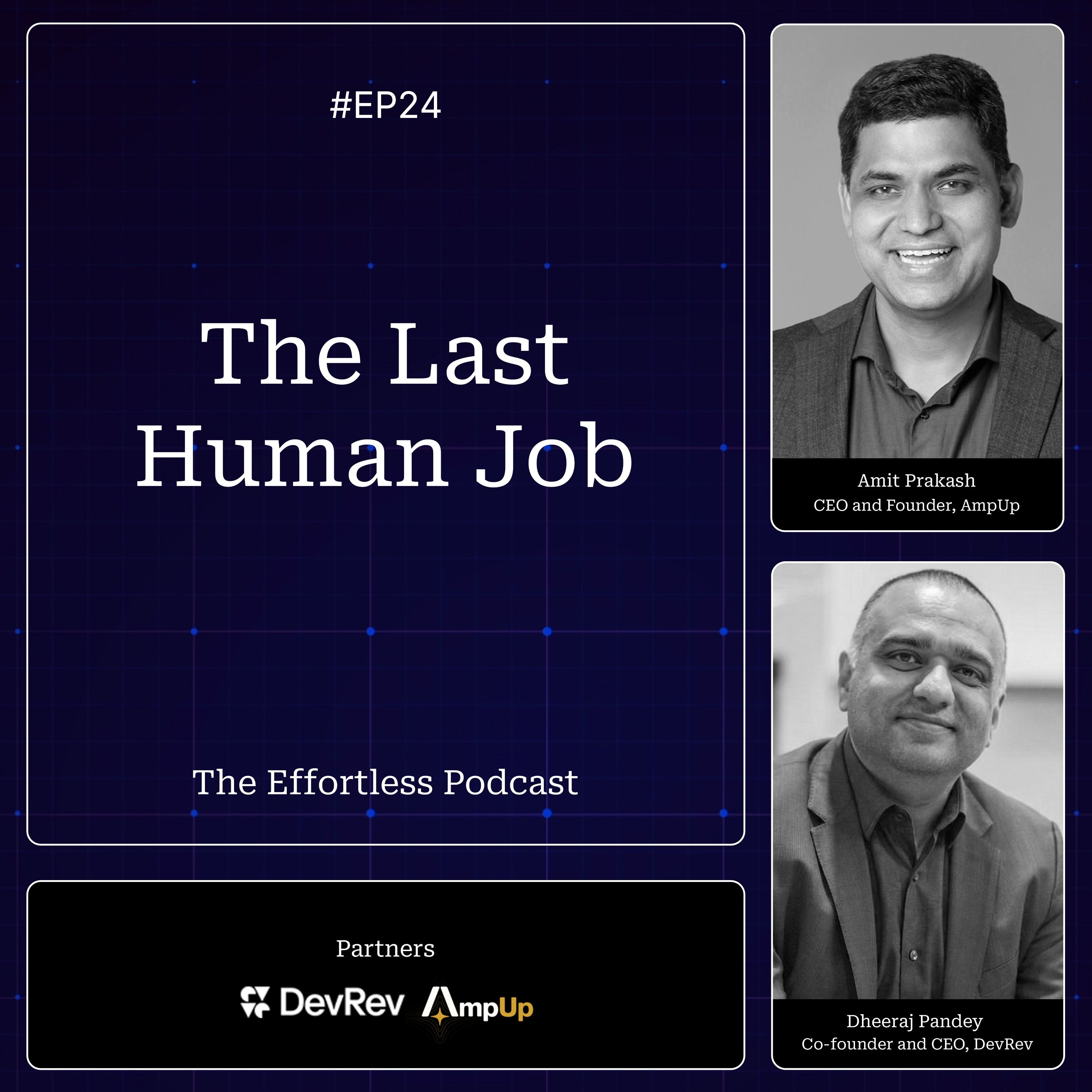
In this episode of The Effortless Podcast, Dheeraj Pandey and Amit Prakash return after the summer break to unpack recursive self-improvement (RSI) across the three legs of the AI stack: the model, the agent harness and memory. They start with the news cycle, from small, fast classifier models like Jev to 10,000 parallel agents working on Navier-Stokes, and what it means for routing, discovery and how agents communicate. The conversation moves to where humans still sit in the loop as models help build the next generation of models, what Bing and Google AdSense taught about measurement and fast feedback loops, and why self-improving memory and agents need metrics that act as leading indicators. They close on the difference between generalized intelligence and institutional intelligence, the limits of ideas that never meet physics, and why bits ultimately have to meet atoms. Key Topics & Timestamps 00:00 - Intro 00:30 - Back after summer and the recent news cycle 02:29 - Jev and the case for small, specialized models 04:44 - From BERT to Jev: what actually changed 06:36 - Routing, OpenRouter and the policy engine 09:20 - Discovery and routing: MCP, A2A and agents as IP addresses 10:25 - How 10,000 parallel agents learned to communicate 11:47 - ALOHA, Ethernet and lessons from networking 12:44 - Distributed consensus: RISC vs CISC as a model for agents 15:21 - Separation of concerns and the three legs of the AI stack 16:58 - What recursive self-improvement means 20:21 - Models helping build models: GFS1 to GFS2 23:52 - Shrinking the 90% perspiration 24:59 - Lessons from Bing and AdSense: measurement and fast loops 27:46 - GFS vs Bigtable: when structure pays off 29:32 - Self-improving memory and junk CRM data 34:22 - Self-improving agents: code, prompts and judgment 35:07 - Metrics, evals and observability 36:28 - From lagging to leading indicators 39:58 - Generalized vs institutional intelligence 42:07 - Who owns institutional intelligence: training data and privacy 45:36 - Can models generate novel ideas? 47:50 - Math vs physics: where ideas meet limited resources 49:41 - Toxicity in drug discovery and in CI/CD 53:39 - Taste, context and simulated populations 55:16 - An agent that interviews you for story memories 57:54 - "Only two jobs left" and the limits of physical AI 1:00:51 - Quantum simulation and Earth as a giant computer Hosts: Amit Prakash – CEO and Founder at AmpUp, former engineer at Google AdSense and Microsoft Bing, with extensive expertise in distributed systems and machine learning Dheeraj Pandey – Co-founder and CEO at DevRev, former Co-founder & CEO of Nutanix. A tech visionary with a deep interest in AI, systems, and the future of work. Follow the Hosts: Amit Prakash LinkedIn – https://www.linkedin.com/in/amit-prakash-50719a2/ Twitter/X – https://x.com/amitp42 Dheeraj Pandey LinkedIn – https://www.linkedin.com/in/dpandey/ Twitter/X – https://x.com/dheeraj Share Your Thoughts Have questions, comments, or ideas for future episodes? Email us at EffortlessPodcastHQ@gmail.com Don't forget to Like, Comment, and Subscribe for more conversations at the intersection of AI, systems, and product design.